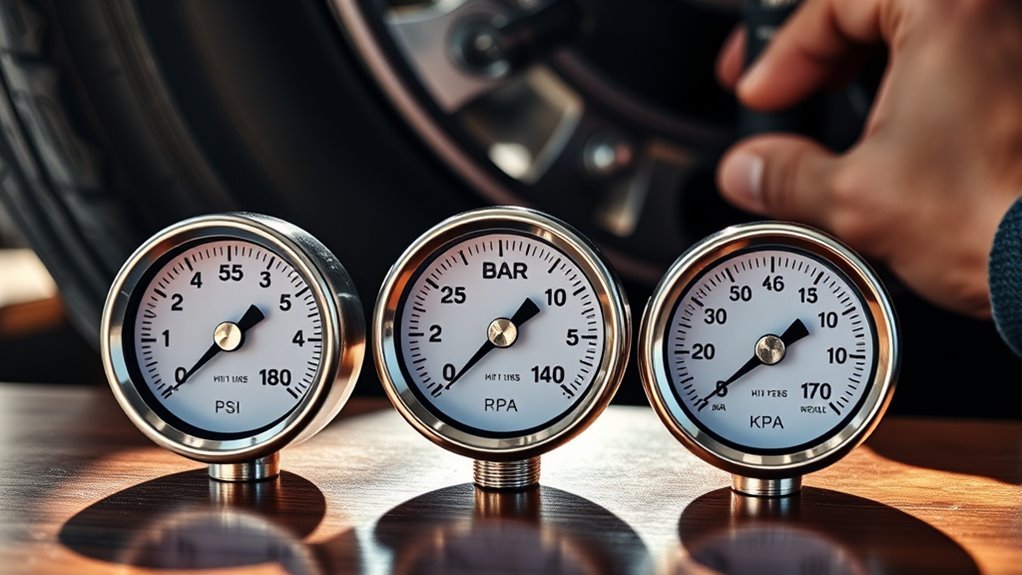
Tire pressure greatly impacts your vehicle’s load capacity; proper PSI allows tires to safely support their maximum load. Under-inflated tires lead to uneven wear and increased heat buildup, while over-inflated ones compromise traction and handling. Maintaining the recommended pressure optimizes performance and extends tire lifespan. Regular checks and adherence to load index ratings are essential to prevent blowouts and enhance stability. Explore further to understand the nuances of effective tire management and its benefits for your vehicle.
Why Tire Pressure Matters for Your Vehicle’s Load Capacity
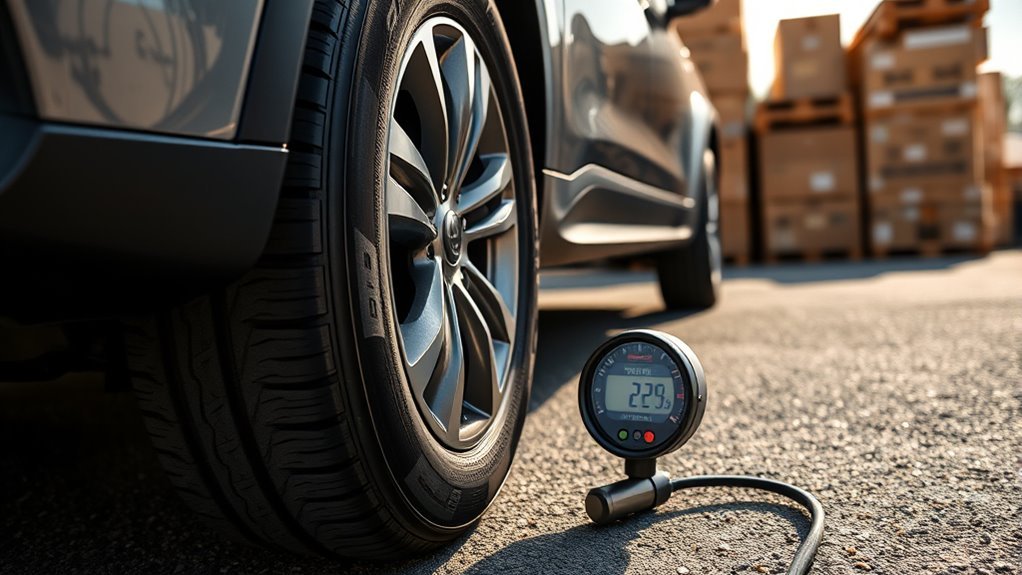
Tire pressure is vital for your vehicle’s load capacity because it directly influences how much weight your tires can safely carry. Maintaining proper air pressure guarantees that your tires can support their maximum load without compromising safety. For example, a tire rated for 3,330 lbs at 95 psi can effectively carry about 35 lbs per psi. Under-inflated tires diminish load capacity, leading to uneven wear and potential failure. Conversely, over-inflated tires wear unevenly in the center, adversely affecting vehicle handling and limiting their effective load. Regular tire maintenance, including checking pressure against tire manufacturers’ specifications, is essential for achieving peak tire performance and making sure you’re maximizing your vehicle’s load capacity safely and efficiently.
The Risks of Under-Inflation and Over-Inflation
While many drivers may overlook the importance of proper tire inflation, the risks associated with both under-inflation and over-inflation can have serious consequences for vehicle performance and safety. Under-inflated tires lead to premature wear on the outer edges, increasing wear rates by 25% if pressures drop 20% below the recommended level. Conversely, over-inflated tires wear unevenly in the center, diminishing traction and heightening the risk of tread cuts or sidewall damage. Both conditions create excessive heat buildup, considerably raising the likelihood of tire failure. Additionally, incorrect tire pressure adversely affects vehicle handling and stability, compromising your safety. Maintaining correct tire pressure is crucial to guarantee ideal load capacity and overall driving performance.
How to Maintain Proper Tire Pressure for Optimal Performance
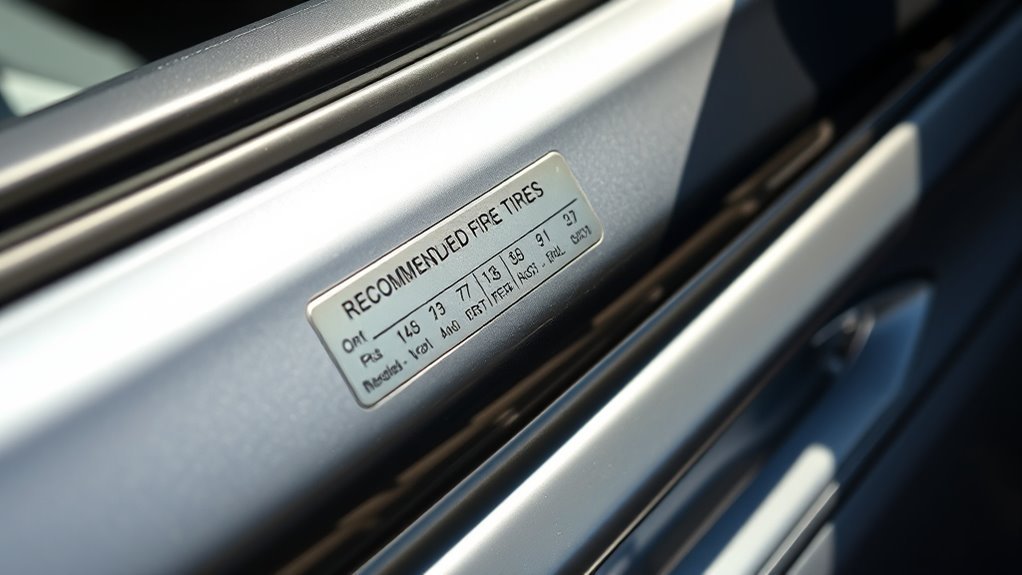
To guarantee peak performance, regularly maintaining proper tire pressure is essential for both safety and efficiency. Check your tire pressure when the tires are cold, as temperature fluctuations can artificially inflate readings by 2 PSI for every 10-degree rise. Always adhere to the manufacturer’s recommended PSI, typically found on the vehicle door jamb or in the owner’s manual, to optimize load capacity and tire performance. Under-inflated tires cause uneven wear and reduce tire lifespan by up to 25%, while over-inflated tires diminish road contact and increase the risk of traction loss. Use a reliable tire pressure gauge to ascertain accurate readings, as improper inflation can lead to blowouts and loss of control, especially when carrying heavy loads.
Why You Should Regularly Check Your Tires?
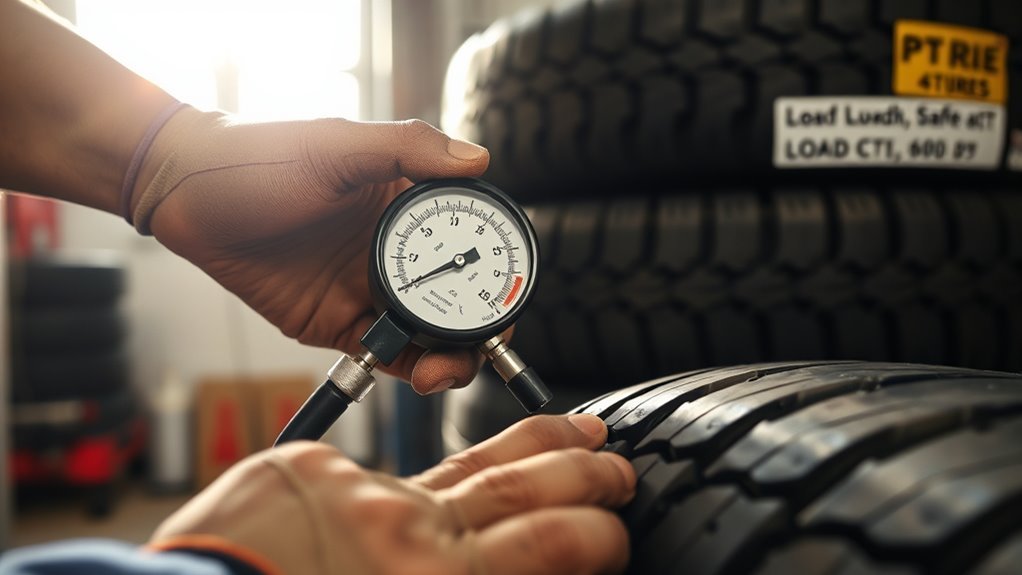
Regularly checking your tires is essential, as it directly impacts safety and performance. Maintaining tire pressure at the manufacturer’s recommended PSI optimizes load capacity and enhances vehicle handling. Under-inflated tires can lead to uneven wear, increasing the risk of tire failure due to heat buildup. Conversely, over-inflated tires cause wear in the center, compromising safety, especially under heavy loads. Routine tire inspections help you monitor pressure, tread wear, and damage, ensuring stability during highway speeds. By preventing operational costs associated with increased tire wear and reduced fuel efficiency—under-inflation can accelerate wear by 25%—you not only enhance safety but also maximize your vehicle’s performance. Regular checks empower you to drive confidently and efficiently.
Boosting Safety and Efficiency With Tire Management
Effective tire management goes beyond routine checks; it encompasses a thorough approach to maintaining safety and efficiency on the road. By regularly monitoring tire pressure and adhering to the manufacturer’s specifications, you optimize load capacity and enhance tire longevity. Under-inflated tires not only increase wear but also elevate the risk of blowouts, compromising vehicle stability. Understanding tire load index ratings guarantees your tires are properly matched to your vehicle and trailer loads, preventing overloading. Implementing advanced systems like Central Tire Inflation Systems (CTIS) allows for real-time adjustments, enhancing safety and efficiency. Proper inflation levels directly affect braking performance and fuel efficiency, making proactive tire management essential for your driving experience.
Frequently Asked Questions
What Is the 3% Rule for Tires?
The 3% rule states you can safely increase a tire’s load capacity by 3% for every 10% rise in tire pressure. Proper inflation, weight distribution, and pressure monitoring are essential for ideal performance and tire longevity.
How Does Tire Pressure Affect Load Rating?
Tire pressure dramatically influences load capacity; low PSI can make your tires feel like they’re dragging a boulder. Proper inflation enhances safety, minimizes tire wear, boosts fuel efficiency, and improves vehicle handling and ride comfort.
Is 40 Psi Too Much for 33 Psi Tires?
Yes, 40 PSI is too much for 33 PSI tires. Overinflation risks include uneven wear, reduced performance, safety concerns, and compromised fuel efficiency. Always adhere to recommended pressures for ideal tire lifespan and load distribution.
Does 10 Lbs per Tire Make a Difference?
Yes, 10 lbs per tire considerably impacts tire inflation, affecting load distribution, vehicle handling, and cargo stability. Proper pressure monitoring guarantees safety standards, enhances fuel efficiency, and minimizes tread wear under varying driving conditions. Prioritize tire maintenance.
Conclusion
In the domain of automotive performance, tire pressure acts as the foundational anchor, balancing safety and efficiency. Just as a well-tuned engine propels you forward, maintaining ideal psi guarantees your vehicle carries its load with confidence. Like a finely crafted bridge, proper tire inflation supports your journey, preventing wear and tear. Regular checks become your compass, guiding you through the risks of under- and over-inflation. Embrace this vigilance, and you’ll navigate the road ahead with assurance and precision.