Checking coolant on a Toyota Tundra is a simple maintenance task, but it has to be done cold and with the right coolant. Park on level ground, let the engine cool fully, read the translucent reservoir, and top off only with Toyota Super Long Life Coolant or a manual-approved equivalent. If the level keeps dropping, treat it as a leak warning rather than a normal top-off.
Quick Answer
To check coolant in a 2015 Toyota Tundra, wait until the engine is completely cold, find the translucent engine coolant reservoir, and confirm the fluid sits between the LOW and FULL marks. If it is at or below LOW, add Toyota Super Long Life Coolant or an approved equivalent to the FULL mark.
Key Takeaways
- Check the coolant only when the engine is cold; hot coolant can spray and cause serious burns.
- Use Toyota Super Long Life Coolant or a compatible coolant listed for your Tundra; do not choose by color alone.
- Do not overfill the reservoir. Add coolant slowly until it reaches the FULL mark when cold.
- If the level drops again soon, inspect for leaks at the radiator, hoses, reservoir cap, drain cock, and water pump.
At a Glance
| Time Required | 5–10 minutes for a level check; 15–20 minutes if topping off and rechecking |
| Difficulty | Easy DIY maintenance |
| Tools Needed | Gloves, safety glasses, clean funnel, rag, flashlight, correct coolant |
| Cost | Usually the cost of coolant only; diagnosis or repairs cost more if a leak is found |
Quick How-To: Check and Add Coolant (Tundra)
Use this quick process for a routine coolant level check and small top-off. This is not a full coolant drain, flush, or repair procedure.
- Park the Tundra on level ground and set the parking brake.
- Let the engine cool completely. If you recently drove, wait several hours before opening the hood for coolant work.
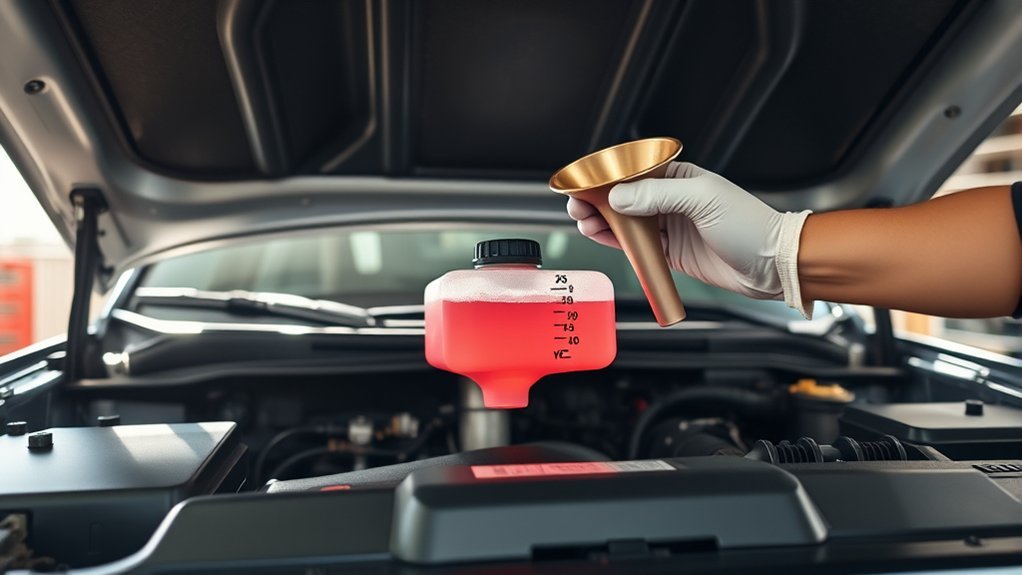
- Open the hood and locate the translucent engine coolant reservoir. Look for the LOW and FULL marks molded into the side of the tank.
- Read the coolant level from the side of the reservoir. The correct cold level should be between LOW and FULL.
- If the level is at or below LOW, inspect for obvious leaks before adding coolant.
- Remove the reservoir cap only when the engine is cold. Use a clean funnel and pour slowly.
- Add Toyota Super Long Life Coolant or a compatible coolant listed in your owner’s manual until the level reaches FULL. Do not fill above FULL.
- Secure the cap, wipe spills with water and a rag, start the engine, set the heater to warm, and watch the temperature gauge.
- Shut the engine off, let it cool again, then recheck the reservoir level. Add a small amount if needed.
Warning: Never remove the radiator cap when the engine is hot. The cooling system can be under pressure and can spray hot coolant or steam, causing burns. For a routine top-off, use the coolant reservoir and work only on a cold engine.
[Products Worth Considering]

Ensure accurate engine cooling with Toyota's genuine water temperature sensor, designed for precise coolant monitoring and reliable performance. This OEM part fits seamlessly into your vehicle, offering durability and consistent temperature readings for optimal engine health.

The Pigenius windshield sunshade protects your Tundra's interior from heat and UV damage while keeping the cabin cool. Its accordion design folds easily for storage and quick setup, and the triple‑laminate construction provides durable, reflective protection. Ideal for long trips and daily commutes, it guards dashboards, seats, and steering wheels from sun‑related wear.

Stay warm and keep control with the KVAEY fluffy steering wheel cover. Its high‑density plush provides a soft, comfortable grip while the anti‑slip rubber liner ensures safety during winter drives. Easy to install and fits 15‑inch wheels on cars, trucks, and SUVs, adding a cozy, stylish touch to any interior.
When to Check Coolant and Why It Matters
Check the coolant level at least monthly, before long trips, before towing, and before extreme heat or freezing weather. A low coolant level can lead to overheating, poor heater performance, corrosion, and expensive engine damage.
Coolant does more than keep the engine from freezing. It helps manage heat, protects metal parts from corrosion, and supports stable operating temperature. Toyota explains that engine coolant helps manage heat and that coolant type and replacement intervals depend on the vehicle and coolant formula, so the maintenance guide should always be the final reference for scheduled replacement.
For a 2015 Tundra with unknown service history, treat coolant condition seriously. If the coolant is dirty, brown, rusty, oily, or the truck is past its scheduled service interval, plan a proper coolant service rather than only topping off the reservoir.
Safety First: Cold Engine and Protective Gear
Coolant safety starts before you touch the cap. Work on a cold engine, wear gloves and safety glasses, and keep children and pets away from the area. Ethylene glycol coolant is toxic, and used coolant can contain contaminants, so spills should be cleaned immediately.
| Item | Purpose |
|---|---|
| Safety glasses | Protects eyes from splashes |
| Chemical-resistant gloves | Reduces skin contact with coolant |
| Clean funnel | Prevents spills and contamination |
| Rags or absorbent pads | Helps clean spills quickly |
| Sealable container or disposal bag | Holds contaminated rags until proper disposal |
Note: Do not pour used coolant onto the ground, into a storm drain, or into household trash. Take used coolant to a local recycling center, auto parts store, repair shop, or household hazardous waste site that accepts antifreeze.
Find the Tundra Coolant Reservoir and Fill Lines
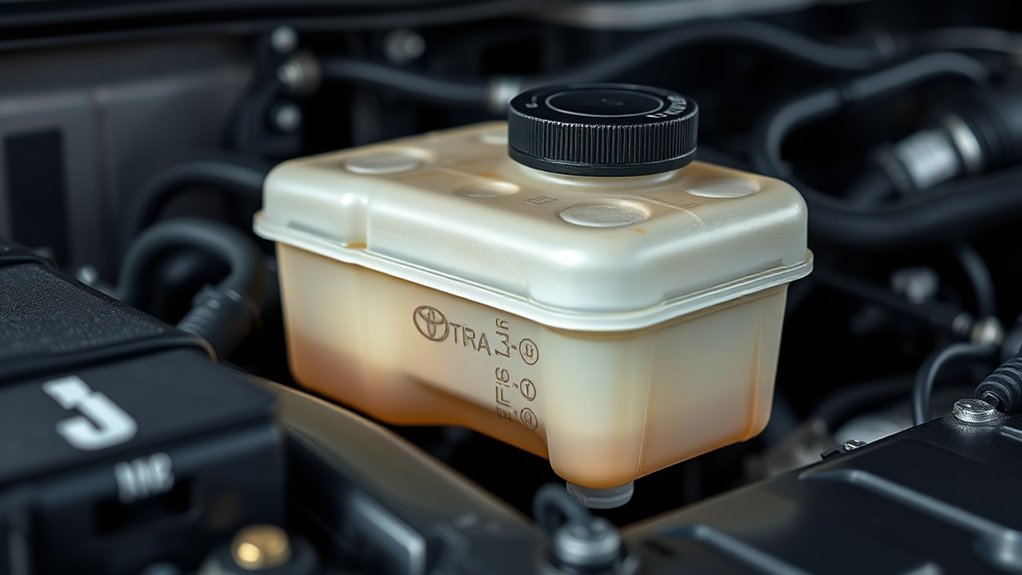
On the 2015 Toyota Tundra, the engine coolant reservoir is the translucent plastic tank in the engine bay marked for coolant. The exact view can vary by engine, trim, and how you are standing at the truck, so identify it by the cap, the translucent tank, and the LOW/FULL marks instead of relying only on left-side or right-side wording.
[Products Worth Considering]

These TPE door anti‑kick pads provide durable, water‑resistant protection for Toyota Tundra doors from 2022 to 2026. They fit precisely, are easy to install with double‑sided tape, and can be cleaned simply with water. The pads guard against scuffs and impacts while preserving the door's appearance and smooth operation.

Protect your vehicle's door handles and bowls with high-quality, reflective, self‑adhesive stickers that resist scratches, water, heat and fading. The subtle reflective glow improves night‑time visibility, enhancing safety while adding a sleek, luxurious look. Easy to install and durable, they fit most cars, trucks, SUVs and RVs.
Locate the Coolant Reservoir
Open the hood and use the engine maintenance layout in your owner’s materials if needed. The reservoir is designed so you can read the fluid level from outside the tank without opening the cooling system. Use a flashlight if the plastic is cloudy or the lighting is poor.
Identify the Fill Line Marks
Read the molded marks on the side of the reservoir. When the engine is cold, the coolant should sit between LOW and FULL. If the level is below LOW, top it off only after checking for visible leaks. If the reservoir is empty, do not assume a simple top-off is enough; inspect the truck and consider professional diagnosis.
Avoid Overfilling the Reservoir
Coolant expands as it heats. Filling above the FULL mark when cold can push coolant out of the overflow path after the engine warms up. Add small amounts, pause to let the level settle, and stop at FULL.
Inspect Coolant: Color, Odor, and Surface Signs
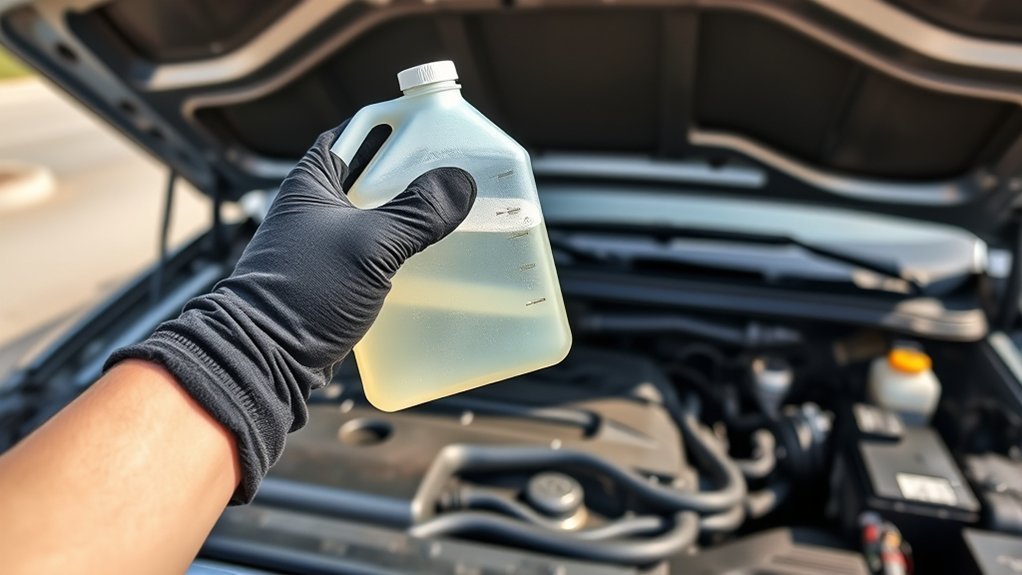
Before adding fluid, inspect the coolant you can see in the reservoir. Healthy Toyota Super Long Life Coolant is commonly pink or red in appearance, but color alone is not the specification. The label and owner’s manual matter more than the shade in the bottle.
| What You See or Smell | What It May Mean | What to Do |
|---|---|---|
| Clear pink/red coolant | Likely normal if level is stable | Top off only if low |
| Brown, rusty, cloudy, or sludgy coolant | Age, contamination, corrosion, or mixed coolant types | Schedule a coolant service and inspection |
| Oily sheen or milky residue | Possible oil/coolant contamination | Stop topping off and get a diagnosis |
| Sweet smell, steam, or hot coolant odor | Possible leak or overheating | Let the truck cool and inspect before driving farther |
How to Remove the Radiator/Reservoir Cap Safely
For a routine level top-off, remove only the coolant reservoir cap and only when the engine is cold. Do not remove the radiator cap on a hot engine. If a service procedure requires opening the radiator cap, wait until the engine is fully cold, cover the cap with a thick rag, turn slowly to the first stop to relieve any remaining pressure, then remove it carefully.
Inspect the cap and surrounding area for cracks, damaged seals, crusty coolant residue, or wet spots. A bad cap can let pressure escape and may cause repeated coolant loss. If you see damaged parts, replace them with parts that match the truck’s specifications.
Refill the Overflow Tank: Choosing and Mixing Coolant
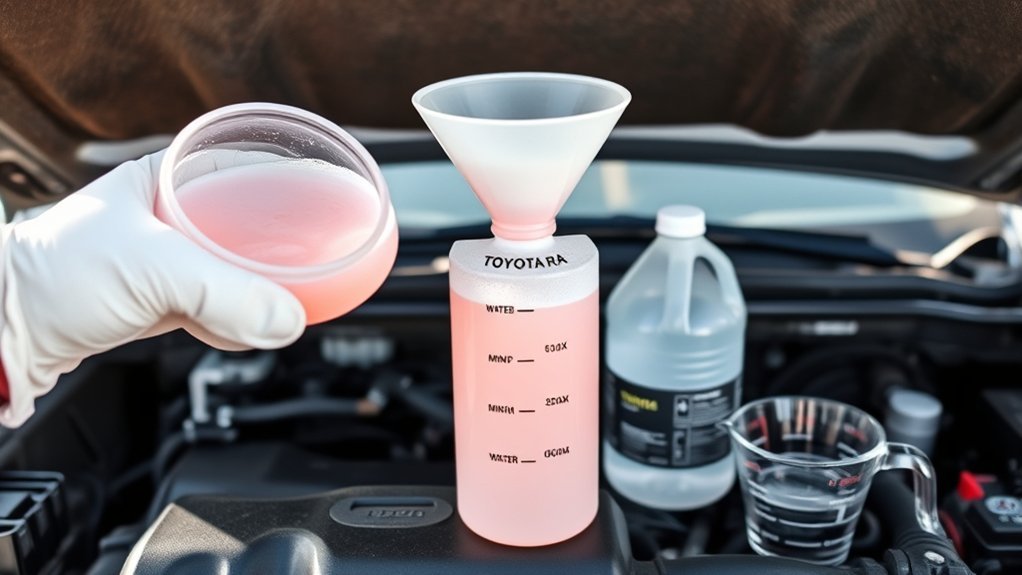
Use Toyota Super Long Life Coolant or a high-quality compatible coolant approved for your Tundra. Toyota’s official coolant guidance also points owners back to the coolant recommended in the vehicle owner’s manual, so check the label and the manual before mixing products.
If you buy premixed Toyota Super Long Life Coolant, do not add water. If you buy concentrate, mix it only as the coolant label and owner’s manual specify, using distilled or deionized water. Never use plain water alone except in a true roadside emergency, because it does not provide the needed corrosion, freeze, and boiling protection.
Pro Tip: Keep a small notebook or phone note with the date, mileage, coolant added, and how much you used. If the level drops again soon, that record helps confirm a leak pattern.
How to Bleed Air and Check the Engine After Refilling
A small reservoir top-off usually does not require a full bleeding procedure. Still, after adding coolant, you should run the engine and recheck the level after the truck cools. Air pockets can cause gurgling, unstable heater output, or temperature spikes.
- Secure the reservoir cap.
- Start the engine and set the heater to warm with the fan on low or medium.
- Watch the temperature gauge. Shut the engine off if the gauge climbs unusually high.
- Look under the truck and around visible hoses for leaks while the engine runs.
- Shut the engine off and let it cool completely.
- Recheck the reservoir. Add coolant to FULL only if the cold level has dropped below the mark.
If you drained the system, replaced parts, or the reservoir was empty, use the correct service-manual bleeding process or have a Toyota technician perform the service. A full cooling-system refill is more involved than a simple top-off.
Spot Leaks and Signs of Head Gasket Failure
Coolant loss is not normal if it keeps happening. After topping off, inspect the truck over the next few drives. A small drop immediately after a top-off can happen as air settles, but repeated drops mean the system needs attention.
Oil in Coolant
An oily film, milky residue, or chocolate-colored sludge in the reservoir can point to oil and coolant mixing. A head gasket is one possible cause, but oil cooler or other internal issues can also contaminate coolant. Do not keep driving and topping off if you see this; schedule a pressure test, combustion leak test, or professional diagnosis.
White Exhaust Smoke
Heavy white exhaust smoke that continues after warm-up, especially with a sweet smell and coolant loss, can indicate coolant entering the combustion chamber. Shut the truck down if it overheats, and avoid driving it until the problem is diagnosed.
External Coolant Leaks
Look for puddles, wet hoses, crusty pink or white residue, damp radiator seams, a leaking water pump, or stains near the reservoir cap. If the coolant level drops soon after replenishing, Toyota’s manual guidance is to visually check the radiator, hoses, engine coolant reservoir cap, drain cock, and water pump, then have the system tested if no leak is found.
| Symptom | Likely Concern | Immediate Action |
|---|---|---|
| Coolant puddle under truck | External leak | Do not drive far; inspect hoses, radiator, pump, and reservoir |
| Temperature gauge rising | Low coolant, airflow issue, thermostat issue, or leak | Pull over safely, shut down, and let the engine cool |
| Milky or oily coolant | Possible internal contamination | Get a professional diagnosis before driving |
| Repeated low reservoir | Slow leak or trapped air after service | Track level and schedule a pressure test |
Coolant Maintenance Checklist and When to See a Mechanic
- Check reservoir level monthly and before long trips.
- Inspect coolant color and surface condition every time you check the level.
- Use only the correct coolant type and avoid mixing unknown formulas.
- Clean spills immediately with water and keep pets away from the area.
- Record coolant additions by date and mileage.
- Schedule service if coolant is dirty, oily, rusty, low again after topping off, or if the truck overheats.
See a mechanic if you find persistent level drops, overheating, white exhaust smoke, coolant in the oil, oil in the coolant, or visible leaks you cannot repair confidently. Those signs can lead to engine damage if ignored.
Frequently Asked Questions
What kind of coolant does a Toyota Tundra take?
A 2015 Toyota Tundra should use Toyota Super Long Life Coolant or a compatible high-quality ethylene-glycol coolant approved for Toyota cooling systems. Check the owner’s manual and coolant label before mixing products, and do not rely on color alone.
How often should you change the coolant in a Toyota Tundra?
Follow the 2015 Tundra Warranty & Maintenance Guide and your service history. Toyota Super Long Life Coolant is an extended-drain coolant, so do not default to older green-coolant rules such as every 30,000 miles. If the coolant is original, unknown, contaminated, or the truck is past its service interval, schedule a drain-and-fill or full cooling-system service.
Is it safe to drive with low coolant in my Toyota?
No. Low coolant can cause overheating and engine damage. If the temperature gauge rises, steam appears, or you smell hot coolant, pull over safely, shut off the engine, and let it cool before inspecting the reservoir.
Can I add water instead of coolant?
Use water only as a short-term emergency measure if no correct coolant is available and you need to prevent immediate overheating. Replace the emergency mix with the correct coolant mixture as soon as possible because plain water does not provide proper corrosion, freeze, and boiling protection.
Why does my coolant level keep dropping after I top it off?
A repeated drop usually means a leak, trapped air after service, a bad cap, a water pump issue, radiator damage, hose seepage, or internal engine contamination. Inspect for wet spots or crusty residue and have the cooling system pressure-tested if you cannot find the leak.
Conclusion
You can check and add coolant to a Toyota Tundra at home if the engine is cold, the truck is level, and you use the correct coolant. Keep the level between LOW and FULL, avoid overfilling, clean spills quickly, and never open the radiator cap hot. If the coolant is dirty, oily, low again soon, or the truck overheats, stop treating it as a routine top-off and get the cooling system inspected.
Sources
- Toyota Owners Manuals & Warranties: 2015 Tundra — official owner manual and maintenance guide access point.
- 2015 Toyota Tundra Quick Reference Guide — engine maintenance layout showing the engine coolant reservoir.
- Toyota Genuine Super Long Life Coolant — Toyota coolant product reference.
- Toyota: How Often to Change Engine Coolant — coolant function, coolant type, and general interval guidance.
- U.S. EPA: How Do I Dispose of Used Antifreeze? — antifreeze toxicity and disposal considerations.