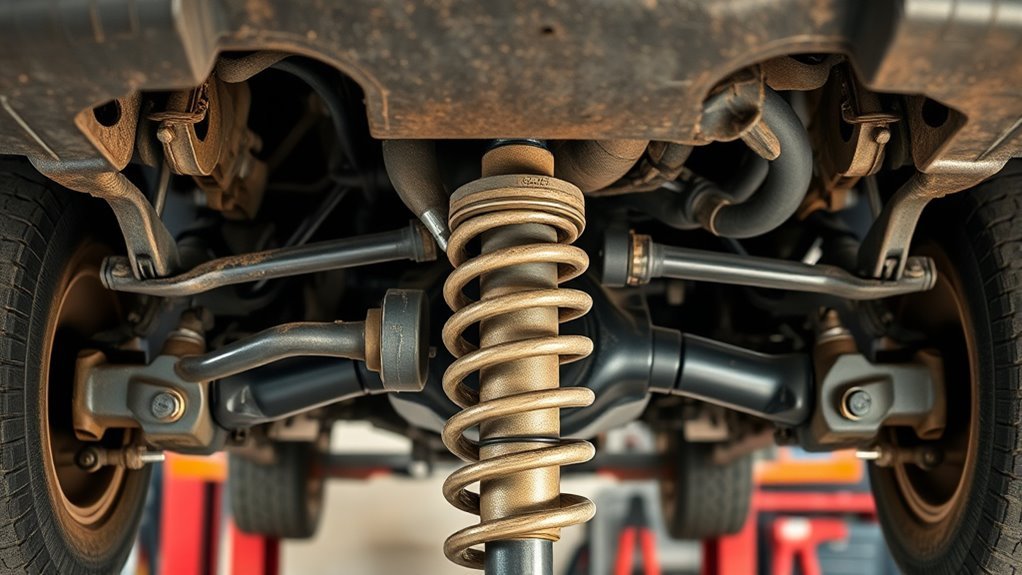
A worn Toyota Tundra suspension usually shows up as uneven tire wear, clunks over bumps, extra bouncing, steering wander, nose-diving while braking, or a rear end that sags under normal load. The exact checks depend on your model year: 2000–2021 Tundras use rear leaf springs, while 2022 and newer Tundras use a coil-spring multi-link rear suspension. Start with a safe visual inspection, confirm the symptom with a road test only if the truck still feels controllable, then prioritize loose joints, leaking shocks, damaged springs, and alignment-related wear before comfort upgrades.
Quick Answer
A Tundra suspension likely needs service if you see cupped or uneven tire wear, hear clunks or squeaks, feel steering wander, notice excessive bounce after bumps, or see leaking shocks, torn boots, loose ball joints, cracked bushings, sagging leaf springs, or damaged rear coils.
Key Takeaways
- Do not call the front suspension “MacPherson struts.” Tundras use front coil-over shock assemblies with double-wishbone suspension geometry.
- Check the rear suspension by generation: 2000–2021 models have leaf springs, while 2022+ models have a coil-spring multi-link rear setup, with air suspension and AVS available on some trims.
- Loose ball joints, damaged control-arm bushings, bad tie rods, broken springs, and severe shock leaks are safety-critical repairs, not comfort upgrades.
- After replacing suspension or steering parts, torque hardware to the correct Toyota service specification and get an alignment.
At a Glance
| Time Required | 30–60 minutes for a careful visual inspection; longer if wheels are removed |
| Difficulty | Moderate; advanced if checking loaded ball-joint play or replacing parts |
| Tools Needed | Flashlight, gloves, tire-pressure gauge, wheel chocks, floor jack, jack stands, pry bar, torque wrench, and Toyota service information for your exact model year |
| Cost | DIY inspection is usually free if you already own the tools; repair cost varies by model year, trim, parts quality, and labor rates |
Quick Signs Your Suspension Needs Service
Wondering whether your Tundra’s suspension needs service? Start with the signs you can feel, hear, and see. Uneven tire wear, especially inner-edge wear, outer-edge wear, feathering, or cupping, can point to alignment problems, weak damping, worn bushings, loose ball joints, or tire-pressure issues. The National Highway Traffic Safety Administration recommends regular tire checks for inflation, treadwear, damage, rotation, balancing, and alignment because tire condition is a major safety factor.
On the road, watch for extra bouncing after bumps, a floaty feeling at highway speed, rear-end sway while towing or hauling, nose-diving during braking, or a steering wheel that no longer returns cleanly to center. Listen for clunks over driveways and potholes, squeaks during low-speed turns, popping when backing out of a parking space, or rattles from the sway bar area.
Warning: Do not keep driving if the truck has severe steering looseness, a loud metal-on-metal clunk, visible ball-joint separation, a broken spring, a wheel that shifts in the wheel well, or a sudden pull after hitting a curb or pothole. Have it inspected before the next trip.
Know Your Tundra Suspension Generation Before You Inspect
The most important update to this checklist is model-year accuracy. A 2007 Tundra and a 2024 Tundra do not use the same rear suspension design.
| Model years | Front suspension | Rear suspension | Inspection focus |
|---|---|---|---|
| 2000–2021 | Independent double-wishbone with coil-over shocks | Live axle with multi-leaf springs | Control arms, ball joints, shocks, sway links, leaf-spring packs, shackles, U-bolts, and axle-side mounts |
| 2022 and newer | Newer double-wishbone design with front coil-over shocks | Coil-spring multi-link rear suspension; some trims offer rear air suspension or Adaptive Variable Suspension | Control arms, ball joints, shocks, rear coils, rear links, track/lateral control components, air springs if equipped, and sensor wiring |
Toyota’s 2021 Tundra brochure lists double-wishbone front suspension and a live axle with multi-leaf rear suspension. Toyota’s 2022 Tundra launch information says the redesigned truck moved to a multi-link rear suspension that replaces leaf springs with coil springs, while also using a newly developed double-wishbone front suspension.
Suspension Parts That Wear First on a Tundra
After spotting signs like uneven tire wear or clunking, check the parts that directly affect alignment, damping, and steering control. Heavy payloads, rough roads, oversized tires, towing, off-road use, and lift kits can all shorten service life.
- Front coil-over shocks: Look for wet oil trails, damaged dust boots, dented bodies, worn mounts, and weak rebound control.
- Upper and lower control-arm bushings: Check for cracking, separation, metal-to-metal contact, or arm movement under braking.
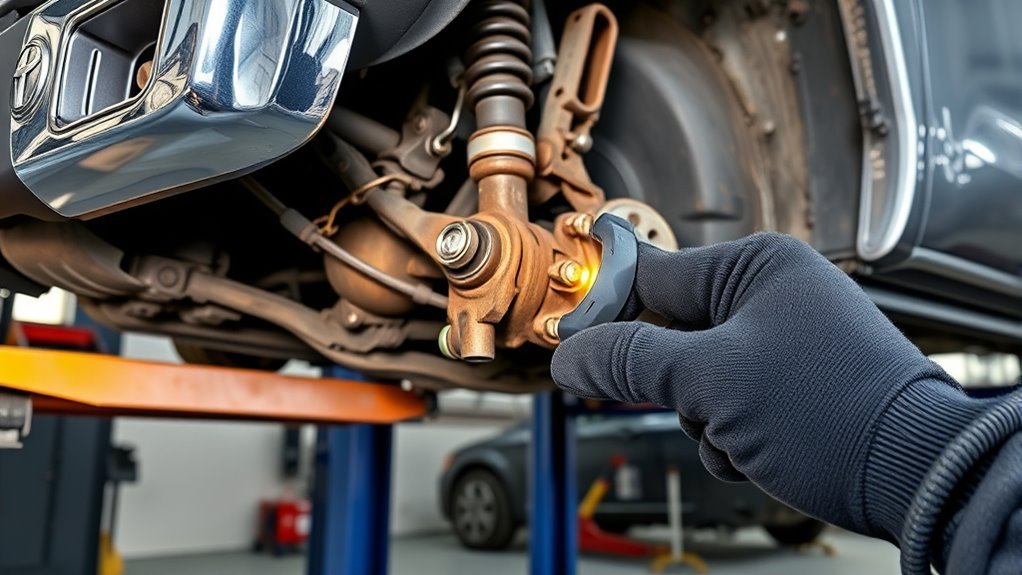
- Ball joints: Inspect for torn boots, rust powder, grease loss, vertical play, rotational looseness, or popping noises.
- Tie rods and steering rack boots: Look for wheel play, torn boots, leaking grease, or steering looseness.
- Sway bar links and bushings: Check for play, split rubber, missing hardware, and clunks over small bumps.
- CV boots on 4WD models: Look for cracks, grease sling, clicking under acceleration while turning, or boot stretch after a lift.
- Rear shocks and mounts: Check for leaks, loose bushings, cracked mounts, and poor rebound control.
- Rear springs and links: Check leaf packs on 2000–2021 trucks; check rear coils, links, and air-suspension parts on 2022+ trucks.
Note: A light film of dust on a shock is not the same as a failed shock. Treat wet oil running down the shock body, repeated bouncing, tire cupping, or poor control as stronger evidence of shock failure.
Safe Tundra Suspension Inspection Steps
Use this order so you do not chase symptoms blindly. If you are not comfortable lifting a full-size truck, have a qualified technician inspect it.
- Park safely: Use level ground, set the parking brake, place the transmission in Park, and chock the wheels that stay on the ground.
- Check tires first: Set cold tire pressure to the door-label specification, then inspect tread depth, cupping, feathering, inner-edge wear, outer-edge wear, and sidewall damage.
- Do a low-speed listening check: If the truck feels safe to drive, listen over small bumps, while turning into a driveway, and during light braking. Stop if steering feels loose or unstable.
- Inspect without lifting: Look under the truck with a flashlight for leaking shocks, torn boots, cracked bushings, shiny metal contact points, sagging ride height, broken spring parts, or missing hardware.
- Lift only with proper support: Use the correct Toyota lift points, support the truck with jack stands, and never work under a vehicle held only by a jack.
- Check wheel play: Rock the tire at 12 and 6 o’clock and at 3 and 9 o’clock. Any obvious clunk, movement, or looseness needs closer diagnosis before parts are ordered.
- Use a pry bar carefully: Lightly load control arms, sway links, and bushings to check for separation or movement. Do not force parts hard enough to damage boots or mounts.
- Document findings: Note which side is noisy, which tire is wearing, where the leak is, and whether the issue changes under braking, turning, towing, or load.
Pro Tip: Diagnose in pairs. If the right-front tire is cupped and the right-front shock is leaking, the shock is a likely suspect. If both front tires are feathered, alignment, toe settings, tie rods, or control-arm bushings may be more likely than one failed shock.
Front End: Coil-Over Shocks, Ball Joints & Bushings
Start with the front coil-over shock assemblies, upper and lower control arms, ball joints, tie rods, and sway bar links. These parts control steering geometry, tire contact, braking stability, and bump control.
Front Shock Checks
Look for oil leaking down the shock body, damaged lower mounts, cracked upper mounts, torn dust boots, bent shafts, or uneven ride height. A simple bounce test can help, but it is not perfect on a heavy pickup. If the front end keeps bouncing after a firm push, dives sharply during braking, or feels floaty after a dip in the road, the shocks need closer inspection.
Ball Joint Checks
Inspect ball-joint boots first. A torn boot lets dirt and water into the joint, which can accelerate wear. With the truck safely supported, check for vertical or side-to-side play using the method recommended for your model year in Toyota service information. Worn ball joints can create clunks, steering looseness, wandering, and uneven tire wear.
Control Arm and Bushing Checks
Check upper and lower control-arm bushings for cracking, swelling, separation, or metal sleeve movement. A bad bushing can shift alignment under braking or cornering, even if the alignment looks acceptable on a rack while the truck is sitting still.
Tie Rod, Sway Bar and CV Boot Checks
Rock the front tire at 3 and 9 o’clock and watch the inner and outer tie rods. Any delay, knocking, or visible looseness should be diagnosed before alignment. For sway bar links, listen for light clunks over small bumps and look for split bushings or loose link ends. On 4WD models, inspect CV boots for cracks, grease sling, and stretching, especially if the truck has been lifted.
Rear Suspension: Shocks, Springs & Sway Bar Wear
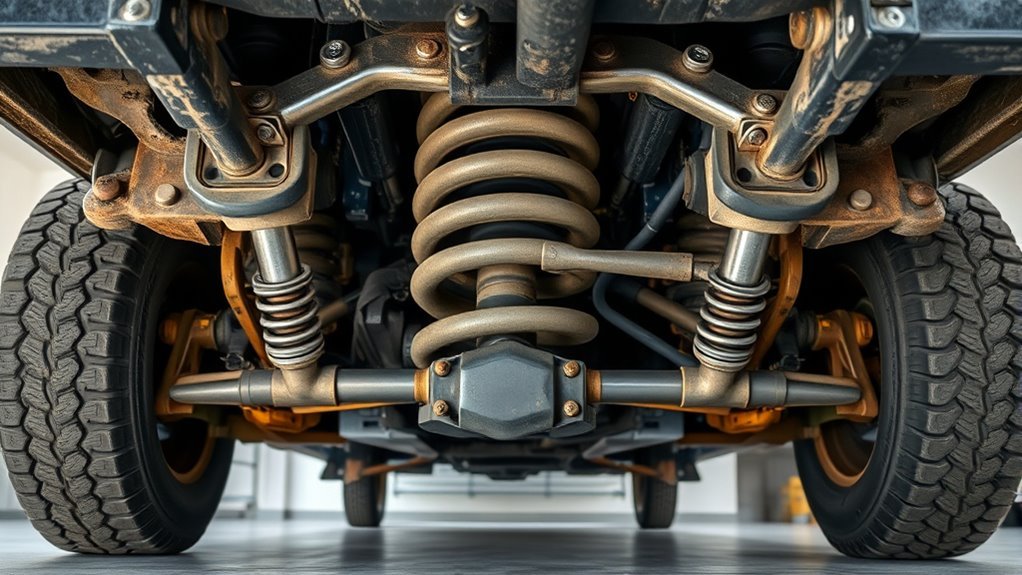
Once you have checked the front suspension, move rearward to inspect rear shocks, springs, mounts, sway bar attachments, and axle-control parts. The rear suspension carries payload, controls towing stability, and helps keep the truck settled over bumps.
Rear Checks for 2000–2021 Leaf-Spring Tundras
- Check leaf-spring packs for cracked leaves, shifted leaves, missing clips, rust jacking, and sagging ride height.
- Inspect shackles, hangers, bushings, and U-bolts for looseness, rust damage, or movement marks.
- Look for leaking rear shocks, worn shock bushings, dented shock bodies, or loose mounts.
- Check the bump stops and axle contact points for signs the truck is frequently bottoming out.
- Compare left and right ride height with the truck unloaded and parked on level ground.
Rear Checks for 2022+ Coil-Spring Tundras
- Inspect rear coil springs for cracks, broken ends, uneven ride height, and displaced isolators.
- Check multi-link rear arms and bushings for cracks, separation, loose hardware, or shiny movement marks.
- Inspect rear shocks for leaks, damaged boots, worn bushings, or dented bodies.
- If equipped with rear air suspension, look for air-spring cracks, uneven height, compressor cycling, warning messages, and damaged height-sensor links.
- If equipped with Adaptive Variable Suspension, do not ignore warning lights, damaged wiring, or fluid leaks around the shock body.
Worn rear shocks often show up as bounce, rear-end hop, trailer sway, poor control over washboard roads, or tire cupping. Spring problems show up more as ride-height loss, uneven stance, bottoming, or load-control issues.
Tire Wear Patterns and What They Mean
Tire wear is one of the easiest ways to spot a suspension or alignment issue early, but one wear pattern can have more than one cause.
| Wear pattern | Common causes to check |
|---|---|
| Inner-edge wear | Toe/camber alignment, worn control-arm bushings, ball-joint play, ride-height changes, or lift-kit geometry |
| Outer-edge wear | Underinflation, alignment, hard cornering, worn steering parts, or overloaded driving |
| Cupping or scalloping | Weak shocks, imbalance, worn suspension parts, or neglected rotation |
| Feathered tread | Toe alignment, tie-rod wear, or bushing movement |
| One tire wearing faster | Localized shock, ball-joint, bearing, brake, alignment, or tire-pressure issue |
Prioritize Repairs: Safety, Ride Quality & Trip-Readiness
Because suspension faults affect handling, braking stability, tire wear, and towing control, fix safety-critical items before comfort upgrades. Use the table below to triage what to repair first.
| Priority | Fix immediately if you find | Why it matters |
|---|---|---|
| High | Loose ball joints, loose tie rods, cracked control arms, severe bushing separation, broken springs, loose mounts, or wheel movement | These can affect steering control, wheel position, and safe braking. |
| High | Shock leaking heavily, shock mount broken, rear air suspension sagging, or truck bottoming under normal load | Loss of damping or ride height can reduce tire contact and towing stability. |
| Medium | Cupped tires, mild shock seepage, cracked but intact bushings, noisy sway links, or uneven ride height | These can become expensive if ignored and can shorten tire life. |
| Lower | Comfort upgrades, towing upgrades, or off-road shock upgrades with no failed part | Useful upgrades, but they should wait until safety and alignment issues are fixed. |
Set your inspection frequency based on use. A Tundra that tows, hauls, runs oversized tires, drives off-road, or spends time on rough roads should be inspected more often than a lightly used commuter. Check tires and visible suspension parts at oil changes, after hard impacts, before long towing trips, and any time the truck develops a new noise or handling change.
After Repairs: Alignment, Torque & Road Test
Suspension work is not finished when the new part is bolted on. Use Toyota repair information and service publications for the correct procedure and torque specifications for your exact model year, drivetrain, trim, and suspension package.
- Torque correctly: Use a torque wrench and follow the service manual. Many suspension fasteners must be tightened at normal ride height, not with the suspension hanging.
- Replace related hardware when required: Some fasteners, cotter pins, nuts, clips, and one-time-use parts should not be reused if the service procedure says to replace them.
- Align the truck: Get an alignment after replacing control arms, ball joints, tie rods, ride-height parts, or anything that changes steering or suspension geometry.
- Road test carefully: Start at low speed, listen for noises, confirm steering return, then check braking stability and highway tracking.
- Recheck the work: After a short drive, look for fluid leaks, loose hardware, shifted bushings, or new noises.
Note: Be careful with lift kits and major ride-height changes on 2022+ Tundras. Toyota says its TRD 3-inch lift kit was developed to retain Toyota Safety Sense functionality, which is a reminder that suspension geometry can affect camera, radar, alignment, and stability-system performance.
Frequently Asked Questions
How often should Tundra shocks be replaced?
There is no single mileage that fits every Tundra. Inspect shocks regularly, especially once the truck has higher mileage or sees towing, hauling, off-road use, rough roads, or oversized tires. Replace shocks when they leak, lose damping, cause repeated bouncing, contribute to tire cupping, or make the truck unstable.
How do you check Tundra ball joints?
Park on level ground, chock the wheels, lift and support the truck correctly, then inspect the ball-joint boots for tears, grease loss, rust powder, and looseness. Rock the wheel and use the service-manual procedure for your model year to check loaded and unloaded play. If you feel clunking or see movement at the joint, do not ignore it.
Are 2022 and newer Tundras still leaf-spring trucks?
No. Toyota changed the Tundra rear suspension for the 2022 redesign. Older 2000–2021 Tundras use rear leaf springs, while 2022 and newer Tundras use a coil-spring multi-link rear suspension. Some newer trims may also have rear air suspension or Adaptive Variable Suspension.
Do I need an alignment after replacing Tundra suspension parts?
Yes, get an alignment after replacing control arms, ball joints, tie rods, ride-height parts, springs, or any part that affects suspension geometry. Alignment is also smart after curb hits, pothole impacts, lift-kit installation, or unexplained uneven tire wear.
Can I drive my Tundra with a suspension clunk?
A small sway-bar-link noise may not be as urgent as a loose ball joint, but you should not guess. If the clunk is loud, metallic, new after an impact, paired with steering looseness, or paired with uneven ride height, stop driving and inspect it before the next trip.
What causes uneven tire wear on a Tundra?
Common causes include incorrect tire pressure, skipped rotation, wheel imbalance, alignment problems, weak shocks, worn ball joints, loose tie rods, damaged control-arm bushings, overloaded driving, or ride-height changes. Use the tire-wear pattern as a clue, then confirm the cause with a suspension and alignment inspection.
Conclusion
By now you know the common Tundra suspension wear points and the quick signs to watch for: uneven tire wear, clunks, excess bounce, steering wander, sagging ride height, and leaking shocks. The key is to inspect the right parts for your model year. Older Tundras need leaf-spring checks in the rear, while 2022+ trucks need coil-spring, multi-link, air-suspension, and AVS-aware checks where equipped. Prioritize loose joints, damaged bushings, broken springs, leaking shocks, and alignment problems first. A careful inspection, correct torque procedure, and proper alignment will keep your truck safer, steadier, and ready for the next trip.
Sources
- Toyota USA Newsroom: All-New 2022 Toyota Tundra — backs up the 2022+ double-wishbone front suspension, coil-spring multi-link rear suspension, available air suspension, AVS, and shock-package details.
- Toyota 2021 Tundra eBrochure — backs up 2000–2021-era double-wishbone front suspension and rear multi-leaf suspension details for the 2021 model.
- Toyota Support: Toyota repair information and publications — backs up using Toyota service information for repair manuals, service bulletins, and model-specific procedures.
- NHTSA TireWise — backs up tire-pressure, treadwear, tire-damage, rotation, balancing, and alignment maintenance guidance.
- Toyota USA Newsroom: Tundra TRD 3-inch Lift Kit — backs up the caution that lift-kit design can affect Toyota Safety Sense compatibility and suspension geometry.