For motorcycle tires, the recommended PSI typically ranges from 29-36 for the front and 36-42 for the rear. It’s essential to check the manufacturer’s specifications found in your owner’s manual for accurate pressures, as this can vary by model. Remember to adjust your tire pressure based on rider weight and load, as these factors can affect performance and safety. To guarantee peak handling and longevity, explore more about maintaining tire pressure effectively.
How to Determine and Adjust Tire Pressure for Motorcycles
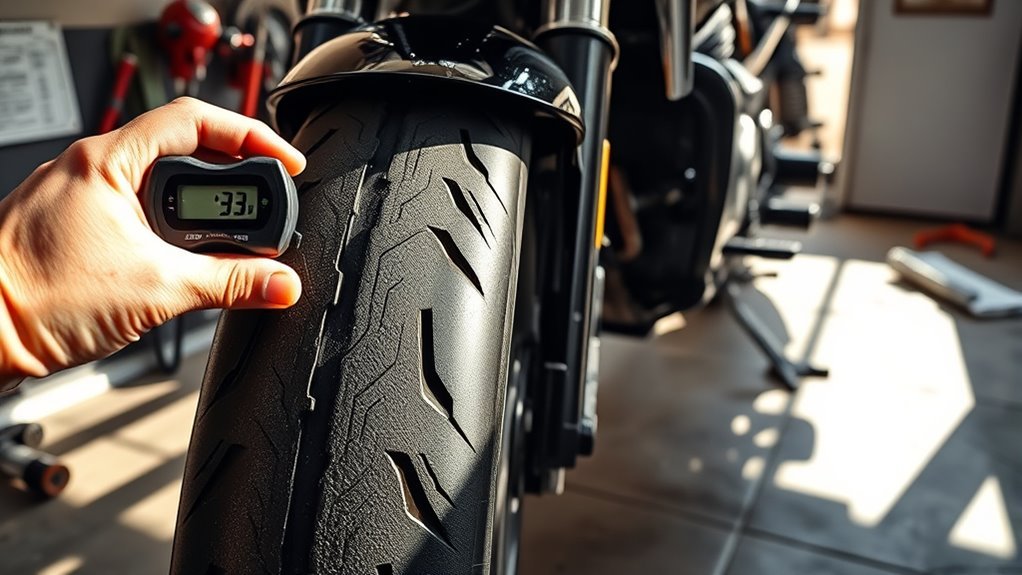
How do you guarantee your motorcycle tires are properly inflated? Start by consulting your owner’s manual or the vehicle placard for the manufacturer’s recommended PSI for both front and rear tires. Remember to check tire pressure when the tires are cold—ideally, they shouldn’t have been ridden for at least three hours. Use a reliable tire pressure gauge, either digital or high-quality analog, to measure the PSI accurately. If you’re carrying extra weight, adjust tire pressure accordingly to promote peak performance. Regularly inspect your tires for signs of uneven wear or damage while checking the pressure, as these issues can indicate your tires aren’t properly inflated. Keep your motorcycle’s tire sidewall in mind for any specific instructions.
The Impact of Rider Weight on Tire Pressure Adjustments
Maintaining the correct tire pressure is essential for ideal motorcycle performance, and rider weight plays a considerable role in these adjustments. Heavier riders often need to increase tire pressure by 1-2 PSI for every additional 10-15 pounds over the manufacturer’s recommended baseline. This adjustment guarantees proper tire contact with the road, enhancing traction and handling characteristics. Always refer to the owner’s manual, as it provides manufacturer specifications that consider average rider weight and load conditions. Regularly monitoring and adjusting tire pressure in response to changes in rider weight or cargo can prevent uneven tire wear and greatly improve safety. Remember, the right tire pressure is critical for a smooth, liberated ride.
Top 5 Common Tire Pressure Mistakes and How to Avoid Them
While many riders understand the importance of proper tire pressure, common mistakes can undermine safety and performance. Here are five pitfalls to avoid:
- Relying solely on the maximum pressure printed on tire sidewalls instead of the manufacturer’s recommended specifications.
- Forgetting to check your motorcycle’s tire pressure when the tires are cold, leading to inflated readings.
- Neglecting to adjust tire pressure based on load; heavier riders or cargo may require higher pressures for safety.
- Believing that lower pressures always enhance grip, risking excessive tire wear and failure.
- Overlooking the need for regularly checking tire pressure at least once a month to guarantee proper inflation.
Avoid these mistakes to enhance your riding experience and maintain control on the road.
The Importance of Front and Rear Tire Pressures
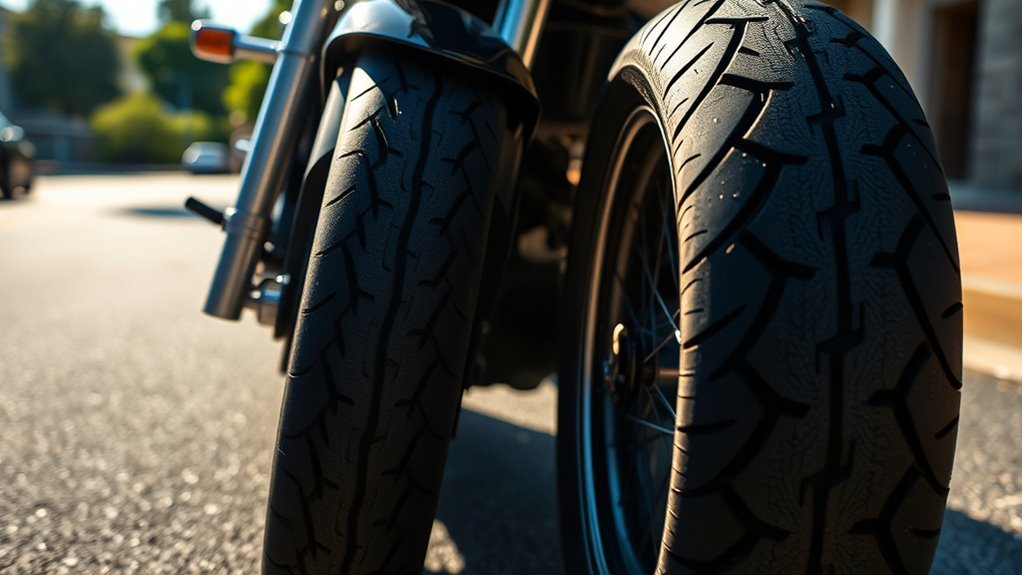
Understanding the importance of both front and rear tire pressures is essential for every motorcycle rider, as these pressures directly impact your bike’s handling, stability, and overall safety. Proper tire pressure not only guarantees peak handling but also affects ride comfort and tire lifespan.
| Tire Type | Recommended PSI (Cold) | Effects of Improper Pressure |
|---|---|---|
| Front Tire | 29 – 36 | Under-inflated leads to poor steering; over-inflated causes harsh ride. |
| Rear Tire | 36 – 42 | Under-inflated compromises traction; over-inflated decreases grip in corners. |
| Regular Checks | N/A | Regularly checking helps maintain peak performance. |
How to Monitor and Maintain Motorcycle Tire Pressure
Monitoring and maintaining your motorcycle tire pressure is essential for safe and enjoyable rides. To guarantee peak performance, follow these steps:
Regularly checking and maintaining your motorcycle tire pressure ensures safety and enhances overall riding performance.
- Check tire pressure at least once a month and before long journeys, using a reliable pressure gauge.
- Adjust tire pressure according to the manufacturer’s recommended levels found in your owner’s manual.
- Inspect tires for damage or uneven wear, which can indicate underlying issues.
Always remember to replace the valve cap after checking tire pressure to maintain tire integrity and prevent air leakage. Monitoring tire pressure not only enhances safety but also improves your motorcycle’s handling and longevity. Stay vigilant and keep your tires in top shape for every ride!
Frequently Asked Questions
Is 40 Psi Too High for a Bike?
Yes, 40 PSI can be too high for your bike. Proper tire pressure is essential for riding safety, tire wear, and motorcycle handling. Always adjust pressure based on ideal inflation, load capacity, and air temperature for best performance.
Is 40 Psi Ok for Bike Tires?
While 40 PSI might seem fine, it can compromise riding stability and tire wear. For ideal inflation, check your owner’s manual, consider temperature effects, and regularly monitor pressure to guarantee safe performance under varying riding conditions.
Is 50 Psi Too High for Bike Tires?
Yes, 50 PSI’s too high for bike tires. It compromises handling performance and motorcycle safety. Follow manufacturer recommendations and inflation guidelines, considering tire types and riding conditions, to prevent excessive tire wear and guarantee ideal pressure maintenance.
Is 35 Psi Too Much for Tires?
No, 35 PSI isn’t too much for tires, but it depends on your riding style, load capacity, and manufacturer guidelines. Monitor tire pressure regularly, considering temperature and weather, to guarantee peak handling performance and safety.
Conclusion
In summary, maintaining the right tire pressure for your motorcycle is essential for safety and performance. By adjusting for rider weight, avoiding common mistakes, and monitoring pressure regularly, you guarantee a smoother ride and better handling. Remember, the front tire supports your control, while the rear tire provides stability. Prioritize your motorcycle’s tire health, and you’ll enjoy enhanced safety, improved efficiency, and an unforgettable riding experience. Keep your tires in check, and ride with confidence.