The recommended PSI for truck tires varies by type: light pickups need 35-45 PSI, medium-duty trucks require 70-95 PSI, while semi-trucks demand 100-130 PSI for front tires and 85-120 PSI for the rear. Always adjust pressure based on load and changing weather conditions, as improper inflation can lead to handling issues and increased wear. Regular monitoring is key to safety and performance. You’ve got a lot more to learn about keeping your tires in top shape!
What’s the Right PSI for Your Truck Tires?
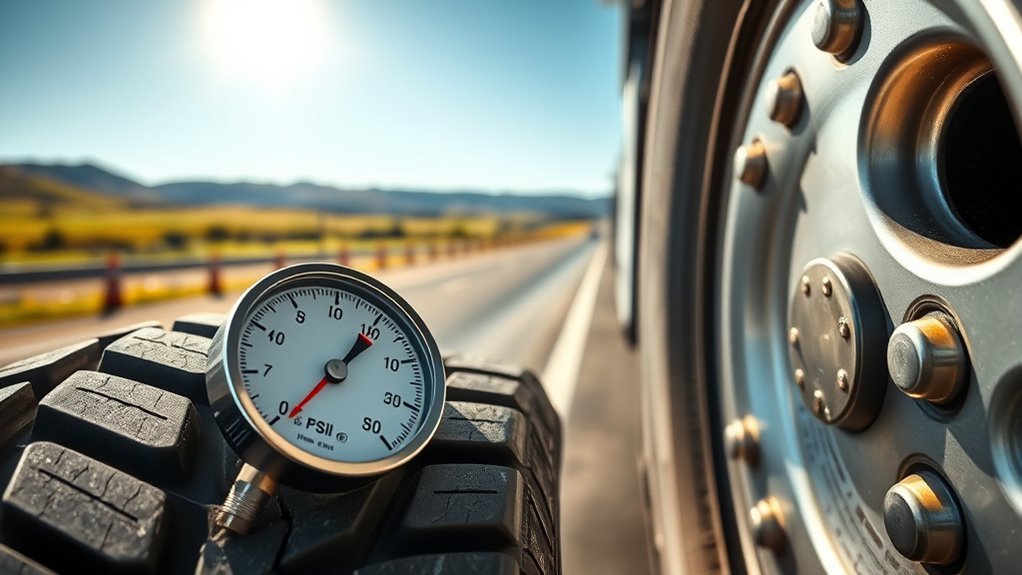
What’s the right PSI for your truck tires? Finding the ideal tire pressure isn’t just about comfort; it’s vital for safety and performance. For light pickup trucks, the recommended PSI typically ranges from 35 to 45, while medium-duty delivery trucks should sit between 70 to 95 PSI. If you drive a semi-truck, front tires need 100 to 130 PSI, and rear tires require 85 to 120 PSI, depending on load distribution. Always check the manufacturer’s guidelines for specific recommendations, as they’re designed to enhance your truck’s performance based on its weight and use. Regularly checking your tire pressure is important, as under-inflated tires can lead to increased rolling resistance and even blowouts. Stay liberated on the road by keeping your tires properly inflated.
Consequences of Incorrect Tire Pressure on Truck Performance
Incorrect tire pressure can seriously compromise your truck’s handling and stability, making every turn feel uncertain. When tires are under or over-inflated, you’ll notice increased wear and tear, leading to costly replacements down the road. Keeping your tires at the right PSI is essential for maintaining control and extending their lifespan.
Handling and Stability Issues
When tire pressure isn’t maintained properly, you may experience significant handling and stability issues that can affect your truck’s performance. Under-inflated tires increase rolling resistance, making it harder to control your vehicle, especially under heavy loads. This not only compromises fuel efficiency but also heightens the risk of accidents. On the flip side, over-inflated tires can lead to uneven wear, primarily in the center of the tread, which compromises traction and can cause blowouts. Proper tire pressure is critical for peak braking efficiency; any deviation can affect stopping distances. Regularly monitoring your tire pressure is essential to avoid these issues, ensuring safer journeys and improved overall performance in your trucking endeavors.
Increased Wear and Tear
Maintaining the right tire pressure is crucial, as failing to do so can lead to significant wear and tear on your truck’s tires. Underinflated tires wear unevenly, especially along the edges, while over-inflated tires suffer excessive center wear. This uneven wear not only shortens tire life but also compromises your truck’s overall performance. Underinflated tires create increased rolling resistance, driving up fuel consumption and decreasing efficiency. Furthermore, over-inflation can result in a harsh ride, impairing traction and stability during high-speed maneuvers. To guarantee your safety and prolong the lifespan of your tires, it’s important to regularly check your tire pressure. A small effort can save you from costly replacements and enhance your truck’s performance on the road.
How Load and Weather Affect Tire Pressure
Understanding how load and weather affect tire pressure is essential for ensuring your truck’s performance and safety. Load weight considerably impacts tire pressure; heavier loads often require higher PSI to maintain proper tire performance and prevent premature wear. Temperature changes play an important role, as tire pressure drops about 1 PSI for every 10°F decrease. In colder weather, under-inflation can increase rolling resistance and reduce fuel efficiency—key considerations for winter driving. Regular tire checks are crucial, especially since trucks can lose pressure faster under heavy loads and fluctuating conditions. Additionally, ensuring even load distribution across all tires enhances safety and traction, particularly in adverse weather, ultimately liberating you from unnecessary risks on the road.
How to Maintain Optimal Tire Pressure
To maintain ideal tire pressure, check your tires at least once a month and adjust based on your load and driving conditions. Temperature changes can impact pressure, so keep an eye on it, especially before long trips. Using a reliable gauge will help you avoid uneven wear and enhance safety on the road.
Regular Pressure Checks
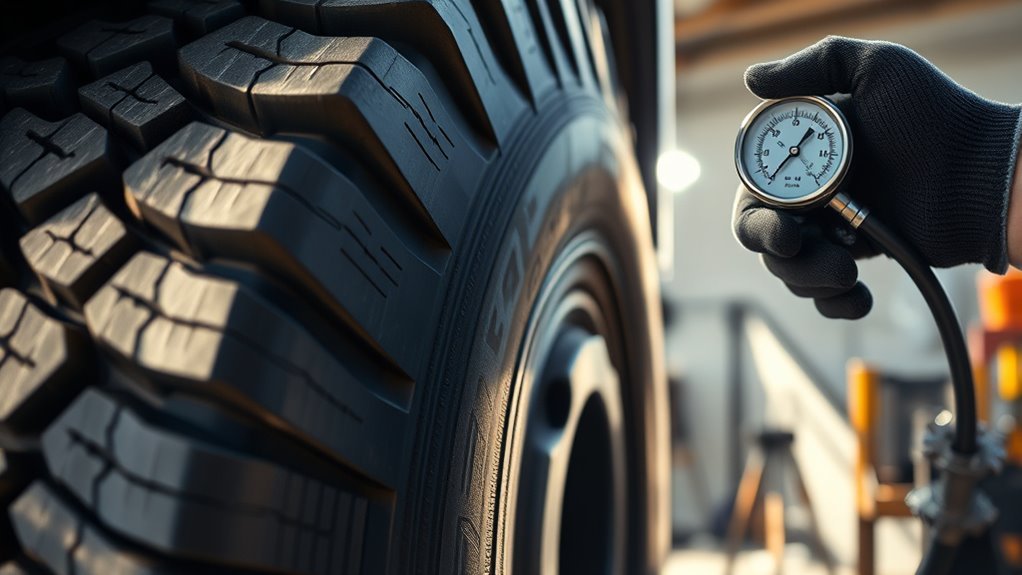
While it may seem easy to overlook, regular pressure checks are vital for the safety and performance of your truck tires. You should check your tire pressure at least once a month and before long trips, as it naturally decreases over time. Use a reliable tire gauge for accurate PSI measurements, and always check the pressure when tires are cold. Adjust tire pressure according to load conditions, increasing it within the manufacturer’s recommendations if you’re carrying heavy cargo. During inspections, monitor tire wear patterns; uneven wear can signal incorrect pressure or alignment issues. Keep a record of these pressure checks to track trends and guarantee compliance with manufacturer recommendations, enhancing your truck’s performance and safety on the road.
Temperature Adjustments Needed
As temperatures fluctuate, keeping your truck tires at ideal pressure becomes essential for safety and performance. Tire pressure can drop by about 1 PSI for every 10°F decrease, so you must make regular temperature adjustments. Always check tire pressure when the tires are cold, preferably before driving, to get accurate readings unaffected by heat. Maintaining suitable tire pressure during colder months prevents uneven wear, improves fuel efficiency, and enhances overall safety. Monitor your tire pressure frequently, especially during seasonal changes, to combat natural pressure loss. Consider using a reliable tire pressure monitoring system (TPMS) for real-time updates, ensuring you’re always aware of your tire’s condition, particularly in extreme temperatures.
Load Weight Considerations
Maintaining ideal tire pressure is essential, especially when considering the load weight of your truck. The correct PSI guarantees safety and performance. Here’s how to adjust for load weight:
- Light Loads (35-45 PSI): Lower PSI for stability when hauling light cargo.
- Heavy Loads (90-120 PSI): Increase pressure to handle heavier cargo safely.
- Regular Inspections: Check tire pressure frequently to avoid uneven wear and blowouts.
- Follow Manufacturer Guidelines: Always adhere to the recommended PSI based on your truck’s specifications.
Tools and Technology for Monitoring Tire Pressure
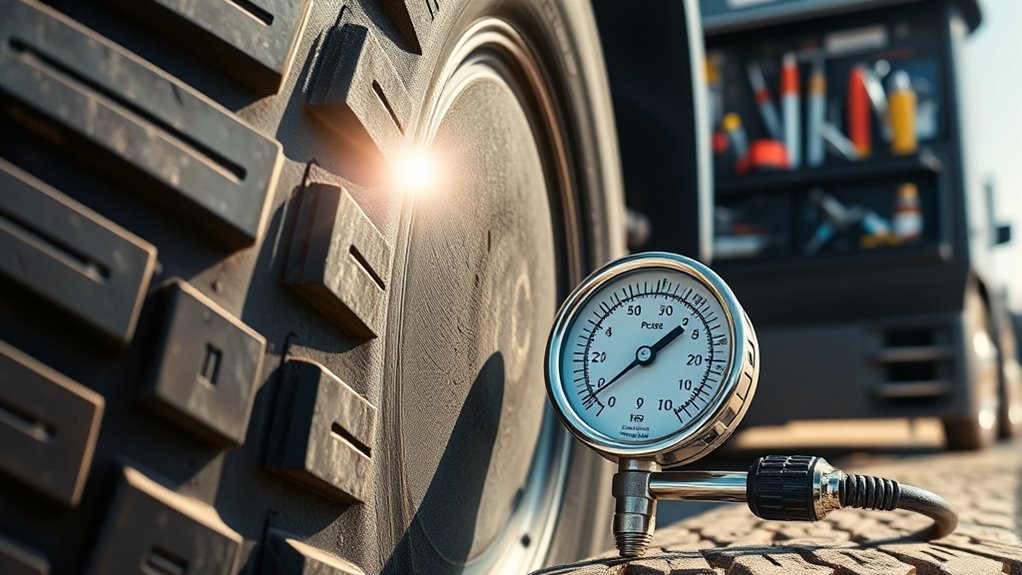
To guarantee peak performance and safety on the road, utilizing the right tools and technology for monitoring tire pressure is essential for truck drivers. Manual tire pressure gauges provide accurate readings, allowing you to check pressure before and after trips. Tire Pressure Monitoring Systems (TPMS) offer real-time updates, helping maintain correct tire inflation during your journey. Automatic tire inflation (ATI) systems can adjust pressure as needed, reducing the need for manual checks. Regularly monitoring tire pressure according to manufacturers’ recommendations enhances vehicle performance and safety.
| Tool/Technology | Benefits |
|---|---|
| Manual Gauges | Accurate spot readings |
| TPMS | Real-time pressure updates |
| Automatic Inflation | Reduces manual check frequency |
Best Practices for Ongoing Tire Maintenance and Safety
Ensuring your truck tires are in top condition goes beyond just checking pressure; it involves a thorough approach to ongoing maintenance and safety. Here are some best practices:
- Check tire pressure monthly or before long trips, ensuring it aligns with the manufacturer’s recommendations.
- Adjust for load: If you’re hauling cargo, remember that increased weight may require a higher PSI to prevent under-inflation.
- Monitor tire condition regularly for signs of uneven wear or damage, which may indicate the need for adjustments.
- Keep records of pressure changes and maintenance activities; it’s important to note how these affect your tires’ performance over time.
Frequently Asked Questions
Is 40 Psi Good Tire Pressure for Trucks?
Yes, 40 PSI can be good for trucks, enhancing tire pressure benefits like fuel efficiency and safety. Keep ideal pressure settings in mind, considering load capacity factors and adjusting seasonally to minimize tire wear implications.
What Psi Should 1500 Truck Tires Be?
For 1500 truck tires, aim for 35 to 45 PSI. Monitor pressure regularly, adjust for tire load, and consider seasonal changes and off-road conditions to prevent uneven wear patterns and guarantee peak performance.
What Psi Should My Tires Be at on My Truck?
Your truck’s tire pressure should match the manufacturer’s recommendations, considering load capacity, seasonal adjustments, and regular safety checks. Maintaining proper pressure reduces tire wear, enhances performance, and guarantees your safety on the road.
What Is the Best PSI for Big Truck Tires?
For big truck tires, ideal inflation usually falls between 90 to 120 PSI, depending on load capacity. Following safety guidelines guarantees proper tire pressure, enhancing your truck’s performance and prolonging tire lifespan. Stay vigilant!
Conclusion
Maintaining the correct PSI for your truck tires is essential not just for safety, but also for performance. Did you know that under-inflated tires can decrease fuel efficiency by up to 3% for every 1 PSI drop? By regularly checking your tire pressure and adjusting based on load and weather, you can boost your truck’s longevity and save on gas. Stay proactive about tire maintenance, and you’ll enjoy a smoother, safer ride every time you hit the road.