Changing the engine oil in a Toyota Camry is a doable DIY job when you use the correct oil, support the car safely, replace the filter and drain plug gasket, and check the dipstick before driving. The specs below focus on the 2018 Toyota Camry because the original article’s 4.8-quart and 0W-16 recommendation applies to the 2.5L 4-cylinder engine, not every Camry engine or model year.
Quick Answer
For a 2018 Toyota Camry 2.5L 4-cylinder, use about 4.8 quarts of SAE 0W-16 engine oil with a new filter, then verify the level on the dipstick. The 3.5L V6 uses a different spec, so always confirm your engine before buying oil.
Key Takeaways
- Confirm your Camry’s engine before choosing oil: the 2018 2.5L 4-cylinder uses SAE 0W-16, while the 2018 3.5L V6 uses SAE 0W-20.
- Use a new oil filter and a new drain plug gasket or crush washer at every oil change.
- Never work under a vehicle supported only by a jack; use ramps or properly rated jack stands on level ground.
- After refilling, start the engine briefly, check for leaks, shut it off, wait more than five minutes, and confirm the dipstick level.
- Recycle used oil and the drained oil filter at an approved collection center instead of throwing them in the trash or pouring oil on the ground.
At a Glance
| Time Required | 30–60 minutes for most DIYers |
| Difficulty | Beginner to moderate, mainly because the vehicle must be lifted safely |
| Tools Needed | Ramps or floor jack and jack stands, wheel chocks, drain pan, funnel, 10mm socket for the lower cover, 14mm wrench or socket for the drain plug, oil filter wrench, torque wrench, gloves, and shop towels |
| Cost | Parts only: engine oil, oil filter, drain plug gasket, and a container for recycling used oil; price varies by brand and location |
Confirm Your Camry’s Engine Oil Capacity and Viscosity
Before you drain anything, confirm your Camry’s model year and engine. The 2018 Toyota Camry owner information lists different oil specifications for the 2.5L 4-cylinder and the 3.5L V6, so one oil recommendation does not fit every Camry. You can confirm your official manual through Toyota’s 2018 Camry manuals and warranties page.
Note: Toyota describes oil capacity as a reference amount. After refilling, warm the engine, turn it off, wait more than five minutes, and check the oil level on the dipstick before driving.
| 2018 Camry Engine | Recommended Oil | Capacity With Filter |
| 2.5L 4-cylinder A25A-FKS | SAE 0W-16, API SN/RC multigrade engine oil; SAE 0W-20 may be used temporarily if 0W-16 is unavailable and replaced with 0W-16 at the next change | 4.8 qt. (4.5 L) |
| 3.5L V6 2GR-FKS | SAE 0W-20, ILSAC GF-5 multigrade engine oil; SAE 5W-20 may be used temporarily if 0W-20 is unavailable and replaced with 0W-20 at the next change | 5.7 qt. (5.4 L) |
Gather Your Essential Tools and Supplies
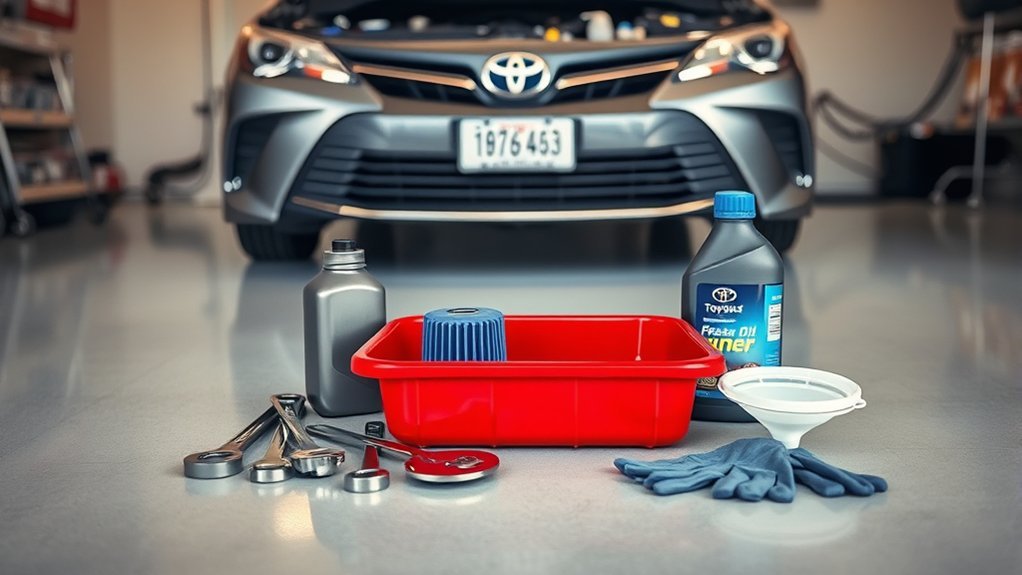
To kick off your oil change on a Toyota Camry, gather everything before you lift the vehicle. You’ll need a funnel, drain pan, gloves, shop towels, a 10mm socket for the lower underbody cover, a 14mm wrench or socket for the drain plug, and a torque wrench. Use the correct oil filter wrench or filter cap for your engine instead of relying on adjustable pliers, which can slip or damage the filter.
For supplies, have the right amount of Toyota Genuine Motor Oil or equivalent oil that meets the required grade and viscosity, a new oil filter, and a new drain plug gasket or crush washer. Mobil 1 can be a suitable option when the bottle meets the correct Toyota-required oil grade and viscosity, but the safest wording is always “Toyota Genuine Motor Oil or equivalent.”
Warning: Never crawl under a Camry supported only by a hydraulic jack. Park on a flat surface, set the parking brake, chock the rear wheels, and use ramps or properly rated jack stands placed at approved lift points.
Your Easy Step-by-Step Guide to Changing Oil in a Toyota Camry
- Park on level ground. Let the engine warm briefly so the oil flows better, then shut it off. Avoid draining oil when the engine or exhaust is hot enough to burn you.
- Lift and support the vehicle safely. Use ramps or a floor jack and jack stands. Keep the car level enough that the oil drains well and the dipstick reading is accurate later.
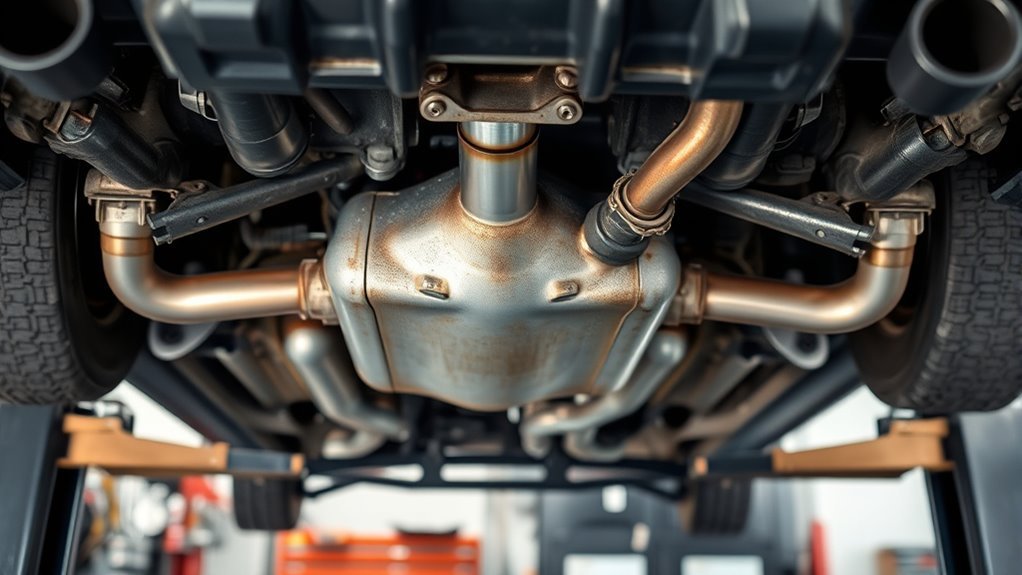
- Remove the lower cover. Use a 10mm socket to remove the fasteners securing the underbody cover so you can reach the oil pan drain plug and filter area.
- Position the drain pan. Place it under the drain plug, leaving room for the oil stream to move as pressure drops.
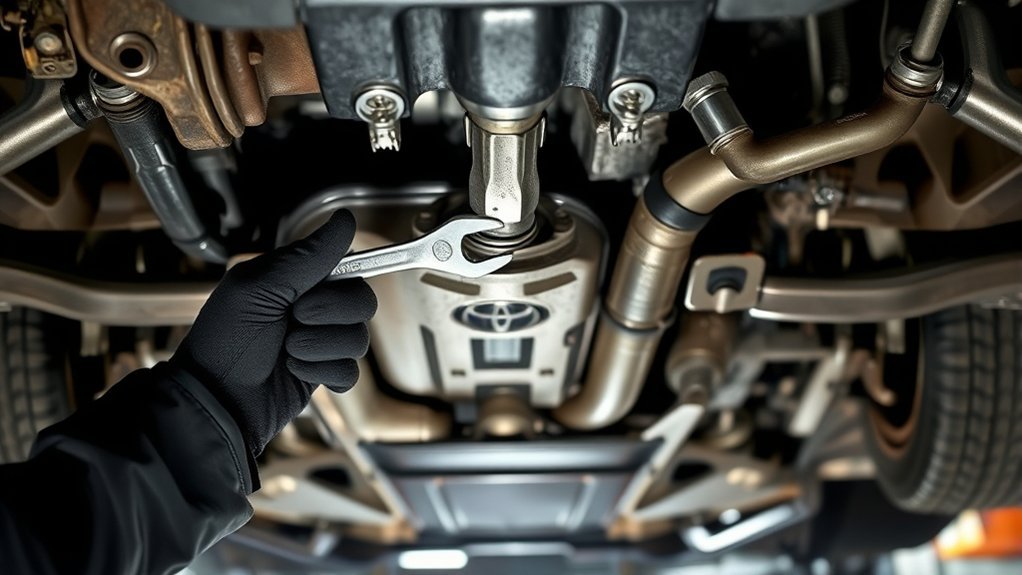
- Remove the drain plug. Use a 14mm wrench or socket and loosen the plug slowly. Let the old oil drain until it becomes a slow drip.
- Replace the drain plug gasket. Install a new gasket or crush washer, then reinstall the plug. A commonly used service spec is about 30 ft-lb for the drain plug, but verify the correct torque for your exact engine and oil pan if you have access to Toyota repair data.
- Replace the oil filter. Move the drain pan under the filter. Remove the old filter or cartridge housing with the correct tool, confirm the old gasket came off with the filter, wipe the mating surface clean, lightly oil the new gasket, and install the new filter. If using a spin-on filter with a published torque value for your engine, 13 ft-lb is commonly used; otherwise follow the filter or repair-manual instructions and do not overtighten.
- Add new oil. Remove the oil filler cap and use a funnel. For the 2018 2.5L 4-cylinder, start with slightly less than 4.8 quarts of 0W-16, then top up after checking. For the 2018 V6, use the V6 spec in the table above.
- Start the engine and inspect for leaks. Run the engine for 30–60 seconds while watching the drain plug and filter area. Shut it off immediately if the oil pressure warning stays on.
- Check the dipstick. Turn the engine off, wait more than five minutes, pull the dipstick, wipe it clean, reinsert it fully, then pull it again. The oil should sit between the low and full marks.
- Reinstall the cover and reset the maintenance reminder. Once the level is correct and no leaks are present, reinstall the underbody cover and reset the maintenance message from the vehicle settings menu.
Pro Tip: Add a little less oil than the listed capacity at first. It is easier to top up a few ounces than to remove oil after overfilling.
Essential Tips for Oil Filter and Drain Plug Installation
Proper installation of the oil filter and drain plug is what prevents leaks after the job. Start by wiping the oil filter’s mating surface clean. If the old rubber gasket sticks to the engine, remove it before installing the new filter; a doubled gasket can cause a major oil leak within seconds of startup.
Use a new drain plug gasket every time. Tighten the drain plug evenly with a torque wrench and avoid “one more turn” after it feels tight. Overtightening can damage oil pan threads, while undertightening can allow oil to seep out. For the filter, follow the filter manufacturer’s instructions or the Toyota repair-manual torque spec for your exact engine. A filter that is too loose leaks; a filter that is crushed or overtightened can be difficult to remove at the next service.
Top 5 Mistakes to Avoid During Your Oil Change

Performing an oil change on your Toyota Camry can be straightforward, but a few common mistakes can turn a simple service into an expensive repair.
- Using the wrong oil for your engine. Do not assume all Camrys use the same oil. The 2018 2.5L 4-cylinder uses 0W-16, while the 2018 V6 uses 0W-20.
- Skipping the oil filter. Fresh oil should not be routed through an old filter. Replace the filter at the same time as the oil.
- Reusing the drain plug gasket. A reused washer can seep even when the plug feels tight.
- Overtightening the drain plug or filter. This can strip threads, distort the gasket, or make the next oil change harder.
- Failing to check the level after startup. Always inspect for leaks, shut the engine off, wait more than five minutes, and verify the dipstick before driving.
How to Check Oil Levels and Reset Your Maintenance Light
Checking the oil level is not just a final formality. Park on level ground, shut the engine off, wait more than five minutes, and pull the dipstick. Wipe it clean, reinsert it fully, and remove it again. The oil should be between the minimum and maximum marks. If it is low, add oil a small amount at a time through the filler opening and recheck often to avoid overfilling.
To reset the maintenance light on a 2018 Camry, turn the vehicle on, use the steering-wheel controls to open the multi-information display settings, choose the vehicle settings or scheduled maintenance menu, and confirm the reset. Reset the light only after the oil change and inspection are finished so your service reminder stays accurate.
How Often Should You Change Toyota Camry Oil?
Toyota’s 2018 Camry Warranty & Maintenance Guide recommends scheduled maintenance every 5,000 miles or six months, whichever comes first. Under normal schedule points, the 10,000-mile or 12-month service includes replacing the engine oil and oil filter. However, special operating conditions can require oil and filter replacement at 5,000-mile intervals.
Change the oil sooner if most of your driving includes dusty roads, repeated short trips below freezing, extensive idling, low-speed commercial use, towing, a car-top carrier, or heavy vehicle loading. Keep receipts and write down the date, mileage, oil viscosity, oil brand, filter part number, and gasket replacement so your maintenance history is easy to prove later.
Troubleshooting After Your Oil Change
If something feels wrong after the oil change, stop and inspect before driving. Here are the most common issues:
- Oil drip under the car: Recheck the drain plug gasket, drain plug tightness, filter gasket, and filter seating surface.
- Oil pressure warning stays on: Shut the engine off immediately. Check the oil level and make sure the filter is installed correctly.
- Dipstick reads low: Add oil a few ounces at a time, wait briefly, and recheck.
- Dipstick reads overfull: Do not ignore it. Drain a small amount and recheck, because overfilling can aerate oil and create engine problems.
- Maintenance message comes back: Repeat the reset steps and confirm you selected scheduled maintenance, not another vehicle setting.
Clean Up and Recycle Used Oil
Pour the old oil into a sealed container and keep it separate from coolant, brake cleaner, gasoline, or other chemicals. Drain the old oil filter into the pan before recycling it. The U.S. Environmental Protection Agency recommends recycling or reusing used motor oil and notes that used oil filters can usually be dropped off at the same collection centers as used oil.
Frequently Asked Questions
Can I just change my Toyota Camry oil myself?
Yes, you can change your Camry’s oil yourself if you have the correct oil, filter, gasket, tools, and a safe way to support the vehicle. The job is not technically difficult, but safe lifting and accurate oil level checking are essential.
What oil does a 2018 Toyota Camry take?
The 2018 Camry 2.5L 4-cylinder uses SAE 0W-16 engine oil. The 2018 Camry 3.5L V6 uses SAE 0W-20. Always confirm your engine and owner’s manual before buying oil.
How much oil does a 2018 Toyota Camry need?
With a filter change, the 2018 Camry 2.5L 4-cylinder takes about 4.8 quarts, while the 3.5L V6 takes about 5.7 quarts. Add slightly less than the full amount first, then top up after checking the dipstick.
Do I need to replace the oil filter every time?
Yes. Replacing the oil without replacing the filter leaves old oil and trapped debris in the system. A new filter is inexpensive protection for the engine.
Can I drive if the oil level is slightly over the full mark?
Do not ignore an overfilled crankcase. A tiny amount above full may not cause an immediate issue, but a clearly overfilled engine should be corrected before driving because excess oil can foam and reduce lubrication quality.
Conclusion
Changing your Toyota Camry’s engine oil is a practical DIY maintenance task when you work safely, choose the correct oil for your exact engine, replace the filter and gasket, and verify the dipstick level after startup. The most important takeaway is simple: do not treat one Camry oil spec as universal. Confirm the engine, use the proper oil, recycle the old oil, and keep a maintenance record. A careful oil change helps protect reliability, reduce avoidable wear, and keep your Camry ready for the next service interval.
Sources
- Toyota Owners — 2018 Camry Manuals and Warranties — official owner manual and warranty/maintenance guide access
- Toyota 2018 Camry Warranty & Maintenance Guide — scheduled maintenance intervals and special operating conditions
- Toyota Support — Synthetic Oil Change Intervals — Toyota guidance on oil-change intervals for vehicles using synthetic oil
- U.S. EPA — Managing, Reusing, and Recycling Used Oil — used oil and used oil filter recycling guidance
- OSHA — Jacks and Portable Tools Standard — jack rating and firm-foundation safety guidance