What’s in This Article
- Quick Answer: How Long Will a Toyota Camry Last?
- Camry Lifespan by Generation and Engine
- Common High-Mileage Camry Problems
- Maintenance That Helps a Camry Last Longer
- Checklist for Buying a High-Mileage Camry
- Repair, Keep, or Replace a High-Mileage Camry?
- Tips to Maximize Lifespan After You Buy
- Frequently Asked Questions
- Final Takeaway
A Toyota Camry can last far longer than many owners expect, but mileage alone doesn’t tell the full story. Service history, engine type, rust, and driving style decide whether a Camry feels solid at 180,000 miles or tired at 120,000. This guide shows realistic mileage ranges, common high-mileage repairs, and the checks that help you keep a Camry dependable.
Quick Answer: How Long Will a Toyota Camry Last?

A well-kept Toyota Camry can often reach 200,000 to 300,000 miles. Some examples go beyond that, but you should treat 300,000 miles as a strong result, not a promise. Your best chance comes from regular oil service, clean fluids, timely repairs, gentle driving, and a clean body structure with limited rust.
Key Takeaways
- Expect 200,000 to 300,000 miles from a Camry with steady maintenance and careful driving.
- Check service records before you trust the odometer on any high-mileage Camry.
- Inspect rust, suspension parts, leaks, warning lights, and transmission behavior before you buy.
- Follow the owner’s manual for oil, coolant, spark plugs, timing parts, brake service, and tire care.
- Fix small issues early so they don’t grow into expensive engine, brake, or suspension repairs.
Camry Lifespan by Generation and Engine: What to Expect
As of May 2026, the Camry still has one of the stronger long-life reputations among midsize sedans. In the 2025 iSeeCars longest-lasting vehicle study, the gas Toyota Camry had a 9.0% predicted chance of reaching 250,000 miles, about 3.5 times the average passenger car in that study. The Camry Hybrid scored slightly higher at 10.2%.
Generation matters, but condition matters more. A clean older Camry with service records can outlast a newer car that missed oil changes, overheated, or lived on salted roads. You should compare mileage with maintenance proof, fluid condition, rust level, and how the car drives.
Four-cylinder Camrys often cost less to maintain than V6 models because they use simpler parts and leave more room to work. A V6 Camry can still last a long time, but you should budget more for parts, labor, tires, and fuel. Hybrid models can also age well, but you need to check hybrid battery health and cooling system care before you buy one.
Common High-Mileage Camry Problems and Mileage Ranges
High mileage doesn’t make a Camry bad. It simply moves the car into a stage where wear parts need closer attention. You should expect repairs to the charging system, cooling system, suspension, brakes, mounts, belts, hoses, and sensors as mileage climbs.
Use these ranges as planning guides, not fixed deadlines. Your owner’s manual, service records, climate, and driving style should decide the final schedule.
| Part or System | Common Check Range | What You Should Watch For |
|---|---|---|
| Alternator and battery | 100,000 miles and higher | Slow starts, dim lights, battery warning light |
| Water pump and cooling parts | 90,000 miles and higher | Coolant loss, overheating, dried coolant marks |
| Suspension bushings and struts | 100,000 to 150,000 miles | Clunks, uneven tire wear, loose steering feel |
| Brake pads and rotors | 30,000 to 70,000 miles | Grinding, vibration, longer stops, thin pads |
| Belts, hoses, and mounts | 100,000 miles and higher | Cracks, leaks, vibration, squealing noise |
Warning: Don’t ignore oil pressure, coolant temperature, brake, or battery warning lights because small problems can quickly damage major parts.
Toyota advises drivers to respond quickly when warning lights point to low oil pressure or cooling problems. You should stop driving if the engine overheats or if the oil pressure light stays on, then get the car inspected before you restart it.
Maintenance That Helps a Camry Last Longer
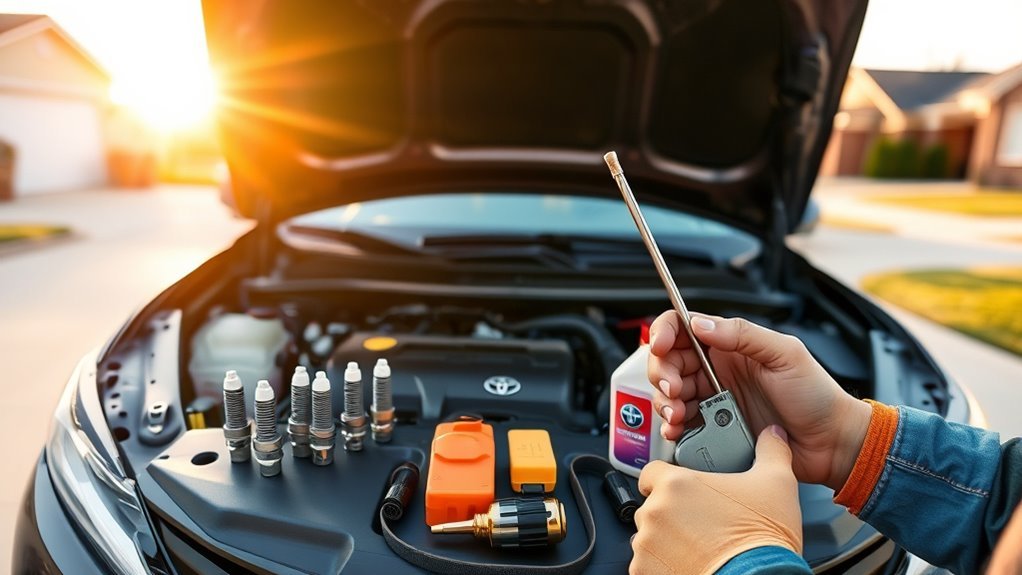
You can give a Camry its best chance at long life by following the maintenance guide for your exact model year. Toyota notes that oil change needs depend on the oil type, engine, and driving conditions. Many vehicles fall around 5,000 to 7,500 miles, while some synthetic-oil schedules can run longer when the manual allows it.
You should also rotate tires, check tire pressure, inspect fluids, and respond to leaks early. Toyota recommends tire rotation every 5,000 to 8,000 miles to help tires wear more evenly. That simple habit protects ride quality, fuel economy, and suspension parts.
Regular Oil and Filter Changes
Oil service matters more than almost any other routine task. Clean oil reduces friction, moves heat away from engine parts, and helps prevent sludge. You should use the oil grade listed in your owner’s manual and shorten the interval if you drive in heat, heavy traffic, dust, or many short trips.
Keep receipts for every oil change. Those records help you track patterns, spot leaks early, and support resale value when you sell the car. If you buy a used Camry with no oil history, change the oil soon and inspect it again after a short interval.
Timing Belt and Water Pump
Not every Camry uses a timing belt. Toyota’s support guidance tells owners to check the timing belt or timing chain chart and the Warranty and Maintenance Guide for the exact interval. Older belt-equipped Camrys need strict attention because a failed belt can stop the engine and may cause major damage on some engines.
Many older Camrys from 1990 to 2001 used timing belts, and V6 Camrys through 2006 also used belts in many references. Later four-cylinder and V6 Camrys generally use timing chains. Before you spend money, confirm your engine by vehicle identification number, owner’s manual, or a Toyota parts counter.
Note: A timing chain usually has no routine replacement interval, but dirty oil can still damage chain guides, tensioners, and related parts.
Brake and Tire Maintenance
Brake and tire care protects both safety and long-term repair costs. Inspect brake pads, rotors, calipers, hoses, and brake fluid at regular service visits. Replace pads before they damage rotors, and have a mechanic test old or dark brake fluid.
Check tire pressure at least monthly and before long trips. Proper pressure helps fuel economy, steering response, tire wear, and braking distance. Rotate tires on schedule and request an alignment check if the car pulls, shakes, or wears one tire edge faster than the others.
Inspection Checklist for Buying a High-Mileage Camry
When you buy a high-mileage Camry, start with the service history. Look for regular oil changes, coolant service, transmission fluid care, brake work, timing belt records when the engine uses a belt, and proof that warning lights received prompt attention.
Then inspect the car in person. A clean report helps, but it doesn’t replace a physical check under the car, under the hood, and during a test drive. You should pay extra attention to leaks, rust, engine noise, shift quality, suspension feel, and tire wear.
Service History Review
Ask for the full service file before you discuss price. Good records should show mileage, dates, parts used, and the shop that performed the work. You want evidence of steady care, not just one large repair bill before sale.
Check for repeated repairs to the same system. Multiple battery replacements may point to charging trouble. Repeated overheating notes may point to deeper cooling system or head gasket risk. Gaps in records don’t always kill the deal, but they should lower your confidence.
Pro tip: Pay a trusted mechanic for a pre-purchase inspection before you buy any Camry with high mileage or missing service records.
Drivetrain and Engine
Begin your engine and drivetrain check with a cold start. Listen for knocking, ticking, rattling, long cranking, or rough idle. Look for blue smoke, white smoke, oil leaks, coolant stains, and low or dirty fluids.
During the test drive, check smooth acceleration, steady temperature, clean shifting, and stable braking. A good Camry should feel predictable. Harsh shifts, delayed engagement, vibration, or warning lights should prompt a deeper inspection.
| Check | What to Look For |
|---|---|
| Noises and vibrations | Knocks, ticking, rattles, shuddering |
| Fluids | Leaks, low levels, burnt smell, dark color |
| Service history | Oil, coolant, transmission, timing part records |
| Transmission | Smooth shifts, no slipping, clean fluid |
| Test drive | Acceleration, braking, steering, temperature stability |
Rust and Frame Integrity
If the car spent time near salted roads or coastal air, inspect the undercarriage with care. Surface rust may not ruin a car, but deep rust near suspension mounts, brake lines, subframes, rocker panels, and jacking points can create serious safety and repair problems.
Look for bends, cracked undercoating, mismatched paint, fresh welds, and uneven panel gaps. Recent undercoating can help protect clean metal, but it can also hide old corrosion. Ask the inspector to lift the car before you decide.
Repair, Keep, or Replace a High-Mileage Camry?
You should keep a high-mileage Camry when the body stays solid, the engine runs cleanly, the transmission shifts well, and repair costs remain predictable. Keeping the car often makes sense when one known repair costs far less than replacing the whole vehicle.
Replacement starts to make more sense when the car has deep rust, repeated overheating, transmission failure, major oil burning, electrical problems, or repair bills that keep returning. Compare the repair cost with the car’s value, your budget, and the cost of a safer replacement.
| Condition | Best Action | Why It Makes Sense |
|---|---|---|
| Solid body, good records, no warning lights | Keep | The car still offers reliable, low-cost use |
| Known wear part, fair repair cost | Repair | A targeted repair can add more useful life |
| Deep rust, major drivetrain failure, repeated repairs | Replace | Future costs may exceed the car’s value |
Be objective before you spend. Add the repair quote, next likely repairs, tire needs, registration, insurance, and inspection issues. That full number gives you a clearer keep-or-replace answer.
Practical Tips to Maximize Lifespan After You Buy
Treat routine maintenance as a fixed cost, not an optional expense. Follow Toyota’s service schedule, keep oil and coolant fresh, replace filters on time, and inspect belts, hoses, brakes, tires, and suspension parts before they fail.
Respond quickly to warning lights, new noises, vibration, fluid smells, or changes in steering and braking. Small issues usually cost less when you catch them early. Waiting can turn a simple sensor, hose, belt, or brake repair into a much larger bill.
- Use the correct oil grade listed in your owner’s manual.
- Check tire pressure monthly and rotate tires on schedule.
- Keep coolant, brake fluid, transmission fluid, and power steering fluid clean and at the proper level.
- Avoid hard acceleration, heavy loads, long idling, and late braking when you can.
- Wash the underbody after winter road salt or beach-area driving.
- Keep service receipts so you can track repairs and support resale value.
Quality parts also matter. Cheap parts can save money today and create repeat repairs later. Choose parts that match the car’s needs, especially for brakes, suspension, cooling parts, sensors, and timing components.
Frequently Asked Questions
Can a Camry go 500,000 miles?
A Camry can reach very high mileage, but 500,000 miles takes excellent care, favorable driving, and some luck. You should expect major wear-part repairs long before that poi
::contentReference[oaicite:0]{index=0}