By Merrick Vaughn · Last updated: July 31, 2026 — Toyota cargo specifications, 5th-gen cargo floor measurements, current crate dimensions, pet-travel guidance, certified-product references, and schema were reviewed.
Yes, a dog crate can fit in a 2019 Toyota RAV4 cargo area, but fit depends entirely on the crate’s external footprint and the vehicle’s aggressive rear-hatch slope rather than generic labels like “medium” or “36-inch.” Behind the second-row seats, the 2019 RAV4 offers a usable floor depth of approximately 36 to 39 inches, a narrowest width between the wheel arches of roughly 39.4 inches (1,000 mm), and an opening height of approximately 31.5 inches. Toyota rates total cargo volume at 37.6 cu. ft. behind the rear seats and 69.8 cu. ft. with the rear seats folded flat.
This is a measurement-based technical guide. Exact fit requires measuring your specific vehicle and crate setup. See the RAV4 cargo area and folding-seat guide for related cargo-floor and rear-seat setup information.
Quick Answer
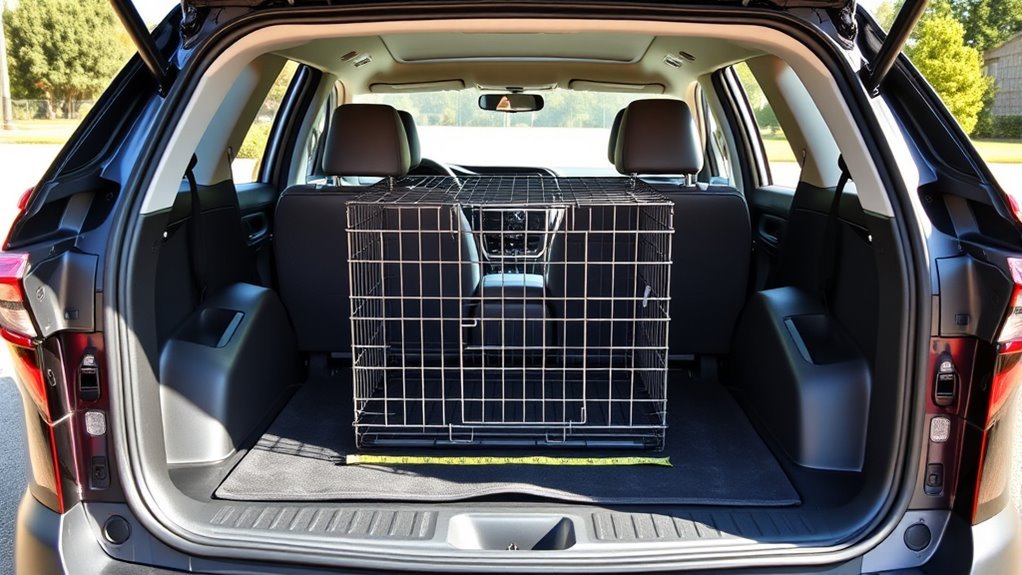
Most small, medium, and select intermediate dog crates (up to roughly 30 to 34 inches in exterior length) fit comfortably in the 2019 RAV4 cargo area behind the second row. A crate fits safely only when it passes six physical checks: the dog can sit, stand, turn, and lie down naturally; the base sits flat; the crate roof clears the inward-sloping rear hatch glass; the door opens freely; ventilation holes remain unblocked; and the crate is securely anchored to the RAV4’s four factory cargo D-rings using manufacturer-approved tie-down straps.
Key Takeaways
- Toyota lists 37.6 cu. ft. behind the rear seat, but total cubic volume does not account for the sloped rear glass or wheel-well intrusions.
- Always fit the crate to your dog first (length and standing height + 3–4 inches), then verify vehicle clearance.
- Lowering the 2019 RAV4’s dual-level cargo deck board gains approximately 2 inches of vertical clearance.
- Test the full manual sweep of the power liftgate to ensure the upper rear corners of the crate do not contact the rear window glass.
- Anchor the crate to the four factory floor D-rings with high-strength cam or ratchet straps—never use elastic bungee cords.
2019 RAV4 Cargo & Crate Fit At a Glance
| Toyota Cargo Volume | 37.6 cu. ft. behind 2nd row; 69.8 cu. ft. with rear seats folded flat |
| Usable Cargo Dimensions | ~39.4 in. (1,000 mm) wide between wheel wells; ~36.0–39.0 in. floor depth; ~31.5 in. vertical opening |
| Verified Size Example | RuffLand Intermediate exterior: 30.5 in. L × 20.0 in. W × 23.5 in. H; fits comfortably lengthwise or angled |
| Best Pre-Purchase Test | A full-scale cardboard mock-up including handles, brackets, and door opening radius |
| Automatic No-Go | Any contact with rear window glass, blocked cabin airflow, unstable crate base, or unsecured restraint |
Measure Your 2019 RAV4 Cargo Area Before Buying a Crate
Before purchasing a travel kennel, measure the cargo floor width, depth, rear-seat incline angle, and the arc of the closing rear hatch. Then compare those vehicle boundaries with the crate’s total exterior dimensions—including exterior molding, handles, door hinges, and tie-down anchor pins.
Official Toyota 2019 RAV4 specification data confirms 1,064.7 liters (37.6 cu. ft.) of cargo volume behind the second row. However, the rigid frame of a travel crate must fit inside the physical dimensions of the cargo bay. Consult the 2019 Toyota RAV4 Owner’s Manual for factory cargo-hook weight limits and floor configuration details.
| Measurement Point | 2019 RAV4 Reference | What to Check |
|---|---|---|
| Width between wheel wells | ~39.4 in. (1,000 mm) | Measure the narrowest point of the floor where the crate base rests. |
| Floor depth to rear seats | ~36.0–39.0 in. | Measure from the hatch sill to the seatbacks in their upright, locked position. |
| Hatch opening height | ~31.5 in. | Vertical clearance at the rear threshold when loading the crate. |
| Rear glass slope sweep | Angles sharply forward | Check if the top rear edge of the crate contacts the glass during closure. |
| Seatback recline slope | ~20° to 25° incline | A slant-back crate utilizes this space far better than a square box. |
| Cargo floor depth setting | Dual-level floor board | Lowering the deck board adds ~2 in. of vertical height clearance. |
Always measure with your cargo mat, all-weather tray, and rear seats in their exact travel positions. A thick rubber liner or reclined seatback can eliminate 1 to 2 inches of critical clearance.
Use a Cardboard Mock-Up Before You Buy
A full-size mock-up prevents costly return shipping fees. Cut a piece of cardboard to match the crate’s exterior base dimensions. Tape vertical cardboard pieces to represent the crate’s maximum height, including top handles and tie-down brackets.
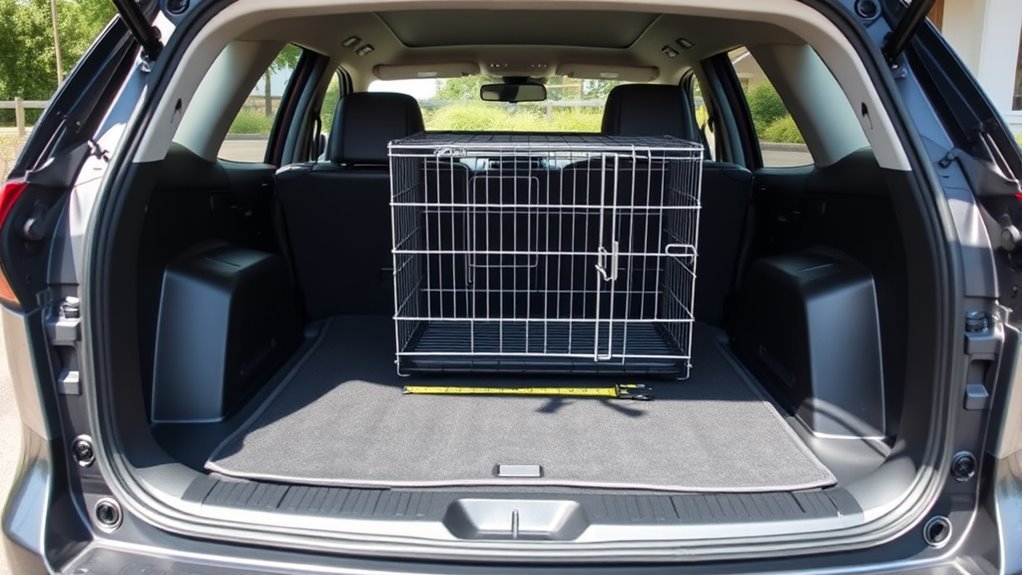
Place the mock-up inside the cargo area and close the liftgate slowly by hand. Check the top corners near the glass, the clearance around the hatch latch, and the space between the crate and the rear headrests. If the mock-up touches the glass or trim, a real crate will not fit.
Use These Six Fit Conditions for a Go or No-Go Decision
| Required Check | Pass Condition |
|---|---|
| Dog fit | Your dog can stand, sit, turn around, and lie down naturally without hunching. |
| Floor footprint | The crate base rests flat without perching on the wheel wells or cargo trim. |
| Hatch sweep | The liftgate closes fully without contacting crate plastic, handles, or brackets. |
| Door access | The kennel door swings open wide enough for normal entry and quick emergency exit. |
| Ventilation | Cargo sidewalls, seatbacks, and gear leave all kennel air holes completely open. |
| Approved restraint path | The crate can be strapped to the 4 factory floor D-rings using rated tie-down straps. |
Treat the setup as a no-go if any single condition fails. Never force the liftgate shut or compromise ventilation to make an oversized kennel fit.
Make Sure the Crate Fits Your Dog First
Vehicle fit should never compromise pet comfort or safety. Your dog must be able to stand comfortably, turn around freely, and stretch out without pressing against the crate walls. The American Kennel Club (AKC) crate guide recommends measuring your dog’s length (tip of the nose to the base of the tail) and standing height (floor to the top of the head or ears), then adding 3 to 4 inches to both dimensions.
Note: Crate sizing terminology is not standardized. One manufacturer’s “medium” can have the exact same exterior footprint as another brand’s “intermediate.” Compare actual published dimensions in inches every time.
- Measure length from the tip of the nose to the base of the tail.
- Measure height from the floor to the top of the ears while standing alert.
- Ensure adequate width for natural turning and lying in a relaxed curled or side position.
- Confirm your dog can enter and exit the crate doorway without scraping their spine.
- Consult your veterinarian or trainer if your dog falls between standard sizes.
How Does the Rear-Seat Angle Affect Crate Fit and Hatch Closure?
The 2019 RAV4 second-row seatbacks recline at an angle, while the rear liftgate glass rakes steeply forward. A standard rectangular crate leaves empty triangular gaps at the bottom of the seatbacks while hitting the hatch glass at the top. Slanted SUV kennels follow these angles to maximize usable interior space.
Cubic cargo volume only tells you total capacity. Exterior roofline length and the liftgate arc determine whether the hatch will close without shattering glass.
- Lock the second-row seats in their most upright position to maximize cargo floor depth.
- Position the crate with its tapered end or angled wall against the seatback slope.
- Check that upper handles and latches stay at least 1 to 2 inches clear of the rear window glass.
- Verify that the crate base sits completely flat across the floorboard.
- Tighten all tie-down straps only after confirming complete door and hatch clearance.
Never force the motorized power liftgate closed against a crate. Contact pressure can bend the hatch hinge assembly, damage the latch motor, or shatter the rear glass on road bumps.
What Size Dog Crate Fits in a 2019 Toyota RAV4?
No nominal size label guarantees a 2019 RAV4 fit. Small and medium crates fit easily straight or sideways. Intermediate crates (around 30 to 32 inches long) generally fit lengthwise if they feature a tapered or slant-back profile. Standard 36-inch rectangular crates often interfere with the sloped glass unless positioned sideways or with the rear seats folded flat.
For example, the RuffLand Intermediate Kennel measures 30.5 inches long, 20.0 inches wide, and 23.5 inches high. Its tapered profile and optional SlantBack door configuration fit the 2019 RAV4 cargo area well behind the second row. Compare common crate profiles in the table below:
| Crate Label or Type | 2019 RAV4 Fit Outlook | Key Clearance Caution |
|---|---|---|
| Small Kennel (<26 in. L) | Fits easily in any orientation | Verify interior room is sufficient for your dog to turn comfortably. |
| Medium Kennel (27–30 in. L) | Excellent fit straight or angled | Check top handle height against the downward-sloping roofliner. |
| Intermediate (30–32 in. L) | Fits straight; slant-back preferred | Square top corners may touch the angled rear hatch glass. |
| 36-Inch Standard Crate | Tight fit; often requires sideways loading | Length usually prevents hatch closure unless rear seats are folded. |
| Large Box Kennel (>36 in. L) | Requires folded rear seats | Will not fit behind the 2nd row; requires rear-seat fold-down setup. |
| Slanted SUV-Specific Crate | Best space utilization | Verify door swing clearance over the rear cargo threshold lip. |
Practical fit rule: A “36-inch” label describes only crate length. Crate width at the wheel wells, overall height, and roofline taper dictate whether the 2019 RAV4 hatch will latch securely.
[Products Worth Considering]
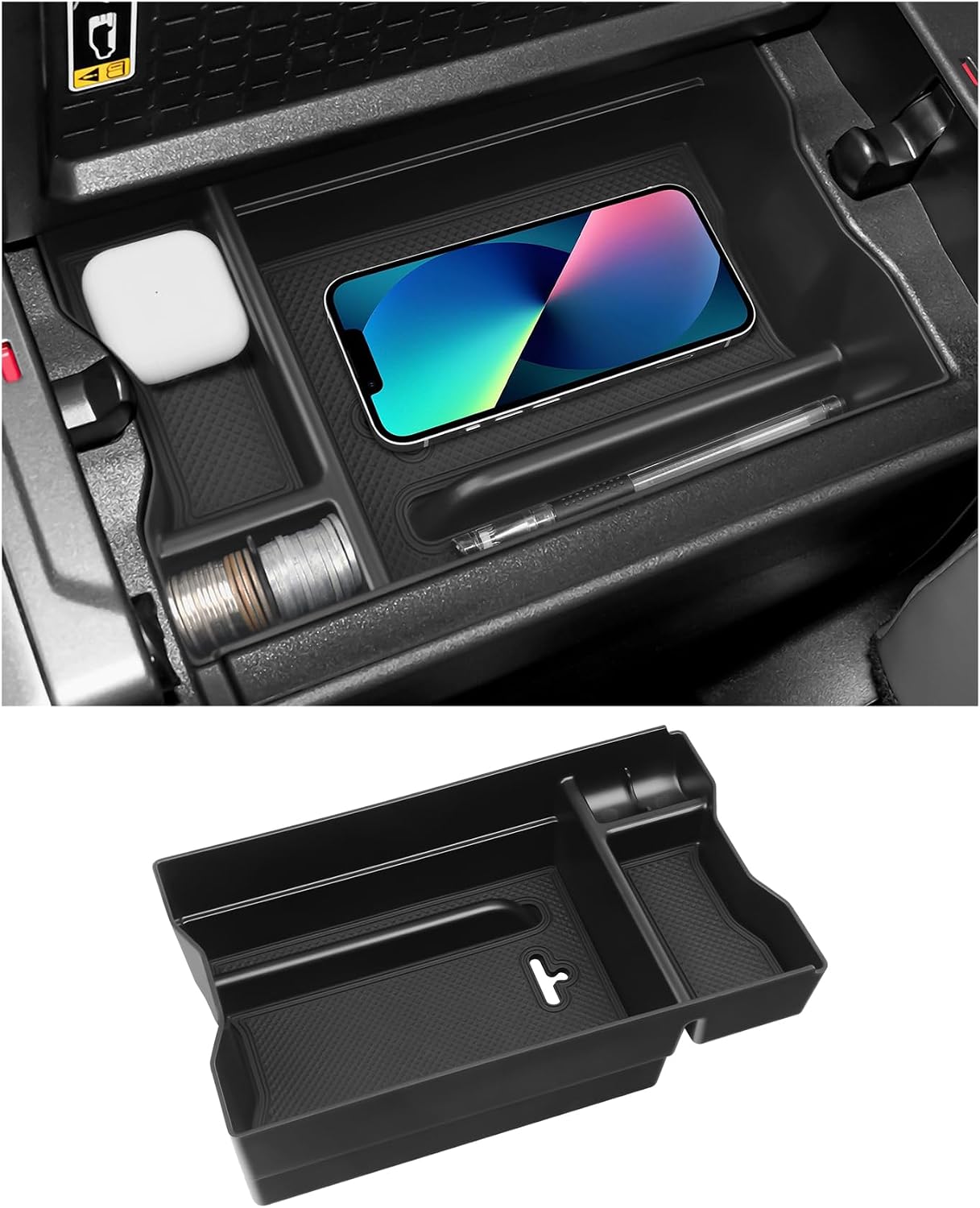
This center console organizer adds a convenient secondary storage layer to compatible Toyota RAV4 hybrid models, helping keep sunglasses, keys, coins, phones, and other small items neatly arranged. Built from durable ABS plastic with a matte finish, it fits directly into the armrest area for quick, tool-free installation and easy removal. Non-slip rubber mats help reduce sliding and noise while maximizing usable storage space inside the console.

This custom-fit cargo liner is designed for Toyota RAV4 hybrid and gas models from 2019 through 2025, delivering seamless coverage for the trunk and rear seat backs. Made from all-weather TPE, it helps protect against spills, dirt, pet hair, scratches, and everyday cargo wear while staying odorless and easy to clean. The integrated one-piece design with double fixation helps keep the mat securely in place for dependable use.

This custom-fit floor mat set is designed for Toyota RAV4 models from 2019 to 2025, including hybrid and gas versions, to deliver complete interior protection. It covers the passenger area, rear seat backs, trunk, and door sill areas with high edges and a seamless fit that helps block spills, dirt, pet hair, and scratches. Made from odorless all-weather TPE with a non-slip surface, it is easy to clean and built for everyday use.
Step-by-Step RAV4 Crate Fit Test
Perform the full physical fit test with an empty crate before loading your dog. Verify static clearance and the full closing arc of the rear hatch.
- Clear the cargo area of all loose gear, emergency kits, and grocery bags.
- Place the 2019 RAV4 cargo floor board in its lower setting to maximize vertical headroom.
- Lock the second-row seatbacks in their upright travel position.
- Measure cargo floor depth, width between the wheel housings (~39.4 in.), and hatch opening height.
- Build a cardboard mock-up if you do not yet have physical access to the crate.
- Place the empty crate in the cargo bay and confirm that its base rests completely flat.
- Close the liftgate slowly by hand—stop immediately if you feel resistance against the glass or trim.
- Install travel mats, cooling pads, water dishes, and tie-down straps, then re-test the hatch closure.
- Anchor the crate to the 4 factory floor D-rings and perform a rigorous shake test.
- Take a 10-minute test drive over road bumps, stop, and inspect strap tension and crate stability.
Pro Tip: Turn off the RAV4 power liftgate button on the dash during initial test fits. Lower the hatch slowly by hand so you can detect contact with the crate before the motor forces it against the glass.
Can Two Dog Crates Fit in a 2019 RAV4?
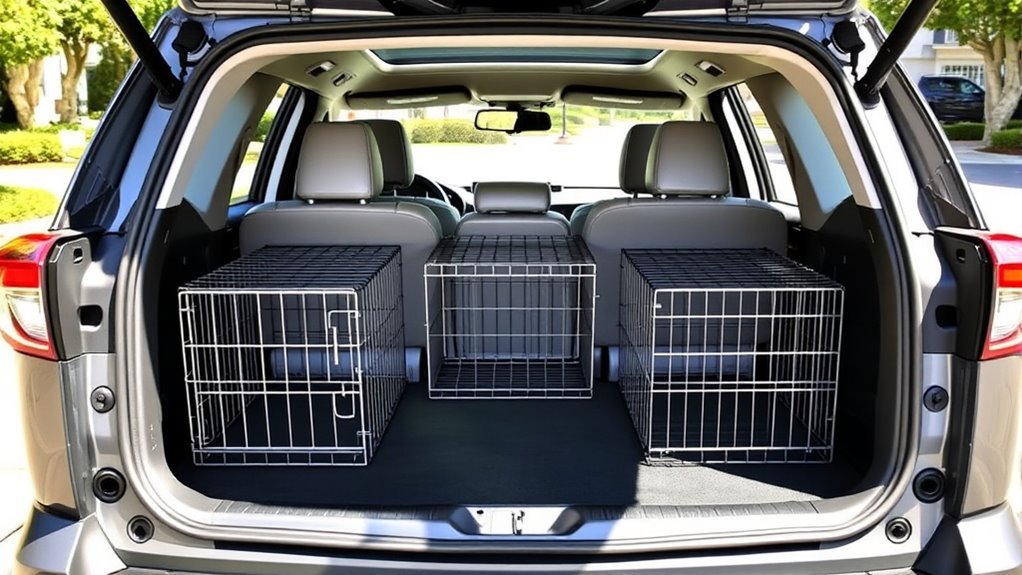
Two dog crates can fit side-by-side in a 2019 RAV4 only if both kennels are small or slender intermediate models. Because the width between the wheel arches is approximately 39.4 inches, two side-by-side crates cannot exceed 19.5 inches in exterior width each.
- Verify that the combined exterior width of both crates does not exceed 39 inches.
- Ensure crate doors open outward freely without blocking each other or hitting the side walls.
- Maintain at least 1 inch of ventilation space between the two crates.
- Anchor each crate independently to the cargo D-rings using dedicated tie-down straps.
- Never stack crates on top of each other in an SUV unless using an OEM-tested interlocking stack kit.
If two suitable crates cannot fit safely side-by-side behind the second row, fold the 60/40 split rear seat or use an independently tested crash-protection harness in the passenger seat for the second dog.
[Products Worth Considering]

Custom-designed for Toyota RAV4 gasoline models from 2013 to 2018, this full-coverage interior protection set includes front and rear floor mats, a cargo liner, seat back protectors, and door sill guards. Built with odorless TPE and 3D laser fit precision, it helps block spills, dirt, pet hair, and daily wear while staying securely in place for a clean, family-friendly cabin.

This custom-fit floor mat and cargo liner set is designed for Toyota RAV4 models from 2006 to 2012, providing full coverage for the cabin, cargo area, and backrest. Made from durable TPE, it offers a waterproof, odorless, and easy-to-clean solution that helps protect original carpeting from mud, snow, debris, and everyday wear while supporting safer driving with a secure anti-slip design.
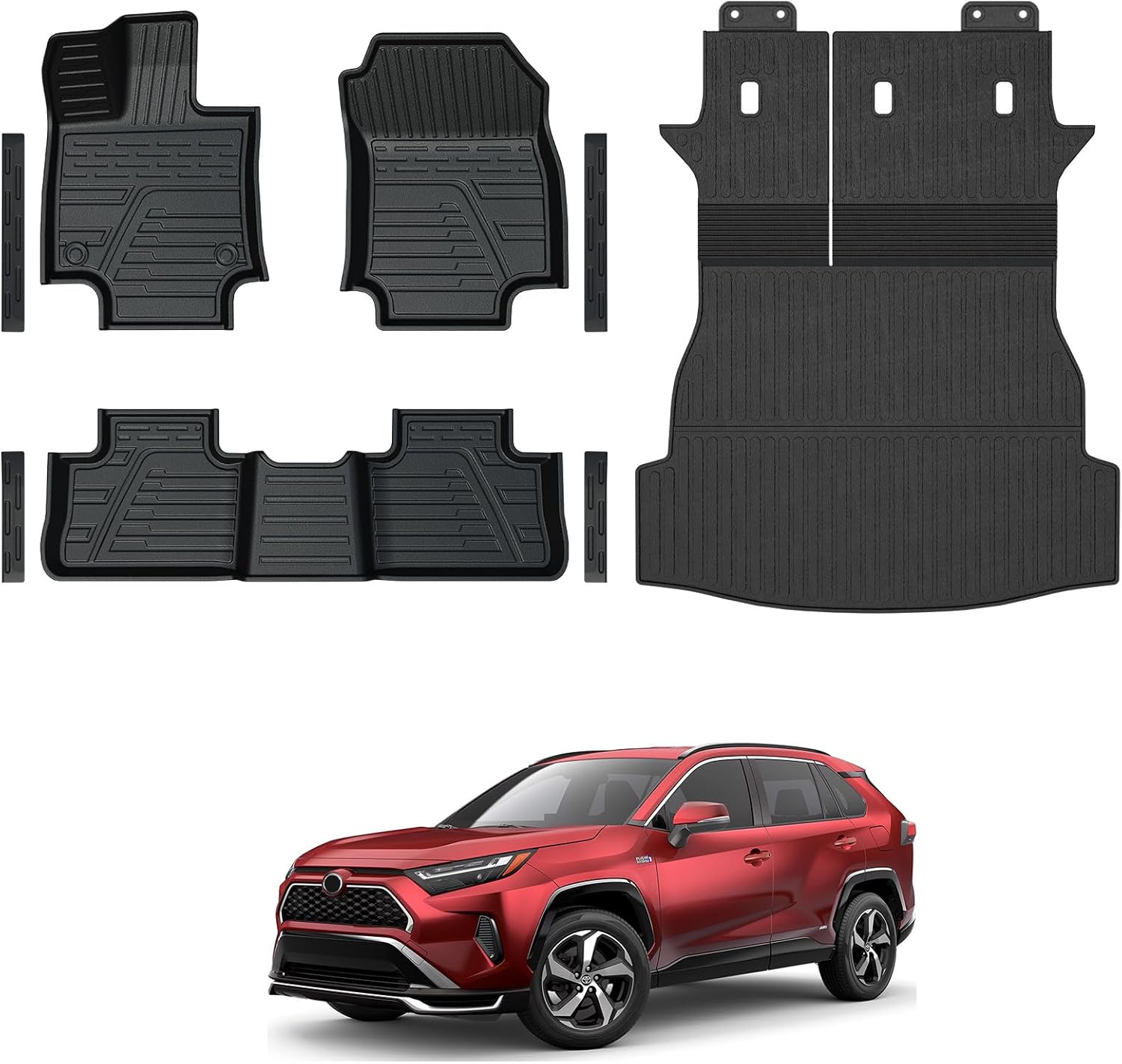
This custom-fit floor mat set is designed for 2019-2025 Toyota RAV4 models, including hybrids, delivering full interior coverage with an integrated cargo liner and backrest protection. Raised edges, secure clips, and a non-slip design help contain spills and keep the mats firmly in place, while odorless all-weather TPE construction provides durable, family-safe protection for daily driving.
Which Crate Placement Helps the RAV4 Hatch Close?
Straight, angled, and sideways placements offer different clearance advantages. Choose the layout that keeps the base flat, preserves door access, and allows secure anchoring to factory tie-down points.
- Straight (Front-to-Back): Best for tapered intermediate crates. Places the door facing the rear hatch for quick access.
- Sideways (Side-Door Kennel): Useful for 32-to-36-inch crates. Requires a side-entry door so the dog can enter from the rear hatch.
- Angled (Corner-to-Corner): Works for intermediate crates with square roofs. Aligns the crate with the deepest center section of the cargo floor.
Always ensure the kennel door remains fully accessible in an emergency. An orientation that closes the hatch but traps the crate door against the seatback is unsafe.
How Should You Secure a Dog Crate in a 2019 RAV4?
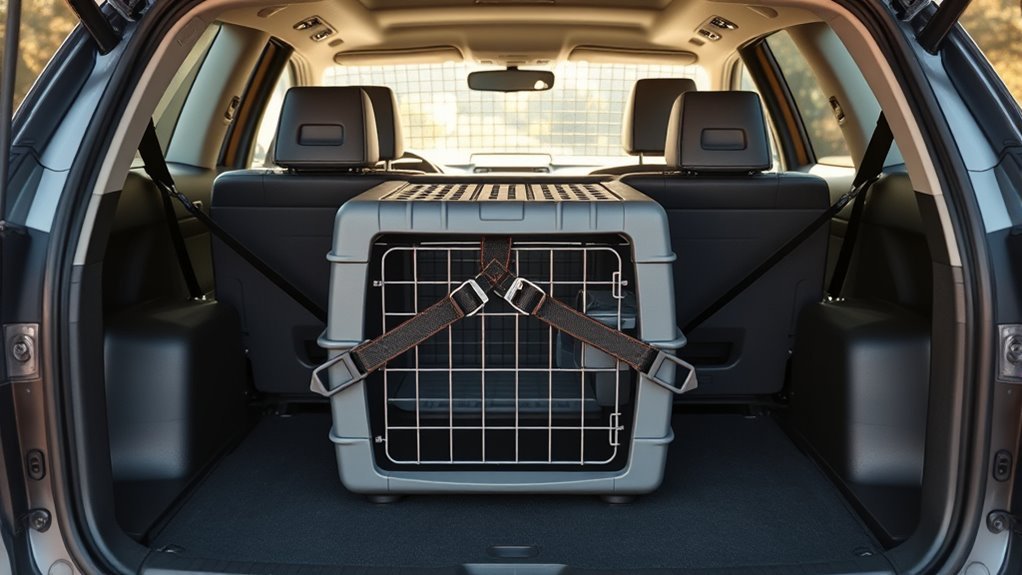
Secure the crate using strength-rated cam-buckle or ratchet straps routed through the crate’s molded anchor channels and connected to the 2019 RAV4’s four factory floor D-rings. Check your owner’s manual for cargo ring load limits. An unsecured 50-pound dog in a 30-pound crate becomes a hazardous projectile during a 35-mph collision.
The ASPCA vehicle travel guidelines strongly advise using a hard-sided, well-ventilated carrier secured firmly against sliding. The ASPCA cautions against wire and folding crates because their welds can shear and collapse inward upon impact.
The Center for Pet Safety (CPS) conducts independent crash testing and certifies pet travel crates based on strict structural and restraint criteria. Brands like Gunner Kennels and Lucky Duck have achieved 5-star crash ratings when secured with their certified tie-down strap kits.
Warning: Never use elastic bungee cords to secure a dog crate. Bungees stretch under load, snap during hard braking, and offer zero impact restraint.
- Use 1-inch or 1.5-inch heavy-duty nylon tie-down straps rated for at least 500 lbs working load limit.
- Connect straps in an X-pattern or 4-point cross-brace directly to the RAV4 factory floor D-rings.
- Do not attach tie-down straps to rear headrest posts, child-seat tether loops, or plastic trim panels.
- Ensure the crate does not rock, slide, or lift when pulled firmly in any direction.
- Re-tighten tie-down straps after the first 15 minutes of driving, as webbing settles over time.
[Products Worth Considering]

This windshield wiper blade set is designed as a direct replacement for Toyota Rav4 models from 2013 to 2018, offering an exact fit for dependable performance. The precision-tensioned springs and aerodynamic spoiler help deliver even pressure across the windshield for clearer wiping, while the rubber compound and graphite coating promote quiet, smooth operation. Built for easy installation and all-season use, it provides a practical upgrade for maintaining visibility in changing weather.

This custom-fit cargo net is designed for the 2026 Toyota RAV4 to help keep your trunk organized and secure during everyday driving. It helps hold groceries, tools, and smaller items in place while reducing rolling and shifting, and the heavy-duty carabiners support reliable installation. The net also offers convenient storage and easy access for SUVs and other compatible vehicles.

These custom-fit seat covers are tailored for Toyota RAV4 gasoline models from 2019 through 2025, giving your SUV a refined interior upgrade with a precise OEM-inspired look. The spill-resistant faux leather surface helps protect against daily messes, scuffs, and pet wear while staying easy to clean, and the reinforced airbag-compatible stitching supports safety without sacrificing style. A secure strap, zipper, and Velcro installation system helps keep the covers in place for a stable, comfortable fit in all seasons.
DIY Cargo Liners and Simple Mods to Reduce Slipping
A high-quality cargo liner protects the 2019 RAV4 carpeting from mud and pet hair while providing a non-slip base for the crate. Pair it with custom-fit 3D cargo mats to trap liquids and dirt.
While a rubber cargo mat reduces sliding during normal driving, it does not replace mechanical tie-down straps. Ensure the liner has precut openings that leave the four factory tie-down D-rings completely exposed and usable.
Cut-To-Fit Cargo Mat
If using custom heavy-duty rubber matting, cut the material precisely to prevent it from bunching beneath the crate base:
- Place the 2019 RAV4 floor board in your chosen height setting before measuring.
- Use a utility knife to cut clearance slots around the four corner D-rings.
- Keep the rear hatch latch mechanism clear of all rubber material.
- Choose firm, textured rubber rather than soft foam that can compress and loosen strap tension.
Non-Slip Underlays
A thin, textured rubber underlay placed between the cargo board and the crate base prevents micro-vibrations and rattling on highway drives.
| Material Option | Primary Function | Installation Tip |
|---|---|---|
| Rubberized Grip Mesh | Prevents crate vibration & minor shifts | Place directly beneath kennel; trim excess flush with base. |
| All-Weather Cargo Tray | Contains moisture, mud, and shedding | Ensure raised tray lip does not tilt the crate base. |
| Closed-Cell Foam Pad | Dampens road noise and vibration | Use only thin, high-density foam to avoid unstable rocking. |
How Do You Maintain Airflow and a Safe Temperature?
The cargo area in an SUV can experience higher ambient temperatures than the front cabin. Position the crate so vehicle air conditioning vents have an unobstructed path to the kennel’s ventilation holes.
Pet cooling pads and crate fans improve airflow on hot road trips, but they do not replace direct cabin climate control, regular hydration stops, and active monitoring.
Note: While the 2019 RAV4 offers remote climate pre-conditioning on select trims, this feature is strictly for cooling the car prior to departure. Never leave your dog unattended in a parked vehicle.
- Keep at least 2 to 3 inches of clearance around all crate ventilation vents.
- Angle dashboard and center-console AC vents toward the rear ceiling to circulate cool air into the trunk.
- Use window sunshades on the rear side glass and hatch window to block direct solar heat.
- Stop every 2 to 3 hours on long road trips for water, exercise, and bathroom breaks.
- Never leave your dog unattended in a parked car, regardless of outside temperature.
How Do You Fix Common Crate-Fit Problems?
Re-evaluate the full setup if you encounter fitment or stability issues. Prioritize pet safety and vehicle integrity over forcing an incompatible crate to work.
| Observed Issue | Underlying Cause | Recommended Solution |
|---|---|---|
| Hatch touches crate roof | Sloped rear glass meets square crate top | Lower the 2-tier cargo board; switch to a slant-back kennel. |
| Crate rocks during turns | Uneven cargo floor or loose straps | Remove bulky mats; tighten 4-point cam straps to D-rings. |
| Crate door blocked by sill | Low cargo threshold lip interferes with door | Raise floor board to upper flush setting or use a raised door crate. |
| Kennel blocks rearview mirror | Crate height exceeds window line | Position crate to passenger side; utilize digital rearview mirror if equipped. |
| Strap hooks slip off D-rings | Incorrect strap angle or open S-hooks | Use locking carabiner ends or closed snap hooks rated for cargo use. |
When Should You Get Professional Help?
Consult a veterinarian or certified animal behaviorist if your dog displays severe travel anxiety, motion sickness, or attempts to chew out of the crate. Sizing a crate larger than necessary to soothe an anxious dog can reduce crash safety, as excess space increases momentum during sudden stops.
Consult an automotive outfitter or professional installer if you need heavy-duty cargo barrier installation, custom drawer-top kennel mounts, or dedicated secondary restraint systems. Never drill into the RAV4 floorpan or frame rails without certified technical guidance, as fuel lines, hybrid high-voltage wiring, and airbag sensors run beneath the cargo floor.
Frequently Asked Questions
What size dog crate fits in a 2019 Toyota RAV4?
Most small, medium, and select intermediate crates up to roughly 30 to 34 inches in exterior length fit behind the second row of a 2019 RAV4. Usable cargo floor dimensions are approximately 39.4 inches wide between the wheel housings, 36 to 39 inches deep to the seatbacks, and 31.5 inches high at the opening. Slant-back kennels fit best due to the forward-sloping rear glass.
Will a 36-inch dog crate fit in a 2019 RAV4?
A standard rectangular 36-inch crate usually will not fit straight lengthwise behind the second-row seats because the top rear edge contacts the sloped liftgate glass. However, a 36-inch crate can often fit sideways across the cargo floor (if under ~39 inches total exterior width) or lengthwise if you fold down the 60/40 split rear seats.
How do you secure a dog crate in the cargo area of an SUV?
Secure the crate to the vehicle’s four factory cargo floor D-rings using high-strength cam-buckle or ratchet tie-down straps rated for at least 500 lbs working load limit. Route the straps through the crate manufacturer’s molded anchor channels in an X-pattern. Never use elastic bungee cords, which stretch and break under impact loads.
How long is the cargo area in a 2019 Toyota RAV4?
The usable cargo floor depth in a 2019 RAV4 measures approximately 36 to 39 inches from the rear hatch sill to the base of the upright second-row seatbacks. Folding the rear seats expands usable cargo depth to roughly 65 to 69 inches, allowing larger kennels to fit flat.
Where is the safest place to put a dog crate in a car?
The safest position is centered on the cargo floor behind the rear seatbacks, oriented front-to-back and anchored to factory floor D-rings with rated tie-down straps. The second-row seatbacks act as a protective barrier during sudden front-end stops, preventing the crate from shifting into the passenger cabin.
Can you fit two dog crates in a 2019 RAV4?
Yes, two small or slender intermediate crates can fit side-by-side if their combined exterior width is under 39.4 inches (the width between the 2019 RAV4 wheel arches). Each crate must be under roughly 19.5 inches wide, feature front-facing doors, and have independent strap anchors to the factory floor rings.
Will a large dog crate fit with the rear seats folded?
Yes. Folding down the 60/40 rear seatbacks expands cargo volume to 69.8 cu. ft. and provides over 65 inches of flat floor length, accommodating large 40-to-48-inch dog crates. However, you must use heavy-duty cargo straps anchored to secure tie-down points to prevent the crate from sliding forward into the front seats.
Can you use a wire crate in a 2019 RAV4?
While a wire crate may physically fit inside the cargo space, safety organizations including the ASPCA and Center for Pet Safety advise against wire and collapsible crates for vehicle transport. In a crash, wire welds easily shear and collapse inward, creating severe puncture hazards for your dog.
Safety Disclaimer: This article provides technical vehicle-fit and pet-travel information. It does not replace professional guidance from your veterinarian, certified dog trainer, or automotive technician. Always fit the crate to your dog first and follow the manufacturer’s verified installation and restraint instructions.
Conclusion
A dog crate fits safely in a 2019 Toyota RAV4 when exterior kennel dimensions match the vehicle’s cargo floor depth (~36–39 in.), narrowest width between the wheel arches (~39.4 in.), and steep rear-hatch slope. Always fit the crate to your dog first, lower the dual-level cargo deck board to gain 2 inches of height, and conduct a manual hatch closure test before driving.
Anchor the kennel firmly to the 2019 RAV4’s four factory floor D-rings using rated cam-buckle tie-down straps. If a crate contacts the rear glass, restricts ventilation, or forces an unstable base, transition to a slant-back SUV kennel, fold the rear seats, or select a larger vehicle platform.
Sources
- Toyota Canada 2019 RAV4 & RAV4 Hybrid Specifications — official cargo capacity and tie-down ring data
- Toyota 2019 RAV4 Owner’s Manual & Warranties — factory cargo-floor positions and tie-down ring load guidance
- Center for Pet Safety (CPS) Certified Products — independent crash-test performance ratings and restraint criteria
- ASPCA: Traveling With Your Pet — vehicle safety recommendations for hard-sided travel carriers and restraint
- American Kennel Club: How to Choose a Dog Crate — sizing methodology for standing height and body length
- RuffLand Intermediate Kennel Specifications — exterior dimensions and SUV SlantBack configuration