When your Toyota RAV4’s check engine light comes on, first check whether the light is steady or flashing and notice how the vehicle feels. A steady light may allow a short, gentle trip only if the RAV4 runs normally and no red warning light, overheating, strong fuel smell, heavy shaking, or major power loss is present. A flashing light is urgent because it can indicate an active misfire or another condition that may overheat the catalytic converter.
Last reviewed: July 15, 2026. Safety, OBD, and emissions-warranty guidance was checked against current Toyota, EPA, and eCFR sources.
Quick Answer
For a steady RAV4 check engine light, check the fuel cap, look for drivability problems and other warning lights, and scan the vehicle for OBD-II codes soon. If the light is flashing, reduce engine load, pull over safely, and arrange diagnosis or towing, especially if the RAV4 shakes, loses power, overheats, or smells strongly of fuel.
Key Takeaways
- A steady light may allow a short, gentle trip only if the RAV4 runs normally and no red warning light, overheating, strong fuel smell, heavy shaking, or major power loss is present.
- A flashing check engine light is urgent. Stop driving as soon as it is safe, especially if the RAV4 shakes, loses power, overheats, or smells like fuel.
- Common causes include a loose fuel cap, EVAP leak, oxygen or air-fuel ratio sensor fault, MAF sensor issue, vacuum leak, misfire, fuel-delivery issue, wiring fault, or catalytic converter problem.
- Do not clear codes before recording their status and freeze-frame data. Those details can show when and under what conditions the fault occurred.
- If the RAV4 may still have warranty coverage, check the Toyota warranty booklet before approving an expensive emissions repair.
At a Glance
| Time Required | 5–15 minutes for basic checks; full diagnostic time varies by the fault and required testing |
| Difficulty | Beginner for fuel-cap and visual checks; intermediate or professional for live-data diagnosis |
| Tools Needed | OBD-II scanner and flashlight; gloves, a multimeter, and hand tools only for tests you understand |
| Cost | Free for basic checks; a scanner purchase or shop diagnostic fee may apply |
Evidence note: This guide explains a diagnostic process. It does not claim that one cause is most common for every RAV4 model year. Use the exact code status, freeze-frame data, symptoms, VIN-specific service information, and model-year owner’s manual to confirm the cause.
Who This Guide Helps and Why

This guide is for RAV4 owners who want a clear, safe diagnostic plan before paying for repairs. You will learn what the light pattern means, what you can check at home, which symptoms mean “stop driving,” and when professional testing is the smarter choice.
The goal is not to guess at parts. Collect the light behavior, recent refueling history, unusual noises, drivability changes, stored and pending diagnostic trouble codes, and freeze-frame data. That information can help you avoid unnecessary parts replacement and ask a repair shop better questions.
Is It Safe to Drive With a RAV4 Check Engine Light?
Whether it is safe to drive depends on the light pattern, other dashboard warnings, and how the vehicle behaves. Toyota labels the check engine symbol the malfunction indicator lamp, or MIL. Because the same lamp can represent many faults, use the exact model-year owner’s manual and stored codes to decide the next step.
| Light Pattern | What It May Mean | What to Do |
|---|---|---|
| Steady | A stored engine-control or emissions fault | Drive gently only if the RAV4 feels normal and no urgent symptoms or red warnings are present. Scan and diagnose it soon. |
| Intermittent | A fault that appears under specific operating conditions | Record when it happens and scan for stored, pending, permanent, or history information. |
| Flashing | Often an active misfire or another catalyst-damaging condition | Reduce load, pull over safely, and arrange towing or immediate diagnosis. |
Warning: Do not keep driving a RAV4 with a flashing check engine light, strong fuel smell, heavy shaking, overheating, an oil-pressure warning, or severe power loss. Continuing to drive can turn a smaller fault into a catalytic converter or engine repair.
If the RAV4 enters reduced-power or limp mode, treat that as a protective response. Do not force highway speeds, tow a load, or use heavy acceleration. Drive only as far as needed to reach a safe place if the vehicle remains controllable and no stop-now warning is present.
Is the Check Engine Light Different From Other RAV4 Warnings?
Yes. The check engine light is not the same as a routine maintenance reminder, and its driving advice does not apply to every dashboard warning. Read the exact symbol and message before deciding what to do.
| Warning or Message | General Meaning | Response |
|---|---|---|
| Check engine light or MIL | The engine or emissions-control system stored a fault | Judge urgency by whether it flashes, how the RAV4 runs, other warnings, and the stored codes. |
| Maintenance reminder | Scheduled service may be due based on time or mileage | Review the maintenance schedule. A reminder is not itself an OBD fault diagnosis. |
| Red oil-pressure, temperature, brake, or charging warning | A condition that may require immediate attention | Pull over safely and follow the model-year owner’s manual. Do not rely on steady-MIL driving guidance. |
| Hybrid-system warning or specific warning message | A fault may involve the hybrid powertrain or another monitored module | Follow the exact message and arrange Toyota-capable diagnosis if the warning remains or power is reduced. |
How Does the RAV4 Check Engine System Work?
Your RAV4 uses an onboard diagnostic system, commonly called OBD-II, to monitor emissions-related and engine-control systems. The engine control module compares signals from components such as oxygen or air-fuel ratio sensors, the mass airflow sensor, crankshaft and camshaft sensors, coolant-temperature sensors, and fuel-trim feedback.
When a monitored value or system test falls outside its expected range, the vehicle may store a diagnostic trouble code and illuminate the malfunction indicator lamp. A scan tool can retrieve the code, but the code is only a starting point. For example, a lean code does not automatically prove the oxygen sensor is faulty. It can also result from an intake leak, contaminated MAF sensor, low fuel pressure, injector imbalance, or exhaust leak.
Note: Do not clear the check engine light before writing down the codes, code status, and freeze-frame data. Clearing codes can erase clues a technician needs to reproduce and confirm the root cause.
What Commonly Causes a RAV4 Check Engine Light?
Common RAV4 fault categories include fuel-vapor leaks, intake-air errors, ignition misfires, fuel-delivery problems, emissions faults, wiring issues, and failed or implausible sensor signals. Start with safe, simple checks, then use code status and live data to guide further testing.
Loose or Damaged Fuel Cap
If the light appears soon after refueling, inspect the fuel cap first. A loose, damaged, or incorrect cap can allow vapor leakage and trigger an EVAP-system warning. Some RAV4 models may also display a fuel-cap message when the cap is not secured correctly.
- Turn the vehicle off before checking the cap.
- Inspect the seal for cracks, flattening, contamination, or missing material.
- Reinstall the cap securely according to its design.
- Use a genuine Toyota or correctly specified replacement if the original cap is damaged.
EVAP System Leak
The evaporative emissions system captures fuel vapors instead of releasing them directly into the air. A loose cap is one possible cause, but cracked hoses, a purge-valve fault, vent-valve problem, wiring issue, or charcoal-canister leak can also trigger codes such as P0440, P0441, P0442, P0455, or P0456.
Faulty Oxygen Sensor or Air-Fuel Ratio Sensor
Oxygen and air-fuel ratio sensors help the engine computer evaluate combustion and fuel mixture. A slow, biased, damaged, or electrically faulty sensor may contribute to rich or lean operation, reduced fuel economy, rough running, or an emissions-test failure. Confirm the circuit, wiring, exhaust integrity, and live sensor response before replacing the sensor.
Dirty or Faulty MAF Sensor
The mass airflow sensor measures air entering the engine. Dirt, intake leaks, an incorrectly installed air filter, certain oiled filters, wiring faults, or sensor failure can distort airflow readings. Compare MAF data with fuel trims, engine speed, load, and known-good operating patterns before deciding whether cleaning or replacement is appropriate.
Vacuum or Intake Leak
Unmetered air entering the engine can cause lean operation and codes such as P0171 or, where applicable, P0174. Possible leak points include cracked intake boots, disconnected hoses, PCV-system leaks, intake-manifold gasket leaks, and brake-booster plumbing. A controlled smoke test can help locate small leaks that are difficult to see.
Misfire, Spark Plugs, or Ignition Coils
Codes from P0300 through the applicable cylinder-specific range indicate random or cylinder-related misfire detection. Possible causes include worn spark plugs, weak ignition coils, injector faults, poor fuel, compression loss, intake leaks, and wiring problems. A flashing light with shaking or power loss is often misfire-related and needs immediate attention.
Fuel Injector or Fuel-Delivery Problem
A restricted injector, poor spray pattern, electrical injector fault, low fuel pressure, contaminated fuel, or another delivery problem can cause lean operation, rough idle, hesitation, and misfire codes. Injector cleaner is not a substitute for electrical testing, fuel-trim analysis, pressure testing, or injector-balance checks when a fault is persistent.
Catalytic Converter Efficiency or Restriction
A catalytic-converter efficiency code such as P0420 means the monitored catalyst performance fell below the system’s expected threshold. It does not automatically prove that the converter is the original cause. Check for misfires, rich operation, oil or coolant consumption, exhaust leaks, damaged wiring, and sensor faults before approving converter replacement.
Pro Tip: If P0420 appears with misfire or fuel-trim codes, diagnose the misfire or mixture problem first. Replacing the catalytic converter without correcting the cause can damage the replacement.
What If the Check Engine Light Turns On and Off?
An intermittent light usually means the vehicle detected a fault under particular conditions, such as a specific temperature, fuel level, engine load, refueling event, or electrical connection state. The light turning off does not prove that the fault repaired itself. Stored, pending, permanent, or history information may remain available.
Record the outside temperature, fuel level, speed, engine load, recent service, and whether the light appeared after refueling. Also note any hesitation, shaking, unusual noise, odor, reduced power, or additional warning message. This context can help a technician reproduce an intermittent fault.
A steady light means diagnose the fault soon. A flashing light means reduce risk and protect the engine and catalytic converter now.
If the light begins flashing, the engine shakes, or the vehicle loses significant power, stop treating the condition as intermittent. Pull over safely and arrange immediate diagnosis.
Which Simple DIY Checks Can You Do Safely?
Before replacing parts, perform a safe visual inspection. These checks take only a few minutes and may uncover a loose cap, poor connection, disturbed intake duct, or visible leak.
Check Fuel-Cap Condition
If the light came on after refueling, turn the RAV4 off, remove the fuel cap, inspect its seal, and reinstall it securely. Replace the cap with the correct model-year part if it is cracked, missing a seal, or unable to tighten correctly.
Inspect 12-Volt Battery Condition
Low 12-volt system voltage or loose battery connections can contribute to multiple warnings, low-voltage codes, or module-communication problems. Inspect accessible terminals for corrosion, loose clamps, and damaged cables. A fully charged conventional 12-volt battery often rests near 12.6 volts after sitting, but one voltage reading cannot confirm battery health. A proper load or conductance test is more useful.
Perform a Visual Engine-Bay Check
Use a flashlight and inspect the engine bay while the engine is cool. Look for loose hoses, disconnected electrical plugs, cracked intake tubing, visibly low fluid levels, rodent damage, or oil and coolant leaks. Check whether the air-filter box and intake duct were closed correctly after recent service.
- Tighten or replace a faulty fuel cap.
- Clean and secure accessible battery connections.
- Inspect hoses and wiring for visible damage.
- Confirm oil and coolant are at safe levels using the model-year instructions.
- Check that the air-filter housing and intake duct are seated properly.
Warning: Keep hands, clothing, tools, and jewelry away from belts, fans, and hot engine parts. A hybrid gasoline engine can start automatically while the vehicle is in READY mode. Leave live under-hood testing to a technician if you are not trained to perform it safely.
How Do You Scan a RAV4 for Check Engine Codes?
An OBD-II scanner gives you information needed to stop guessing. A basic reader can retrieve generic powertrain codes. A more capable tool may also display freeze-frame data, live data, readiness-monitor status, pending codes, permanent codes, and Toyota-specific module information.
- Park safely, set the parking brake, and turn the vehicle off.
- Find the RAV4 OBD-II port under the driver-side dashboard.
- Connect the scanner and follow its instructions. Many basic scans use ignition ON with the engine off. Some live-data tests require the engine to run or a hybrid to be in READY mode and should be performed only in a ventilated, safe area.
- Read stored, pending, and permanent codes when the scanner supports them.
- Save code status and freeze-frame data before clearing anything.
- Use the code to identify the system that needs testing rather than automatically replacing the component named in the description.
[Products Worth Considering]

The ANCEL AD410 helps drivers quickly read and clear engine-related fault codes, view live data, and understand why the check engine light is on before heading to a repair shop. With built-in code definitions, readiness checks, and support for common OBD2 functions, it makes basic diagnostics straightforward for beginners and DIY users. Powered directly from the vehicle and easy to use with no app required, it offers practical value for everyday vehicle troubleshooting.
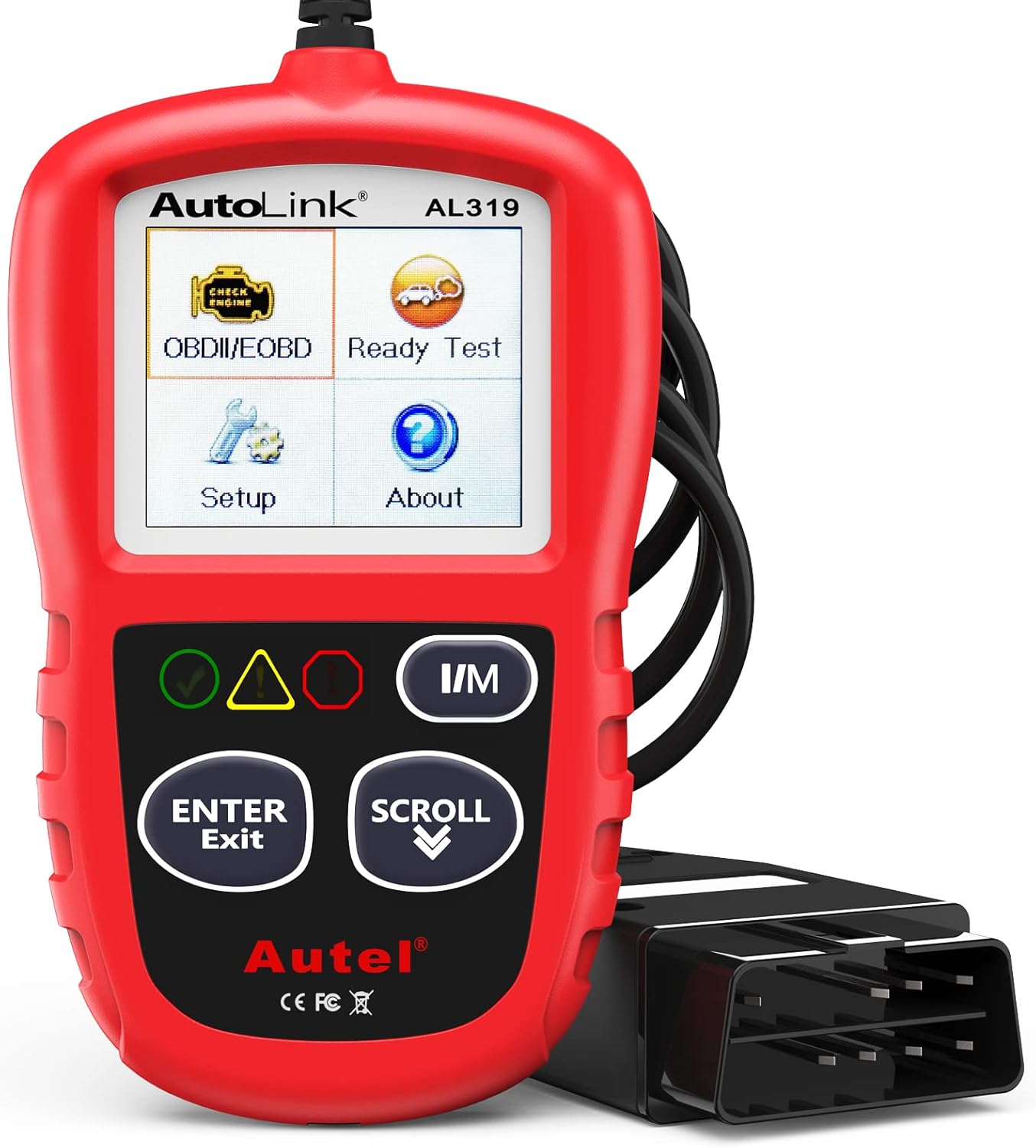
The Autel AL319 is a user-friendly OBD2 scan tool designed to help drivers quickly diagnose check engine light issues and understand vehicle fault codes. It supports reading and clearing DTCs, live data, freeze frame, I/M readiness, and vehicle information, making it a practical choice for DIYers and everyday car owners. With plug-and-play operation, a color display, built-in speaker, and broad vehicle compatibility, it delivers fast, reliable diagnostics without complicated setup.
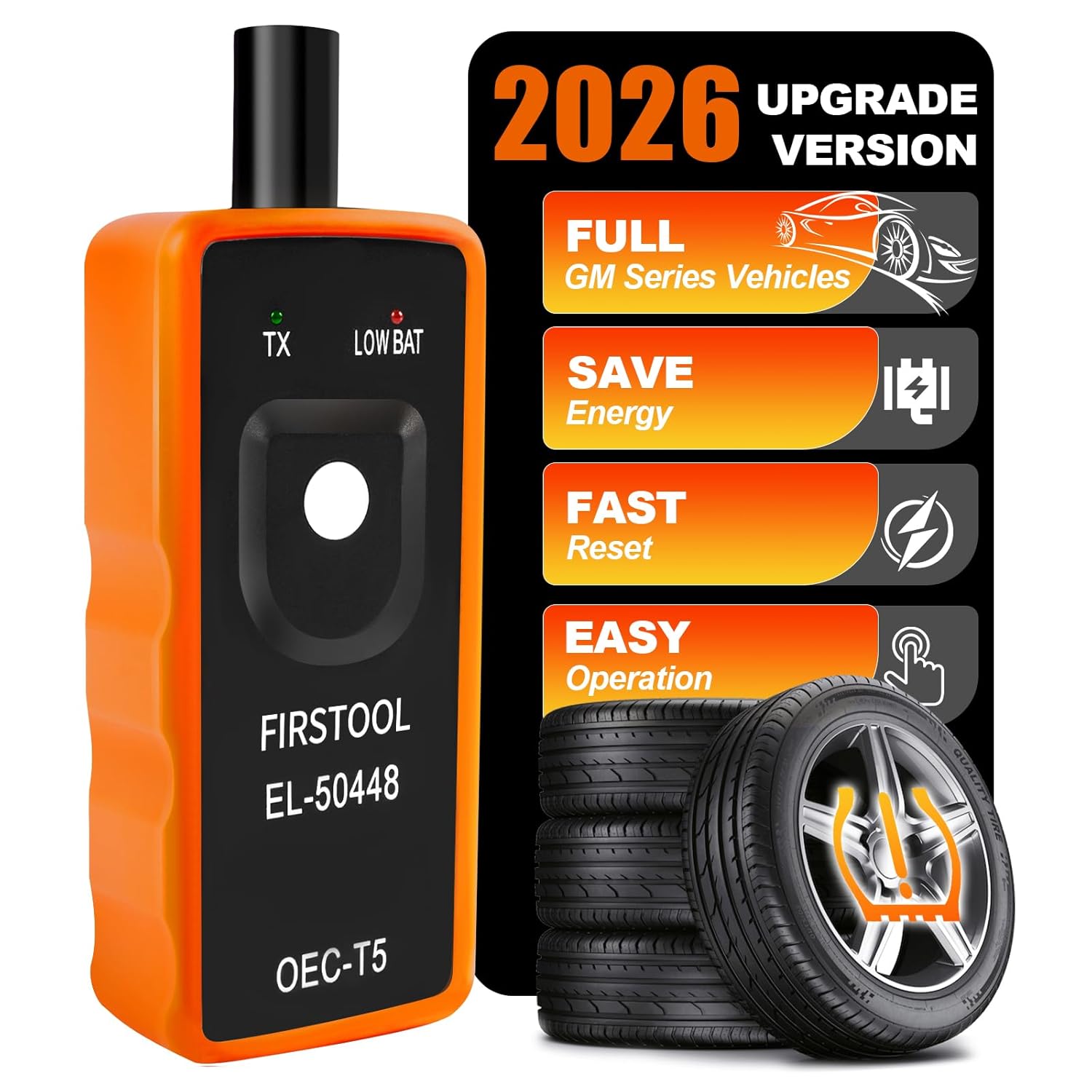
This EL-50448 TPMS relearn tool helps quickly activate and reset tire pressure sensors so your vehicle’s monitoring system stays accurate after tire rotations, sensor replacement, or seasonal tire changes. Designed for many GM-related vehicles and compatible with common 315 and 433 MHz TPMS systems, it offers simple one-button operation and reliable performance for clearing warning lights and relearning sensor positions.
Record These Details Before Clearing Codes
- RAV4 model year, engine or hybrid powertrain, mileage, and recent repairs
- Whether the light is steady, intermittent, or flashing
- Every stored, pending, permanent, or manufacturer-specific code shown
- Freeze-frame engine speed, coolant temperature, vehicle speed, calculated load, and fuel-trim data when available
- Fuel level and whether the light appeared shortly after refueling
- Shaking, hesitation, stalling, unusual noise, odor, overheating, or reduced power
- Any additional dashboard warning or message
Which Check Engine Codes Can Appear on a RAV4?
These are generic code descriptions. Exact definitions, bank labels, available cylinders, and test procedures vary by RAV4 model year, engine, market, and powertrain.
| Code | Plain-English Meaning | Common Checks |
|---|---|---|
| P0171; P0174 where applicable | System too lean on one or more banks | Intake leaks, MAF data, fuel pressure, PCV leaks, exhaust leaks, injector balance |
| P0300–P0306 where applicable | Random or cylinder-specific misfire | Spark plugs, coils, injectors, compression, fuel quality, wiring |
| P0420 | Catalyst efficiency below threshold | Exhaust leaks, sensor data, misfires, rich operation, oil consumption, converter condition |
| P0440, P0441, P0442, P0455, P0456 | EVAP-system leak, flow, or control malfunction | Fuel cap, purge valve, vent valve, hoses, wiring, smoke test |
| P0101 | MAF sensor range or performance issue | Air-filter housing, intake leaks, MAF contamination, wiring, airflow data |
| P0136, P0137, P0138, P0141 | Oxygen-sensor circuit, signal, or heater issue | Sensor wiring, heater circuit, exhaust leaks, power and ground, sensor response |
What Does a Check Engine Code Not Prove?
A trouble code identifies a system, operating result, or circuit that needs testing. It does not automatically identify the failed part. Use the code, symptoms, freeze-frame data, service information, and test results together.
| Code or Code Family | What It Does Not Prove | What to Test First |
|---|---|---|
| P0171 or P0174 | It does not prove the oxygen or air-fuel ratio sensor is bad. | Fuel trims, intake leaks, MAF data, fuel pressure, PCV flow, and exhaust leaks |
| P0301–P0306 | It does not prove the ignition coil is the cause. | Spark plug, coil output, injector operation, compression, wiring, and intake leaks |
| P0420 | It does not prove the converter failed without an upstream cause. | Misfires, mixture faults, oil or coolant consumption, exhaust leaks, and sensor signals |
| EVAP leak code | It does not prove the fuel cap is the only leaking component. | Cap seal, purge and vent operation, hose integrity, wiring, and a controlled smoke test |
What Does Professional RAV4 Diagnosis Include?
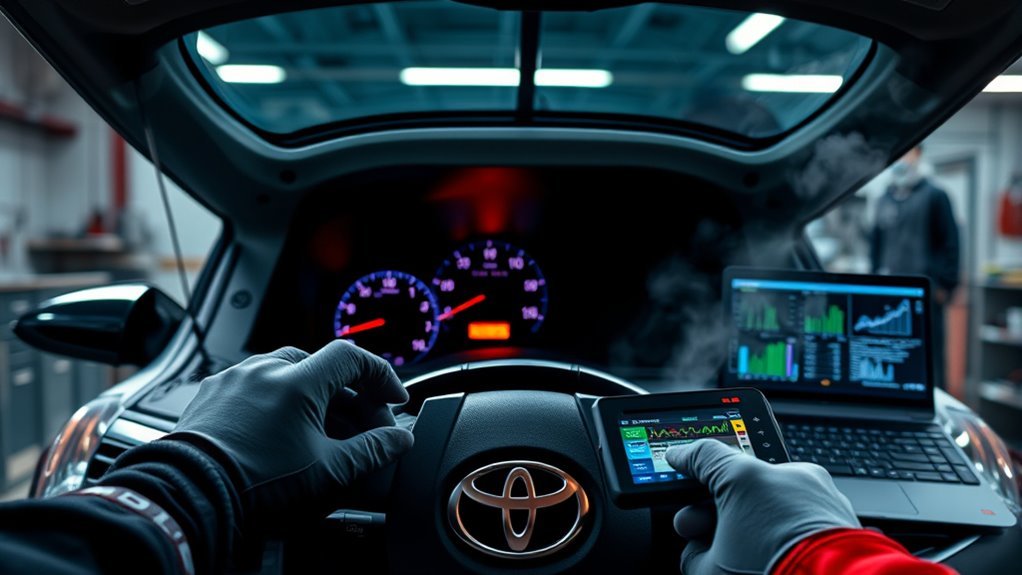
Professional diagnosis should go beyond pulling one code. A technician may begin with a full-system scan, review stored and pending codes, save freeze-frame data, and monitor live values at idle, during a controlled road test, or under a specified load. Useful data can include fuel trims, air-fuel ratio or oxygen-sensor response, MAF readings, coolant temperature, commanded mixture, and misfire counters.
If a lean or EVAP fault is suspected, a controlled smoke test can reveal leaks that are difficult to find visually. For a misfire, a technician may inspect spark plugs, test or swap coils as part of a controlled procedure, check injector operation, measure compression or cylinder leakage, and examine electrical signals.
A basic reader may retrieve generic engine codes but miss Toyota-specific hybrid, brake, AWD, body-control, or communication-module information. A warning can therefore require a Toyota-capable scan even when a basic reader reports no generic powertrain code.
[Products Worth Considering]

Rain-X WeatherBeater wiper blades deliver dependable, conventional performance designed to meet or exceed OEM standards for quality and durability. The natural rubber squeegee, galvanized steel frame, and multiple pressure points work together to provide a clean, consistent wipe while resisting cracking, rust, and corrosion. A pre-installed multi-adapter helps simplify installation on many vehicles.

K&N Select Oil Filter SO-7020 is engineered to deliver dependable engine protection and high-efficiency filtration for a wide range of compatible vehicles. Its pleated synthetic-blend media helps capture harmful contaminants while supporting use with synthetic, conventional, high-mileage, and blended motor oils. Designed for long service intervals and backed by warranty coverage, it offers premium performance for everyday maintenance.
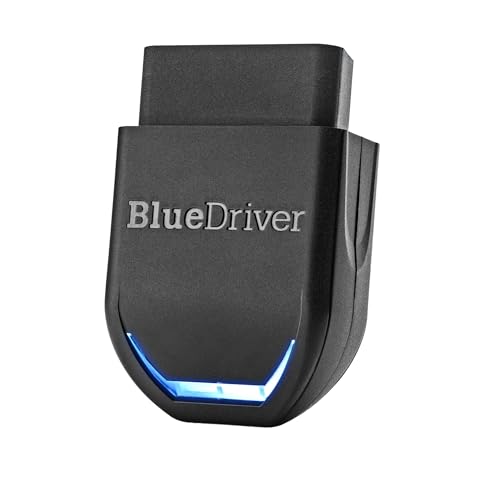
[Diagnose Like a Pro] BlueDriver Pro is a professional OBD2 scanner and diagnostic tool that helps you scan, understand, and clear vehicle trouble codes with confidence. Turn your phone into a powerful car diagnostic scanner—no guesswork, no unnecessary repairs.
Should You Choose DIY Repair, a Shop, or a Toyota Dealer?
Choose the repair path based on risk, available tools, and diagnostic certainty. DIY work is reasonable for checking a fuel cap, correcting an improperly closed air-filter housing, inspecting visible hoses, and recording codes. An independent shop is often appropriate for smoke testing, fuel-trim analysis, electrical diagnosis, and mechanical misfire testing. A Toyota dealer or qualified hybrid specialist may be useful for warranty claims, software-related procedures, hybrid-system faults, and manufacturer-specific diagnostics.
| Repair Type | Best Choice | Why |
|---|---|---|
| Fuel cap, air-filter check, or obvious loose hose | DIY or quick shop visit | The condition is visible and can be verified without advanced testing. |
| Lean codes, EVAP leaks, or intermittent faults | Qualified independent shop or dealer | Diagnosis may require smoke testing, live-data interpretation, and electrical checks. |
| Flashing light, shaking, or severe misfire | Shop or dealer immediately | Continuing to drive may overheat the catalytic converter or worsen engine damage. |
| Catalytic converter or emissions-warranty concern | Dealer or warranty-authorized facility | Coverage documentation, approved diagnosis, and claim procedures may matter. |
[Products Worth Considering]

CEL Doctor: The ANCEL AD310 is one of the best-selling OBD II scanners on the market and is recommended by Scotty Kilmer, a YouTuber and auto mechanic. It can easily determine the cause of the check engine light coming on. After repairing the vehicle's problems, it can quickly read and clear diagnostic trouble codes of emission system, read live data & hard memory data, view freeze frame, I/M monitor readiness and collect vehicle information

【Diagnose Check Engine Light in Seconds – No Mechanic Needed】The FOXWELL NT301 OBD2 scanner instantly reads & clears engine fault codes (DTCs) with one click. Simply plug into the 16-pin DLC port, turn ignition on, and get accurate results within seconds—No prior car knowledge required. Save hundreds on dealership fees by knowing exactly what’s wrong before you visit a shop. The #1 choice car scanner for DIYers and car owners who want to take control of their vehicle’s health

[Built-in 15+ Powerful Functions]: Compared to entry-level diagnostic tools, the AD200 not only has all of their functions, but it is also more professional and powerful. This vehicle code reader supports: read/clear code, I/M readiness, EVAP/o2 sensor test, freeze frame, real-time data stream curve and more. with those function, you can quickly check the cause of the engine check light (MIL), and reset it, but also can accurately read the dtc code and clear it, let your car back to health
What Should RAV4 Hybrid Owners Know?
On a RAV4 Hybrid, the check engine light can still originate from the gasoline engine, EVAP system, air-fuel ratio sensors, fuel-trim problems, or misfires. Hybrid models also contain high-voltage components and additional control modules. Do not touch orange high-voltage cables, connectors, battery components, or inverter-related parts.
A basic OBD-II reader may retrieve generic engine codes but may not access every Toyota-specific hybrid, brake, AWD, or body-control module. If the warning message refers to the hybrid system, reduced power, or dealer service, arrange Toyota-capable diagnosis even when a basic reader shows no generic code.
Could an Emissions Warranty Cover the Repair?
Federal emissions warranties generally provide coverage for many emissions-related defects for 2 years or 24,000 miles, whichever comes first. Certain specified major emissions components may receive coverage for 8 years or 80,000 miles. The covered parts, exclusions, claim process, and any longer state coverage depend on the RAV4’s model year, warranty booklet, registration state, and diagnosis.
Bring the code report, inspection notes, current mileage, maintenance records, and any emissions-test paperwork when asking about coverage. Do not assume a component is covered solely because it affects emissions. Do not assume it is excluded without checking the model-year Toyota warranty booklet and asking an authorized facility to review the diagnosis.
How Can You Reduce Future Check Engine Light Problems?
No maintenance routine can prevent every sensor, wiring, emissions, or mechanical fault. However, correct service, clean fuel, proper fluid levels, and early attention to symptoms can reduce avoidable problems and limit secondary damage.
- Use the fuel grade specified in the model-year owner’s manual.
- Avoid repeatedly topping off the tank after the pump automatically stops.
- Secure the fuel cap after refueling.
- Replace spark plugs at the specified interval for the exact engine and model year.
- Keep the air-filter housing and intake duct sealed correctly.
- Investigate oil or coolant consumption that could affect combustion, sensors, or the catalytic converter.
- Scan new symptoms promptly instead of continuing to drive for weeks without knowing the fault.
Frequently Asked Questions
Will my warranty cover RAV4 check engine light repairs?
Coverage depends on the diagnosed fault, vehicle age, mileage, registration state, maintenance history, and model-year warranty terms. Federal emissions warranties generally cover many emissions defects for 2 years or 24,000 miles, while certain specified major components may receive 8-year or 80,000-mile coverage. Ask an authorized facility to confirm eligibility before approving a major repair.
Can roadside assistance tow me for a check engine light?
Roadside assistance may provide towing depending on the plan and coverage terms. Towing is the safer choice if the light is flashing, the RAV4 is shaking, overheating, stuck in reduced-power mode, losing substantial power, or showing an oil-pressure, temperature, brake, or charging warning.
Can aftermarket tuning trigger the check engine light?
Yes. Intake, exhaust, emissions, or ECU changes can alter airflow, sensor readings, catalyst monitoring, and expected system behavior. If the light appeared after a modification, record the codes and inspect the changed hardware and calibration. Verify that the modification is compatible with the exact RAV4 and local emissions requirements.
How long before a check engine light damages the catalytic converter?
There is no universal safe time limit. A minor EVAP fault may not threaten the converter, while an active misfire can send unburned fuel into the exhaust and overheat the catalyst. If the light flashes or the engine shakes, stop driving as soon as it is safe and arrange diagnosis.
Can cold weather cause the check engine light to come on?
Cold weather can expose a weak 12-volt battery, marginal electrical connection, brittle hose, fuel-vapor leak, or sensor that fails under a particular temperature. The temperature may reveal the fault rather than being the complete cause. Record the temperature and scan the code instead of assuming the light is harmless.
Will the check engine light reset after I tighten the fuel cap?
It may turn off after the vehicle completes enough successful self-checks, but the change is not always immediate. If the light remains on after several normal trips, scan the codes. The fault may involve another EVAP component or may be unrelated to the cap.
Is the check engine light the same as the Maintenance Required light?
No. The check engine light indicates that the onboard diagnostic system detected an engine-control or emissions-related fault. A maintenance reminder normally indicates that scheduled service may be due based on time or mileage. Read the exact symbol and model-year manual before resetting either indicator.
Should I disconnect the battery to reset the check engine light?
Do not disconnect the battery merely to hide the light. Doing so may erase useful diagnostic information, reset readiness monitors, and fail to correct the underlying problem. Record the codes and freeze-frame data first, repair the confirmed cause, and clear codes only when the diagnostic procedure calls for it.
Conclusion
A Toyota RAV4 check engine light is a warning, not a diagnosis. Treat a flashing light, heavy shaking, overheating, strong fuel smell, red warning light, or severe power loss as urgent. A steady light may allow a short, gentle trip only when the RAV4 otherwise operates normally.
Check the fuel cap and visible under-hood items first. Then record stored, pending, and permanent codes along with freeze-frame data. Test the system identified by the code instead of automatically replacing the named component. That process protects the catalytic converter, preserves useful evidence, and helps you choose the right repair path.
Sources
- Toyota Owners: Warning Lights and Indicators — manufacturer guidance for identifying dashboard warnings and their general urgency.
- Toyota Owners: 2024 RAV4 Opening the Fuel Tank Cap — model-specific fuel-cap operation and fuel-cap warning guidance.
- eCFR: 40 CFR Part 86, Vehicle Emissions and Onboard Diagnostics — federal requirements covering vehicle emissions controls and onboard diagnostic systems; applicable provisions vary by model year.
- eCFR: 40 CFR 85.2103 Emission Warranty — current federal emissions warranty periods and specified major-component provisions.
- U.S. EPA: Transportation, Air Pollution, and Climate Change FAQs — consumer guidance on federal emissions warranties and warranty claims.