If your 2000 Toyota Camry’s vents smell musty, dusty, sour, or stale, the cause is usually trapped moisture, debris, or odor buildup inside the HVAC system. Start with the simple checks first: identify the smell, inspect the outside air intake and glovebox area, confirm whether your exact Camry has a serviceable cabin air filter, then check the A/C drain and evaporator if the odor remains.
Quick Answer
A musty smell from a 2000 Toyota Camry’s vents usually comes from moisture and odor buildup on the A/C evaporator, debris in the cowl intake, a blocked condensate drain, or a dirty cabin filter if your specific car has one. Do not assume every 2000 Camry has a replaceable cabin filter.
Key Takeaways
- First confirm the odor type. Musty, dusty, gasoline, coolant, and burning smells point to different problems.
- Some 2000 Camrys may not have a serviceable cabin air filter, so inspect before buying parts.
- A blocked A/C drain or damp evaporator can keep the smell coming back even after cleaning the vents.
- Gasoline, exhaust, burning electrical, or sweet coolant smells are safety warnings, not normal cabin-filter problems.
- Use fresh-air mode before parking and dry the evaporator after A/C use to reduce repeat odors.
At a Glance
| Time Required | 15–45 minutes for inspection; 1–2 hours if cleaning the drain and applying evaporator cleaner |
| Difficulty | Beginner for inspection; intermediate for drain and evaporator cleaning |
| Tools Needed | Flashlight, gloves, shop vacuum, microfiber towel, mild cleaner, flexible plastic line or compressed air, HVAC evaporator cleaner, N95 respirator and goggles for moldy debris |
| Cost | $0–$25 for basic cleaning; $10–$30 for a cabin filter if equipped; more if a shop performs evaporator service |
Quick Diagnostic Guide: Why Your Camry’s Vents Smell
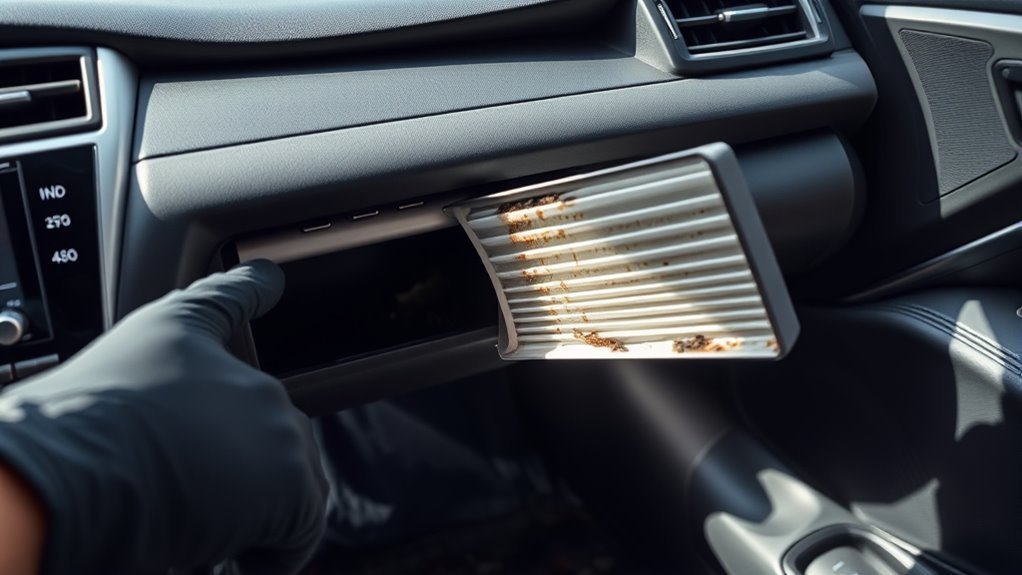
Before you remove the glovebox or spray anything into the ducts, match the smell to the most likely source. This keeps you from treating a safety problem like a simple odor problem.
| Smell | Likely Cause | What To Check First |
| Musty or mildew | Moisture on the evaporator, blocked A/C drain, wet debris in intake or ducts | A/C drain drip, passenger-side carpet, cowl intake, evaporator cleaner |
| Dusty or dirty | Leaves, pollen, dirt, dirty blower area, dirty filter if equipped | Cowl intake screen, glovebox area, blower housing, cabin filter slot if present |
| Sour or vinegar-like | Bacterial odor on a damp evaporator | Evaporator drying routine and A/C cleaner |
| Sweet syrup | Possible coolant leak or heater-core issue | Coolant level, oily windshield film, wet passenger carpet; call a mechanic |
| Gasoline, exhaust, or burning | Possible fuel leak, exhaust leak, oil leak, belt issue, or electrical fault | Stop driving if strong; inspect outside the HVAC system and get professional diagnosis |
Warning: A gasoline, exhaust, burning plastic, or strong coolant smell is not a normal cabin-filter odor. Park safely, turn the car off if the smell is strong, and have the fuel, exhaust, cooling, or electrical system inspected before continuing to drive.
Does a 2000 Toyota Camry Have a Cabin Air Filter?
Do not assume the answer is yes. Some older Camrys and market variants may have a serviceable filter behind the glovebox, while others may only have a fixed mesh screen or no replaceable cabin filter at all. The safest approach is to inspect your car before buying a filter.
For exact vehicle information, use your VIN with Toyota’s owner manual and parts resources: Toyota Owners Manuals and Warranties and Toyota Genuine Cabin Air Filters. If the parts catalog, owner information, and physical inspection disagree, trust the physical inspection or ask a Toyota parts department to check by VIN.
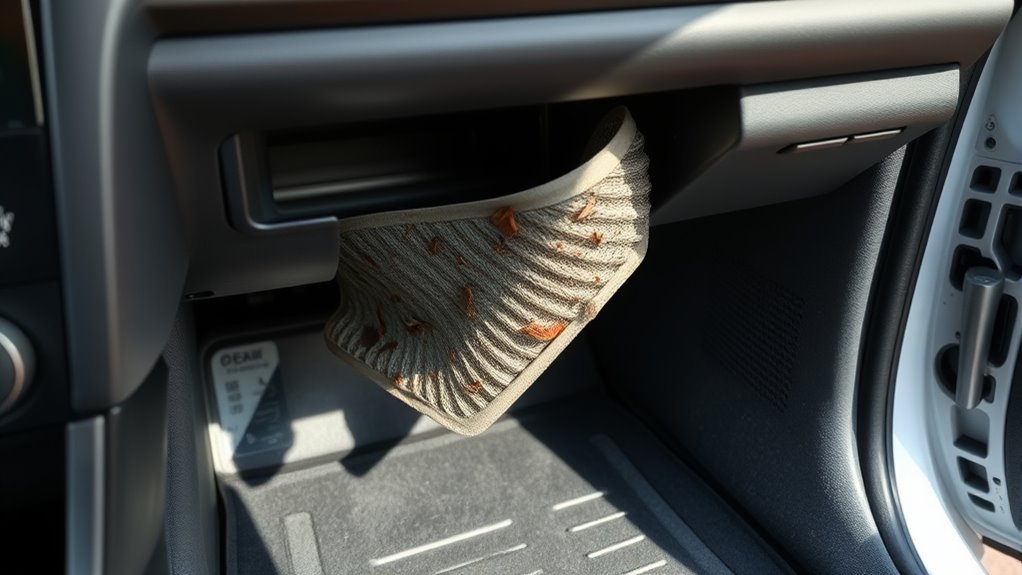
How To Check Behind the Glovebox
- Empty the glovebox.
- Open it fully and gently press the sides inward so it can swing down.
- Use a flashlight to look behind the glovebox for a rectangular filter access door or removable cover.
- If a cover is present, open it and check whether a filter slides out.
- If there is no access door or filter slot, do not force the plastic housing. Your car may not have a serviceable cabin filter.
Note: If your Camry has no serviceable cabin filter, the odor fix shifts to cleaning the cowl intake, blower area, evaporator drain, and vents instead of replacing a filter.
Top Causes of Dust and Musty Smells From Camry Vents
The most common causes are simple, but they can overlap. A musty odor often comes from moisture sitting on the evaporator core after A/C use. A dusty odor often comes from leaves, pollen, or dirt entering through the outside air intake. A blocked A/C condensate drain can make the problem worse by keeping the HVAC case damp.
Toyota’s HVAC odor guidance for later Toyota models explains that odors from inside and outside the vehicle can accumulate in the air conditioning system and on the evaporator, then be released through the vents as the evaporator temperature changes. Toyota also notes that these service procedures may reduce odor intensity rather than eliminate every odor permanently. Toyota HVAC Odor Maintenance bulletin hosted by NHTSA
Common Odor Sources
- Wet debris in the cowl intake: Leaves and dirt can collect near the windshield base and feed stale odors into the fresh-air intake.
- Dirty cabin filter, if equipped: A dirty filter can hold dust and odor, but only if your specific Camry has a replaceable filter.
- Damp evaporator core: Moisture after A/C use can hold odor on the evaporator fins.
- Blocked condensate drain: If water cannot drain under the car, it may pool in the HVAC case or soak the passenger-side carpet.
- Dirty blower housing: Debris near the blower wheel can create dusty smells and weak airflow.
- Continuous recirculation use: Recirculation can trap humidity and cabin odors instead of flushing them out.
How to Check and Replace the Cabin Air Filter, If Equipped
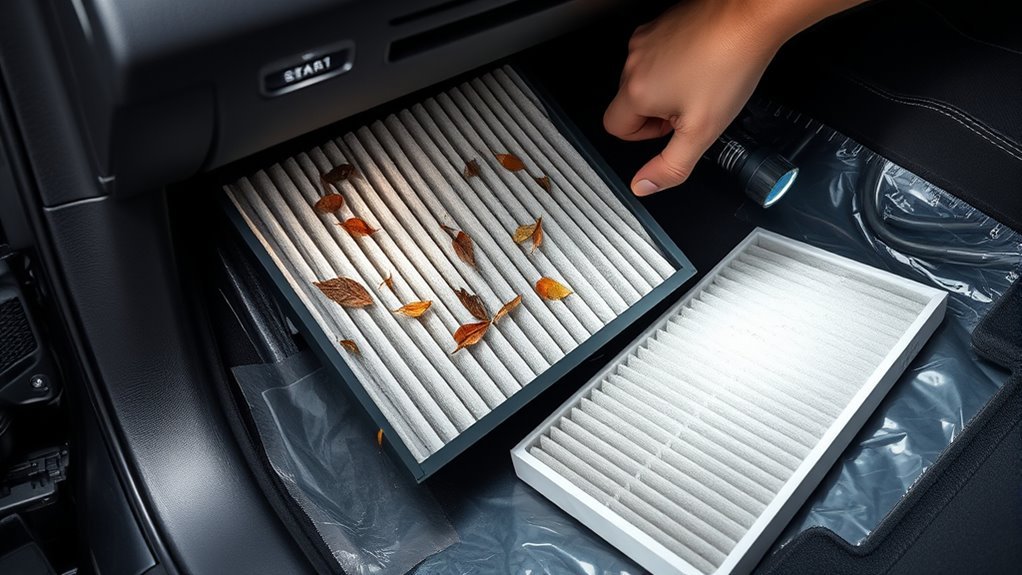
If your inspection confirms a serviceable cabin filter, replacing it is a good first step. If no filter slot is present, skip to the next section instead of cutting or forcing the HVAC housing.
- Turn the ignition off and remove items from the glovebox.
- Lower the glovebox carefully by pressing the side stops inward.
- Look for a rectangular filter door or removable cover behind the glovebox.
- Remove the cover and slide the old filter out.
- Check the old filter for leaves, dirt, dampness, dark staining, or odor.
- Match the new filter to the old one and follow the airflow arrow on the filter or housing.
- Slide the new filter in without crushing it, reinstall the cover, and raise the glovebox.
- Run the blower on fresh air for a few minutes and check airflow from every vent.
Pro Tip: If the old filter is damp, do not stop at filter replacement. A damp filter can be a symptom of a drain, water intrusion, or evaporator moisture problem.
What To Do If Your Camry Has No Serviceable Cabin Filter
If your 2000 Camry does not have a replaceable cabin filter, you can still remove many odor sources with basic cleaning.
- Clean the cowl intake: Remove leaves and dirt from the area at the base of the windshield. Keep water drains clear.
- Vacuum accessible debris: Use a shop vacuum around the glovebox opening, lower dash area, and visible intake areas.
- Check the blower: If airflow is weak or noisy, debris may be near the blower wheel. Remove only panels you can reinstall correctly.
- Inspect the passenger-side carpet: Damp carpet can point to a blocked A/C drain, water leak, or heater-core issue.
- Use fresh-air mode: Run the blower on fresh air to flush stale cabin air out of the ducts.
Deep Clean the Evaporator, Drain Tube, and Ducts for Mold
If the smell is strongest right after you turn on the A/C, the evaporator and drain tube are prime suspects. The evaporator removes moisture from cabin air, and that moisture should drain under the car through the condensate drain. When the drain blocks or the evaporator stays damp, odors can return quickly.
Warning: Wear gloves, eye protection, and at least a NIOSH-approved N95 respirator when disturbing moldy debris. The CDC advises people with allergies, immune suppression, asthma, COPD, or underlying lung disease not to take part in mold cleanup. CDC mold cleanup guidance
How To Check the A/C Drain
- Park on a safe, level surface.
- Run the A/C for 10–15 minutes on a humid day.
- Look under the passenger side of the car for a normal water drip.
- If there is no drip and the passenger carpet feels damp, the drain may be blocked.
- Clear the drain gently with compressed air or a flexible plastic line. Do not jam metal tools into the drain tube.
How To Clean the Evaporator and Ducts
- Choose an automotive HVAC evaporator cleaner made for vehicle A/C systems.
- Follow the product label exactly, including ventilation and dwell time.
- Apply cleaner through the approved access point, usually the drain tube or intake path, depending on the product.
- Let the foam or cleaner work for the recommended time.
- Run the blower as directed to dry and distribute the cleaner.
- Confirm the drain flows freely afterward.
Do not spray harsh household chemicals directly into vents, and never mix cleaning products. Strong cleaners can damage interior materials, create irritating fumes, or leave residue in the HVAC case.
Short-Term Fixes and Long-Term Prevention for HVAC Odors
Quick Odor Remedies
Use quick fixes only after you remove obvious debris and check for safety-related smells. Air fresheners can mask odor, but they do not fix a wet evaporator, dirty intake, or blocked drain.
- Remove leaves and dirt from the cowl intake.
- Replace the cabin filter if your Camry has a serviceable one.
- Clear the A/C drain if condensate is not dripping under the car.
- Use an automotive evaporator cleaner if the odor is musty or sour.
- Run the blower on fresh air after cleaning.
Preventive Maintenance Steps
Toyota’s HVAC odor guidance recommends using outside/fresh-air mode when parking to reduce odors trapped in the HVAC system. It also recommends annual or 10,000-mile HVAC filter replacement for covered Toyota models and A/C evaporator cleaning if odor persists. For a 2000 Camry, apply that guidance only where your car is equipped with a serviceable filter, and use the fresh-air drying routine regardless. Toyota HVAC Odor Maintenance bulletin
- Before parking: Switch from recirculation to fresh air for the last few minutes of driving.
- After heavy A/C use: Run the fan with A/C off for a few minutes to help dry the evaporator.
- Monthly: Clear leaves from the windshield cowl area.
- Every oil change: Check for weak airflow, unusual blower noise, damp carpet, or a missing condensate drip.
- Annually: Replace the cabin filter if equipped and inspect the A/C drain.
The best odor fix is not a stronger air freshener. It is removing moisture, dirt, and debris so the HVAC system can dry properly.
When to Call a Pro: Inspections, Costs, and What to Expect
Call a professional mechanic or automotive HVAC technician if the odor remains after basic cleaning, if airflow is weak, if the passenger carpet is wet, or if you smell gasoline, exhaust, coolant, or burning. A shop can inspect the evaporator case, drain tube, blower housing, heater core, fuel system, and exhaust path more safely than a driveway diagnosis.
Expect the technician to:
- Confirm the odor type and when it occurs.
- Inspect the cowl intake, blower housing, and HVAC case.
- Check whether your exact Camry has a serviceable cabin filter.
- Verify A/C drain flow.
- Check for water leaks, coolant leaks, fuel smells, or exhaust intrusion.
- Recommend evaporator cleaning, drain clearing, leak repair, or component replacement as needed.
If you suspect a recall or safety-related defect, check your VIN through NHTSA’s recall lookup. NHTSA explains that VIN or license-plate searches can show whether a specific vehicle needs repair as part of a recall.
Frequently Asked Questions
Can a cabin air filter cause a musty smell?
Yes, if your Camry has a serviceable cabin air filter. A dirty or damp filter can hold pollen, dust, leaves, and odor. However, not every 2000 Camry has a replaceable cabin filter, so inspect the glovebox area before buying one.
Why does my Toyota Camry A/C smell bad when I first turn it on?
A bad smell at startup often comes from moisture and odor buildup on the evaporator. The smell may fade as air moves through the system, but it usually returns unless you dry the evaporator, clear the drain, remove debris, and clean the HVAC case if needed.
Can a bad cabin filter make my car smell like gas?
A cabin filter may hold odors, but it should not be treated as the cause of a gasoline smell. A gas smell can point to a fuel leak, evaporative-emissions issue, or fumes entering the cabin. Park safely and have the vehicle inspected before continuing to drive if the smell is strong.
What is the Toyota smell lawsuit?
The Toyota HVAC odor settlement is Salas v. Toyota, involving certain 2012–2015 Camry XV50 vehicles purchased or leased in California. It does not apply to a 2000 Camry. Toyota denied the allegations and settled without the court deciding who was right.
How do I keep the smell from coming back?
Use fresh-air mode before parking, avoid leaving the system in recirculation, clear leaves from the cowl intake, make sure the A/C drain drips normally, and replace the cabin filter if your specific Camry has one. If the odor returns quickly, the evaporator or drain may need deeper cleaning.
Conclusion
A musty vent smell in a 2000 Toyota Camry is usually fixable, but the right repair depends on the source. Start by identifying the odor, then inspect the cowl intake, glovebox area, cabin filter slot if equipped, A/C drain, and evaporator. If the smell is fuel, exhaust, coolant, or burning, skip deodorizing and get the car inspected for a safety issue.
Sources
- Toyota Owners Manuals and Warranties — vehicle-specific owner information for the 2000 Toyota Camry.
- Toyota Genuine Cabin Air Filters — Toyota parts resource for checking cabin filter availability by vehicle.
- Toyota HVAC Odor Maintenance Bulletin T-SB-0010-20 — Toyota guidance on HVAC odor sources, fresh-air mode, HVAC filters, and evaporator cleaning.
- CDC Mold Cleanup Guidelines — mold cleanup PPE and health-risk cautions.
- NHTSA Recall Lookup — VIN-based safety recall checks.
- Salas v. Toyota Official Settlement Website — current scope of the Toyota Camry HVAC odor settlement.