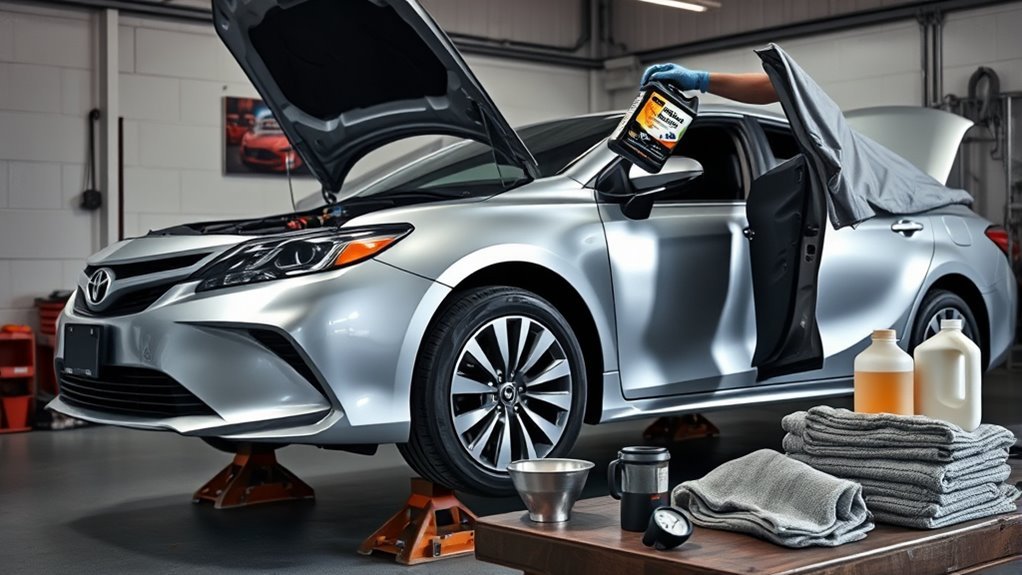
Winter storage is less about “parking and forgetting” and more about protecting the parts that suffer when a Toyota Camry sits: the 12-volt battery, fuel system, tires, brakes, paint, interior, and, on hybrid models, the traction battery. Use this checklist before storing your Camry for a month or longer, and check your owner’s manual for your exact model year before handling fluids, batteries, or lift points.
Quick Answer
To winterize a Toyota Camry, store it in a dry, secure, ventilated space; wash and dry it; fill the fuel tank and add stabilizer; check oil, coolant, brake fluid, and washer fluid; protect the 12-volt battery; inflate the tires; avoid the parking brake; block pests; and keep a restart checklist in the car.
Key Takeaways
- A full tank with fuel stabilizer helps reduce moisture and fuel varnish during storage.
- Use a battery maintainer or disconnect the negative 12-volt battery terminal to reduce parasitic drain.
- Set tires to the door-jamb pressure, use chocks, and consider tire cradles or jack stands for longer storage.
- Do not apply undercoating over rust, exhaust parts, brake parts, sensors, or wet metal.
- For a Camry Hybrid, Toyota advises starting the hybrid system about every two months for roughly 30 minutes when the vehicle is stored.
At a Glance
| Time Required | 2–4 hours, plus drying time after washing or cleaning the interior |
| Difficulty | Easy to moderate; use a technician for lifting, fluid service, or battery work if unsure |
| Tools Needed | Tire gauge, air compressor, fuel stabilizer, battery maintainer, wheel chocks, microfiber towels, breathable cover, optional tire cradles or jack stands |
| Cost | About $30–$200 for basic supplies; more if you buy a premium cover, maintainer, or professional fluid service |
Winterize Your Camry: Immediate Checklist Before You Start
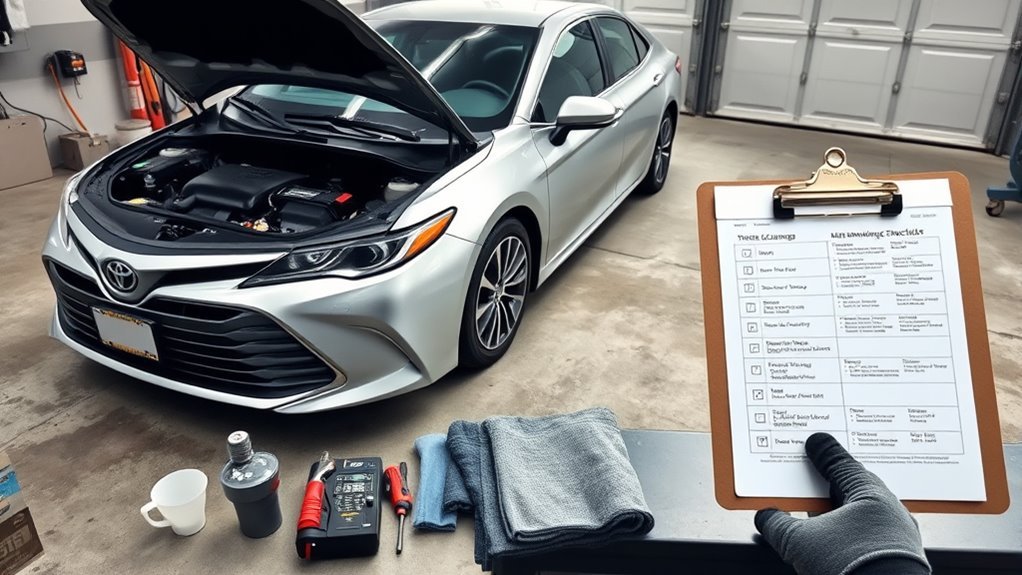
Before you begin winter storage, choose a location that is dry, secure, and ventilated. A garage is best, but a covered, well-drained parking space with a fitted car cover is better than leaving the car exposed to snow, rain, road salt, and direct winter grime.
Use this fast pre-check before you touch fluids or the battery:
- Remove trash, food, receipts, gym bags, and anything that can trap moisture or attract pests.
- Check for active leaks under the engine, transmission, radiator, brake lines, and fuel tank.
- Confirm the tire pressure label on the driver’s door jamb.
- Review your owner’s manual or Toyota’s Camry owner manual library for your exact model year.
- Decide whether the car will sit for one month, two to six months, or longer than six months. Toyota recommends getting specialized long-term storage help if the vehicle will be stored for more than six months.
Keep a written checklist in the glove box that says what you did: fuel stabilizer added, battery disconnected or maintained, tire pressure set, vents covered, exhaust blocked for pests, and parking brake left off. That small note prevents missed steps when you bring the Camry back into service.
Warning: Never run a gasoline or hybrid Camry in a closed garage. If you need to circulate fuel stabilizer or maintain a hybrid battery, open the garage door fully, move the car outdoors when possible, and keep the exhaust area clear.
Fluids & Engine: Oil, Coolant, Fuel Stabilizer for Storage
Fresh, correct fluids make winter storage easier on the engine, fuel system, seals, and cooling system. Start with the fuel tank: fill it with fresh gasoline, add fuel stabilizer according to the product label, then drive 5–10 miles or run the engine long enough in a safe, ventilated area to move treated fuel through the system. AAA also recommends filling the tank and circulating stabilizer before storage.
Next, check the engine oil. If the oil is old, dark, fuel-smelling, or close to its service interval, change the oil and filter before storage. Used oil can hold contaminants and moisture; fresh oil gives the engine better protection while it sits. Use the viscosity shown on your oil cap and owner’s manual, not a generic winter grade.
Check coolant level only when the engine is cold. Most modern Toyota models use Toyota Super Long Life Coolant or an equivalent long-life coolant, and many bottles are already premixed. Do not mix random coolant colors or add tap water. If the coolant is low, contaminated, rusty, or unknown, have the system inspected instead of simply topping it off.
The best storage prep is boring on purpose: clean oil, correct coolant, stabilized fuel, a healthy battery, dry interior, full tires, and no mystery leaks.
- Brake fluid: Check the reservoir level. If it is low, do not just top it off and forget it; low brake fluid can mean worn pads or a leak.
- Transmission fluid: Do not drain it for storage. Follow the owner’s manual or have a Toyota-qualified shop inspect it if service is due.
- Washer fluid: Use winter-rated washer fluid if the car will face freezing temperatures.
- Air conditioning: If the car can be safely run during storage, running the climate system occasionally helps keep seals lubricated and the cabin dry.
Note: For a Camry Hybrid, the gasoline engine may start and stop automatically while the READY light is on. Treat it like a running vehicle and maintain exhaust ventilation the entire time.
[Products Worth Considering]

This genuine Toyota fuel tank cap assembly ensures a perfect fit for your vehicle, delivering reliable sealing and protection against fuel leaks. It meets OEM specifications, offering Toyota‑quality assurance and a manufacturer warranty for peace of mind. Ideal for drivers seeking authentic parts that maintain performance and safety.

Ensure accurate engine cooling with Toyota's genuine water temperature sensor, designed for precise coolant monitoring and reliable performance. This OEM part fits seamlessly into your vehicle, offering durability and consistent temperature readings for optimal engine health.

The Pigenius windshield sunshade protects your Tundra's interior from heat and UV damage while keeping the cabin cool. Its accordion design folds easily for storage and quick setup, and the triple‑laminate construction provides durable, reflective protection. Ideal for long trips and daily commutes, it guards dashboards, seats, and steering wheels from sun‑related wear.
Battery Care: Disconnect, Store, or Use a Trickle Charger
The 12-volt battery is one of the first things to fail when a Camry sits. A healthy, fully charged 12-volt battery usually reads around 12.6 volts with the vehicle off. If it is already weak, storage will not improve it; test or replace it before parking the car for winter.
| Action | Best For | Why It Helps |
|---|---|---|
| Use a smart battery maintainer | Garage storage with power | Maintains charge without constant manual charging |
| Disconnect the negative terminal | Storage without outlet access | Reduces parasitic drain from electronics |
| Remove and store the battery | Very cold or unsecured storage | Keeps the battery away from freezing, theft, and corrosion risk |
| Check voltage monthly | Any storage plan | Catches discharge before the battery is deeply drained |
If you disconnect the battery, turn the vehicle off, keep the key away from the car, and remove the negative cable first. Secure the cable so it cannot spring back to the terminal. When reconnecting, some settings may need to relearn or reset, including clock, windows, and other electronics.
Use a smart maintainer designed for your battery type, especially if your Camry has an AGM battery. Do not use an old manual trickle charger that can overcharge the battery while unattended.
[Products Worth Considering]

Stay warm and keep control with the KVAEY fluffy steering wheel cover. Its high‑density plush provides a soft, comfortable grip while the anti‑slip rubber liner ensures safety during winter drives. Easy to install and fits 15‑inch wheels on cars, trucks, and SUVs, adding a cozy, stylish touch to any interior.

Upgrade your vehicle's cargo capacity with these heavy‑duty aluminum roof crossbars that lock securely and reduce wind noise. The aerodynamic design and adjustable width provide a quiet, stable platform for luggage up to 260 lb, while the easy‑install kit and labeled front and rear bars simplify setup. Ideal for Toyota Grand Highlander and Lexus TX models from 2024‑2026 with flush side rails.
Hybrid Camry Storage: What Changes?
A Camry Hybrid has two battery systems: the small 12-volt auxiliary battery and the high-voltage hybrid traction battery. The 12-volt battery still needs the same storage protection as a gasoline Camry. The hybrid battery needs a different approach.
Toyota’s hybrid battery storage guidance says to charge the hybrid vehicle battery at least once every two months by starting the hybrid system for about 30 minutes, with the READY light on and electrical accessories off. You do not need to drive the vehicle for that step, but you must prevent exhaust buildup. If the hybrid battery becomes fully discharged and the hybrid system will not start, contact a Toyota dealer.
Pro Tip: Do not follow generic EV advice for a regular Camry Hybrid. A non-plug-in Camry Hybrid does not let you set the traction battery to a manual 50–70% storage charge the way some plug-in or battery-electric vehicles do.
Tires & Suspension: Inflate, Jack Options, Prevent Flat Spots
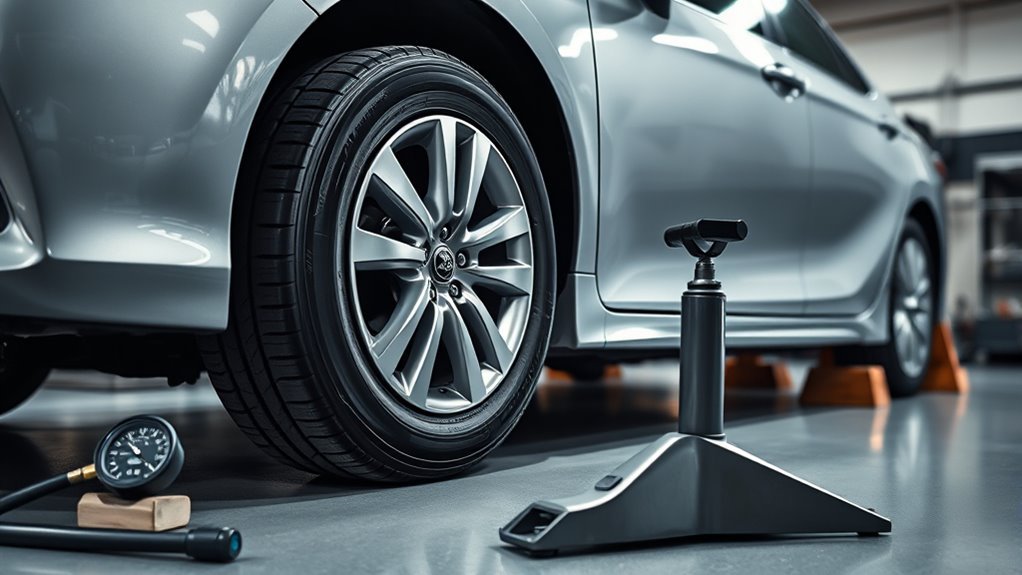
You can leave a Camry on its tires for short storage, but do not leave the tires underinflated. Inflate them to the manufacturer-recommended cold pressure on the driver’s door jamb, not the maximum pressure printed on the tire sidewall. Tires lose air over time, so recheck them when you return.
For storage longer than a month, reduce flat-spot risk with one of these options:
- Park on tire cradles, rubber mats, plywood, or thick foam insulation squares.
- Move the car a few feet every few weeks if it is safe and legal to do so.
- Use jack stands at the proper lift points for longer storage if you know how to lift the vehicle safely.
- Use wheel chocks and leave the transmission in Park.
Do not set the parking brake for long winter storage if the vehicle is safely chocked. Moisture can cause pads, shoes, or rotors to stick. Before lifting the vehicle, use a rated jack, level ground, and jack stands rated above the vehicle’s weight. Never rely on a jack alone.
Wash, Undercoat, and Cover: Exterior and Interior Protection
Salt, mud, bug residue, bird droppings, and road film can damage paint and speed corrosion while a Camry sits. Wash the exterior thoroughly, including wheel wells, rocker panels, lower door edges, and the underside where road salt collects. Dry the car fully before covering it.
Be careful with undercoating. A rubberized undercoating can trap moisture if sprayed over rust, damp metal, dirt, seams, brake parts, exhaust parts, sensors, or drain holes. If the underside already has rust, use a professional rust inspection or an appropriate corrosion inhibitor instead of sealing the problem under a thick coating.
Inside, vacuum the cabin, wipe hard surfaces, clean glass, remove perishables, and dry carpets and mats completely. Steam-cleaning can help with odor and grime, but only if the interior is ventilated until fully dry. Damp carpet under a closed winter cover is a mold invitation.
Use a breathable, fitted cover. Indoors, a soft breathable cover is usually enough to keep dust off. Outdoors, choose a weather-resistant cover that still allows moisture to escape. Avoid plastic tarps; they can trap condensation and rub paint when the wind moves them.
Storage Setup: Pests, Security, and Monthly Checks
Set the Camry in a cool, dry, well-ventilated space. Park away from exterior walls if possible, because those areas often see more condensation. Use desiccant packs or a dehumidifier in damp garages, and keep the floor under the car clean so new leaks are easy to spot.
Rodents can chew wiring, nest in the air intake, and pack debris around warm engine areas. Reduce the risk before storage:
- Remove food, wrappers, pet food, bird seed, and cardboard from the storage area.
- Block the tailpipe and obvious intake openings with removable material such as aluminum foil or fine mesh.
- Leave a bright reminder tag on the steering wheel that says “Remove exhaust and intake covers before starting.”
- Inspect monthly for droppings, nests, chewed insulation, or new smells.
- Keep insurance and registration requirements in mind, especially if the car is parked off your property or on a public street.
Check the car monthly if you can. Look for moisture, leaks, tire pressure loss, pest activity, battery charge, and cover movement. Fix small issues as soon as you see them instead of waiting until spring.
Post-Storage Restart Checklist
When storage ends, reverse the checklist slowly. Do not jump in and drive away just because the engine starts.
- Remove the car cover and inspect the paint, glass, tires, and underbody.
- Remove all exhaust, intake, and vent blockers used for pest control.
- Check for nests, droppings, chewed wiring, or debris in the engine bay.
- Check engine oil, coolant, brake fluid, washer fluid, and visible leaks.
- Reconnect the 12-volt battery or remove the maintainer.
- Set tire pressure to the door-jamb specification.
- Start the vehicle in a ventilated area and watch warning lights and gauges.
- Test headlights, brake lights, turn signals, wipers, horn, HVAC, and backup camera.
- Press the brake pedal several times before moving; surface rust on rotors may make the first stops noisy.
- Take a short, low-speed test drive, then recheck for leaks, smells, warning lights, or tire vibration.
If the brake pedal feels soft, a warning light stays on, the hybrid system will not enter READY mode, or the vehicle shakes badly after storage, stop and schedule service before driving farther.
Frequently Asked Questions
How do you winterize a Toyota Camry for storage?
Wash and dry the car, clean the cabin, fill the fuel tank, add stabilizer, check oil and coolant, protect the 12-volt battery, inflate the tires, avoid the parking brake, block pests, use a breathable cover, and keep a restart checklist inside the vehicle.
How long can a Camry sit without being driven?
A few weeks usually needs little more than a clean, full tank, correct tire pressure, and a healthy battery. Once storage reaches a month or longer, use fuel stabilizer, battery maintenance, pest prevention, and tire flat-spot protection. For storage beyond six months, Toyota recommends consulting a long-term vehicle storage specialist.
How do you store a Toyota Camry Hybrid for three months?
Prepare it like a gasoline Camry, but add hybrid battery care. Maintain or disconnect the 12-volt battery, and follow Toyota’s guidance to start the hybrid system about every two months for roughly 30 minutes with the READY light on and accessories off. Always do this in a ventilated area.
Should I disconnect the Camry battery or use a trickle charger?
Use a smart battery maintainer if the car is stored in a secure place with power. If no outlet is available, disconnect the negative 12-volt battery terminal to reduce drain. Do not use a basic manual charger unattended, and make sure the maintainer matches your battery type.
What should I put under the tires when storing my car?
Use tire cradles, rubber mats, plywood, or thick foam insulation squares. Inflate the tires to the pressure shown on the driver’s door jamb, use wheel chocks, and avoid setting the parking brake for long storage.
Should I start my Camry during winter storage?
Do not start it briefly just to let it idle for a few minutes; short starts can add moisture without fully warming the system. If you start it to circulate stabilizer or maintain a hybrid battery, run it long enough for the intended task and only with safe exhaust ventilation.
Conclusion
A Camry comes out of winter storage well when you protect the weak points before it sits: fuel, fluids, battery, tires, brakes, paint, interior moisture, and pests. Treat the process like preventive maintenance, not a seasonal chore. When you return, reverse every step carefully, inspect before driving, and take the first test drive slowly. The goal is simple: no dead battery, no flat-spotted tires, no fuel-system trouble, and no surprises when the Camry wakes up.
Sources
- Toyota Support: Long-term vehicle storage preparation — Toyota guidance for preparing a vehicle for extended storage and when to consult a storage specialist.
- Toyota Support: Hybrid battery storage care — Toyota guidance for maintaining the hybrid vehicle battery during storage.
- Toyota Owners: Camry Hybrid Owner’s Manual — model-specific manual reference for maintenance, warnings, fluids, and hybrid-system precautions.
- AAA: Tips for parking and storing your car for extended periods — fuel stabilizer, parking brake, tire, and battery storage recommendations.
- NHTSA: Toyota Long-Term Vehicle Storage Guidelines — Toyota technical bulletin covering battery, inspection, and long-term storage maintenance procedures.