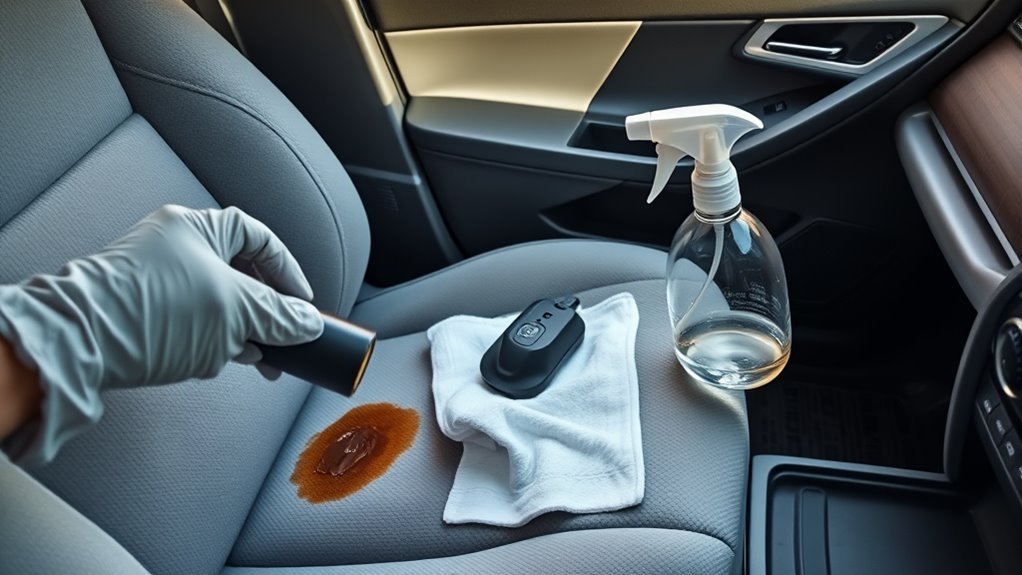
Identify the stain, then vacuum and mask trim. Warm your cleaner and tools, apply a citrus-based solution like Flex Citrus to heavy spots, let it dwell about 15 minutes, agitate with a drill-mounted brush then follow with a white-bristle finish. Extract with a hot-water extractor using a wet pass, then a dry pass, and repeat spot treatments on stubborn areas. Towel-dry and speed-dry without over-wetting, and keep going for step-by-step tips on tougher stains.
Identify Stains on Camry Cloth Seats
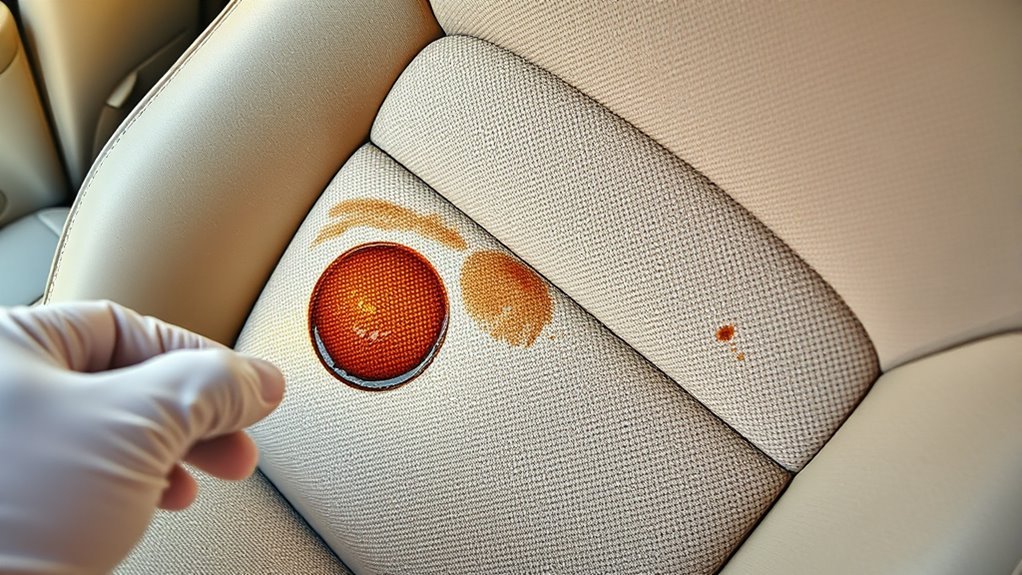
How do you tell what’s damaged your Camry’s cloth seats? Start with calm, systematic stain identification: note color, texture, and location. Water-based marks—coffee, soda, juice—look faded, soak in, and often smell sweet; they’re common culprits and generally easier to lift. Grease, oil, and makeup sit darker, feel slick, and resist water; treat them as oil-based. Pet dander and dirt from shoes appear as dispersed discoloration or embedded grit along seams and foot zones. Age matters: old stains tend to set and bind fibers, raising removal difficulty. You’ll test a hidden patch before any full treatment to avoid discoloration. Act quickly after spills; immediate attention prevents setting and keeps options open. Keep a routine: inspect seats after trips, address fresh spots, and record patterns so you can target recurring common culprits decisively. You’ll reclaim control of your interior through disciplined, informed action.
Tools & Cleaners: Budget vs Pro (Flex Citrus, Extractor, Brushes)
Once you’ve identified the stain type and severity, pick tools and cleaners that match the job: for routine spots, a white-bristle brush and mild detergent suffice; for heavy oil, grease, or set-in soil, step up to Flex Citrus with mechanical agitation and extraction. You’ll choose between budget friendly options and professional grade tools based on frequency and desired freedom from recurring stains. Flex Citrus (≈$50/gal) plus a Merilyx 2000 extractor (≈$40) is pro-level: use boiling-water fill, drill brush for agitation, then white-bristle and extractor to remove residues. Clean equipment after each session; a Flex Ice rinse prevents fiber lifting and preserves textiles.
| Tool | Purpose | Cost |
|---|---|---|
| White-bristle brush | Light agitation | Low |
| Drill brush | Initial agitation | Low–mid |
| Merilyx 2000 extractor | Extraction | ~$40 |
Pick tools that liberate you from repeat work: maintain them, and you’ll reclaim seats efficiently.
Prep Seats: Vacuum, Heat Tools, Protect Trim
Start by vacuuming the Camry cloth seats thoroughly to remove loose dirt and debris so cleaners can work directly on stains. Warm your Merilyx 2000 extractor (and the Flex Citrus solution) before use and confirm the heating element is active to improve extraction and drying. Mask trim and surrounding areas with towels or plastic covers to prevent chemical or water damage.
Vacuum Thoroughly First
A thorough vacuuming is the first step: use a high-powered vacuum with a brush attachment to remove loose dirt from the Camry’s cloth seats, paying close attention to seams and crevices where debris hides; heat your cleaning tools slightly to help loosen stubborn spots, and protect trim and surrounding surfaces with masking tape or plastic covers to prevent accidental damage. Start at the top of each seat and work downward in overlapping passes so you don’t miss fibers. Target seams, under cushions, and seat belt anchors where grime and differing fabric types trap particles. Remove all surface debris before treating stains so your agents reach the stain types directly. This disciplined prep frees you to treat spots effectively and reclaim your seats without spreading contaminants.
Warm Tools Before Use
With the vacuumed seats ready, warm your tools and solutions to improve cleaning power and speed drying. You’ll preheat the extractor and gently warm spray bottles or cans like Flex Citrus; this facilitates warm cleaning that penetrates fibers and loosens stains faster. Keep temperatures steady—avoid overheating—to preserve fabric and chemicals. Work methodically: test a small area, note reaction, then proceed row by row. Use insulated holders or brief low-heat cycles for equipment, and bring products to consistent warmth before each effective application. Warming reduces dwell time and speeds evaporation, so you finish sooner and with better results. You’re freeing the interior from grime efficiently; controlled warmth makes your stain removal precise, faster, and more reliable.
Mask And Protect Trim
Before you apply any liquids, mask off trim and hardware so cleaners and water don’t cause stains, discoloration, or electrical issues. You’ll vacuum seats first to remove loose debris, then warm solutions with heat tools to increase efficacy. For trim protection, apply painter’s tape along seams and cover knobs, switches, and panels with plastic sheeting; press edges firmly so liquids won’t seep underneath. Use precise masking techniques: cut tape to fit contours, overlap edges, and secure corners. If you’ll agitate with a drill brush, confirm masked areas are fully covered to avoid bristle contact. Run the extractor briefly to verify its heat element works, reducing soak time. Masking techniques and trim protection free you to clean boldly, without risking damage.
Apply Flex Citrus: Dwell Time for Heavy Soils
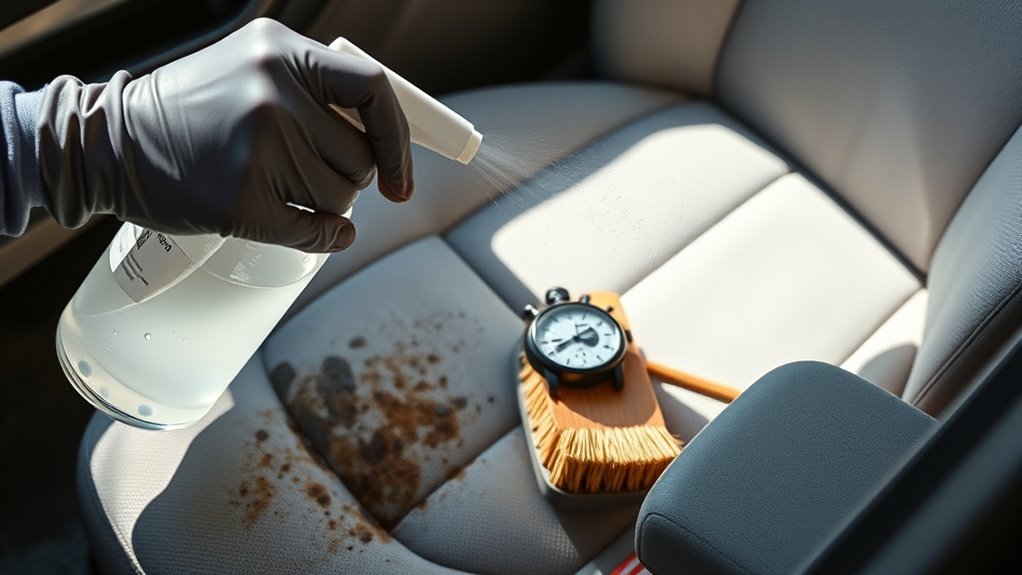
Apply Flex Citrus generously to heavily soiled areas and let it dwell for about 15 minutes to break down stubborn stains. Don’t be afraid of over-saturation—wetting the fabric helps loosen embedded dirt, but avoid puddling that can prolong drying. After dwell time, agitate the fibers with a brush before extracting with boiling-water-filled extractor, doing wet and then dry passes.
Optimal Dwell Duration
How long should you let Flex Citrus sit on heavily soiled Camry cloth seats? For liberating results, set a firm dwell time of 15 minutes; this handles common stain types—oil, food, and ground-in grime—by penetrating fibers and loosening bonds. Apply generously so the fabric stays wet; the solution needs saturation to work. During the 15 minutes, monitor the upholstery so it doesn’t dry; reapply sparingly if edges begin to dry but avoid soaking beyond what the fabric can hold. The longer you allow proper dwell, the more effective extraction will be. After the interval, use an extractor to remove solution and lifted soils, restoring fabric function and freeing you from stubborn, entrenched stains.
Avoid Over Saturation
While Flex Citrus needs about 15 minutes to break down heavy soils, don’t drench the Camry cloth—keep the fabric visibly wet but not saturated so drying stays manageable and fibers aren’t stressed. You’ll apply just enough product to penetrate grime, practicing stain prevention and deliberate upholstery care. Monitor spray volume, work methodically with a drill brush but avoid heavy pressure, and resist the urge to flood fibers. The dwell period frees you to reclaim control; liberation comes from restraint. After 15 minutes, remove moisture with a heated extractor using wet and dry passes to prevent lingering dampness. Below is a simple checklist to guide your restraint.
| Action | Goal | Threshold |
|---|---|---|
| Spray | Penetrate grime | Visible wet, not soaked |
| Brush | Agitate lightly | Low pressure only |
| Extract | Remove moisture | Wet then dry passes |
Post-Dwell Agitation
Once the 15-minute dwell has done its work, you’ll begin agitation to lift loosened soils without overworking the cloth. Use post dwell techniques that respect the fabric: start with a drill brush to break grime free, moving in controlled passes along the weave. Switch to a white bristle brush for targeted, gentler agitation where fibers are thin or seams are sensitive. Don’t over-saturate during this phase; too much moisture lifts fibers and traps soil. Work methodically, alternating brush types and inspecting results frequently. When extracting, the extractor’s heat aids stain removal and speeds drying—capitalize on that by keeping extraction thorough. Clean the extractor and brushes after use to preserve tool effectiveness and guarantee liberation from recurring stains next time.
Agitate Fabric: Drill Brush and White-Bristle Tips
Start by fitting a low-speed drill with a stiff bristle brush to agitate the seat fabric, using controlled passes to lift embedded dirt without stressing the fibers; you’ll combine effective fabric care and proven cleaning techniques. Work in short, overlapping strokes across the stained area, keeping the drill moving to avoid concentrated wear. After mechanical agitation with the drill brush, switch to a white-bristle hand or drill attachment for a gentler finish that respects delicate upholstery fibers. Use light pressure and refine edges where grime meets clean fabric, reclaiming control over your seats. Agitate regularly during routine maintenance to disrupt soils before they bond, making stains easier to remove and future cleanings faster. Be deliberate: low speed, consistent motion, white-bristle follow-up. Finally, remember agitation only loosens soils; the liberated dirt still needs removal with extraction to complete the liberation of your cloth seats.
Use a Hot-Water Extractor: Wet Pass, Dry Pass, Heat Tips
After loosening soils with the drill brush, bring in a hot-water extractor to remove the lifted dirt and finish the job. Start with a wet pass using a citrus-based solution like Flex Citrus; you’ll dissolve oils and set stains for extraction. Move methodically with overlapping strokes so coverage is even and streaks don’t form. Engage the extractor’s heat element during the wet pass to boost solvent action and relax fibers.
Once the solution has been agitated and loosened, follow with a dry pass to pull out moisture and suspended debris; don’t linger in one spot to avoid over-saturation. Use consistent pressure and overlap again for uniform results. Keep doors open afterward to permit airflow and reduce drying time. Practice regular extractor maintenance—clean lines, filters, and the tank after each use—to preserve performance and hygiene. These cleaning techniques free your seats from stubborn marks while protecting fabric integrity and giving you confident, liberated results.
Towel Dry & Speed Drying Without Lifting Fibers
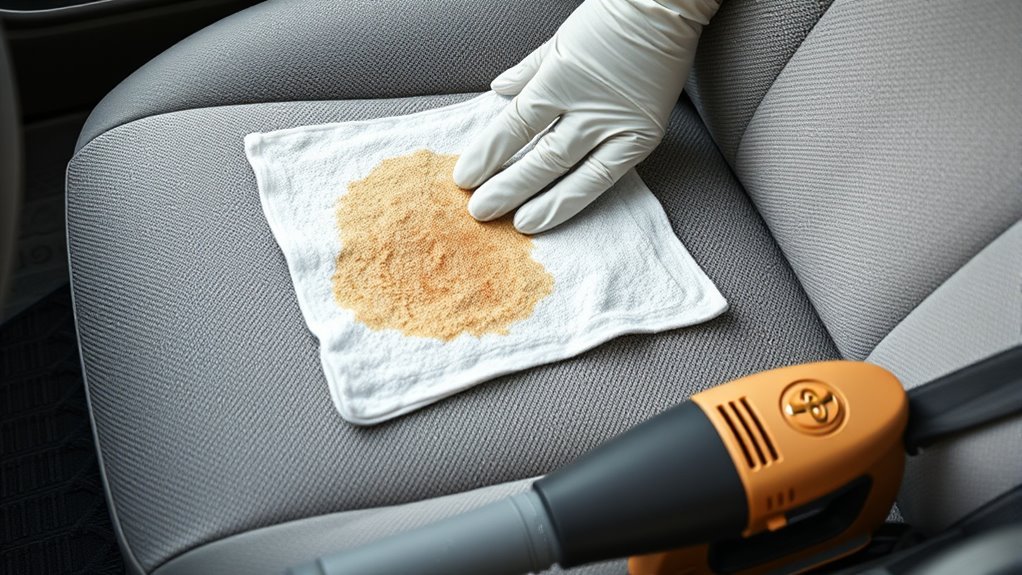
1 good microfiber towel and a patient, section-by-section approach will dry Camry cloth seats fast without lifting fibers. You’ll blot — never scrub — using absorbent microfiber to remove excess moisture after extraction. Work small areas so you catch dampness before it soaks in; that prevents water spots and protects the weave.
Use these focused towel techniques and drying methods:
- Blot in layers with a dry towel, then follow with a slightly damp towel to lift residue without over-saturating.
- Keep doors open for cross-ventilation and aim a fan at low speed; place heat sources indirectly to avoid scorching.
- Replace towels as they become saturated to maintain absorption efficiency and avoid rewetting.
Move methodically: finish one section, then inspect and repeat until uniformly damp-free. Regular maintenance shortens future drying time and keeps fibers relaxed. You’ll free yourself from worrying about damage while restoring seats efficiently and confidently.
Stain Troubleshooting: Repeat Steps, Spot-Treat, When to Call a Pro
Once the seats are dry to the touch, inspect every section and be prepared to repeat the cleaning sequence on stubborn spots—apply Flex Citrus, let it dwell for 15 minutes, then extract thoroughly to lift deep-set soils. If marks remain, spot-treat with a concentrated dose of Flex Citrus and agitate with a drill brush, then extract and blot with absorbent towels. Monitor drying closely; insufficient drying lets stains resurface. Track stain categories (oil, dye, organic, ink) so you choose correct aggression and avoid overworking fibers.
| Issue | Action |
|---|---|
| Light spill | Immediate blot, standard clean |
| Heavy set | Spot-treat, concentrate Flex Citrus |
| Oil/grease | Agitate, longer dwell, extract |
| Persistent after repeats | Call a pro with industrial extraction |
Repeat attempts should follow measured cleaning frequency—don’t overdo or under-treat. If multiple targeted cycles fail, hire a professional with industrial cleaners and advanced extraction to reclaim freedom from lasting stains.
Aftercare for Camry Cloth Seats: Maintenance and Stain Prevention
If you want your Camry’s cloth seats to stay clean and last longer, vacuum them regularly to remove grit, use a fabric protector after cleaning, and deal with spills immediately by blotting and applying a mild upholstery cleaner. You’ll extend upholstery longevity by following a simple routine that frees you from constant worry.
- Vacuum weekly to remove loose dirt before it embeds.
- Apply a fabric protector after any deep clean to repel liquids and stains.
- Blot spills at once, then treat with a mild upholstery cleaner; repeat only if needed.
Be proactive: avoid eating and drinking in the car to limit risks, and schedule professional upholstery cleaning every 6–12 months, especially for high-traffic seats. That periodic reset preserves fibers and restores protective treatments. Stay disciplined, act fast on accidents, and use fabric protectors as a liberation tool—reducing maintenance time and keeping your Camry’s cloth seats functional, clean, and ready for the road.
Frequently Asked Questions
How Do I Clean My Toyota Camry Car Interior?
You clean your Toyota Camry interior by vacuuming thoroughly, applying upholstery care cleaner, agitating stains, extracting with hot water, and finishing with fabric protection; prioritize regular interior maintenance to reclaim control and preserve comfort.
How Do You Clean Toyota Seats?
Like a fresh breeze, you’ll vacuum seat fabric, pretreat with approved cleaning products, let dwell, extract with hot water, blot and air-dry; you’ll repeat as needed, reclaiming freedom from grime and restoring clean surfaces.
What Do Car Detailers Use to Remove Stains?
They use professional stain removal products and tools for upholstery cleaning: concentrated cleaners (Flex Citrus), hot water extractors, drill and white-bristle brushes, and extraction rinses like Flex Ice—you’ll reclaim fabric freedom and lasting seat resilience.
Conclusion
Clean, cared-for Camry cloth seats stay comfortable and look crisp. Consistent quick cleaning, careful conditioning, and cautious chemical choices cut cumulative contamination. After spotting stains, systematically scrub, extract, and speed-dry; repeat stubborn spots and seek pro service when saturated soils or set-in stains stubbornly survive. Schedule simple weekly sweepings, smart stain shields, and sensible snack rules to safeguard surfaces. Small steady steps sustain spotless seats and simplify serious stain solutions.