The Toyota Camry’s evolution showcases its transformation from a compact car in 1982 to a leading midsize sedan. Initially launched as the Celica Camry, its name means “crown” in Japanese. Over the years, the Camry embraced design changes, engine innovations, and advanced safety features. With impressive sales milestones and a strong hybrid focus, it’s adapted to consumer demands. As you explore further, you’ll uncover more about its journey and future direction.
The Origins of the Toyota Camry
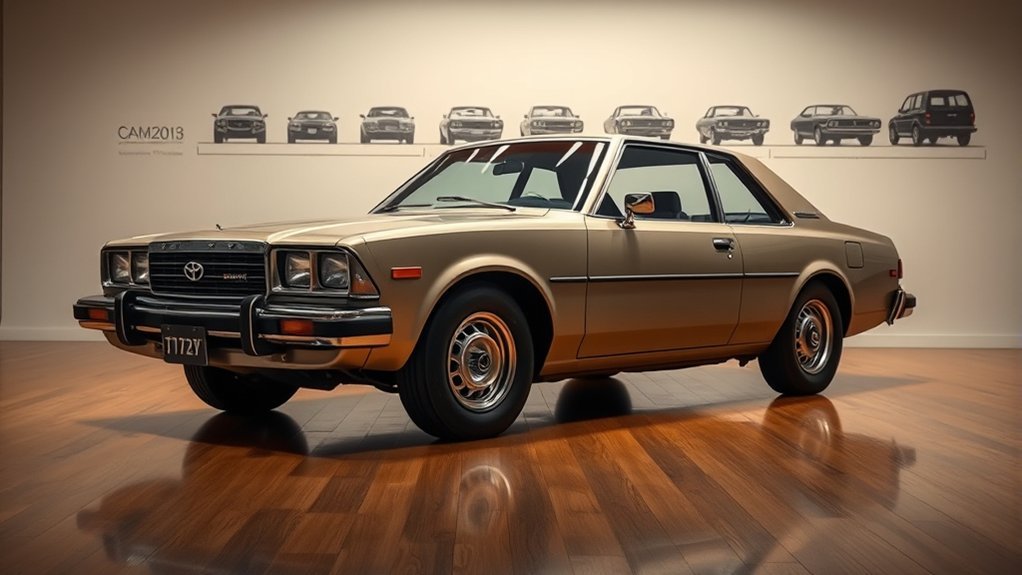
When you explore the origins of the Toyota Camry, you’ll find a story of innovation that began in 1982. Initially launched as a compact vehicle, the Camry quickly evolved into a mid-size model by 1991, reflecting Toyota’s adaptability to consumer needs. Its name, derived from the Japanese word “kanmuri,” meaning “crown,” holds significant weight in the brand’s regal naming tradition, symbolizing quality and reliability. Originally introduced as the Celica Camry in 1979, the Camry established its own identity with the V10 series in 1982, marking a new chapter in automotive design. By 1985, it became the best-selling car in the U.S., a title it maintained for 18 consecutive years. The Camry’s milestone of producing its 10 millionth unit in July 2021 underscores its enduring appeal and commitment to excellence. Understanding these Camry origins reveals how it has shaped the automotive landscape over the decades.
Key Design Features Through the Generations
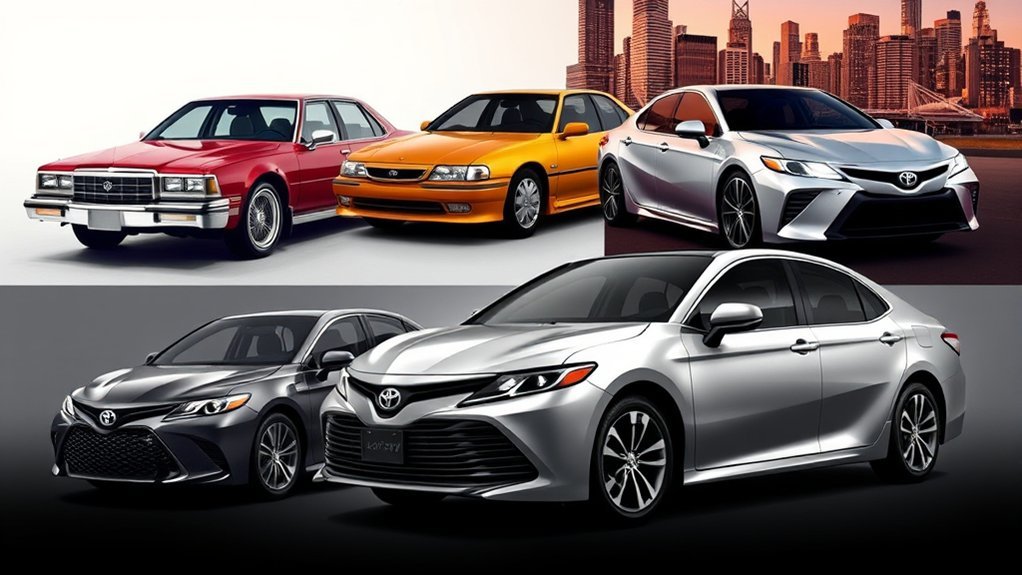
As the Toyota Camry evolved through its generations, each iteration brought distinctive design features that not only reflected contemporary trends but also addressed driver needs. The first-generation Camry established a boxy design, offering both sedan and hatchback options that set the stage for Toyota’s front-wheel-drive configuration. With the second generation, a streamlined appearance and the introduction of a V-6 engine enhanced its aesthetic impact. The third generation shifted into a wider mid-size category, adding a coupe variant that showcased modern 90s styling. The fourth generation returned to a boxier look, emphasizing build quality while delivering impressive performance metrics. Finally, the eighth generation embraced a sportier edge, featuring sharper lines and a wider stance that improved handling and interior space. Each step in this design evolution not only catered to changing tastes but also solidified the Camry’s position in the competitive automotive landscape.
Major Generational Changes and Their Impact
The evolution of the Toyota Camry through its generations reveals a strategic response to both market demands and technological advancements. Each iteration reflects a refined design philosophy, catering to changing consumer preferences. The first generation established the Camry as a compact sedan, while the second introduced a V6 option, marking a pivotal shift in performance. Shifting to midsize in the third generation, it expanded its appeal, enhancing market positioning markedly. The fourth generation solidified its dominance, becoming the best-selling car in the U.S. in 1997, thanks to improved comfort and the addition of the Solara coupe variant. Fast forward to the eighth generation, which embraced the TNGA platform for superior handling and sportier aesthetics, ensuring it stays competitive against rivals like the Honda Accord. These major generational changes underscore how the Camry has continuously evolved to meet both market trends and driver expectations.
Engine Innovations: Performance Milestones of the Toyota Camry
The evolution of engine options in the Toyota Camry reveals a fascinating journey of performance enhancements. From the initial 1.8L inline-four prioritizing fuel efficiency to the powerful 3.5L V-6 achieving remarkable acceleration, each generation showcases significant milestones. This progression not only reflects changing consumer demands but also Toyota’s commitment to innovation in the midsize sedan market.
[Products Worth Considering]

Protect your Toyota key fob with this premium soft TPU case that offers 360-degree coverage against drops, dust, and scratches while maintaining full signal strength. The sleek gold‑rimmed design adds a stylish touch, and the attached leather‑aluminum keychain provides convenient carrying. Made from durable materials with strong color fastness, it fits like a glove for a seamless look and feel.

Upgrade your Toyota Camry interior with a custom‑fit PU leather console cover that shields the armrest from scratches, sweat, and pet claws. The soft, waterproof material stays comfortable in any temperature, while the easy‑install design lets you secure it quickly by pushing seats forward. Enjoy a sleek, protected console that enhances driving comfort and preserves your vehicle’s resale value.

This genuine Toyota fuel tank cap assembly ensures a perfect fit for your vehicle, delivering reliable sealing and protection against fuel leaks. It meets OEM specifications, offering Toyota‑quality assurance and a manufacturer warranty for peace of mind. Ideal for drivers seeking authentic parts that maintain performance and safety.
Engine Variants Over Generations
While exploring the evolution of the Toyota Camry, you’ll notice that engine variants have played a crucial role in shaping its performance milestones. Over generations, the Camry has embraced innovations, from initial four-cylinder engines to robust V6 options, enhancing horsepower and engine efficiency. The introduction of hybrid technologies marked a significant shift, blending fuel economy with performance tuning.
| Generation | Engine Type | Horsepower |
|---|---|---|
| First (1983-1986) | 2.0L I4 | 92 |
| Second (1987-1991) | 2.5L V6 | 153 |
| Eighth (2018-Present) | 3.5L V6 & Hybrid Powertrain | 301 |
These advancements showcase Toyota’s commitment to engine reliability and transmission advancements, giving you a thrilling driving experience.
Performance Enhancements Timeline
Engine innovations have consistently marked significant milestones in the Toyota Camry’s performance history. From the first-generation’s 2.0L inline-four engine producing 92 horsepower, you see the foundation for future performance upgrades. The 1987 second generation introduced a 2.5L V6, boosting output to 153 horsepower and enhancing appeal. The third generation’s 3.0L V6 refined the midsize classification, improving overall performance. Fast forward to the sixth generation, where a powerful 3.5L V6 engine delivered 268 horsepower, achieving 0-60 mph in just 5.8 seconds. Now, in the eighth generation, the new 2.5L four-cylinder and 301-hp V6 emphasize improved handling and fuel efficiency, showcasing remarkable engine comparisons and a commitment to evolving performance.
The Evolution of Safety Features Over Time
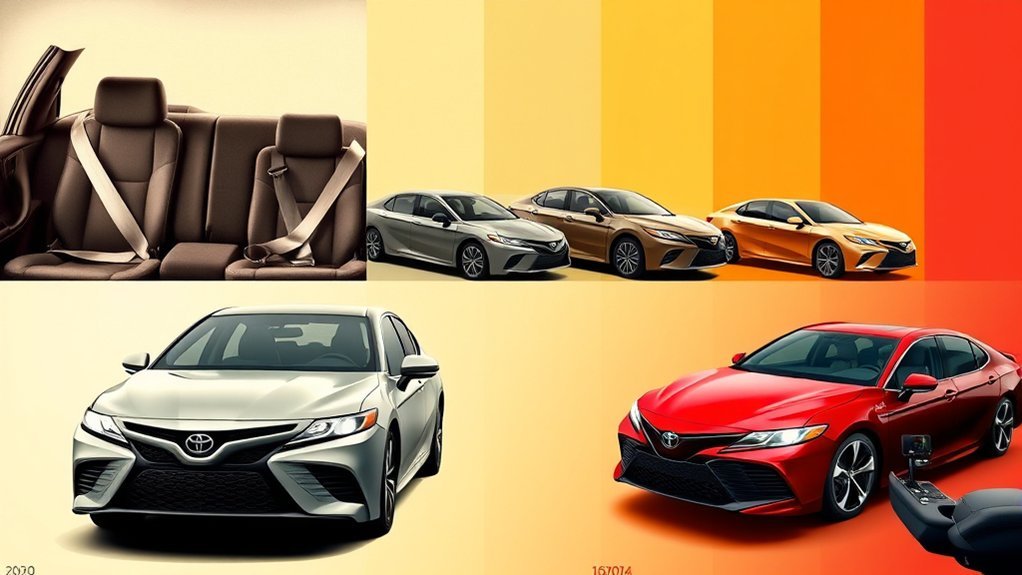
As safety concerns have grown over the decades, the Toyota Camry has consistently adapted to meet and exceed expectations. Starting with standard airbags in the 1990s, the Camry quickly progressed to include side-impact and curtain airbags by 2002. By 2012, the introduction of Toyota Safety Sense brought a suite of safety advancements, including pre-collision systems and lane departure alerts, enhancing driver awareness markedly.
The 2018 model further elevated safety with adaptive cruise control and automatic high beams, ensuring a more secure driving experience. Recent models, such as the 2021 facelift, made features like backup cameras and dynamic radar cruise control standard. Looking ahead, the 2025 Camry aims to standardize advanced safety technology, including automatic emergency braking across all trims. This evolution reflects Toyota’s commitment to not just meeting safety regulations but truly empowering drivers with peace of mind on the road.
Market Strategies That Made the Toyota Camry a Best-Seller
To understand why the Toyota Camry has become a best-seller, you need to look at its strategic positioning in the automotive market. By targeting family-oriented buyers between the Corolla and Avalon, Toyota hit the sweet spot for reliability and fuel efficiency. Their competitive analysis revealed a demand for these features, leading to a sales strategy that emphasized consumer feedback. Joint ventures like NUMMI enhanced production capabilities, allowing Toyota to cater effectively to the U.S. market.
Aggressive advertising tactics showcased safety features and innovative technology, building brand loyalty among consumers. This commitment to meeting consumer demands was evident when they introduced hybrid models in 2007, highlighting sustainability. Consistently outselling competitors like the Honda Accord, the Camry secured its status as the best-selling car for 18 consecutive years, proving that effective market positioning and responsive strategies can lead to enduring success.
The Shift to Hybrid Technology: Meeting Modern Demands
With a strong foundation in reliability and fuel efficiency, the Toyota Camry naturally evolved to meet the growing demand for eco-friendly vehicles. The introduction of the Camry Hybrid in 2007 marked a pivotal change, combining a 2.4-liter four-cylinder engine with an electric motor to produce 187 horsepower. This hybrid variant offered impressive fuel efficiency, achieving an EPA-estimated 40 mpg in city driving and 38 mpg on the highway. By 2025, the Camry Hybrid upgraded to a 2.5-liter engine and a CVT, enhancing overall efficiency to a remarkable 52 mpg combined.
This alteration underscores Toyota’s commitment to modern environmental standards and consumer expectations for fuel-efficient vehicles. The hybrid benefits extend beyond just savings at the pump; they align with a growing desire for eco-friendly features in everyday transportation. As a result, hybrid models have solidified the Camry’s reputation as a reliable, environmentally conscious choice in the midsize sedan market.
Sales Milestones and Market Reception
Since its launch, the Toyota Camry has achieved remarkable sales milestones that reflect its strong market reception and consumer trust. With its debut in 1988, the Camry quickly surpassed 200,000 units sold in the U.S., marking a pivotal moment in automotive history. By 1997, it became the best-selling car, a title it held for 18 consecutive years, demonstrating its alignment with evolving consumer preferences. The sales trends continued to soar, reaching a record 473,108 units in 2007, solidifying the Camry’s dominance. In July 2021, the celebration of the 10 millionth Camry produced showcased nearly four decades of success. This journey illustrates how the Camry has not only adapted to market demands but has also shaped them, reinforcing its status as a reliable choice for countless drivers. Such milestones highlight the enduring appeal and trust consumers place in the Toyota Camry.
Current Trends and Future Outlook for the Toyota Camry
As the Toyota Camry continues to build on its impressive legacy, current trends indicate a significant shift towards modernization and sustainability. The 2025 model showcases a redesigned exterior with a bold front-end and sleek headlights, aimed at appealing to contemporary buyers. By dropping the V-6 engine, the Camry focuses on a four-cylinder hybrid powertrain, achieving an impressive EPA-estimated 52 mpg combined in the LE trim. This move aligns perfectly with market trends highlighting a growing consumer preference for eco-friendly vehicles.
Inside, the updated “open-style cockpit” features a standard digital instrument cluster and available head-up display, enhancing driver convenience and integrating modern technology. With competition heating up from rivals like Honda Accord and Hyundai Sonata, the Camry’s commitment to advanced safety features and innovative tech guarantees it remains a top choice in the midsize sedan segment, adapting to evolving consumer expectations and values.
What’s Under the Hood? Engine Innovations Over the Years
Over the decades, the Toyota Camry has undergone remarkable engine innovations that not only enhance performance but also cater to evolving consumer demands. Starting with the 1979 Celica Camry, you experienced the simplicity of gasoline inline-four engines, like the 1.8L 1S-LU. The 1986 V20 series introduced fuel injection, marking a pivotal shift that improved performance with a turbo diesel option. By the third generation, a 2.2-liter four-cylinder and a 3.0-liter V-6 set new standards for power and fuel efficiency. Fast forward to the sixth generation, where you could enjoy a 268-hp V-6 that zipped from 0-60 mph in just 5.8 seconds. Today, the eighth generation features a robust 2.5-liter four-cylinder and a powerful 301-hp V-6, alongside a hybrid engine that emphasizes efficiency. These engine types reflect Toyota’s commitment to innovation, making performance comparisons increasingly favorable for the Camry.
Frequently Asked Questions
What Are the Different Generations of Toyota Camry?
The Toyota Camry’s generations showcase evolving design, engine advancements, enhanced safety features, and integrated technology. Each iteration reflects your desire for reliability, comfort, and innovation, making the Camry a steadfast choice in the automotive landscape.
Are There Any Camry Years to Avoid?
You might want to avoid the 2007-2009 and 2009 models due to Camry reliability issues, like excessive oil consumption and transmission problems. These common problems could lead to costly repairs and headaches you’d rather skip.
Which Camry Years Are Considered the Best?
The best Camry years are 2007-2011 for their impressive performance and top safety ratings. The 2012-2017 models also shine with strong features, making them reliable choices for anyone seeking a dependable, stylish vehicle.
How Has the Camry Changed Over the Years?
The Camry’s evolved considerably, with engine advancements like the V-6 option and hybrid models enhancing performance. Its design evolution from compact to sporty reflects changing consumer demands, making it a top choice for drivers seeking reliability.
Conclusion
As you’ve explored the rich history and evolution of the Toyota Camry, it’s clear that this iconic sedan is more than just a car—it’s a tribute to adaptability and innovation. From its humble beginnings to cutting-edge hybrid technology, the Camry continually meets the demands of drivers. So, as you consider your next vehicle, ask yourself: can any other car truly match the Camry’s blend of reliability, performance, and safety? It’s a legacy that’s hard to overlook.