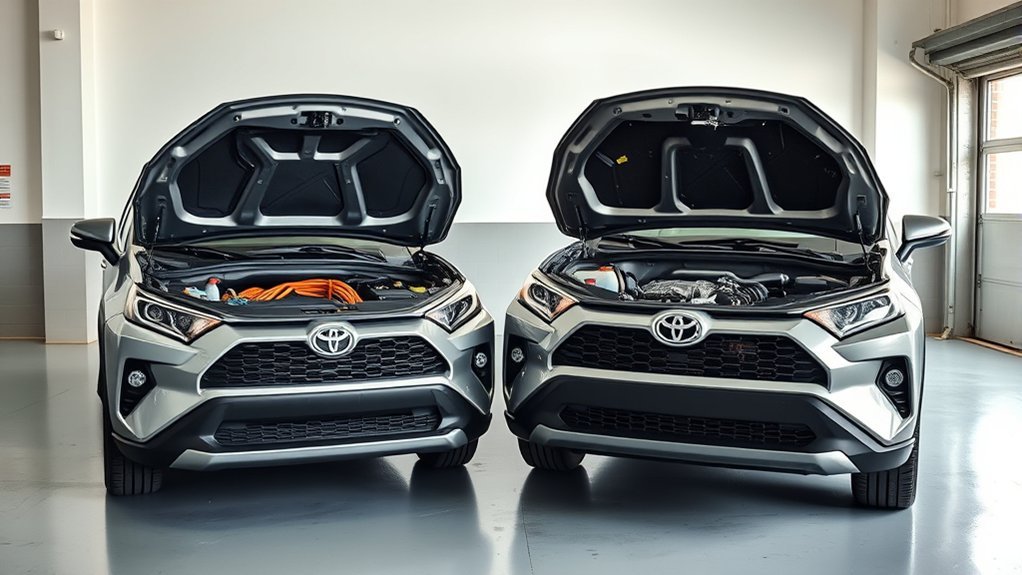
RAV4 Hybrid eCVT vs Conventional Automatic: Complete Comparison
What’s in This Article
The RAV4 Hybrid and the gas RAV4 look similar from the outside, but they drive in very different ways. The main reason sits under the floor and hood: Toyota’s hybrid eCVT handles power without normal gear shifts, while older gas models use an 8-speed automatic. This guide shows how each setup affects fuel use, towing, repair needs, and daily driving feel.
Quick Answer
The RAV4 Hybrid‘s eCVT gives you smoother low-speed response, stronger city fuel economy, and fewer wear parts than the 8-speed automatic used in older gas RAV4 models. EPA data lists most 2025 RAV4 Hybrid trims at 39 mpg combined, while 2025 gas RAV4 models range from 28 to 30 mpg combined. Choose the hybrid if you commute in traffic and want lower fuel costs. Choose an older gas model with the 8-speed automatic if you prefer defined shifts or need the specific capability of a gas trim.
Key Takeaways
- Toyota’s eCVT uses a planetary gear set instead of belts or chains, so don’t judge it like a belt-driven CVT.
- Most 2025 RAV4 Hybrid trims return 39 mpg combined, while 2025 gas RAV4 models return 28 to 30 mpg combined.
- The eCVT works best in city traffic because electric torque helps the RAV4 move smoothly from a stop.
- The 2025 gas RAV4 uses an 8-speed automatic, but Toyota moved the 2026 U.S. RAV4 lineup to hybrid and plug-in hybrid powertrains.
- Always check the owner’s manual before towing because limits vary by model year, trim, drivetrain, and equipment.
Who This Guide Is For
This guide helps you compare a RAV4 Hybrid with eCVT against a gas RAV4 with an 8-speed automatic. You may compare a new hybrid to a used gas model, a 2025 gas model still on a lot, or an older RAV4 you already own.
You also need one key update before you shop. Toyota moved the U.S. 2026 RAV4 lineup to hybrid and plug-in hybrid powertrains. Because of that change, this comparison applies most directly to 2025 and older gas RAV4 models versus hybrid RAV4 models.
Quick Verdict: When the RAV4 eCVT Beats a Conventional Automatic
The RAV4 eCVT beats a conventional automatic in three main areas: smooth low-speed acceleration, fuel efficiency, and simple long-term operation. Its planetary gear set lets the system blend gas and electric power without normal shift events. The 8-speed automatic still gives you a more familiar feel because you can sense each gear change.
Smooth Low-Speed Acceleration
The RAV4 Hybrid’s eCVT blends electric torque with engine power, so you get a smooth launch from a stop. In city traffic, the system avoids the shift pause that fixed-ratio automatics can create. That makes the hybrid feel calm and quick at low speed.
A gas RAV4 with an 8-speed automatic can feel more traditional. You feel gear changes, and the transmission may pause before it chooses the right ratio. Some drivers like that feedback, but it doesn’t feel as smooth in stop-and-go traffic.
Superior Fuel Efficiency
The RAV4 Hybrid’s eCVT improves fuel efficiency by helping the engine stay near its most efficient speed. The electric motor also handles low-load driving, which helps in traffic and short trips. EPA data lists most 2025 RAV4 Hybrid trims at 39 mpg combined, while 2025 gas RAV4 models range from 28 to 30 mpg combined.
That gap can matter if you drive many city miles. Your exact savings depend on fuel price, mileage, traffic, tires, cargo weight, and driving style.
Strong Long-Term Reliability
Toyota’s eCVT design avoids the belts and pulleys used in many mechanical CVTs. It uses a planetary gear set, motor-generators, and control software to manage torque. This layout gives the system fewer friction parts than a multi-speed automatic.
A conventional automatic has more shifting parts, including clutch packs, hydraulic circuits, and valve-body controls. Those parts can last a long time with proper care, but they add more service points. For normal commuting, the eCVT usually gives you the simpler ownership path.
RAV4 Hybrid eCVT vs ICE Automatic: Side-by-Side
| Feature | RAV4 Hybrid (eCVT) | Gas RAV4 (8-Speed Auto) |
|---|---|---|
| Transmission type | Planetary gear eCVT | 8-speed automatic on 2025 and older gas models |
| Fuel economy | Most 2025 trims: 39 mpg combined | 2025 gas models: 28 to 30 mpg combined |
| Low-speed response | Smooth launch with electric torque | Brief shift delay possible |
| Highway driving feel | Smooth, but less shift feedback | Defined shifts and a familiar feel |
| Towing notes | 2025 Hybrid trims list 1,750 lbs; many 2026 AWD hybrids list up to 3,500 lbs | Most 2025 gas trims list 1,500 lbs; select older Adventure/TRD trims list 3,500 lbs |
| Maintenance complexity | Lower, with fewer transmission wear parts | Higher, with clutch packs and hydraulic controls |
| Best for | City commuting, fuel savings, smooth driving | Drivers who want shift feel or shop older gas trims |
[Products Worth Considering]

Protect your Toyota RAV4 interior with this custom‑fit windshield sun shade that blocks 99% of harmful UV rays and reduces cabin heat. The mirror cut‑out ensures a seamless fit without gaps, while durable 240T polyester and bendable wire keep it sturdy through repeated use. Foldable and stored in a convenient pouch, it offers easy installation and removal for everyday comfort.

The Autovir windscreen shade offers full windshield coverage for Toyota RAV4 models from 2019 to 2026, blocking up to 99.95% of UV rays and reducing interior heat. Its multi‑layer reflective material provides SPF 100 and UPF 80+ protection while keeping the dashboard, seats, and steering wheel cooler. The foldable design installs quickly and stores conveniently in the glove box, and reinforced stitching ensures long‑lasting durability for daily use.
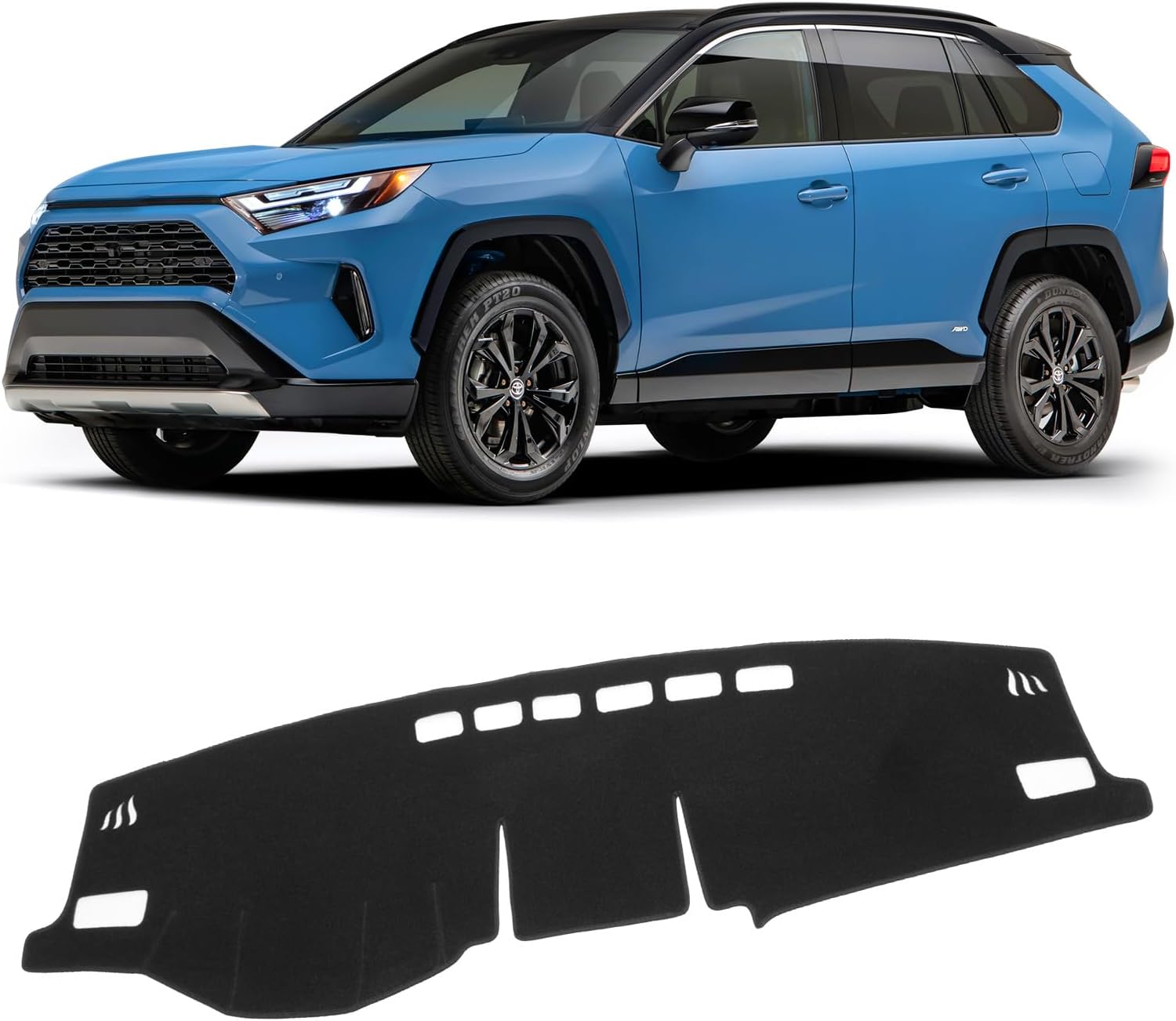
The KUST Black Dashboard Cover Mat offers a custom, eco‑friendly fit for Toyota RAV4 models from 2019 to 2025, protecting the dash from UV damage, scratches, and glare. Made from post‑consumer recycled polyester with a silicone anti‑slip underside, it stays soft, breathable, and odorless while securely adhering to the surface. Installation is quick and reversible, and the foldable design allows easy storage when not in use.
How Toyota’s eCVT Works in the RAV4
Toyota’s eCVT in the RAV4 uses a planetary gear set to blend engine and electric-motor power. It does not use the belts or chains found in many mechanical CVTs. That design helps explain why Toyota hybrid owners often separate eCVT reliability from the reputation of belt-driven CVTs.
You get immediate accelerator response because the electric motor can send torque quickly. The system also changes the relationship between engine speed and wheel speed without normal gear steps. That gives you smooth power in traffic, but it can also make the engine sound different from a gas model during hard acceleration.
The eCVT also supports regenerative braking. When you slow down, the motor-generator sends some energy back to the battery instead of losing all of it as brake heat. This helps the hybrid most in city driving, where you brake often.
How the ICE RAV4’s Conventional Automatic Differs
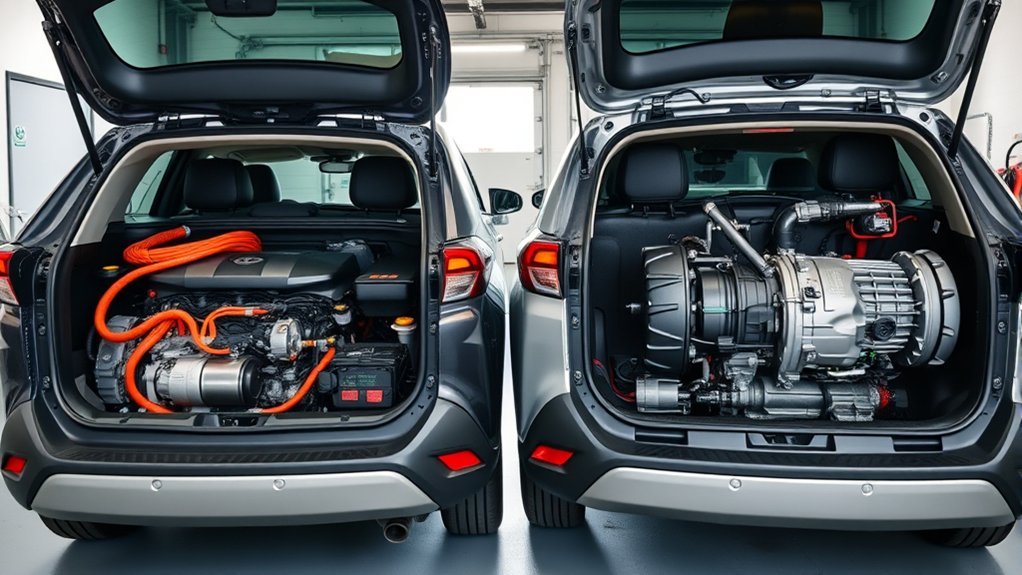
The 2025 and older gas RAV4 uses an 8-speed Direct Shift automatic. This transmission uses fixed gear ratios, hydraulic control, and internal clutch packs to change gears. You feel those gear changes more clearly than you do in a hybrid eCVT.
- Driving feel: The 8-speed automatic gives you defined shifts and a more familiar gas-vehicle response.
- Gear control: Fixed ratios help the powertrain settle into a clear cruising gear on the highway.
- Service needs: Multi-speed automatics use more internal parts, so they can need more involved service as mileage rises.
The trade-off stays simple. You get more mechanical feedback from the automatic, but you give up the hybrid system‘s smooth torque blending and city fuel savings.
Real-World Performance: Fuel Economy and Acceleration
The eCVT in RAV4 Hybrid models gives you strong low-speed response because the electric motor helps right away. That matters most when you pull away from lights, merge into slow traffic, or creep through a parking lot. A gas RAV4 with an 8-speed automatic builds speed in a more traditional way because it works through fixed ratios.
EPA data shows the fuel economy gap clearly for 2025 models. Most 2025 RAV4 Hybrid trims return 39 mpg combined, while the 2025 gas RAV4 returns 28 to 30 mpg combined depending on drivetrain and trim. Toyota also says 2026 RAV4 Hybrid fuel economy can reach up to a manufacturer-estimated 44 mpg combined on front-wheel-drive models, but final trim results can vary.
City vs Highway: Where the eCVT Shines and Where It Doesn’t
The eCVT shines in city traffic because it can blend electric and gas power without shift events. You get smooth launches, less low-speed hesitation, and better fuel use in frequent stop-and-go driving. Regenerative braking also helps recover energy when you slow down.
- Smooth electric torque improves low-speed response in traffic.
- Continuous power blending helps the engine run in an efficient range.
- Fixed-gear automatics can feel more familiar during steady highway cruising.
On the highway, the eCVT can feel less connected if you expect normal gear changes. During hard acceleration, engine speed may rise and hold while road speed catches up. That behavior feels strange to some drivers, but it reflects how the hybrid system manages power.
Pro tip: If you drive more city miles than highway miles, the RAV4 Hybrid’s eCVT will usually give you the better fuel-saving result.
Reliability and Maintenance: RAV4 eCVT vs Automatic
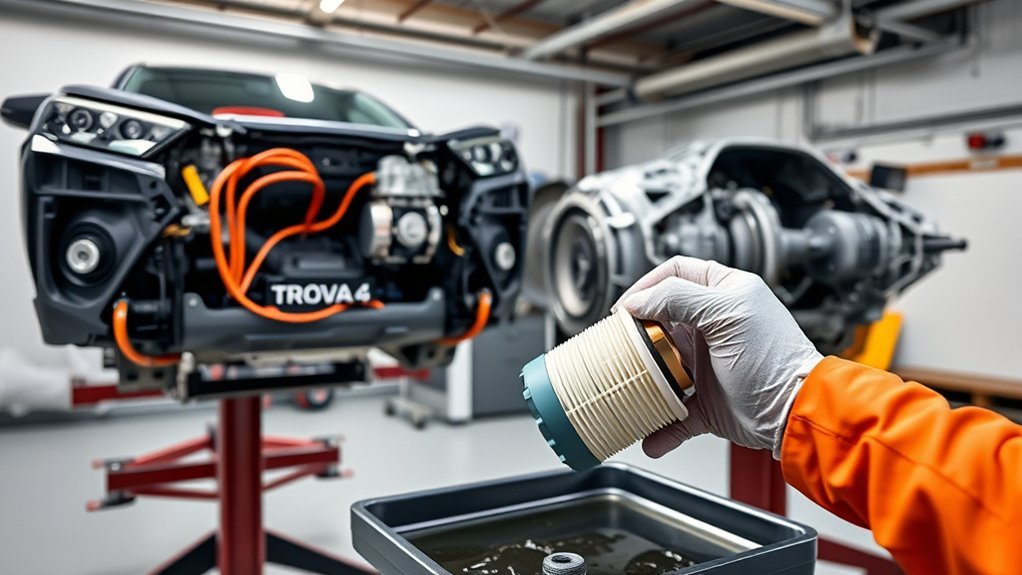
Toyota’s eCVT gives you a simpler transmission layout than a typical 8-speed automatic. It avoids belts, pulleys, torque-converter shift feel, and multiple clutch packs. That does not make it impossible to damage, but it does reduce several common wear points.
A conventional automatic can also last a long time if you service it well. Still, it has more internal parts that manage gear changes under heat and load. If you want the lowest routine drivetrain complexity for normal commuting, the RAV4 Hybrid has the advantage.
Towing, Payload, and Heavy Use: Which Handles Stress?
Towing limits need careful checking because RAV4 ratings vary by year and trim. Toyota listed 1,750 pounds for 2025 RAV4 Hybrid trims in available product data. The 2025 gas RAV4 commonly lists 1,500 pounds, while select older Adventure and TRD Off-Road trims listed 3,500 pounds in Toyota’s 2024 brochure.
Toyota changed the picture again for 2026. The new U.S. RAV4 lineup uses hybrid and plug-in hybrid powertrains, and Toyota says many AWD hybrid grades can tow up to 3,500 pounds. Always use your owner’s manual, door-label payload data, hitch rating, and trailer weight before you tow.
Warning: Never tow above the rating for your exact RAV4 year, trim, drivetrain, hitch, and loaded vehicle weight.
- Torque handling: Use the rated limit for your exact trim, not a general RAV4 number.
- Heat control: Heavy loads raise drivetrain heat, especially on hills and in hot weather.
- Payload math: Count passengers, cargo, hitch weight, and accessories before you judge towing room.
If towing matters, check the exact vehicle identification number and owner’s manual before you buy. A trim badge alone may not tell you every limit that applies.
[Products Worth Considering]

The TPXSIUE passenger storage organizer mat provides a custom‑fit, non‑slip silicone tray that keeps items secure and the console tidy. It slides into the grab‑handle slot without tools, protecting the interior from scratches and rattles while offering easy access to pens, gum, and other essentials. Designed for RAV4 models from 2019 to 2024, it delivers a perfect OEM‑like fit and enhances vehicle organization.

Upgrade your RAV4 interior with a sleek, retractable 4‑port USB hub that adds vibrant RGB lighting and fast charging for phones, tablets, and accessories. The intelligent retractable cables keep the console tidy while the snap‑in design ensures easy installation. Compatible with 2020‑2025 RAV4 models, it blends modern tech with a clean aesthetic.
Buying Guidance: Choose the Right RAV4
The right RAV4 depends on your daily driving pattern. The RAV4 Hybrid costs more than many older gas models, but it can return that difference through fuel savings and smoother city driving. A gas RAV4 with an 8-speed automatic can still make sense if you shop used, want lower purchase cost, or prefer normal gear shifts.
Fuel Economy Priorities
Choose the RAV4 Hybrid if fuel economy directly affects your monthly cost. The eCVT helps the hybrid use electric assist in traffic, which gives it a clear advantage in city and mixed driving. You should still calculate your own annual fuel cost because fuel prices and mileage change the payback period.
- eCVT: choose it for city economy, smooth response, and fewer fuel stops.
- 8-speed automatic: choose it if you prefer defined shifts and shop 2025 or older gas models.
- Total cost: compare purchase price, fuel cost, insurance, and service history before you decide.
Driving Style Match
Pick the RAV4 that matches how you actually drive. The hybrid’s eCVT works best for urban commuting, short trips, and daily traffic. The conventional automatic feels more familiar if you like stepped shifts and a traditional gas powertrain.
Choose the RAV4 Hybrid if: you commute mostly in traffic, want strong fuel economy, and value smooth power delivery.
Choose a gas RAV4 with the 8-speed automatic if: you shop 2025 or older models, prefer a conventional shift feel, or want a lower used-market price.
Frequently Asked Questions
Is the RAV4 eCVT more reliable than a conventional automatic?
The RAV4 eCVT has a strong design for normal driving because it uses a planetary gear set instead of belts or pulleys. It also avoids many clutch-pack and shift-control parts found in a conventional automatic. You should still follow Toyota’s service schedule for your exact model year.
Do CVT transmissions have more problems than automatic transmissions?
Some belt-driven CVTs can have problems under heat, neglect, or heavy load. Toyota’s hybrid eCVT uses a different design, so you should not group it with belt-and-pulley CVTs. A conventional automatic may handle some heavy-duty use well, but it also has more shift-related parts.
What is the RAV4 Hybrid’s towing capacity?
For 2025, Toyota data lists RAV4 Hybrid towing at 1,750 pounds. For 2026, Toyota says many AWD hybrid grades can tow up to 3,500 pounds. Check your owner’s manual because towing limits change by year, trim, drivetrain, and equipment.
Does the RAV4 Hybrid eCVT need regular transmission fluid changes?
Toyota service needs vary by model year and driving conditions. You should inspect the maintenance schedule in your owner’s manual and ask a Toyota service department if you tow, drive in extreme heat, or keep the vehicle for high mileage. Severe use can justify more frequent fluid service.
Does the 2026 RAV4 still offer a gas-only automatic model?
Toyota announced a fully electrified U.S. RAV4 lineup for 2026, with hybrid and plug-in hybrid choices. That means the gas-only RAV4 with the 8-speed automatic mainly applies to 2025 and older models. Used buyers will still see many gas models on the market.
Conclusion
Your best choice depends on how you drive most days. The RAV4 Hybrid eCVT gives you smoother city response, better fuel economy, and lower transmission complexity. A gas RAV4 with the 8-speed automatic still suits you if you shop older models and want a more traditional shift feel.
Check the exact model year, trim, EPA rating, towing limit, and service history before you decide. When you match the powertrain to your real driving pattern, the better RAV4 becomes easy to spot.
References
- Fuel Economy of 2025 Toyota RAV4 Models — U.S. Department of Energy / EPA, 2025
- 2025 Toyota RAV4 Features and Specifications — Toyota Motor Corporation, 2025
- 2025 Toyota RAV4 Hybrid Specifications — Toyota Motor Corporation, 2025
- The Next Adventure Begins: 2026 RAV4 Arrives this Winter — Toyota USA Newsroom, 2025
- 2024 Toyota RAV4 eBrochure — Toyota Motor Corporation, 2024
- All-New RAV4 Plug-in Hybrid — Toyota Motor Corporation UK, 2026