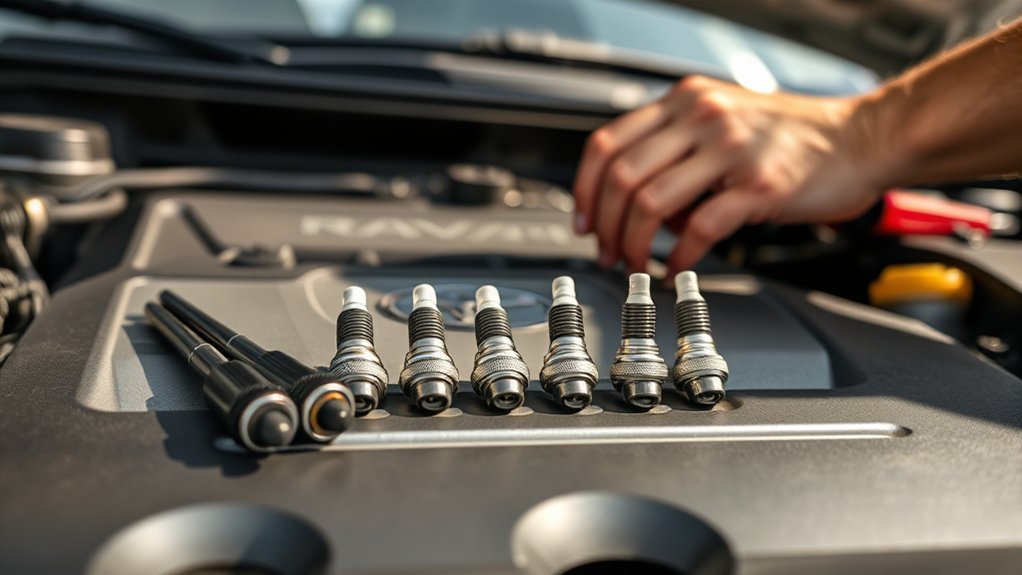
Replacing the spark plugs in a Toyota RAV4 is a manageable DIY job on many model years, but the exact plug, gap, socket size, and torque can vary by engine. Before you start, confirm your RAV4’s model year, engine code, and maintenance schedule in your owner’s manual or service data. The steps below give you a safe, practical process while calling out the specs that commonly apply to late-model RAV4 gasoline and hybrid engines.
Quick Answer
To replace Toyota RAV4 spark plugs, let the engine cool, remove the engine cover, disconnect and remove each ignition coil, clean the plug wells, remove the old plugs, hand-start the new iridium plugs, then tighten them with a torque wrench to the correct spec for your engine. Many late-model RAV4 plugs are pre-gapped and should not be adjusted.
Key Takeaways
- Confirm your RAV4’s year, engine, spark plug part number, gap, and torque before buying parts.
- Toyota’s U.S. 2023 RAV4 maintenance guide lists spark plug replacement at 120,000 miles or 144 months.
- Many current RAV4 and RAV4 Hybrid iridium plugs use a 0.8 mm / 0.031 in. gap and should not be re-gapped unless the manufacturer allows it.
- Start every plug by hand and use a torque wrench; over-tightening can damage the plug or aluminum cylinder-head threads.
- If the engine misfires after the job, recheck coil connectors, plug seating, and OBD-II codes before driving far.
At a Glance
| Time Required | 45–90 minutes for most 4-cylinder RAV4 models |
| Difficulty | Easy to moderate DIY |
| Tools Needed | Torque wrench, ratchet, extensions, spark plug socket, coil-bolt socket, compressed air or vacuum, dielectric grease for coil boots if needed |
| Cost | Usually about $40–$120 for four quality iridium plugs if you already own the tools; shop pricing varies |
Before You Start: Confirm Your RAV4 Spark Plug Specs
Do not assume every RAV4 uses the same spark plug. A 2019–2025 2.5L RAV4, an older 2AR-FE 2.5L RAV4, and an older V6 RAV4 can use different plug designs, socket sizes, gaps, and torque values. Use your VIN, owner’s manual, under-hood emissions label, or a trusted Toyota parts lookup before ordering plugs.
| Item to Confirm | Why It Matters | Common Late-Model Example |
|---|---|---|
| Spark plug type | Wrong reach, heat range, or electrode design can cause poor running or engine damage. | Iridium-tipped plug specified by Toyota/DENSO for many current models |
| Gap | Too-small or too-large gaps can cause weak spark, rough idle, or misfires. | 0.8 mm / 0.031 in. on many late-model RAV4/RAV4 Hybrid applications |
| Torque | Under-tightening hurts heat transfer; over-tightening can damage threads or the plug. | Many A25A-FKS service references list 20 N·m / 15 ft-lb, but verify your exact engine |
| Replacement interval | Long-life iridium plugs do not need frequent replacement under normal conditions. | Toyota U.S. 2023 RAV4 guide: 120,000 miles / 144 months |
Note: If you own a RAV4 from a non-U.S. market, a diesel model, or an older V6 model, follow your local owner’s manual and service data. Diesel engines use glow plugs, not gasoline-engine spark plugs.
Warning: Remove and install spark plugs only when the engine is cool. Aluminum cylinder heads expand when hot, which increases the risk of thread damage. On hybrid models, keep the vehicle powered off, keep the key away from the vehicle, and avoid touching orange high-voltage components.
Step-by-Step Guide to Replacing Spark Plugs
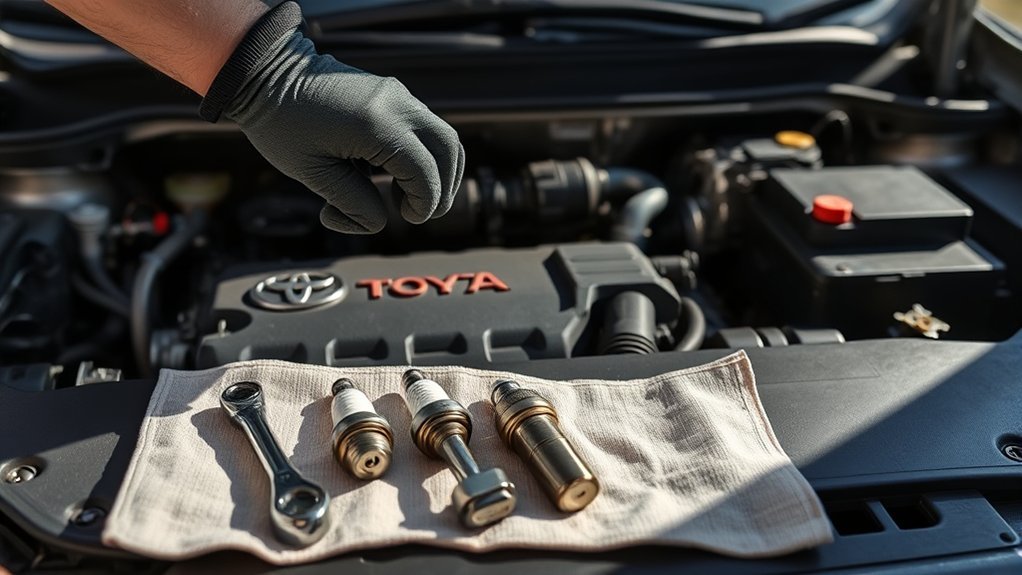
Work one cylinder at a time so the coils, connectors, and bolts go back exactly where they came from. That simple habit reduces the chance of mixing parts or missing a connector.
- Park safely and let the engine cool. Set the parking brake, open the hood, and wait until the engine is cool to the touch.
- Remove the engine cover. Most late-model RAV4 engine covers pull upward from rubber grommets. Set it aside where it will not get dirty.
- Disconnect the ignition coil connector. Press the locking tab gently. Do not yank on the wires.
- Remove the ignition coil bolt. Use the correct socket for your model. Many late-model guides use an 8 mm socket, while some older RAV4s use different fasteners.
- Lift out the ignition coil. Twist it gently if the boot is stuck. Inspect the boot for oil, carbon tracking, cracks, or moisture.
- Clean the plug well. Use compressed air or a vacuum to remove dirt around the spark plug before loosening it. Keep debris out of the cylinder.
- Remove the old spark plug. Use the correct spark plug socket and extension. Keep the socket straight so the porcelain insulator does not crack.
- Compare old and new plugs. Confirm thread length, seat type, electrode style, and part number. If a new plug was dropped or struck, replace it.
- Check the new plug carefully. Verify the factory gap only if your plug maker allows it. Do not pry against a fine-wire iridium center electrode.
- Install the new plug by hand. Thread it in with the socket extension only, without the ratchet, until the gasket seats. If it resists, back it out and restart to avoid cross-threading.
- Torque the spark plug. Attach a torque wrench and tighten to the correct specification for your engine and plug.
- Reinstall the coil. Seat the coil boot fully, reinstall the bolt, and reconnect the electrical connector until it clicks.
- Repeat for the remaining cylinders. Keep the same clean, one-cylinder-at-a-time process.
- Reinstall the engine cover and start the engine. Listen for smooth idle, check for warning lights, and scan for codes if anything feels wrong.
Pro Tip: A short piece of clean rubber hose slipped over the porcelain end of the spark plug can help you hand-start the plug in a deep well. If the plug cross-threads, the hose usually slips before damage occurs.
Essential Tools for Replacing Spark Plugs in a RAV4
The right tools make this job safer and cleaner. The most important tool is a torque wrench that reads accurately in the low range used for spark plugs.
Required Socket Sizes
Socket size depends on the spark plug and engine generation. Many newer 2.5L RAV4 engines use a 14 mm spark plug socket. Some older 2.5L engines use a 16 mm or 5/8 in. spark plug socket. Check before you start so the job does not stop halfway.
| Tool | Use | Notes |
|---|---|---|
| 14 mm thin-wall spark plug socket | Removing/installing plugs on many late-model RAV4 engines | A magnetic or rubber-retainer socket helps in deep plug wells. |
| 16 mm / 5/8 in. spark plug socket | Some older RAV4 engines | Verify by engine code and plug part number. |
| 8 mm or 10 mm socket | Ignition coil bolts or nearby brackets | Fastener size varies by year and engine. |
| 3/8 in. ratchet and extensions | Accessing deep plug wells | A 3 in. and 6 in. extension usually cover most 4-cylinder RAV4 jobs. |
Essential Torque Wrench
A torque wrench prevents both under-tightening and over-tightening. For many 2021–2025 RAV4 2.5L A25A-FKS engines, public repair data lists the spark plug torque as 20 N·m, or about 15 ft-lb. Older engines can differ, so treat that as a common example, not a universal rule.
Install plugs dry unless the plug or vehicle manufacturer specifically says otherwise. Anti-seize and other lubricants can change the torque reading and lead to over-tightening.
Ratchet and Extensions Needed
A 3/8 in. ratchet with short and medium extensions gives you control without forcing the socket sideways. Keep the extension straight over the spark plug. If the socket sits at an angle, the porcelain can crack or the threads can start crooked.
Warning: Do not use an impact wrench on spark plugs. Use hand tools, start the plug by hand, and finish with a torque wrench.
Measuring and Adjusting Spark Plug Gaps
Modern RAV4 iridium plugs usually come pre-gapped. On many late-model RAV4 and RAV4 Hybrid applications, Toyota lists a 0.8 mm / 0.031 in. gap and warns not to adjust iridium-tipped spark plug gaps. Older engines may use a different gap, so your vehicle’s exact specification matters.
Importance of Proper Gapping
The spark plug gap affects how easily the ignition coil can jump the spark across the electrodes. A gap that is too wide can cause weak spark under load. A gap that is too narrow can reduce ignition quality and create rough running. The fix is not to guess; the fix is to use the correct plug and the correct factory specification.
Measuring Techniques for Accuracy
If your plug maker allows checking the gap, use a wire-style feeler gauge and be gentle. Slide the gauge through the gap without forcing it. Avoid coin-style gap tools on fine-wire iridium plugs because they can damage the center electrode or porcelain.
Adjusting Gaps for Performance
Do not adjust a precious-metal iridium plug unless the vehicle manual or plug manufacturer says it is acceptable. If a new plug’s gap is badly wrong, the safest move is usually to exchange it for the correct part rather than bend the electrode.
| Gap Situation | What to Do |
|---|---|
| Factory pre-gapped iridium plug matches spec | Install it without adjustment. |
| Gap is slightly questionable | Verify with a wire gauge and compare with the manual. |
| Gap is far from spec or electrode is damaged | Replace or exchange the plug. |
| Older non-iridium plug requires adjustment | Move only the ground strap with the proper tool. |
Installing New Spark Plugs: Best Practices
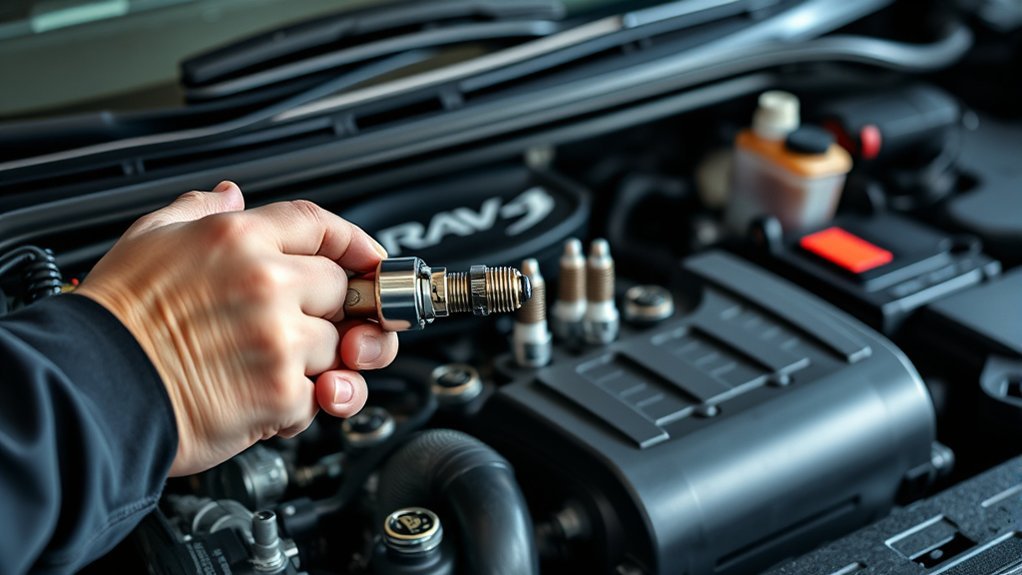
Good installation is more important than speed. A spark plug must sit cleanly against the cylinder head so heat can transfer properly. Poor seating, dirt on the threads, wrong torque, or a cracked insulator can all cause problems after the repair.
- Keep the plug wells clean. Blow or vacuum debris away before removing each old plug.
- Use the correct spark plug socket. A thin-wall magnetic socket is helpful on deep late-model wells.
- Start threads by hand. Never use the ratchet until the plug has threaded smoothly several turns.
- Torque carefully. Stop when the wrench clicks. Do not “add a little more.”
- Inspect coil boots. Replace cracked, oil-soaked, or carbon-tracked boots.
- Reconnect every coil connector. A loose connector can cause an immediate misfire and check engine light.
Note: A small amount of dielectric grease may be used inside the coil boot if recommended for your boot design. Keep grease off the spark plug threads and electrodes.
Avoid These Common Spark Plug Replacement Mistakes
Most spark plug problems after a DIY replacement come from small mistakes. Avoid these before they become misfires, stripped threads, or cracked plugs.
| Mistake | Why It Is a Problem | Better Method |
|---|---|---|
| Using the wrong plug | Incorrect reach or heat range can cause poor combustion or damage. | Match by VIN, engine code, and Toyota/DENSO/NGK catalog data. |
| Forcing the gap on an iridium plug | Fine-wire electrodes are easy to damage. | Verify gently; exchange damaged or incorrect plugs. |
| Adding anti-seize by habit | Lubricated threads can over-torque at the dry torque spec. | Install dry unless the manufacturer says otherwise. |
| Starting plugs with a ratchet | Cross-threading can damage the aluminum cylinder head. | Start by hand with the socket extension only. |
| Skipping the torque wrench | Too loose or too tight can both cause engine problems. | Use the verified torque spec for your engine. |
| Not cleaning plug wells | Dirt can fall into the cylinder or affect torque readings. | Clean before loosening each plug. |
When to Replace Your Spark Plugs?
For the U.S. 2023 Toyota RAV4 maintenance schedule, Toyota lists spark plug replacement at 120,000 miles or 144 months. Your exact year, market, and engine may have a different schedule, so confirm the interval in your owner’s manual or maintenance guide.
Replace plugs earlier if there is a confirmed problem, such as a misfire code, rough idle, hard starting, hesitation, poor fuel economy, or worn/damaged electrodes during diagnosis. Do not replace good long-life iridium plugs early just because a generic maintenance chart says to.
A scheduled spark plug service is not just about fuel economy. Correct plugs, clean installation, and proper torque help the plug transfer heat safely into the cylinder head.
How Regular Inspections Can Enhance Spark Plug Life
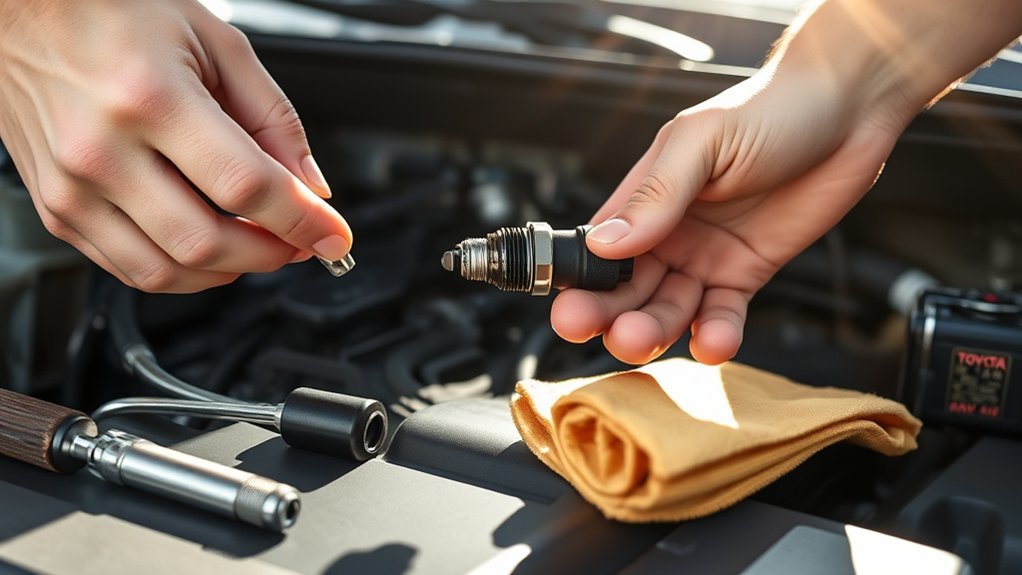
Regular inspections do not always mean removing the spark plugs. For long-life iridium plugs, it is often smarter to monitor symptoms, scan for codes when the check engine light appears, and inspect ignition coils or plug wells during other maintenance.
| Inspection Type | What to Look For | Why It Helps |
|---|---|---|
| OBD-II scan | P0300 random misfire or P0301–P0304 cylinder misfire codes | Points you toward the affected cylinder or system. |
| Idle and acceleration check | Shaking, hesitation, hard starting, or power loss | Flags possible ignition issues before they worsen. |
| Coil boot inspection | Cracks, oil, moisture, white tracking marks, or carbon lines | A bad boot can mimic a bad plug. |
| Plug inspection when removed | Worn electrode, oil fouling, fuel fouling, cracked porcelain, damaged threads | Reveals ignition, oil, fuel, or mechanical problems. |
Troubleshooting Issues After Spark Plug Replacement
If your RAV4 runs worse after spark plug replacement, stop and recheck the work before driving far. Most post-repair problems are caused by a loose coil connector, a coil boot not seated fully, the wrong plug, a cracked plug, debris in the plug well, or an incorrect torque/gap issue.
- Rough idle immediately after startup: Check that every coil connector clicked into place.
- Check engine light: Scan for codes. P0301, P0302, P0303, or P0304 can point to a specific cylinder on a 4-cylinder RAV4.
- Misfire moved after swapping coils: The ignition coil or boot may be the problem, not the plug.
- Fuel smell or flashing check engine light: Shut the engine off and diagnose before driving. Active misfires can damage the catalytic converter.
- Ticking or popping from the plug area: Stop and verify the plug is seated and torqued correctly.
Warning: A flashing check engine light usually means an active misfire. Avoid continued driving until the cause is fixed.
Why Spark Plug Maintenance Matters
Spark plugs ignite the air-fuel mixture thousands of times per minute. When they are worn, loose, over-tightened, contaminated, or mismatched, the engine can lose power, idle roughly, use more fuel, or set misfire codes. Healthy plugs also help protect ignition coils and emissions components.
The best approach is simple: use the correct plug, keep dirt out of the engine, avoid unnecessary gap adjustments, start threads by hand, torque to spec, and replace plugs at the interval Toyota lists for your specific RAV4.
Frequently Asked Questions
In what order should you replace Toyota RAV4 spark plugs?
Replace them one cylinder at a time. Remove one ignition coil, replace that plug, reinstall the coil, reconnect it, then move to the next cylinder. This keeps parts organized and reduces the chance of leaving a connector loose.
What are the basic steps to change a Toyota RAV4 spark plug?
Let the engine cool, remove the engine cover, disconnect the ignition coil, remove the coil bolt, clean the plug well, remove the old plug, compare it with the new plug, hand-start the new plug, torque it to spec, reinstall the coil, and test the engine.
How often should spark plugs be changed on a Toyota RAV4?
Toyota’s U.S. 2023 RAV4 maintenance guide lists spark plug replacement at 120,000 miles or 144 months. Your model year, market, and engine can differ, so always confirm the interval in your owner’s manual or maintenance guide.
What is the correct Toyota RAV4 spark plug gap?
It depends on the engine and plug. Many late-model RAV4 and RAV4 Hybrid iridium plugs are listed at 0.8 mm / 0.031 in. and should not be adjusted. Some older RAV4 engines use different gaps, so verify your exact specification before installing plugs.
What is the correct spark plug firing order?
Most Toyota 4-cylinder RAV4 engines use a 1-3-4-2 firing order, but you usually do not need firing-order routing for coil-on-plug spark plug replacement. If you have an older V6 RAV4, confirm the firing order and cylinder numbering in the repair manual for that engine.
Should I use anti-seize on Toyota RAV4 spark plugs?
Usually no, unless the plug or vehicle manufacturer specifically instructs you to use it. Many modern spark plugs have plated threads, and adding anti-seize can change torque readings. If threads are lubricated, torque values must be adjusted according to manufacturer guidance.
Conclusion
Replacing Toyota RAV4 spark plugs is straightforward when you slow down and verify the details first. The key is not memorizing one universal gap or torque number; it is matching the plug, gap, socket, and torque to your exact RAV4. Work on a cool engine, keep the plug wells clean, start each plug by hand, torque it correctly, and check for smooth operation before you close the hood.
Sources
- Toyota 2023 RAV4 Warranty & Maintenance Guide — backs the 120,000-mile / 144-month spark plug replacement schedule for the U.S. 2023 RAV4.
- Toyota 2024 RAV4 Hybrid Maintenance Data — backs the late-model 0.8 mm / 0.031 in. iridium spark plug gap example and no-gap-adjustment warning.
- DENSO Spark Plug Installation Guide — backs clean-thread, hand-start, torque-wrench, lubricant, and gapping cautions.
- DENSO Spark Plug Torque and Installation Basics — backs torque-angle guidance and the warning to keep the wrench straight in deep plug wells.
- NGK Spark Plug Installation — backs cool-engine installation, clean plug holes, and torque-related engine damage warnings.
- NGK: 5 Things You Should Know About Spark Plugs — backs anti-seize, fine-wire gapping, and torque cautions.