The duty cycle of your tire inflator indicates how long it can run before needing a cooldown. Most models allow for around 15 minutes of continuous use, meaning you should let it rest for an equal time afterward. Exceeding this limit risks overheating and damage. By understanding your inflator’s duty cycle, you can optimize its performance and lifespan. Want to know how to calculate specific duty cycles and recognize signs of overuse? There’s more ahead.
What Is a Tire Inflator Duty Cycle?

When you use a tire inflator, understanding its duty cycle is vital to guarantee peak performance and prevent damage. The duty cycle refers to the percentage of time the inflator can operate continuously before it needs a cooldown period. Most models typically feature a duty cycle of around 15 minutes, indicating they can run for that duration before requiring rest. Exceeding this recommended run time can lead to overheating and potential damage, jeopardizing your inflator’s longevity. It’s important to check the manufacturer’s specifications for each model, as duty cycles can vary. By understanding these limits, you can efficiently plan your inflation tasks, ensuring safe operation and maximizing the lifespan of your tire inflator.
Why Understanding Duty Cycle Matters for Your Tire Inflator
Understanding the duty cycle is vital to optimizing your tire inflator’s performance and longevity. This metric indicates how long your inflator can run continuously before needing a cool-down period. Most tire inflators typically feature a duty cycle of around 15 minutes, which means they can operate efficiently for that duration before requiring a rest. By grasping your inflator’s compressor duty cycles, you can avoid overworking it, preventing overheating and premature failure. This is especially important if you often inflate multiple tires or larger vehicles like RVs and trucks. Regularly checking the duty cycle guarantees you maintain proper tire pressure while maximizing your inflator’s lifespan and performance during essential tire maintenance tasks.
Calculating Your Tire Inflator Duty Cycle: A Step-by-Step Guide
To calculate your tire inflator’s duty cycle accurately, you’ll need to measure both the run time and the rest time of your device. Use the formula: Duty Cycle (%) = (Run Time / (Run Time + Rest Time)) x 100. For instance, if your inflator runs for 15 minutes and requires 30 minutes of rest, your duty cycle computes to 33%.
| Run Time (minutes) | Rest Time (minutes) |
|---|---|
| 15 | 30 |
| 10 | 20 |
| 20 | 40 |
| 5 | 15 |
Always consult the manufacturer’s guidelines for specific duty cycle ratings, as they can differ by model. Monitoring these times helps extend your inflator’s lifespan and maintain peak performance.
Common Duty Cycle Ratings for Tire Inflators Explained

Many tire inflators feature duty cycle ratings that dictate their ideal operating periods. Typically, these inflators have a duty cycle of around 15 minutes, meaning you should allow for an equal cooldown time after continuous use to avoid overheating. Portable models often cater to intermittent use, providing short bursts of inflation before requiring a break. It’s essential to check the manufacturer’s specifications, as duty cycles can vary considerably. High-quality inflators may support longer continuous duty cycles, yet they still need rest to maintain peak performance and longevity. Understanding these ratings is critical for effective tire maintenance, ensuring you operate within the recommended limits to prevent overheating and extend the life of your tire inflator.
Identifying Signs of Overuse in Your Tire Inflator
When using your tire inflator, pay attention to signs of overuse that can indicate it’s operating beyond its duty cycle. Excess heat, unusual noises, and extended inflation times are critical indicators that your inflator requires a break to prevent damage. Monitoring these factors will help maintain peak performance and extend the lifespan of your device.
Excess Heat Emission
Excess heat emission in your tire inflator can signal overuse, which may lead to performance issues or even damage. To identify signs of overheating, keep an eye out for these indicators:
- Warm Compressor Casing: If the casing feels excessively warm to the touch, it’s a clear sign of overheating.
- Duty Cycle Exceedance: Remember, the typical duty cycle is around 15 minutes. If you exceed this without allowing time to cool, you’re risking excessive wear.
- Decreased Air Pressure Output: A drop in air pressure can indicate that your inflator is struggling due to overheating.
Regularly monitoring your inflator’s temperature and allowing it to cool is vital to prevent damage and guarantee safe tire inflation.
Unusual Noises During Operation
While operating your tire inflator, unusual noises can serve as critical indicators of overuse and potential damage. Sounds like rattling or grinding often signal excessive wear from prolonged use beyond its compressor duty cycle. If you hear a high-pitched whine or squeal, it may indicate overheating, urging you to cool down the unit to prevent further damage. Continuous operation exceeding recommended limits typically results in increased noise levels, reflecting strain on the motor under excessive load. Sudden changes in sound could point to mechanical failure, necessitating immediate inspection to avoid a complete breakdown. By regularly monitoring the noise levels of your tire inflator, you can identify signs of overuse early and extend the device’s lifespan effectively.
Extended Inflation Times
Extended inflation times can signal that your tire inflator is being overworked, potentially leading to premature wear or damage. To guarantee your inflator remains in peak condition, watch for these signs of overuse:
- Excessive Heat: If the unit becomes too hot to touch, it’s time to let it cool down and avoid overheating.
- Unusual Noises or Vibrations: Any strange sounds or movement may indicate mechanical stress, suggesting you should turn it off immediately.
- Prolonged Inflation Time: If your inflator exceeds its expected duty cycle, it’s a clear sign that it needs a break to protect its cooling components and prevent thermal overload.
Keeping these indicators in mind can help you maintain your tire inflator’s performance and longevity.
Tips for Extending the Lifespan of Your Tire Inflator
To maximize the lifespan of your tire inflator, it is crucial to follow several key practices. Verify your inflator has a duty cycle of at least 15 minutes, allowing adequate internal cooling between uses. Regularly check and clean the compressor’s air filter to maintain ideal airflow and prevent contamination. Always operate the inflator within its specified pressure range; exceeding this can lead to excessive wear on the motor and components. Store the inflator in a cool, dry place to protect it from moisture and extreme temperatures. Finally, periodically inspect the hose and nozzle for leaks or damage, as maintaining these components guarantees efficient operation and prolongs the overall life of your inflator.
How to Use Your Tire Inflator Safely
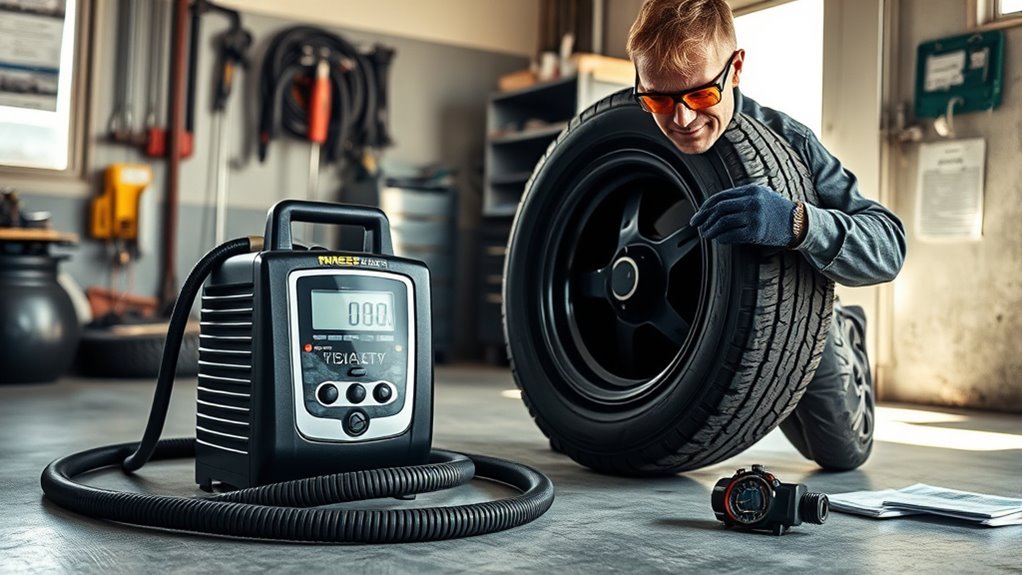
Using a tire inflator safely is essential for both your equipment’s longevity and your personal safety. Follow these guidelines to guarantee a smooth operation:
- Check the Duty Cycle: Always refer to your inflator’s specifications, which usually indicate a run time of 15 to 30 minutes. Respect this limit to avoid overheating.
- Monitor Temperature: If the compressor runs too hot, turn it off immediately. Allow it to cool for at least 20-30 minutes to prevent damage.
- Use Engine Power: For peak performance, keep your vehicle’s engine running while using a corded inflator. This guarantees sufficient power and prevents battery drain while you set the desired PSI and CFM.
How Long Can You Run Your Tire Inflator Continuously?
Understanding the duty cycle of your tire inflator is key to maximizing its performance and lifespan. Most inflators can run continuously for about 15 minutes before needing a cooldown. If you push beyond this duty cycle, the compressor is running longer than intended, leading to overheating and potential damage. While some high-quality models may be designed for extended use, it’s vital to refer to the manufacturer’s specifications for your specific inflator. After each use, let your inflator rest for at least 10-15 minutes to prevent overheating and prolong its lifespan. By following these guidelines, you guarantee your tire inflator remains reliable and effective, giving you the freedom to tackle any flat tire situation with confidence.
Corded vs. Cordless Tire Inflators: Duty Cycle Comparison
When choosing between corded and cordless tire inflators, it’s crucial to evaluate their duty cycles, as this can greatly impact your inflation tasks. Here’s a quick comparison:
- Duty Cycle: Corded inflators often have a duty cycle of up to 100%, allowing continuous operation, while cordless tire inflators typically max out around 15 minutes.
- Air Pressure Maintenance: Corded models maintain higher air pressure (often above 100 PSI) longer, whereas cordless inflators may struggle over time.
- Cooling Requirements: Cordless inflators require downtime for battery recharge and cooling, while corded inflators can operate without interruption as long as the engine runs.
Frequently Asked Questions About Tire Inflator Duty Cycles?
What should you know about tire inflator duty cycles? Understanding the duty cycle of your tire inflator is essential for safe operation. Typically, inflators can run continuously for about 15 minutes before requiring a cool-down period. Some models may have lower duty cycles, like 25% or 33%, which means shorter operational times followed by longer rests. Ignoring these guidelines can lead to overheating and damage. Always monitor the temperature during use and refer to the manufacturer’s specifications for precise duty cycles.
| Duty Cycle (%) | Usage Time (Minutes) | Cool-Down Time (Minutes) |
|---|---|---|
| 100 | 15 | 10 |
| 33 | 3 | 6 |
| 25 | 4 | 8 |
| 50 | 7.5 | 7.5 |
| 75 | 11 | 4 |
Frequently Asked Questions
How Long Can an Air Compressor Run Continuously?
An air compressor can typically run for 15-30 minutes continuously, depending on its type. To avoid overheating, follow compressor maintenance tips and allow ideal cooling periods between uses, minimizing continuous operation risks for longevity.
What Is a Good Duty Cycle for an Air Compressor?
A good duty cycle for an air compressor typically ranges from 25% to 100%. Understanding duty cycle importance enhances compressor efficiency and aids in air compressor maintenance, helping you choose the right air compressor for your needs.
What Does 70% Duty Cycle Mean?
A 70% duty cycle means your inflator operates for 7 minutes, ensuring compressor efficiency while managing air pressure. It reduces overheating risks by requiring 3 minutes of rest, maintaining peak performance and extending the unit’s lifespan.
What Happens if I Don’t Break in My Air Compressor?
Neglecting break-in procedures is like skipping the foundation of a house; your air compressor’s lifespan and performance optimization suffer. You risk overheating, increased energy consumption, and potential warranty issues without proper air compressor maintenance.
Conclusion
In the world of tire inflators, understanding your tool’s duty cycle is like knowing the limits of a bridge: push it too far, and you risk a breakdown. By respecting these guidelines, you guarantee your inflator runs smoothly, extending its lifespan and improving your safety on the road. Whether you choose corded or cordless, always remember: a well-maintained inflator is your vehicle’s steadfast companion, ready to support your journey without faltering under pressure.