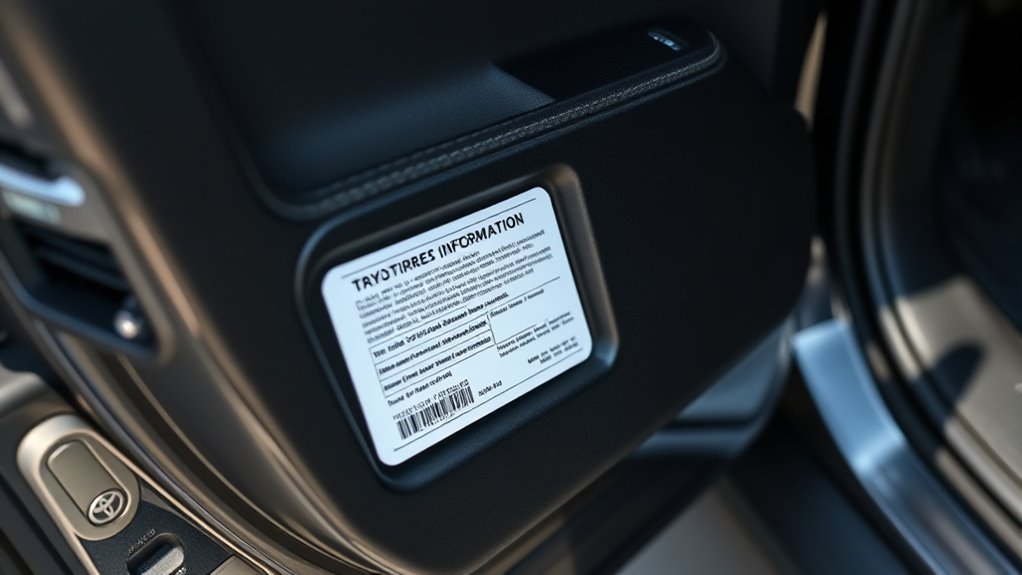
You’ll find the tire information placard on the driver’s door jamb near the latch; use it as the authoritative source for cold inflation pressures, tire sizes, and maximum load—not the sidewall. Check pressures when tires are cold, set each tire to the placard PSI (typically 35 PSI on recent RAV4s) with a calibrated gauge, and recheck after inflation. Monitor monthly and before long trips; if TPMS lights persist after adjustments, a sensor or system check may be needed—more guidance follows.
Who This Guide Helps and How to Use It
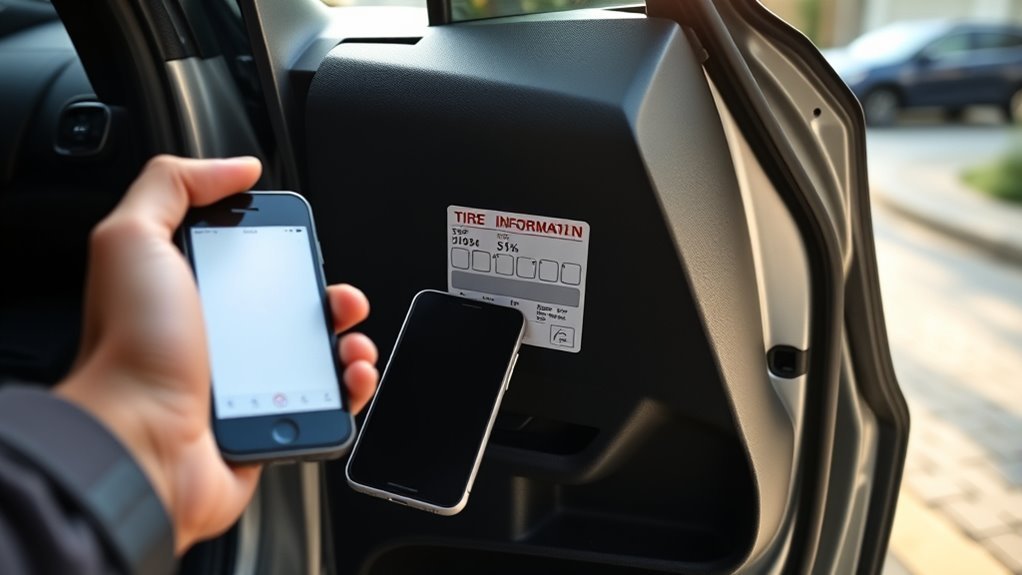
Anyone who owns or maintains a Toyota RAV4 will find this guide useful; it explains the tire information placard and how to apply its recommendations. You’ll use this section to identify who benefits and how to act on the placard’s data. If you care about safety, economy, and independence, follow the placard’s PSI specs—typically 35 PSI front and rear for a 2021 RAV4—rather than the tire sidewall. The placard also lists tire size and load capacity so you can match replacements and avoid overload.
You’ll perform pressure monitoring regularly, checking cold pressures and adjusting to the placard values to sustain handling and fuel economy. These tire maintenance tips keep tires wearing evenly and reduce failure risk. Use a reliable gauge or the vehicle’s monitoring system, record readings, and correct pressures before trips. This concise, technical approach hands you control and reduces dependence on guesswork or unsafe defaults.
Find the RAV4 Tire Information Placard
Now that you know why the placard matters, locate it before you adjust pressures. Open the driver’s door and inspect the door jamb near the latch; the RAV4 tire information placard is typically mounted there. You’ll find manufacturer-recommended values—on a 2021 RAV4 that’s 35 PSI front and rear—plus tire sizes and load limits. For consistent tire maintenance and accurate pressure monitoring, consult this placard rather than the tire sidewall, which can show maximum—not recommended—pressure.
Make it a habit: check the placard whenever you rotate tires, change load conditions, or reset your pressure monitoring system. Photograph or note the values and store them where you can access them easily. Relying on the placard lets you reclaim control over safety and efficiency, ensuring your pressures match the vehicle’s engineered parameters instead of assumptions or generic advice.
How to Read the Tire Information Placard
Locate the placard on the driver’s door jamb and confirm it matches your vehicle VIN. Read the recommended tire pressures—typically shown in PSI for front and rear (e.g., 35 PSI for a 2021 RAV4)—and note the tire size listed. Use those placard values for inflation and ignore any PSI shown on the tire sidewall.
[Products Worth Considering]

Protect your Toyota RAV4 interior with this custom‑fit windshield sun shade that blocks 99% of harmful UV rays and reduces cabin heat. The mirror cut‑out ensures a seamless fit without gaps, while durable 240T polyester and bendable wire keep it sturdy through repeated use. Foldable and stored in a convenient pouch, it offers easy installation and removal for everyday comfort.

The Autovir windscreen shade offers full windshield coverage for Toyota RAV4 models from 2019 to 2026, blocking up to 99.95% of UV rays and reducing interior heat. Its multi‑layer reflective material provides SPF 100 and UPF 80+ protection while keeping the dashboard, seats, and steering wheel cooler. The foldable design installs quickly and stores conveniently in the glove box, and reinforced stitching ensures long‑lasting durability for daily use.

The Autorder windshield sun shade umbrella provides full coverage for Toyota RAV4 models from 2019 to 2026, blocking heat and UV rays with its advanced ice crystal material. Its ten reinforced skeletons and anti‑puncture edges ensure durability and stability, while the effortless umbrella‑style deployment and compact storage bag make it convenient for everyday use. Keep your car interior cool and protected from sun damage with this easy‑setup, high‑performance sunshade.
Locate The Placard
Where can you find the RAV4’s tire information placard? Look inside the driver’s door jamb; that’s where the placard importance is made practical. You’ll see a durable label with concise technical data: manufacturer’s recommended tire pressure, allowed tire sizes for front and rear, and maximum load capacity. Use it as your primary reference when servicing tires so tire safety isn’t left to guesswork. The placard empowers you to maintain proper inflation, match correct tire dimensions, and respect load limits—actions that preserve handling, fuel efficiency, and structural integrity. When you inspect or replace tires, consult that label first to guarantee compliance with manufacturer standards and to assert control over your vehicle’s performance and safety.
Read Pressure Values
Having found the placard on the driver’s door jamb, read the listed pressure values carefully: the manufacturer’s recommended cold inflation pressure for the 2021 RAV4 is 35 PSI for both front and rear tires. You’ll use that number to set tire pressure, not the sidewall’s maximum PSI, which only shows the tire’s limit. As you check pressures cold, adjust to 35 PSI and recheck after a short drive; don’t overinflate or underinflate. Note the placard’s maximum load capacity too — payload affects recommended pressures for safe operation. Reading tips: trust the vehicle placard, carry a calibrated gauge, and document pressures periodically. Accurate readings free you from guesswork and keep the vehicle efficient, safe, and under your control.
Quick Steps: Set Your RAV4 Tires to the Placard PSI
Start by locating the tire information placard on the driver’s door jamb to note the recommended front and rear PSI. Check the tire pressures when the tires are cold to get accurate readings. Use a portable inflator, home compressor, or gas station pump to inflate each tire to the placard PSI and recheck to confirm.
[Products Worth Considering]

The KDOWES front windshield sun shade offers a custom fit for Toyota RAV4 SUVs, featuring a double‑layer heat shield that blocks up to 99% of solar rays and reduces interior temperature by up to 40°F. Reinforced steel rings and Velcro fasteners ensure easy installation and a secure fit, while the foldable cartilage steel ring allows convenient storage. This high‑quality, reflective fabric protects upholstery, dashboard, and electronics from UV damage, keeping the cabin cool and comfortable.

The Pigenius windshield sunshade protects your Tundra's interior from heat and UV damage while keeping the cabin cool. Its accordion design folds easily for storage and quick setup, and the triple‑laminate construction provides durable, reflective protection. Ideal for long trips and daily commutes, it guards dashboards, seats, and steering wheels from sun‑related wear.
Locate Door Jamb Placard
Want to confirm the correct tire pressure for your RAV4? Open the driver’s door and inspect the door jamb for a manufacturer sticker — the tire information placard. Read it deliberately: it lists recommended PSI (commonly 35 PSI front and rear on a 2021 RAV4). Use the placard as your authoritative reference; tire sidewall numbers show maximum inflation, not the vehicle-specific setting. Before inflating, compare your gauge reading to the placard to enforce consistent tire maintenance and uphold safety practices. Regular checks against the placard preserve fuel efficiency and extend tire life by preventing under- or over-inflation. Locate the placard now, commit to its values, and free yourself from guesswork with this precise, manufacturer-approved guidance.
Check Cold Tire Pressure
Grab a reliable tire pressure gauge and confirm the placard PSI listed on the driver’s door jamb before you check — do this with the tires cold (vehicle parked for at least three hours or driven less than a mile). You locate the recommended cold PSI for front and rear tires—often ~35 PSI on a 2021 RAV4—and measure each tire with the gauge. Cold readings prevent temperature-induced overestimation. Use consistent technique: remove valve cap, press gauge firmly, note reading, replace cap. Compare values to the placard and log results for ongoing tire pressure monitoring. If any tire reads low, plan to add air using a portable inflator, compressor, or station pump to restore proper pressure. Regular checks preserve handling, fuel efficiency, and tire inflation safety.
Inflate To Recommended PSI
With your cold PSI readings noted from the driver’s door jamb, move on to inflating each tire to the placard value. You’ll use the placard (35 PSI front/rear for a 2021 RAV4) as your target. Confirm each tire’s current pressure with a reliable gauge, then add air until the gauge matches the placard. Use a portable inflator, home compressor, or station pump. Practice disciplined pressure monitoring to preserve handling, economy, and safety.
- Verify cold PSI with a reliable tire pressure gauge before inflation.
- Inflate each tire to 35 PSI (2021 RAV4 placard) using your chosen air source.
- Re-check pressures after inflating and re-tighten valve caps.
Stay consistent: regular tire inflation and pressure monitoring liberates you from avoidable roadside issues.
Why the Door‑Jamb PSI Is the Correct Reference
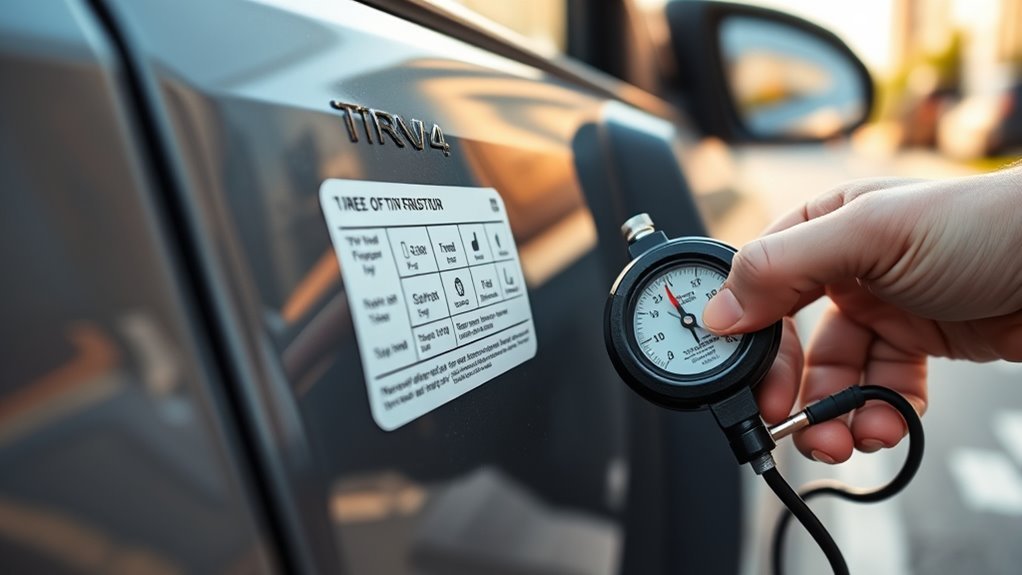
Because the door‑jamb placard reflects the vehicle maker’s tested settings, you should use its PSI values rather than the tire sidewall numbers when inflating your RAV4. That placard gives the optimized 35 PSI for both front and rear on a 2021 RAV4, derived from vehicle-specific testing to balance tire performance and inflation importance. You want the pressures engineers selected to match the RAV4’s weight distribution, suspension, and intended handling.
Tire sidewalls show maximum capacity, not recommended operating pressure; inflating to that maximum can degrade handling, increase wear, and reduce fuel efficiency. Using the door‑jamb PSI preserves predictable steering, consistent tread wear, and the fuel economy you’re entitled to. Referencing the placard also minimizes risks of under‑ or over‑inflation that compromise safety. Follow the manufacturer’s number as the authoritative setting for safe, efficient, and liberating control of your vehicle.
When and How Often to Check Tire Pressure (Temperature Tips)
Now that you’re using the door‑jamb PSI as your reference, make a habit of checking tire pressure at least once a month and before any long trip to keep those manufacturer settings effective. You’ll use a reliable gauge — dashboard lights are reactive and may lag — and record readings as part of maintenance reminders that free you from unexpected stops. Remember seasonal adjustments: pressure falls roughly 1 PSI per 10°F drop, so check more often when temperatures swing.
- Check pressures cold (vehicle parked 3+ hours) with a calibrated gauge.
- Adjust to door‑jamb PSI; don’t follow the tire sidewall.
- Inspect monthly and after major temperature changes.
Consistent checks improve fuel economy and tire life, giving you autonomy over vehicle performance. Treat pressure checks as small acts of liberation: simple, disciplined, and empowering. Keep a small gauge and a log in your glove box so maintenance reminders become routine and your RAV4 stays safe and efficient.
Troubleshoot RAV4 TPMS and Tire Pressure Warnings
If your RAV4’s TPMS warning lights up, check and set all four tires to the door‑jamb PSI immediately using a calibrated gauge, because the system is reactive and won’t show exact pressures. You’ll manually verify pressures, correct any low tire to the specified PSI, and retest—this is proactive monitoring, not passive reliance on a warning lamp. Remember temperature shifts lower PSI roughly 1 psi per 10°F drop, so adjust when seasons change.
If the light persists after accurate inflation, suspect TPMS malfunctions: a dead sensor battery, damaged sensor, or a system fault may be present. Don’t ignore a persistent indicator; you’re responsible for safety and freedom on the road. A qualified technician can scan TPMS data, reset the system, or replace faulty sensors. Maintain a routine of manual checks, carry a reliable gauge, and treat the TPMS as an alert system rather than an exact pressure source to stay liberated and safe.
Frequently Asked Questions
Does Toyota RAV4 Tell You Which Tire Is Low?
No — the RAV4’s TPMS doesn’t tell you which tire is low; it only triggers a warning light. You’ll need to manually check tire pressure with a gauge, or use Connected Services/app on newer models to pinpoint.
How Do You Read Your Tire Information?
You read it by checking the placard, noting recommended tire pressure for front and rear, and following maintenance tips; you’ll compare PSI values to your gauge, adjust cold tires, and log pressures to keep yourself safely liberated.
How to Read a Tyre Placard?
You read a tyre placard by locating recommended tire pressure for front/rear, matching tire size, and noting load capacity limits; you’ll follow manufacturer specs to optimize safety, performance, fuel efficiency, and maintain your vehicle’s liberated control.
Conclusion
Think of the door‑jamb placard as your vehicle’s blueprint and the tire as its foundation stone. When you set pressure to the placard PSI, you’re aligning design and reality—stability, efficiency and safety snap into place. Check pressures cold, fix leaks, and treat TPMS warnings like a flashing beacon: don’t ignore them. Routine checks keep the foundation true, prolonging tire life and preserving handling so your RAV4 performs as engineered.