Last updated: August 30, 2026
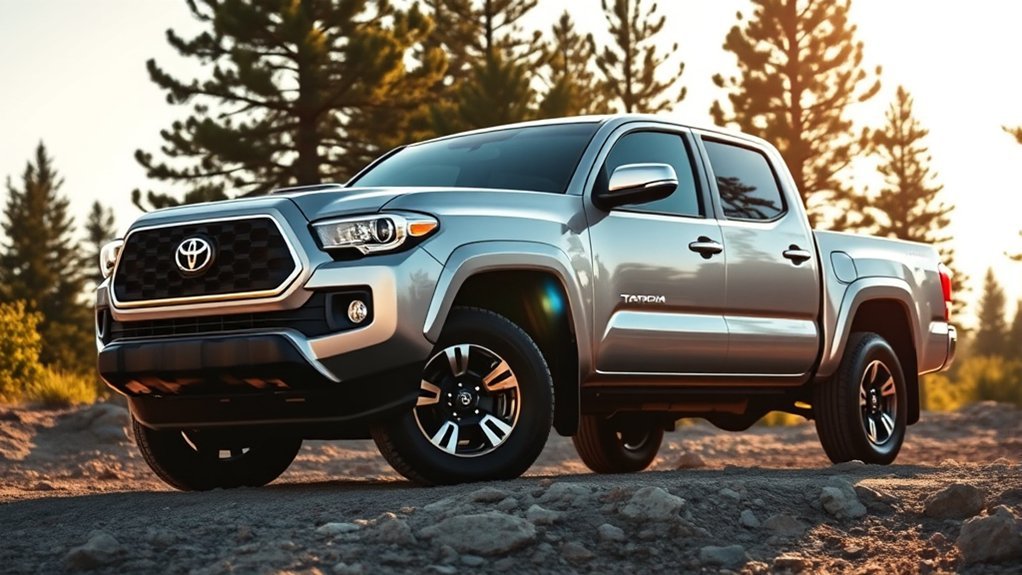
A stock Toyota Tacoma hitch receiver height typically measures between 16.5 and 19.0 inches from level ground to the top inside edge of the receiver tube. To calculate the required ball mount drop or rise, use this formula: Receiver Height − Coupler Height = Drop (if positive) or Rise (if negative). Because trailer coupler heights, tongue weight, and suspension sag vary, you must measure your loaded truck and level trailer before selecting hardware.
Quick Answer
To find your Tacoma’s drop hitch size: park on level ground, measure from the ground to the top inside edge of the Tacoma’s 2-inch receiver, then measure to the bottom of your level trailer coupler. Subtract coupler height from receiver height. A positive number indicates drop; a negative number indicates rise. For a stock Tacoma (approx. 17″–18″ receiver) towing a standard utility trailer (15″ coupler), a 2-inch to 3-inch drop is typical. Lifted Tacomas often require a 4-inch to 6-inch drop.
Key Takeaways
- Standard factory Tacoma tow packages utilize a Class IV 2-inch square receiver with a 5/8-inch hitch pin hole.
- Use the standard formula: Receiver Height − Coupler Height = Required Drop or Rise.
- Stock Tacoma receiver heights range from 16.5″ to 19.0″ depending on trim, tire size, and model generation (3rd Gen leaf springs vs. 4th Gen coil springs).
- Measure both the truck and trailer loaded for travel but uncoupled, then verify final trailer attitude after coupling to account for 1″ to 2″ of rear suspension sag.
- The lowest rated component among the Tacoma, receiver, ball mount, hitch ball, coupler, and trailer sets the maximum towing capacity.
At a Glance
| Time Required | 10–15 minutes |
| Difficulty | Easy / Beginner |
| Tools Needed | Tape measure, 2-ft or 4-ft level, level pavement, trailer tongue jack, wheel chocks |
| Hardware Standard | 2-inch Class IV receiver shank, 5/8-inch hitch pin |
Toyota Tacoma Hitch Height Measurement Worksheet
Record the dimensions below before purchasing a fixed ball mount or adjusting a multi-position hitch. The uncoupled measurement provides your baseline hardware setting; the coupled check confirms whether suspension compression requires fine-tuning.
| Measurement Step | Exact Reference Points | What to Record |
|---|---|---|
| 1. Loaded Tacoma Receiver Height | Level ground to top inside edge of the 2″ receiver tube (uncoupled, truck loaded) | Record in inches (e.g., 18.0″) |
| 2. Level Trailer Coupler Height | Level ground to bottom of trailer coupler (trailer leveled via tongue jack) | Record in inches (e.g., 15.0″) |
| 3. Starting Drop or Rise | Receiver height minus coupler height | Positive = Drop needed Negative = Rise needed |
| 4. Coupled Verification | Measure trailer frame level and truck rear suspension sag under full tongue weight | Adjust ball height 1″ if sag exceeds expectations |
Why Toyota Tacoma Hitch Height Matters
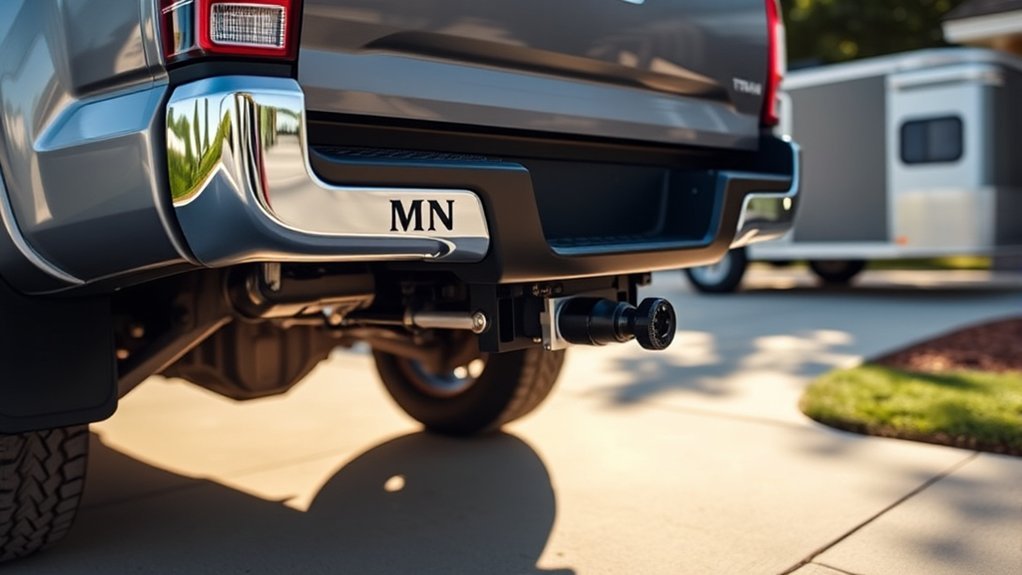
Your Toyota Tacoma’s hitch height dictates the operational angle of the trailer. When a trailer rides nose-up or nose-down, it unevenly distributes weight across the trailer axles, causes erratic tire wear, increases braking distances, and drastically elevates the risk of high-speed trailer sway under SAE J2807 towing dynamics.
Toyota rated properly equipped 3rd Generation (2016–2023) V6 Tacomas to tow up to 6,800 pounds. For 4th Generation (2024–2026) models, standard i-FORCE gas models are rated up to 6,500 pounds, while i-FORCE MAX hybrid configurations are rated up to 6,000 pounds due to powertrain curb weight. These figures represent maximum capacity limits, not a standardized hitch height. Always verify your specific door-jamb Federal Motor Vehicle Safety Standard (FMVSS) label and owner’s manual before hitching.
For a detailed breakdown of gross combined weight ratings and axle limits, review our Tacoma towing capacity and payload guide. Correct ball mount height ensures stability, but it cannot compensate for an overloaded bed or excessive tongue weight.
Warning: Never attempt to correct severe rear-end squat solely by altering ball mount drop. If your Tacoma sags significantly, exhibits light front-end steering, or sways at highway speeds, inspect your remaining payload, verify that tongue weight is within 10%–15% of gross trailer weight, and confirm that rear gross axle weight ratings (GAWR) are not exceeded.
How to Measure Tacoma Hitch Height for Exact Drop or Rise
Park the Tacoma and trailer on a flat, level concrete surface. Load the Tacoma with your anticipated passenger and bed cargo weight, and ensure the trailer is loaded with its typical travel gear, water, and fuel. Keep the trailer uncoupled during initial measurement to establish true horizontal alignment.
Step 1: Measure the Tacoma’s Receiver Height
Measure vertically from the pavement to the top inside edge of the 2-inch receiver tube opening. Industry manufacturers (including CURT, B&W, and Reese) use this standard reference point. Confirm that your truck is fitted with the standard 2″ x 2″ Class IV receiver and uses a standard 5/8″ hitch pin.
Step 2: Measure the Trailer Coupler Height
Place a 2-foot or 4-foot carpenter’s level on the trailer’s structural frame rail or tongue A-frame (do not place the level on sheet metal or tailgate lids). Crank the tongue jack until the bubble indicates the trailer is completely level. Measure vertically from the ground to the bottom of the trailer coupler socket.
| Trailer Category | Typical Level Coupler Height | Common Ball Diameter |
|---|---|---|
| Open Utility / Landscape Trailers | 15″ – 17″ | 2″ |
| Enclosed Cargo Trailers | 16″ – 19″ | 2″ or 2-5/16″ |
| Boat & Marine Trailers | 16″ – 18″ | 2″ |
| Travel Trailers / Campers | 18″ – 22″ | 2-5/16″ |
Step 3: Calculate the Required Drop or Rise
Apply the standard towing formula:
| Formula Calculation | Mathematical Result | Required Hardware Setup |
|---|---|---|
| Receiver Height > Coupler Height | Positive value | Drop Ball Mount (lowers the hitch ball) |
| Receiver Height < Coupler Height | Negative value | Rise Ball Mount (raises the hitch ball) |
| Receiver Height = Coupler Height | Zero or near-zero (< 0.5″) | Straight Ball Mount (zero-offset shank) |
Stock Tacoma Calculation Example: If your stock Tacoma receiver height measures 18.0 inches and your level utility trailer coupler measures 15.0 inches, the equation is 18.0 − 15.0 = 3.0 inches. You need a 3-inch drop ball mount.
Lifted Tacoma Calculation Example: If your Tacoma has a 2.5-inch suspension lift on 33-inch tires, your receiver height may sit at 21.5 inches. Towing the same 15.0-inch utility trailer yields 21.5 − 15.0 = 6.5 inches. You need a 6-inch or 6.5-inch drop ball mount.
Note: Measure consistently from the top inside edge of the receiver to the bottom of the coupler socket. Do not measure to the hitch ball platform, receiver centerline, or bottom of the bumper unless following specific proprietary instructions from an adjustable hitch manufacturer.
Account for Suspension Sag: Leaf Springs vs. Multi-Link Coils
When you lower the trailer coupler onto the ball, the trailer’s tongue weight settles the Tacoma’s rear suspension, causing 1.0 to 2.5 inches of suspension sag depending on your truck’s generation and suspension configuration:
- 3rd Generation Tacomas (2016–2023): Utilize traditional rear leaf spring packs. Stock leaf packs have a relatively linear initial spring rate that compresses progressively under moderate 350–500 lb tongue weights.
- 4th Generation Tacomas (2024–2026): Most trims (except base SR utility leaf setups) feature a multi-link rear coil suspension. Coil setups deliver superior ride compliance unladen but can exhibit faster initial compression under tongue weight before stabilizing.
Because suspension sag lowers the truck’s receiver, an uncoupled measurement might suggest a 4-inch drop, but real-world settling may reduce the required operational drop to 3 inches. Always couple the loaded trailer, engage the hitch latch, retract the trailer jack fully, and confirm that both the truck and trailer maintain a level stance.
Target a tongue weight that equals 10% to 15% of your gross trailer weight. Correct hitch drop creates level alignment, but proper tongue weight balance ensures vehicle stability and eliminates trailer sway.
Key Factors for Selecting an Adjustable Hitch for Your Tacoma
An adjustable ball mount is the most practical choice for Tacoma owners who tow multiple trailer types, use their truck for overland camping, or have modified suspension systems. Evaluate these specifications prior to purchase:
- Receiver Shank Compatibility: Confirm the shank is 2″ x 2″ (Class IV) with a standard 5/8″ hitch pin hole. Avoid 2.5″ shanks that require reducers, which introduce excess rattle and play.
- Adjustment Range: Choose a mount offering at least 4″ to 6″ of drop and 4″ to 6″ of rise in 1-inch increments to accommodate both low utility trailers and tall overland rigs.
- Gross Trailer Weight (GTW) & Tongue Weight (TW) Ratings: The ball mount and hitch ball must meet or exceed the loaded weight of your trailer. Ensure the ball mount is rated for at least 7,500 lbs GTW / 750 lbs TW to fully cover the Tacoma’s maximum tow rating.
- Dual or Tri-Ball Configuration: Select a dual-ball (2″ and 2-5/16″) or tri-ball assembly with an integrated channel lock to switch between standard utility trailers and heavy equipment couplers without carrying separate mounts.
- Departure Angle & Shank Clearance: Long drop shanks reduce departure angles when navigating steep driveways or off-road trails. Stride for compact designs that do not extend excessively below the receiver.
Pro Tip: After establishing your optimal drop setting for each trailer you own, write the pin position and drop increment on a waterproof label inside your Tacoma’s center console or glovebox for instant setup.
[Products Worth Considering]
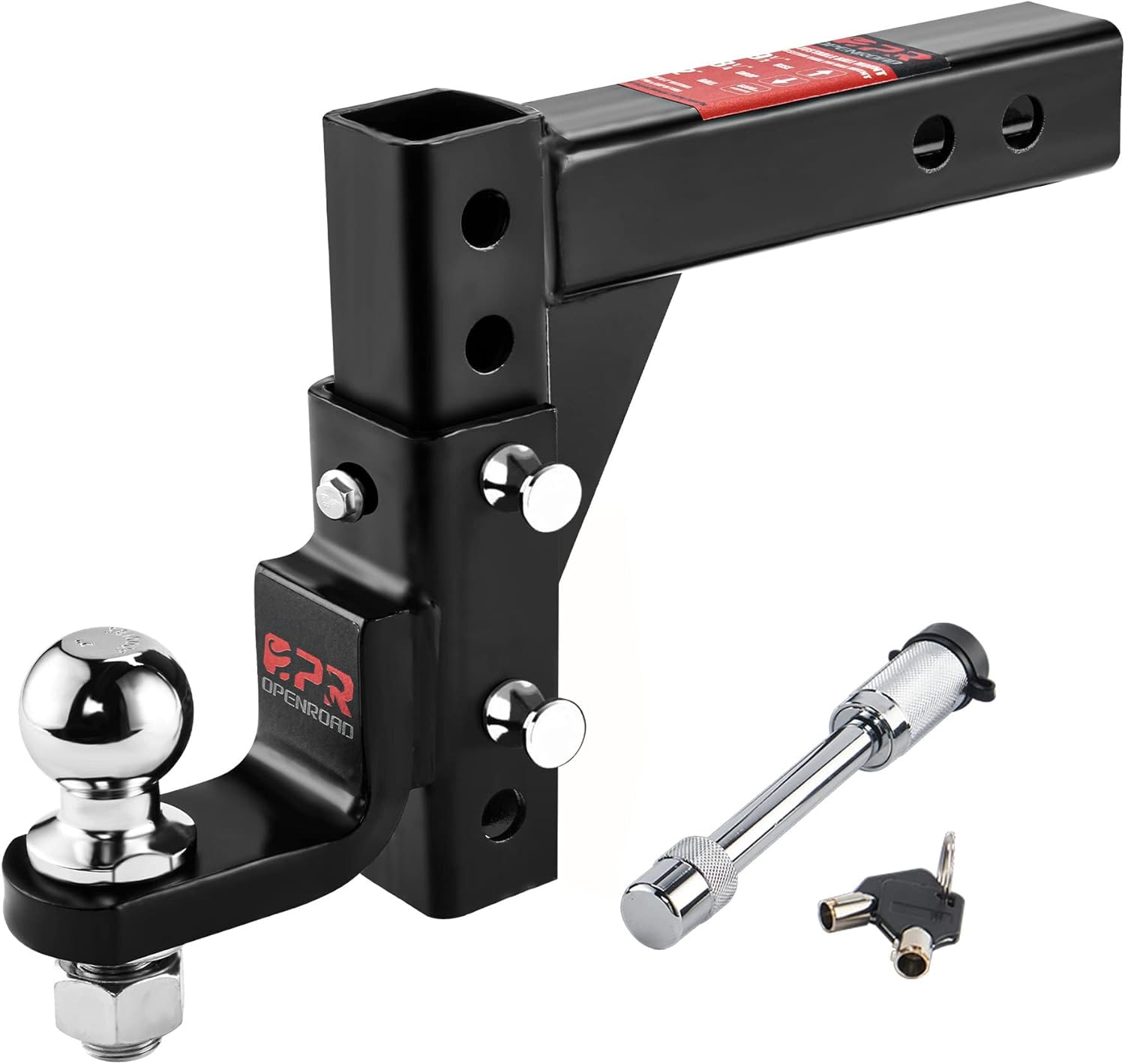
This adjustable trailer hitch ball mount is built for dependable towing with a strong steel construction and a versatile fit for 2-inch receivers. Its adjustable drop and rise settings help you dial in the right towing height, while the lock and keyed anti-theft design add security. A black powder-coated finish helps resist rust and wear for lasting performance on trucks and other towing setups.
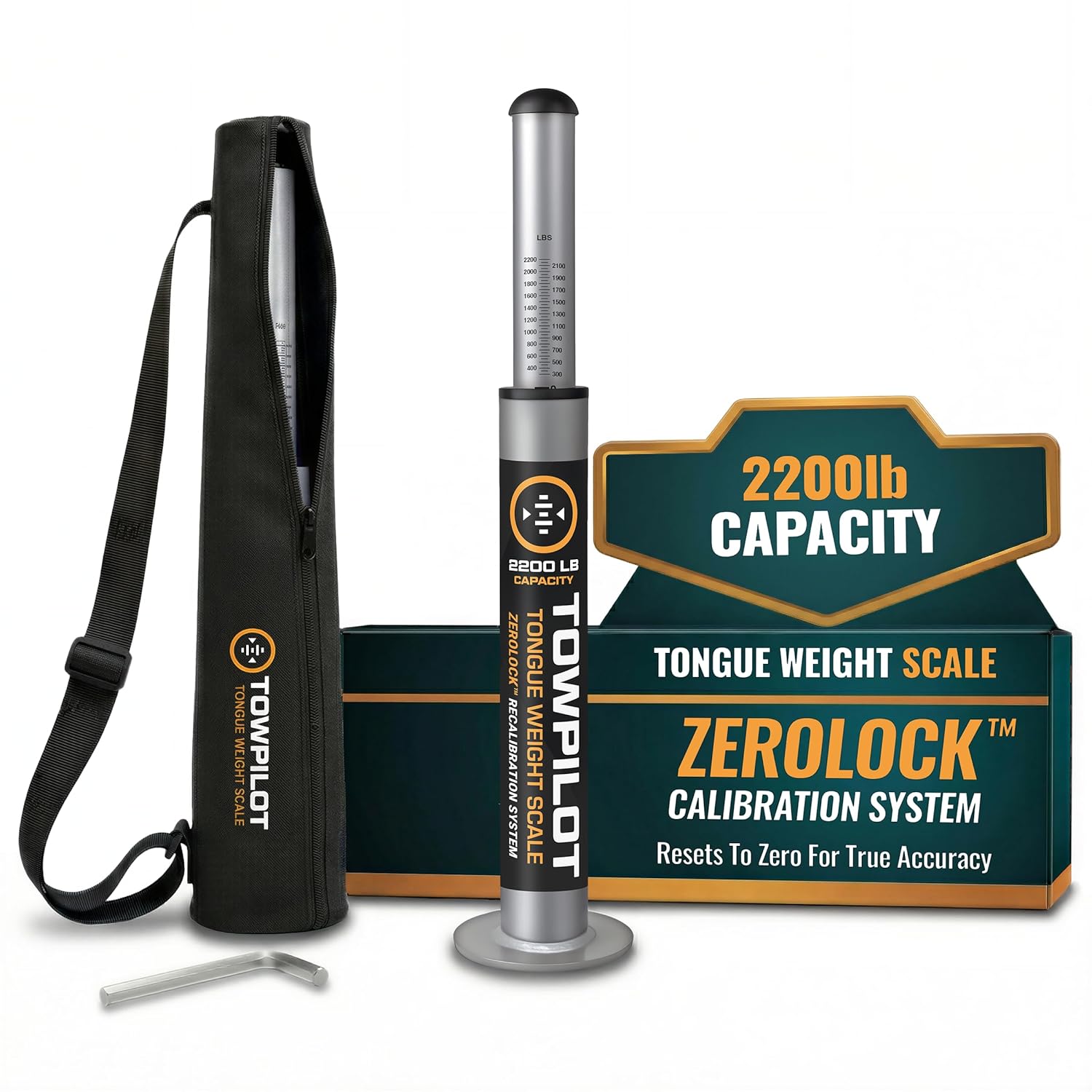
This trailer tongue weight scale helps you check hitch weight quickly and accurately before towing, reducing sway and improving overall safety. Built with durable steel and a spring mechanism, it works without batteries and includes a recalibration feature to maintain true-zero accuracy over time. It is designed for RVs, campers, and utility trailers, with a top plate that helps protect your coupler during use.

This adjustable trailer hitch ball mount is designed for 2-inch receivers and provides a versatile towing solution for heavy-duty trucks. Its high-strength steel construction supports reliable performance, while the adjustable drop and rise settings help achieve the right towing height. A black powder-coated finish adds corrosion resistance and helps protect against rust, scuffs, and scratches for lasting use.
What Size Drop Hitch Does a Stock vs. Lifted Tacoma Need?
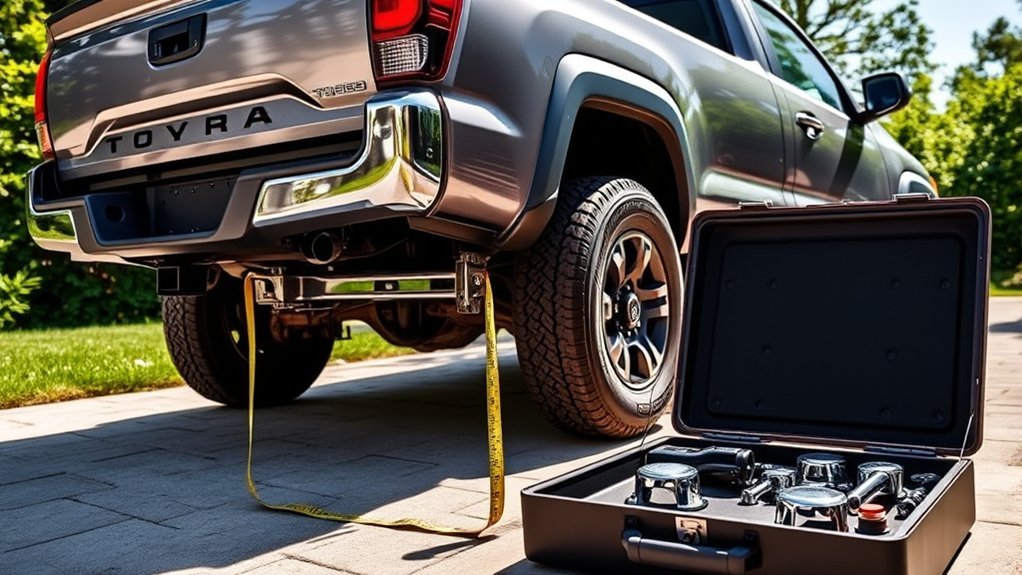
While exact drop size must be verified with a tape measure, most Tacoma setups fall into predictable hardware categories based on vehicle trim and trailer type:
| Tacoma Configuration | Avg. Receiver Height | Target Trailer Type | Typical Drop / Rise Required |
|---|---|---|---|
| Stock Tacoma (SR5, TRD Sport, Limited) | 16.5″ – 17.5″ | Standard Utility / Cargo (15″–16″) | 1.5″ to 2.5″ Drop |
| Stock Tacoma (TRD Off-Road, Trailhunter) | 17.5″ – 18.5″ | Boat or Small Camper (16″–18″) | 0″ (Straight) to 2″ Drop |
| Stock Tacoma (All 4×4 Models) | 17.0″ – 18.5″ | Off-Grid / High-Clearance Camper (20″–22″) | 2″ to 4″ Rise |
| Lifted Tacoma (2″–3″ Lift + 33″ Tires) | 20.0″ – 22.0″ | Standard Utility / Cargo (15″–16″) | 4″ to 6″ Drop |
[Products Worth Considering]
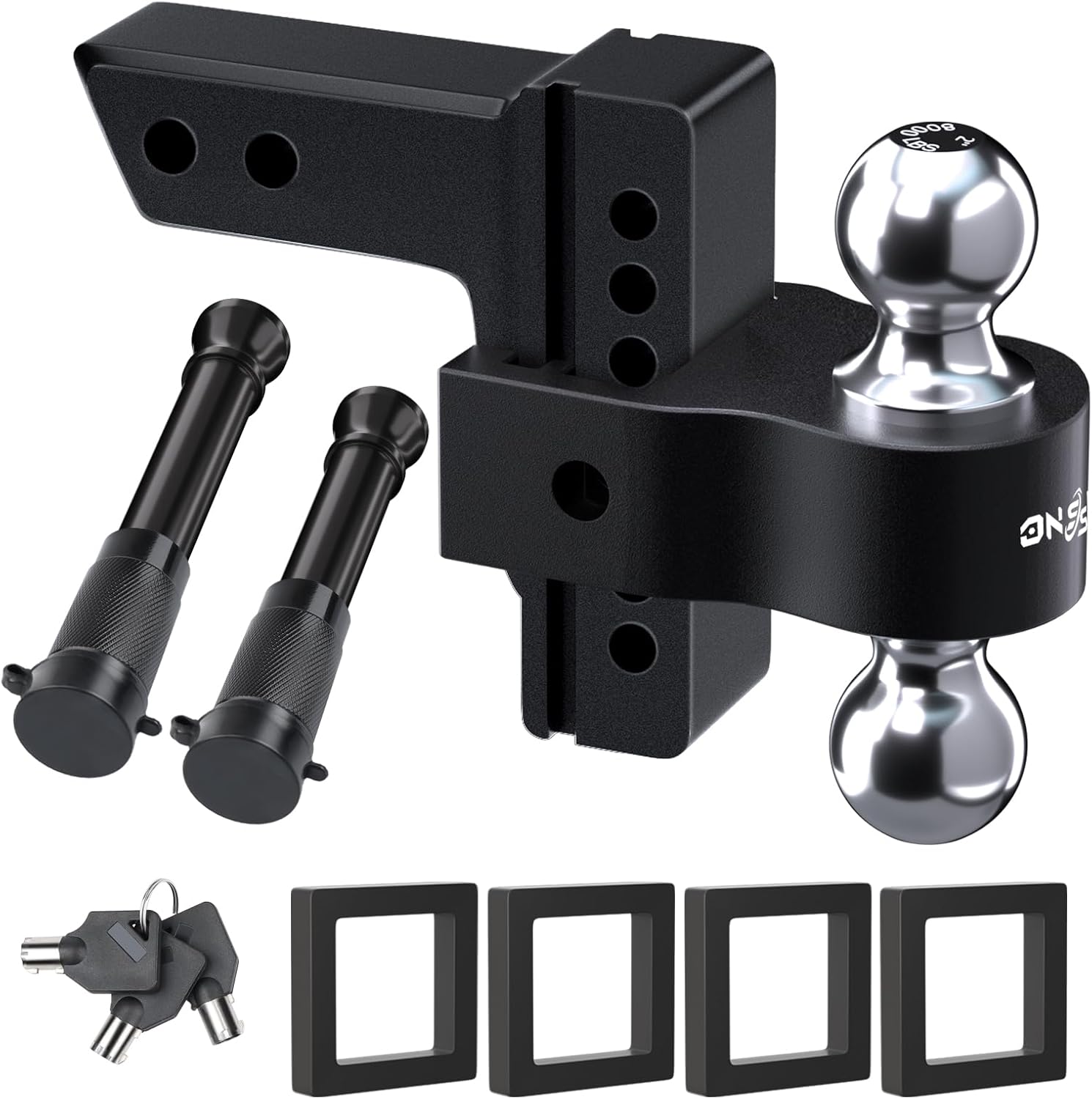
This adjustable trailer hitch is designed for 2-inch receivers and offers flexible towing with a 6-inch drop and rise range. Dual ball sizes help support different trailer setups, while the high-strength aluminum construction is built for dependable performance on tough jobs. Included hitch locks and silencers add security and help reduce noise for a smoother towing experience.
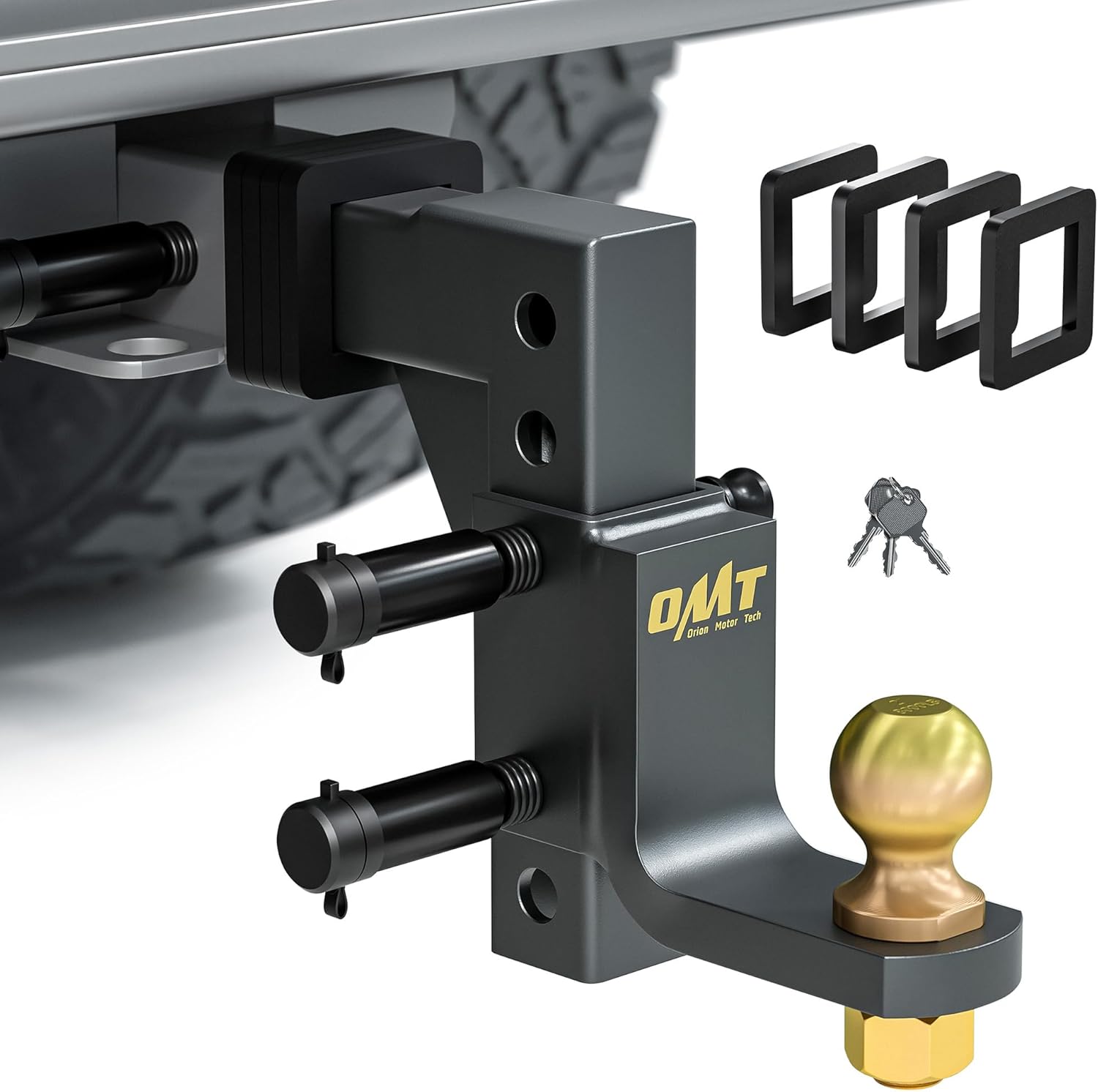
This adjustable trailer hitch ball mount is built for secure, versatile towing with a standard 2 inch receiver, a 2 inch ball, and both drop and rise adjustment for better fitment. Rated for heavy-duty towing and designed with anti-theft locking pins, it helps keep your trailer secure while resisting harsh weather and road conditions. The pre-assembled design makes installation fast and tool-free, so you can get hooked up and ready to tow with confidence.

These replacement support brackets are designed to secure the spring bars on a trailer frame for CURT TruTrack weight distribution hitches. Their adjustable mounting holes help achieve precise leveling while the rigid construction supports integrated sway control for a steadier towing experience. A durable powder coat finish adds long-lasting protection, and the package includes two replacement brackets.
Essential Safety Checks Before Towing With Your Tacoma
Proper ball height ensures baseline balance, but safe towing demands thorough inspection of the entire truck-and-trailer connection system prior to every departure.
1. Verify 10%–15% Tongue Weight Distribution
Trailer tongue weight should equal 10% to 15% of the total loaded trailer weight. Tongue weight below 10% promotes violent highway sway, while tongue weight exceeding 15% overloads the Tacoma’s rear axle and removes critical steering traction from the front tires.
- Place 60% of cargo weight in the front half of the trailer (forward of the axle centerline).
- Secure heavy equipment low and centered over the trailer axles to maintain a low center of gravity.
- Use a dedicated tongue weight scale or a commercial CAT scale to confirm actual axle and tongue loads.
2. Check Cold Tire Pressure
Proper tire inflation preserves sidewall stiffness, reduces heat accumulation, and stabilizes dynamic towing loads.
| Component | Target Specification Reference | Key Safety Role |
|---|---|---|
| Tacoma Tires | Driver door-jamb FMVSS placard (cold PSI) | Maintains front steering response and rear load support |
| Trailer Tires | Trailer VIN certification label or max cold PSI on sidewall | Minimizes rolling heat buildup and blowout risk |
| Spare Tires | Check both truck and trailer spares monthly | Prevents highway stranding during blowout emergencies |
3. Secure Chains, Breakaway Cables, and Electrical Connectors
Cross your safety chains under the trailer coupler in an “X” pattern to create a cradle that catches the tongue if an uncoupling event occurs. Confirm that chains have sufficient slack for full-lock turns without dragging on the pavement.
Insert the 7-pin or 4-pin electrical connector firmly into the Tacoma’s bumper receptacle, test all running lights, brake lights, and turn signals, and attach the emergency breakaway cable securely to the truck’s steel receiver frame (never clip it to the safety chains or ball mount).
How to Fix Common Tacoma Hitch Height Problems
If your Tacoma towing setup exhibits instability, harsh ride quality, or uneven wear, use the troubleshooting framework below to resolve the issue:
| Symptom | Underlying Cause | Recommended Fix |
|---|---|---|
| Trailer rides nose-high | Insufficient drop on ball mount; elevated lifted truck receiver | Increase ball drop by 1″ to 2″ or lower your adjustable channel hitch setting. |
| Trailer rides nose-low | Excessive drop mount; severe truck rear suspension squat | Reduce ball drop, verify ball platform height, and confirm tongue weight is not overloading the truck. |
| Tacoma rear squats heavily | Excessive tongue weight (> 15%), overloaded bed cargo | Shift cargo rearward on trailer, remove bed cargo, or install a rated Weight Distribution Hitch (WDH). |
| High-speed trailer sway | Insufficient tongue weight (< 10%), rear-heavy trailer loading | Shift trailer cargo forward of axles to achieve 10%–15% tongue weight; reduce highway speed. |
| Drop hitch scrapes ground | Excessive shank length below receiver; low departure clearance | Use an adjustable mount with a trimmed lower shank or invert mount if trailer permits. |
Smart Tips for Adjusting Your Tacoma Hitch Height
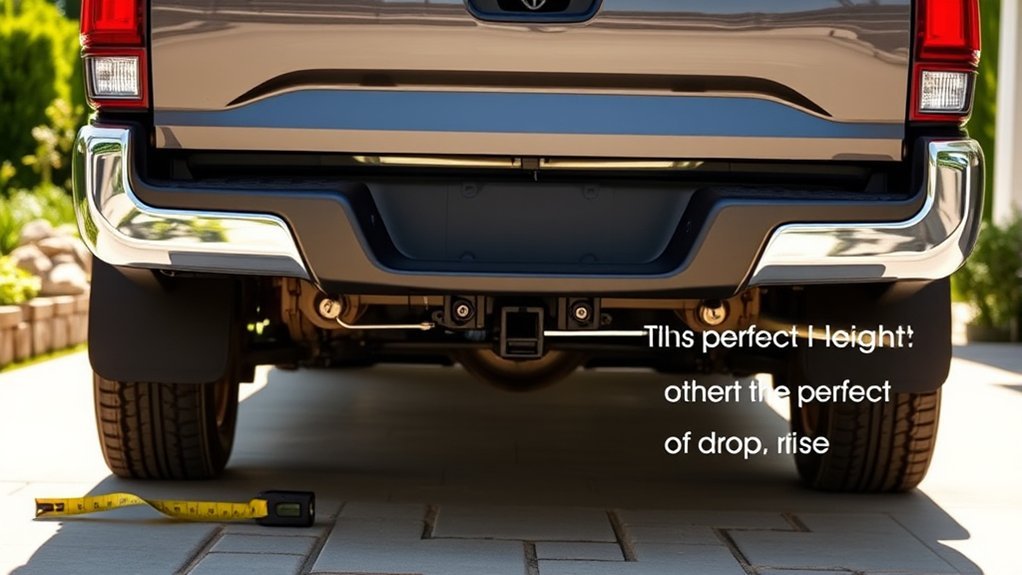
Fine-tune your towing geometry with these practical field checks:
- Level From the Steel Frame: Place a 2-foot level directly on the trailer frame rail or tongue A-frame rather than the trailer floor or bodywork.
- Measure Under Real Towing Load: Always measure with full fuel tanks, camping gear in the truck bed, and passengers seated inside the cab.
- Account for Aftermarket Suspensions: Recalculate your receiver height whenever installing rear add-a-leaf packs, aftermarket coil-overs, or larger all-terrain tires.
- Torque Hitch Balls Correctly: Standard 1-inch hitch ball shanks require approximately 250 lb-ft of torque; 1-1/4-inch shanks require up to 450 lb-ft. Ensure the lock washer is fully compressed.
- Lock Your Adjustable Mount: Use high-grade stainless steel locking hitch pins to secure both the receiver shank and the adjustable dual-ball assembly from theft and road vibration.
When a Weight Distribution Hitch May Help
A Weight Distribution Hitch (WDH) utilizes spring bars to leverage a portion of the trailer’s tongue weight off the Tacoma’s rear axle and redistribute it forward to the front steering axle and rearward to the trailer axles. A WDH does not eliminate the need for the correct ball height—the WDH adjustable shank must still be set so the trailer remains perfectly level once spring bars are under tension.
Toyota recommends considering a weight distribution system when towing heavy travel trailers that approach the truck’s maximum towing thresholds. Verify that your Tacoma’s factory hitch receiver label explicitly lists a “Weight Distributing” rating and confirm that your trailer manufacturer approves WDH use on its frame.
[Products Worth Considering]
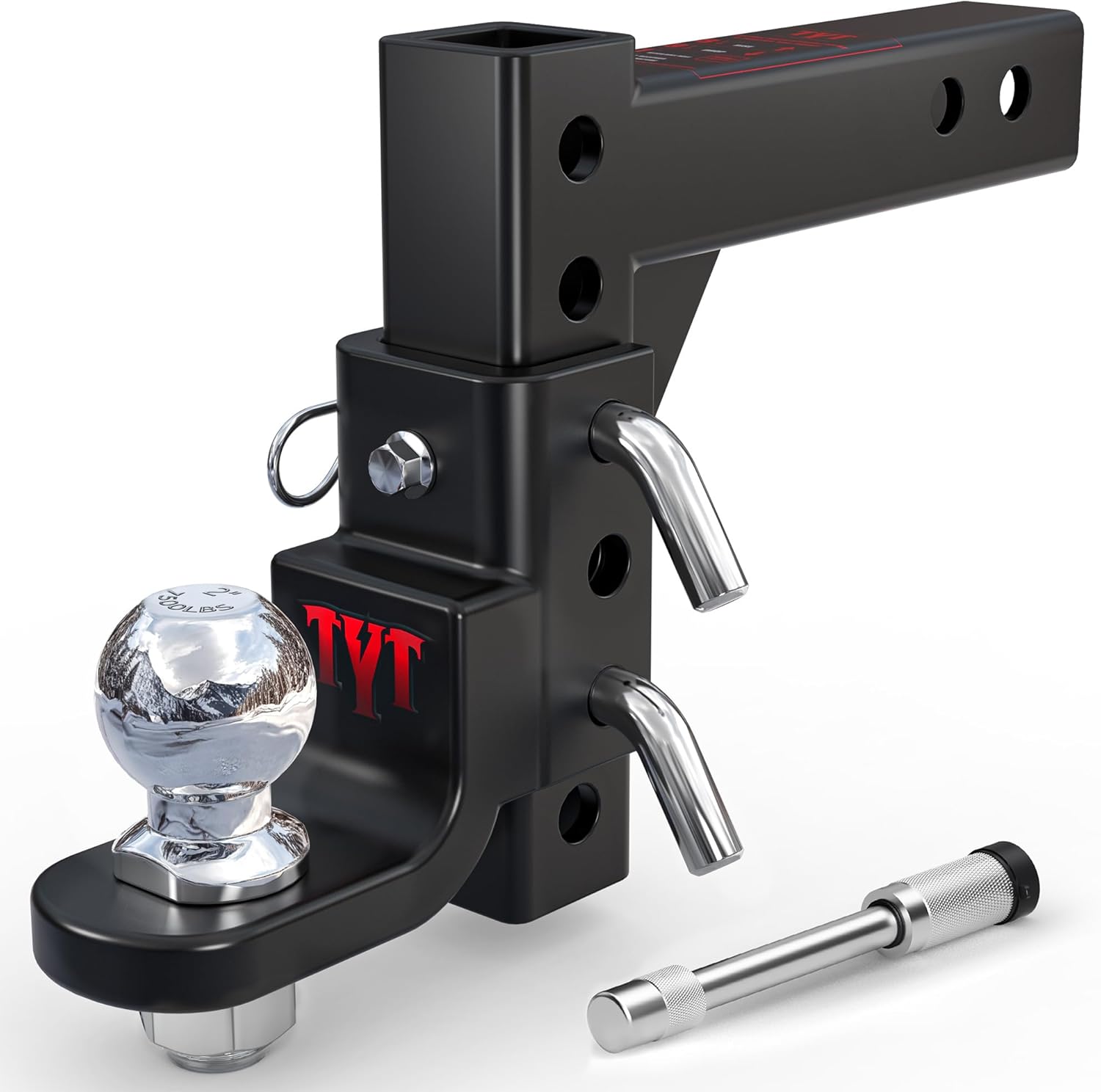
This adjustable trailer hitch ball mount is built for dependable towing with a standard 2-inch receiver and a high-capacity design suited for trucks, campers, boats, and utility trailers. Its adjustable rise and drop settings help you achieve a level tow, while the anti-rattle design supports a smoother, quieter ride. Complete with pins, clips, and a premium pin lock, it offers an easy installation and secure connection for everyday hauling needs.

This Andersen Hitches weight distribution hitch kit is designed to improve towing stability with a grease-free friction cone and tension chain system that helps reduce sway and bounce. It features a universal setup with a 2-inch ball and 4-inch drop/rise to suit many bumper-pull trailer applications, while making hitching and unhitching faster and easier than traditional spring bar systems. Built in the USA, it offers dependable performance for travelers, workers, and outdoor enthusiasts who need confident towing control.

This adjustable tri-ball trailer hitch gives you flexible towing support with three hitch ball sizes and a 4.5-inch rise and drop for level hauling across different vehicles and trailers. Built for durability and convenience, it includes a tow hook, D-ring shackle, and a secure locking system for dependable towing, recovery, and off-road versatility.
Frequently Asked Questions
Is it better to have the hitch higher or lower on a Toyota Tacoma?
Neither is better. The hitch ball should position the loaded trailer completely level when hitched to your Tacoma. A hitch that sits too high leaves the trailer nose-high (causing rear-axle overloading and sway), while a hitch that sits too low causes nose-down trailer angle, ground scraping, and front-axle overloading.
What is the rise on a drop hitch?
Rise is the vertical distance the hitch ball platform sits above the receiver tube shank when a ball mount is inverted. You need a rise hitch when your level trailer coupler sits higher off the ground than your Tacoma’s hitch receiver opening.
How much drop does a stock Toyota Tacoma need?
A stock 4×4 Toyota Tacoma typically features a receiver height of 17 to 18.5 inches. When towing standard utility and cargo trailers with a 15-inch coupler height, a stock Tacoma typically requires a 2-inch to 3-inch drop ball mount.
Does a lifted Tacoma need a drop hitch or rise hitch?
A lifted Tacoma almost always requires a deeper drop hitch (typically 4 to 6 inches of drop) because suspension lifts and larger tires raise the truck’s receiver tube higher above standard trailer coupler heights.
Should I measure hitch height with the trailer loaded?
Yes. Measure with the Tacoma and trailer loaded with your typical passengers, camping gear, cargo, and liquids. Take initial measurements uncoupled to determine starting drop, then couple the trailer to verify that suspension sag has settled the setup level.
Can I flip a drop hitch upside down for rise?
Most standard fixed ball mounts can be inverted to provide rise, provided the manufacturer’s label approves rise installation and the hitch ball is remounted right-side up with proper shank torque.
Do airbags change the drop hitch size on a Tacoma?
Yes. Rear helper airbags reduce suspension sag under tongue load, maintaining a higher loaded receiver height. When using airbags, measure your truck with the airbags inflated to your designated towing PSI. Airbags do not increase the truck’s published GVWR or towing ratings.
Should hitch height be measured before or after coupling?
Measure both. Take uncoupled measurements of the loaded truck and level trailer to calculate your initial ball mount setting, then couple the trailer and perform a final check to ensure rear suspension sag leaves the trailer level.
Conclusion
Determining the correct Toyota Tacoma hitch height requires matching your truck’s loaded receiver elevation with your level trailer coupler. Measure from level pavement to the inside top of the Tacoma’s 2-inch receiver, subtract the level trailer coupler height, and select a rated ball mount matching the calculated drop or rise. Verify the coupled attitude under full tongue weight, ensure tongue weight remains between 10% and 15% of gross trailer weight, and confirm that all hardware stays within Toyota’s published towing limits.
Sources
- Toyota: The 2026 Toyota Tacoma Pressroom — Current generation Tacoma towing specifications, payload ratings, and powertrain details.
- Toyota: 2023 Tacoma Tow Package and Towing Capacity — 3rd Generation Tacoma tow package equipment and maximum capacities.
- Toyota 2026 Tacoma Owner’s Manual Access — Factory towing safety requirements, tongue weight recommendations, and vehicle loading instructions.
- CURT Manufacturing: Adjustable Trailer Hitch Guide — Standard ball mount measurement procedures and drop/rise calculation formulas.
- NHTSA / Lippert Towing Safety Technical Service Bulletin — Tongue weight distribution rules and vehicle dynamic stability standards under SAE J2807.