RAV4 Door Won’t Lock or Unlock: Troubleshooting Fix
What’s in This Article
- Quick Fix: How to Check Why Your RAV4 Door Won’t Lock or Unlock
- Before You Begin: Safety, Tools, and Limits
- Check Easy Fixes First: Fuses, Door Switches, and the Key Fob
- Is It All Doors or One Door? Test Central Locking vs. a Single Actuator
- Remove the Door Card and Inspect the Lock Parts
- How to Test and Replace a Faulty Door Actuator or Lock Motor
- Check Wiring, Fuses, Relays, and Body ECU Signals
- When to Call a Pro, Warranty Steps, and Next Actions
- Frequently Asked Questions
Your RAV4 door lock problem can feel minor until one door stays open, stuck, or unsecured. Start with the simple checks first: fuses, the key fob battery, door-ajar switches, and the manual lock. Then test whether every door fails or only one door fails, because that split usually points you toward a system-wide electrical fault or one bad actuator.
Quick Answer
If your RAV4 door won’t lock or unlock, check the fuses, key fob battery, door closure, and manual lock first. If all doors fail, focus on the fob, fuse, relay path, wiring, or body ECU. If only one door fails, inspect that door’s actuator, latch, linkage, connector, and wiring before you replace parts.
Key Takeaways
- Check the easy items first, including fuses, the key fob battery, and fully closed doors.
- Test all doors before you remove a door panel, because one failed door points to a local fault.
- Use the correct fuse amperage and the correct fob battery type for your RAV4 model year.
- Inspect wiring and connectors before replacing an actuator, since corrosion can mimic motor failure.
- Call a technician when the fault repeats, affects several doors, or requires body ECU diagnostics.
Quick Fix: How to Check Why Your RAV4 Door Won’t Lock or Unlock
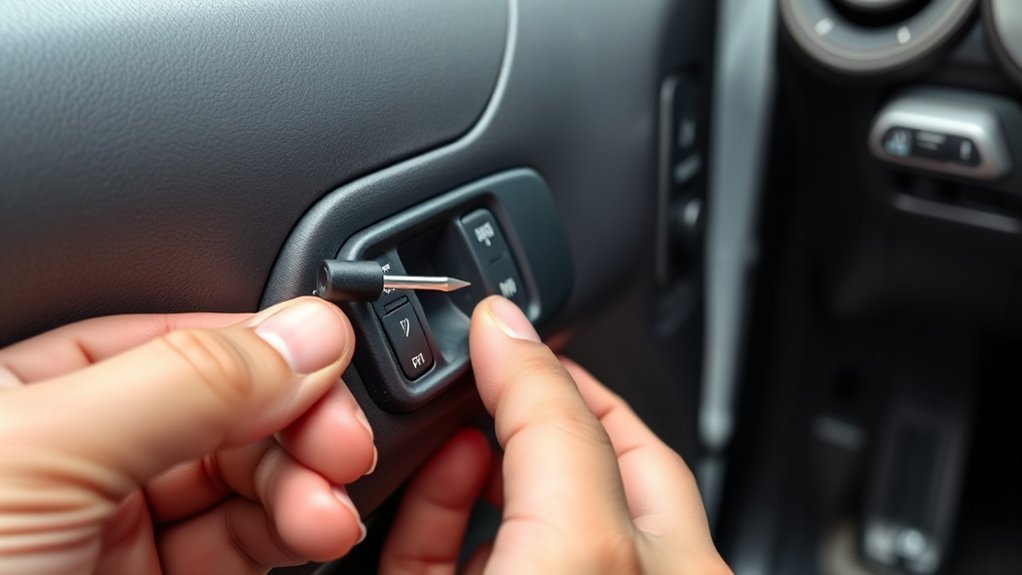
If your RAV4 won’t lock or unlock, start with the simplest electrical and mechanical checks. Inspect the related fuses, test the key fob battery, confirm every door closes fully, and use the physical key or manual lock switch to compare results.
Next, check whether the failure affects all doors or only one door. All-door failure usually points to the key fob, fuse, relay path, wiring, or body ECU. One-door failure usually points to that door’s actuator, latch, linkage, wiring, or connector.
If one door fails, remove the door card only after you understand the risk and have the right tools. Inspect the actuator motor, gears, rods, clips, connector, and wiring for corrosion, binding, or damage. If the tests show no clear cause, let a Toyota technician test the central locking system with the correct scan tools.
[Products Worth Considering]

The Pigenius windshield sunshade protects your Tundra's interior from heat and UV damage while keeping the cabin cool. Its accordion design folds easily for storage and quick setup, and the triple‑laminate construction provides durable, reflective protection. Ideal for long trips and daily commutes, it guards dashboards, seats, and steering wheels from sun‑related wear.

The Autorder windshield sun shade umbrella provides full coverage for Toyota RAV4 models from 2019 to 2026, blocking heat and UV rays with its advanced ice crystal material. Its ten reinforced skeletons and anti‑puncture edges ensure durability and stability, while the effortless umbrella‑style deployment and compact storage bag make it convenient for everyday use. Keep your car interior cool and protected from sun damage with this easy‑setup, high‑performance sunshade.

The KDOWES front windshield sun shade offers a custom fit for Toyota RAV4 SUVs, featuring a double‑layer heat shield that blocks up to 99% of solar rays and reduces interior temperature by up to 40°F. Reinforced steel rings and Velcro fasteners ensure easy installation and a secure fit, while the foldable cartilage steel ring allows convenient storage. This high‑quality, reflective fabric protects upholstery, dashboard, and electronics from UV damage, keeping the cabin cool and comfortable.
Before You Begin: Safety, Tools, and Limits
Work on the door lock system only when the vehicle sits on a level surface, the ignition stays off, and you can track small clips and screws. Gather plastic trim tools, a flashlight, a multimeter, a fuse puller, the owner’s manual, and a small container for fasteners.
Warning: Disconnect the negative battery terminal before you unplug door wiring or remove the actuator, unless a test specifically requires live voltage.
Do not probe random wires, bypass fuses, or install a higher-rated fuse. A higher-rated fuse can let a short circuit overheat wiring. If a fuse blows again after replacement, stop testing and book a professional diagnosis.
Check Easy Fixes First: Fuses, Door Switches, and the Key Fob
Start by checking the fuse box for any blown fuse linked to the door lock system. Use your owner’s manual or fuse box lid to identify the correct circuit and amperage. Toyota owner manual guidance says you should replace a blown fuse with the proper amperage rating shown on the fuse box lid.
Check the key fob next if the manual lock switch still works. Open the fob carefully and replace the battery with the type listed in your owner’s manual. Many RAV4 fobs use a coin cell, but you should confirm the exact type before you buy one.
Confirm each door, liftgate, and hatch closes fully. A door-ajar switch or latch that does not report a closed position can stop normal locking behavior on some systems. Then test the physical key, inside lock switch, and remote fob so you can compare each result.
[Products Worth Considering]

Protect your Toyota RAV4 interior with this custom‑fit windshield sun shade that blocks 99% of harmful UV rays and reduces cabin heat. The mirror cut‑out ensures a seamless fit without gaps, while durable 240T polyester and bendable wire keep it sturdy through repeated use. Foldable and stored in a convenient pouch, it offers easy installation and removal for everyday comfort.

The Autovir windscreen shade offers full windshield coverage for Toyota RAV4 models from 2019 to 2026, blocking up to 99.95% of UV rays and reducing interior heat. Its multi‑layer reflective material provides SPF 100 and UPF 80+ protection while keeping the dashboard, seats, and steering wheel cooler. The foldable design installs quickly and stores conveniently in the glove box, and reinforced stitching ensures long‑lasting durability for daily use.
Check Fuses First
Electrical faults often start with a simple fuse check. Open the fuse panel, use the diagram for fuse identification, and inspect each related fuse for a broken element. A multimeter or test light gives you a more reliable result than sight alone.
If a fuse has blown, remove it and complete the fuse replacement with the same amperage rating. Never substitute a higher rating. Test the locks after replacement, and stop if the new fuse blows again.
A repeat failure means the circuit may have a short, damaged wiring, or a failing component. Let a qualified technician test that circuit before you keep replacing fuses.
Replace Key Fob Battery
Check the key fob battery if the remote does not lock or unlock the doors. Open the fob case carefully, remove the old cell, and match the replacement to the battery type in your owner’s manual.
Install the new battery with the correct polarity. Reassemble the housing and test the fob from several distances. A new battery helps restore normal range, but it will not fix a damaged fob, failed receiver, blown fuse, or wiring fault.
If the fob still fails, test the spare key fob if you have one. When both fobs fail but the inside switch works, your vehicle may need key registration, receiver testing, or dealer-level diagnostics.
Is It All Doors or One Door? Test Central Locking vs. a Single Actuator
Test the central locking system with the key fob and the driver’s master switch. If none of the doors respond, check the fob battery, related fuses, door-ajar condition, and lock relay path first.
If only one door fails, focus on that door. Operate the lock switch while you listen near the suspect door. A weak click, short buzz, or delayed movement can point to a tired actuator, sticky latch, or binding linkage.
If the door makes no sound, inspect the connector and wiring before you buy a new actuator. Corrosion, a loose terminal, or a broken wire in the door jamb can mimic a dead motor. These checks help you avoid replacing parts that still work.
Remove the Door Card and Inspect the Lock Parts
Remove the door card only after you check the easy causes. Unscrew visible fasteners, use plastic trim tools on the clips, and pull the panel back with care. Keep every screw and clip in order so reassembly goes smoothly.
Inspect the cavity with a flashlight. Look at the actuator, latch, rods, clips, wiring harnesses, water shield, and nearby window components. Cracked housings, broken gears, burnt plastic, detached rods, or bent clips can stop the lock from moving.
Trace the wiring harness for corrosion, chafing, pinched insulation, or loose terminals. Wiggle connectors gently while you watch for intermittent lock movement. Remove debris, rust flakes, or insulation fragments that block the linkage.
How to Test and Replace a Faulty Door Actuator or Lock Motor
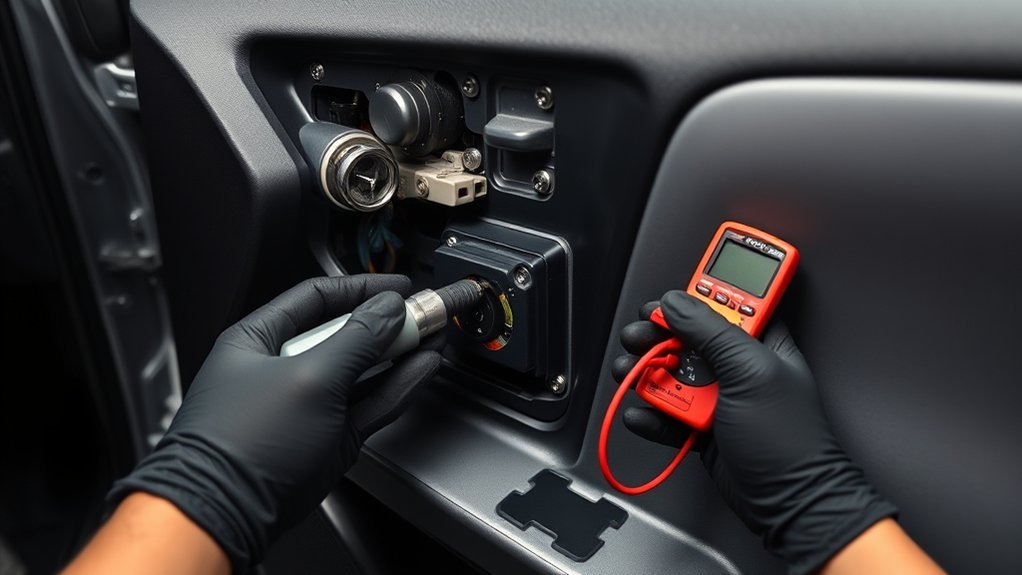
Confirm the actuator fault before you replace it. With the door panel removed and the test area clear, press the lock/unlock switch and watch the linkage. No sound or movement can mean a defective motor, but a wiring or connector fault can cause the same symptom.
Use a multimeter to check voltage at the actuator connector during lock and unlock commands. If voltage reaches the connector but the actuator does not move, the actuator likely failed. If voltage never reaches the connector, keep testing wiring, fuses, relay output, and body ECU signals.
For the replacement procedure, disconnect the negative battery terminal. Remove the interior door panel, unplug the actuator connector, detach the linkage, and unbolt the actuator assembly. Match the replacement part by VIN, door position, and model year before installation.
Install the new actuator, reconnect the linkage and connector, and secure the mounting hardware. Reconnect the battery and test the lock/unlock cycle several times before you reinstall the full trim panel. If the lock works every time, reinstall the panel and test the fob, inside switch, and manual lock again.
Check Wiring, Fuses, Relays, and Body ECU Signals
If the actuator tests good, trace the electrical side. Inspect the door wiring harness for chafing, pinched sections, broken strands, or corrosion at the connectors. Pay close attention to the door-to-body grommet, because wires flex every time the door opens.
Repair damaged wiring with automotive-grade methods or replace the harness if insulation has failed. Check the fuse box for blown fuses tied to door locks and use only correct-rating replacements. Test or swap the related relay with a known-good relay only when the owner’s manual or service data supports that step.
Measure voltage at the actuator during lock and unlock commands. No voltage, low voltage, or intermittent voltage points toward wiring, relay, switch, or body ECU output. Body ECU and Controller Area Network (CAN) testing usually needs a scan tool and service information.
| Item | Action |
|---|---|
| Harness | Inspect for chafing, corrosion, and broken wires |
| Fuses | Check and replace only with the correct rating |
| Relay | Test or swap only when service data supports it |
| Voltage | Measure at the actuator during lock commands |
| Body ECU | Verify output with proper scan tools |
When to Call a Pro, Warranty Steps, and Next Actions
Call a qualified technician when basic checks do not restore reliable locking. Intermittent faults, repeated fuse failure, CAN signal issues, and body ECU faults often need dealer-level tools and wiring diagrams.
Before you approve repairs, review your warranty coverage. Check whether your door module, actuator, latch, wiring, or related control unit still has coverage. Use the VIN to confirm the exact part and avoid ordering the wrong door position.
Check your VIN for open Toyota recalls or service campaigns, especially if the problem affects a latch, rear door, liftgate, or safety system. Toyota says its U.S. recall lookup covers open safety recalls and service campaigns released since 1999 for Toyota, Lexus, and Scion vehicles sold in the U.S., U.S. territories, and Mexico. NHTSA also lets you search by VIN to see whether a specific vehicle needs a recall repair.
Note: A recall or warranty decision depends on your VIN, model year, mileage, region, and repair history.
Keep timestamps, photos, diagnostic reports, part numbers, invoices, and service notes. Ask for a written estimate before the repair starts. The estimate should list the diagnosis, failed part, labor, part number, and warranty status.
If the issue returns after repair, contact the service manager with your records and request a retest. A clear repair trail helps you explain the fault and support a warranty review.
Frequently Asked Questions
Can Water Damage Inside the Door Cause Intermittent Locking Issues?
Yes. Water inside the door can corrode connectors, weaken the actuator, and make linkages stick. Inspect the water shield, drain holes, seals, and connector pins before you replace the actuator.
Can a Warped Door Latch Prevent Electronic Locking From Working?
Yes. A bent or misaligned latch can bind the lock mechanism and stop the actuator from moving fully. Check door gaps, latch alignment, striker position, and linkage movement before you replace electrical parts.
Will Aftermarket Alarm Systems Interfere With Central Locking?
Yes. Poor alarm wiring, weak grounds, incorrect adapters, or bad module programming can disrupt central locking. Check the alarm installation against the wiring diagram and remove unsafe splices before deeper diagnosis.
Do Cold Temperatures Affect Actuator Performance Long-Term?
Cold weather can thicken old grease, stress seals, and expose a weak actuator motor. Clean and lubricate mechanical parts with the correct product, but replace the actuator if it still fails with proper voltage.
Can Door Alignment Issues Trigger ECU Error Codes?
Yes. Door alignment issues can affect latch and door-ajar switch readings. A scan tool can help confirm whether the body ECU sees the door as open, closed, locked, or unlocked.
Safety Disclaimer: This article is for informational purposes only and does not replace professional vehicle diagnosis or repair advice. Always consult a qualified technician before you repair electrical wiring, airbags, latches, locks, or safety-related vehicle systems.
Conclusion
A RAV4 door that won’t lock or unlock needs a simple, ordered diagnosis. Check fuses, the key fob battery, door closure, and manual lock operation before you remove trim or buy parts. If one door fails, inspect that door’s actuator, latch, linkage, connector, and wiring.
If all doors fail or the fault comes back, get a professional diagnosis before the issue becomes a security or safety risk. A careful test path helps you fix the real cause and avoid wasted parts.
References
- Checking and replacing fuses, Toyota RAV4 owner manual content, accessed May 2026
- Wireless remote control / electronic key battery, Toyota RAV4 owner manual content, accessed May 2026
- Toyota RAV4 Door Lock Failure: Diagnose Guide, Olathe Toyota Parts Center, accessed May 2026
- Toyota RAV4 Door Lock Actuator fitment listings, ToyotaPartsDeal, accessed May 2026
- Toyota Safety Recalls and Service Campaigns lookup, Toyota, accessed May 2026
- Check for Recalls, National Highway Traffic Safety Administration, accessed May 2026