Last updated: September 1, 2026 · By Ryker Calloway · Fact-checked against the Toyota 2024 Tundra Owner’s Manual (OM0C056U).
On an equipped 2024 Toyota Tundra, use TOW HAUL when the loaded trailer weighs less than 5,000 lb (2,268 kg) and TOW+ when it weighs more than 5,000 lb. Toyota’s wording does not assign a mode at exactly 5,000 lb. To activate the system, press the TOW HAUL switch; if you need TOW+, turn the separate mode select switch. Toyota says these modes change engine, transmission, and steering operation to better suit towing or a heavy load.
Quick Answer
For a 2024 Toyota Tundra equipped with these controls, select TOW HAUL below 5,000 lb of loaded trailer weight and TOW+ above 5,000 lb. Toyota’s manual uses “less than” and “more than,” so it does not expressly assign exactly 5,000 lb. Press the TOW HAUL switch to activate TOW HAUL, turn the separate mode select switch to choose TOW+, and press the TOW HAUL switch again to cancel the towing mode. Neither mode increases the truck’s towing, payload, axle, tire, hitch, or braking limits.
5,000-lb boundary: Toyota’s 2024 manual says TOW HAUL is for trailers weighing less than 5,000 lb and TOW+ is for trailers weighing more than 5,000 lb. Because the published wording leaves exactly 5,000 lb unassigned, check the owner’s manual for your exact truck or ask a Toyota dealer if your measured loaded trailer is right at that boundary.
Key Takeaways
- Below 5,000 lb: Toyota recommends TOW HAUL for the trailer’s actual loaded weight.
- Above 5,000 lb: Toyota recommends TOW+.
- Exactly 5,000 lb: Toyota’s less-than/more-than wording does not expressly assign a mode.
- Controls are separate: the TOW HAUL switch activates or cancels the system; the mode select switch changes between TOW HAUL and TOW+.
- Tow modes do not increase your Tundra’s tow rating, payload, axle ratings, tire ratings, or hitch rating.
- Confirm loaded trailer weight, payload, tongue weight, cold tire pressure, lights, trailer brakes, and hitch security before leaving.
Tow-Mode Decision Guide
| Loaded trailer under 5,000 lb | Select TOW HAUL. |
| Loaded trailer over 5,000 lb | Select TOW+. |
| Loaded trailer exactly 5,000 lb | Toyota’s published wording does not assign the boundary; check the exact manual or ask a Toyota dealer. |
| Heavy cargo in the truck | Toyota permits the towing modes for a heavy load, but the 5,000-lb split is specifically stated for trailer weight. Stay within payload and axle limits. |
| No trailer or heavy load | Cancel the towing mode and use normal everyday driving settings. |
What Tow Haul Mode Does on a 2024 Tundra
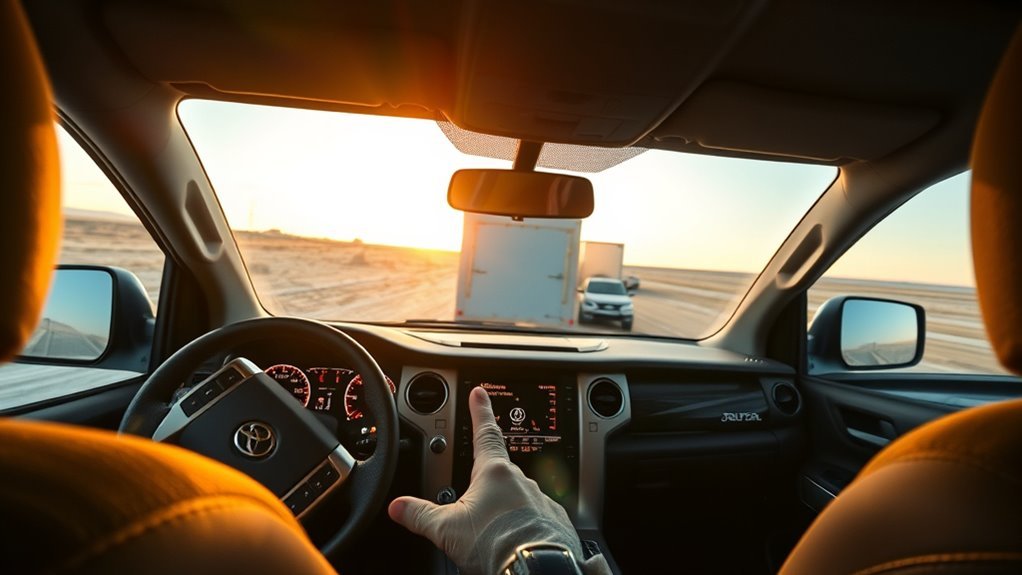
Toyota’s 2024 Tundra owner’s manual says activating TOW HAUL or TOW+ changes engine, transmission, and steering operation to make the truck more suitable for pulling a trailer or hauling a heavy load. Toyota also describes standard Tow/Haul as increasing throttle response, while Tow/Haul+ uses a more aggressive throttle response for larger towing demands.
The important point is that Tow Haul changes how the truck uses the performance it already has. It does not add engine power or create extra towing capacity. The transmission and powertrain calibration are intended to make the vehicle respond more appropriately when extra weight changes acceleration, shifting, steering, or grade behavior.
For official towing limits, use Toyota’s published ratings for your exact cab, bed, drivetrain, engine, and equipment. Toyota lists the 2024 Tundra with an available maximum towing capacity of up to 12,000 lb when properly equipped, but many configurations are rated lower. Your truck’s labels and model-specific towing information control the final limit.
Warning: Tow Haul mode does not raise towing capacity, payload, GCWR, GVWR, GAWR, tire ratings, hitch ratings, or trailer-braking capability. Stay within every applicable limit for the complete truck-and-trailer setup.
How to Activate Tow Haul on the 2024 Tundra
On an equipped 2024 Tundra, Toyota uses two controls for these towing modes: the TOW HAUL switch activates or cancels the system, while the separate mode select switch changes between TOW HAUL and TOW+. Confirm the selected mode on the instrument display before relying on it.
Locating the Tow Haul Button
Look near the center-console drive controls for the TOW HAUL switch and mode select switch. Toyota marks the TOW HAUL system as “if equipped,” so the exact controls depend on the truck’s equipment. Identify both controls while parked rather than searching for them while towing.
| What to Check | What You Should See | Why It Matters |
|---|---|---|
| TOW HAUL switch | Dedicated switch near the drive controls | Activates TOW HAUL and cancels the active towing mode |
| Mode select switch | Separate selector near the TOW HAUL control | Changes between TOW HAUL and TOW+ |
| Mode display | TOW HAUL or TOW+ | Confirms which towing mode is active |
| Trailer weight | Under or over 5,000 lb loaded | Determines Toyota’s recommended trailer mode |
Selecting TOW HAUL or TOW+
Use the trailer’s actual loaded weight, not its advertised empty or dry weight. Toyota recommends TOW HAUL when that weight is less than 5,000 lb and TOW+ when it is more than 5,000 lb. Cargo, water, fuel, batteries, propane, tools, motorcycles, camping gear, and installed accessories can move a trailer from one side of the threshold to the other.
- Activate TOW HAUL: press the TOW HAUL switch once. The TOW HAUL indicator should appear.
- Select TOW+ if needed: turn the mode select switch to change from TOW HAUL to TOW+ and confirm the TOW+ indicator.
- Cancel the mode: press the TOW HAUL switch again when the towing or hauling job is finished.
Note: The 5,000-lb recommendation is stated for the trailer being towed. It is not a payload limit, tongue-weight allowance, or combined-weight rating.
Confirming the Display Indicator
After operating the controls, check the instrument display for the correct TOW HAUL or TOW+ indicator. Do not rely only on engine sound, throttle feel, or shift behavior to decide whether the mode is active.
Toyota says TOW HAUL and TOW+ automatically deactivate when the four-wheel-drive control is in 4L or when Drive Mode Select or Multi-Terrain Select is selected. If the indicator disappears, safely verify those settings before assuming the towing system has failed.
Tow Haul vs. Tow Plus: When to Use Each
For trailer towing, Toyota makes the starting decision straightforward: TOW HAUL for a loaded trailer below 5,000 lb and TOW+ for a loaded trailer above 5,000 lb. TOW+ is the stronger towing calibration and Toyota describes it as the mode to use when more towing power is needed than TOW HAUL provides. Neither mode changes the truck’s weight ratings.
[Products Worth Considering]

This proportional electric brake controller automatically applies trailer brakes based on your vehicle's braking force and speed for smoother, more responsive stopping. It is compatible with a wide range of tow vehicles and trailer setups, and includes an LED display for easy setup, diagnostics, and manual braking control. The included mounting hardware and plug-and-play port help make installation simple and convenient.
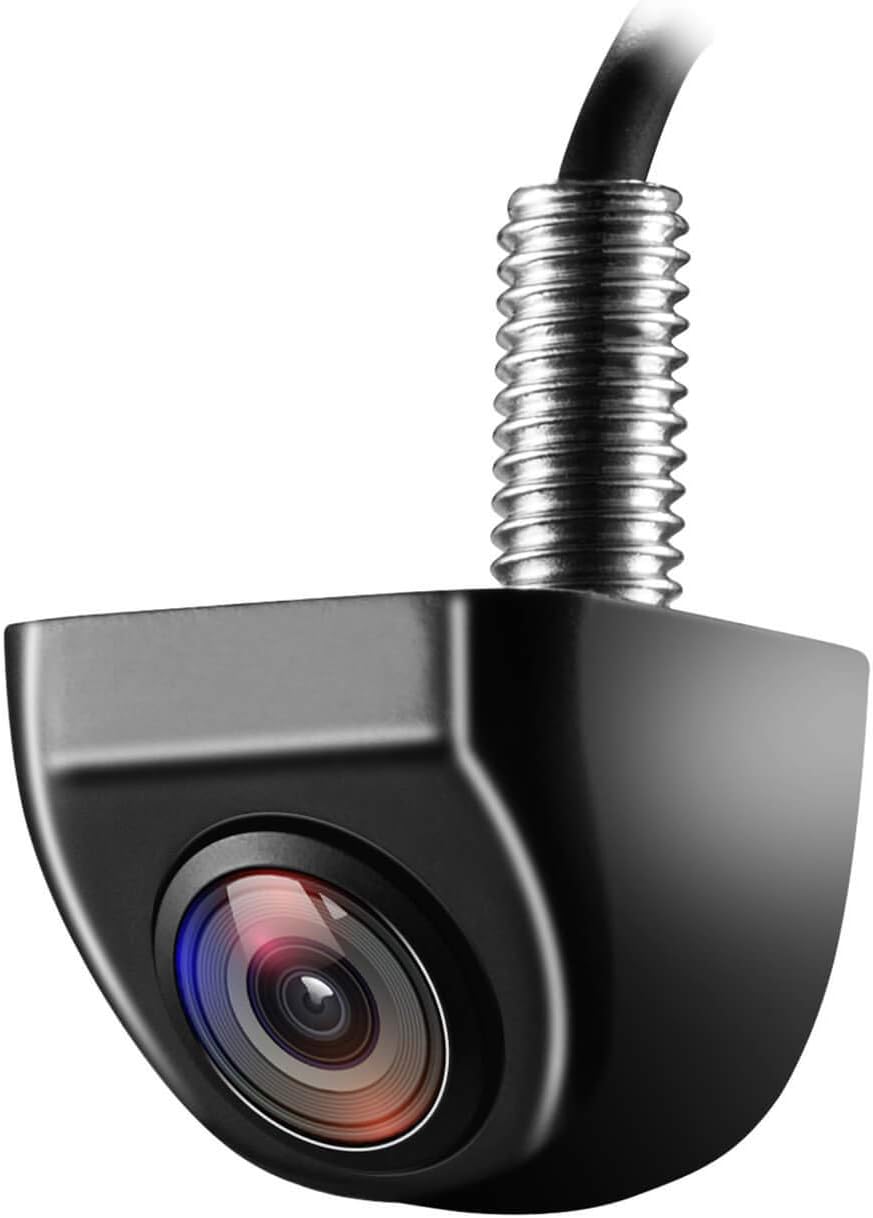
This OEM-style backup camera delivers a clear rear view with a wide-angle HD sensor to help reduce blind spots and make parking easier. Its fully sealed waterproof construction and strong low-light performance support reliable use in all weather and lighting conditions. Designed for cars, trucks, SUVs, vans, and RVs, it also supports front-view switching and selectable guide lines for flexible installation.

Leather CPR cleans and conditions real leather in one easy step, helping lift dirt, body oils, and grime while restoring softness, shine, and color. It is designed for finished leather on furniture, car interiors, jackets, handbags, boots, saddles, and other leather goods, with a water-based formula that dries to a natural matte finish.
TOW HAUL Overview
Use TOW HAUL when the loaded trailer weighs less than 5,000 lb. Toyota describes this standard mode as increasing throttle response for lighter to moderate towing needs. Examples can include a small utility trailer, personal-watercraft trailer, motorcycle trailer, compact cargo trailer, or small boat trailer, but the measured loaded weight—not the trailer’s appearance—decides which side of the threshold it falls on.
With TOW HAUL active, expect the truck to use towing-focused engine, transmission, and steering behavior rather than its normal unloaded calibration. The exact shift behavior can vary with speed, grade, throttle position, braking, and load, so do not use a particular shift point or engine rpm as your only confirmation that the mode is working.
TOW+ Advantages
Use TOW+ when the loaded trailer weighs more than 5,000 lb. Toyota describes Tow/Haul+ as using a more aggressive throttle response for larger towing demands. Larger travel trailers, enclosed cargo trailers, boats, and equipment trailers may fall into this category, but loaded weight still controls the recommendation.
| Situation | Toyota Guidance | Reason |
|---|---|---|
| Loaded trailer under 5,000 lb | TOW HAUL | Toyota’s recommended mode below the threshold |
| Loaded trailer over 5,000 lb | TOW+ | Stronger towing calibration for heavier trailers |
| Loaded trailer exactly 5,000 lb | Check exact manual/dealer guidance | Toyota’s published wording does not assign the exact boundary |
| Heavy bed load without a trailer | Use towing mode as the manual directs | The 5,000-lb trailer split is not a payload rule |
Tow Haul Weight Limits Under 5,000 Lb and Typical Loads
For trailer towing, TOW HAUL is Toyota’s recommended mode when the trailer weighs less than 5,000 lb loaded. The key word is loaded. Dry or empty trailer weight does not include everything you add before a trip.
- Typical lighter examples: small utility trailers, jet ski trailers, motorcycle trailers, golf-cart trailers, compact boat trailers, and small landscape trailers.
- Before selecting the mode: confirm actual loaded trailer weight plus the truck’s payload, tongue weight, axle, tire, hitch, and combined-weight limits.
- At exactly 5,000 lb: do not invent a universal answer; Toyota’s less-than/more-than wording leaves that exact boundary unassigned.
- What the mode does not do: it cannot make an overloaded truck or trailer safe or bring an over-limit combination within its ratings.
Pro Tip: If your trailer is close to 5,000 lb, weigh it in its ready-to-travel condition. Water, batteries, propane, tools, food, motorcycles, camping gear, and other cargo can materially change the number.
[Products Worth Considering]

This trailer tongue hitch coupler lock helps secure latch-type couplers and deter theft with a padlock-style design. Its high-strength construction, corrosion-resistant finish, and simple locking action make it a practical choice for trailer owners who want dependable protection and easy everyday use. Two keys are included for added convenience.

This trailer hitch lock helps secure your trailer and hitch-mounted accessories with a high-strength steel pin designed for 2-inch receivers. It includes a weather-resistant cap to help keep out dust and moisture, plus rubber O-rings to reduce rattling during towing. With two copper keys and a sturdy lock core, it offers added peace of mind and dependable everyday protection.
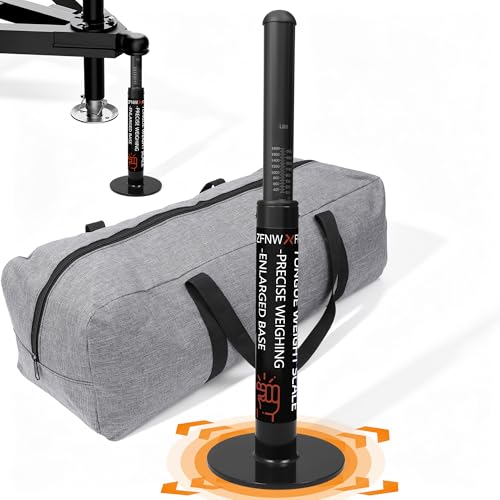
【Stable 6.3" Large Base】Our trailer tongue weight scale features an upgraded large base - 6.3" to prevent tipping, wobbling, or sinking in mud—safe and reliable for every towing trip, no messy mishaps.
Three Weight Checks Before Selecting a Mode
Choosing the correct towing mode is only one part of a safe setup. Before driving, separate the mode-selection question from the truck’s actual weight limits:
- Loaded trailer weight: use the trailer’s ready-to-tow weight to choose TOW HAUL below 5,000 lb or TOW+ above 5,000 lb.
- Tongue weight and payload: count tongue load, passengers, bed cargo, accessories, and hitch equipment against the truck’s available payload.
- Combined and axle limits: verify TWR, GCWR, GVWR, front and rear GAWR, tire ratings, receiver rating, and other hitch-component limits for the exact setup.
This distinction prevents a common mistake: selecting the correct drive mode while exceeding a separate truck, axle, tire, or hitch rating. For more detail on the hardware around these limits, see the Toyota Tundra Tow Package guide.
Common Tow Haul Use Cases: Trailers, Jet Skis, and Bikes
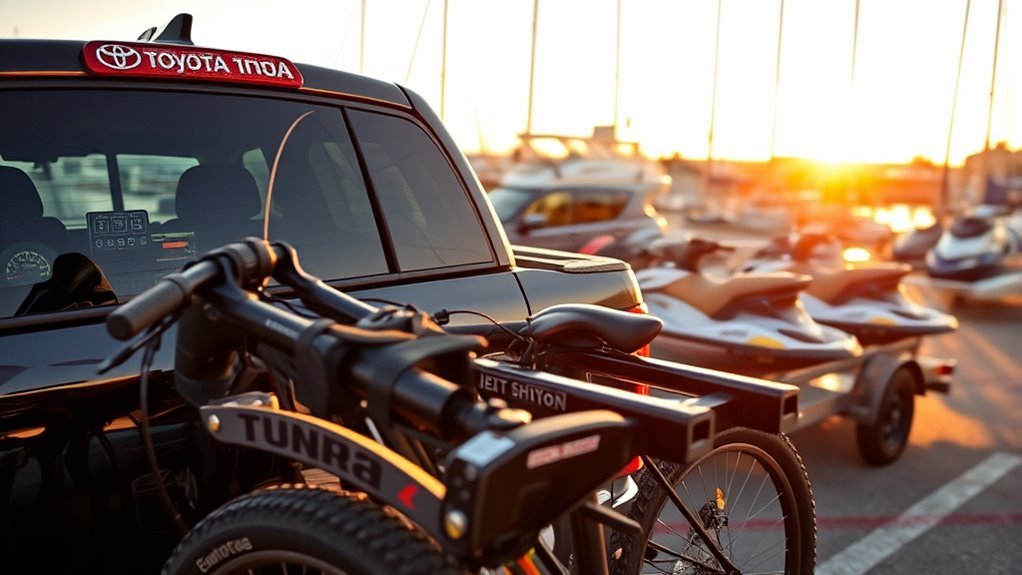
A trailer does not need to look large to change how a truck accelerates, steers, or slows. Use the trailer’s actual loaded weight first, then confirm that the rest of the combination stays within its ratings.
Here is how to think about common lighter towing jobs:
- Jet ski trailer: if its actual loaded weight is under 5,000 lb, TOW HAUL is Toyota’s recommended mode. Check the coupler, safety chains, lights, tires, and cargo before leaving the ramp.
- Motorcycle trailer: weigh the trailer with the motorcycle and gear aboard, then secure the bike so the load cannot shift.
- Small cargo trailer: use its post-loading weight rather than brochure dry weight because furniture, tools, equipment, and supplies add up quickly.
- Golf cart or ATV trailer: count the vehicle, fuel, accessories, ramps, straps, spare tires, and other cargo in the loaded trailer weight.
In every case, Tow Haul is a vehicle-response setting, not a substitute for correct loading, working trailer brakes where required, proper tire pressure, secure cargo, or a correctly rated hitch.
[Products Worth Considering]
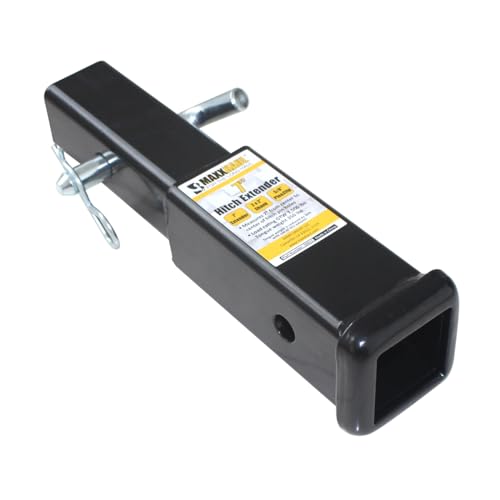
Extended Reach: Extend the reach of your trailer hitch by 7 inches with the Trailer Hitch Extension, allowing for better maneuverability and clearance.
![OPT7 7 Pin to 4 Pin Trailer Adapter, 7 Way Blade to 4 Way Flat Connector | [SECURE TAB DESIGN] Trailer Light Adapter for Pickup Truck Tow Hitch, 3.75"x1.75"](https://m.media-amazon.com/images/I/41YKeKsBJwL._SL500_.jpg)
Universal Compatibility: Give your rig the ability to light up any trailer, camper, or accessory with this versatile adapter

Compatible Receiver Size: Designed for a 2-inch receiver size, this dual tow hitch extension receiver provides versatile compatibility with a range of towing setups.
How Tow Haul Changes Engine, Transmission, Steering, and Braking Behavior
Toyota’s 2024 owner’s manual gives the clearest manufacturer description: TOW HAUL and TOW+ change engine, transmission, and steering operation to better suit towing or a heavy load. Toyota also states that Tow/Haul changes throttle response, with Tow/Haul+ using a more aggressive response for larger trailers.
Transmission and Shift Behavior
The 2024 Tundra uses a 10-speed automatic transmission with uphill/downhill shift logic. Toyota does not publish one fixed Tow Haul shift point for every load or road condition, so actual behavior can change with grade, vehicle speed, accelerator position, braking, and trailer weight.
- Towing calibration: the transmission operates under a towing-focused strategy rather than its normal unloaded behavior.
- Grade response: the Tundra’s transmission includes uphill/downhill shift logic that can change gear selection as conditions change.
- Brake input: Toyota notes that engine speed may become high because of automatic shifting when the brake pedal is depressed while TOW HAUL or TOW+ is selected.
- No fixed RPM rule: confirm the mode from the instrument indicator rather than assuming it is active because of one particular engine speed or shift.
Throttle and Power Delivery
Toyota describes standard Tow/Haul as increasing throttle response for lighter to moderate towing. Tow/Haul+ uses a more aggressive throttle response when greater towing demand is present. That does not mean the engine receives a higher power rating; the calibration changes how the available power responds to driver input.
| Function | Manufacturer-Described Change | What It Means to the Driver |
|---|---|---|
| Engine | Towing-focused operation | Powertrain response is adapted for a trailer or heavy load |
| Throttle response | Increased in Tow/Haul; more aggressive in Tow/Haul+ | Different accelerator response under towing demand |
| Transmission | Towing-focused operation | Shift behavior can differ from normal unloaded driving |
| Steering | Changed for towing suitability | Steering calibration is part of the towing mode |
Downhill Speed Control and Engine Braking
Do not assume TOW HAUL or TOW+ will control downhill speed by itself. Toyota notes that automatic upshifting or downshifting can raise engine speed in conditions such as downhill driving or when the brake pedal is used with a towing mode selected. Enter a descent at a safe speed, leave extra following distance, and use the transmission’s selectable range only as the owner’s manual directs.
If you regularly tow on long grades, the separate Tundra engine-braking guide explains how grade control and driver-selected transmission ranges fit into downhill towing.
The correct towing mode is only one part of the setup. Trailer weight, payload, hitch ratings, tire condition, brake settings, cargo security, and safe driving speed still determine whether the combination is within its limits.
Fuel Economy and Performance Trade-Offs in the Tundra
Tow Haul is designed around towing response rather than guaranteed fuel savings. Toyota warns that towing can adversely affect fuel consumption, and extra mass plus aerodynamic drag generally increase the energy needed to move the truck and trailer. A tall enclosed trailer may also create substantially more wind resistance than a low trailer of similar weight.
To improve real-world efficiency while towing:
- Use the correct towing mode for the loaded trailer weight.
- Drive smoothly and avoid unnecessary rapid acceleration.
- Remove cargo you do not need.
- Check truck and trailer tire pressures when cold.
- Leave enough following distance to slow gradually.
- Cancel the towing mode when the towing or heavy-hauling job is finished.
Common Tow Haul Mistakes and How to Avoid Them
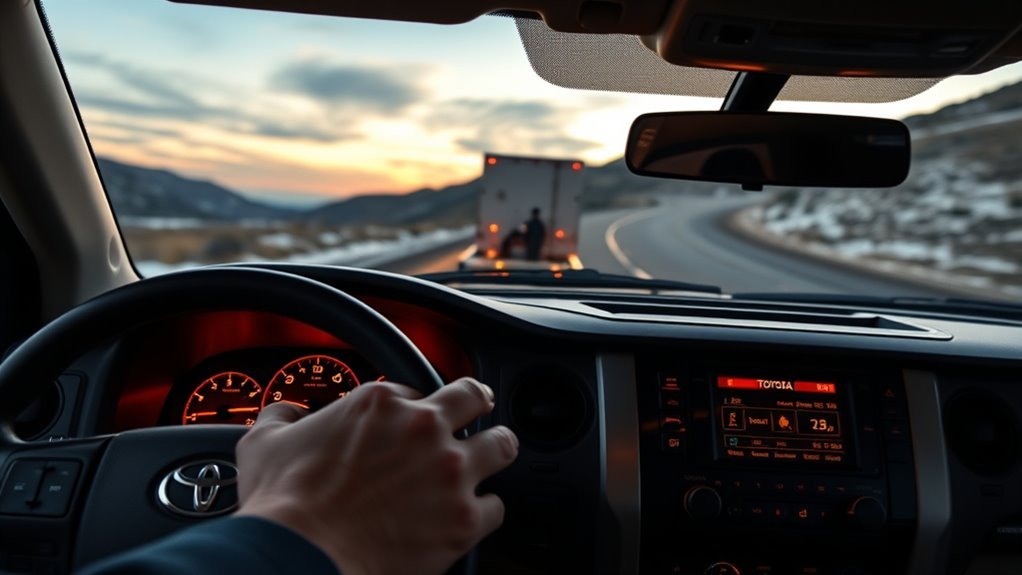
Most Tow Haul mistakes come from using the wrong weight, confusing the two controls, or treating the mode as extra towing capacity. A repeatable pre-trip routine prevents most of these problems.
- Mistake: choosing a mode from dry weight or trailer appearance. Fix: use the actual loaded trailer weight.
- Mistake: treating “around 5,000 lb” as Toyota’s exact rule. Fix: use TOW HAUL below 5,000 lb and TOW+ above 5,000 lb; Toyota’s wording does not assign exactly 5,000 lb.
- Mistake: expecting the TOW HAUL switch itself to cycle into TOW+. Fix: press TOW HAUL first, then turn the separate mode select switch for TOW+.
- Mistake: assuming Tow Haul increases the tow rating. Fix: remain within TWR, GCWR, GVWR, GAWR, payload, tire, hitch, and trailer limits.
- Mistake: ignoring the display. Fix: confirm the TOW HAUL or TOW+ indicator before relying on the selected mode.
- Mistake: forgetting automatic deactivation. Fix: remember that 4L, Drive Mode Select, or Multi-Terrain Select can deactivate the towing modes.
Signs Tow Haul Isn’t Working and Quick Diagnostics
If the expected towing mode does not appear, check the controls and current drive settings before assuming something is broken. A wrong switch sequence or an automatic-deactivation condition can explain the problem.
Watch for these signs:
- The TOW HAUL indicator does not appear after pressing the TOW HAUL switch.
- The TOW+ indicator does not appear after activating TOW HAUL and turning the mode select switch.
- The active towing indicator disappears after selecting 4L, Drive Mode Select, or Multi-Terrain Select.
- A warning light or transmission-related message appears.
- The controls or indicators behave differently from the procedure shown in the owner’s manual for your truck.
Quick checks you can do safely:
- Stop in a safe location and shift to Park.
- Confirm the truck is not in 4L and that a conflicting drive mode or Multi-Terrain Select setting is not active.
- Press the TOW HAUL switch and confirm the TOW HAUL indicator.
- If you need TOW+, turn the mode select switch and confirm the TOW+ indicator.
- If the expected indicator still does not appear or a warning is present, check the exact owner’s-manual procedure and have the truck inspected if necessary before towing a heavy load.
Note: On trucks equipped with Stop & Start, Toyota lists TOW HAUL or TOW+ not being active as one of the operating conditions for the Stop & Start system. The engine therefore normally will not perform an automatic Stop & Start shutdown while either towing mode is active.
Safe Towing Tips When Using Tow Haul
Before every towing trip, run through the truck, trailer, and connection instead of relying on the drive mode alone.
- Confirm ratings: check TWR, GCWR, GVWR, front and rear GAWR, payload, receiver, hitch-component, tire, and trailer limits.
- Check tongue weight: make sure the measured tongue load is appropriate for the trailer and remains within the truck, hitch, axle, and payload limits.
- Inspect tires cold: check truck and trailer tire pressures and condition before driving.
- Test lights: verify brake lights, turn signals, running lights, and hazard lights.
- Test trailer brakes: if equipped, confirm the brake controller and trailer brakes operate correctly before entering traffic.
- Secure the connection: latch the coupler correctly, install the required pin or lock, attach safety chains, connect the electrical plug, and position the breakaway cable correctly.
- Secure cargo: prevent the load from moving during acceleration, cornering, or braking.
- Drive conservatively: increase following distance, brake earlier, slow before curves and grades, and reduce speed in poor weather.
Frequently Asked Questions
Should Tow Haul mode be on or off?
Use TOW HAUL or TOW+ when towing or hauling a heavy load as Toyota directs. For trailer towing on an equipped 2024 Tundra, Toyota recommends TOW HAUL below 5,000 lb of loaded trailer weight and TOW+ above 5,000 lb. Press the TOW HAUL switch again to cancel the towing mode when the job is finished.
Do you get better gas mileage in Tow Haul mode?
Do not expect Tow Haul to guarantee better fuel economy. Toyota notes that towing can adversely affect fuel consumption, and trailer weight, aerodynamic drag, speed, wind, hills, tire pressure, and driving style all affect mileage.
Does Tow Haul mode increase towing capacity?
No. TOW HAUL and TOW+ change vehicle operation for towing or a heavy load, but they do not increase the Tundra’s towing capacity, payload, GCWR, GVWR, GAWR, tire ratings, hitch ratings, or braking capability.
When should I use TOW+ instead of TOW HAUL?
For an equipped 2024 Tundra towing a trailer, use TOW+ when the trailer’s actual loaded weight is more than 5,000 lb. Use TOW HAUL when it is less than 5,000 lb.
How do I activate TOW+ on a 2024 Tundra?
Press the TOW HAUL switch first and confirm the TOW HAUL indicator. Then turn the separate mode select switch to change to TOW+ and confirm the TOW+ indicator on the instrument display.
Which mode should I use at exactly 5,000 lb?
Toyota’s 2024 manual says TOW HAUL is for trailers weighing less than 5,000 lb and TOW+ is for trailers weighing more than 5,000 lb. Because that wording does not expressly assign exactly 5,000 lb, use a verified loaded-trailer weight and check the owner’s manual for your exact truck or ask a Toyota dealer at that boundary.
Why did TOW HAUL or TOW+ turn off?
Toyota says TOW HAUL and TOW+ automatically deactivate when the four-wheel-drive control is in 4L or when Drive Mode Select or Multi-Terrain Select is selected. Check those settings if the towing-mode indicator disappears.
Can I use Tow Haul for a heavy load in the truck bed?
Yes. Toyota says TOW HAUL or TOW+ can be used when hauling a heavy load as well as when pulling a trailer. However, the less-than/more-than 5,000-lb recommendation is specifically stated for trailer weight. A bed load still has to remain within payload, GVWR, axle, and tire limits.
Conclusion
For an equipped 2024 Toyota Tundra, the essential Tow Haul rule is simple: use TOW HAUL below 5,000 lb of loaded trailer weight and TOW+ above 5,000 lb. Toyota’s published wording does not assign exactly 5,000 lb. Press the TOW HAUL switch to activate the system, use the separate mode select switch for TOW+, and confirm the selected indicator on the instrument display.
Neither mode creates extra towing capacity. Before every trip, verify the trailer’s loaded weight, the truck’s payload and axle limits, the hitch and tire ratings, trailer brakes, lights, cargo security, and the complete connection. If a towing-mode indicator unexpectedly disappears, remember that 4L, Drive Mode Select, and Multi-Terrain Select can automatically deactivate TOW HAUL and TOW+.
Sources
- Toyota Owners — 2024 Tundra manuals and warranties — official access to Toyota’s 2024 Tundra documentation.
- Toyota 2024 Tundra Owner’s Manual (OM0C056U) — TOW HAUL/TOW+ controls, 5,000-lb mode recommendations, automatic deactivation, towing precautions, and Stop & Start operating conditions.
- Toyota Owners — 2024 Tundra trailer towing — official towing safety guidance and towing-limit warnings.
- Toyota Owners — 2024 Tundra vehicle load limits — trailer weight rating, cargo capacity, and load-limit definitions.
- Toyota 2024 Tundra eBrochure — official powertrain, towing equipment, transmission, and available maximum towing information.
- Toyota USA Newsroom — third-generation Tundra towing systems — Toyota’s description of Tow/Haul and Tow/Haul+ throttle response.
- NHTSA TireWise — tire-pressure, tire-condition, and load-limit safety guidance.