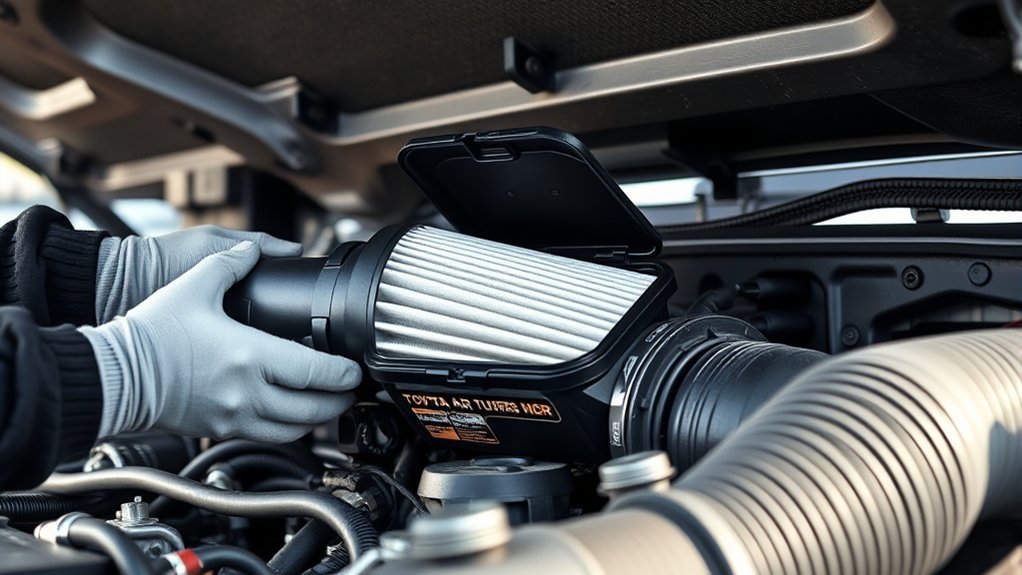
Replacing the engine air filters on a 2022+ Toyota Tundra is a straightforward DIY job, but there is one important detail to get right: the third-generation Tundra uses two engine air-filter elements. Inspect or replace both filters, keep dirt out of the intake, and confirm the correct parts by VIN before you start.
Quick Answer
Open the hood, locate the two air-filter housings, release the front clips on each air box, lift the lid carefully, remove the old filter, and install a matching replacement in the same orientation. Repeat on both sides, snap every clip closed, and replace the filters at Toyota’s scheduled interval or sooner if they are dirty.
Key Takeaways
- A complete 2022+ Tundra engine air-filter service means checking or replacing two filter elements.
- Toyota’s maintenance guide lists engine air-filter replacement at 30,000 miles or 36 months under the normal schedule.
- Inspect sooner if you drive on dirt roads, dusty roads, muddy trails, construction areas, or after heavy debris exposure.
- Use VIN fitment, a Toyota dealer, or the part maker’s fitment tool before buying filters.
- Do not wash or oil a standard paper filter; only service washable performance filters exactly as directed.
At a Glance
| Time Required | 10–20 minutes |
| Difficulty | Beginner |
| Tools Needed | Usually none; gloves, flashlight, and a clean rag help. A small flathead screwdriver is optional for stubborn clips. |
| Cost | Two replacement filters; price varies by dealer, OEM paper filter, TRD filter, or aftermarket brand. |
Quick Steps: Replace the Air Filter on a 2022+ Toyota Tundra
- Park on a level surface, turn the engine off, set the parking brake, and let the engine bay cool.
- Open the hood and locate the two rectangular air-filter housings near the front of the engine bay.
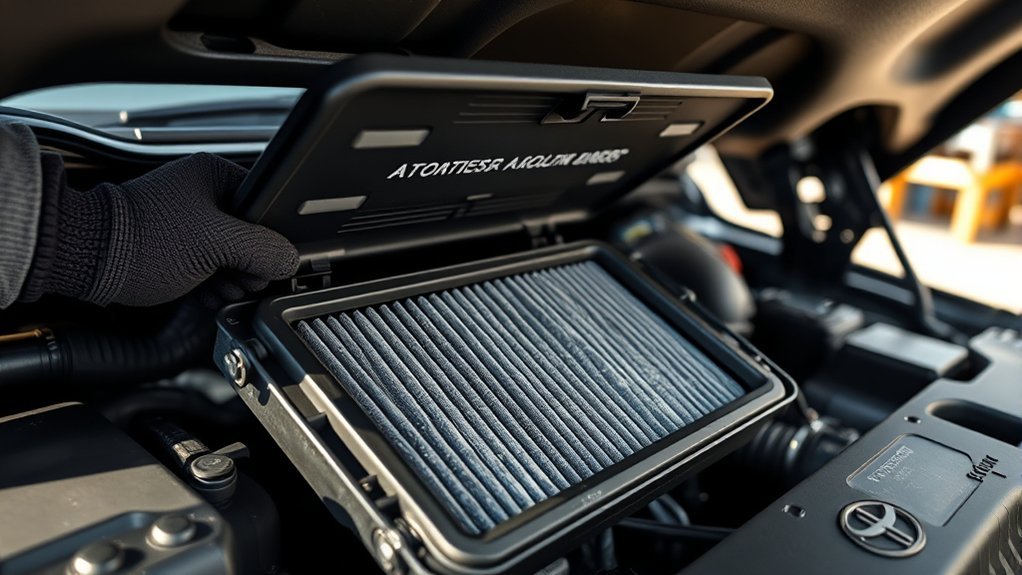
- Release the clips on the front edge of one air box.
- Lift the upper air-box lid just enough to access the filter, keeping hoses and wiring undisturbed.
- Lift out the old filter and note its orientation before removing it from the work area.
- Wipe loose debris from the dirty side of the air box without pushing dirt into the intake opening.
- Install the new matching filter in the same orientation, with the seal seated evenly.
- Lower the lid, align the rear hooks or tabs, and snap the front clips closed.
- Repeat the same process on the second air-filter housing.
- Start the truck and listen for whistling, rattling, or air leaks.
Warning: Do not run the engine with an air-filter lid open, a filter removed, or an intake opening exposed. Dirt entering the intake can damage the engine and turbocharger components.
Before You Start: Confirm the Right Filters
Do not assume an older Tundra filter part number fits a 2022+ truck. Use your VIN, the Toyota dealer parts counter, or the filter maker’s official fitment tool before buying. The 2022+ Tundra’s 3.4L twin-turbo engine layout uses two engine air-filter elements, so buy the correct quantity for a complete service.
For Toyota’s washable TRD performance filter, Toyota lists part number PTR03-34220 and notes that Tundra and Sequoia require two performance air filters. Standard paper filters are different from washable performance filters, so follow the care instructions for the exact filter type you install.
Note: The i-FORCE and i-FORCE MAX versions can have similar service needs, but part fitment can still vary by model year, trim, market, and engine package. VIN confirmation is the safest choice.
[Products Worth Considering]

These heavy-duty running board side steps are designed to improve access to your Toyota Tundra without reducing ground clearance. Built for Double Cab and CrewMax front door applications, they offer practical convenience for everyday entry, roof loading, and off-road use. The durable iron construction and easy no-drill installation make them a reliable upgrade for rugged driving.
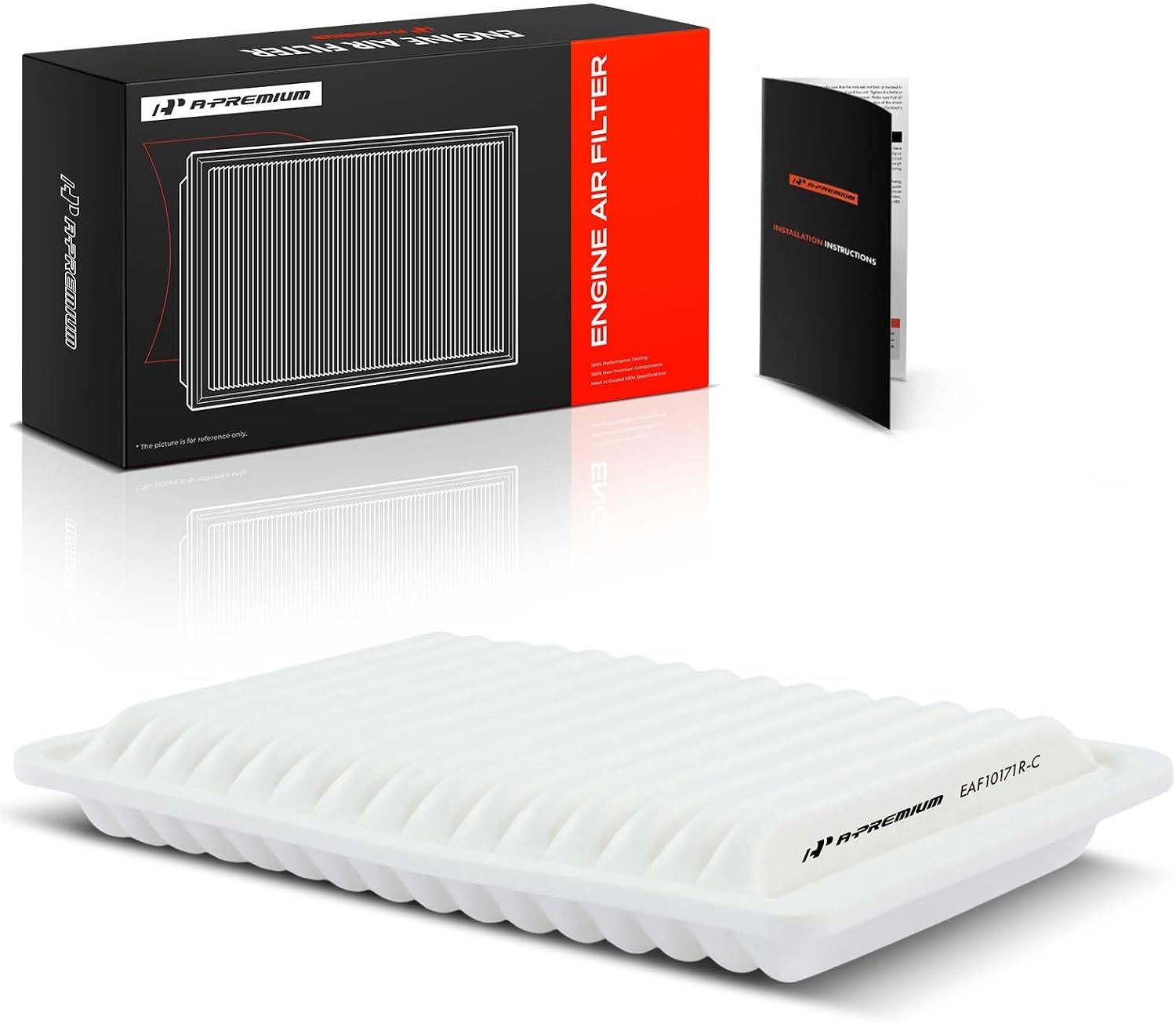
This A-Premium engine air filter is designed to help Toyota Camry and Venza models maintain cleaner airflow and stronger engine performance. Its fine filtration media captures debris while keeping air moving efficiently, and the rectangular, front-mounted design offers a direct replacement fit for select vehicles. Replace it regularly to support engine efficiency and cleaner intake air.

This A-Premium engine air filter is designed to help maintain clean airflow for compatible Lexus and Toyota vehicles, supporting better engine performance and efficiency. It uses fine filtration media to capture debris while minimizing airflow restriction, making it a practical replacement for routine maintenance. With fitment for multiple popular models and a convenient boxed single-pack design, it offers a straightforward solution for keeping your engine protected.
Locate the Air Filter Housings on a 2022+ Tundra
Open the hood and look near the front of the engine bay for the two rectangular plastic air-filter housings. Each housing has a lid held by clips at the front and hooks or tabs at the rear. Work on one side at a time so you can compare the old filter orientation with the new one before moving to the other side.
Keep the work area clean. Brush or vacuum loose leaves, sand, and grit from around the air boxes before opening them. This simple step helps stop debris from falling into the housing while the lid is raised.
Tools and Tundra-Compatible Replacement Filters to Have
You normally do not need a socket wrench for this job. The air-box clips can usually be released by hand. Keep gloves, a flashlight, and a clean rag nearby. A small flathead screwdriver can help with a stubborn clip, but use gentle pressure so you do not crack the plastic lid or bend a clip.
[Products Worth Considering]

This EPAuto engine air filter is designed as an OEM replacement for select Toyota Camry and Venza models with 4-cylinder gas engines. It helps protect the engine by filtering dust, dirt, and debris from incoming air while supporting efficient performance and improved fuel mileage. Built for a precise fit, it is a practical replacement choice for routine maintenance.

This Toyota replaceable air filter element is designed to help keep your engine intake clean by effectively removing contaminants. Built for reliable fit and routine maintenance, it supports cleaner airflow and helps protect engine performance over time. It is a practical replacement part for drivers looking to maintain proper filtration in compatible Toyota vehicles.

This Bosch Workshop Engine Air Filter is designed to help protect compatible Toyota RAV4 engines from harmful airborne particles while supporting strong performance and efficiency. It uses high-pleat construction, 98% filtration efficiency, and high-velocity cellulose media to reduce air resistance and help maintain clean airflow. The polyurethane foam seal adds reliable sealing against water and heat intrusion for dependable engine protection.
Essential Hand Tools
- Gloves: Keep dirt and filter dust off your hands.
- Flashlight: Helps you inspect pleats, seals, and debris in the housing.
- Clean rag: Useful for wiping the air-box rim and seal surface.
- Small flathead screwdriver: Optional; use only if a clip is stuck.
OEM and Aftermarket Filter Options
OEM-style paper filters are simple: install them dry, replace them when dirty or at the scheduled interval, and do not wash or oil them. Aftermarket paper filters should be treated the same way unless the manufacturer specifically says otherwise.
Washable performance filters, including Toyota’s TRD performance filter, have different care requirements. Toyota describes its TRD filter as washable and reusable, with regular cleaning and re-oiling needed for proper performance. Use only the cleaner and oil specified for that filter style.
Pro Tip: Write the date, odometer reading, filter brand, and part number in your maintenance log. It makes the next replacement easier and helps you track dusty-road service.
Remove the Upper Air Box and Access the Filter
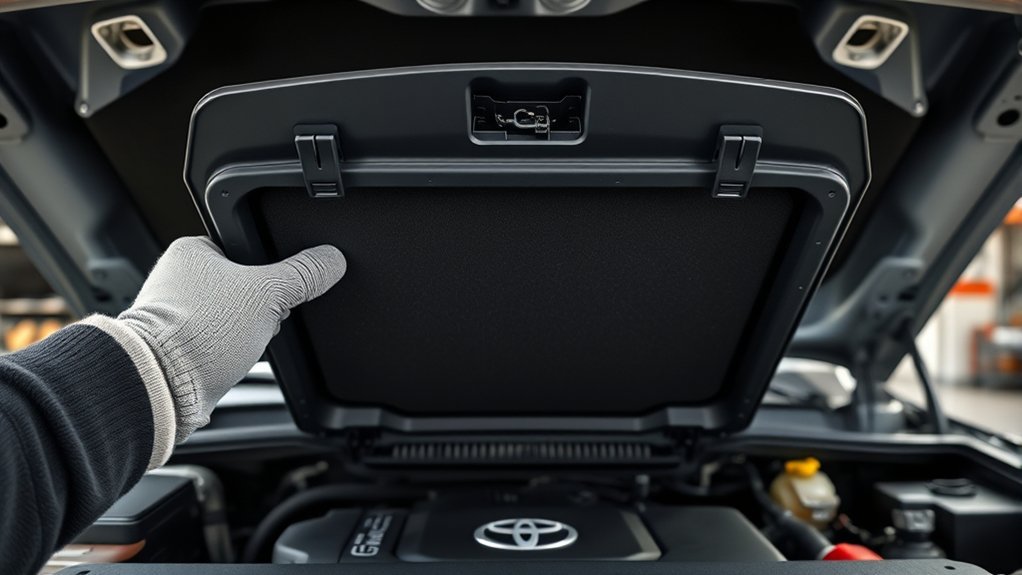
Start on either air-filter housing. Pop the front clips open, then lift the upper lid carefully. You only need enough room to slide the filter out. Avoid pulling hard on intake hoses, wiring, or nearby sensors.
As you lift the lid, notice how the rear hooks or tabs locate the lid against the lower air box. These must be aligned again during reassembly. If the lid feels stuck, stop and check for a clip that is still engaged instead of forcing the plastic housing.
Lift the old filter straight out. Keep the dirty side facing away from the intake opening so loose grit does not fall into the air box. If leaves or sand are sitting in the bottom of the housing, remove them with a vacuum or damp rag before installing the new filter.
Check the Filter: How to Inspect and Decide Clean vs Replace
Inspect both filters, even if one side looks cleaner than the other. Hold each filter under a bright light and look through the pleats. Some discoloration is normal, but packed dirt, oily spots, wet media, torn pleats, damaged seals, or heavy debris mean the filter should be replaced.
[Products Worth Considering]
This mech-style metal key fob cover adds a sleek armored look while helping protect your Toyota key from scratches, drops, and everyday wear. Designed for compatible 4-button Toyota smart keys, it preserves full remote functionality with no signal interference and includes glow-in-the-dark buttons for easier nighttime use.

This engine air filter replacement is designed for select Toyota, Lexus, Scion, Pontiac, and Lotus models to help maintain cleaner airflow to the engine. It helps protect against dirt and support consistent performance while contributing to better fuel efficiency. Built as a direct replacement for compatible OEM and FRAM part numbers, it is a practical maintenance choice for routine filter changes.

This cabin and engine air filter kit is designed for a wide range of compatible Toyota, Scion, and Pontiac models, helping improve airflow and keep your HVAC and engine systems cleaner. The activated carbon cabin filter helps reduce odors and trapped debris, while the engine air filter supports efficient performance with extended service life. It is easy to install and offers a convenient replacement solution for routine vehicle maintenance.
Visual Dirt and Debris
Look for dark bands across the pleats, clumped dust, leaves, bugs, sand, or gravel. Also check the rubber or foam sealing edge. A damaged seal can let unfiltered air bypass the filter, even if the pleated media still looks acceptable.
- Replace the filter if the pleats are packed with dust or debris.
- Replace it if the seal is torn, flattened, loose, or uneven.
- Replace it if the filter is wet, oily, moldy, or damaged.
- Do not reuse a filter that has holes or separated pleats.
Hold the Filter to Light
A light test is a quick screening method. If light passes through most pleats and the filter is dry and undamaged, it may still be usable. If large sections block light, the filter is clogged enough to justify replacement.
Clean vs Replace
For a standard paper filter, light tapping can remove loose surface dust, but do not wash it, oil it, or blast it with high-pressure compressed air. Those methods can damage the filter media. For a washable TRD or other performance filter, follow the filter maker’s cleaning and re-oiling instructions exactly.
A clean air filter can restore acceleration and throttle response when the old filter is clogged, but on modern fuel-injected vehicles it usually does not create a fuel-economy gain.
That distinction matters. FuelEconomy.gov explains that replacing a clogged air filter on modern fuel-injected, computer-controlled vehicles does not generally improve MPG, though it can improve acceleration. The U.S. Department of Energy also reports acceleration improvements in tests with clean versus clogged filters.
Install a New Air Filter and Reseat the Lid
Place the new filter into the lower air box in the same orientation as the old one. The filter should sit flat, with its seal evenly contacting the housing. Do not bend the frame or force a corner down; if it does not sit cleanly, remove it and check the orientation.
Lower the upper air-box lid evenly. Align the rear hooks or tabs first, then press the lid down until the seal compresses evenly. Snap the front clips closed. A loose clip or crooked lid can create an air leak and may cause noise, drivability issues, or a check engine light.
Repeat the entire process on the second air-filter housing. A complete replacement is not finished until both filters are installed and both lids are clipped shut.
Common Mistakes When Replacing a Tundra Air Filter
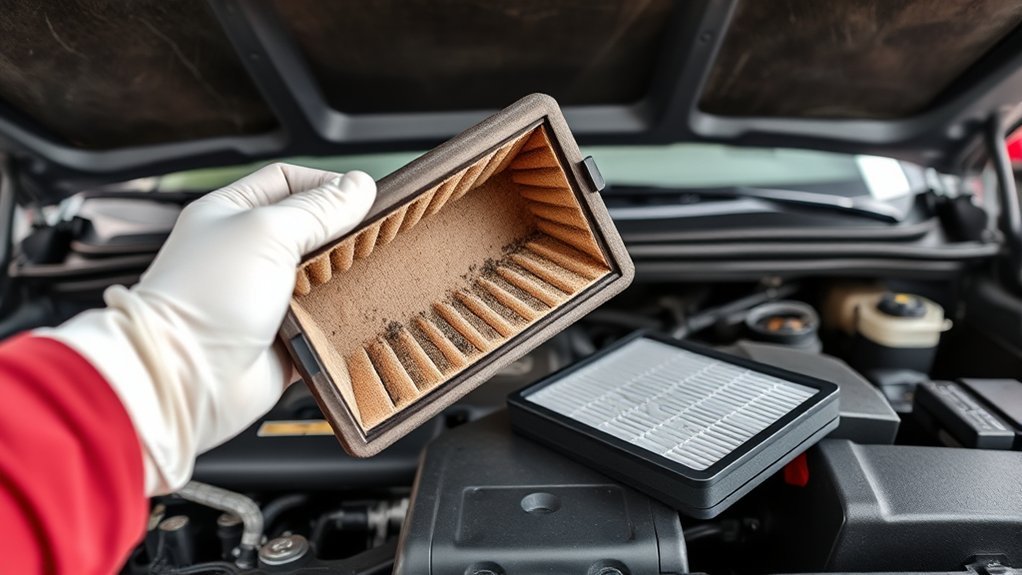
Now that the new filters are seated and the lids are secured, check for mistakes that can undo the job. Focus on filter cleanliness, seal alignment, and secure fastening.
After the filters are in place, verify clean housings, even seal contact, and fully closed clips on both air boxes.
- Replacing only one filter: A 2022+ Tundra service should include both air-filter elements.
- Wrong filter orientation: Compare the new filter to the old one before snapping the lid shut.
- Debris left in the housing: Remove loose dirt before installing the new filter.
- Misaligned rear hooks: If the lid does not sit flush, reopen it and align the rear tabs.
- Loose clips: Every clip should snap closed with the lid seated evenly.
- Oiling a paper filter: Paper filters install dry. Oil only a filter designed to be oiled.
When to Check or Replace the Filter Based on Driving Conditions
Toyota’s 2022 Tundra maintenance guide lists engine air-filter replacement at 30,000 miles or 36 months under the scheduled maintenance log. It also calls for engine air-filter inspection under special operating conditions such as driving on dirt roads or dusty roads.
| Driving Condition | Recommended Action |
|---|---|
| Normal commuting and highway driving | Replace at Toyota’s scheduled interval: 30,000 miles or 36 months. |
| Frequent dirt roads, dusty roads, desert driving, farm roads, or off-road use | Inspect at routine maintenance visits and replace early if the filters are dirty, packed, wet, or damaged. |
| After deep dust, mud, water splash, heavy leaves, or rodent activity | Inspect both housings immediately before continuing long-distance driving. |
| Washable TRD or performance filters | Clean and re-oil only according to the filter maker’s instructions; replace if the media or seal is damaged. |
Quick Troubleshooting After Reinstalling the Air Filter
After both filters are installed, start the engine and listen for unusual sounds. A whistle, sucking noise, rattling lid, rough idle, reduced power, or check engine light means something may not be seated correctly.
- Turn the engine off and reopen both air boxes.
- Confirm each filter is flat and fully seated.
- Check that all rear hooks or tabs are aligned.
- Snap every clip closed.
- Inspect nearby hoses and wiring to make sure nothing was pulled loose.
- If the check engine light stays on, scan the code or have the truck inspected before ignoring it.
Warning: If the engine runs poorly after the filter service, do not keep driving and hope it clears up. Recheck the air boxes first, then get professional help if the problem remains.
Frequently Asked Questions
How often should I replace my Toyota Tundra engine air filters?
For normal 2022 Tundra service, Toyota’s maintenance guide lists engine air-filter replacement at 30,000 miles or 36 months. Inspect sooner if you often drive on dirt roads, dusty roads, off-road trails, or in heavy debris.
How many engine air filters does a 2022+ Toyota Tundra have?
A 2022+ Toyota Tundra uses two engine air-filter elements. A complete inspection or replacement means servicing both air-filter housings, not just one side.
What air filter part number should I buy for a 2022+ Tundra?
Confirm by VIN before buying. Toyota lists the TRD performance filter as PTR03-34220 and notes that Tundra and Sequoia require two of those filters. Stock paper-filter fitment should be checked through a Toyota dealer or VIN-based parts lookup because parts can vary by model year, trim, and market.
Can I clean and reuse the Tundra’s engine air filters?
Standard paper filters should be replaced, not washed or oiled. You can gently tap out loose dust in an emergency, but heavy dirt, tears, wet media, or a damaged seal means replacement. Washable performance filters can be cleaned only if the filter maker says they are reusable.
Will new air filters improve fuel economy?
Do not expect a fuel-economy gain on a modern fuel-injected Tundra just because you replaced the filters. If the old filters were badly clogged, new filters can help restore airflow and acceleration, but government fuel-economy guidance says MPG gains are generally not seen on modern computer-controlled engines.
Why is there a whistling noise after replacing the air filters?
A whistle usually means an air-box lid, rear tab, clip, hose, or filter seal is not seated correctly. Turn the engine off, reopen both housings, reseat both filters, align the lids, and snap every clip closed.
Conclusion
Replacing the engine air filters on a 2022+ Toyota Tundra is easy once you remember to service both filter elements. Use VIN-confirmed parts, keep debris out of the air boxes, seat each filter evenly, and follow Toyota’s 30,000-mile/36-month replacement schedule unless dusty driving or visible contamination calls for earlier attention. Done carefully, the job helps protect the intake system and keeps the truck breathing the way it should.
Sources
- Toyota Owners Manuals and Warranties — official owner manual and warranty/maintenance access for the 2022 Tundra.
- Toyota 2022 Tundra Warranty & Maintenance Guide — scheduled maintenance interval and special operating-condition guidance.
- Toyota TRD Performance Air Filter PTR03-34220 — Toyota performance filter details, two-filter requirement, and washable/reusable note.
- FuelEconomy.gov: Keeping Your Vehicle in Shape — modern clogged air-filter guidance for MPG versus acceleration.
- U.S. Department of Energy Fact #568 — ORNL findings on acceleration effects from clogged versus clean air filters.