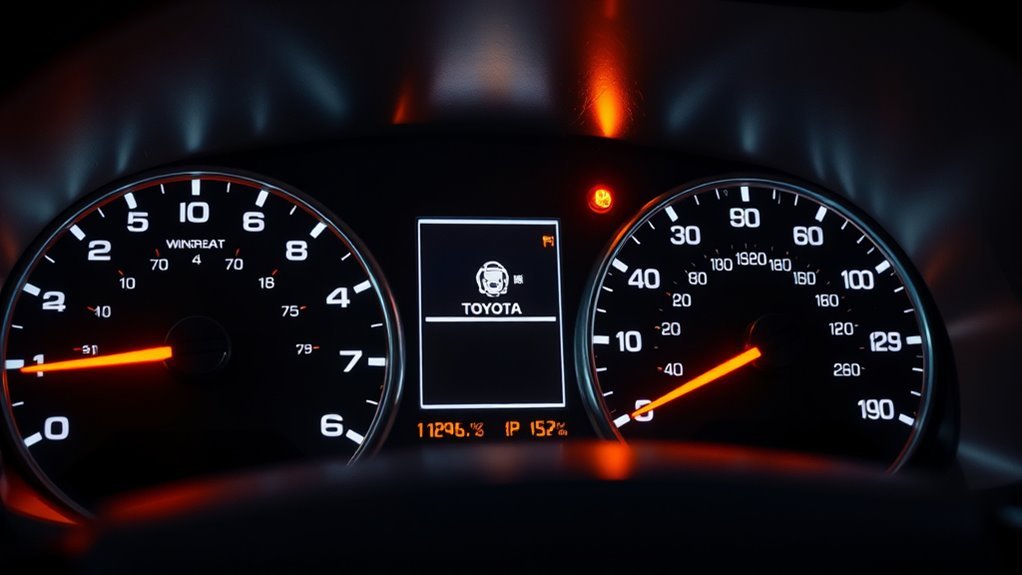
When your Toyota Tundra’s TPMS light comes on, it is warning you that one or more tires may be significantly under-inflated, or that the tire pressure monitoring system itself may have a fault. Do not ignore it. Pull over when safe, check the tires with a gauge, inflate them to the cold PSI shown on the driver-side door placard, and inspect for punctures, sidewall damage, or a leaking valve stem.
Quick Answer
A solid TPMS light on a Toyota Tundra usually means at least one tire is low. A flashing light that later stays on usually means a TPMS malfunction. Check all tire pressures cold, inflate to the door-placard PSI, inspect for damage, then reset or relearn the system only after the tires are correct.
Key Takeaways
- Use the Toyota Tundra’s driver-door tire placard for the correct cold PSI, not the maximum PSI printed on the tire sidewall.
- A solid TPMS light points to low pressure first; a flashing light points to a system or sensor issue.
- Check pressures when the tires are cold, or recheck later after the truck has been parked for at least three hours.
- Resetting TPMS before correcting tire pressure can store the wrong baseline and make future warnings less useful.
- If the light returns after inflation, look for a slow leak, damaged tire, bad valve stem, dead sensor battery, or sensor registration problem.
At a Glance
| Time Required | 5–15 minutes for a pressure check; longer if a tire needs repair |
| Difficulty | Easy for pressure checks; moderate to professional for sensor diagnosis |
| Tools Needed | Accurate tire pressure gauge, air compressor, flashlight, tread-depth gauge or penny |
| Cost | Often $0–$5 for air; tire repair or TPMS sensor service varies by shop, tire, sensor, and location |
TPMS Light on Your Tundra: What It Means
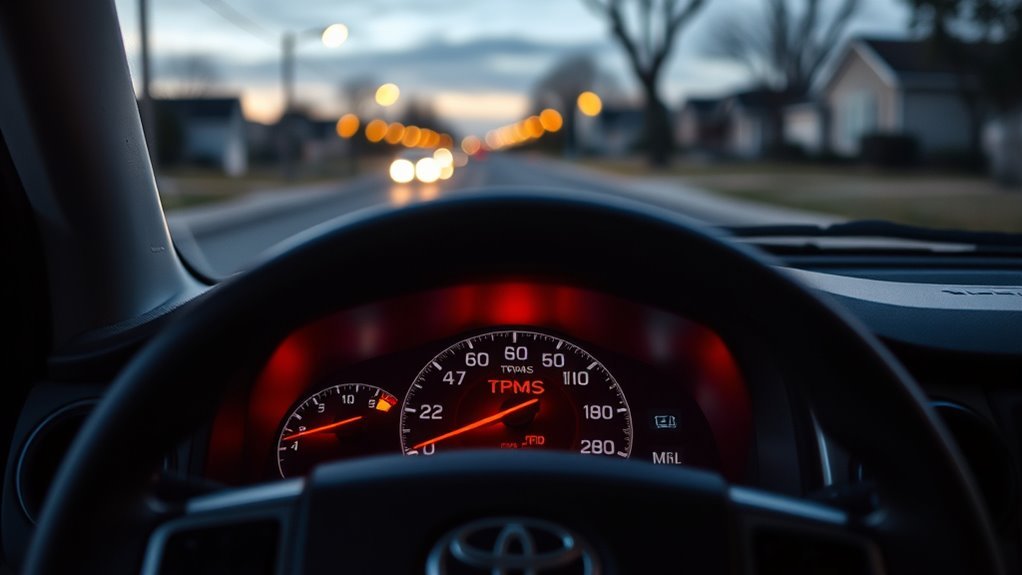
Your Tundra’s TPMS, or tire pressure monitoring system, is designed to warn you when tire pressure drops far enough to create a safety concern. Federal TPMS rules define the system as one that detects when one or more tires are significantly under-inflated and turns on a warning telltale. Toyota also explains that if the tire pressure warning indicator stays on, you should check all tires and refill, repair, or replace any tire that is below the proper pressure.
The important detail is this: TPMS is a warning system, not a replacement for regular tire checks. A tire can be low before the light comes on, and temperature changes can move pressure up or down. The National Highway Traffic Safety Administration says tire pressure should be checked when tires are cold, using the vehicle manufacturer’s recommended cold inflation pressure from the tire information placard or certification label.
Note: The correct PSI is not the same for every Tundra year, trim, wheel size, load setup, or tire type. The door placard on your truck is the source to trust unless Toyota or your tire manufacturer gives you a different approved specification for your exact setup.
Solid vs. Flashing TPMS Light
A solid TPMS light and a flashing TPMS light do not mean the same thing. Use the pattern of the warning light to decide what to check first.
| TPMS Light Pattern | Most Likely Meaning | What To Do |
|---|---|---|
| Solid light | One or more tires may be low, overinflated, leaking, or recently changed in pressure. | Check all tires with a gauge and set them to the cold PSI on the door placard. |
| Flashes for about a minute, then stays on | The TPMS may not be working correctly because of a failed sensor, dead sensor battery, registration issue, receiver issue, or incompatible wheel/sensor. | Check tire pressure manually, then schedule TPMS diagnostics if the light keeps flashing. |
| Light returns after inflation | A slow leak, puncture, damaged valve stem, bead leak, or sensor problem may be present. | Recheck pressure over the next day or two and have the tire inspected if pressure drops again. |
Under-inflation can reduce fuel efficiency and tire tread life, and it may affect handling and stopping ability. That is why a TPMS warning should be treated as a safety prompt, not a dashboard annoyance.
Quick Safety Check: Can You Drive With the TPMS Light On?
You may be able to drive a short distance with a solid TPMS light if the truck feels normal, no tire looks flat, and you are only moving to a safer place or nearby air pump. Keep speed low, avoid hard braking, and stop as soon as you can check pressure. If any tire looks flat, damaged, shredded, or unstable, do not keep driving on it.
Warning: Do not drive normally on a visibly low or damaged tire. Driving on a significantly under-inflated tire can build heat, damage the tire internally, and increase the risk of tire failure.
If the TPMS light is blinking, the bigger concern is that the system may not reliably warn you about a low tire. That does not automatically mean the tire is flat, but it does mean you should check pressure manually and arrange service. After a tire rotation, tire replacement, wheel change, or TPMS sensor replacement, a flashing light may also mean the sensors need to be registered or relearned.
Inspect and Fix Tires: Step-by-Step for a Tundra
Start with the basics before you reset anything. The goal is to confirm whether the warning is caused by actual tire pressure, visible tire damage, or a TPMS fault.
- Park safely on level ground. Set the parking brake and let the tires cool if possible.
- Find the correct cold PSI. Open the driver-side door and read the tire and loading information placard. Do not use the maximum PSI on the tire sidewall as your normal target.
- Check all four tires with a reliable gauge. Measure each tire and write down the readings. Check the spare manually too, especially before towing or long trips, because it may not appear in the TPMS display.
- Inflate low tires to the placard pressure. If a tire is overinflated, release air slowly and recheck.
- Inspect each tire and valve stem. Look for nails, screws, cuts, bulges, sidewall cracks, tread separation, uneven wear, or a hissing leak at the valve.
- Drive briefly and recheck the light. Some systems need a short drive before the warning clears after pressure is corrected.
- Recheck pressure the next day. If the same tire drops again, treat it as a leak until proven otherwise.
Pro Tip: Keep a digital tire gauge in the truck. TPMS tells you when pressure is already low enough to trigger a warning; a gauge helps you catch small pressure loss before it becomes a roadside problem.
[Products Worth Considering]

This Yuirote universal car motor diagnostic tool helps drivers quickly detect engine fault codes and identify system issues for routine inspections and maintenance. It also supports electronic parking brake reset and emergency release functions, making it useful for handling EPB-related problems without a repair shop visit. Its compact, ergonomic design and broad vehicle compatibility make it a practical choice for car owners and DIY repair enthusiasts.
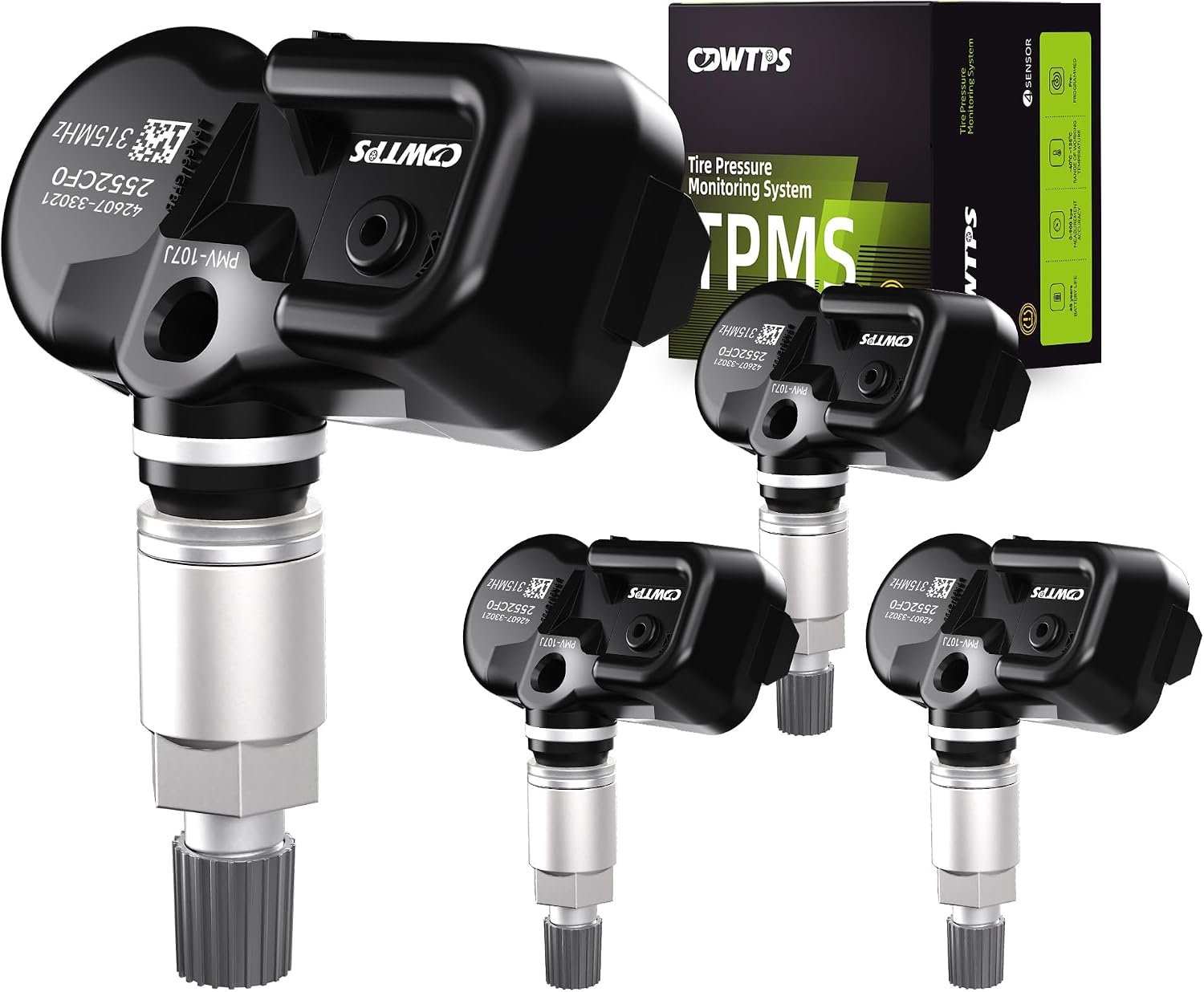
This set of four pre-programmed TPMS sensors is designed as a direct-fit replacement for compatible Toyota, Lexus, and Scion vehicles. It helps restore accurate tire pressure monitoring without sensor programming, and each unit is factory-tested for dependable performance. Built for long service life, these sensors offer a convenient solution for replacing worn or failed tire pressure monitors.

This AstroAI digital tire pressure gauge delivers factory-calibrated readings with dependable ±1 PSI accuracy, helping you keep cars, trucks, motorcycles, and spare tires at the right pressure. Its bright backlit LCD and illuminated nozzle make nighttime checks easy, while the one-button unit switch and auto-off design add convenience and battery efficiency for routine maintenance.
When a Tire Can Be Repaired
If you find a puncture, the repair decision depends on the location and size of the damage. The U.S. Tire Manufacturers Association says puncture repairs should be limited to the tread area, the tire should be removed from the wheel for internal inspection, and a plug alone is not an acceptable repair. A proper repair uses a stem or plug to fill the injury and a patch to seal the inner liner.
Do not repair a tire with sidewall damage, shoulder damage, a large puncture, overlapping repairs, exposed cords, bulges, or signs it was driven while flat. In those cases, replacement is the safer option. If you tow, haul, or drive off-road often, be more conservative: a questionable tire can become a much bigger problem under load.
Reset TPMS on a Tundra: How To and Troubleshooting
Only reset or initialize the TPMS after every tire is set to the correct cold pressure and any tire damage has been fixed. Resetting the system while the tires are low can teach the truck the wrong baseline.
[Products Worth Considering]

This CARORAV TPMS sensor set provides reliable tire pressure monitoring for a wide range of Toyota and Lexus vehicles with 315MHz compatibility. It is pre-programmed for easier setup, but still requires relearning or reset procedures after installation. Designed for accurate real-time pressure tracking, these sensors help support safer driving and long-lasting performance across many model years.

This set of four pre-programmed TPMS sensors is designed to restore accurate tire pressure monitoring for a wide range of Toyota, Lexus, and Scion vehicles. Built to OE-quality standards with long battery life and broad compatibility, these sensors help maintain proper tire pressure, improve safety, and eliminate TPMS warning lights when installed and activated correctly.

This steering clock spring is designed to restore reliable steering wheel controls across a wide range of Toyota models. It supports audio, cruise control, and other multifunction commands while matching OEM part numbers for confident replacement fitment. Built for dependable signal transfer and straightforward installation, it is an effective solution for repairing steering column control issues.
Reset Older Tundra Models With a Physical Button
Some older Toyota Tundra models use a physical tire pressure reset button. The exact location can vary by model year, so check your owner’s manual if you do not see it under the dash or near the lower driver-side controls.
- Set all tires to the recommended cold PSI on the driver-door placard.
- Turn the ignition to ON without starting the engine, or use the power mode your owner’s manual specifies.
- Press and hold the tire pressure warning reset button until the TPMS light blinks three times.
- Release the button, then drive the truck as the manual directs so the system can relearn.
- If the light returns, recheck the tire pressures and inspect for leaks before assuming the sensor is bad.
Reset Newer Tundra Models Through the Display
Many newer Tundra models use the multi-information display instead of a separate reset button. Use the steering-wheel controls to open the vehicle settings menu, select the tire pressure warning system or TPWS/TPMS setting, and follow the on-screen prompt to set or initialize pressure. Keep the truck parked during the menu reset, then drive normally so the system can update the readings.
Note: Toyota procedures differ by model year and market. If your Tundra’s menu wording does not match a guide online, use the owner’s manual for your exact year or ask a Toyota dealer to confirm the correct reset and sensor registration process.
Why the TPMS Light Stays On After You Add Air
If you inflated the tires and the TPMS light still will not clear, work through these common causes:
- The tires were checked warm. Pressure rises as tires heat up. Recheck cold pressure after the truck has been parked for at least three hours.
- One tire still does not match the placard. Some Tundra trims use different front and rear pressures, so do not assume all four tires take the same PSI.
- There is a slow leak. A nail, bead leak, cracked valve stem, or damaged wheel can drop pressure slowly enough that the tire looks normal.
- A sensor battery is dead. Internal TPMS sensor batteries are sealed; when they fail, the sensor is normally replaced.
- A sensor was not registered. New sensors often need programming or registration before the truck recognizes them.
- Aftermarket wheels or sensors are incompatible. Incorrect sensors, wrong frequency, damaged valves, or poor installation can trigger a warning.
- The system needs a drive cycle. Some TPMS warnings clear only after the truck has been driven long enough for the sensors to report updated pressure.
When to See a Pro and Expected TPMS Repair Costs
See a tire shop, repair shop, or Toyota dealer if the TPMS light flashes, the light stays on after all tires are correctly inflated, one tire keeps losing pressure, the display shows missing tire readings, or the warning started after wheel, tire, or sensor work. A technician can scan each wheel sensor, check valve stems, confirm sensor IDs, test the receiver, and perform the correct relearn or registration procedure.
Costs depend on what is wrong. Adding air may cost little or nothing. A simple tire repair is usually much less expensive than a sensor replacement, but not every puncture is repairable. TPMS sensor replacement usually includes the sensor or valve assembly, tire dismounting and mounting, balancing, and programming or relearn. A TPMS control module or wiring issue can cost much more than a single sensor, so ask for an itemized estimate before approving work.
Toyota’s official parts store lists genuine tire pressure monitor valve sub-assemblies as wheel-mounted components that support tire pressure communication and serve as the tire’s air valve. Dealer prices, installation labor, taxes, and programming charges vary, so the final installed cost is best confirmed with a local shop using your VIN and wheel setup.
[Products Worth Considering]

Be ready for roadside emergencies with this comprehensive car safety kit designed to help you handle common breakdown situations quickly and confidently. It includes a portable air compressor for fast tire inflation, jumper cables for dead batteries, and a self-contained emergency set with essential tools and first aid supplies. Built for all-weather preparedness, this kit helps keep drivers, passengers, and families safer on the road.

This all-in-one car emergency kit helps drivers stay prepared for roadside breakdowns, flat tires, and dead batteries with essential tools in one compact package. It includes a portable air compressor, heavy-duty jumper cables, a first aid kit, and other safety items designed for year-round peace of mind. Compact enough for easy trunk storage, it makes a practical safety solution and thoughtful gift for drivers of all ages.

This windshield sun shade umbrella is designed for Toyota Tundra models from 2007 to 2026, helping block harsh sunlight and reduce interior heat buildup. Its reflective cooling coating and high-density fabric work together to protect dashboards, seats, and trim while keeping the cabin more comfortable. The umbrella-style design installs quickly, folds down easily, and stores neatly for everyday convenience.
Frequently Asked Questions
What does a solid TPMS light mean on a Toyota Tundra?
A solid TPMS light usually means one or more tires are below the recommended pressure. Check every tire with a gauge, inflate to the cold PSI on the driver-door placard, inspect for damage, and drive briefly to see whether the light clears.
What does a blinking TPMS light mean?
A blinking TPMS light, especially one that flashes for about a minute and then stays on, usually means the system has detected a malfunction. Common causes include a failed sensor, dead sensor battery, unregistered sensor, incompatible wheel or sensor, or a receiver issue.
Can I drive my Tundra with the TPMS light on?
You can usually drive slowly to a safe place or nearby air pump if the truck feels normal and no tire looks flat. Do not keep driving normally until you check the pressure. If a tire is visibly low, damaged, or unstable, stop and change the tire or call roadside assistance.
Should I use 32–35 PSI in every Toyota Tundra tire?
No. Some Tundra setups use different front and rear pressures, and tire pressure can vary by model year, wheel size, tire size, load rating, and trim. Always use the cold PSI on your truck’s driver-door placard unless Toyota or your tire manufacturer gives a different approved specification.
Why did the TPMS light come on after cold weather?
Cold air lowers tire pressure, so a temperature drop can trigger the TPMS light even when there is no puncture. Check the tires cold and inflate them to the placard PSI. Recheck after a day or two; if one tire drops faster than the others, look for a leak.
Do I need to reset TPMS after adding air?
Not always. In many cases, the light turns off after the tires are inflated and the truck is driven. If the light remains on, follow the reset or initialization procedure for your Tundra’s model year. Reset only after all tires are at the correct cold pressure.
Conclusion
The TPMS light on your Toyota Tundra is a safety warning, not something to ignore or clear without checking the tires. A solid light usually means low tire pressure; a blinking light usually points to a TPMS fault. Start by checking cold pressure with a gauge, inflate to the driver-door placard PSI, inspect for tire damage, and then reset or relearn the system if needed. If the warning keeps coming back, have a shop check for leaks, sensor failure, or registration problems before your next long drive, tow, or off-road trip.
Sources
- Toyota Support: How the Tire Pressure Monitor System Works — Toyota guidance on checking, refilling, repairing, or replacing tires when the indicator stays on.
- NHTSA Tire Safety — Cold tire pressure guidance and tire safety basics.
- 49 CFR 571.138: Tire Pressure Monitoring Systems — Federal TPMS performance and malfunction warning requirements.
- U.S. Tire Manufacturers Association: Tire Repair Basics — Industry guidance on puncture repair limits and proper patch-plug repairs.
- Toyota Genuine Tire Pressure Monitor Valve Sub-Assembly — Toyota parts information for TPMS valve/sensor assemblies.