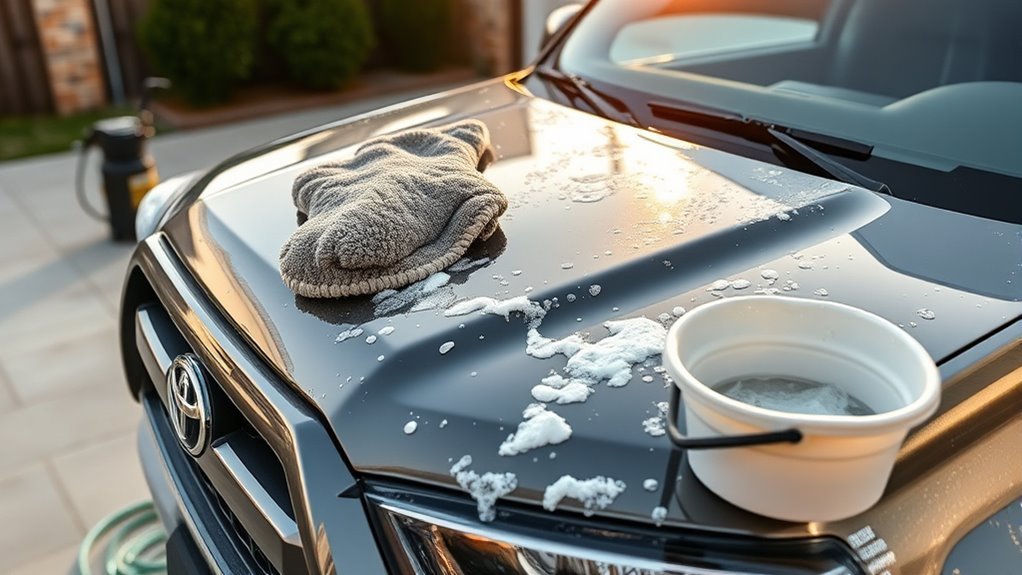
The safest way to wash a Toyota 4Runner is to remove loose dirt before touching the paint, then use separate wash and rinse buckets so grit does not keep returning to the vehicle. Work on cool paint in the shade, rinse the body, wheel wells, and dirty lower areas thoroughly, use an optional foam pre-wash if you have one, and wash from the cleaner upper panels toward the dirtier lower panels with a soft, well-lubricated mitt. Rinse the mitt in the dedicated rinse bucket before reloading it with shampoo. Finish with a thorough rinse and dry gently with clean, absorbent microfiber towels. After mud, road salt, bird droppings, sap, or other heavy contamination, wash sooner rather than waiting for a fixed schedule.
2026 4Runner pressure-washer precautions: Toyota says to keep a high-pressure cleaning nozzle at least 11.9 in. (30 cm) from the vehicle body, avoid holding the spray continuously in one place, and do not directly spray cameras, radar, or parking sensors. Do not continuously spray the lower windshield or gaps around doors and windows, and do not use a high-pressure washer on the underside. If you own another model year, check that year’s owner’s manual before assuming the same limits apply.
Last updated: September 16, 2026
Prep: When and Where to Wash Your 4Runner
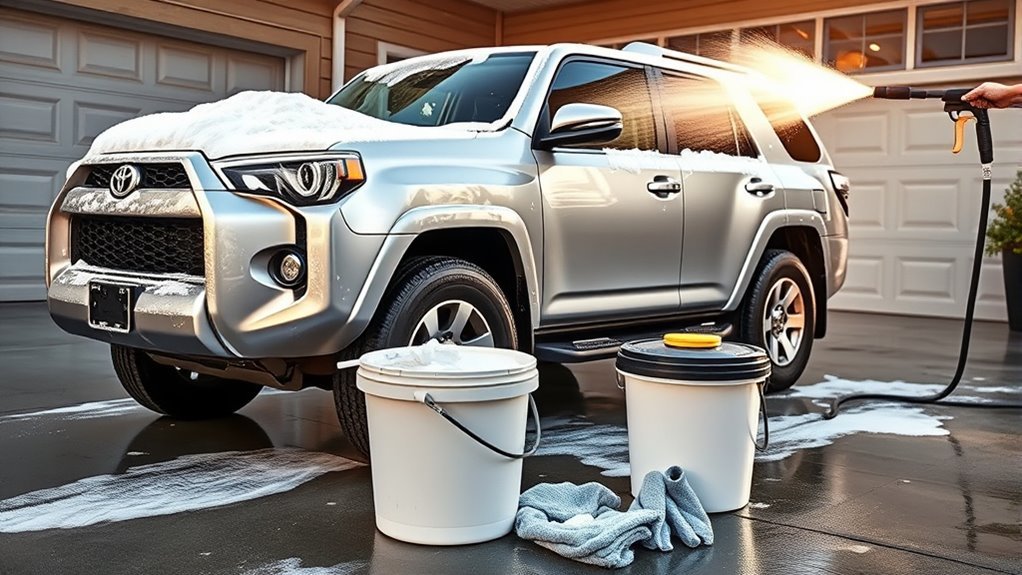
Wash your 4Runner when the body is cool and, when possible, work in the shade. Hot paint and direct sun make soap and rinse water dry faster, increasing the chance of streaks and mineral spots before you can rinse or dry the panel.
Before touching the paint, rinse from the top down. Flush loose dirt from the roof, glass, hood, doors, lower body, wheel wells, and other areas where grit collects. If the 4Runner is covered in trail mud, do not immediately attack the mud with a wash mitt. Soften and rinse away as much as possible first so coarse dirt is not dragged across the clear coat.
Road salt deserves the same attention. If winter driving leaves salt or dirty slush underneath the vehicle or in the wheel wells, rinse those areas rather than allowing the residue to build up. The goal of the preparation stage is simple: remove as much contamination as possible before contact washing begins.
Safety note for 2026 models: Do not apply water inside the engine compartment, and let the exhaust pipe cool before working near it. Toyota warns that water in the engine compartment can affect electrical components and that a hot exhaust pipe can cause burns.
Can a Toyota 4Runner Go Through an Automatic or High-Pressure Car Wash?
A 4Runner can be washed automatically, but preparation depends on model year and equipment. Toyota’s 2026 guidance warns that automatic-car-wash brushes may scratch the vehicle surface and wheels. For 2026 models, Toyota also instructs owners to fold the mirrors before washing, turn off the power back door if equipped, consider rear-spoiler compatibility with the wash, and remove the hitch cover on applicable vehicles.
- 2026 automatic-wash preparation: Fold the mirrors, turn off the power back door if equipped, confirm the rear spoiler will clear the wash equipment, and remove the hitch cover where applicable.
- Electronic key: If the wet door handle causes repeated locking and unlocking while the electronic key is nearby, Toyota says to keep the key at least 6 ft. (2 m) from the vehicle during the wash or place the key in battery-saving mode.
- Brush washes: Toyota warns that automatic-wash brushes may scratch the vehicle surface and wheels. If preserving a low-swirl finish is the priority, careful hand washing gives you more control over what touches the paint.
- High-pressure body washing: On a 2026 model, keep the cleaning nozzle at least 11.9 in. (30 cm) from the vehicle body and do not continuously hold the nozzle in one place.
- Cameras, radar, and parking sensors: Do not directly spray these areas with high-pressure water. Toyota warns that high-pressure spray can interfere with or damage these systems.
- Doors, windows, and windshield: Do not hold the nozzle close to gaps around the doors or perimeter of the windows, and do not continuously spray those gaps or the lower part of the windshield.
- Underside: Toyota’s 2026 manual says not to wash the underside with a high-pressure car washer. Use an ordinary hose or other non-high-pressure rinse for accessible mud and road-salt residue.
- Other model years: Equipment and automatic-wash preparation vary, so follow the owner’s manual for the exact year rather than assuming the 2026 instructions apply unchanged to every 4Runner.
A touchless or self-service wash can be useful when home washing is impractical, especially for winter grime, but it may not remove all bonded road film. If paint condition matters more than convenience, a careful hand wash gives you more control over what touches the finish.
For exact model-year instructions, use Toyota’s Manuals and Warranties page and select your 4Runner’s year and equipment.
What Do You Need to Wash a Toyota 4Runner Safely?
Set up two clearly separated buckets before washing. Fill the WASH bucket with water and automotive car-wash shampoo mixed according to the shampoo manufacturer’s directions. Fill the RINSE bucket with plain water. A grit guard in one or both buckets can help keep the wash media away from heavier debris at the bottom.
- WASH bucket: Fresh shampoo solution mixed according to the product label.
- RINSE bucket: Plain water for cleaning the mitt after each section.
- Wash media: A clean microfiber or other soft automotive wash mitt reserved for paint.
- Wheel tools: Separate brushes, mitts, or towels that never return to painted body panels.
- Drying: Several clean, absorbent microfiber drying towels.
- Optional pre-wash: A foam cannon or foam gun if you already have compatible equipment.
A foam cannon is useful but not mandatory. Foam can soften and carry away some loose road film before contact washing, but it does not replace the pre-rinse or careful mitt technique. If you use a pressure washer, follow both the pressure-washer instructions and the model-year-specific precautions in your 4Runner owner’s manual.
[Products Worth Considering]
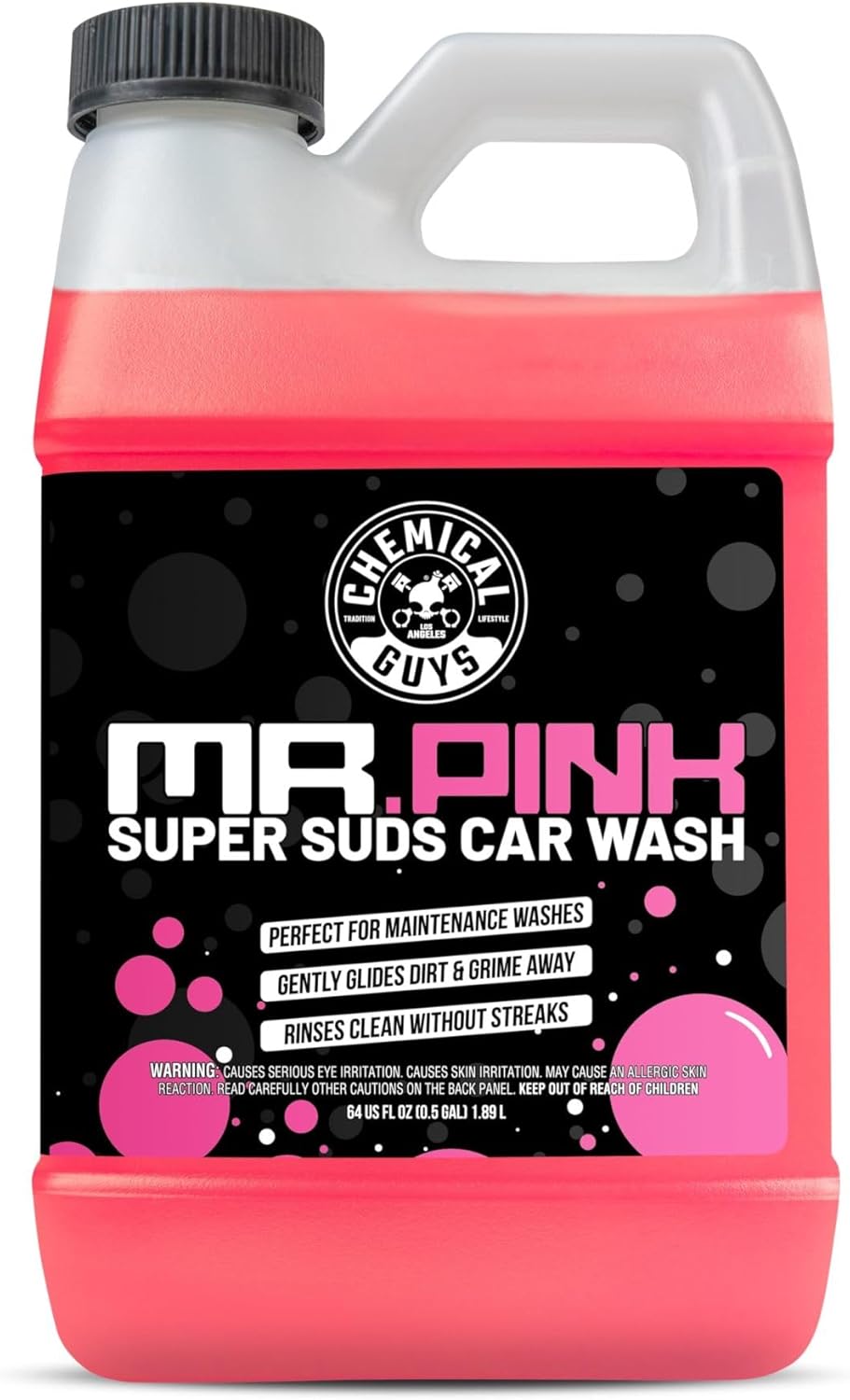
Chemical Guys Mr. Pink Car Wash Soap delivers thick, luxurious foam for safe and effective washing with a foam cannon, foam blaster, or bucket. Its pH-balanced formula helps lift dirt and grime while protecting wax, sealants, and ceramic coatings, leaving paint, glass, wheels, and trim clean and glossy.

This pressure washer gun and foam cannon combo is designed for efficient vehicle and outdoor cleaning with strong spray control and quick-change convenience. It connects to compatible pressure washer hoses and includes multiple nozzle tips plus an adjustable snow foam lance for washing cars, motorcycles, driveways, siding, and more. Built for flexible detailing and deep cleaning, it helps create thick foam and targeted spray patterns for better results.

This adjustable foam cannon delivers thick, even foam for efficient pressure washer cleaning and comes with a dual connector for smooth switching between soap application and rinsing. Designed for use with a pressure washer, it includes multiple nozzle tips and an adjustable spray pattern to tackle vehicles and a wide range of outdoor cleaning jobs with ease.
How Should You Wash Matte-Painted 4Runner Wheels?
Some 2026 4Runner wheels require different care because of their matte finish. Toyota says to remove dirt with water as early as possible and, when needed, use diluted neutral detergent followed by an immediate rinse and gentle drying with a soft cloth. Do not apply coatings or wax to matte-painted wheels, do not use acidic, alkaline, or abrasive detergents, and keep tire cleaner or tire wax off the wheel finish. Toyota also says not to scrub or polish these wheels with a brush or dry cloth and not to use a high-pressure washer or steam cleaner on them.
How to Wash a Toyota 4Runner Step by Step
- Rinse thoroughly. Start at the roof and work downward. Pay extra attention to lower doors, rocker areas, wheel wells, and any place holding mud or grit.
- Clean the wheels and wheel wells with separate tools. Keep wheel brushes, mitts, and towels away from the paint. If your 4Runner has matte-painted wheels, follow the special care instructions above.
- Pre-wash if desired. Apply foam with a foam cannon or foam gun and let it dwell only as long as the product directions allow. Do not let cleaner dry on the vehicle.
- Load a clean mitt from the WASH bucket. The mitt should be wet and well lubricated with shampoo solution.
- Wash a small section. Use light pressure and controlled, overlapping passes. Start with cleaner upper surfaces and save heavily contaminated lower areas for later.
- Rinse the mitt in the RINSE bucket. Release dirt before putting the mitt back into the shampoo solution.
- Reload from the WASH bucket. Continue around the vehicle one manageable section at a time. If the mitt becomes heavily contaminated, replace or thoroughly clean it rather than carrying grit to another panel.
- Rinse the entire 4Runner thoroughly. Remove remaining shampoo from paint, glass, trim, wheels, and crevices before drying.
If one section begins drying while you are still washing, rinse it again. Keeping soap from drying on the surface is more important than racing through the job.
How Should You Dry a 4Runner Without Water Spots or Swirls?
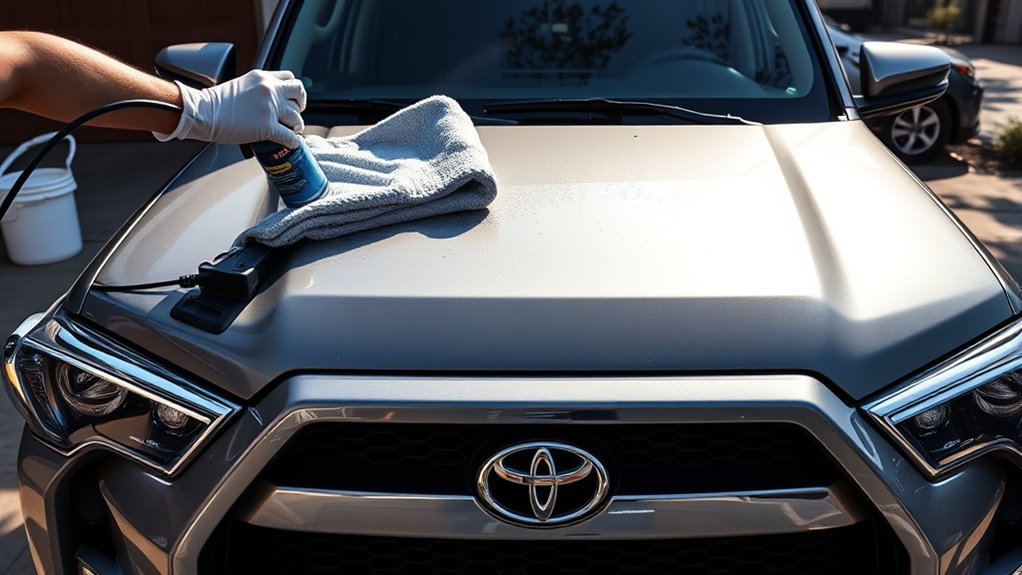
Dry the 4Runner soon after the final rinse so standing water does not evaporate and leave mineral deposits. Use clean, absorbent microfiber drying towels and light pressure. If a towel becomes dirty after touching a lower panel, replace it rather than dragging that contamination onto cleaner paint.
Work from the roof downward. Dry the glass and upper panels first, then the sides and lower body. Open the doors after the exterior is mostly dry and remove trapped water from door jambs and other crevices with a separate towel.
Blotting is safer than aggressive rubbing when water remains in a sensitive area. If your current wax, sealant, or coating is still performing well, another protection product is not automatically required after every wash. If water repellency has noticeably deteriorated, apply a paint-protection product that is compatible with the finish and any existing coating, following that product’s directions.
Before parking after the wash: Toyota advises driving slowly and applying the brakes several times so wet brake pads and rotors can dry. This helps reduce the chance of rust causing the brake components to stick while the vehicle is parked.
[Products Worth Considering]

The Chemical Guys TORQ Foam Blaster 6 Cannon turns any standard garden hose into an easy foaming car wash tool. Its adjustable foam dial lets you customize suds from light rinse to thick foam, helping lift dirt and grime while reducing swirl marks and scratches. Designed for safe, convenient washing, it makes cleaning cars, wheels, glass, and trim faster and more enjoyable for the whole family.

Protect your Toyota 4Runner interior with custom-fit floor mats and a rear cargo liner designed for all-weather coverage. The 3D-scanned TPE construction offers a precise fit for multiple model years, while raised edges help guard against spills, mud, snow, and everyday debris. Built for durability and easy maintenance, this set delivers reliable cabin protection without trimming.

Meguiar's Gold Class Car Wash combines cleaning and conditioning in one easy step for a smooth, high-gloss finish. Its advanced, biodegradable formula creates rich suds that lift away dirt and road grime while helping preserve existing wax protection. Versatile for bucket washing or foam cannon use, it leaves paint looking radiant, renewed, and ready for a professional-level detail.
How Should You Wash a 4Runner After Mud, Trails, or Road Salt?
Heavy contamination changes the first part of the wash. The dirtier the 4Runner is, the more important the non-contact rinse becomes.
- Caked mud: Soften and rinse it away before using a mitt. Do not scrub dried grit across the paint.
- Wheel wells: Flush accumulated mud and debris before the final body wash.
- Underside: Rinse accessible dirt and road-salt residue instead of focusing only on visible body panels. For a 2026 4Runner, use an ordinary hose or another non-high-pressure rinse because Toyota says not to high-pressure wash the underside.
- Lower doors and bumpers: Treat them as the dirtiest paint areas and wash them after cleaner upper panels.
- Tools: Use separate wash media for exceptionally dirty lower sections if your main mitt becomes heavily contaminated.
After a light dusty drive, a full corrective-detailing process is unnecessary. After deep mud or salted winter roads, however, spend more time on rinsing and contamination removal before touching the finish.
When Should You Clay, Polish, or Get Paint Correction?
Washing removes dirt, but it does not remove every paint defect. After the vehicle is clean and dry, inspect the paint under good lighting before deciding on a more aggressive process.
[Products Worth Considering]
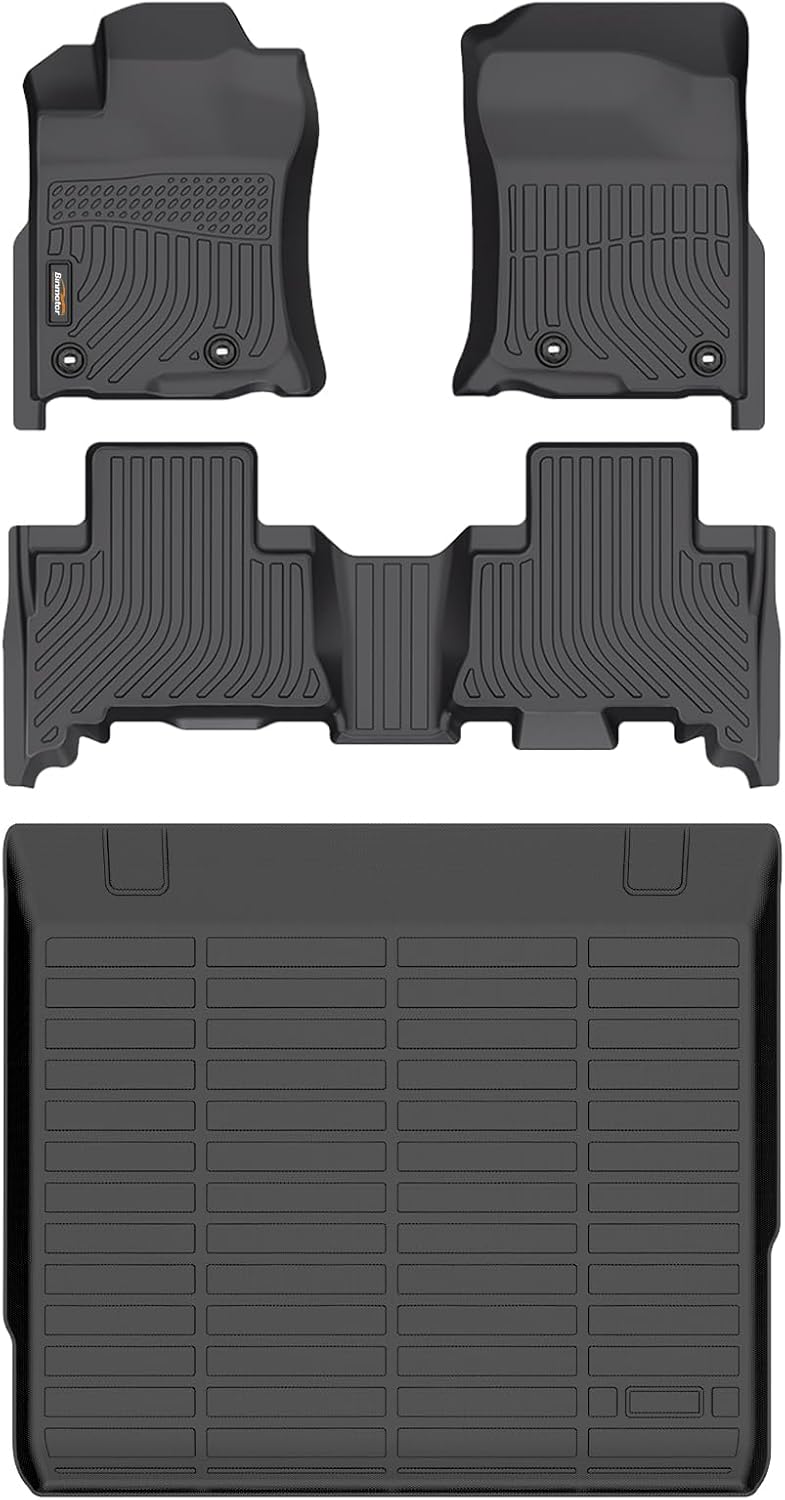
These custom-fit floor mats and cargo liner are designed for select Toyota 4Runner models and provide full-coverage protection for your interior. Made from durable TPE material with raised edges and non-slip buckles, they help contain dirt, spills, snow, and debris while staying securely in place. The waterproof design is easy to clean, making them a practical all-weather upgrade for everyday driving.
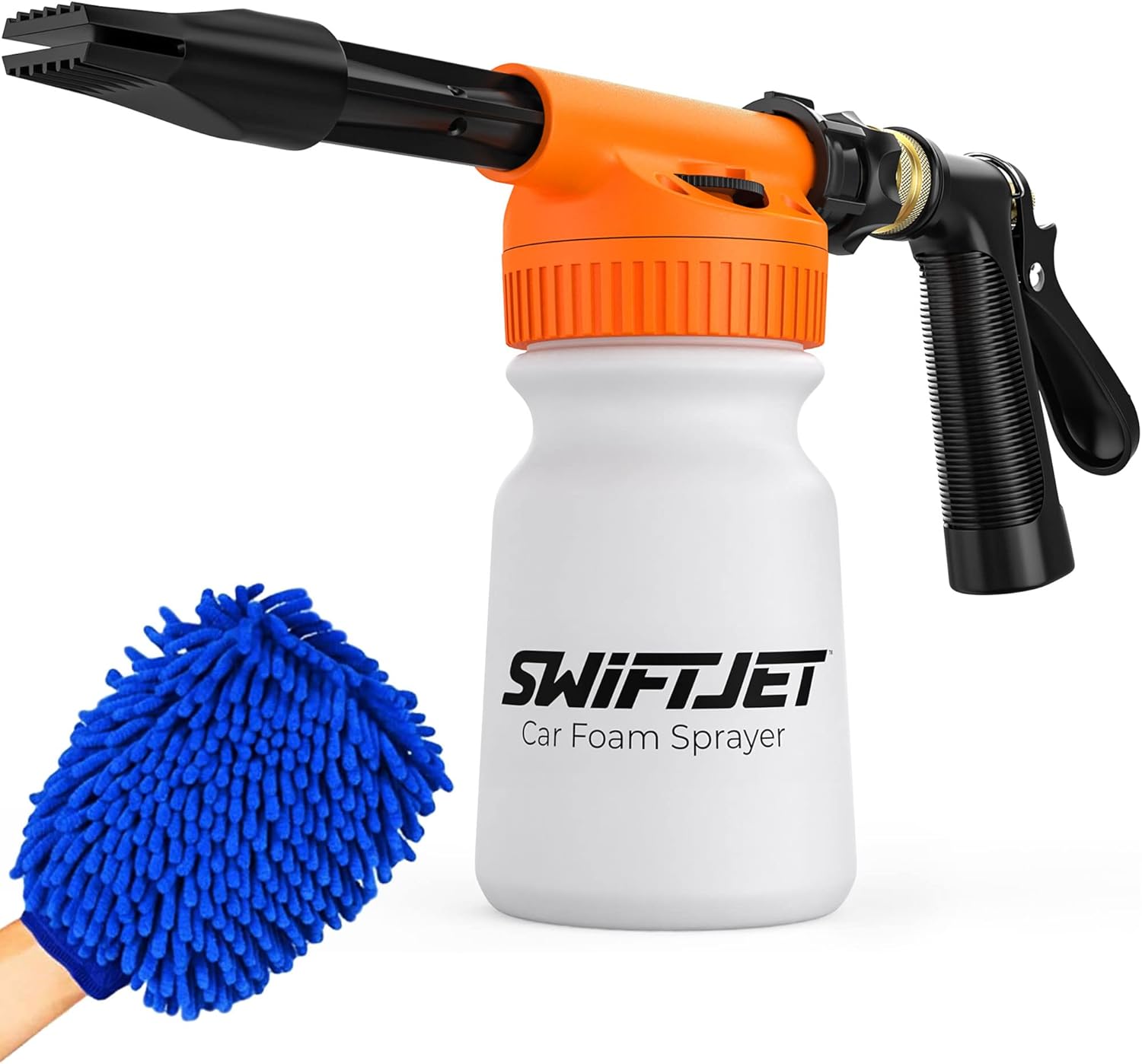
The SwiftJet Car Wash Foam Gun turns a standard garden hose into a powerful foam blaster for easier home car cleaning without a pressure washer. It produces thick, lubricating foam to help lift dirt and reduce scratches and swirl marks while giving you adjustable foam control for everything from light rinses to deep cleans. The included microfiber wash mitt adds extra convenience for a faster, more effective wash on cars, trucks, wheels, glass, and trim.

This wide mouth foam cannon makes car washing easier by helping you mix soap quickly and produce thick, adjustable foam for a deeper clean. Its stable bottle design, durable brass and stainless steel connectors, and adjustable spray settings help improve coverage while reducing swirl marks during washing. Compatible with electric and gas pressure washers, it is built for reliable performance and everyday detailing.
When Should You Clay the Paint?
Use detailing clay or another paint-safe mechanical decontamination method only when normal washing leaves bonded contamination behind and the paint still feels rough. Keep the surface well lubricated and work gently. Claying can itself create light marring on sensitive finishes, so it should be used because the paint needs decontamination, not simply because several months have passed.
What About Light Swirl Marks?
Light wash-induced swirls may respond to a mild polish and an appropriate pad. A dual-action polisher is generally easier for beginners to control than an aggressive rotary process, but polishing still removes a small amount of the clear-coat surface. Start with the least aggressive combination likely to correct the defect and stop if you are uncertain about the paint condition.
When Should You Call a Professional?
Deep scratches, failing or peeling clear coat, previous body repairs, or defects that would require sanding should not automatically be treated as routine DIY polishing jobs. Wet sanding removes clear coat and can permanently damage a panel when performed incorrectly. A qualified detailer or body shop can determine whether a defect can be safely polished, needs touch-up work, or requires refinishing.
Related 4Runner Cleaning Guides
- How to clean 4Runner interior plastics without streaks
- How to clean 4Runner floor mats and the cargo liner
- How to clean and condition 4Runner leather seats
Frequently Asked Questions
What Does Toyota Recommend for Washing a 4Runner?
Toyota’s current 4Runner guidance says to apply water liberally from top to bottom to remove dirt and dust, wash the body with a soft cloth or sponge, use car-wash soap for hard-to-remove marks, rinse thoroughly, wipe away water, and refresh wax when the vehicle’s water repellency has deteriorated. For a 2026 model, Toyota also provides specific automatic- and high-pressure-wash precautions, so follow the owner’s manual for your exact year and equipment.
How Often Should I Wash My 4Runner?
There is no single wash interval that fits every 4Runner. Wash when contamination builds up, and do not leave heavy mud, road salt, bird droppings, tree sap, or similar residue sitting on the vehicle unnecessarily. A garaged highway-driven 4Runner may need washing less often than one used on salted winter roads or muddy trails.
Can a 4Runner Go Through an Automatic Car Wash?
Yes, but check the owner’s manual for your exact year and equipment first. Toyota warns that automatic-wash brushes can scratch vehicle surfaces. For a 2026 4Runner, Toyota also calls for folding the mirrors, turning off the power back door if equipped, checking rear-spoiler compatibility with the wash, and removing the hitch cover where applicable. If a wet door handle causes repeated locking and unlocking, keep the electronic key at least 6 ft. (2 m) away during the wash or use its battery-saving mode.
Is a Pressure Washer Safe for a Toyota 4Runner?
A pressure washer can be used carefully, but the 2026 4Runner manual gives specific limits. Keep the nozzle at least 11.9 in. (30 cm) from the vehicle body, do not continuously hold it in one place, and do not directly spray cameras, radar, or parking sensors. Keep the nozzle away from door and window gaps, do not continuously spray the lower windshield, and do not use a high-pressure washer on the underside. Follow the manual for your exact model year because instructions can differ.
Do You Need a Foam Cannon to Wash a 4Runner?
No. A foam cannon is an optional pre-wash tool. A thorough rinse, clean and well-lubricated wash media, good contamination control, and gentle drying are more important than producing thick foam.
Can Not Washing Your 4Runner Damage the Paint?
Allowing contamination to remain on the vehicle can contribute to staining, bonded deposits, paint deterioration, and corrosion in vulnerable areas. Remove mud, road salt, bird droppings, sap, and other aggressive contamination promptly, then wash with paint-safe tools and products.
Can You Pressure-Wash the Underside of a 2026 4Runner?
No. Toyota’s 2026 4Runner manual says not to wash the underside with a high-pressure car washer. After mud or salted-road driving, rinse accessible underbody contamination with an ordinary hose or another non-high-pressure water source instead.
How Should You Clean Matte-Painted 4Runner Wheels?
For applicable 2026 matte-painted wheels, Toyota says to remove dirt with water as soon as practical and use diluted neutral detergent only when needed, followed by an immediate rinse and gentle drying. Do not wax or coat the matte finish, use acidic, alkaline, or abrasive cleaners, scrub or polish it aggressively, or use a high-pressure washer or steam cleaner on the wheels.
Conclusion
A safe 4Runner wash is mostly about controlling dirt and following the precautions for your exact model year. Rinse loose contamination away before making contact, keep the wash bucket separate from the rinse bucket, use light pressure with clean wash media, and dry with clean microfiber towels. A foam cannon can help with pre-washing, but it is optional. After trail mud or winter salt, spend extra time rinsing the wheel wells, lower body, and accessible underside without using a high-pressure underbody wash on a 2026 model. For 2026 4Runners, also protect the cameras, radar, parking sensors, lower windshield, matte wheels, mirrors, power back door, rear spoiler, hitch cover, and Smart Key system as directed by Toyota. After washing, dry the brakes with several slow brake applications before parking. Clay or polish only when the paint condition actually calls for it, and leave deep or uncertain defects to a qualified professional.