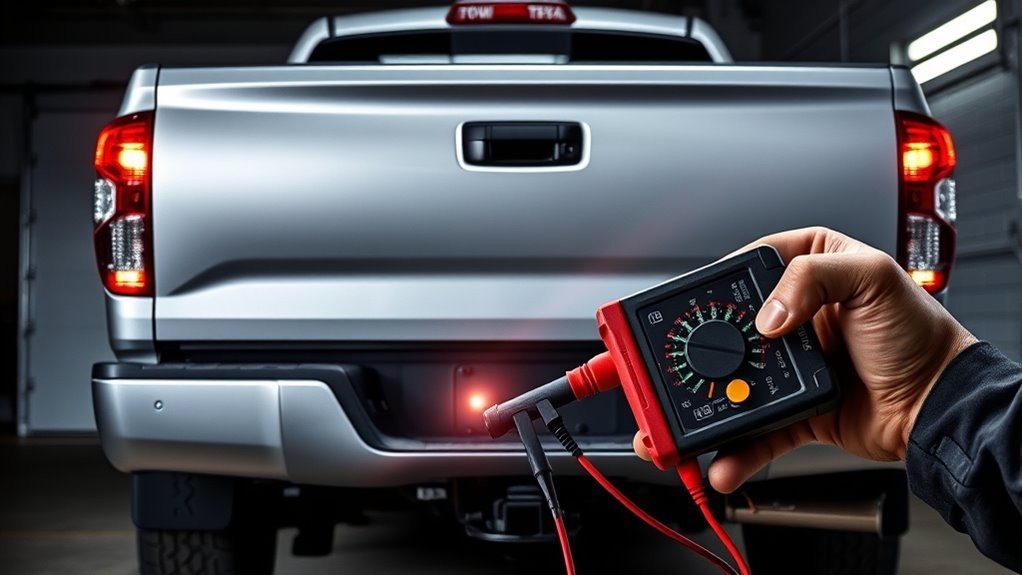
First, isolate whether it’s the truck, trailer, or connector by swapping the trailer to another vehicle and checking lights; then inspect the Tundra’s 4‑prong/7‑way plug for corrosion, bent pins, and a solid ground. Check the passenger fuse box for the 30A “Tow/Tail” fuse and replace if blown. Use a multimeter or test lamp to verify pin voltages and continuity, and jumper the ground to rule out frame issues. Continue for step‑by‑step fixes and preventive tips.
Quick Check: Is It the Truck, the Trailer, or the Connector?
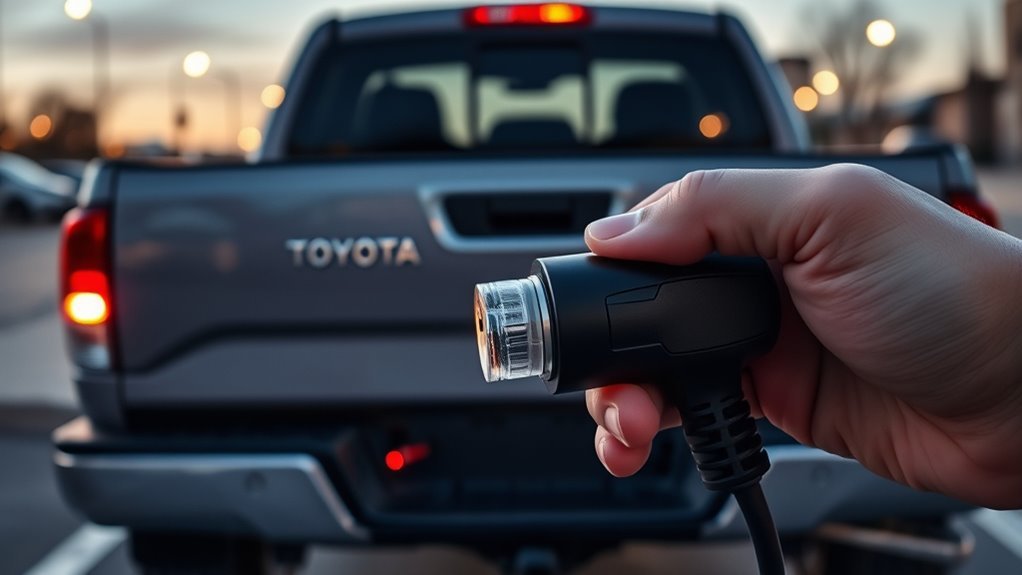
Wondering whether the problem is the truck, the trailer, or the connector? Start by swapping the trailer onto another vehicle to confirm the trailer lights and trailer brake circuit work—if they do, the fault’s on your Tundra. Next, visually inspect the truck’s connector for corrosion, bent pins, or physical damage; clean contacts and reseat the plug. Verify the ground wire: tighten its terminal, remove corrosion, and guarantee metal-to-metal contact so grounding won’t sabotage signals. Use a multimeter to check voltage at each pin on the truck connector while operating turn signals, brakes, and running lights; compare readings to expected values and your towing capacity wiring diagram. If signals are absent at the plug but present elsewhere, trace wiring back to fuses and modules. These steps give you a procedural roadmap to reclaim control—diagnose methodically, isolate the component, and act decisively to free yourself from recurring light failures.
Check the 30A “Tow/Tail” Fuse in the Passenger Fuse Box
Start by locating the passenger-side fuse box and remove the cover—the underside is labeled and the 30A “Tow/Tail” (marked “trailer lights”) sits in the bottom row, second from the fender. Inspect that 30A fuse visually for a broken element or discoloration; pull it straight out with the fuse puller or needle-nose pliers. If it’s blown, swap it for a new 30A blade fuse of the same rating. Reinstall the cover and test the trailer running lights; many Tundra owners report this simple replacement restores function when brake and turn signals still work.
Record the fuse location for future reference and make checking it part of routine maintenance. Use these troubleshooting tips: confirm the replacement fuse is seated fully, check for corrosion in the socket, and retest after a short drive. If the new fuse blows immediately, stop and seek professional diagnosis to avoid repeated electrical failures.
Test the 4‑Prong/7‑Way Connector: What Each Pin Should Read
When you’re ready to test the trailer plug, first identify whether you have a 4‑prong or 7‑way and then probe each pin with a multimeter or LED tester while activating the corresponding vehicle function: you’re confirming pin functions and voltage readings so you can act decisively. Test procedure: key on, headlights/brake/turns as needed, probe center/each blade, and note results.
- 4‑prong: tail light pin ≈12V with headlights on; brake and left/right turn pins show voltage only when activated; ground should register continuity.
- 7‑way: includes the 4 standard pins plus reverse, auxiliary power, and 12V battery supply; check each for expected voltage when its circuit is energized.
- If voltage readings are absent or low, check fuses and connections on the vehicle side and compare readings to a known working trailer to isolate the fault.
- Record each pin’s reading and proceed to targeted repairs with confidence.
Check and Fix the Trailer Ground (The Most Common Silent Culprit)
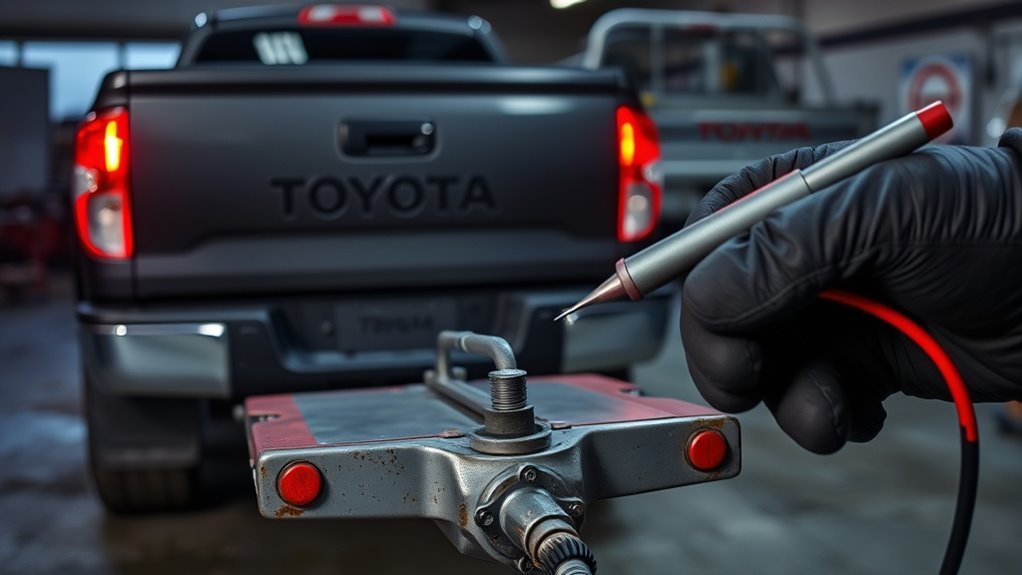
Start by inspecting the trailer’s ground connection at the hitch and each light to spot corrosion, loose bolts, or a broken white wire. Clean any rust or paint down to bare metal, reattach the ground securely, and tighten the hardware to guarantee metal-to-metal contact. If lights still act up, use a jumper ground from the truck frame to the trailer frame and test continuity to confirm the fix.
Inspect Trailer Ground Connection
Because a poor ground is the most common silent culprit, check the trailer’s ground connection first: make sure the white ground wire on a 4-prong plug is bolted to clean, bare metal on the trailer frame, inspect for corrosion or frayed wire at the lug, and tighten or replace any loose or damaged hardware. You’ll test continuity from the connector’s ground pin to the frame with a meter. If continuity fails, probe the lug, wiring, and paint layers. On plastic or aluminum trailers, use a jumper ground to verify lighting before permanent fixes. Document damage and act decisively to restore reliable grounding.
- Verify ground wire tightness and metal contact
- Perform corrosion inspection at lug and frame
- Use meter to test continuity
- Employ temporary jumper ground if needed
Clean And Reattach Ground
You’ve already checked the ground lug and continuity; now clean and reattach the ground to restore a solid electrical path. Start by disconnecting the trailer from the truck and exposing the ground wire (usually white). Inspect for ground corrosion, frayed strands, or paint under the clamp. Remove rust and paint with a wire brush or sandpaper until bare metal is visible. Trim any heavily corroded wire and strip fresh insulation for a clean bite. Use a star washer or fresh ring terminal and secure the ground to frame bare metal with a tightened bolt. Recheck continuity with a multimeter between the ground wire and the trailer lights. Use proven grounding techniques and periodic checks to reclaim reliability and prevent repeat faults.
Test With Jumper Ground
Grab a jumper wire and temporarily bond the trailer’s white ground wire to a solid metal point on the tow vehicle to see if the lights come back to life. You’re performing jumper wire troubleshooting to confirm the ground is the culprit. Secure a clean, bare metal surface, attach the jumper tightly, then have someone cycle lights while you observe. If lights restore, the issue was the ground; if not, move to wiring and fuses.
- Inspect and clean ground points; remove corrosion for reliable contact.
- Use a multimeter to check continuity before and after testing.
- Tighten or relocate a loose ground to a thicker chassis bolt for durability.
- Document findings and replace corroded rings or wires to free yourself from repeat failures.
Step‑By‑Step Voltmeter / Test‑Lamp Checks You Can Run Now
Start by testing each pin on the trailer connector with a voltmeter or test lamp to confirm which circuits have voltage and which don’t. Begin with voltmeter basics: set to DC volts, probe the ground and each signal pin (left, right, tail, brake). Note voltages with lights on, brakes applied, and turn signals activated. For test lamp usage, clip lamp ground to clean chassis ground and touch each pin; lamp illumination shows circuit continuity and power. If a pin shows no voltage, verify the tow/tail 30‑amp fuse in the passenger fuse box labeled “trailer lights” or “Towing” next. Secure the ground: use jumper cables from battery negative to trailer connector ground to rule out poor grounding. If still dead, inspect the harness for breaks or corrosion at visible splice points. You can also plug an 1156 bulb test lamp into each socket to isolate individual circuits before proceeding to repair.
Common Wiring Failures and How to Spot Them (Wires, Pins, Converters)
Start by visually inspecting wire insulation for cuts, abrasions, or places where it’s rubbed through—repair or replace any compromised sections immediately. Check connector pins for bends, corrosion, or looseness and clean/tighten them so each pin makes solid contact. Finally, test the converter box for proper output and wiring gauge compatibility, replacing it if you find voltage drop or undersized wiring.
Wire Insulation Damage
When your trailer wiring drags or rubs, the insulation can wear through and create shorts that cause intermittent or complete loss of trailer lights, a failure especially common on older Tundras like the 2002 model. You’ll want to inspect the harness visually, feeling for rough spots, nicks, or exposed conductor. Prioritize wire maintenance and insulation protection to reclaim control and prevent roadside failures.
- Isolate damaged sections and clean surrounding areas before repair.
- Use heat-shrink tubing or self-fusing silicone wrap for temporary protection.
- Replace severely abraded segments with equal-or-heavier gauge wire to restore reliability.
- Verify repairs with a multimeter under load while moving the harness to replicate flex and vibration.
Follow these steps decisively to free yourself from recurring light failures.
Bent Or Corroded Pins
After checking the harness for worn insulation, move on to the trailer connector itself: bent or corroded pins often cause intermittent or total light failures by preventing a solid electrical contact. Inspect each pin visually and feel for bends; even slight deformities break reliable connection. Use a multimeter to verify continuity and voltage at every terminal — record readings so you can prove changes after repairs. For corrosion, apply contact cleaner and scrub gently with a wire brush until metal gleams; dry thoroughly. Straighten bent pins carefully with needle-nose pliers, avoiding metal fatigue. If readings remain poor or pins recur in corrosion, replace the connector assembly. Regular pin maintenance and corrosion prevention will free you from repeated light faults and unsafe towing.
Faulty Converter Boxes
Check the converter box next: these modules translate your truck’s lighting signals to the trailer and, if they fail, will often knock out brake and turn lights or cause erratic flashing. You’ll perform converter box troubleshooting to verify whether the module or wiring causes signal transmission issues. Inspect for corrosion, loose plugs, or melted housings; test input and output with a multimeter to confirm proper voltage under brake and turn application. If readings are off, replace the converter.
- Visually inspect connections for corrosion or broken wires.
- Use a multimeter to compare vehicle output to trailer-side voltage.
- Check connector pins for damage that impedes contact.
- Replace aging converter boxes to prevent recurrence.
If Lights Work on Another Vehicle: Isolate the Tundra Harness
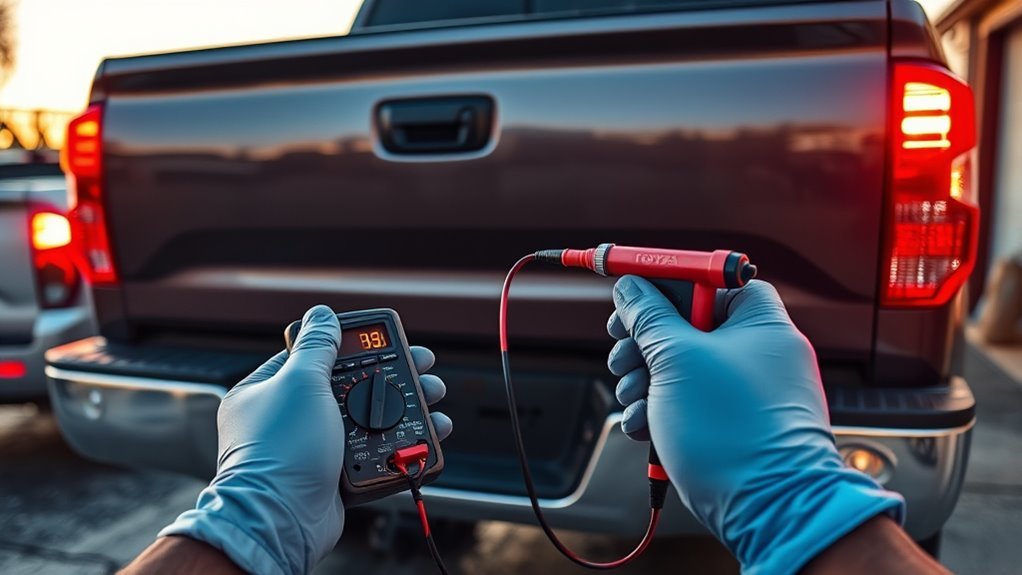
If the trailer lights work on another vehicle, focus your diagnostic on the Tundra’s harness and connectors: inspect the truck’s trailer plug for corrosion, guarantee the ground wire is secured to clean bare metal, and use a multimeter to probe each pin for the correct voltage and continuity while operating the lights. Start with a harness inspection: look for frayed wires, splice damage, or rodent chew marks along the harness path. Expose connectors and remove dielectric grease to reveal corrosion or bent terminals. For connector testing, backprobe each pin with the multimeter while an assistant cycles turn signals, brakes, and running lights; record voltages and compare to expected values. Check continuity between plug ground and chassis; a high resistance means a poor ground. Confirm the 30‑amp Tow Tail fuse is present, but don’t rely on fuses alone. If readings are inconsistent, swap in a known-good trailer connector or jumper harness to isolate a broken section and free yourself from guesswork.
Quick Home Fixes: Fuse Swap, Pigtail Repair, and Ground Jumper
With the harness and connector tested, move on to quick home fixes you can do with basic tools: inspect and swap the 30‑amp “trailer lights” fuse in the passenger fuse box, replace a damaged pigtail, and try a temporary ground jumper to the trailer frame. First, perform fuse identification: locate the passenger fuse box, confirm the 30‑amp labeled “trailer lights” or “towing,” and swap with an identical fuse or test it with a multimeter. Next, check connector maintenance: open the trailer connector, clean corrosion, bend back tight terminals, and guarantee the truck pin seats fully.
- Verify continuity of each circuit with a multimeter before swapping parts.
- Replace a cracked or burned pigtail with a weatherproof replacement and solder or crimp solid joints.
- Attach a jumper cable from the truck negative to a clean spot on the trailer frame to test ground integrity.
- Re-test lights; if they work, document the repair and secure connections to prevent recurrence.
When to Replace Parts or Call a Pro (Converters, Harnesses, Dealer)
When basic troubleshooting hasn’t fixed your trailer lights, you’ll need to decide whether to replace parts or call a pro based on symptoms, visible damage, and test results. Start with a harness inspection: look for corrosion, frays, or broken pins. If you see physical damage or intermittent shorts, replace the harness. If the connection looks clean but signals don’t pass, consider converter replacement—converters fail to relay brake/turn signals even with power present.
| Symptom | Likely Action | Priority |
|---|---|---|
| Visible corrosion/damage | Harness replacement | High |
| No signal despite power | Converter replacement | High |
| Multiple trailers affected | Professional diagnostics | Highest |
After parts swaps, retest with a known-good trailer. If issues persist or tests conflict, pursue dealer diagnostics—especially under warranty or for complex vehicle circuitry. Keep evaluating wiring integrity; document failures to demand proper service. Act decisively to regain freedom on the road.
Preventive Care: Protect Connectors, Secure Grounds, Routine Checks
Because connector corrosion and loose grounds cause most trailer-light failures, inspect and clean each plug and socket regularly to prevent problems before they start. You’ll adopt a disciplined connector maintenance routine: remove debris, use a brush or contact cleaner, dry thoroughly, then apply dielectric grease to seal against moisture. Check grounding techniques every time you service wiring; a solid ground prevents erratic lights and blown fuses.
Follow a concise checklist:
- Visually inspect all connectors and wiring for corrosion, cracking, or loosened pins.
- Tighten chassis ground bolts, scrape paint to bare metal, and add jumper ground wires where needed.
- Apply dielectric grease to pins and sockets after cleaning to block moisture and extend life.
- Stress-test high-flex areas and secure cables with clamps or conduit to prevent wear.
You’ll schedule routine checks before long trips and after exposure to salt or mud, reclaiming control over your trailer’s electrical reliability and reducing roadside failures.
Frequently Asked Questions
How Do I Fix My Trailer Lights Not Working?
Start by checking the 30A fuse, then test each connector pin with a multimeter. Tighten grounds, clean corrosion, and repair wiring issues or connector problems. You’ll regain control and freedom on the road.
Do Trucks Have Fuses for Trailer Lights?
Yes — you’ll find dedicated fuses for trailer wiring in many trucks; check the passenger-side fuse box. Inspect the 30-amp tow fuse, follow electrical troubleshooting steps, then replace or repair to regain freedom towing safely.
Conclusion
You’ve traced the fault from fuse to pin to ground and fixed it—often by coincidence when a loose ring terminal met a clean bolt. Keep testing: swap fuses, probe pins, and jumper the trailer ground to see instant change. If lights work on another vehicle, isolate or replace the Tundra pigtail or converter; if not, tighten or replace the ground. Do these quick checks regularly and the next roadside blip will feel like déjà vu you’ve already solved.