If you regularly idle your Toyota Tundra for long periods, the main concern is not one single “instant damage” event. The real risk is repeated low-load running that wastes fuel, adds engine hours, can speed up oil contamination, and may increase wear over time. Brief idling for a cold start, defogging, or safe visibility is normal. Long, unnecessary idling is the habit to reduce.
Quick Answer
Yes, excessive idling can shorten a Toyota Tundra’s engine life over time because it adds engine hours without adding miles, wastes fuel, and can accelerate oil contamination under frequent low-load use. A short warm-up is fine; repeated long idling should be treated as severe service.
Key Takeaways
- Brief idling is normal, but long idle sessions add engine hours that mileage-based service reminders may not fully reflect.
- Toyota classifies extensive idling as a special operating condition; under those conditions, engine oil should be changed at 5,000-mile intervals.
- Modern vehicles warm up better with gentle driving than by sitting parked for several minutes.
- Use remote start for comfort or defrosting when needed, but avoid stacking full idle cycles every day.
- Do not blame every Tundra engine symptom on idling; certain 2022–2024 conventional gas Tundras have had official engine-debris recalls.
At a Glance
| Time Required | 30 seconds for a normal cold start; longer only when needed for visibility, safety, or work use |
| Difficulty | Easy driver habit change |
| Tools Needed | Owner’s manual, maintenance records, optional OBD/fleet idle-time logger |
| Cost | Usually $0; possible cost for more frequent oil service if your Tundra idles often |
Does Idling Shorten a Toyota Tundra’s Engine Life?
Excessive idling can shorten engine life, but the effect is usually gradual. Your Tundra’s engine is designed to idle, so sitting at a traffic light or letting the oil stabilize after startup is not a problem. The wear concern begins when idling becomes a routine habit: long remote-start sessions, drive-through waits, job-site idling, winter warm-ups, or sitting parked with the A/C running.
The biggest issue is that idling adds engine hours without adding miles. That means the oil, fuel system, cooling system, spark plugs, and emission components are working even though your odometer barely changes. If you service the truck only by mileage and ignore heavy idle use, the oil may stay in service longer than the engine’s actual run time suggests.
The U.S. EPA says unnecessary idling wastes fuel, pollutes, and can cause excess engine wear. The Toyota Support guidance for synthetic-oil intervals also lists extensive idling as a special operating condition that requires 5,000-mile engine-oil replacement intervals, regardless of oil type.
The practical rule: a short idle is normal; repeated long idling should be treated like severe service, not normal commuting.
[Products Worth Considering]

These TPE door anti‑kick pads provide durable, water‑resistant protection for Toyota Tundra doors from 2022 to 2026. They fit precisely, are easy to install with double‑sided tape, and can be cleaned simply with water. The pads guard against scuffs and impacts while preserving the door's appearance and smooth operation.

The Pigenius windshield sunshade protects your Tundra's interior from heat and UV damage while keeping the cabin cool. Its accordion design folds easily for storage and quick setup, and the triple‑laminate construction provides durable, reflective protection. Ideal for long trips and daily commutes, it guards dashboards, seats, and steering wheels from sun‑related wear.

Upgrade your vehicle's interior with this universal console cover that combines comfort and organization. The high‑quality microfiber leather resists spills and scratches while the thick memory foam core provides ergonomic support, reducing elbow fatigue on long drives. Dual side pockets keep essentials within reach, and elastic straps with non‑slip dots ensure a secure, tool‑free installation for any sedan.
How Idling Affects a Tundra Engine
At idle, the engine runs at low rpm and low load. A healthy Tundra still has oil pressure at idle, but oil flow and crankcase ventilation are not the same as they are during steady driving. When the engine spends a lot of time idling, moisture and combustion byproducts can remain in the oil longer, especially during cold starts, short trips, and winter use.
Frequent idling can contribute to these problems:
- Oil contamination: cold-start enrichment and low-load operation can allow fuel and moisture to collect in the oil faster than normal.
- Deposits: low-load running may encourage carbon buildup in the intake, valves, injectors, spark plugs, and combustion chambers over time.
- Added engine hours: the truck is “working” even when the odometer is not moving.
- Fuel waste: idling consumes fuel while producing zero miles per gallon.
- Heat management stress: stationary idling reduces natural airflow through the radiator and engine bay, so the cooling fans and cooling system do more of the work.
- Emission-system load: unnecessary idling increases exhaust emissions and can contribute to soot and odor problems, especially if the engine is not fully warm.
Warning: Never idle a Tundra in a garage, enclosed carport, or poorly ventilated area. Carbon monoxide can build up quickly and can be fatal even when doors or windows are partly open.
When Is Idling Acceptable? Cold Starts, Accessories, and Safe Time Limits
Idling is acceptable when it serves a real purpose: stabilizing after startup, clearing the windshield, keeping occupants safe in severe weather, powering necessary accessories, or supporting job-site needs. The goal is not “never idle.” The goal is to avoid idling by habit when shutting the engine off would be safer, cleaner, and cheaper.
For a normal cold start, let the engine settle briefly, then drive gently. The EPA says modern vehicles do not need long winter warm-ups before driving. In cold weather, avoid hard throttle until the engine and transmission are warm, but do not sit parked for several minutes just to “protect” the engine.
| Situation | Recommended action |
|---|---|
| Normal cold start | Wait about 30 seconds, then drive gently. |
| Windshield fog, ice, or safety issue | Idle only as long as needed for clear visibility. |
| Short stop | If you will move again almost immediately, idling is reasonable. |
| Long parked wait | Shut the engine off when it is safe to do so. |
| A/C, heat, charging, or work accessories | Use only what you need and watch temperature or warning lights. |
| Overheating, low oil pressure, fuel smell, or warning light | Stop idling and have the truck inspected. |
Note: Some states, counties, and cities restrict unnecessary idling. The U.S. Department of Energy’s Alternative Fuels Data Center notes that idling laws and ordinances exist in many areas, so check local rules if you idle for work, delivery, school pickup, or job-site use.
Maintenance for Frequently Idling Tundras: Oil, Filters, Coolant, and Monitoring
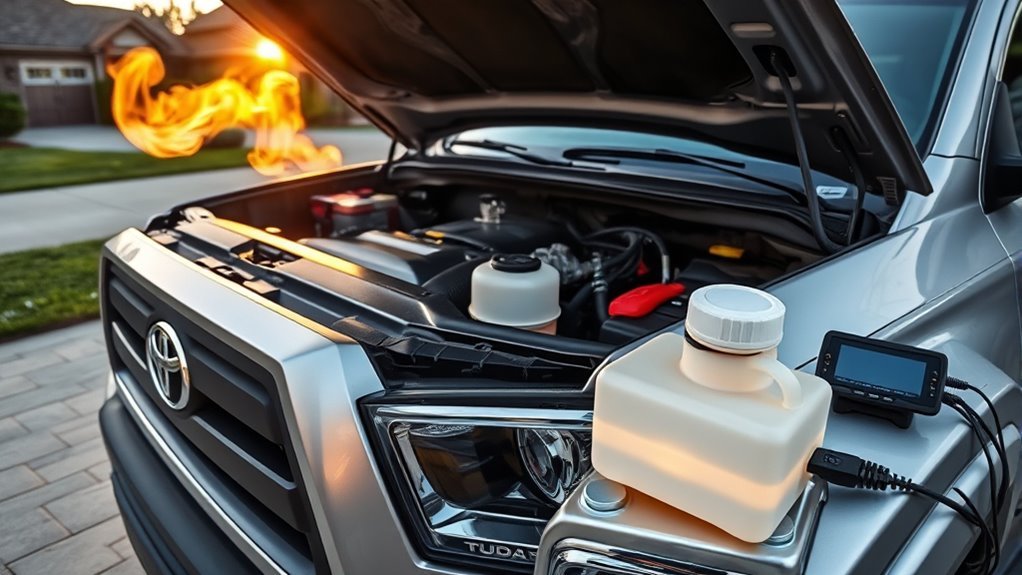
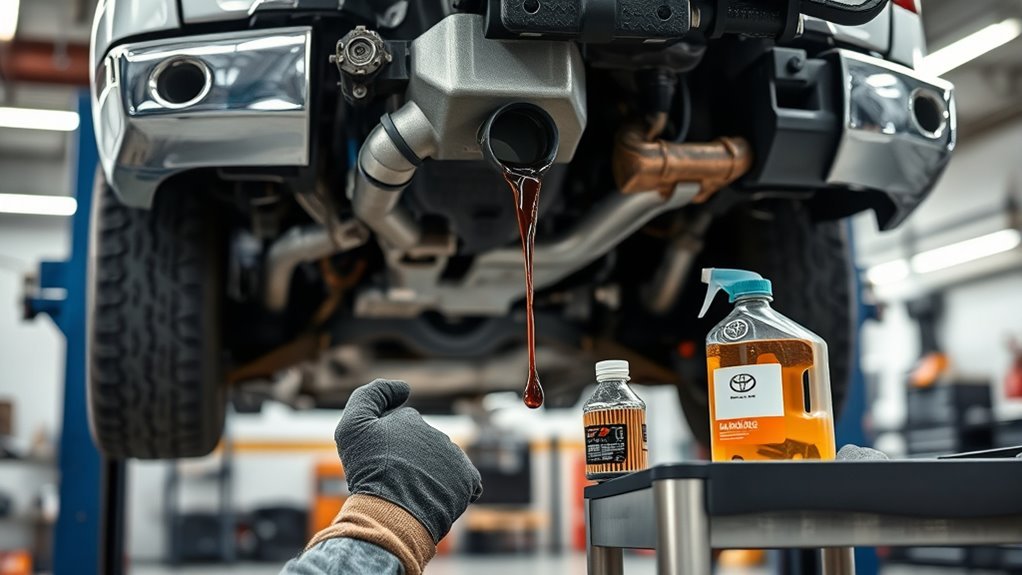
If your Tundra idles often, maintain it as a severe-service truck. Toyota’s guidance for special operating conditions says engine oil should be replaced at 5,000-mile intervals when the vehicle is used for extensive idling. This is especially important for trucks used for delivery, security, towing support, job sites, school pickup lines, or regular winter remote-start warm-ups.
Focus on the basics before adding aftermarket parts:
- Engine oil and filter: use the oil viscosity and specification listed for your model year, and use a quality filter.
- Service records: write down oil-change dates, mileage, and heavy idle use so you can prove maintenance history.
- Cooling system: check coolant level, leaks, radiator blockage, fan operation, and temperature warnings.
- Air filter: inspect more often if the truck idles or works in dust, dirt, construction areas, or wildfire-smoke conditions.
- Spark plugs and fuel system: address rough idle, misfires, poor fuel economy, or a fuel smell promptly.
- Battery and charging system: repeated accessory use at idle can add electrical load, especially in extreme heat or cold.
Pro Tip: If your Tundra spends hours idling every week, track idle time with a fleet system, OBD logger, or maintenance notes. Service by real engine use, not just by odometer mileage.
[Products Worth Considering]

Stay warm and keep control with the KVAEY fluffy steering wheel cover. Its high‑density plush provides a soft, comfortable grip while the anti‑slip rubber liner ensures safety during winter drives. Easy to install and fits 15‑inch wheels on cars, trucks, and SUVs, adding a cozy, stylish touch to any interior.

Upgrade your Camry's interior with a sleek magnetic phone mount designed for the 12.3‑inch touch screen. It offers one‑hand clip‑on operation, 360° rotation, and strong MagSafe compatibility, while metal rings extend support to other smartphones. Durable plastic construction ensures reliable performance on any road.

And Vehicle Specific
How to Reduce Idling: Safe Warm-Up, Remote Start, and Cooling Tips
Remote start is useful, but it can also turn into hidden idle time. Toyota says Toyota Remote Connect runs for up to 10 minutes per Remote Start session, with a maximum of two sessions before the vehicle must be manually started. That means two full remote-start cycles can add 20 minutes of idle time before you even drive.
Use remote start when it solves a real comfort or safety problem, such as defrosting the glass or cooling a dangerously hot cabin. Avoid using it as a daily 10- to 20-minute warm-up routine when the truck could safely be driven after a brief start-up period.
To cut idle time without abusing the engine:
- Start the engine, buckle up, set mirrors, and drive gently after the idle stabilizes.
- Scrape snow and ice manually instead of relying only on long idling.
- Use seat heaters, steering-wheel heat, and climate settings efficiently if equipped.
- Park in shade during hot weather to reduce A/C demand at startup.
- Shut the engine off during long waits when it is safe and legal.
- For work trucks, consider approved auxiliary power solutions instead of engine idling.
[Products Worth Considering]

🌿 Remote Control from 164 FT - Ditch the back-and-forth! Our RF remote (battery included) controls multiple timers up to 164ft/50m. Customize watering zones from your couch—schedule lawn irrigation or balcony blooms with one click. Ultimate convenience for complex gardens!

PACKAGE INCLUDE: This set includes two 3", two 4", two 5", a 6", a 7" and a 8" pillar candles(each 3" diameter), two 10-key remote control, a user manual.
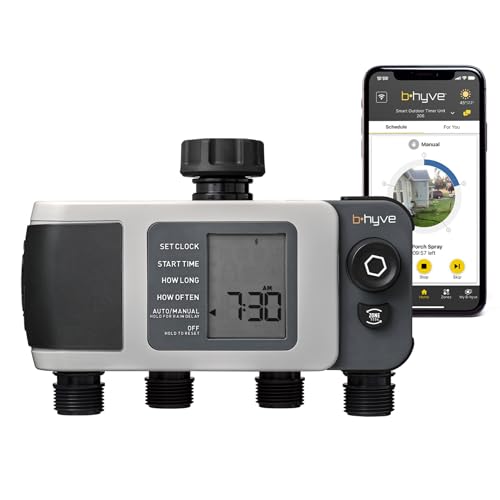
Automated Smart Watering: The Orbit 4-Port Smart Hose Watering Timer delivers effortless auto watering through an intelligent watering timer system
Model-Year, Hybrid, and Recall Notes Tundra Owners Should Know
Not every Tundra has the same engine or idle behavior. Older 5.7L V8 Tundras, newer twin-turbo V6 models, and i-FORCE MAX hybrid models may respond differently to cold starts, accessory load, and idle time. Always use the maintenance schedule and oil specification for your exact year, engine, and market.
Hybrid i-FORCE MAX models can shut the gas engine off and restart it depending on battery state, cabin climate demand, and driving conditions. That does not mean idle-related maintenance can be ignored. If the gas engine runs often while parked to support heat, A/C, or battery charging, track that use and follow Toyota’s severe-service guidance.
Also, do not assume every engine noise or drivability issue is caused by idling. Toyota announced a safety recall involving certain 2022–2024 Toyota Tundra conventional gas models because machining debris may not have been cleared from the engine during production. Toyota says affected vehicles may experience engine knocking, rough running, no-start, or loss of motive power. Check your VIN through Toyota’s recall lookup or NHTSA’s recall lookup if your truck falls in that range.
Warning Signs After Heavy Idling
Occasional idle time should not make a healthy Tundra act up. If you notice any of the symptoms below, stop treating it as a normal idle issue and schedule service:
- oil-pressure warning light or unusually low oil pressure at hot idle;
- coolant temperature rising while parked;
- rough idle, shaking, misfire, or check-engine light;
- fuel smell in the oil or oil level rising between changes;
- burning smell, heavy exhaust smell, or visible smoke;
- knocking, ticking, or sudden loss of power;
- remote start shutting off early with warning messages.
These symptoms can point to maintenance issues, cooling problems, ignition faults, fuel-system faults, software updates, or recalls. A scan tool and a qualified Toyota technician can separate idle-related wear from unrelated mechanical problems.
Frequently Asked Questions
Does idling increase engine wear in a Toyota Tundra?
Yes, excessive idling can increase wear over time because it adds engine hours, wastes fuel, and can speed up oil contamination under frequent low-load use. Brief idling is normal; repeated long idle sessions should be treated as severe service.
How long should I idle my Tundra before driving in cold weather?
For most cold starts, about 30 seconds is enough for the idle to stabilize. Then drive gently until the engine and transmission warm up. Idle longer only when needed to clear fog, ice, or snow for safe visibility.
How often should I change oil if my Tundra idles a lot?
Toyota lists extensive idling as a special operating condition. Under that type of use, Toyota support guidance says engine oil should be replaced at 5,000-mile intervals, regardless of oil type. Your exact model’s Warranty & Maintenance Guide still controls.
Can idling damage a Tundra transmission?
Normal idling in Park should not damage a healthy transmission. Problems are more likely when the truck idles for long periods under heavy heat, towing support, accessory load, or low fluid/poor maintenance conditions. If the transmission overheats, shifts harshly, or displays a warning, have it inspected.
Is remote start bad for a Toyota Tundra?
Remote start is not bad when used reasonably. The problem is using it for long warm-ups every day. Toyota Remote Connect can run up to 10 minutes per session, and two full sessions can add 20 minutes of idle time before you drive.
What Tundra problems should I not blame on idling?
Do not blame knocking, rough running, no-start, sudden power loss, or repeated warning lights only on idling. Some 2022–2024 conventional gas Tundras have had official engine-debris recalls, so check your VIN with Toyota or NHTSA if your truck is in that model-year range.
Conclusion
You are not hurting your Toyota Tundra by letting it idle briefly after startup or while clearing the windshield. The problem is repeated, unnecessary long idling. It adds engine hours, burns fuel, can speed oil contamination, and may move your truck into Toyota’s special operating conditions for maintenance. Keep warm-ups short, drive gently, use remote start only when it helps, and follow the 5,000-mile oil-service guidance if your Tundra idles often. If warning lights, overheating, rough idle, or knocking appear, stop guessing and get the truck inspected.
Sources
- Toyota Support: Oil change intervals using synthetic oil — backs up the 5,000-mile oil-change interval for special operating conditions such as extensive idling.
- U.S. EPA: What You Can Do to Reduce Pollution from Vehicles and Engines — backs up the guidance that unnecessary idling wastes fuel, pollutes, and can cause excess engine wear.
- U.S. Department of Energy Alternative Fuels Data Center: Idle Reduction Benefits and Considerations — backs up fuel, air-quality, engine-wear, and idling-law context.
- Argonne National Laboratory: Idle Reduction for Personal Vehicles — backs up personal-vehicle idle-reduction and fuel-waste guidance.
- Toyota Support: Toyota Remote Connect run time — backs up the 10-minute remote-start session and 20-minute maximum run-time guidance.
- Toyota USA Newsroom: Toyota Tundra, Lexus GX, and Lexus LX recall — backs up the 2022–2024 Tundra conventional gas engine-debris recall context.