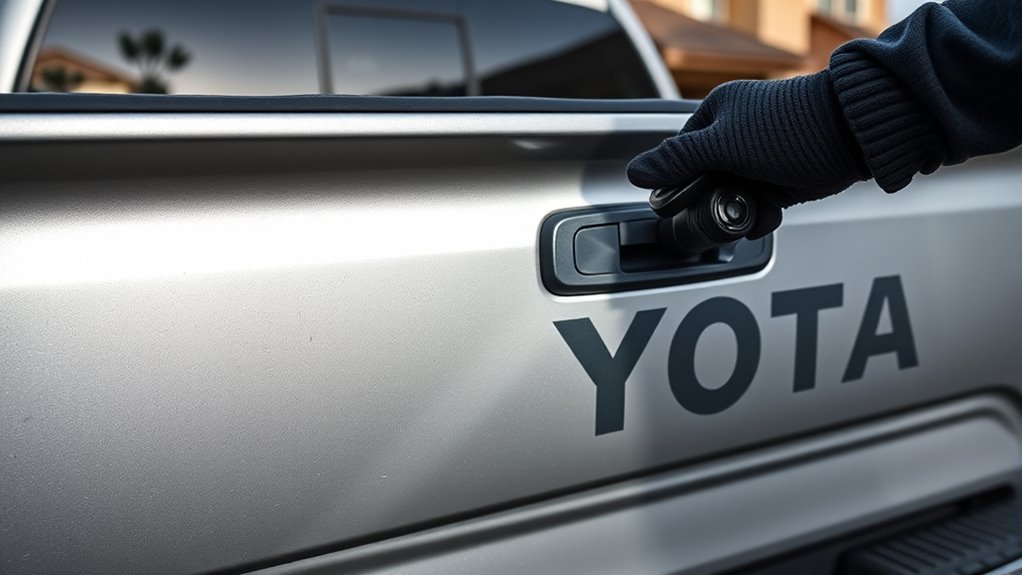
If your Tundra tailgate won’t open, start by inspecting the handle, cables and visible latches for damage or disconnection, then remove the inner panel to access linkages. Reconnect bent rods or dislodged clips, clean grit from latch grooves, lightly lubricate moving parts, and manually cycle the handle to confirm engagement. Replace a worn latch or handle if cleaning and reconnection don’t help. Follow the step‑by‑step checks below to identify cable versus latch failure and proceed with repairs.
Immediate Steps to Open a Tundra Tailgate Now
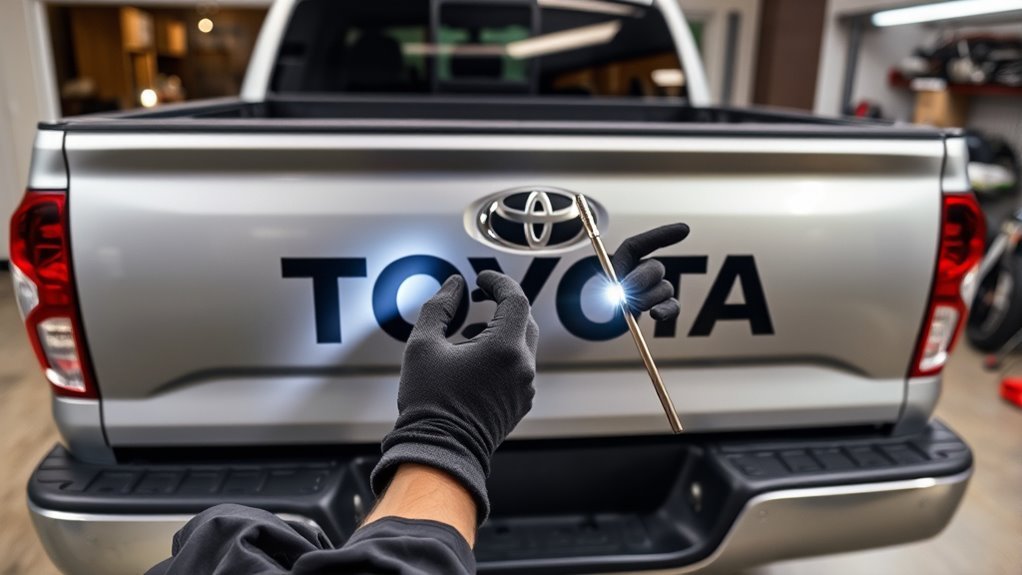
Start by visually inspecting the tailgate handle and side latches for visible damage, disconnections, or debris that could be blocking movement. You’ll follow concise tailgate troubleshooting tips: look for cracked plastic, bent linkages, or foreign material in latch recesses. Next, remove the back panel to access the internal mechanism; keep fasteners organized and note clip locations. With the panel off, perform a methodical visual check for dislodged clips or disconnected rods that match common tailgate issues. Reconnect any loose components, seating clips until they click and aligning rods with their levers. Cycle the handle manually while observing latch engagement; this confirms restored movement before reassembly. If the mechanism still resists after securing parts, don’t force it—seek professional assistance to avoid further damage. These steps free you from immediate blockage quickly and safely, giving you control and a clear path to full repair.
Quick Diagnostic: Cable/Handle vs. Latch Problem
Start by checking the external handle and cable for visible damage or loose connections; a disconnected cable usually isolates the problem to the handle assembly. If the handle and cable test as intact and properly seated, remove the inner tailgate panel and inspect the latch for wear or binding. Clean any debris from the latch grooves and test operation to confirm whether the fault is in the cable/handle or the latch mechanism.
Handle And Cable Check
When diagnosing a stuck Tundra tailgate, first visually inspect the handle and cable for breaks, looseness, or disconnection, since these are the simplest components to verify and often reveal the fault. You’ll begin with handle maintenance: check mounting bolts, pivot integrity, and whether the handle returns smoothly. If it feels loose or unresponsive, trace the cable to its terminals and verify secure connections. Apply cable adjustment if there’s slack or uneven tension; small tightening can restore operation. Operate the handle repeatedly while watching the cable to spot intermittent binding or fraying. Avoid assuming latch failure until you’ve ruled out handle and cable issues. Document findings, then proceed to latch inspection only when handle and cable tests are conclusive.
Latch And Debris Inspection
Having confirmed the handle and cable are intact, move on to inspecting both tailgate latches for disconnection, damage, or debris buildup that can mimic a cable fault. You’ll visually verify connections, look for bent or broken components, and remove the interior panel to inspect internal linkages. Use latch maintenance tips: lubricate pivot points after cleaning, tighten fasteners, and replace worn parts. Apply debris removal techniques: compressed air, brushes, and solvent for grease.
| Inspection Step | Action |
|---|---|
| Left latch check | Visual, actuate manually |
| Right latch check | Visual, actuate manually |
| Debris clearing | Compressed air, brush |
| Internal inspection | Remove panel, inspect linkages |
| Functional test | Reassemble, operate tailgate |
Test operation to confirm secure, liberated function.
How to Remove a Tundra Tailgate Inner Panel Safely
Locate and remove any visible screws or clips securing the Tundra’s tailgate inner panel, then use a trim removal tool to pry the panel off gently while protecting clips and the panel surface. For controlled tailgate panel removal, work methodically from one corner, releasing clips sequentially to avoid stress fractures. Feel for any hidden fasteners along edges and within recesses; miss one and the panel won’t come free. Once loosened, support the panel with one hand and expose wiring. Prioritize electrical connector disconnection before pulling the panel away—depress locking tabs and separate connectors cleanly to prevent bent pins. Keep a shallow tray for screws, clips, and fasteners so reassembly is straightforward and you’re not bound by missing parts. Inspect clip condition as you remove them; replace any brittle components to preserve future removability. When ready to reinstall, reverse the sequence, reconnecting electrical plugs and seating clips until the panel sits flush and secure.
Inspect the Handle Linkage and Side Latches
Now that the inner panel is off, inspect the handle linkage for any disconnections or bent rods that would stop the tailgate from opening. Check both side latches for debris, binding, or damage and clear or repair as needed. Finally, reconnect any dislodged clips and verify all latches operate smoothly before refitting the panel.
Handle Linkage Inspection
Start by removing the tailgate’s inner back panel so you can access the handle linkage and side latches; you’ll need basic trim tools and a flashlight for a thorough visual check. Inspect the handle linkage for disconnections, bent rods, worn clips, or corrosion—these faults are primary targets in linkage troubleshooting. Trace each rod from the handle to the latch, moving the handle to observe motion; any slack or binding indicates adjustment or replacement. Visually check side latches for debris and misalignment that impede release, but save detailed side latch tear-down for the next section. Reconnect or replace damaged clips and secure fasteners so components won’t loosen again. Reinstall the panel and test the tailgate to confirm proper operation and restored freedom of use.
Side Latch Examination
While you have the inner panel off, inspect the side latches and handle linkage closely for binding, misalignment, and debris that can prevent the tailgate from releasing. You’ll check that the linkage rods and clips are intact and that the latch assembly moves freely when the handle is actuated. Look for grit or corrosion in latch grooves and clear it with a brush and solvent; debris often causes seizure. Assess latch alignment visually—misaligned latches will not engage or release consistently. Apply light latch lubrication to pivot points after cleaning, avoiding excess that attracts dirt. Repeatedly cycle the mechanism by hand to confirm smooth travel and dependable engagement. Verify operation under realistic conditions before reassembling the panel.
Reconnect Dislodged Clips
Begin by visually tracing the handle linkage from the interior handle to each side latch, looking for any dislodged retaining clips or separated rods that would interrupt movement; secure each clip fully onto its pin or groove, confirm both latches are connected and free of debris, and manually cycle the handle to verify the linkage transmits motion smoothly before reassembly. You’ll inspect clip types (C‑clips, spring clips, plastic retainers), note wear, and perform necessary linkage adjustments to restore freedom of movement. Reattach any separated rods, clear debris from latch pockets, and replace damaged clips. After securing connections, cycle the handle to guarantee both latches actuate simultaneously. Reassemble panels and test the tailgate under load to confirm liberation from the fault.
| C‑clips | Spring clips | Plastic retainers |
|---|---|---|
| Inspect | Reattach | Replace if brittle |
Clean Latch Grooves and Remove Debris
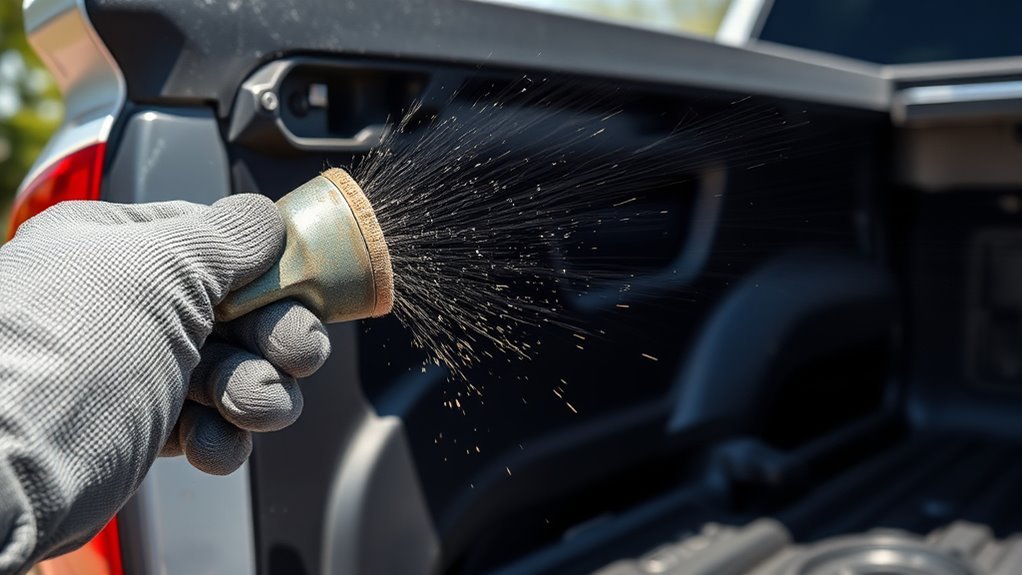
If your Tundra’s tailgate is sticking or misaligning, clean the latch grooves to remove dirt and grit that impede movement; use a soft brush or compressed air to dislodge debris, then inspect the grooves for wear or damage before proceeding. You’ll adopt a routine latch maintenance habit: gather cleaning tools (soft brush, compressed air, pick, and cloth), work methodically, and free the mechanism so the tailgate serves you, not the grime.
- Remove large debris with a soft brush, then blow remaining particles out with compressed air.
- Visually inspect grooves and mating surfaces for wear, deformation, or corrosion.
- Use a small pick to extract lodged grit, avoiding force that could bend parts.
- After cleaning, apply a light lubricant to prevent future adhesion and guarantee smooth operation.
Maintain this schedule periodically. You’re reclaiming control: simple, disciplined steps reduce malfunctions and extend reliable performance.
How to Reconnect Clips and Rods (Step‑by‑Step)
1. Remove the tailgate back panel carefully with a screwdriver or pry tool, keeping clips intact. You’re doing tailgate maintenance to reclaim control, so work deliberately and avoid gouging plastic.
Inspect the handle and latch assembly for dislodged clips or rods. Note each part’s orientation before disconnection; freedom comes from understanding the mechanism. Reconnect a displaced rod by aligning it with its slot and seating the end into the lever. Push each plastic clip into its mating groove until you hear or feel a firm click. Use needle-nose pliers for stubborn clips, but avoid excessive force that could break retainers.
After reconnecting components, manually cycle the latch inside the open panel to confirm smooth movement. If binding persists, recheck alignment and clip engagement. Once satisfied, reinstall the back panel, ensuring all fasteners and clips reclaim their original positions. These DIY repairs restore function and give you practical independence over vehicle upkeep.
Test the Latch and Handle After Repairs
With the tailgate reassembled, pull the handle fully to engage the latch and observe its motion—you’re checking for smooth travel, consistent engagement, and prompt release without resistance. Use deliberate latch engagement techniques: pull and release deliberately while watching the latch. If it binds, stop and recheck linkages and debris. You’re conducting handle operation troubleshooting in a controlled sequence to confirm liberation from failure modes.
- Pull the handle fully, then manually push the latch to verify smooth engagement and release.
- Listen for atypical noises during operation; grinding or clicking signals internal issues.
- Inspect and confirm all clips and connectors are seated and locked to prevent dislodgment.
- Clear any debris or obstructions around the latch that could impede movement.
Perform multiple cycles until operation is repeatable and silent. If motion is inconsistent after adjustments, revisit connections and clean the mechanism before declaring the repair complete.
When to Replace Parts and Common Failing Components
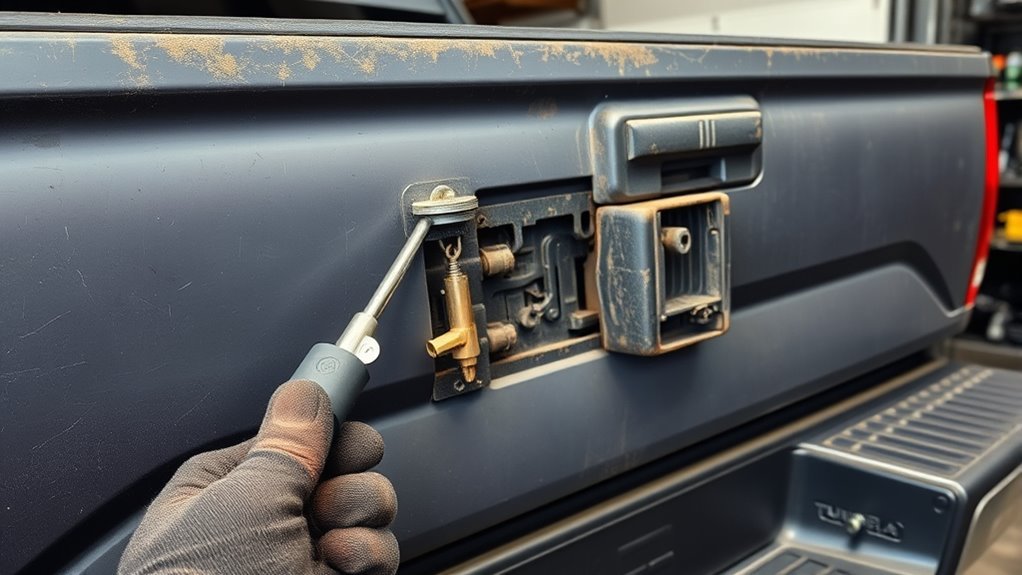
When should you replace parts versus continue adjusting or cleaning? You inspect methodically: if debris clears but the latch still fails to engage, replace the latch assembly. Use tailgate maintenance tips to document wear—corrosion, bent components, stripped teeth—and compare against functional tolerances. If internal linkage shows disconnection or broken springs on inspection, swapping the entire latch mechanism is justified.
Handle play or unresponsiveness signals handle failure; a loose pivot or fractured plastic means replacement rather than repeated adjustment. Clean and lubricate first; if repeat failures occur within short intervals, proceed to part exchange. Follow a latch replacement guide for correct part selection and torque specs to restore reliable operation.
Schedule routine checks to detect progressive wear and avoid cascade failures. You’ll conserve effort and maintain autonomy by replacing clearly compromised components instead of chasing intermittent fixes that rob you of control.
When to Call a Pro and What to Expect
What next if you’ve inspected the tailgate and adjustments, cleaning, and basic part swaps haven’t fixed the problem? You call a pro. For true tailgate troubleshooting, a trained technician performs a professional assessment that pinpoints mechanical failures, wiring faults, or latch deformation you can’t see. Expect systematic diagnostics, access to OEM parts, and calibrated tools that restore reliable operation.
- They’ll inspect latches, cables, and actuators, and test electrical circuits under load.
- They’ll report findings, recommend repair vs. replacement, and itemize labor and parts.
- Costs vary by model and failure mode; get a written estimate and timeline.
- Ask about warranties, guarantees, and parts provenance to protect future use.
You’ll leave empowered: the pro converts uncertainty into clear options. Treat this step as tactical delegation—you’re reallocating effort to specialists so you regain freedom from recurring tailgate failures.
Frequently Asked Questions
Will a Tailgate Lockout (Valet) Prevent Opening on a Tundra?
Yes — you can enable the lockout feature to prevent unauthorized access; it disables the tailgate mechanism electronically, so someone without your key or override can’t open the tailgate, preserving control and protecting your cargo.
Can Cold Weather Freeze the Latch Solid?
Like ice locking a river, yes — cold weather can freeze the latch solid. You’ll perform latch maintenance: warm components, de-ice with safe thawing, lubricate per specs, and test operation to reclaim your tailgate’s freedom.
Is There a Fuse or Electrical Issue Affecting Power Tailgates?
Yes, you should check a fuse and power supply; you’ll inspect the wiring harness for shorts, corrosion, or loose connectors, test voltage at the motor, and replace faulty components to regain reliable, autonomous tailgate operation.
Will Using Wd‑40 Damage Latch Components or Plastic Clips?
Yes — but cautiously. You’ll avoid damage by limiting WD‑40 use; it can weaken some plastic clips and strip protective grease. For latch maintenance, prefer silicone or white lithium grease as lubricant alternatives to preserve components.
Can a Damaged Tailgate Still Be Driven Safely Temporarily?
Yes — you can drive briefly with a damaged tailgate if you secure it with proper temporary repairs (straps, bolts) and verify tailgate safety; keep speeds low, avoid heavy loads, and head straight to a proper fix immediately.
Conclusion
So you fixed the stubborn tailgate yourself — congratulations, you’ve officially out‑smarted a hunk of metal that refuses to cooperate unless you pry, clean, and reclip it. That’s irony: a truck built for hard work halted by dirt and a slipped rod. Keep testing the handle, lubricate the latch, and watch for worn clips. If it still balks, swap the failing part or call a tech; don’t let pride turn into a ruined Saturday.