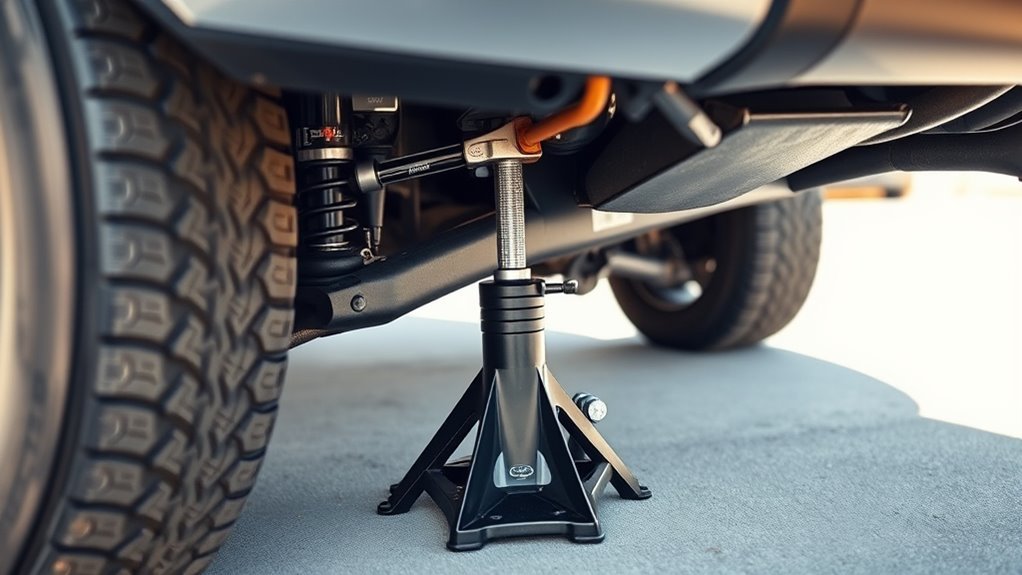
You’ll find Toyota Tundra jacking points at stamped notches near each wheel and a center frame indentation; feel for reinforced, flat metal and avoid thin stamped panels. Park level, set the brake, remove the rear pouch, use the stock jack with traction pads, and seat the saddle under the confirmed notch. Lift slowly, stop when the wheel clears, and support the truck with rated jack stands. Continue for procedures on alignment, maintenance, and troubleshooting.
How to Prepare Your Tundra and Use the Stock Jack
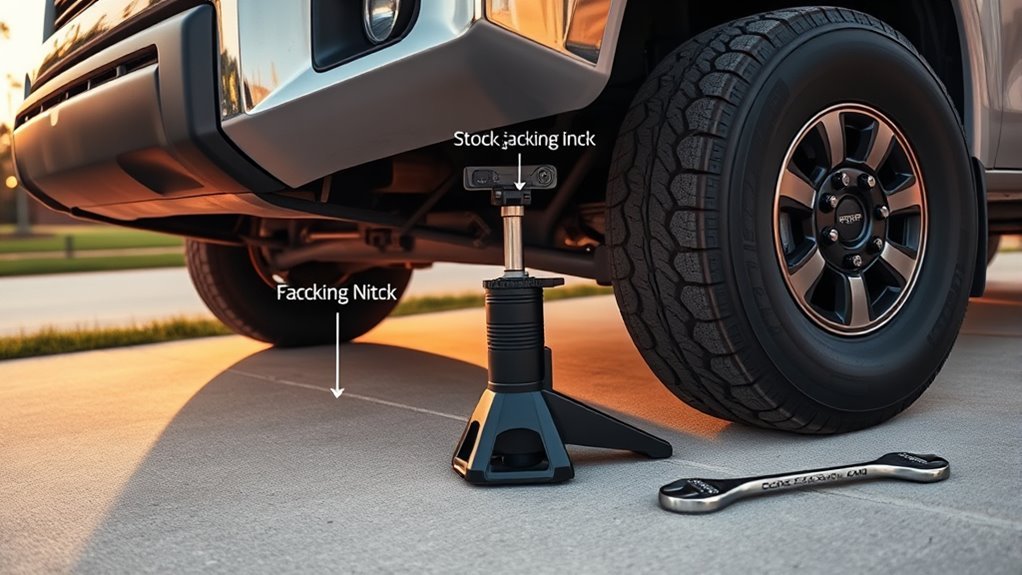
Park your Tundra on a flat, stable surface, engage the parking brake, and confirm the vehicle won’t roll before you start. You’ll remove the 3D branded cover at the rear, access the inner pouch, and extract the stock jack and tools. For jack safety and vehicle stability, use the provided traction pads under the jack contact area to prevent slippage and distribute load. Position the jack beneath the designated frame jacking zones shown in the owner’s manual; align it squarely and seat it fully before applying force. Crank steadily, watching for tilt or shift; stop immediately if the truck moves. Once the suspension clears the ground, verify the jack is securely engaged and the truck remains stable before you work underneath. Keep hands clear of pinch points and maintain a controlled, deliberate cadence while lifting or lowering. These steps minimize risk, preserve your freedom to repair, and enforce disciplined, reliable jack safety.
Locate Toyota Tundra Factory Jacking Points
With the truck secured and the stock jack ready, look under the frame near each wheel to find the factory jacking points. You’ll see small notches or indentations on the frame near the front and rear wheels; these are the designated jacking point locations. Use them to preserve vehicle stability and avoid frame damage. Always work on a flat, solid surface and consult the owner’s manual for load limits and jack specs.
| Location | Marking | Purpose |
|---|---|---|
| Front Left | Frame notch | Lifting front corner |
| Front Right | Frame notch | Lifting front corner |
| Rear Left | Frame notch | Lifting rear corner |
| Rear Right | Frame notch | Lifting rear corner |
| Center (if equipped) | Indentation | Lifting midpoint |
You’ll act decisively and free yourself from uncertainty by following these precise cues. The jacking point locations are your guide to safe, controlled lifts that maintain vehicle stability.
Confirm a Safe Jacking Point by Sight and Touch
Before lifting, confirm the jacking point by sight and touch: visually locate the reinforced frame sections or manufacturer-marked indentations and run your hand along the frame to feel for flat, solid metal—avoid plastic panels, thin sheetmetal, rusted areas, or anything with debris or deformation that could slip or collapse under load. Next, perform a focused safety inspections routine: inspect the undercarriage for manufacturer markings, weld seams, corrosion, dents, or loose components that undermine frame integrity. Use touch to verify solidity; a firm, flat surface transmits load cleanly, while flex, roughness, or flaking metal signals risk. Remove loose debris and clean small areas to improve contact and confirm markings. If you find rust, deformation, or uncertainty about the point’s load path, stop and consult the owner’s manual or a professional. By combining visual cues, tactile checks, and verified markings you liberate yourself from guesswork and secure a reliable, structurally sound jacking location.
Use the Stock Jack: Step-by-Step Lifting Procedure
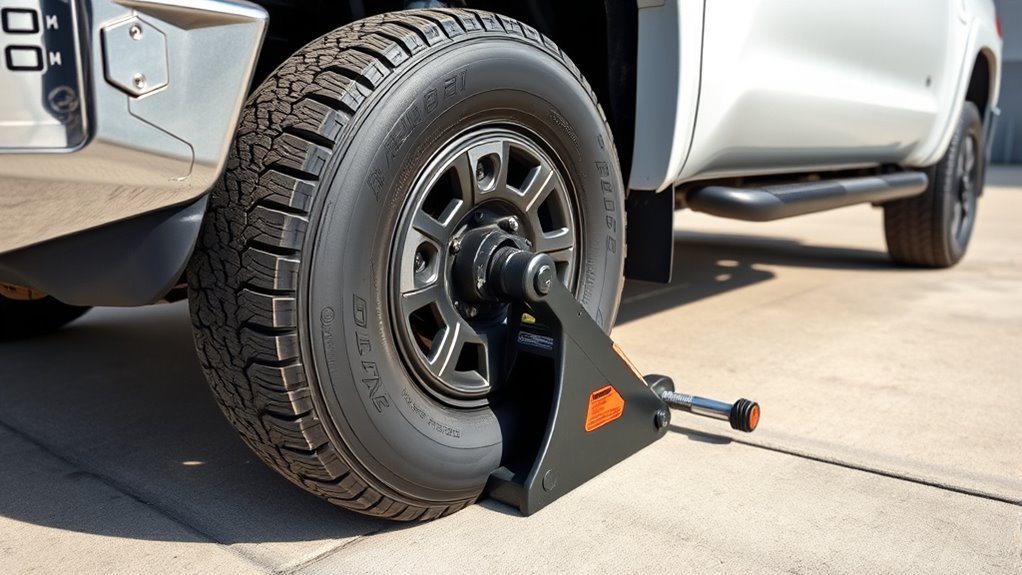
Having confirmed a solid jacking point by sight and touch, retrieve the stock jack and tools from the rear compartment: remove the 3D-branded cover, unhook the inner pouch with the elastic hook, and loosen the retaining mechanism to extract the jack assembly. Position the jack saddle directly under the confirmed lift point, align squarely, and attach any traction pads via snap clips for added grip. Hand-spin the jack handle to engage the screw; use the provided tool for consistent torque and faster rise. Lift steadily, watching for lateral movement and listening for unusual noises. Stop once the wheel clears the ground by several inches. For descent, reverse the procedure: lower slowly, maintaining hand control to avoid sudden drops. After use, realign the jack to its stowed orientation, secure the retaining mechanism, rehook the inner pouch, and replace the 3D cover. Follow jack operation tips and safety precautions at all times to preserve freedom of movement and prevent avoidable harm.
Use Jack Stands and Traction Pads for Stable Lifting
When you raise your Tundra, don’t rely on the jack alone—set properly rated jack stands under the designated chassis points and place traction pads under the tires to spread load and prevent slipping; lift until the wheels clear the ground, then lower the truck onto the stands so they carry the full weight. You’ll verify jack stand safety by selecting stands rated above your truck’s axle load, seating them on flat, stable ground, and engaging their locking mechanisms. Position stands at manufacturer-specified jacking points to avoid frame damage and guarantee vertical load transfer. Use traction pad placement strategically: center pads under each tire contact patch, align pads to prevent lateral shift, and verify pad integrity before use. Lift with the jack only to clear the wheels, then transfer weight to the stands—never work under a vehicle supported solely by a jack. Inspect jack and stands regularly for wear, corrosion, and correct operation to maintain reliable support and preserve your autonomy while working safely.
Common Mistakes That Damage the Frame or Jacking Points
Even with proper stands and traction pads in place, a few common mistakes can still damage your Tundra’s frame or the jacking points. You must avoid improper jacking—placing the jack on nonreinforced panels invites frame damage and costly repairs. Over-extending a jack beyond rated height creates jack instability and acute safety risks; it’s a shortcut that compromises control. Skipping traction pads on slick surfaces causes traction failure, slippage, and concentrated loads that deform welds or pinch seams. Misaligned contact from poor jack alignment increases bending loads on the jack and vehicle, often leading to jack failure or twisted brackets. Ignoring manufacturer lifting guidelines risks suspension damage through incorrect lift points or uneven lifts, affecting alignment and ride geometry. Act deliberately: select designated slots, confirm stable footing, verify rated jack height, and use pads and stands per specs. That disciplined approach minimizes damage and preserves your autonomy over vehicle maintenance without trading safety for speed.
Troubleshooting: Jack Won’t Lift, Won’t Seat, or Tools Won’t Store
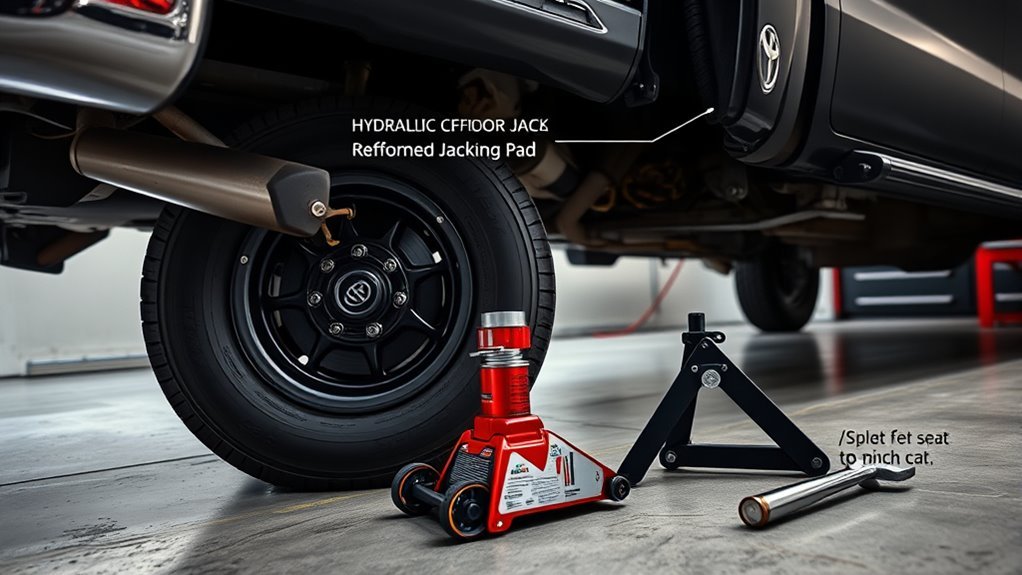
If the jack won’t lift, won’t seat, or the tools won’t store, start by confirming correct engagement and alignment: verify the jack head is fully seated in the reinforced lift slot, the hand-spinning mechanism and height-adjustment sleeves operate freely, and no debris or bent metal is preventing contact. You’ll then isolate common causes: improper seating, worn or bent components, and tool misalignment in the storage tray. For jack issues, inspect the lifting saddle, height‑adjustment sleeves, and protective cap; rotate the hand crank to detect binding and use a proper lever if needed. For a jack that won’t seat, clear obstructions, realign the vehicle or jack, and ascertain the elastic hook and reassembly parts are positioned correctly. If tools won’t store, return each tool to its designated slot, test the opening mechanism, and remove foreign objects. Address damage or deformation immediately—don’t force parts. These steps free you from avoidable failure and restore safe, reliable operation.
Caring for the Jack and Onboard Tools After Use
After you finish using the jack, clean off dirt and debris, inspect the lifting saddle, sleeves, and protective cap for wear or damage, and return the jack to its inner pouch while securing each tool in its assigned slot so components stay protected and ready. You’ll perform jack maintenance by removing grime, wiping moving surfaces, and confirming the protective cap is seated behind the crossmember to block moisture and contaminants. Check for bent or stripped threads, fractured welds, or worn teeth that reduce lifting reliability. Reassemble only if all parts pass inspection; tag and remove damaged items from service. Organize tools with discipline: seat sockets, handles, traction pads, elastic hook, and snap clips into their designated slots to preserve function and enable rapid deployment. Periodically test elastic hooks and snap clips for integrity and replace fatigued items. This regimen keeps your onboard kit functional, reduces failure points during roadside actions, and preserves your autonomy when you need a dependable jack and organized tools.
Frequently Asked Questions
Can I Use a Bottle Jack Instead of the Stock Jack on My Tundra?
Yes — you can use a bottle jack if it meets bottle jack safety standards and jack compatibility with Tundra jacking points; you’ll guarantee rated capacity, stable base, correct pad/adaptor, and solid ground so you’re empowered and protected.
Are Jacking Points Different for TRD or Lifted Tundra Models?
Yes — jacking points can differ on TRD suspension and lifted height trucks; you’ll need to verify reinforced frame spots, aftermarket crossmembers, or extended pinch weld adapters, and adjust jack placement and stands for safe, liberated work.
Can Snow/Ice Affect Where It’s Safe to Jack My Truck?
Yes — snow and ice can compromise jacking stability; you’ll avoid slipping by clearing surface conditions, using wide, stable jack pads or board supports, and anchoring with wheel chocks so you’re free to work without being trapped by hazards.
Is It Safe to Jack the Truck With a Full Fuel Tank or Bed Load?
Yes — you can jack it with a full tank or bed load, but fuel weight impact and load stability concerns matter: redistribute or remove loose cargo, secure weight, use rated jack stands, and avoid side loads to prevent shifting or collapse.
Do Aftermarket Bumpers Change Recommended Front Jacking Points?
Yes — aftermarket bumpers can change recommended front jacking points. Powerfully precise positioning prevents prosthesis-like punctures; assess aftermarket bumper impact, verify frame contact, and follow safe jacking techniques to liberate yourself safely and confidently.
Conclusion
You’ll now be able to lift your Tundra safely using the factory jack and correct jacking points. For example, a service tech avoided frame damage by feeling for the reinforced pinch weld and using a traction pad before raising the rear, then supported the truck with rated stands on the axle. Always confirm the point by sight and touch, use the stock jack as instructed, deploy stands, and stow tools; this prevents damage and injury.