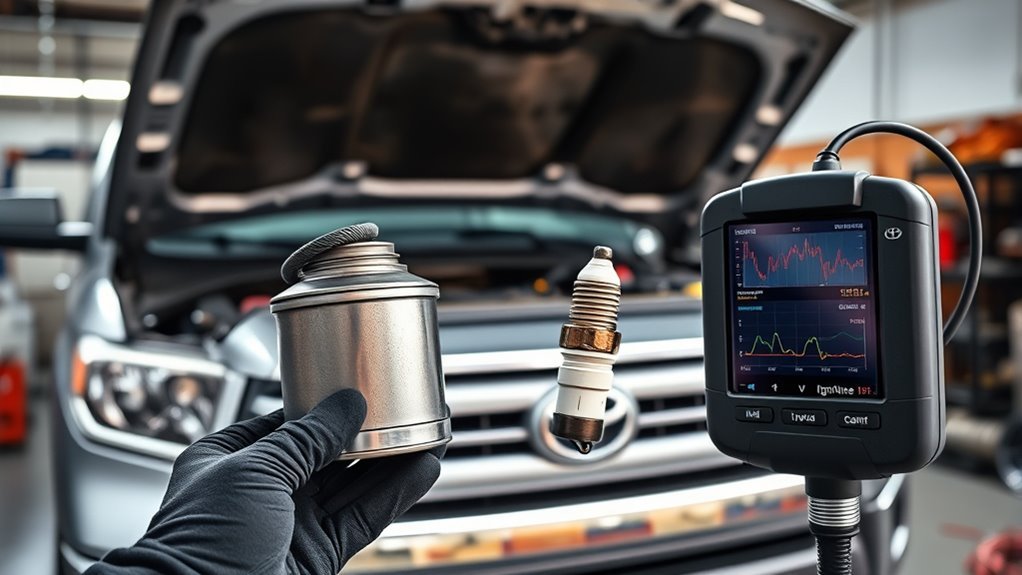
Your Tundra is likely misfiring because worn spark plugs and stressed ignition coils aren’t delivering consistent spark; you’ll see rough idle, hesitation, and OBD codes for misfires. Short trips and low mileage speed thermal cycling that widens plug gaps and raises coil voltage demand, causing coil insulation breakdown and cascading failures. Test coils by unplugging one at a time at idle and measure primary resistance; inspect plugs for electrode erosion and gap. Keep going to learn targeted tests and fixes.
Quick Answer : Why Your Tundra Is Misfiring

Why is your Tundra misfiring? You’re seeing classic engine performance losses caused primarily by ignition issues: faulty coils and worn plugs. If unplugging a coil makes the roughness change, that coil’s failing. Excessive spark plug gap—35 thou instead of the standard 32 thou—also sparks misfires and needs inspection. Your truck’s age combined with low-mileage, short-trip use creates frequent heat cycles that accelerate degradation of both plugs and coils. That stresses the ignition system, undermining combustion consistency and throwing diagnostic trouble codes. You’ll regain strength by swapping worn plugs for platinum or iridium units rated 100k–120k miles and replacing failing coils as found during a focused tune-up. Regular maintenance that treats coils and plugs together prevents premature coil failure and restores stable engine performance. You want freedom from breakdowns; target the ignition subsystem decisively and you’ll liberate reliable operation.
How to Test Individual Tundra Ignition Coils
When diagnosing a misfire, start by isolating coils one at a time: with the engine idling, unplug a single coil and note any change in roughness—if unplugging a coil alters the misfire, that coil is likely bad. Continue sequentially across cylinders to identify which coil removal improves or worsens running; a coil that, when unplugged, makes the engine smoother is a clear failure candidate.
Next perform coil testing with a multimeter usage protocol: disconnect the coil pack, set the multimeter to ohms, and measure primary winding resistance. Compare readings to the Toyota spec (typically around 0.5–1.5 ohms for primary). Inspect for open circuits, shorts, or values outside the range. If resistance is abnormal or intermittent, replace the coil.
Document results, replace faulty coils, and retest the engine. Regular inspection prevents repeated failures and empowers you to reclaim control of performance and reliability.
How Worn Spark Plugs Damage Coils and Performance
After you’ve isolated a bad coil, check the spark plugs next—worn plugs raise the gap and force the coil to generate higher voltages, increasing stress and heat that accelerate coil wear. You’ll diagnose faster when you prioritize spark plug maintenance: inspect gaps, electrode erosion, and material type. Widened gaps demand more from the coil, causing hot spots and eventual insulation breakdown that shortens ignition coil lifespan.
| Symptom | Root Cause | Fix |
|---|---|---|
| Recurrent misfire | Eroded plug tip | Replace with platinum/iridium |
| Overstressed coil | Excessive voltage demand | Test coil under load |
| Reduced efficiency | Improper gap | Re-gap or replace plug |
You’ll avoid cascading failures by replacing non-platinum plugs earlier and tracking wear patterns. Use quality replacements and scheduled checks to reclaim control over performance and move toward liberation from repeat breakdowns.
Why Short Trips and Low Mileage Speed Plug Wear
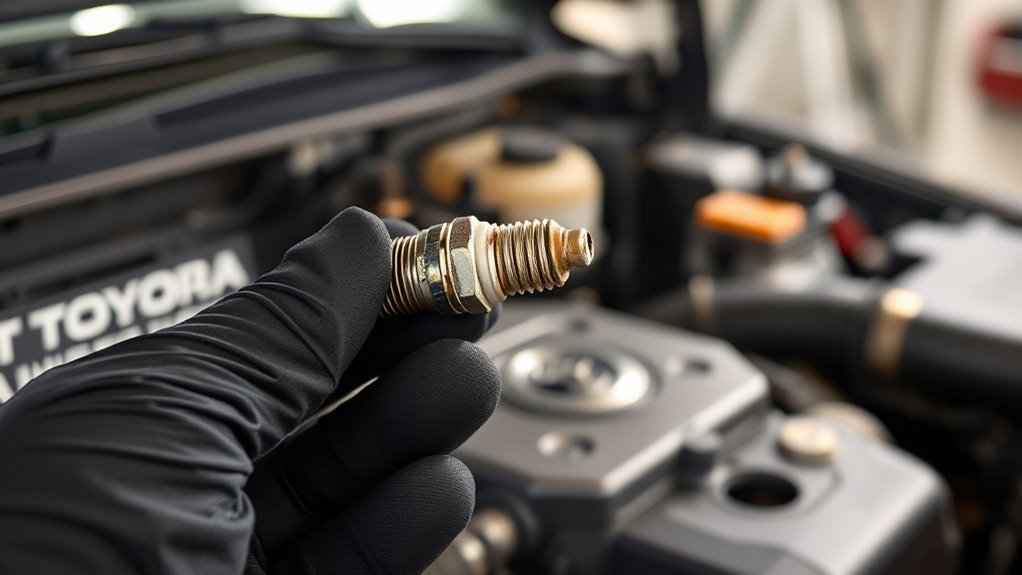
Although low mileage suggests gentle use, frequent short trips subject your Tundra’s plugs to rapid heat-cool cycles that accelerate electrode erosion and tip fracturing, especially with non-platinum plugs. You’ll see heat cycle effects concentrate damage: gaps open, tips chip, and combustion efficiency falls even at 60,000 miles.
- Short-run cycling — repeated warm-up/shut-down increases thermal stress on spark plug materials, speeding electrode wear and widening gaps from ~0.032″ toward 0.035″.
- Non-platinum vulnerability — standard plugs used in older Tundras erode faster than platinum/iridium types, so lifespan shortens despite low odometer readings.
- Broken tips — fractured electrodes create irregular gaps and inconsistent spark energy, degrading coil load and promoting misfires.
- Diagnostic action — prioritize inspection of plug tip condition and gap measurement; replace with higher-grade spark plug materials if you want durable, liberating reliability.
You’ll free the engine from predictable failure modes by addressing heat cycle effects proactively and upgrading plugs where warranted.
If Several Coils Fail: Check Plugs, Wiring, and Fueling
Short trips that wear plugs faster also raise the odds that multiple ignition coils will fail, so start by inspecting the spark plugs for electrode erosion, widened gaps (target ~0.032″), cracked insulators, and carbon tracking—any of which raises coil voltage demand and shortens coil life. If several coils have failed, you need a methodical check: measure plug gap and replace worn plugs with platinum or iridium types rated for longer life to reduce electrical resistance and repeat failures. Verify coil compatibility when replacing coils; mismatched units change impedance and stress the system. Probe wiring harnesses and connector terminals for corrosion, broken strands, or heat damage that raise circuit resistance or produce intermittent grounds. Finally, confirm fuel delivery and injector function—lean conditions or poor spray patterns can mimic misfire and overload ignition components. Diagnose systematically: eliminate plugs, wiring, and fueling faults before condemning multiple coils, and document measured resistance and gap values for future reference.
Tundra Tune-Up Checklist: Plugs, Coils, Gaps, and Steps
Start your Tundra tune-up by prioritizing the ignition system: set all spark plug gaps to 0.032″ (± a few thou), swap non‑platinum plugs for platinum or iridium units rated for 100k–120k miles, and inspect coils for cracking, oil contamination, or arcing. You’ll free yourself from repeat misfires by following a disciplined service path that targets root causes.
- Check gap and torque plugs to spec; a 0.035″ gap risks misfires and reduced performance.
- Replace non‑platinum plugs with platinum/iridium; record mileage and plan 100k–120k intervals for spark plug maintenance.
- Visually and electrically test ignition coils; multiple coil failures often trace back to worn plugs—perform ignition coil care and swap faulty coils.
- Account for duty cycle: short trips increase heat cycles, so shorten service intervals when driving is mostly stop/start.
Execute these steps methodically. You’ll diagnose, correct, and prevent misfires—regain control of engine efficiency and reliability.
Frequently Asked Questions
What Are the Three Most Common Misfires?
The three most common misfires are faulty ignition coils, worn spark plugs, and fuel delivery issues. You’ll diagnose them to restore engine performance, assess the ignition system, and reclaim control over your vehicle’s reliability and freedom.
What Is the Code P0300 on a Toyota Tundra?
P0300 explanation: persistent, perplexing, problematic — you’ve got a random/multiple cylinder misfire. You’ll diagnose via misfire troubleshooting, inspecting coils, plugs, fuel, and vacuum to restore reliable, liberated engine performance.
Conclusion
If your Tundra’s misfire persists after checking coils, plugs, wiring, and fuel, don’t shrug it off—diagnose methodically. Test coils individually, inspect plug wear and gaps, and rule out ECU or injector faults with a scanner. Short trips accelerate plug erosion, so adjust service intervals. Treat multiple coil failures as a system issue, not bad luck. Think like a seasoned mechanic and, like a knight with a wrench, tackle the root cause promptly.