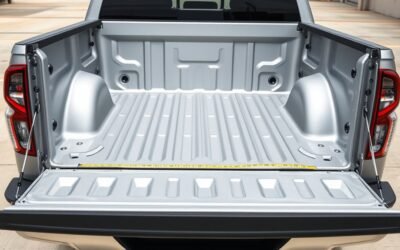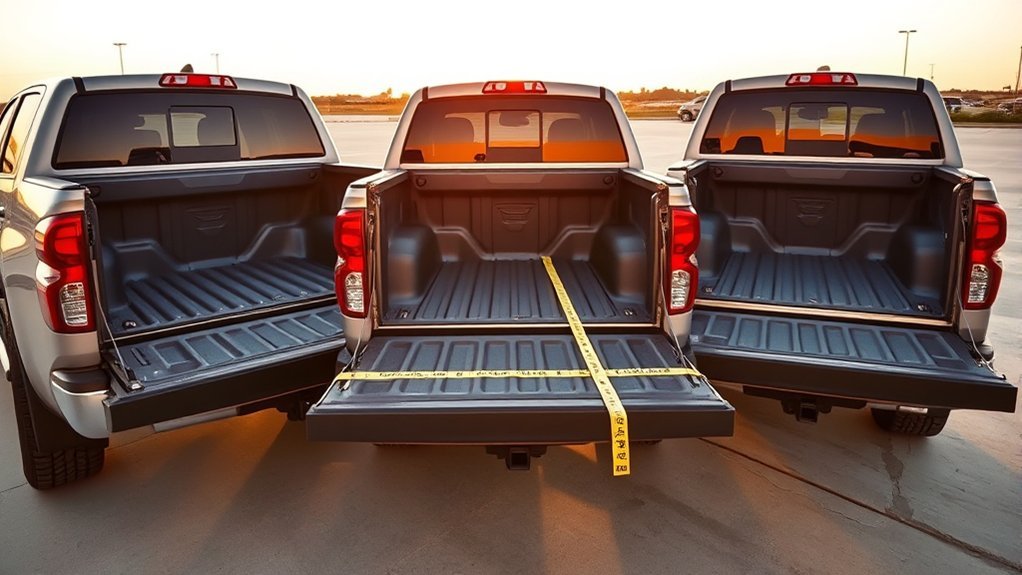
You’ll pick a Tundra bed by prioritizing passengers or cargo: CrewMax favors rear comfort with a 5.5 ft bed (42.3 in rear legroom) for urban agility, while Double Cab gives you 6.5 ft or 8.1 ft beds for greater hauling and payload. All beds share a 66.7 in usable floor width; usable lengths are 66.7, 78.7, and 97.6 in. Composite beds, adjustable rails, and lighting secure loads—keep going to see exact fitment, payload and trim tradeoffs.
Quick Answer: Which Tundra Bed Should You Choose?
Wondering which Tundra bed fits your needs? You’ll choose by prioritizing mission: maneuverability, versatility, or maximum cargo. If you value urban freedom and rear-passenger comfort, the CrewMax pairs with the short 5.5-foot bed—compact, easier to park, and ready for targeted bed customization options like toolboxes or bed dividers that don’t sacrifice cabin space. Want balanced utility? The standard 6.5-foot bed is the middle path, compatible with both CrewMax and Double Cab, letting you fit modular storage and a wider range of towing accessories without committing to the bulk of a long bed. If your goal is unencumbered hauling—lumber, trailers, recreational rigs—opt for the 8.1-foot long bed offered with the Double Cab; it maximizes payload and load length. Decide by use-case, not aesthetics: let your required cargo profile and accessory plan dictate the bed, and you’ll gain the operational liberation you’re after.
Tundra Bed Dimensions (5.5 Ft, 6.5 Ft, 8.1 Ft)
Three bed lengths—about 5.5 ft, 6.5 ft, and 8.1 ft—let you match the Tundra’s cargo footprint to specific tasks: the 5.5‑foot short bed (CrewMax only) gives urban agility while preserving passenger space; the 6.5‑foot standard bed (Double Cab or CrewMax) balances daily utility and weekend projects; the 8.1‑foot long bed (Double Cab only) maximizes load length for lumber or gear. You’ll choose based on maneuverability needs and the size of items you haul.
- Select the 5.5 ft if tight parking and passenger comfort free you from compromise.
- Choose 6.5 ft for versatile use—work, play, and practical freedom.
- Opt for 8.1 ft when maximal straight-line cargo capacity liberates your plans.
- Pair your bed length decision with bed material options and bed accessory enhancements to tailor durability and utility.
Decide deliberately: match cab, cargo, and aftermarket enhancements to gain functional independence.
Bed Volume, Floor Width & Usable Length
Having picked a bed length that fits your cab and cargo needs, next look at actual floor width, usable length, and overall volume to confirm what will physically fit. The Tundra’s consistent 66.7-inch floor width gives you a predictable base for loading pallets, toolboxes, or modular racks; you’ll design around that dimension for true cargo versatility. Usable lengths are 66.7 inches (5.5 ft), 78.7 inches (6.5 ft), and 97.6 inches (8.1 ft), so measure your longest items against those clear numbers rather than nominal bed labels. Bed volume derives from those widths and lengths combined with wall height and wheelwell intrusions; choose the long bed when maximum cubic capacity matters, or the short bed for maneuverable urban freedom. All beds use sheet-molded composite lining, improving impact resistance and reducing dents and rust—meaning the volume you count on stays serviceable. Use these precise metrics to liberate your load planning and eliminate guesswork.
CrewMax vs Double Cab: Bed Length and Payload
Choose CrewMax if you prioritize rear-seat comfort; its fixed 5.5-foot bed pairs with 42.3 inches of rear legroom for true passenger-focused utility, while Double Cab trades some interior space (34.7 inches rear legroom) for 6.5- or 8.1-foot bed options that increase cargo volume and, in many configurations, payload capacity. You’ll pick CrewMax when passenger comfort is non-negotiable; you and your passengers get expanded legroom and a stable, predictable rear environment. You’ll choose Double Cab when mission demands hauling or higher payload comparison numbers matter more than rear-seat space. Assess duty cycles: frequent heavy loads favor the Double Cab’s optional beds and often higher payload limits, while routine transport of people favors CrewMax ergonomics. Make the decision by prioritizing liberty of use—do you free yourself to carry people comfortably or to carry larger payloads? Below are four focused considerations to finalize the choice.
Choose CrewMax for passenger comfort; pick Double Cab when cargo length and higher payloads matter more.
- Rear legroom priority vs cargo length trade-off
- Bed-length effect on usable payload
- Typical payload comparison by configuration
- Operational use and passenger comfort requirements
What Fits in Each Bed: Lumber, Pallets, ATVs, Gear
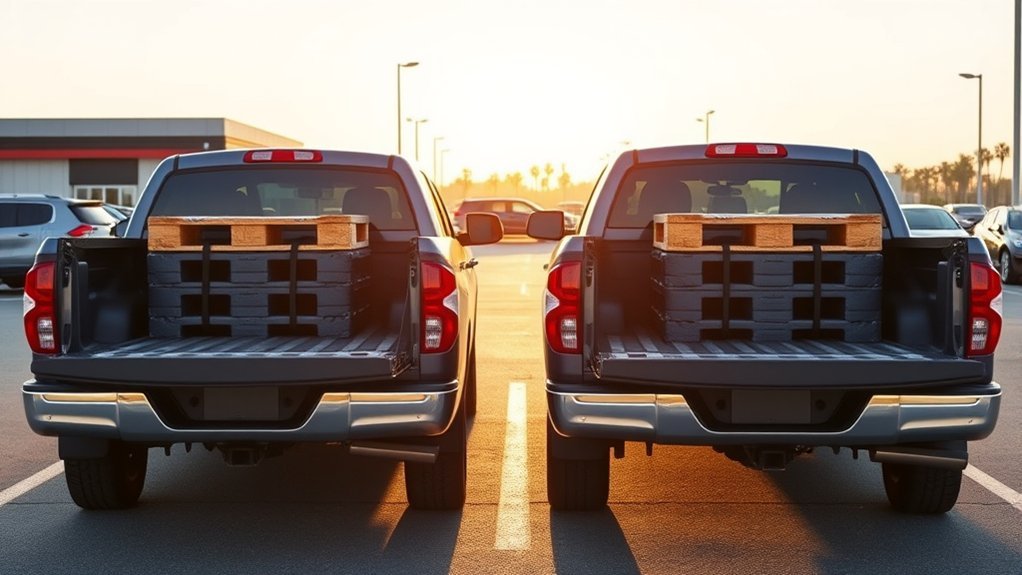
Start by matching the bed to the task: the 5.5-foot bed handles everyday loads—groceries, sports gear, small furniture—while the 6.5-foot bed lets you carry standard 4×8 sheets of plywood or drywall and longer recreational items, and the 8.1-foot bed accommodates long lumber, multiple pallets, or an ATV; all beds use a durable composite surface and an adjustable deck rail system to secure and protect gear. You’ll choose based on item length, pallet count, or equipment footprint. For short, frequent runs the 5.5-foot bed is nimble and secure with basic bed accessories like tie-downs and organizers. The 6.5-foot bed frees you to haul full sheets and kayaks without overhang, using the deck rail for restraint and modular cargo organization. The 8.1-foot bed is purpose-built: stack lumber, stage pallets, or load an ATV with anchor points optimized for heavy tie-downs. Select accessories that enhance restraint, protect finishes, and simplify loading so you stay unbound and mission-ready.
How Bed Size Affects Payload, Towing Trade‑Offs, and Maneuverability
You’ve matched bed length to load types; now consider how bed size shifts payload, towing behavior, and maneuverability.
You’ll use the 5.5, 6.5, and 8.1-foot beds to balance payload optimization, towing efficiency, and city freedom. Shorter beds (often in Double Cab setups) raise payload capacity, so you carry heavier gear without overtaxing the chassis. Longer beds let you haul oversized items and generally support higher towing weights, improving towing efficiency for heavy trailers, but they compromise tight turning and urban parking. Choose based on mission: heavier payloads vs. longer cargo or tow demands.
Match bed length to mission: short beds for payload and city agility, long beds for oversized loads and towing stability.
- Payload optimization: pick the shorter bed/Double Cab for max cargo mass per axle and simplified load distribution.
- Towing efficiency: longer beds stabilize tongue weight and enable higher tow ratings—beneficial for sustained heavy towing.
- Maneuverability: shorter beds free you from tight-radius constraints in cities.
- Trade-off strategy: match bed length to the dominant task to liberate capability without excess compromise.
Bed Features That Matter: Composite Bed, Tie‑Downs, Lighting, Tailgate
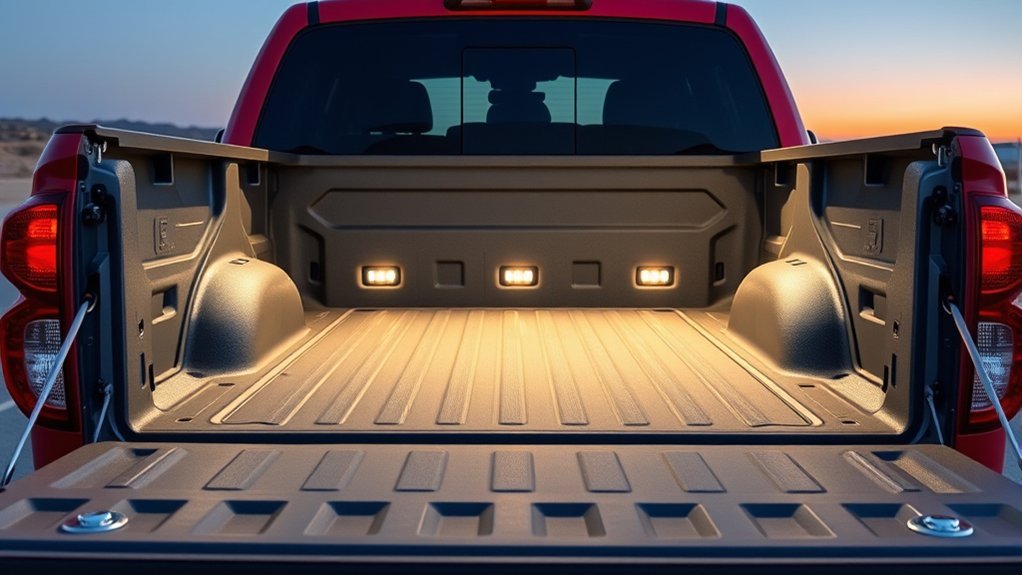
You’ll appreciate the Tundra’s sheet-molded composite bed for its superior impact resistance against dents, dings, and rust. The adjustable deck rail system gives you flexible tie-down points to secure varied loads precisely where you need them. Optional integrated bed lighting (and available power options) makes loading and working in low light straightforward and efficient.
Durable Composite Bed
A sheet‑molded composite bed gives the Tundra a dent‑and‑rust‑resistant cargo floor that still handles heavy payloads and lets items slide smoothly when you load and unload. You get composite benefits that translate to long-term cargo protection and reduced maintenance, so you can focus on utility rather than repair. The surface resists impacts and corrosion, keeping the bed dependable under repeated use.
- Reduced dents and rust: preserves structural integrity and resale value.
- Heavy-payload capable: engineered layup supports demanding loads without deformation.
- Smooth sliding surface: minimizes effort when loading, securing, or removing gear.
- Low upkeep: the material cuts repair needs and frees you to use the truck fully.
The composite bed is liberation through durability and practicality.
Adjustable Tie‑Downs
Two adjustable deck rails let you position tie‑downs exactly where you need them, giving precise control over cargo security across the composite bed. You’ll arrange loads confidently: the rails accept a range of tie down accessories so you can adapt anchors, cleats, and mounts to each mission. The composite bed resists dents and corrosion, so rail hardware stays stable and reliable over time. You’ll secure odd shapes and heavy gear without improvisation, improving cargo organization and reducing transit risk. Installation and reconfiguration are straightforward, letting you reclaim time and space. This system extends the Tundra’s utility without compromise—modular, robust, and engineered for people who demand freedom to carry more, smarter, and safer.
Integrated Bed Lighting
Integrated bed lighting makes night‑time loading and unloading straightforward by illuminating the composite bed’s sides and rear so you can see tie‑downs, cargo, and the tailgate release bump switch clearly. You get lighting benefits and improved nighttime usability without sacrificing the sheet‑molded composite bed’s durability. The optional system integrates into the bed architecture, reducing snag points and preserving resistance to dents, dings, and rust. It enhances secure cargo management when you adjust tie‑downs in low light and operate the tailgate release bump switch with confidence. This feature frees you from time‑of‑day constraints and extends the truck’s functional envelope.
- Clear illumination reduces loading errors and damage.
- Integrated placement preserves bed integrity.
- Supports secure tie‑down operations at night.
- Expands usable hours for work and freedom.
Best Tundra Bed by Use Case: Daily Driver, Contractor, Recreation
You’ll evaluate daily driving practicality by comparing the CrewMax 5.5‑foot bed’s maneuverability and cargo fit for groceries and gear. For contractor hauling capacity, consider the 6.5‑foot bed and payload tradeoffs in Double Cab and CrewMax layouts. If recreational gear fit is your priority, the Double Cab’s 8.1‑foot long bed provides maximum volume for lumber, boats, and camping setups.
Daily Driving Practicality
Looking for a truck that balances city maneuverability with useful cargo space? You’ll value the 5.5-foot CrewMax for its urban maneuverability and cargo versatility — tight parking, everyday loads. The 6.5-foot bed suits you if you need more room for groceries, gear, and weekend projects without sacrificing daily comfort. Use the adjustable deck rail system and 400-watt inverter to adapt the bed for errands or recreation. Double Cab variants offer surprising payload for heavier daily loads while staying compact.
- Choose 5.5-ft CrewMax: best for city driving and tight garages.
- Choose 6.5-ft: versatile for daily gear, sports, and short trips.
- Use deck rails: secure varied cargo quickly.
- Rely on payload: handle heavier everyday tasks without compromise.
Contractor Hauling Capacity
Moving from daily practicality to worksite capability, contractors will typically choose the Double Cab with the 8.1-foot bed because it handles long materials and bulky gear more efficiently than CrewMax layouts. You’ll get maximum hauling capacity and elevated payload optimization: the longer bed and Double Cab configuration let you load full-length lumber, ladders, and tool racks without sacrificing cabin space. That layout also often carries higher gross payloads, so you can stack heavier gear and still meet legal and factory limits. Prioritize hauling efficiency by planning load distribution—keep weight over the axle, secure tall items, and use tie-downs. The Double Cab 8.1-foot bed is a liberation choice for contractors who need straightforward, industrial-grade utility.
Recreational Gear Fit
For recreational users, the 8.1-foot bed in the Double Cab is the clear choice: it gives you the length and volume to stow bulky items like bikes, kayaks, cooler systems, and camp gear without complex packing, while the higher payload of the Double Cab variants lets you carry heavier accessories and rooftop-style cargo boxes safely. You’ll get ideal recreational storage and freedom to pursue outdoor adventures without compromise. The 6.5-foot bed balances payload and maneuverability if you need versatility for mixed use. The 5.5-foot bed suits urban mobility but limits long-item capacity.
- Maximum length: 8.1-foot for long gear and lumber.
- Payload priority: Double Cab for heavy accessories.
- Versatility: 6.5-foot for mixed duty.
- Urban agility: 5.5-foot for city freedom.
Trim & Configuration Availability: Which Trims Offer Which Beds
Although cab choice drives bed options, every Tundra trim gives you clear combinations to match hauling and passenger needs. You’ll evaluate trim combinations and bed preferences decisively: SR, SR5, Limited, Platinum, 1794 Edition, TRD Pro, and Capstone all permit specific cab/bed pairings so you get the mission-appropriate truck. Double Cab supports 6.5-foot or 8.1-foot beds, maximizing payload and cargo length. CrewMax limits you to 5.5-foot or 6.5-foot beds, prioritizing rear-seat comfort over maximum bed length.
If you want maximum cargo box without sacrificing basic trim features, choose a Double Cab on SR5 or higher to access the 8.1-foot bed. If you value passenger freedom and premium amenities, opt for CrewMax in higher trims with the 5.5- or 6.5-foot bed. Every trim can be configured to free you from compromise; pick the cab first, then match the bed to your load profile and lifestyle requirements.
Frequently Asked Questions
What Are the Different Bed Sizes for Tundras?
You get three Tundra bed options: 5.5 ft short, 6.5 ft standard, and 8.1 ft long. You’ll assess Tundra bed dimensions and payload trade-offs so you can choose freedom and utility confidently.
What’s the Biggest Size Bed You Can Get on a Toyota Tundra?
The biggest bed you can get is an 8.1-foot long bed on the Double Cab, giving you maximum cargo capacity for Tundra towing and Bed customization needs; it’ll free your work while demanding careful urban maneuvering.
Conclusion
You’ll pick the right Tundra bed by matching real needs to real dimensions: the 5.5 ft fits tight garages and daily driving, 6.5 ft balances cargo and maneuverability, and 8.1 ft hauls full lumber and pallets. Coincidentally, the CrewMax that limits bed length often boosts payload and comfort—so you might trade a few inches for daily practicality. Decide on subcompact vs full-length based on payload, towing, and the specific trim’s available bed options.