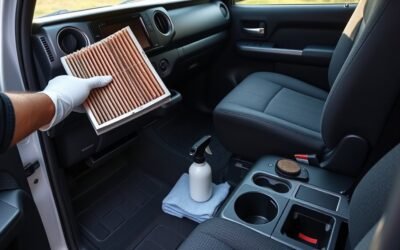
You should inspect the Tacoma’s frame, especially rear leaf spring mounts and front frame horns, for corrosion, cracks and weld defects; check control-arm bushings, ball joints, tie-rod ends and shock mounts for play or wear; scan for engine, transmission, differential and brake/fuel line leaks; verify skid plates, recovery points and fasteners for bends, cracks and proper torque; inspect wiring, auxiliary lights and battery connections for chafing or corrosion. Keep tools, jacks and PPE ready — continue for detailed steps.
Tacoma Underbody Inspection: Quick Checklist

When you’re inspecting a Tacoma’s underbody, focus on structural integrity, suspension wear, and fluid leaks to catch issues before they worsen. Start at the frame: probe for corrosion at rear leaf spring mounts and welds, where Tacomas commonly fail; surface rust needs rust prevention measures, deeper pitting demands repair or replacement. Move to suspension: inspect control arm bushings, ball joints, and shock mounts for play, cracking, or deformation; worn parts compromise handling and liberation on rough terrain. Scan for fluid leaks from driveline, transmission, and engine; trace stains to their source and address seals or hoses immediately. Verify skid plates and underbody protection are secure, unbent, and crack-free to maintain off road modifications‘ effectiveness. Check all mounting bolts and recovery points for torque, grade markings, and integrity; replace any hardware not rated for intended use. You’ll leave with a prioritized action list that keeps your Tacoma safe, capable, and free.
Prep & Safety: Cleaning, Tools, and Setup
Start by thoroughly washing the Tacoma—use a degreaser like Simple Green to remove oil, mud, and road grime so you can clearly see frame welds, fasteners, and suspension components. Adopt targeted cleaning techniques: pressure-rinse wheel wells, agitate grease with a brush, rinse until contaminants are gone. You’ll improve visibility and reduce hazards.
Collect essential tools: torque wrench, inspection mirror, bright flashlight, basic hand tools. Lay them out so you’re not interrupting flow. Use a camera or phone to document findings with timestamps and notes for follow-up repairs.
Establish a secure work area: level ground, wheel chocks, and properly rated jack stands; never rely on a jack alone. Wear protective gloves and eye protection to prevent injury from debris and sharp edges. Follow basic safety measures when crawling beneath the truck: test stability before entering, keep a phone close, and clear escape routes. These disciplined steps free you to inspect efficiently and act decisively on issues you uncover.
Frame Hotspots to Inspect on a Tacoma
Start at the front frame horns and work rearward, inspecting for cracks, perforation, and welded joint integrity. Pay close attention to the rear spring mounts for heavy corrosion from trapped moisture and debris, and inspect the transmission crossmember for rust-through or structural compromise. Flag areas near heat sources and welds where corrosion progresses beyond surface rust, as these require immediate repair or replacement.
Front Frame Horns
Inspect the front frame horns closely, as these short, welded extensions at the nose of the Tacoma absorb impacts and are prone to bending or kinking after collisions (including deer strikes). You’ll assess frame alignment and structural integrity first: look for visible bends, kinks, or step changes where geometry deviates. Check for corrosion, cracks, weld repairs, and paint disturbance that indicate prior damage. Minor distortions can respond to frame straightening services; severe deformation may need part replacement or extensive repair. Apply rust-preventive coatings after cleaning to protect welds and seams, especially in salt-prone regions. If you detect any doubt about stiffness or fitment, get a professional evaluation — accurate measurement and certified repair preserve safety and your freedom to drive without compromise.
Rear Spring Mounts
After checking the front frame horns for bends and weld integrity, move your attention rearward to the rear spring mounts, which take continuous load and exposure. You’ll inspect these critical stress points for cracking, separation, weld perforation, and structural fatigue caused by road debris and moisture. Probe weld seams and surrounding frame for perforation, especially near attachment points. Any visible cracking or significant rust requires immediate repair to avoid suspension compromise and loss of control. Integrate spring mount maintenance into routine service: clean, mechanically remove loose scale, and apply rust-preventive coatings to extend life. This disciplined, precise approach supports vehicle autonomy and your freedom to travel—mitigate corrosion, preserve strength, and act before failure develops.
Transmission Crossmember
The transmission crossmember anchors the drivetrain to the frame and you’ll want to examine it carefully for rust, cracks, or deformation at welds and mounting points that could compromise alignment. You’ll verify fasteners are torqued to spec and that no play exists at bolt holes; loose hardware lets the transmission shift and accelerates wear. Inspect welds and plate edges for corrosion, prioritizing rust prevention treatments where surface pitting appears. Check for bending or impact signs that suggest prior collisions or overloads, and measure alignment if mount faces look distorted. Look for transmission fluid leaks that might indicate seal failure; fluid accelerates corrosion and undermines crossmember maintenance. Document defects and replace or repair components promptly to restore safe, liberated mobility.
Suspension & Steering: Control Arms, Joints, and Shocks

When you check the Tacoma’s suspension and steering, focus on control arm bushings, ball joints, tie rod ends, and shock mounts for wear, play, rust, or loose hardware that can compromise geometry and ride quality. Inspect upper and lower control arm bushings for cracks, separation, or compression loss; they preserve alignment and comfort and matter for any suspension upgrades you plan. Check ball joints for vertical or lateral play and secure fasteners to prevent steering drift. Examine tie rod ends for looseness that causes uneven tire wear and degraded handling. Review shock mounts and hardware for corrosion or looseness that reduces damping effectiveness. Listen for clunks when cycling the suspension — immediate attention frees you from unsafe constraints. Prioritize joint lubrication where applicable and replace compromised components to restore precision and safety.
| Component | Symptom | Action |
|---|---|---|
| Control arm bushings | Cracks/separation | Replace |
| Ball joints | Play/clunk | Tighten/replace |
| Tie rod ends | Loose/uneven wear | Service/replace |
| Shock mounts | Rust/looseness | Inspect/secure |
Brake, Fuel, Driveline, and Differential Leak Checks
If you suspect any leaks, start by visually inspecting brake lines, fuel lines, driveline seals, and the differential housing for wetness, rust at fittings, or drips on the ground. You’ll check brake lines for corrosion and weepage at connection points and frame mounts; even small blebs can contaminate brake fluid and compromise stopping power. For the fuel system, inspect lines, clamps, and connectors for soft spots, rusted clamps, or odor that indicate leakage; secure or replace compromised clamps immediately to prevent fire risk. Perform systematic leak detection under the driveline: examine seals, gaskets, and mounting bolts for seepage or looseness as part of driveline maintenance. Conduct a focused differential inspection—look for cracks, oil trails at fill/drain plugs, and reduced fluid level that signals internal wear. Finally, note any ground spots where you park; documenting their location and color helps isolate brake, fuel, or driveline sources and supports corrosion prevention through timely repairs.
Skid Plates, Recovery Points, and Underbody Protection
Check skid plates for bends, cracks, and secure mounting so they fully protect the transfer case, oil pan, and other underbody components. Inspect recovery points for structural integrity and proper rating for recovery tasks versus standard towing. Verify all fasteners are present and torqued and confirm adequate clearance to prevent contact on rough terrain.
Skid Plate Condition
Although the underbody often goes unseen, you should inspect skid plates, recovery points, and surrounding protection for bends, cracks, impact marks, and loose or missing hardware that could compromise their function. Check skid plate materials for fatigue, corrosion, or deformation; steel plates resist impact but can rust, aluminum lightens weight but dents more easily. Verify transfer case and oil pan clearance to confirm plates fully shield vulnerable components without contact. Torque and secure all fasteners; replace missing or stretched bolts immediately. If your factory shields show repeated damage, consider aftermarket upgrades rated for intended loads and terrain to extend capability and autonomy. Document findings, prioritize repairs that restore mechanical integrity, and keep inspection intervals aligned with off-road use intensity.
Recovery Point Integrity
Verify recovery point integrity before you head off-road, because these anchors—and the skid plates and underbody shields that protect them—must withstand the loads and impacts of real recoveries. You inspect mounting, welds, and hardware for cracks, corrosion, or stretch, and confirm rating matches your towing capacity. Check skid plates for bends, missing fasteners, or damage; upgrade to robust aftermarket plates if factory protection is insufficient. Keep components tight, rust-free, and aligned to guarantee predictable recovery techniques under load.
| Component | Condition Check | Action |
|---|---|---|
| Recovery Points | No cracks, rated for towing capacity | Torque bolts, replace if deformed |
| Skid Plates | No bends or missing hardware | Repair or upgrade |
| Underbody Shields | No rust/stretch | Secure or replace |
Fasteners And Clearance
Start by inspecting every fastener and clearance point beneath the Tacoma: guarantee skid plate and recovery-point bolts aren’t rusted, stretched, or loose, confirm mounts and welds show no cracks or deformation, and verify the transfer case and oil pan maintain sufficient ground clearance to avoid contact on rough terrain. You’ll check skid plates for bends or cracks and confirm they shield the underbody against obstacles; upgrade to aftermarket plates if you need greater durability. Inspect recovery points for structural integrity and correct rating to prevent failure during extraction. Perform systematic fastener maintenance: replace corroded or stretched bolts, torque to factory specs, and use locking hardware where appropriate. Prioritize clearance importance for safe off-road operation and sustained vehicle liberation.
Wheels & Tires: Lug Torque, Clearance, and Alignment Signs

One clear check you should do every time you work on the wheels is torque: tighten lug nuts to the Toyota-specified value (typically 80–100 ft·lb) to secure the wheel and avoid uneven tire wear. After torquing, follow tire rotation and wheel balancing schedules to extend tread life and maintain predictable handling. Inspect sidewalls for cuts, bulges, or degradation that could fail under off-road loads. Measure tread depth; replace tires that approach 2/32″ minimum, and prefer deeper tread for loose surfaces. With lifted or larger-tire setups, verify wheel clearance at full lock and full suspension travel to prevent rubbing on control arms, sway bars, or fenders. Scan tires for asymmetric wear patterns—feathering, shoulder scallop, or inner-edge wear—which indicate misalignment or suspension issues. If the truck pulls, tracks unevenly, or shows rapid irregular wear, get a professional alignment and address bent components. These checks free you from avoidable failure and keep the Tacoma ready for safe, liberated driving.
Electrical & Battery: Underbody Wiring and Auxiliary Lights
Because underbody wiring and auxiliary lights face constant vibration, moisture, and debris, you should inspect harnesses, mounts, and connections for chafing, corrosion, looseness, or compromised insulation every service interval and after off-road trips. Check all underbody wiring for abrasion marks and exposed conductors; repair or reroute immediately using quality wiring protection like split loom, adhesive-lined tape, or convoluted tubing. Verify harness routing clears suspension mounts, frame edges, and skid plates to prevent impact damage from debris.
Confirm auxiliary lighting is rigidly mounted, lenses intact, and connectors sealed. Test switches, relays, and fuses for correct operation and measure voltage at lamp connectors under load to detect voltage drop. Tighten corrosion-free terminals and apply dielectric grease where appropriate. If you find intermittent circuits, trace to the weakest point—loose terminal, broken strand, or chafed insulation—and replace the damaged section. Maintain this discipline to keep systems reliable and your freedom to travel off-grid uncompromised.
Common Findings and When to Get Professional Frame Repair
When you inspect a Tacoma’s frame, watch for bent front frame horns, kinks, and localized corrosion around welds and high‑stress zones—these are the most common signs that structural integrity is compromised. You should document distortions from collisions (including deer strikes) and note any kinks along rail runs. Corrosion commonly initiates at welds and areas of concentrated stress; surface treatments slow progression but won’t restore perforated metal. If you find full perforation or separation, plan for patch panels or section replacement; chemical rust prevention is preventive only.
Seek a professional assessment when bends exceed factory tolerances, when alignment anomalies appear, or when corrosion undermines flange sections. A-frame straightening services can return geometry within spec if the metal retains fatigue life; otherwise replacement is safer. Prioritize inspections in salt‑exposed regions and act quickly—maintaining frame integrity preserves your freedom to travel without constraint.
Frequently Asked Questions
What Are the Toyota Inspection Standards?
Toyota standards require Inspection criteria that assess frame and underbody integrity, corrosion severity, welds, fluid conditions, and component security; you’ll verify perforation risk, replace or lubricate worn parts, and document findings for protective action.
What Are the 7 Steps of the Inspection Process?
Think of preserving freedom: you’ll 1) wash, 2) document, 3) inspect frame for cracks/rust, 4) check suspension/steering, 5) assess brakes/fluids, 6) test drive, 7) plan repairs. Include Rust Prevention and Maintenance Tips.
What Is a Toyota 21 Point Inspection?
A Toyota 21 point inspection is a systematic evaluation of critical systems—brakes, steering, fluids, tires, undercarriage—to spot issues early. You’ll use it for Toyota maintenance and Tacoma care, keeping your vehicle reliable and independent.
What Is the Toyota 160 Point Inspection?
Of course, the Toyota 160 Point Inspection is a thorough vehicle evaluation checking engine, transmission, brakes, suspension, underbody, fluids, electricals and frame integrity; you’ll get precise findings, recommended repairs, Toyota maintenance tips and inspection frequency guidance.
Conclusion
You’ve now inspected the Tacoma’s underbody like a surgeon with a wrench and a suspiciously large flashlight. Don’t ignore that rust spot pretending to be modern patina or the drip that claims to be “just condensation.” Tighten what’s loose, replace what’s scary, and document what’s weird. If the frame starts telling you fortunes, call a pro—this isn’t a DIY séance. Stay thorough, stay safe, and don’t let pride overrule common sense.