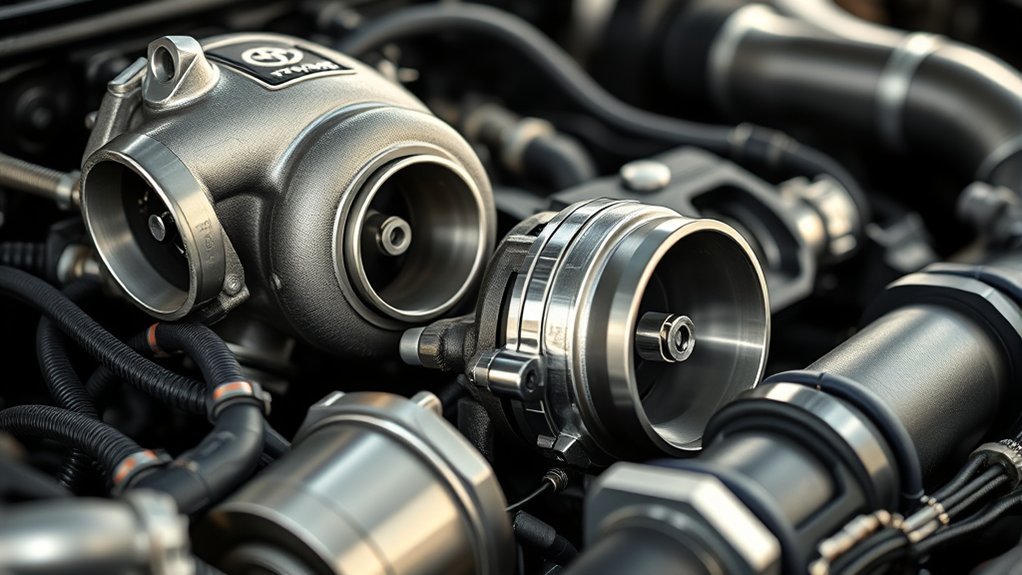
You’re looking at a compact turbocharger primer for your Tacoma: the compressor draws ambient air, compresses it, and sends cooled, denser charge through the intercooler for better combustion; the wastegate meters exhaust flow to the turbine to prevent overboost; oil feeds and drains lubricate and cool the shaft bearings; symptoms like loss of power, smoke, strange noises, oil leaks, or boost drops point to issues; basic inspections and clamp or leak fixes help, and further sections cover inspection, rebuilds, and replacements.
Who Should Read This Tacoma Turbo Guide
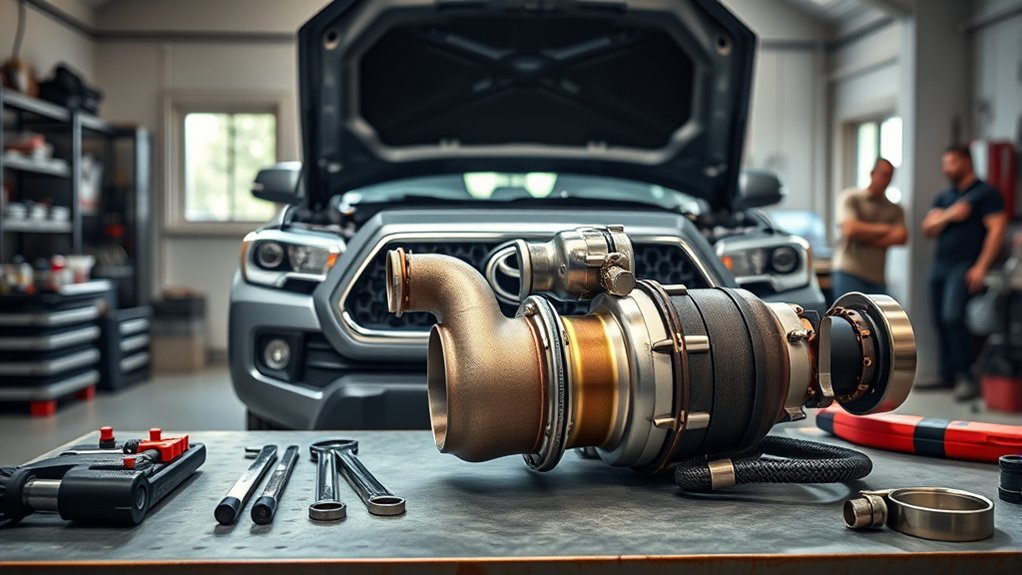
Wondering if this guide fits you? You’re in the right place if you want clear, practical knowledge about turbocharging benefits and how they translate to performance enhancements on a Toyota Tacoma. You’ll find value whether you’re a new Tacoma owner curious about power and efficiency trade-offs, a DIY mechanic who wants to service or upgrade turbo components, an automotive student learning modern forced-induction design, or a professional seeking concise reference material. You’ll get focused explanations of turbocharger components, their roles, and maintenance implications so you can make informed modification decisions without guesswork. The guide emphasizes functional understanding over hype, so you can reclaim control of tuning, reliability, and fuel economy. If you’re motivated to free yourself from stock limitations and thoughtfully pursue upgrades, this guide arms you with the technical grounding to evaluate options, plan interventions, and measure expected gains in power delivery and engine efficiency.
Tacoma Turbo Symptoms and Quick Fixes
How can you tell a Tacoma’s turbo is failing before it causes major damage? Watch for reduced power, excessive exhaust smoke, and unusual whistling or grinding. Use turbo noise diagnosis to localize bearing or shaft issues: listen for high-pitched whine (compressor) or grinding (bearing/seal failure). Inspect for oil leaks around the turbo—seals failing will contaminate intake and exhaust, risking engine damage.
Measure boost with a gauge; a noticeable drop indicates wastegate malfunction or a boost leak. Employ boost pressure troubleshooting: pressurize intake at idle to find leaks, check intercooler and hoses, and verify wastegate actuator movement. Check shaft play and bearing condition during routine service; lateral or axial movement beyond spec means rebuild or replacement.
For quick fixes, tighten or replace clamps, repair leaks, fit a quality aftermarket blow-off valve to reduce compressor surge, and address oil-feed issues promptly. Act decisively to keep your Tacoma free and running.
How the Tacoma Turbocharger Works
You’ll see how the compressor pulls in ambient air, squeezes it, and sends it through the intercooler to reduce intake temperatures and increase air density. The cooled, denser charge improves combustion and power without changing engine displacement. Meanwhile the wastegate meters exhaust gas to the turbine, opening at low RPMs to prevent overboost and maintain controlled boost pressure.
Compressor And Intercooler Flow
Because the compressor wheel forces air from the airbox into the intake tract, you get a much denser charge entering the engine, but that pressurized air must pass through the intercooler to drop temperature and prevent detonation. You’ll monitor compressor efficiency to verify the compressor isn’t overheating or causing excessive pressure. The intercooler choice affects recovery and power; comparing intercooler types helps you pick the best balance of cooling, flow, and package freedom.
| Component | Function |
|---|---|
| Compressor | Raises air pressure, increases density |
| Intercooler | Lowers charge temperature, prevents knock |
| Flow management | Balances pressure and velocity |
| Maintenance | Prevents leaks/blocks, preserves performance |
You’ll keep flow paths clean and sealed to protect engine efficiency and your driving autonomy.
Wastegate And Boost Control
Although it sits small and often unseen, the wastegate is the turbo’s gatekeeper, opening at low RPM to dump exhaust around the turbine and prevent over-boost, then closing as RPMs rise to let the turbine drive higher boost for power. You’ll rely on it to regulate boost pressure by diverting exhaust gases, matching turbine drive to engine speed for consistent performance and safety. The Tacoma commonly uses an internal design for compactness, though external wastegate types exist for tuners seeking control. Inspect the wastegate mechanism and vacuum controls regularly so you can avoid boost-related damage and retain freedom to push the engine.
- Understand wastegate types: internal vs external, compact vs adjustable
- Monitor boost pressure and actuator response
- Service vacuum lines and linkage to preserve control
Tacoma Turbo Parts You Must Know
Now you’ll examine two turbo parts that directly affect durability and boost control: the oil system and the wastegate/diaphragm assembly. The oil feed and return keep the shaft lubricated and cooled, so any restriction or leak quickly degrades bearing life. The wastegate and its vacuum diaphragm regulate exhaust flow to prevent overboost and must move freely and seal correctly.
Turbocharger Oil System
1 key system keeps your Tacoma’s turbo spinning smoothly: the oil feed and drain network. You rely on pressurized oil to lubricate the shaft and bearings, preventing wear and overheating at high RPM. Oil feed lines supply fresh oil; the oil drain returns used oil to the sump, preserving pressure and level. Inspect both lines routinely to catch blockages, restrictions, or leaks that threaten performance. Leaks usually signal seal failure and demand prompt attention if you want freedom from breakdowns.
- Check feed and drain fittings for tightness and chafing.
- Monitor for oil trails on the turbo housing and intercooler.
- Replace clogged or deformed lines to restore proper circulation and protect the turbo.
Wastegate And Diaphragm
Because the wastegate controls exhaust flow to the turbo, you rely on its diaphragm and seals to modulate boost precisely and protect the engine from overboost, heat, and component stress. You’ll learn that wastegate types include internal and external, but a vacuum-controlled wastegate is preferred for its reliable, predictable response driven by diaphragm pressure. Diaphragm materials—typically reinforced nitrile or silicone—must resist heat, oil, and fatigue; failure causes improper operation and dangerous overboost. Inspect the diaphragm and seals regularly for rust, cracking, or loss of flexibility. If you detect issues, replace the diaphragm or entire actuator promptly to preserve boost control, turbo efficiency, and engine longevity. Regular maintenance liberates you from unexpected failures and costly repairs.
Routine Inspection & Maintenance Checklist
Start with a concise, repeatable checklist you can run through every 5,000–10,000 miles or during scheduled service: you’ll verify shaft play, check for oil leaks, and confirm coolant monitoring paths are clear. Test wastegate function and scan for rust inspection points to prevent component degradation.
- Inspect shaft play by gently moving the compressor wheel; note axial or radial excess.
- Search for oil leaks around seals and lines; trace drips to source and tighten or replace fittings.
- Verify coolant monitoring: ascertain inlet/outlet flow, no blockages, and secure hoses/clamps.
Follow a strict cadence so you stay free from unexpected failures: document findings, tighten or replace degraded clamps, and prioritize seals showing leakage. If the wastegate sticks or shows irregular response, isolate and service before it causes overboost. This routine keeps your turbocharger efficient, reliable, and aligned with your goal of mechanical autonomy.
Rebuild, Replacement, Costs, and Timeline
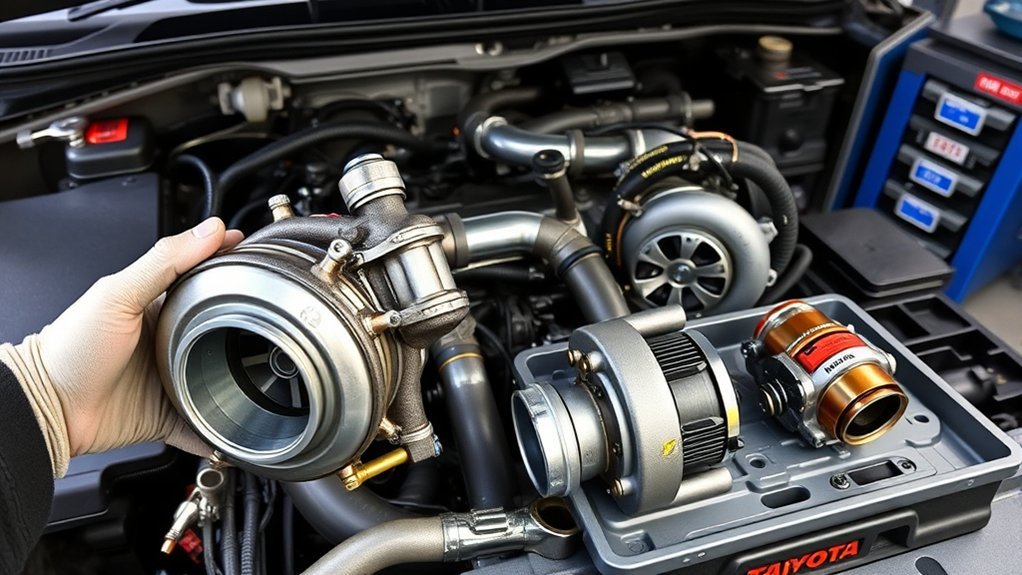
Having a routine inspection habit makes deciding between a rebuild and a full replacement much easier, since you’ll have documented wear patterns and leak histories to guide the choice. You’ll weigh rebuild benefits—lower cost, retained core geometry, and restored turbocharger efficiency—against replacement’s longer-term assurance. Expect a rebuild to cost about $300–$800 depending on parts and shaft/wheel work; a full replacement runs $1,000–$3,000 for OEM or aftermarket options. Rebuilds typically take 3–5 days; replacements often finish in 1–2 days, contingent on shop workload and parts availability. During either service, verify wastegate operation, vacuum lines, seals, and shaft play to prevent recurring failures and preserve liberated, reliable performance. If inspections show excessive shaft play, damaged housings, or chronic leaks, replacement is justified despite higher cost. If damage is localized and core geometry is sound, rebuilding delivers cost-effective restoration and maintains turbocharger efficiency while aligning with your desire for control and independence over vehicle upkeep.
Frequently Asked Questions
Is the Toyota 2.4 L Turbo Engine Good?
Yes — you’ll find the 2.4L turbo strong: performance analysis shows 265 hp/310 lb-ft, engine reliability is solid, tuning potential exists, fuel efficiency improves; maintenance tips boost longevity and the driving experience feels liberating and capable.
Conclusion
You’ve learned key turbo basics, but don’t assume a noisy or laggy Tacoma always needs a full replacement — often simple fixes like boost leaks, worn actuators, or clogged intake plumbing restore performance. Inspect seals, oil feed/return, and shaft play before spending big. If you test and confirm excessive shaft play or oil contamination, a rebuild or replacement is justified. Stay proactive with inspections and timely oil changes to keep the turbo reliable and costs down.