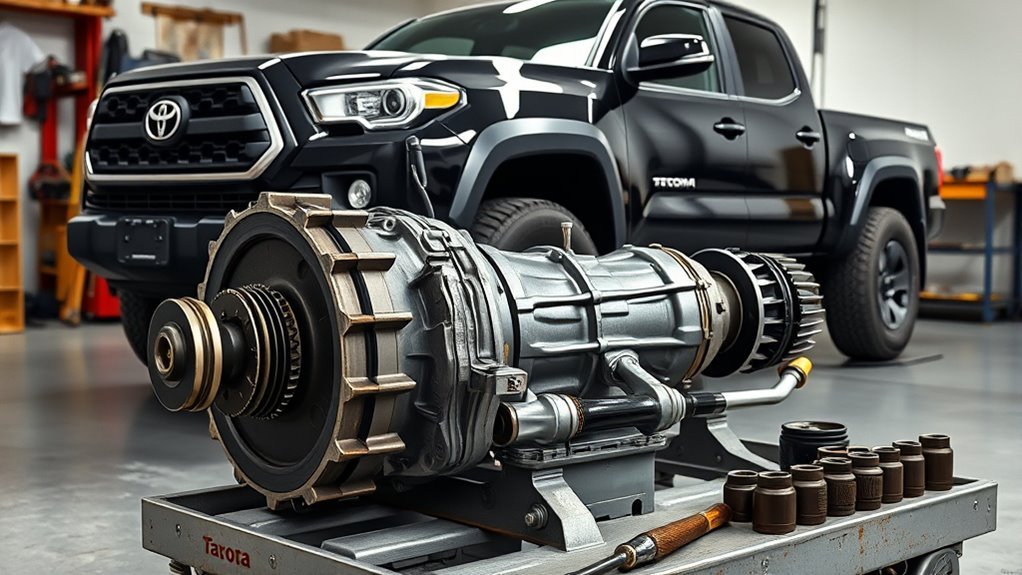
Your Tacoma transmission can last well past 200,000 miles when it is serviced correctly, but the answer depends on model year, transmission type, towing, heat, fluid condition, and how quickly you respond to small symptoms. The biggest mistake is treating every Tacoma the same: a 2016–2023 AC60 automatic, a 2016–2023 RC62F manual, and a 2024+ eight-speed Tacoma have different service needs and different failure clues.
Quick Answer
A Toyota Tacoma transmission commonly lasts about 200,000–300,000 miles, and well-maintained trucks can go farther. The most important factors are clean, correct fluid, controlled heat, leak-free cooler lines, software updates when applicable, and sensible towing or off-road use.
Key Takeaways
- Toyota’s 2023 Tacoma maintenance guide calls for maintenance every 5,000 miles or six months and lists transmission fluid or oil replacement at 60,000 miles/72 months for special operating conditions such as towing, heavy loading, or extended low-speed use.
- For 2016–2023 trucks, the AC60E/AC60F automatic needs careful fluid and heat management; the RC62F manual is simpler but still has clutch and gear-oil wear items.
- Slipping, delayed engagement, harsh shifts, whining, burnt-smelling fluid, leaks, and transmission-related codes are early warning signs you should diagnose quickly.
- Before replacing a transmission, compare the repair estimate with the truck’s frame condition, service history, rust level, resale value, and your long-term plans.
At a Glance
| Time Required | 10–20 minutes for a basic visual check; 1–2 hours for professional fluid-level verification and scan-tool diagnosis |
| Difficulty | Easy for leak and symptom checks; advanced for sealed-transmission fluid service |
| Tools Needed | Flashlight, clean rag, service records, OBD2 scanner with Toyota-enhanced data if possible |
| Cost | Low for inspection; higher for fluid service, software diagnosis, solenoids, rebuild, or replacement |
How Long Will My Tacoma Transmission Last?
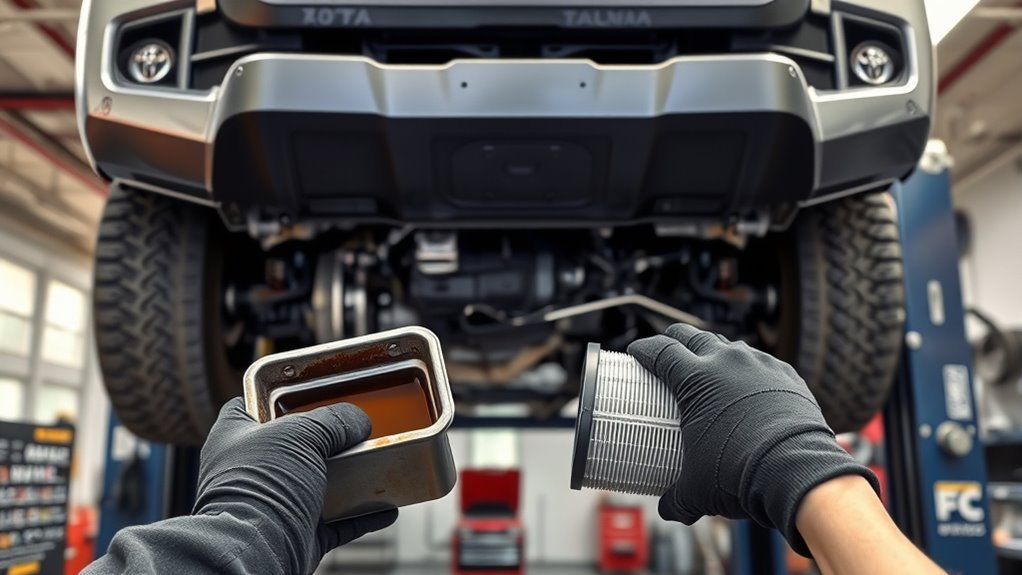
With steady maintenance, a Tacoma transmission can reasonably reach 200,000–300,000 miles. Some owners get more, especially with gentle driving, clean fluid, and a truck that has not spent its life overloaded, overheated, or neglected. That mileage range is not a promise, though. A transmission that tows often, crawls off-road, sits in stop-and-go heat, or runs low on fluid can wear much sooner.
Toyota’s maintenance guide is the best starting point. For the 2023 Tacoma, Toyota recommends scheduled maintenance every 5,000 miles or six months. At 60,000 miles or 72 months, the guide lists inspection of automatic transmission fluid cooler hoses, inspection for transmission leakage, and fluid or oil replacement under special operating conditions such as towing, car-top carrier use, heavy loading, or extended low-speed driving.
Transmission life is less about one magic mileage number and more about heat, fluid condition, driving load, and whether small problems are fixed before they become internal damage.
| Tacoma Setup | Realistic Lifespan Expectation | What Usually Decides It |
|---|---|---|
| Older automatics and manuals | Often 200,000+ miles with records and clean fluid | Fluid service history, rust, towing load, and prior repairs |
| 2016–2023 AC60E/AC60F automatic | Commonly 200,000–300,000 miles when maintained and not overheated | Fluid condition, calibration updates, shift behavior, and cooler-line integrity |
| 2016–2023 RC62F manual | Often long-lived, but clutch life varies widely | Clutch technique, gear-oil service, towing, and off-road use |
| 2024+ Tacoma automatic or iMT manual | Too new for long-term high-mileage patterns | Following the latest owner’s manual, warranty guide, and software updates |
Know Which Tacoma Transmission You Have
Before you set a service plan, confirm your model year and drivetrain. A broad “Tacoma transmission” search can mix together several different units, and that leads to bad advice.
- 2016–2023 automatic: Commonly identified as the AC60E on 2WD trucks and AC60F on 4WD trucks. It is a six-speed automatic with electronic controls and a torque converter.
- 2016–2023 manual: V6 4WD manual trucks use the RC62F six-speed manual. It avoids automatic valve-body and solenoid issues, but the clutch, pressure plate, pilot bearing, and gear oil still matter.
- 2024+ Tacoma: Toyota redesigned the Tacoma and moved to newer powertrains. Toyota states that the i-FORCE MAX uses an electric motor integrated into the eight-speed transmission, and the gas models also use a newer transmission family than the 2016–2023 trucks.
Note: If you are buying parts, ordering fluid, or comparing repair quotes, use the VIN and the transmission ID from the truck or service information. Do not rely only on trim name or online fitment lists.
AC60 vs RC62: How Model Differences Affect Lifespan
The AC60 automatic can be efficient and durable, but it depends heavily on fluid pressure, valve-body operation, torque-converter control, electronic calibration, and heat control. When the fluid is low, old, overheated, or contaminated, shift quality can change quickly. Harsh shifts, hunting between gears, shudder, and delayed engagement should not be ignored.
Toyota issued a service bulletin for some 2016–2017 Tacoma trucks with the 2GR engine and AC60 six-speed automatic for shift-feel concerns such as delayed engagement, harsh 1–2 upshift, delayed upshift with cruise control, gear-hunting behavior, and cold 3–4 flare. That does not mean every 2016–2017 Tacoma has a failing transmission, but it does mean software/calibration history is worth checking before assuming an internal mechanical failure.
The RC62F manual is mechanically simpler. You control clutch engagement and gear choice directly, which can reduce some automatic-transmission heat and shift-cycling issues. But it is not maintenance-free. Clutch wear, throwout bearing noise, gear oil condition, synchro wear, and driver habits all affect lifespan. Riding the clutch, towing in the wrong gear, or forcing shifts when cold can shorten its life.
[Products Worth Considering]

The FOXWELL NT301 is a plug-and-play OBD2 code reader designed to help drivers and home mechanics diagnose check engine light issues with ease. It reads fault codes, clears emissions-related warnings, displays live sensor data in graph form, and shows I/M readiness so you can quickly check vehicle status before an emissions test. With broad compatibility across many OBD2 vehicles and a clear color screen, it offers a practical, user-friendly way to monitor and troubleshoot engine performance.

The TOPDON VeriDiag X800 BT is a wireless bidirectional automotive diagnostic scanner designed for full-system troubleshooting, active testing, and advanced service resets. It supports broad vehicle coverage, live data viewing, AutoVIN identification, and lifetime free updates to help DIYers and professionals diagnose issues faster and with greater confidence.

The BLCKTEC 440 Bluetooth OBD2 scanner helps drivers and DIY mechanics quickly read and clear trouble codes, monitor live data, and check emissions readiness with confidence. Its color display, graphing capabilities, and battery and charging system testing make it a versatile diagnostic tool for OBD-compliant vehicles. Designed for plug-and-play convenience, it runs directly from your vehicle and includes support for report sharing and ongoing updates.
How to Maintain Your Tacoma Transmission
The best maintenance plan is simple: follow the Toyota maintenance guide for your exact model year, service sooner when your use is severe, and fix leaks immediately. Toyota’s own guide says to keep detailed records with the date, mileage, service description, and parts used, because maintenance history protects resale value and helps with warranty or goodwill discussions.
- Check your maintenance guide first. Toyota’s schedule changes by model year, engine, drivetrain, and operating conditions. Start with the guide for your VIN.
- Inspect for leaks at every oil change. Look at the transmission case, pan area, cooler lines, hose connections, transfer case, and the ground under the truck after parking.
- Use the correct fluid. Automatic transmissions and manual transmissions require specific Toyota-approved fluid or gear oil. The wrong fluid can cause poor shift feel or accelerated wear.
- Service severe-use trucks more aggressively. Towing, heavy loads, mountain driving, deep sand, mud, heat, and long low-speed operation all raise fluid temperature and stress.
- Avoid overheating. Keep the radiator, condenser, and transmission cooler area clean. Stop and cool the truck if you smell burnt fluid or notice slipping under load.
- Do not ignore software updates. On electronically controlled automatics, a calibration update can change shift timing and engagement behavior.
- Save every receipt. Record mileage, fluid type, shop name, and what was inspected or replaced.
Warning: Many Tacoma automatics use sealed or temperature-sensitive fluid-level procedures. Overfilling, underfilling, using the wrong fluid, or checking level at the wrong temperature can create the same symptoms you are trying to fix.
Pro Tip: If your Tacoma has high mileage and unknown fluid history, ask a Toyota-experienced shop whether a drain-and-fill is safer than an aggressive flush. A controlled service with inspection is usually smarter than forcing debris through an old unit.
[Products Worth Considering]

Turn your iPhone, Android device, or Windows PC into a professional-grade diagnostic scan tool with this Bluetooth OBD2 adapter. It is designed for broad vehicle compatibility and supports popular apps for deeper diagnostics, live data, and code clearing. Built-in protections and firmware updates help keep your vehicle and scanner safe while delivering reliable performance.

BlueDriver Pro turns your phone or tablet into a powerful vehicle diagnostic scanner with wireless Bluetooth connectivity and no subscription fees. It reads and clears enhanced trouble codes for systems like ABS, SRS, Airbag, TPMS, and Transmission, while also providing technician-verified repair reports, live data, freeze frame views, smog readiness checks, and Mode 6 test results. Built for broad coverage on gas vehicles sold in North America, it offers professional-grade diagnostics with easy setup and 24/7 North American support.

FOXWELL NT201 is an easy-to-use OBD2 scanner designed to help drivers quickly read and clear check engine codes, view live engine data, and check emissions readiness. Its color screen, one-key I/M readiness test, and broad compatibility with most gasoline vehicles since 1996 make it a practical tool for everyday diagnostics and maintenance. With plug-and-play operation and lifetime free updates, it offers a simple way to understand vehicle issues without expensive shop visits.
Fluid, Heat, and Towing: Why Transmissions Wear Out
Automatic transmission fluid does more than lubricate. It transfers hydraulic pressure, cools internal parts, applies clutches, and carries wear material to the filter or magnets. When fluid overheats or oxidizes, shift quality and clutch performance can suffer. Research on automatic transmission clutch temperatures has linked high clutch-pack heat with rapid fluid oxidation and clutch-related failures, and studies of oxidized ATF show that fluid aging changes friction behavior in wet clutches.
Towing is not automatically bad for a Tacoma transmission. The problem is heat and load. Long grades, oversized tires, roof racks, heavy payload, low-speed trail work, and repeated torque-converter slip all add heat. If you tow or carry weight often, treat your truck as severe-use even if the odometer mileage looks low.
| Condition | Why It Matters | Best Response |
|---|---|---|
| Towing or heavy payload | Raises fluid temperature and clutch load | Follow severe-service fluid intervals and avoid overloading |
| Stop-and-go heat | Reduces cooling airflow and increases converter heat | Inspect cooling system and service fluid on time |
| Low fluid or leaks | Can cause pressure loss, slipping, and overheating | Stop driving hard and repair the leak before damage spreads |
| Oversized tires or re-gearing mismatch | Can increase hunting and shift load | Use proper gearing, calibration, and driving mode for the setup |
Early Signs Your Tacoma Transmission Is Failing: Diagnostics to Run
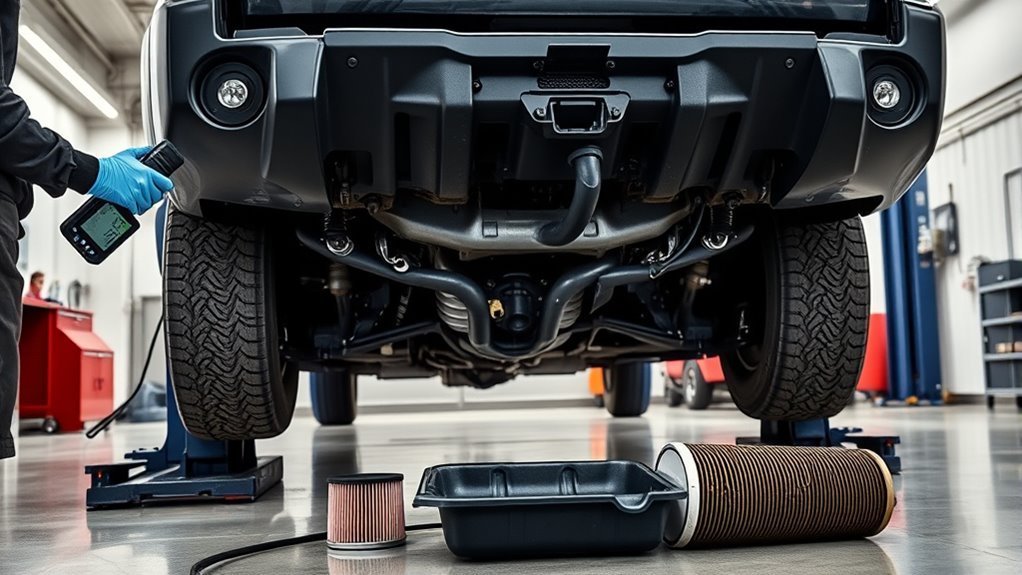
Transmission problems usually start small. The sooner you catch the pattern, the better your odds of avoiding a rebuild or replacement.
- Delayed engagement: The truck hesitates before moving after shifting into Drive or Reverse.
- Slipping: Engine RPM rises but road speed does not match.
- Harsh or flared shifts: The truck bangs into gear or briefly revs between gears.
- Shudder: A vibration appears during light acceleration or torque-converter lockup.
- Whining, grinding, or growling: Noise changes with gear, load, or speed.
- Burnt smell or dark fluid: Heat or clutch material may be present.
- Leaks: Red, brown, or oily fluid appears under the truck or around cooler lines.
- Warning lights or messages: Check engine lights, transmission-related codes, or drive-control warnings need scan-tool diagnosis.
Start with a code scan, but do not stop there. A basic OBD2 scanner may read engine codes but miss Toyota-specific transmission data. A shop with Toyota Techstream or an enhanced scan tool can view live data such as fluid temperature, commanded gear, shift solenoid activity, slip speed, and stored freeze-frame information.
| Symptom | Possible Cause | Next Diagnostic Step |
|---|---|---|
| Delayed Drive or Reverse | Low fluid, calibration issue, worn clutch, valve-body concern | Check for leaks, verify level by procedure, scan for codes |
| Harsh 1–2 shift or gear hunting | Calibration, adaptive shift logic, fluid condition, solenoid control | Check for applicable service bulletins and scan live data |
| RPM flare between gears | Clutch slip, low pressure, worn fluid, internal wear | Stop towing or hard driving; get pressure and scan-tool testing |
| Shudder under light throttle | Torque-converter clutch behavior, fluid friction change, driveline vibration | Confirm whether it is transmission, driveshaft, differential, or tire related |
| Burnt smell or dark fluid | Overheated fluid or internal clutch wear | Avoid long drives and get fluid, pan, and code inspection |
Warning: Do not keep driving a Tacoma that is slipping badly, losing fluid, refusing to move, or smelling burnt. Continued driving can turn a small leak or solenoid issue into internal clutch damage.
Repair vs Replace: Deciding When to Fix or Buy a Used Tacoma
If your Tacoma has high mileage and the transmission starts acting up, do not decide based on mileage alone. A clean, rust-free Tacoma with full service records may be worth repairing. A rusty truck with suspension rot, frame concerns, old tires, overdue maintenance, and no service history may not be.
Use this decision matrix before spending serious money:
| Question | Repair Makes More Sense If… | Replacement or Selling Makes More Sense If… |
|---|---|---|
| Is the frame solid? | Frame, mounts, and suspension points are clean and safe | Rust is structural or repair cost is spreading beyond the transmission |
| Do you have records? | Fluid, cooling, and driveline services are documented | History is unknown and multiple major systems are overdue |
| Is the problem isolated? | Diagnosis points to a leak, calibration, sensor, solenoid, or clutch issue | Metal debris, no movement, repeated overheating, or internal damage is confirmed |
| How do you use the truck? | You plan to keep it and need a known, reliable truck | Your needs changed, or the truck no longer fits towing, commuting, or work use |
When comparing repair options, get written estimates for at least three paths: targeted repair, rebuilt/remanufactured transmission, and used transmission. Ask what is included: torque converter, cooler flushing or replacement, seals, programming, warranty length, labor coverage, and whether related driveline problems were ruled out.
Note: Before buying a used Tacoma, run the VIN through the NHTSA recall lookup or Toyota recall lookup, then compare the result with service records and a pre-purchase inspection.
[Products Worth Considering]

The BLCKTEC 460T is a professional-level OBD2 diagnostic scanner designed for home mechanics and repair shops that need broad vehicle coverage and advanced service functions. It reads and clears engine, ABS, SRS, and transmission codes, performs all-system diagnostics, supports live data graphing, and includes popular reset services such as oil, TPMS, EPB, BMS, SAS, DPF, and throttle relearn. With AutoVIN, AutoScan, free lifetime updates, and RepairSolutions2 app integration, it helps simplify troubleshooting and maintenance for many OBD2-compliant vehicles.

Veepeak OBDCheck BLE is a Bluetooth LE OBD-II scanner designed to read and clear check engine codes, view live sensor data, and access freeze frame and readiness information through a compatible third-party app. It works with most 1996+ gas vehicles and many light trucks for standard diagnostics, with broader features depending on the app and vehicle support. This compact adapter is built for iOS and Android users who want a simple wireless way to monitor vehicle health without WiFi pairing.
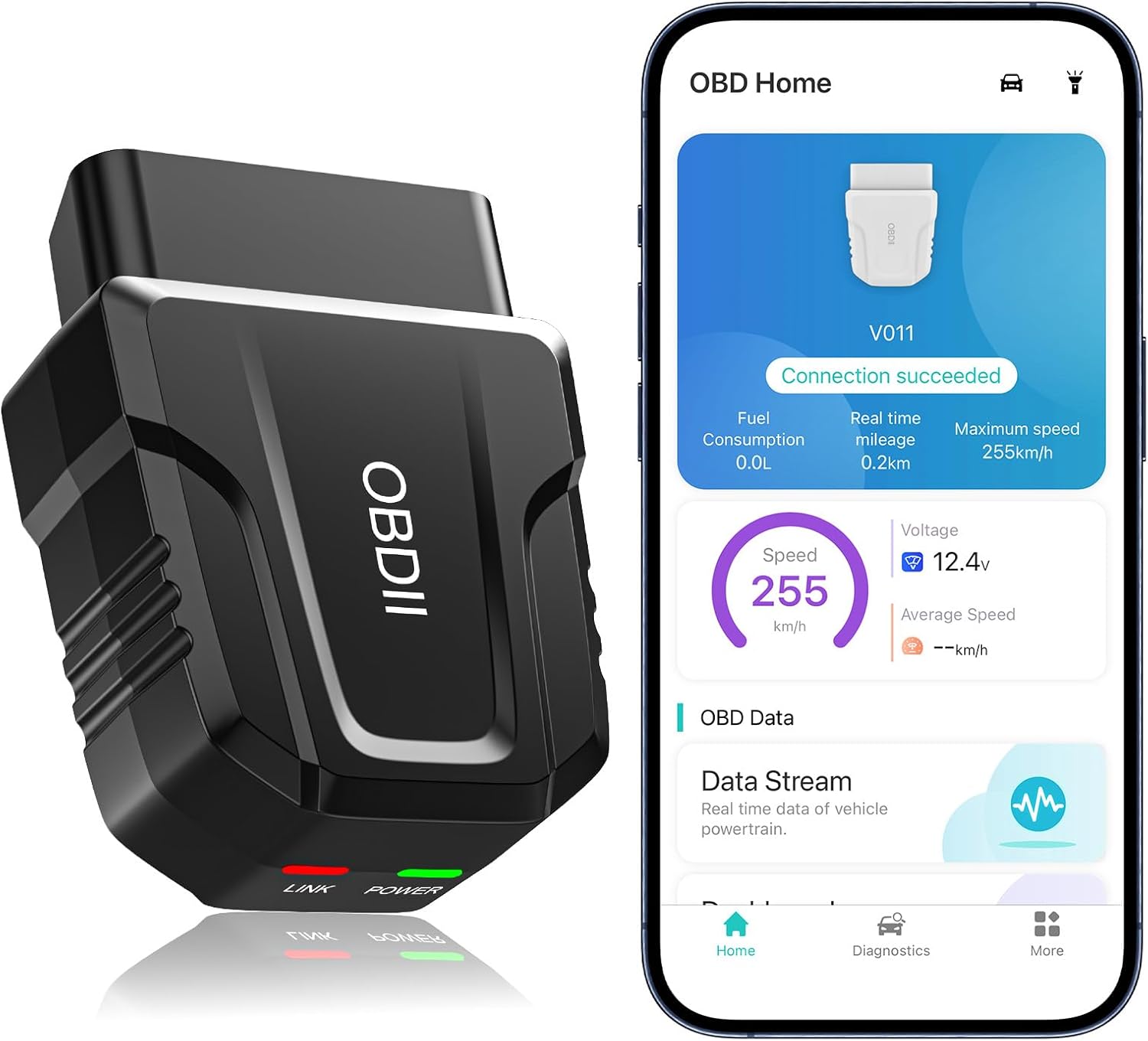
The UMEIJA V011 OBD2 scanner delivers comprehensive vehicle diagnostics with Bluetooth connectivity and a dedicated app for iOS and Android. It supports live data, fault code reading and clearing, readiness checks, freeze frame, sensor data, and performance testing to help drivers understand and monitor vehicle health. With broad compatibility across many car and truck models and easy-to-read data visualization, it is a practical tool for both beginners and experienced users.
Frequently Asked Questions
How long should a Toyota Tacoma transmission last?
A Tacoma transmission should often last around 200,000–300,000 miles with proper maintenance, and some last longer. The main factors are fluid condition, heat, towing load, leaks, driving style, and whether early symptoms are diagnosed quickly.
What year Tacoma has transmission problems?
The 2016–2017 Tacoma automatic is the most discussed because Toyota issued service-bulletin guidance for some 2GR/AC60 trucks with shift-feel concerns. That does not make every truck from those years bad. Inspect service history, check for software updates, scan for codes, and test-drive carefully.
How often should Tacoma transmission fluid be changed?
Follow the maintenance guide for your exact model year. For the 2023 Tacoma, Toyota lists transmission fluid or oil replacement at 60,000 miles/72 months under special operating conditions such as towing, heavy loading, and extended low-speed use. Many owners who tow or off-road treat that as their practical service interval.
Is the Tacoma automatic transmission sealed?
Many Tacoma automatics do not have a simple dipstick-style check. Fluid level may need to be verified at a specific temperature using the proper service procedure. That is why a dealer or Toyota-experienced shop is usually best for level checks and fluid service.
Should I flush or drain-and-fill a high-mileage Tacoma transmission?
Do not choose blindly. If the fluid history is unknown or the transmission already has symptoms, ask a qualified shop to inspect the fluid, scan for codes, and recommend a safe service. A drain-and-fill is often more conservative than a forceful flush on a neglected high-mileage unit.
Is the Tacoma manual transmission more reliable than the automatic?
The manual is simpler and avoids automatic valve-body, solenoid, and torque-converter issues, but it is not automatically cheaper forever. Clutch wear depends heavily on the driver, towing, off-road use, and whether the correct gear oil is serviced on time.
Conclusion
A Tacoma transmission can last well beyond 200,000 miles, but only if you treat maintenance as prevention instead of rescue. Know which transmission you have, follow Toyota’s maintenance guide, service severe-use trucks on time, watch for leaks and shift changes, and diagnose warning signs before internal wear spreads. If the transmission does fail, do not panic-buy parts. Compare repair, rebuild, used replacement, and truck replacement against the frame condition, maintenance records, and how long you plan to keep the Tacoma.
Sources
- Toyota 2023 Tacoma Warranty & Maintenance Guide — factory maintenance intervals, special operating conditions, transmission fluid/oil service notes, and maintenance-record guidance.
- Toyota Owners Manuals and Warranties: 2023 Tacoma — official owner manual and maintenance guide portal.
- Toyota Pressroom: 2024 Tacoma i-FORCE MAX — 2024+ Tacoma powertrain and eight-speed transmission information.
- NHTSA/Toyota Service Bulletin: ECM Calibration Shift Feeling Enhancements — 2016–2017 Tacoma AC60 shift-feel concerns and calibration guidance.
- SAE Technical Paper: Analysis of Automatic Transmission Clutch-Plate Temperatures — technical background on clutch heat and automatic transmission fluid oxidation risk.
- Friction journal study on oxidized automatic transmission fluids and wet clutch behavior — research support for fluid aging affecting clutch friction characteristics.