
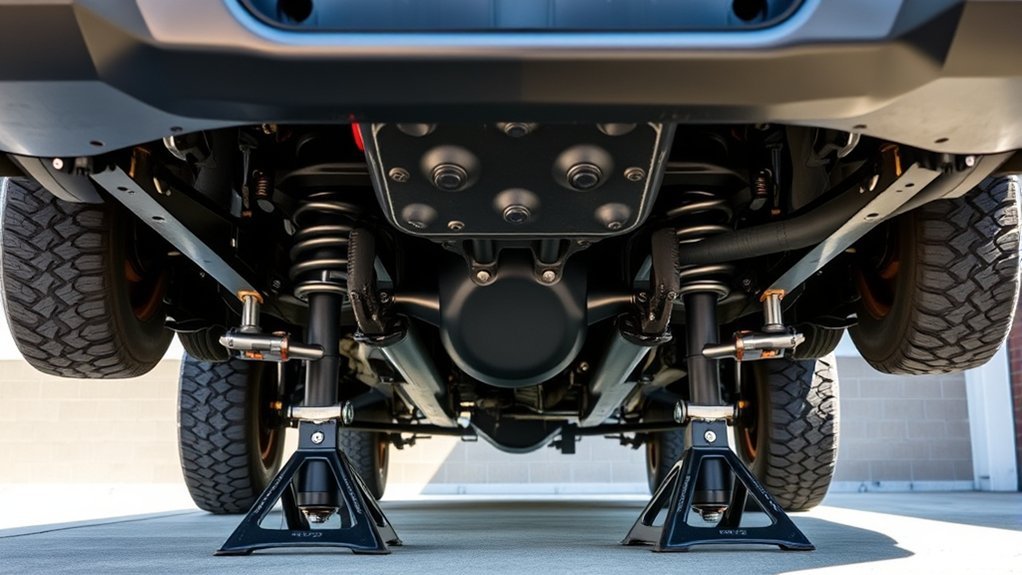
For safe Toyota Tacoma jack stand placement, start with the jack-point diagram and tire-changing instructions for your exact model year. Use the factory jack only as directed for a roadside wheel change. For garage work, lift with properly rated equipment, then support the truck on verified structural frame or axle support points before going underneath. Do not copy a diagram from another Tacoma generation or trim because frame details, rear suspension layouts, lift height, and aftermarket equipment can change the correct contact points.
Last updated: July 12, 2026 · Technical review: [VERIFY: add the real reviewer’s name and relevant vehicle-lifting credentials before publication]
Quick Answer
Use the jack points shown for your exact Toyota Tacoma year and configuration. After lifting, place properly rated jack stands only at verified structural support points required by the repair procedure. Never work under a Tacoma supported only by a jack, and never use skid plates, running boards, exhaust parts, brake or fuel lines, thin brackets, or rust-damaged metal as support points.
Key Takeaways
- Use the jack points shown for your exact Tacoma; the factory emergency jack procedure is for roadside wheel changes, not under-vehicle work.
- Jack stands must support the truck on solid, load-bearing structure—not thin sheet metal, suspension links, skid plates, or the hydraulic jack itself.
- Work on level, solid ground, chock the wheels that stay on the ground, and confirm the truck is stable before going underneath.
- Use the capacity markings and instructions on the jack and stands; never estimate safety from the truck’s curb weight alone.
At a Glance
| Time Required | 10–20 minutes to lift and secure the truck safely |
| Difficulty | Moderate; safety-critical |
| Tools Needed | Floor jack, jack stands, wheel chocks, owner’s manual, gloves, flashlight, torque wrench if removing wheels |
| Equipment Cost | Varies; use properly rated, undamaged equipment from a reputable manufacturer rather than choosing by price alone |
Which Tacoma Jack Point Should You Use?
The correct lift and support points depend on the job. A point used to raise one wheel for a roadside tire change is not automatically a safe place for a floor jack or jack stand. The support choice also determines whether the suspension stays loaded or hangs free.
| Job | Lifting Guidance | Support Guidance | Go Underneath? |
|---|---|---|---|
| Roadside wheel change | Use the factory jack at the exact illustrated point in the owner’s manual. | Follow Toyota’s emergency procedure; do not treat the factory jack as a repair stand. | No. |
| Wheel, brake, or hub service | Use a verified lift point for the exact model year and configuration. | Support the required corner or end at verified structural points, then confirm stability. | Only after the truck is fully supported by stands. |
| Axle or suspension work | Follow the repair procedure because the lift point changes whether the axle is loaded or hanging. | Use the frame or axle support location specified for that procedure; they are not interchangeable. | Only after every support point is verified and stable. |
[Products Worth Considering]

This low profile hydraulic trolley jack is built for fast, reliable lifting in garage and service environments. With a 2 ton capacity, it helps raise most cars with a compact profile that fits lower-clearance vehicles, while the swivel casters and large saddle support smooth positioning and added stability. A built-in overload protection valve adds an extra layer of safety during use.

This low-profile floor jack delivers strong lifting capacity for routine automotive maintenance, from tire changes to brake work and oil service. Its wide lift range, easy-rolling steel wheels, and single piston hydraulic pump make it practical for cars, SUVs, and light trucks. Built with durable steel and safety-focused features, it offers dependable performance and convenient storage.
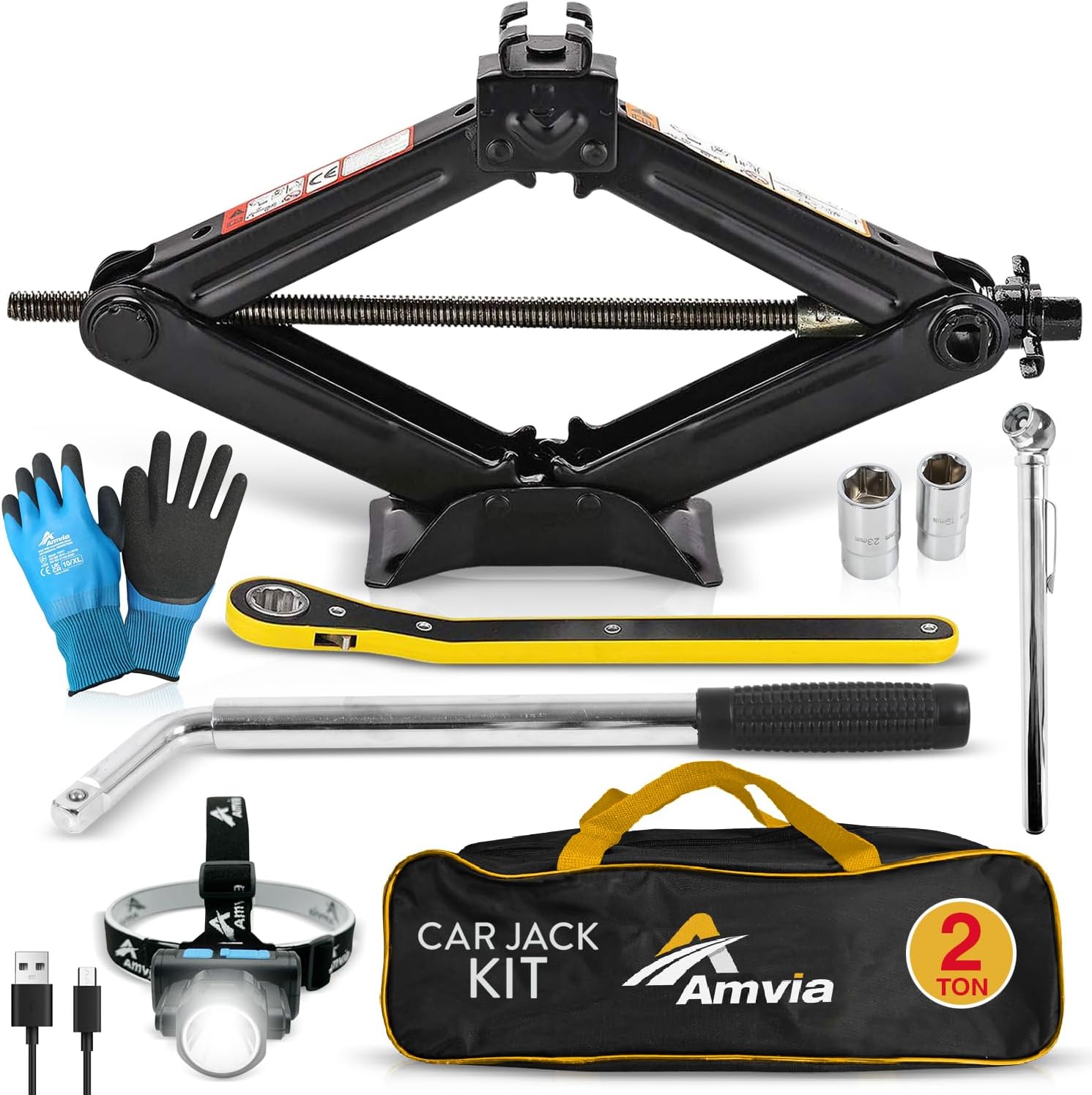
This all-in-one car jack kit is built to help drivers handle flat tire emergencies quickly and safely. It includes a 2 ton scissor jack, telescopic lug wrench, USB rechargeable LED headlamp, tire pressure gauge, gloves, and a storage bag for organized trunk storage. Designed for a wide range of vehicles, it offers a compact, portable solution for roadside tire changes day or night.
Toyota Tacoma Jack Stand Placement Starts With the Correct Jack Points
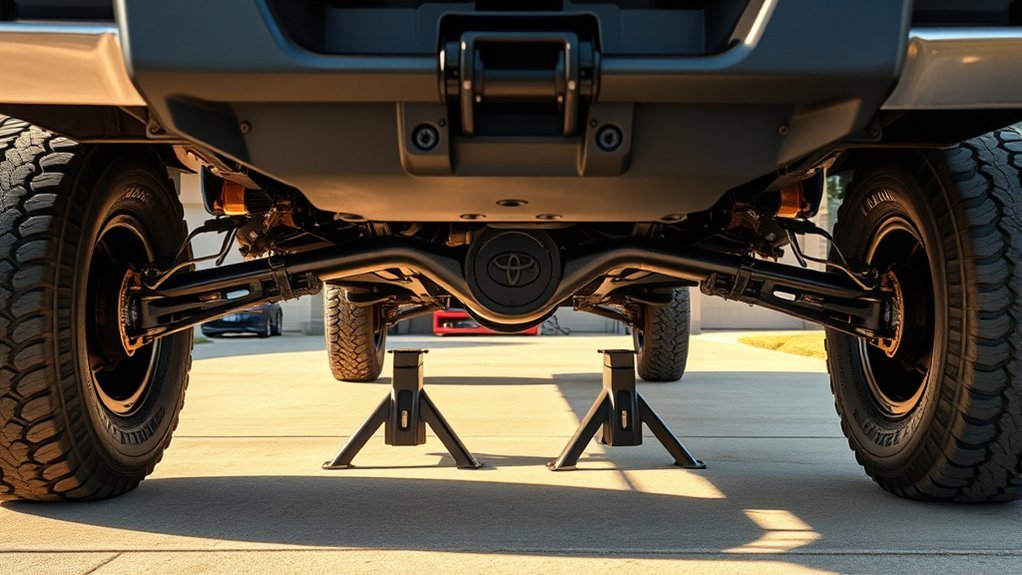
A correct jack point is a reinforced location intended to carry lifting force without bending the vehicle or allowing the jack to slip. A correct stand point must also hold the supported load securely for the specific repair. Those two points may be different, so identify both before raising the truck.
Start with the Toyota manuals portal and select your exact Tacoma year. Use the tire-changing section for the factory jack procedure, then consult Toyota service information for repair-specific floor-jack and stand locations. A roadside wheel-change point should not be assumed to be a general under-vehicle support point.
Warning: A jack is a lifting tool, not a support stand. Never place any part of your body under the Tacoma until the truck is resting securely on properly rated jack stands.
Factory Jack vs. Floor Jack
The factory jack is intended for emergency wheel changes and should be used exactly as shown in the owner’s manual. A hydraulic floor jack offers a wider base and controlled lifting for garage work, but it is still only a lifting device. Once the Tacoma reaches the required height, transfer the load to properly rated jack stands at verified support points.
Front and Rear Lift Points
For front-end work, use the exact lift point specified for the model year and repair procedure. Do not infer a central front point from a photo or video of another Tacoma generation. Avoid thin cross braces, skid plates, the oil or transmission pan, exhaust parts, steering components, and suspension parts that can rotate or bend under load.
For rear work, first decide whether the procedure requires the axle to remain loaded or the suspension to hang. That choice determines whether the verified support point is on the frame or an approved axle location. Never lift or support the truck by the differential cover, drain plug, brake-line bracket, or a thin casting edge.
Toyota’s 2024 Tacoma launch information confirms that fourth-generation trucks can use either leaf springs or an available multi-link coil rear suspension, depending on configuration. Toyota also identifies an integrated high-lift jack point at the rear frame end. Do not assume that feature is a floor-jack or jack-stand point; verify its intended use in the exact manual or service procedure before applying load.
What Tools Do You Need for Safe Jacking?
Before raising a Tacoma, confirm the jack’s capacity, lift range, saddle condition, and manufacturer instructions. Confirm the same for every jack stand. The rating must cover the load each tool will carry, and the marked capacity must never be exceeded. Vehicle curb weight alone does not tell you the exact load at one lift or support point.
- Hydraulic floor jack: Choose one with enough lift height for your Tacoma, especially if the truck has larger tires or a lift kit.
- Jack stands: Use matched stands with clear capacity markings, intact locking parts, a stable base, and enough height without improvised extensions.
- Wheel chocks: Chock the wheels opposite the end being lifted to prevent rolling.
- Torque wrench: Required if you remove wheels and reinstall lug nuts to the correct torque specification.
- Gloves and eye protection: Useful when handling dirty underbody parts, wheels, and jack hardware.
Pro Tip: Before lifting, open your owner’s manual to the tire-changing section and keep a flashlight nearby. The correct jack point is much easier to identify before the truck is in the air.
[Products Worth Considering]

This low profile hydraulic floor jack is designed for cars, coupes, hatchbacks, and sedans with limited ground clearance, making it a practical choice for garages and home maintenance. It lifts smoothly up to a useful height range with a single piston quick-lift pump, while the steel construction, rotating saddle, and overload protection help improve stability and safety during use.

This low-profile hydraulic floor jack is designed for vehicles with limited ground clearance, making it ideal for sports cars, lowered cars, and workshop maintenance. Dual pistons and rapid pump technology help lift vehicles faster with fewer strokes, while the durable steel construction and safety-focused saddle provide dependable support during repairs and routine service.

This low profile hydraulic floor jack is designed for lifting cars and light trucks with limited ground clearance, delivering dependable support for routine maintenance and repairs. Its dual piston quick lift pump helps raise vehicles faster with fewer strokes, while the steel construction, overload protection, and rotating saddle add confidence and control during use.
Where Should Jack Stands Go on a Toyota Tacoma?
Place jack stands only where the exact repair procedure identifies a stable, load-bearing support area. The aim is to transfer the truck’s weight from the jack to the stands without loading thin metal, moving suspension parts, lines, covers, or brackets.
[Products Worth Considering]
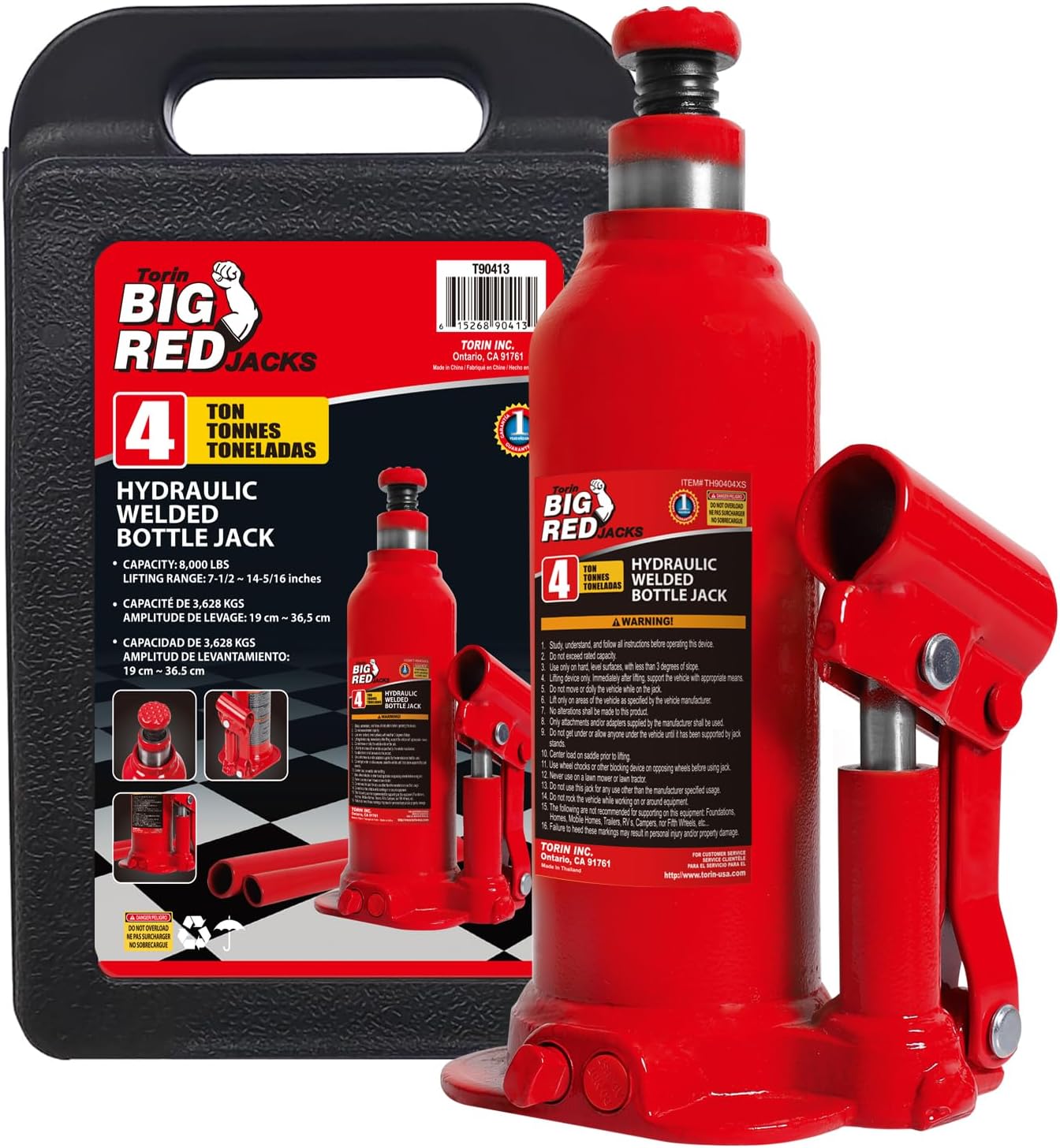
The Torin Big Red hydraulic bottle jack is built for residential and commercial lifting tasks, offering a stable wide base and rugged steel construction for dependable performance. Its smooth pressure pump, adjustable screw top extension, and serrated saddle make lifting easier and more secure, while the included carrying case simplifies storage and transport. Designed to meet ASME safety standards, it is ideal for vehicles, machinery, and other heavy-duty applications.

This 2-piece suspension tool set combines a compact strut spreader with a high-leverage lower control arm prying tool to help speed up safe suspension service. Designed for many FWD, import, and domestic vehicles, it supports strut, hub, ball joint, and control arm work while helping reduce the risk of damage to surrounding components. Heavy-duty steel construction makes it a dependable choice for mechanics and serious DIY suspension repair.
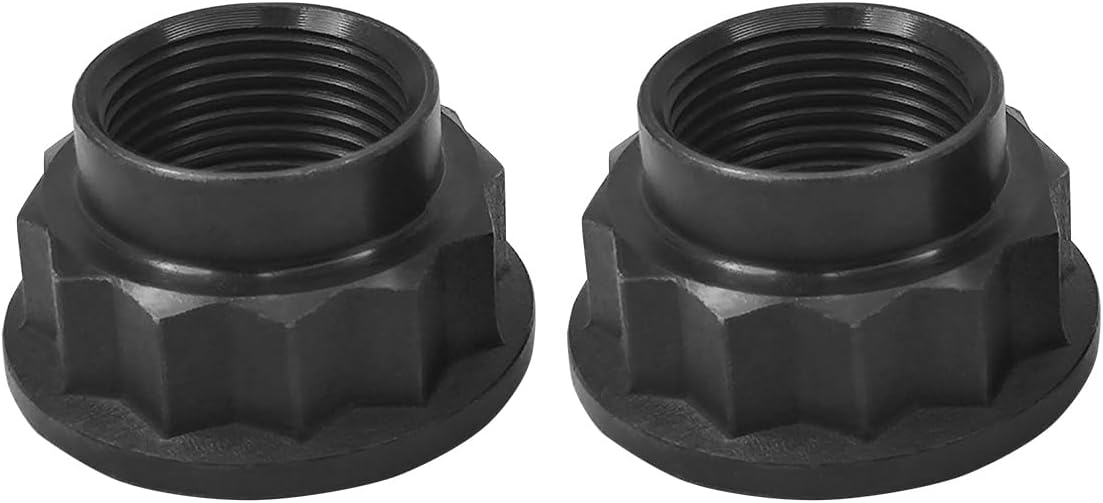
This pair of front axle shaft nuts is designed to secure CV joints and wheel bearings on compatible Toyota and Lexus front drive axles. Built from heat-treated carbon steel for durability and corrosion resistance, it helps maintain proper torque and reliable power transfer. It is a direct replacement for several factory part numbers and is recommended for paired replacement.
Recommended Jack Stand Locations
The stand saddle must be centered under the verified support point, and the stand base must sit flat. Do not use the following list as a substitute for model-specific service information. It explains the structural areas a procedure may identify:
- Verified frame-rail section: Supports the body and frame while allowing an axle or suspension to hang when the procedure requires it.
- Approved rear axle-housing area: Keeps the rear axle loaded for certain jobs, but the saddle must avoid the differential cover, brake lines, brackets, plugs, and curved surfaces that can let it slip.
- Specified frame-side mounting area: May be usable only when Toyota identifies the structural mount and the saddle does not contact a bushing, link, fastener, or moving part.
Avoid these areas unless a Toyota service procedure specifically says otherwise:
- Lower control arms or suspension links
- Skid plates or splash shields
- Running boards, rocker panels, or pinch welds not identified as jack points
- Exhaust, driveshaft, brake lines, or fuel lines
- Differential cover, drain plug, or thin brackets
- Any rusty, bent, cracked, or previously repaired frame area
Proper Lifting Techniques
- Park on level, solid ground. Concrete is best. Avoid gravel, dirt, grass, slopes, or soft asphalt on hot days.
- Set the parking brake and chock the wheels. Chock the tires that stay on the ground.
- Loosen lug nuts slightly if removing a wheel. Do this before lifting, while the tire is still on the ground.
- Position the jack at the correct lift point. Use the manual’s diagram or verified service information.
- Raise the Tacoma slowly. Stop if the jack begins to lean, roll, or shift.
- Place jack stands under solid support points. Match the height on both sides if lifting an axle or end of the truck.
- Lower the truck gently onto the stands. Confirm that each saddle stays centered as the load transfers. The stands, not the hydraulic jack, must carry the supported load.
- Test stability before working. From outside the danger zone, apply a careful stability check. If the truck, stands, or contact points move, raise the truck and reset the entire support arrangement.
Note: If your Tacoma has an aftermarket lift, rock sliders, skid plates, long-travel suspension, or larger tires, factory jack and stand locations may be harder to access. Use verified lift points and equipment with enough height and capacity.
Top Mistakes to Avoid When Jacking Your Tacoma
Most jacking problems come from rushing. Avoid these common mistakes before you put weight on the jack:
- Working under a truck supported only by a jack: Hydraulic jacks can leak down or shift. Always use stands.
- Using the wrong support point: Suspension links, skid plates, and sheet metal can bend or slip.
- Skipping wheel chocks: A truck can roll even on a surface that looks flat.
- Using damaged equipment: Rusted stands, leaking jacks, bent saddles, and missing stand locks are unsafe.
- Lifting on soft ground: A jack or stand can sink and tilt, causing the Tacoma to move.
- Ignoring lug nut torque: If you remove a wheel, reinstall and torque the lug nuts to the specification for your wheel type in the owner’s manual.
Safety standard: OSHA’s jack rules require enough rated capacity, a firm foundation, and immediate securing of the raised load. These workplace rules reinforce the same basic home-garage principle: never rely on the lifting jack as the only support.
Safety Precautions for Safe Jacking
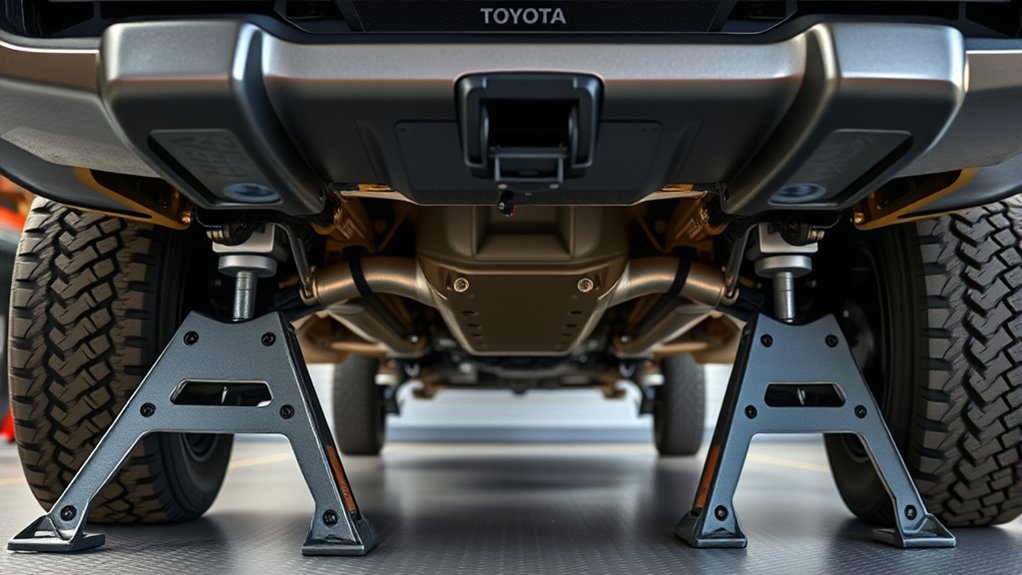
Before you crawl under your Tacoma, treat the setup like a safety inspection. The truck should be stable, the stands should be vertical, and every contact point should be centered and solid.
| Action | Purpose | Safety Notes |
|---|---|---|
| Use wheel chocks | Prevents rolling | Chock the wheels that stay on the ground |
| Inspect the jack and stands | Prevents equipment failure | Look for leaks, rust, cracks, bent parts, or missing locks |
| Use level, solid ground | Prevents sinking or tilting | Concrete is best; avoid grass, gravel, and slopes |
| Lower onto stands slowly | Confirms secure contact | Both stands should sit flat and vertical |
| Do a stability check | Finds movement before work starts | Shake gently from outside the danger area |
Ensuring Stability Before You Start
A stable Tacoma should not rock, slide, or shift once its weight is on the stands. If the truck feels unstable, raise it again, reposition the stands, and start over.
Inspect Jack Equipment
Check your floor jack for hydraulic leaks, damaged wheels, a bent handle, and a saddle that does not sit flat. Check jack stands for cracked welds, bent legs, rust, missing pins, or damaged ratchet teeth. If anything looks questionable, do not use it.
Confirm Ground Stability
The ground should be firm, level, and clean. Sweep away loose stones, oil, leaves, and debris before placing the jack or stands. If you must lift on a less-than-ideal surface in an emergency, use extra caution and avoid going under the truck.
Check the Truck Before Going Underneath
Once the Tacoma is on stands, look at all contact points from the front, rear, and sides. Each stand should be straight, fully seated, and positioned under solid metal. The truck should not be balanced at an angle that loads one stand more than the other.
How Do You Lower a Toyota Tacoma Safely?
- Clear the work area. Remove tools, parts, and people from under and around the truck.
- Reposition the jack at the verified lift point. Raise the Tacoma only enough to remove the load from the stands.
- Remove every stand from the lowering path. Never reach under a vehicle that is not securely supported.
- Lower the truck slowly. Watch the jack, tires, and vehicle position for movement.
- Finish wheel service on the ground. If a wheel was removed, tighten the lug nuts in the specified sequence and to the exact torque listed for the vehicle and wheel.
- Remove the chocks last. Confirm the Tacoma is fully settled and secure before clearing the chocks.
Maintaining Your Jack and Stands: Essential Tips
Regular maintenance keeps your lifting equipment safer and easier to use. Store jacks and stands indoors where they stay dry. Wipe off dirt and road salt, lubricate moving parts as recommended by the manufacturer, and keep the jack’s wheels clean so it can roll slightly as the vehicle rises.
Do not modify jack stands, drill new holes, weld extensions, or stack stands on blocks to gain height. If your Tacoma is lifted or has oversized tires, buy taller rated stands and a higher-lift floor jack instead of improvising.
Frequently Asked Questions
Where should I place jack stands on a Toyota Tacoma?
Place jack stands only at verified, load-bearing support points identified for your Tacoma’s exact model year, configuration, and repair procedure. Depending on the job, the procedure may specify a frame section or an approved axle support area. Never use skid plates, running boards, suspension links, exhaust parts, lines, thin brackets, or rust-damaged metal.
Where is a safe place to put jack stands?
A safe stand point is a verified reinforced area that can carry the supported load without bending or slipping. The stand base must sit flat on firm, level ground, and the saddle must remain centered as the Tacoma’s weight transfers from the jack.
Can I put jack stands under the lower control arms?
Avoid lower control arms as general stand points unless a Toyota service procedure for the exact model and repair specifically requires that support method. Control arms move through an arc, and many surfaces are not shaped to hold a stand saddle securely.
Can I jack up a Tacoma from the rear differential?
Do not lift from the differential cover, drain plug, brake-line bracket, or a thin casting edge. If a verified procedure uses part of the rear axle housing, position the jack only at the exact stable contact area the procedure identifies.
How many jack stands do I need for a Toyota Tacoma?
Use at least a matched pair when supporting one end of the Tacoma. Supporting the entire truck may require four stands and verified points at all four corners, but that setup adds risk and should be attempted only with level concrete, correctly rated equipment, and a repair procedure that identifies every support point.
Can I use jack stands on gravel or dirt?
Do not go under a Tacoma supported on gravel, dirt, grass, a slope, or another surface that can shift or sink. Move the truck to firm, level concrete and place the jack and stands as their manufacturers direct. In a roadside emergency, change the wheel only as the owner’s manual permits and stay out from under the truck.
Conclusion
Before lifting your Tacoma, identify both the lift point and the stand point for the exact model year and repair. Work on level concrete, chock the wheels, stay within every equipment rating, and transfer the load to verified supports before going underneath. If the correct point is unclear, stop and confirm it through Toyota service information or a qualified technician rather than testing a possible contact point with the truck’s weight.
Sources
- Toyota Owners Manuals and Warranties: 2024 Tacoma — official owner’s manual source for Tacoma jack-point and tire-change instructions
- Toyota Digital Owner’s Manual: 2024 Tacoma — interactive Toyota manual reference for model-specific procedures
- Toyota USA Newsroom: 2024 Tacoma Engineering Overview — official confirmation of leaf-spring and multi-link coil rear suspension configurations and the rear-frame high-lift jack point
- OSHA 29 CFR 1910.244: Jacks — jack capacity, foundation, blocking, lubrication, and inspection safety guidance
- OSHA 29 CFR 1926.305: Jacks — rated-capacity, blocking, and securing raised loads
- NHTSA Recalls — official recall lookup for used Tacoma research and safety checks

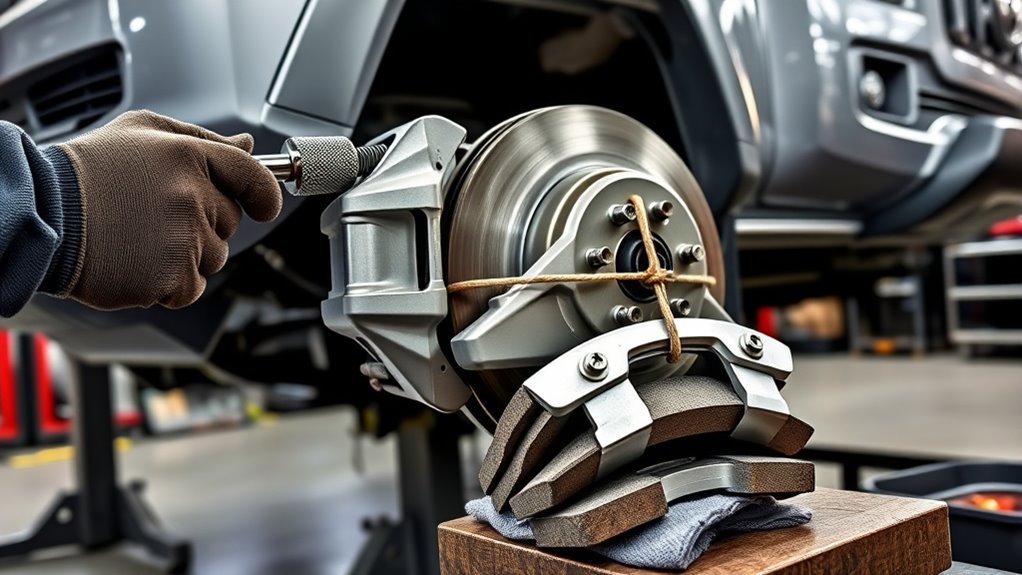
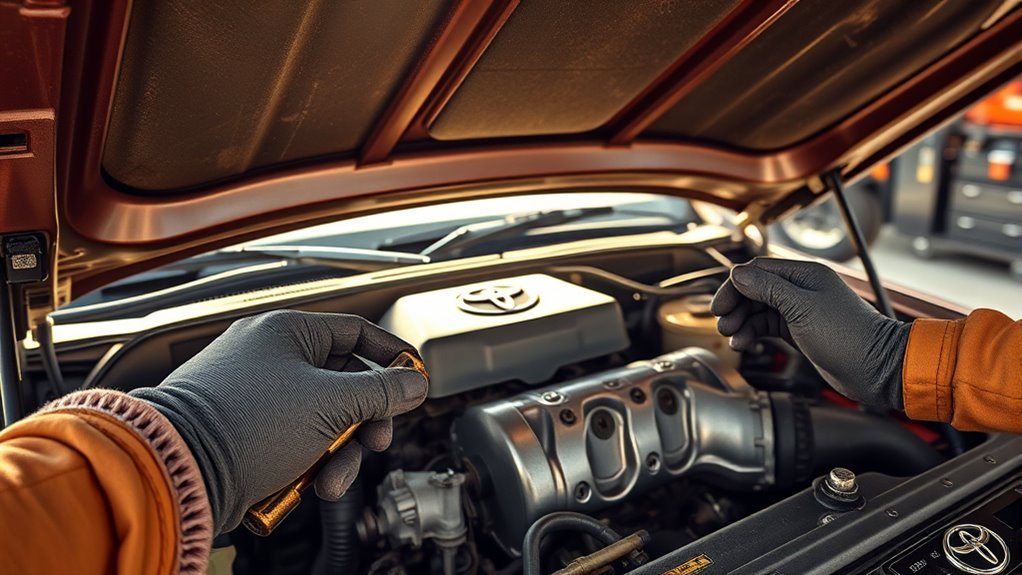

[…] Tacoma, and transfer the truck’s full weight to rated jack stands. See the site’s Tacoma jack and jack-stand placement guide. Never work under or beside a truck supported only by a hydraulic […]
[…] internal metal produces a dull, hollow thud. If you elevate the vehicle, always follow a verified Tacoma jack-stand placement guide, place rated stands on solid concrete, and never work underneath a truck supported solely by a […]