What’s in This Article
- Is My Tacoma Frame Unsafe? Quick Risk Check
- Spotting Early vs. Advanced Tacoma Frame Rust
- Why Tacoma Frames Rust (The Simple Science)
- Recalls, Warranties, and the Class-Action Outcome
- Immediate Safety and Legal Steps If You Find Rust
- Short-Term Fixes: Rust Removal, Preservation, and Undercoating
- Tacoma Frame Rust: Long-Term Repair Options and Trade-Offs
- Estimated Costs, Parts Availability, and Where to Source Them
- When to Repair, Sell for Parts, or Use as a Donor Truck
- Community Resources and Step-by-Step Installers
- Frequently Asked Questions
A rusty Tacoma frame can turn a solid truck into a safety risk before you notice major symptoms. You should inspect your Tacoma’s frame at the suspension mounts, rear crossmember, wheel wells, and undercarriage for surface scale, deep pitting, thinning, or holes. Take clear photos, note the date, and track whether the rust spreads. If you find structural loss, stop heavy use, get a mechanic’s report, and check Toyota frame program or settlement options for your model year.
Quick Answer
Tacoma frame rust becomes unsafe when it weakens suspension mounts, crossmembers, welds, or frame rails. Surface rust may only need cleaning and coating, but holes, soft metal, or deep pitting need a professional inspection. If your truck falls under a Toyota frame campaign or settlement period, contact Toyota or a dealer with your vehicle identification number.
Key Takeaways
- Check suspension mounts, rear crossmembers, weld seams, and wheel wells before judging frame rust.
- Treat holes, soft metal, deep pitting, or loose mounts as safety concerns until a mechanic checks them.
- Clean and coat early surface rust before salt, moisture, and debris make the damage worse.
- Use photos, service records, and a written inspection report when asking about warranty or settlement help.
- Compare repair cost, truck value, and frame condition before choosing repair, parts sale, or donor use.
Is My Tacoma Frame Unsafe? Quick Risk Check
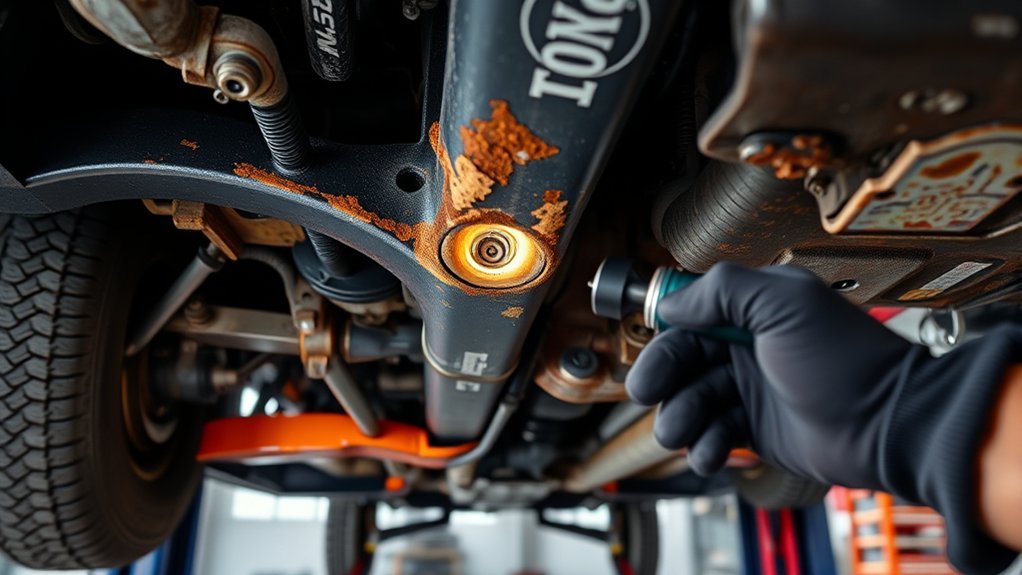
Wondering whether your Tacoma’s frame is safe? Start with the model year, because Toyota frame rust programs and settlement terms vary by generation and vehicle identification number. Then inspect the rear crossmember, suspension mounting points, frame rails, weld seams, and brake line mounting areas.
Look for through-rust, large flakes, deep pits, cracked welds, or metal that bends under light pressure. If you only see surface scale, document the location and thickness before you clean and coat it. If you see holes or major metal loss, treat the frame as compromised and avoid towing, hauling, or off-road use until a qualified shop checks it.
Contact Toyota or a dealer with your vehicle identification number to ask about frame inspection programs, warranty extensions, or past settlement coverage. Keep photos, service records, and repair estimates together. Clear records help you decide whether to repair, reinforce, sell, or retire the truck.
Warning: Don’t tow, carry heavy loads, or drive off-road if rust has weakened frame rails, suspension mounts, or steering and brake attachment points.
Spotting Early vs. Advanced Tacoma Frame Rust
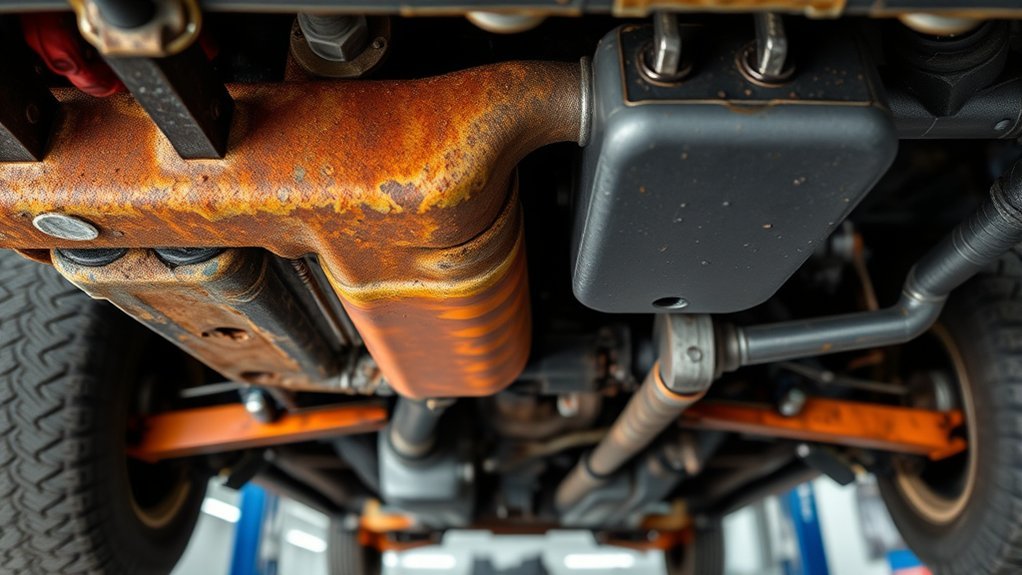
When you inspect your Tacoma, first separate light surface rust from damage that may affect strength. Surface rust often looks orange or brown and stays on the outer layer of the metal. Advanced rust creates deep pits, holes, thin metal, or flakes that peel away in layers.
Use routine checks to catch flaking early, especially after winter driving or salt exposure. Focus on wheel wells, seams, brackets, and the underside of the frame. Early treatment costs less and can slow future corrosion.
Surface Flaking Indicators
A Tacoma frame may show early surface flaking as small rust patches that you can scrape with a dull blade or screwdriver. If the metal below still feels solid, you may have manageable surface corrosion. Photograph the area before and after cleaning so you can track changes.
Clean, dry, and recoat affected zones to slow the damage. Road salt, mud, and poor drainage can speed up rust, so wash the undercarriage after harsh use. Don’t seal wet dirt under a coating, because trapped moisture can make corrosion worse.
| Indicator | Action |
|---|---|
| Small patches | Scrape, clean, document |
| Layered flaking | Remove loose rust, inspect depth, recoat |
Structural Integrity Signs
How do you tell surface rust from structural compromise on a Tacoma frame? Surface rust changes the color and texture but leaves the metal thick and firm. Structural rust removes metal and weakens parts that carry load.
Probe suspect areas with a screwdriver and watch for flex, holes, crumbling metal, or loose brackets. Pay close attention to crossmembers, suspension mounts, spring hangers, and steering or brake line attachment points. If probing reveals through-holes or weak metal at load points, get a professional frame inspection before you keep driving.
Why Tacoma Frames Rust (The Simple Science)
Rust forms when iron reacts with oxygen and moisture. Road salt speeds this reaction because it helps create an electrochemical process on exposed steel. Once paint, coating, or factory protection fails, bare metal can start to corrode.
Tacoma frames can hold mud, salt, and water in seams, joints, boxed areas, and pockets. Those areas stay wet longer than open metal surfaces. Long wet cycles give rust more time to grow.
You can slow the process with smart maintenance. Clean packed mud, wash salt from the undercarriage, dry hidden pockets when possible, and use compatible rust inhibitors or coatings. Focus on recessed joints, weld seams, and debris traps because those areas often rust first.
Recalls, Warranties, and the Class-Action Outcome
You should review Toyota frame campaign details by model year and vehicle identification number before you pay for major repairs. Tacoma frame coverage has included inspection programs, warranty extensions, and class-action settlement remedies for certain Toyota trucks. Terms can vary, so don’t assume every Tacoma qualifies.
Ask the dealer to check open campaigns, past inspections, and repair history. You can also contact Toyota customer support and request written confirmation of eligibility. If coverage has expired, your records can still help with repair decisions or goodwill requests.
Recall Timeline and Scope
Toyota frame rust actions developed after owners reported severe corrosion on certain Tacoma trucks and related Toyota models. Coverage did not apply to every model year in the same way. That means your truck’s build date, vehicle identification number, and service history matter.
Use a dealer inspection to confirm whether the truck passed, failed, or already received frame work. If Toyota replacement frames are no longer available for your vehicle, approved repair paths may differ by region and shop. Document every conversation, inspection, and repair estimate.
Extended Warranty Details
Some affected Tacoma owners received extended frame coverage measured from the original sale date. The exact term and remedy depended on the vehicle and program. Common remedies included frame inspection, rust treatment, repair, or frame replacement when Toyota approved the claim.
You should bring photos, service dates, and inspection notes when you ask about coverage. A dealer can check your vehicle identification number against Toyota records. If the dealer denies coverage, request the reason in writing and ask Toyota customer support about your next step.
Legal Settlement Outcomes
The class-action outcome helped many owners pursue inspection and repair options for premature frame corrosion. It also made documentation more important, because coverage depended on time limits, model eligibility, and inspection results. For many older trucks, those formal windows may have already closed.
Factory frames may not remain easy to source for older Tacomas. Some owners choose aftermarket frame caps or fabricated repairs when a qualified shop says the damage fits that repair method. You should treat any repair as a safety decision, not just a cost decision.
| Component | What to Check | Why It Matters |
|---|---|---|
| Program eligibility | VIN and model year | Confirms possible coverage |
| Inspection status | Dealer records | Shows past frame decisions |
| Repair path | Shop report | Guides safe repair choices |
Immediate Safety and Legal Steps If You Find Rust
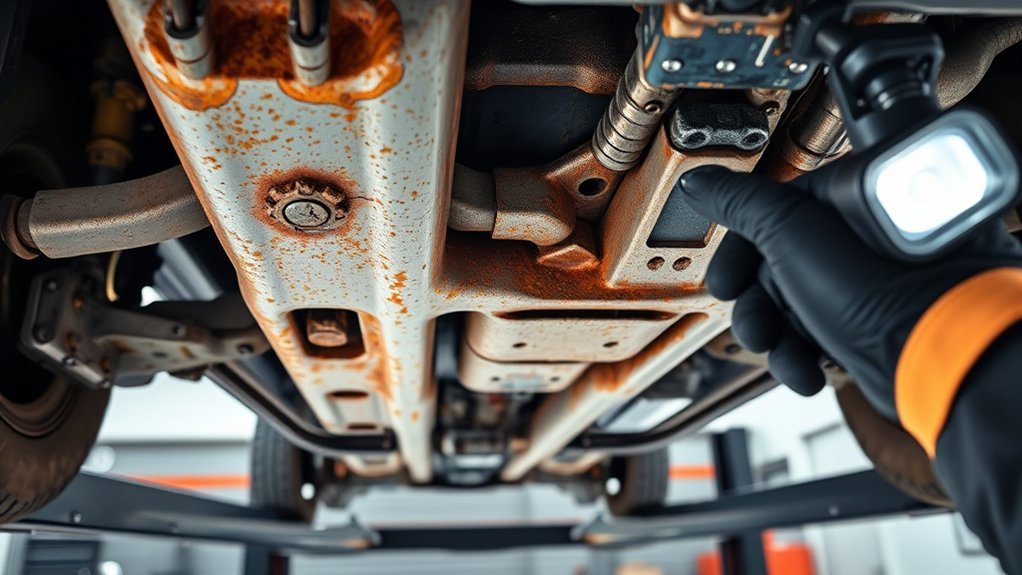
If you find rust on your Tacoma, first decide whether it affects structural parts or safety-critical systems. Check the frame rails, crossmembers, suspension mounts, steering attachment points, and brake line areas. Photograph the damage from several angles and write down the location, date, and mileage.
Use safety precautions until you know the full extent of the damage. Avoid heavy loads if the frame has holes, weak mounting points, or metal that flakes away in large chunks. If the truck feels unstable, makes new clunks, or shows shifted suspension parts, stop driving and arrange an inspection.
Contact Toyota customer service or a Toyota dealer with your vehicle identification number. Ask about open recalls, special service campaigns, extended warranty records, or settlement-related history. Then hire a qualified mechanic or frame specialist for a written report that explains repairability, likely cost, and safety concerns.
Short-Term Fixes: Rust Removal, Preservation, and Undercoating
After you document serious rust and arrange professional inspection when needed, you can treat lighter corrosion. Start by removing loose scale with a wire brush, scraper, or media blasting. For small confined areas, use a chemical rust remover only as the product label directs.
Clean metal helps primer and coating stick better. After loose rust comes off, dry the area and apply a rust-inhibiting primer or converter that matches your coating system. Follow with a protective coating, such as chassis paint, wax-based spray, or undercoating made for vehicle frames.
Don’t coat over wet dirt, loose scale, or oil. That traps moisture and hides future damage. Build a routine: wash salt from the undercarriage, inspect seams and joints, and reapply coating based on climate and truck use.
Pro tip: Mark treated areas with dated photos so you can compare rust growth during each inspection.
[Products Worth Considering]

FRAME COATING: This special aerosol spray is both a rust prevention and rust destroyer formula rolled into one. It will not only protect your chassis from the start of rust formation and allow you to maintain a clean finish, it also eliminates the need for any future maintenance or repairs, ensuring that it will be as good as new for years to come.

PREMIUM FORMULATION: The U-POL Undercoating Spray is a high-quality, hard-wearing, protective coating for use on prepared metals, painted and primed surfaces, aluminum, rigid plastics, and fiberglass.

FRAME COATING: This special aerosol spray is both a rust prevention and rust destroyer formula rolled into one. It will not only protect your chassis from the start of rust formation and allow you to maintain a clean finish, it also eliminates the need for any future maintenance or repairs, ensuring that it will be as good as new for years to come.
Tacoma Frame Rust: Long-Term Repair Options and Trade-Offs
You’ll usually compare full-frame replacement, fabricated repair, and frame caps. Full-frame replacement can restore the best structure when a proper frame is available, but parts and labor can make it hard to justify on older trucks. Frame caps can reinforce targeted areas, but they don’t turn a badly rusted frame into a new frame.
Choose based on damage location, shop skill, truck value, and how you use the vehicle. A daily driver with small localized rust may justify repair. A tow rig or off-road truck with weak mounts needs a stricter safety standard.
[Products Worth Considering]

Perfect Fit: Mid frame rust repair with spring mount fit for 1996-2004 Toyota Tacoma XtraCab, 2WD and 4WD models, including passenger side and driver side and spring mount

Vehicle Fitment: Mid Rear Frame Section at Bump Stop fit for 1996-2004 Toyota Tacoma Regular Cab, XtraCab, Tacoma 2000-2004 Double Cab, 2WD and 4WD models

Fitment: Rear frame rust repair with spring mount fit for 1996-2004 Toyota Tacoma Reg cab(2 doors), 1996-2004 Xtra cab(2.5 doors), 2000-2004 Double cab(4 doors) 2WD 4WD
Frame Replacement Costs
A full-frame replacement can cost several thousand dollars because it requires major labor and hard-to-source parts. The shop must remove many body, suspension, brake, fuel, and drivetrain components. That labor often costs more than the frame itself.
Frame caps or sectional repairs may cost less, but pricing changes with rust depth, welding access, and local labor rates. Always ask for an itemized estimate that separates parts, labor, coating, and inspection. Compare that total with the truck’s safe market value after repair.
- Compare the expected service life for each repair option.
- Itemize parts, labor hours, coating, and inspection checkpoints.
- Choose a shop with documented frame repair experience.
- Use owner groups to compare realistic cost ranges in your area.
Frame Cap Pros and Cons
Frame caps can help when rust stays in a repairable section and the surrounding metal remains strong enough. They add reinforcement and may cost less than a full-frame swap. A skilled installer must remove weak metal, fit the cap correctly, and weld it safely.
Frame caps also have limits. They don’t restore the frame to original factory condition, and poor prep can trap rust under new metal. Ask the shop how it will clean, weld, coat, and inspect the repair after installation.
Estimated Costs, Parts Availability, and Where to Source Them
Cost and parts availability can decide whether a Tacoma frame repair makes sense. Full-frame replacement may not fit the budget for many older trucks. Frame caps and fabricated repairs can lower the cost, but only when the remaining frame can support a safe repair.
- Aftermarket suppliers: Check fitment, material thickness, and owner feedback before buying parts.
- Frame caps: Compare design, coverage area, steel thickness, and weld requirements.
- Community sourcing: Use Tacoma forums and local clubs to find vetted shops and used parts.
- Local shops: Confirm welding quality, corrosion prep, coating work, and inspection steps.
Always calculate the full cost, not just the part price. Include labor, towing, alignment, brake or fuel line work, coating, and post-repair inspection. A cheap repair can become expensive if it hides rust or fails safety checks.
[Products Worth Considering]

Fitment: Front frame repair fit for toyota tacoma 2005-2015 2nd Gen Double Cab and Access Cab

Fitment: Compatible with 1996-2004 Toyota Tacoma Regular Cab, 2WD, 4WD and Prerunner. Note: Will not compatible with Extended Cab.

Fitment: Compatible with 1996-2004 Toyota Tacoma Regular Cab 2WD 4WD Prerunner, Not fit Extended Cab.
When to Repair, Sell for Parts, or Use as a Donor Truck
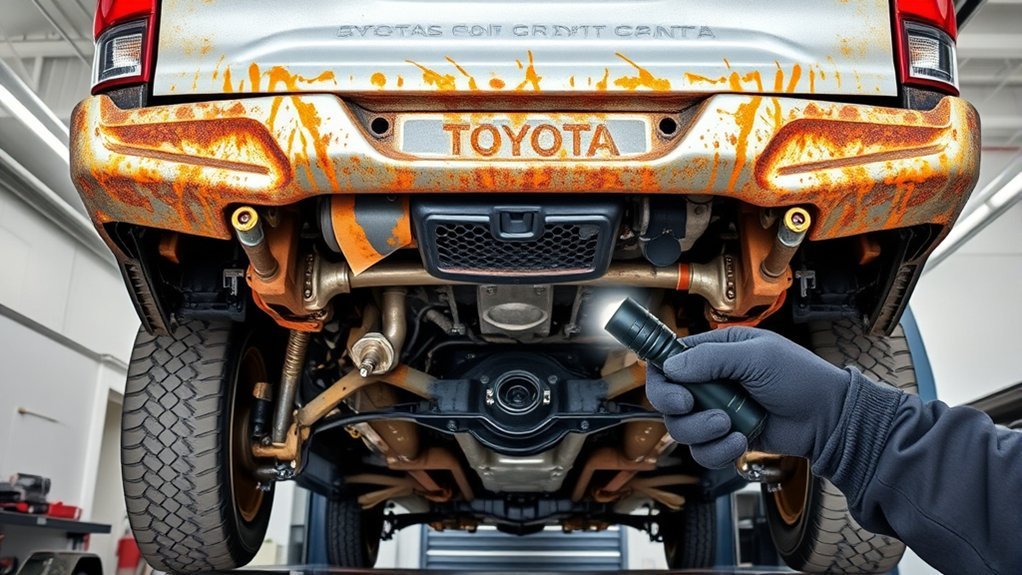
Repair makes sense when frame corrosion stays local and a qualified shop can restore the load path. The repair also needs to fit the truck’s value and your use case. If you tow, haul, or off-road often, don’t accept a weak or uncertain frame repair.
Sell for parts when corrosion affects several load-bearing zones or repair cost exceeds the truck’s safe value. Valuable parts may include axles, drivetrain parts, interior pieces, body panels, wheels, and electronics. Clear photos and honest damage notes help buyers understand what they’re getting.
A donor truck can still help another Tacoma stay on the road. Catalog the useful parts, list the frame condition clearly, and avoid selling a structurally unsafe truck as road-ready. That protects buyers and keeps usable parts out of the scrap pile.
Community Resources and Step-by-Step Installers
If you need repair guidance, use Tacoma owner groups, local 4×4 clubs, and shops that document frame work. These sources can help you find known rust zones, part numbers, and repair photos. They can also help you avoid shops with poor welding or coating habits.
Use Tacoma owner forums and specialist installers for documented rust-repair procedures, validated parts, and vetted welding or frame help.
- Watch repair videos that show cleaning, cutting, welding, priming, and coating steps.
- Ask for shop referrals from owners who used similar frame repair parts.
- Look for local tool libraries or club projects when you plan light rust treatment.
- Use inspection checklists before and after any frame repair.
Community advice should support, not replace, a professional inspection. Frame repairs affect crash safety, suspension alignment, and road control. Use owner knowledge to ask better questions and choose a safer repair path.
Frequently Asked Questions
Are Toyota Tacomas Prone to Rust?
Yes, some Toyota Tacoma trucks are known for frame rust, especially older models exposed to road salt and moisture. The risk depends on model year, climate, maintenance, coating condition, and past frame inspections.
How do I check a Tacoma frame for rust at home?
Park on level ground, use a bright light, and inspect the frame rails, rear crossmember, wheel wells, suspension mounts, and weld seams. Look for holes, deep pitting, large flakes, soft metal, and loose brackets. Take photos and compare them at each inspection.
Can undercoating fix Tacoma frame rust?
Undercoating can help protect clean, solid metal, but it won’t fix structural rust. You must remove loose rust, dry the area, and check metal strength before coating. Coating over wet debris can trap moisture and hide damage.
Are frame caps safe for a rusty Tacoma?
Frame caps can be safe when a skilled shop installs them on a frame that still has enough solid metal. They aren’t a cure for a frame with widespread corrosion or multiple weak load points. Ask for a written inspection before and after installation.
Should I buy a used Tacoma with frame rust?
Only consider it after a mechanic or frame specialist inspects the truck. Light surface rust may be manageable, but holes, weak mounts, and deep pitting can turn the truck into an expensive safety problem. Use the inspection report to negotiate or walk away.
Safety Disclaimer: This article is for informational purposes only and does not replace a professional vehicle inspection. Always consult a qualified mechanic or frame repair specialist before driving, towing, hauling, or repairing a truck with suspected structural rust.
Conclusion
Tacoma frame rust needs quick action because hidden corrosion can weaken the parts that keep the truck stable and safe. Start with a careful inspection, take photos, and get a written mechanic’s report if you see holes, soft metal, or damaged mounts. Then compare Toyota coverage, repair cost, truck value, and your driving needs before you choose the next step. A clear decision now can protect your safety and help you get the most value from your Tacoma.
References
- Vehicle Recalls Search — National Highway Traffic Safety Administration
- Toyota Owners Support — Toyota
- Toyota Frame Rust Settlement Coverage Overview — CarComplaints.com, 2016