You’ll need the exact coolant chemistry, not just color: 1995–2003 Tacomas use red IAT (mix 50/50 with distilled water), 2004 uses pink Toyota Super Long Life (pre-diluted HOAT/OAT), and 2005–2020 follow model-specific OAT/HOAT specs—3.4L systems hold ~10.5 qt mixed. Don’t mix chemistries or rely on color alone; flush before switching and match OEM formulas or approved equivalents to avoid corrosion and failures. Keep going to get year-by-year specs, dilution, and troubleshooting.
Quick Answer: Which Coolant Does the Toyota Tacoma Use?
Which coolant should you use? You’ll choose based on year: 2004 Tacomas need pink Toyota Super Long Life Coolant (HOAT) for ideal protection; 1995–2003 models use red IAT coolant for essential metal protection. Don’t mix types — mixing dilutes inhibitors and can harm performance. Use a 50/50 mix with distilled water unless the manual specifies otherwise; a 3.4L system takes about 10.5 quarts of mixed coolant. Follow owner’s manual guidance to confirm compatibility before replacing fluid.
Treat this as a practical coolant troubleshooting guide: when you see corrosion, overheating, or contamination, verify coolant type first, then check concentration and system integrity. For ongoing reliability, adopt clear coolant maintenance tips: document fluid type and change intervals, use only approved formulas, and flush the system when switching technologies. That discipline frees you from unexpected failures and keeps your Tacoma running on your terms.
Which Coolant by Year and Trim (1995–2020 Summary)
Now that you know the general rules for Tacoma coolant types and maintenance, here’s a concise year-and-trim summary to help you pick the correct fluid. You’ll use red IAT (50/50 with distilled water) for 1995–2003 Tacomas; know that the 3.4L system holds about 10.5 quarts, so mix accordingly to avoid running lean. In 2004 Toyota shifted to pink Super Long Life Coolant (pre-diluted, OAT) — use OEM formula for longevity. For 2005–2020 follow model-specific OAT recommendations; trims don’t change chemistry, but always confirm in the owner’s manual.
- 1995–2003: red IAT, dilute 50/50 with distilled water, observe capacity.
- 2004: pink Super Long Life Coolant, pre-diluted, OEM preferred.
- 2005–2020: OAT-based pink formulas per manual, prioritize compatibility.
Use these coolant maintenance tips to prevent corrosion and apply engine overheating solutions immediately if temps spike. Consult the owner’s manual for exact specs by year and trim.
Why Color Alone Can’t Tell You Compatibility
You can’t judge coolant compatibility by color alone because pink, red, or green shades don’t reveal chemical formulation. Check your Toyota owner’s manual for the exact specification (IAT, OAT, HOAT) rather than assuming compatibility from appearance. Always verify chemical components like diethylene glycol and avoid mixing types to protect the engine.
Color Isn’t Chemical Compatibility
Although coolant color can give a quick visual cue, it doesn’t tell you what’s chemically inside, so don’t assume two pink or green fluids are interchangeable. You need to reject coolant myths and focus on chemical properties instead. Color’s misleading; Toyota’s Super Long Life Coolant is pink, older formulas may be red or green, yet their inhibitor chemistry differs.
- Check formulation: IAT, OAT, HOAT differ in corrosion inhibitors and silicates — color won’t show that.
- Consequences: Mixing incompatible bases (IAT with OAT) can trigger corrosion, gel formation, and loss of protection.
- Action: Consult the owner’s manual and drain/flush before changing types; don’t rely on sight alone.
Treat coolant choice as a rights issue: know your vehicle’s needs and reclaim control.
Manufacturer Specifications Matter
Because coolant color can mask essential chemical differences, always follow Toyota’s specifications rather than relying on hue alone. You’ll consult the owner’s manual to match the exact coolant type—pink Super Long Life or older red Long Life—because formulations (IAT, OAT, HOAT) carry distinct corrosion inhibitors for specific engine metals. Don’t assume identical color equals compatibility; mixing types undermines coolant performance and can provoke corrosion, deposits, and cooling system failure. For liberated vehicle maintenance, you take control: verify part numbers, approved specifications, and service intervals. Use only manufacturer-approved fluids or approved equivalents to preserve engine longevity and performance. That discipline minimizes risk, preserves warranties, and keeps your Tacoma operating as Toyota intended.
Coolant Colors Decoded: Pink, Red, Green, Orange, Blue
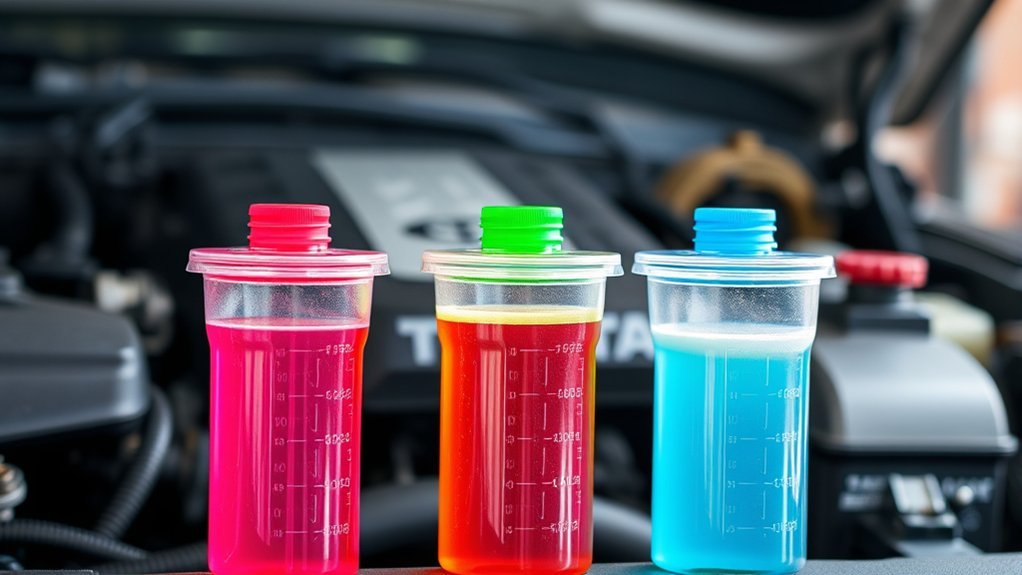
Don’t judge coolant by color alone — color signals underlying chemistry you need to match to your Tacoma’s spec. Pink indicates Toyota’s HOAT Super Long Life formula for 2004+ models, red and green denote older IAT types, orange usually signals OAT, and blue is a specialty Subaru/Toyota blend. Always replace with the color/type specified for your model to guarantee proper corrosion inhibitors and service intervals.
Color Means Chemistry
Think of coolant color as a quick chemistry hint: manufacturers use color to signal formulas—pink for Toyota’s Super Long Life OAT, red for older IAT variants, green for legacy IAT or BMW-shared engines, orange/yellow for OAT blends, and blue for specific Toyota/Subaru hybrid formulations. You’ll use color as an entry point to understand coolant chemistry, but not as a final compatibility check. Colors map to corrosion inhibitors, service intervals, and metal protection strategies that affect coolant maintenance decisions. Be decisive: match chemistry, not just hue.
- Pink/blue/orange = OAT or hybrid OAT, longer life, lower frequent-service needs.
- Red/green = IAT family, stronger short-term metal passivation, needs earlier replacement.
- Always consult specs; color guides direction, spec confirms fit.
Match Color To Spec
Anyone checking coolant color should use it only as a quick guide to the chemistry, then confirm the exact spec in your owner’s manual or service documents. You want clarity: 2004 Tacomas need pink Toyota Super Long Life Coolant (HOAT); 1995–2003 trucks use red IAT for metal protection. Green, often linked to older cars, isn’t suitable for newer Tacomas and can harm engine internals. Orange/yellow signals OAT — long life but weaker metal defense. Color helps decode options, but it doesn’t guarantee compatibility. Bust coolant myths by verifying formulation, not hue. For practical maintenance tips, always drain and refill with the spec listed for your model, avoid cross-mixing chemistries, and document service to preserve performance and independence.
Coolant Chemistries and What They Protect in Your Tacoma
Because your Tacoma’s cooling system contains different metals and components, choosing the right coolant chemistry matters. You want coolant longevity and coolant benefits that match the metals in your engine to avoid corrosion, leaks, or premature failure. Choose chemistry to protect what’s inside.
- IAT: protects copper and brass in older Tacomas; it’s effective but has shorter service intervals, so you’ll swap more often.
- OAT: propylene glycol-based, used in newer models; it extends service life and reduces maintenance frequency but lacks silicates, so it’s less aggressive on some metals.
- HOAT: hybrid formula combines OAT longevity with silicates for added metal protection; it’s the middle ground many manufacturers prefer.
You should match chemistry to the metals present rather than color alone. Using the correct type preserves seals, radiators, and water pumps, supporting durable operation and freeing you from constant coolant-related chores.
How to Pick the Right Coolant (Owner’s Manual Checklist)
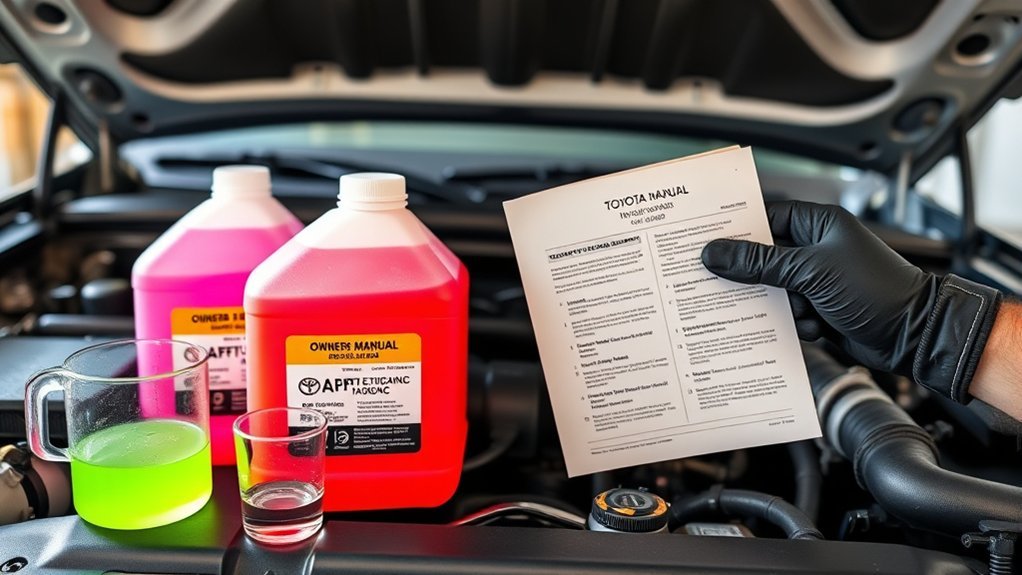
Start by checking your Tacoma’s owner’s manual to confirm the exact coolant specification and color Toyota recommends for your model year. Verify the coolant’s chemical formulation and note any required dilution—Toyota often specifies a 50/50 mix with distilled water—and record the total system volume for accurate filling. Follow the manual’s maintenance intervals to avoid corrosion or engine damage from using the wrong fluid.
Check Owner’s Manual
When you’re choosing coolant for your Tacoma, consult the owner’s manual first to confirm the exact type and dilution recommended for your model year. The manual is your authoritative source for coolant maintenance and engine protection—follow it to avoid incompatible fluids that can accelerate corrosion or damage seals. For a 2004 Tacoma, Toyota specifies Super Long Life Coolant and a 50/50 distilled water mix; check page 324 for precise guidance.
- Confirm recommended coolant type (Super Long Life for 2004).
- Verify dilution ratio (typically 50/50 with distilled water).
- Note any model-year caveats or service intervals.
Use the manual to make confident, independent decisions that preserve reliability and free you from unnecessary repair dependency.
Verify Coolant Specification
Although you’ll rely on the owner’s manual as the definitive source, verify the coolant specification by matching the recommended product and dilution exactly: confirm the exact name (e.g., Toyota Super Long Life Coolant for a 2004 Tacoma on page 324). After that, cross-check chemistry: choose a high-quality ethylene glycol formula without silicate, amine, nitrite, or borate to guarantee compatibility. If using an alternative like Zerex Asian Vehicle Coolant, confirm it contains Diethylene Glycol (111-20-6) and meets Toyota’s chemical profile. Avoid aftermarket coolant additives that alter inhibitor balance; they can undermine engine protection. You’re responsible for precise matching—product name, inhibitor package, and compatibility—not guessing. Follow the manual and validated OEM-equivalents to preserve cooling system integrity and freedom from failure.
Note Dilution And Volume
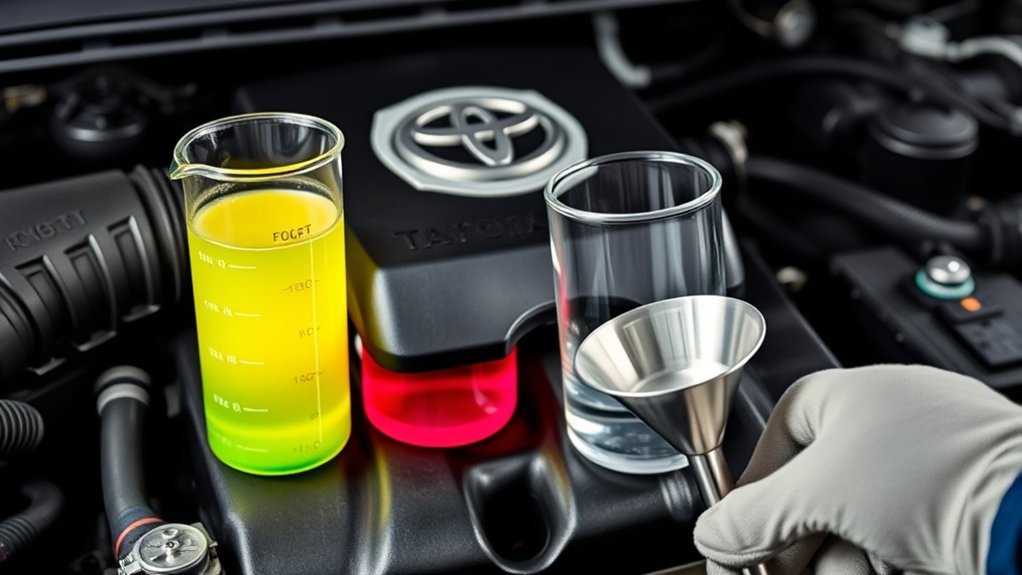
Now that you’ve confirmed the exact coolant specification and inhibitor chemistry, note the required dilution and total volume before filling the system: the 3.4L Tacoma needs 10.5 quarts of coolant in service, normally achieved with a 50/50 mix of concentrated coolant and distilled water, so plan to use roughly 5.25 quarts of concentrate and 5.25 quarts of distilled water (remember a gallon of concentrate plus a gallon of water yields 8 quarts, so measure accordingly). Measure precisely: measurement accuracy prevents corrosion and overheating. Use distilled water; keep concentrate sealed to maintain coolant storage integrity. Consult the owner’s manual if you consider a 60/40 mix in hot climates. Be deliberate and free—take control of maintenance.
- Confirm total capacity and mix.
- Measure concentrate and water precisely.
- Store unused coolant sealed.
How to Top Off, Dilute, and Refill Safely (50/50 and Alternatives)
Before you open the reservoir, let the engine cool completely to avoid burns, then confirm your Tacoma’s coolant spec (2004+ Tacomas use Toyota pink) and plan to top off with either a 50/50 mix of coolant and distilled water or a pre-mixed product that meets Toyota specifications. Use basic coolant maintenance tips: inspect level every 15,000 miles and before long trips, and always consult the owner’s manual for capacity and recommended fluid. For a 50/50 mix, combine equal parts concentrate and distilled water in a clean container; this ratio prevents rust and delivers correct freeze/boil protection. If you choose pre-mixed coolant, verify Toyota compatibility to avoid cross-contamination. When topping off, add fluid slowly to the reservoir’s fill line, avoid overfilling, and secure the cap tightly. These safe refill techniques reduce overheating risk and empower you to maintain your Tacoma reliably and independently without sacrificing engine health.
Why You Should Never Mix Different Coolant Types : And What to Do If It Happens
If you mix different coolant chemistries — for example IAT and OAT — you risk diluting or neutralizing the additives that protect aluminum, iron, and other alloys, which can lead to corrosion and premature component failure. Don’t gamble with coolant chemistry or engine protection: each formula targets specific metals and heat-transfer needs. Mixing can form sludge or precipitates that block passages and degrade pump seals.
When it happens, act decisively:
- Drain and flush the entire cooling system with distilled water to remove mixed fluids and contaminants.
- Refill with the correct coolant specified in your owner’s manual, maintaining proper concentration for freezing/boiling protection.
- Inspect hoses, thermostat, radiator, and water pump for signs of chemical damage; replace compromised components.
You want freedom from avoidable failures—keep coolant chemistry consistent, check levels regularly, and treat any cross-contamination immediately to preserve engine protection and longevity.
Signs Your Tacoma Needs a Coolant Flush or Service
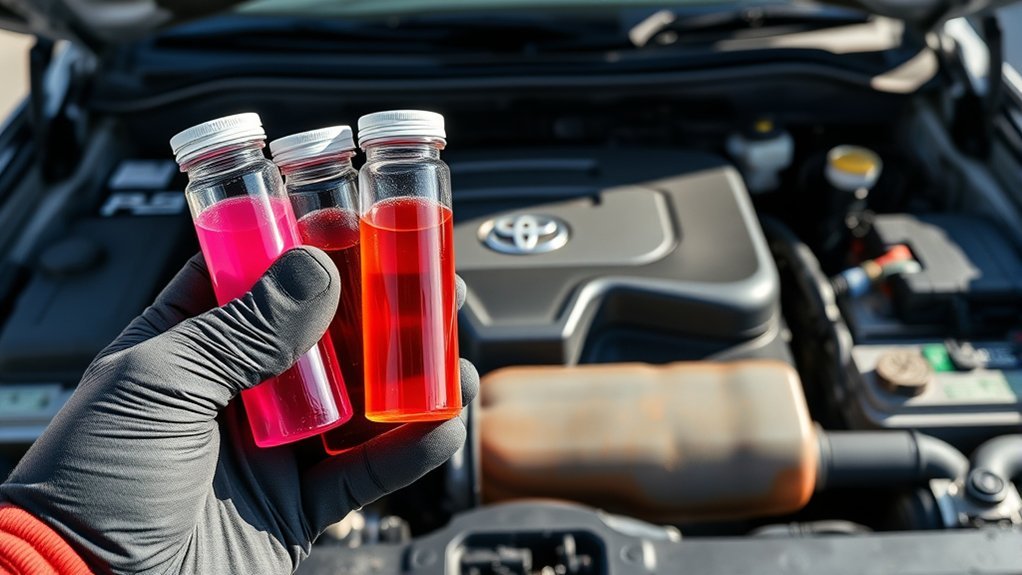
After flushing mixed or contaminated coolant, you should watch for clear warning signs that your Tacoma needs further service or another flush. Listen for unusual grinding noises from the engine; they can indicate coolant-related component wear or blockage. If steam rises from the radiator or under the hood, treat it as an urgent engine overheating sign and pull over safely. Monitor the temperature gauge—consistent high readings after normal warm-up mean the coolant isn’t regulating heat and you’ll need inspection.
Smell for a persistent burning odor beneath the hood; that often accompanies leaks or overheating. Visually check the coolant reservoir and drain for rust, sediment, or discoloration—contamination demands a flush to prevent corrosion. Note puddles under the vehicle, which point to active leaks that compromise system pressure and coolant function. Use these coolant maintenance tips to act decisively: stop driving if overheating, document symptoms, and seek professional service to restore cooling integrity and vehicle freedom.
Where to Buy Toyota Tacoma Coolant (Dealer vs. Budget Alternatives)
Where should you buy coolant for your Tacoma? You can choose dealer certainty or budget freedom—both work if you verify specs. Toyota dealerships provide pre-mixed pink coolant formulated for Tacomas; dealership advantages include guaranteed compatibility and OEM-level specs, but coolant pricing is higher. Aftermarket choices like Zerex Asian Vehicle Coolant or red “Asian” coolants at Napa and O’Reilly’s offer lower cost and wider availability.
- Toyota dealership — OEM pink, verified formula, higher coolant pricing.
- Aftermarket brands (Zerex) — cost-effective, meets Toyota specs if labeled.
- Local auto parts stores — convenient, stock red Asian coolant; check labels.
Always confirm the coolant contains Diethylene Glycol (111-20-6) before buying. Buying nearby retailers gives you liberation from dealer markups, but don’t sacrifice compatibility. Choose by balancing cost, convenience, and the technical requirement that protects your engine.
Frequently Asked Questions
Is Red or Green Coolant Better for Toyota?
Red (HOAT) is better for most modern Toyotas; you’ll guarantee coolant compatibility and superior temperature performance. Stick to manufacturer specs, avoid mixing with green (IAT), and you’ll protect your engine and preserve freedom.
Conclusion
You want reliable cooling—but color tricks you. Older Tacomas asked for green or yellow inorganic formulas; newer models need long-life pink/red hybrid organic types. Don’t assume shade equals chemistry: mixing old and new risks corrosion, head gasket trouble, and expensive repairs. Top off with the manufacturer-recommended formula at a proper 50/50 mix, or flush and replace if incompatible. Stay practical: match specs, avoid shortcuts, and you’ll keep your Tacoma running cool and dependable.