Brake dust is normal on a Toyota Supra, especially when the car uses performance-oriented brake pads. You can remove it safely with a neutral wheel cleaner, soft brushes, water, and microfiber towels. The key is to work on cool wheels, match every product to the wheel finish, and keep cleaners or protectants away from brake friction surfaces.
Quick Answer
To remove brake dust from Toyota Supra wheels, let the brakes cool, rinse one wheel, apply a pH-neutral cleaner rated for its finish, agitate with soft brushes, rinse completely, and dry with microfiber towels. Keep cleaner and protectants off rotors, pads, and tire tread, then make a slow brake check after washing.
Key Takeaways
- Clean the wheels only when the wheels, calipers, and brake discs are cool.
- Toyota specifies a neutral wheel cleaner with a pH of 5–9 and warns against abrasive, strongly acidic, or strongly alkaline cleaners.
- Use soft, dedicated wheel brushes and microfiber towels rather than steel wool, Magic Eraser, or household scouring products.
- Mounted-wheel cleaning is enough for routine maintenance. Remove a wheel only when you can lift and support the car safely.
- Low-dust pads may reduce cleaning, but fitment, braking behavior, heat range, and driving use matter more than dust alone.
At a Glance
| Time Required | About 20–40 minutes for four mounted wheels; longer for heavy buildup or safely removed wheels |
| Difficulty | Easy with the wheels mounted; moderate when wheel removal and safe lifting are involved |
| Tools Needed | Neutral wheel cleaner, hose, soft wheel-face brush, barrel brush, lug brush, bucket, and microfiber towels |
| Cost | Varies by the products you own; routine cleaning requires no specialized machine or wheel removal |
Warning: Never clean hot brakes, support the car with a jack alone, or apply cleaner, dressing, lubricant, sealant, or ceramic coating to the brake rotor, brake pads, tire tread, lug-seat surfaces, or wheel-mounting face.
Essential Supplies for Cleaning Your Supra Wheels
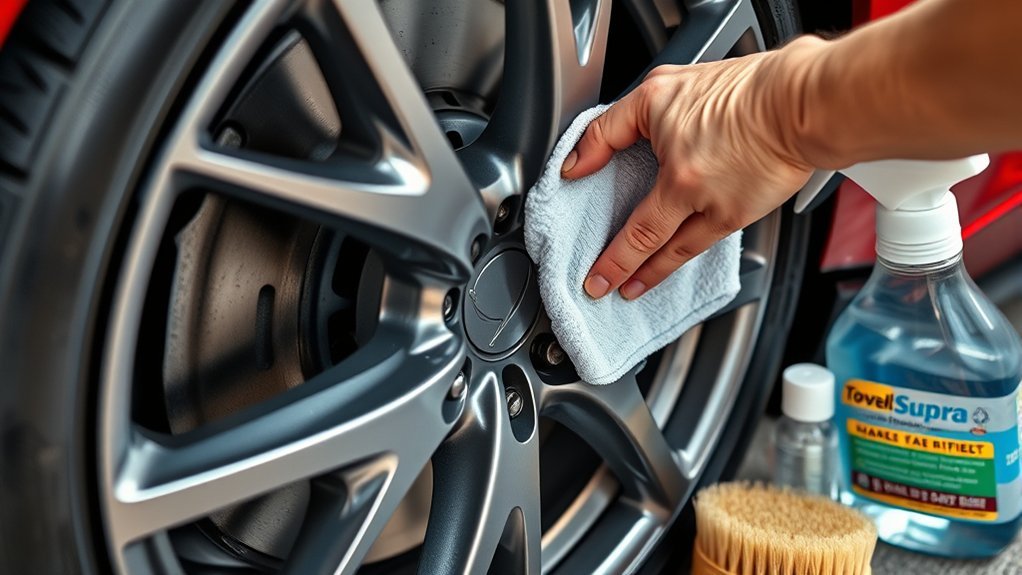
Before choosing a cleaner, identify the finish on your Supra’s wheels. Depending on the model year, trim, special edition, or aftermarket setup, the wheels may have a gloss-painted, clear-coated, machined, polished, chrome, satin, or matte finish. A product that is safe for a gloss clear coat may leave unwanted shine or staining on a matte finish.
The Toyota GR Supra owner manual instructs owners to use a neutral wheel cleaner with a pH value from 5 to 9. It also warns against abrasive cleaners and aggressive acidic or alkaline products.
- Neutral wheel cleaner: Choose a product labeled safe for the exact wheel finish and use it at the stated dilution.
- Soft wheel-face brush: Use this for the spokes and visible surfaces.
- Flexible barrel brush: Use it gently behind the spokes and along the inner wheel barrel.
- Small lug brush: This helps clean around lug openings without using a hard or metal tool.
- Bucket and hose: Use clean water and a gentle rinse rather than relying on chemical cleaner alone.
- Dedicated microfiber towels: Keep wheel towels separate from paint towels because wheel fibers can retain metallic particles.
- Optional finish protectant: Use only a wheel sealant or coating specifically approved for the wheel’s gloss, satin, or matte finish.
Pro Tip: Mark your wheel brushes and towels so they are never used on the Supra’s body paint. Small metallic particles trapped in a wheel towel can scratch a painted panel.
[Products Worth Considering]
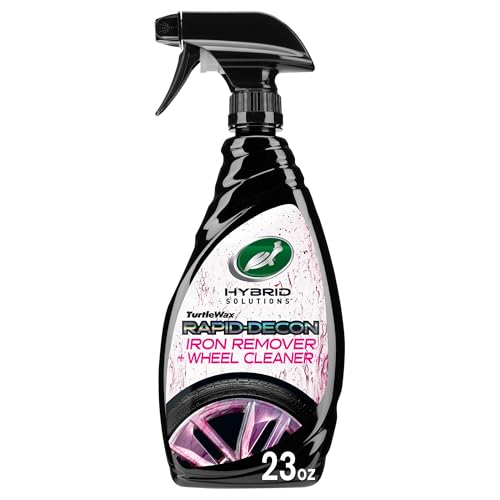
POWERFUL CLEANING: Removes embedded iron particles, brake dust, and road grime that harm your car finish extending the life of paint and providing a deeper clean that car wash cannot tackle alone

Safe Wheel Cleaning (CLD_998_1602) - Gentle, pH-balanced Chemical Guys rim cleaner formula safely cleans chrome, aluminum, painted, powder-coated, and custom wheels without harsh chemicals that can damage finishes or coatings

SIGNATURE SERIES WHEEL CLEANER (CLD_203_16SW) – High-performance car wheel cleaner formula breaks down heavy brake dust, road grime, and oxidation from wheels, calipers, and more
Step-by-Step Guide to Removing Brake Dust
- Park in shade and let the brakes cool. The wheel, brake disc, and caliper should be cool to the touch. Do not spray cleaner onto a wheel that has just completed hard driving.
- Read the product label. Confirm that the cleaner is neutral, compatible with the wheel finish, and safe for painted calipers if overspray may reach them.
- Work on one wheel at a time. This prevents the cleaner or rinse water from drying before you can remove it.
- Rinse loose contamination. Use a hose or a pressure washer with a broad fan pattern from a sensible distance. Do not force high-pressure water directly into seals, electrical connectors, valve stems, or damaged finish.
- Apply the cleaner evenly. Follow the manufacturer’s dwell time. Do not allow the product to dry on the wheel.
- Agitate gently. Clean the wheel face, spokes, lug openings, and accessible barrel areas with separate soft brushes. Use extra cleaner rather than extra pressure on stubborn spots.
- Rinse thoroughly. Remove all cleaner from the wheel, caliper area, tire sidewall, and nearby bodywork.
- Inspect and repeat if necessary. A second gentle treatment is safer than one aggressive scrubbing session.
- Dry the wheel. Use clean microfiber towels or filtered air. Drying reduces water spots and makes missed contamination easier to see.
- Dry the brakes before normal driving. At low speed in a safe area, make several light brake applications. Toyota advises briefly applying the brakes after cleaning so heat can dry the discs and pads.
Note: Cleaning the visible wheel does not increase braking power. It protects the wheel finish, improves appearance, and gives you a clearer view when checking pads, discs, hoses, and calipers.
Brake Pads That May Reduce Dust Buildup
A lower-dust brake pad can reduce how quickly the wheels look dirty, but no pad is completely dust-free. Pad choice can also change initial bite, pedal feel, noise, rotor wear, heat tolerance, and repeated-stop performance. Always verify the exact part number for your Supra’s model year, trim, axle, rotor, and caliper package.
| Pad | Manufacturer Positioning | Best Considered For | Important Check |
|---|---|---|---|
| PowerStop Z16 | Low-dust ceramic stock replacement | Normal commuting and street driving | Confirm that an exact Supra application is listed |
| PowerStop Z23 | Low-dust carbon-fiber ceramic daily-driver upgrade | Street drivers seeking a performance-oriented replacement | Do not assume a universal reduction percentage |
| Endless SSM Plus | Low-dust street-to-winding pad with a stated 0–550°C disc-temperature range | Street and spirited-road use when an exact fitment is available | A street pad is not automatically the right choice for sustained track heat |
For track driving, repeated mountain descents, or modified brake systems, choose pads according to the required temperature range and braking behavior rather than dust level. Follow the pad manufacturer’s bedding procedure and have a qualified technician perform the installation if you are not trained and equipped for brake work.
[Products Worth Considering]

VEHICLE APPLICATIONS: HUSCH 4 PCS front brake pads Fit For BMW 230i 2022, For BMW 330e 2021-2022, For BMW 330i 2021-2022, For BMW 430i 2021-2022, For BMW 530e 2021-2023, For BMW 540i 2021-2023, For BMW 740i 2018-2022, For BMW X3 2020-2024, For BMW X4 2020-2024, For Toyota GR Supra 2020-2024.
Should You Clean the Wheels Off or On the Car?
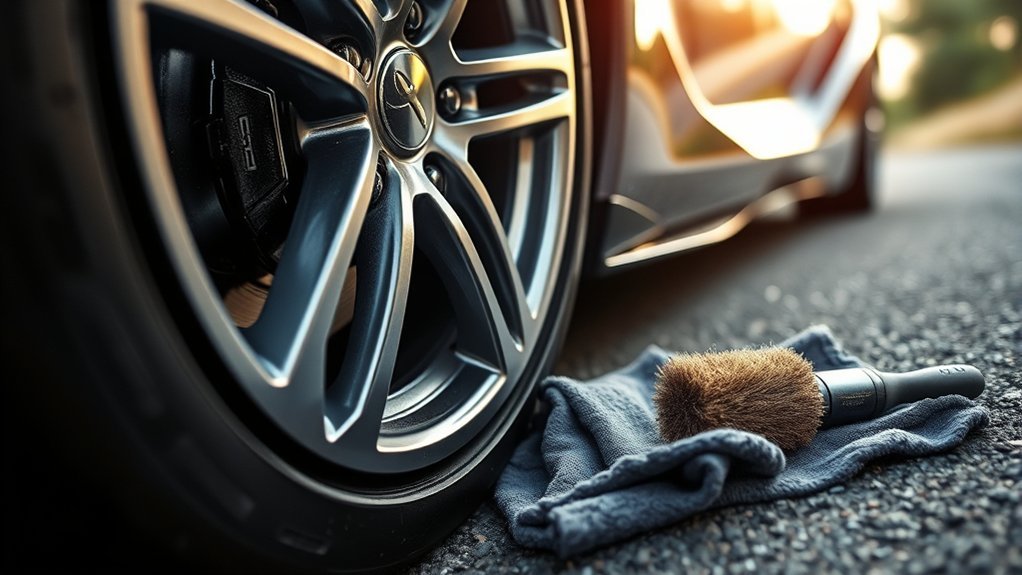
Cleaning the wheels while they remain mounted is the best choice for normal maintenance. Removing them gives you better access to the inner barrels and calipers, but it adds lifting, wheel-fastener, and support risks.
Wheel-On Method Advantages
- Faster and simpler for routine cleaning
- No need to jack up the vehicle
- Enough access for the face, spokes, lug openings, and much of the barrel
- Lower risk of incorrect wheel installation or fastener torque
- Easy to include during a normal hand wash
Use a thin wheel mitt or flexible barrel brush behind the spokes. Do not force a large brush into a space where it can damage a brake hose, sensor wire, painted caliper, or wheel finish.
Wheel-Off Method Benefits
Occasional wheel removal can help when you are deep-cleaning the inner barrels, applying a compatible coating, inspecting the inside edge of a tire, or checking components that are difficult to see with the wheel installed.
- Full access to the inner barrel and back of the spokes
- Better visibility of the caliper, brake hose, pad thickness, and disc condition
- Easier removal of stubborn contamination behind the spokes
- More controlled application of a wheel protectant
Warning: Remove a wheel only on firm, level ground with the transmission secured, the parking brake applied as appropriate, and the opposite wheels chocked. Use Toyota-approved lifting points and properly rated jack stands. Never place any part of your body under a vehicle supported only by a jack. Reinstall and tighten the wheel fasteners according to the manual for your exact Supra.
How to Safely Clean Brake Calipers
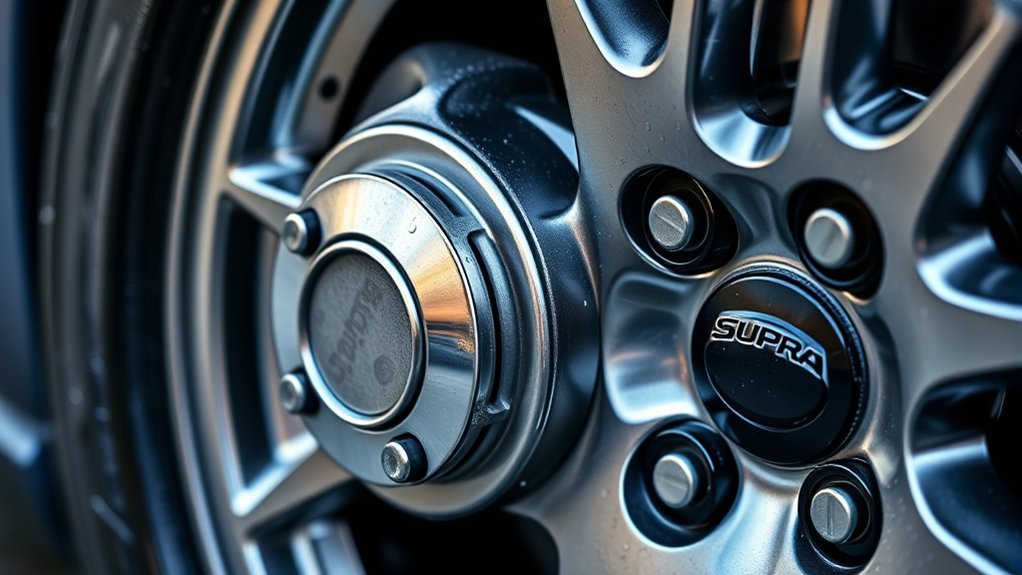
Painted Supra brake calipers need a gentle process. Brake dust can collect around logos, edges, and hardware, but strong degreasers, abrasives, and hard brushing can dull or remove the finish.
Essential Cleaning Tools
- A neutral automotive wheel cleaner labeled safe for painted calipers
- A small, soft detailing brush
- Clean microfiber towels
- A gentle stream of clean water
- Optional filtered air for crevices
Techniques for Effective Cleaning
Make sure the brakes are completely cool. Apply cleaner to the brush or towel when practical so you can control where it goes. Gently work around the visible painted surfaces while avoiding the pad material, rotor face, rubber boots, bleeder area, brake hose, and electrical connectors.
| Step | Tool | Safe Technique |
|---|---|---|
| Initial rinse | Hose | Use low pressure and avoid forcing water into boots or connectors |
| Apply cleaner | Brush or microfiber towel | Use a finish-compatible product and control overspray |
| Agitate | Soft detailing brush | Use light pressure around paint, lettering, and edges |
| Rinse | Clean water | Remove all chemical residue without flooding nearby components |
| Dry | Microfiber towel or filtered air | Dry visible surfaces, then make a low-speed brake check |
What to Expect From Low-Dust Pads and Better Cleaning Habits
Switching pads can reduce visible dust, but results vary. A pad that looks clean on one vehicle may produce more residue on another because the original pad compound, rotor material, driving style, weather, bedding process, and braking temperatures are different.
- Lower-dust pads can make routine wheel cleaning easier.
- New pads may change initial bite, pedal feel, noise, or cold response.
- Improper bedding can cause uneven deposits, noise, vibration, or disappointing performance.
- Hard street driving and track use can create more dust even with a pad marketed as low dust.
- A cleaner wheel does not prove that the pad offers better stopping performance.
A low-dust brake pad is a convenience choice, not a substitute for correct fitment, proper bedding, adequate heat capacity, and safe braking performance.
Using Protectants to Make Future Cleaning Easier
A finish-compatible wheel sealant or ceramic coating can make contamination easier to release during later washes. It does not eliminate brake dust, and it cannot repair pitting, scratches, peeling clear coat, or chemical damage.
- Clean and dry the wheel completely.
- Confirm that the protectant is approved for the exact wheel finish.
- Test it on a small hidden area if the manufacturer recommends testing.
- Apply a thin, even layer according to the product instructions.
- Remove or level residue before it dries incorrectly.
- Observe the stated curing period before exposing the wheel to water.
Note: Do not put a gloss-enhancing sealant on matte or satin wheels unless the product specifically states that it will not change the sheen. Keep every protectant away from the rotor, pads, tire tread, valve opening, wheel-mounting face, and lug-seat surfaces.
Troubleshooting Common Wheel-Cleaning Problems
| Problem | Likely Cause | Safe Response |
|---|---|---|
| Black film remains after washing | Heavy brake dust or incomplete agitation | Repeat the neutral-cleaner process rather than scrubbing harder |
| Tiny embedded dark or orange particles | Ferrous contamination | Use a wheel product specifically labeled for embedded iron and the wheel finish |
| Sticky black spots | Road tar or adhesive contamination | Use a finish-compatible automotive tar remover only on the affected area |
| White rings or mineral marks | Hard-water spotting or cleaner drying | Work one wheel at a time, rinse fully, and dry immediately |
| Dull, rough, or pitted areas remain | Etching, corrosion, or damaged clear coat | Stop aggressive cleaning and have a wheel specialist inspect the finish |
| Cleaner dries before rinsing | Hot wheel, direct sun, or too many wheels treated at once | Rinse immediately and restart later on a cool wheel in shade |
Safe Alternative Cleaning Tools
You do not need a harsh chemical or abrasive tool to clean a Supra wheel effectively. Useful alternatives include:
- A soft microfiber wheel mitt for broad spoke surfaces
- A flexible synthetic wheel-woolie or barrel brush
- A soft lug-nut or detailing brush
- A pump sprayer for controlled cleaner application
- A low-pressure hose nozzle for thorough rinsing
- A filtered air blower for drying tight spaces
- A dedicated automotive iron-removal product when it is approved for the finish
Avoid steel wool, metal brushes, scouring pads, Magic Eraser, oven cleaner, gasoline, lacquer thinner, aggressive degreasers, and strongly acidic or alkaline wheel cleaners. These products can scratch, stain, haze, strip, or otherwise damage painted and clear-coated surfaces.
Standard WD-40 Multi-Use Product may loosen some grime, but it is also a lubricating and moisture-displacing product. It is not the best primary cleaner for Supra wheels, and residue must never reach the rotor, pads, tire tread, or other surfaces where reduced friction could create a safety risk.
The Benefits of Regular Wheel Maintenance
Enhanced Aesthetic Appeal
Regular cleaning keeps dark brake dust from hiding the wheel design and caliper finish. It also prevents contamination from becoming more difficult to remove after repeated heating and weather exposure.
- Keeps spokes, barrels, and lug openings cleaner
- Reduces the chance of cleaner drying onto a heavily contaminated surface
- Helps matte and gloss finishes retain a more even appearance
- Makes later maintenance faster and gentler
Easier Brake and Tire Inspection
Wheel cleaning does not add braking power, but a clean area makes visual inspection easier. While cleaning, look for abnormal pad wear, deep disc scoring, cracking, leaking fluid, damaged brake hoses, loose components, tire sidewall damage, and missing wheel weights.
Stop driving and arrange a professional inspection if you find a fluid leak, damaged hose, cracked disc, loose wheel, severe vibration, grinding sound, or major difference in pad wear from one side to the other.
Longer Wheel-Finish Life
Removing brake dust, road salt, tar, and mineral residue before they remain on the finish for long periods can reduce staining and corrosion risk. This protects the finish, although it cannot prevent damage caused by curb impact, peeling clear coat, incorrect chemicals, or existing corrosion.
Clean the wheels when they become visibly dusty, after exposure to road salt, and after hard or track driving once the brakes have fully cooled. A fixed weekly schedule is not necessary for every driver.
Frequently Asked Questions
What is the best cleaner for brake dust on Supra wheels?
Use a neutral automotive wheel cleaner with a pH of 5–9 that is specifically labeled for the wheel’s finish. Pair it with soft brushes and microfiber towels. The safest cleaner is not necessarily the strongest one; it is the product that removes contamination without attacking the paint, clear coat, polished surface, or matte finish.
How often should you clean brake dust?
Clean the wheels when a visible layer develops, after road-salt exposure, or after hard driving once the brakes are cool. Many street-driven cars can be cleaned during their normal wash schedule. Cars with high-dust pads or frequent spirited use may need attention more often.
Will WD-40 remove brake dust from rims?
Standard WD-40 Multi-Use Product may loosen certain grime, but it leaves a lubricating film and is not the preferred cleaner near brakes or tires. Use a dedicated neutral wheel cleaner instead. Never allow WD-40 or another lubricant to contact the rotor, pads, tire tread, or lug-seat surfaces.
Will a Magic Eraser remove brake dust?
It may remove residue through abrasion, but that same abrasive action can dull or scratch paint, clear coat, polished metal, or matte finishes. Do not use a Magic Eraser on Supra wheel faces or painted calipers. Repeat the finish-safe cleaning process with a soft brush instead.
Can you use a pressure washer on Toyota Supra wheels?
You can use a broad fan pattern at a sensible distance on an undamaged finish, but avoid concentrated pressure around valve stems, wheel damage, seals, brake hoses, rubber boots, and electrical connectors. Do not use a hot steam jet, and do not rely on pressure alone to remove bonded brake dust.
Should Supra wheels be cleaned after a track day?
Inspect and clean them after the brakes have cooled completely. Track driving can create heavy dust and high temperatures. Check the wheels, tires, pads, discs, hoses, and wheel fasteners before the next session. Do not spray cold water or cleaner onto hot brake components.
Sources
- Toyota GR Supra Owner Manuals — official model-specific vehicle care, lifting, and safety guidance
- OZ Racing Wheel-Care FAQ — cold-wheel cleaning, neutral detergent, and non-abrasive tool guidance
- PowerStop Z16 Evolution Brake Pads — manufacturer description of the low-dust stock-replacement formula
- PowerStop Z23 Evolution Sport Brake Pads — manufacturer description of its daily-driver low-dust performance pad
- Endless SSM Plus — manufacturer specifications and intended street-to-winding use
- WD-40 Multi-Use Product Guidance — manufacturer description of its lubricating and moisture-displacing properties
Conclusion
To clean Toyota Supra wheels safely, start with cool brakes, a neutral finish-compatible wheel cleaner, soft brushes, and clean microfiber towels. Work on one wheel at a time, rinse thoroughly, and keep every cleaner or protectant away from friction and tire-contact surfaces. Routine mounted-wheel cleaning is usually enough, while wheel removal and brake-pad replacement require additional tools, correct procedures, and careful safety checks.