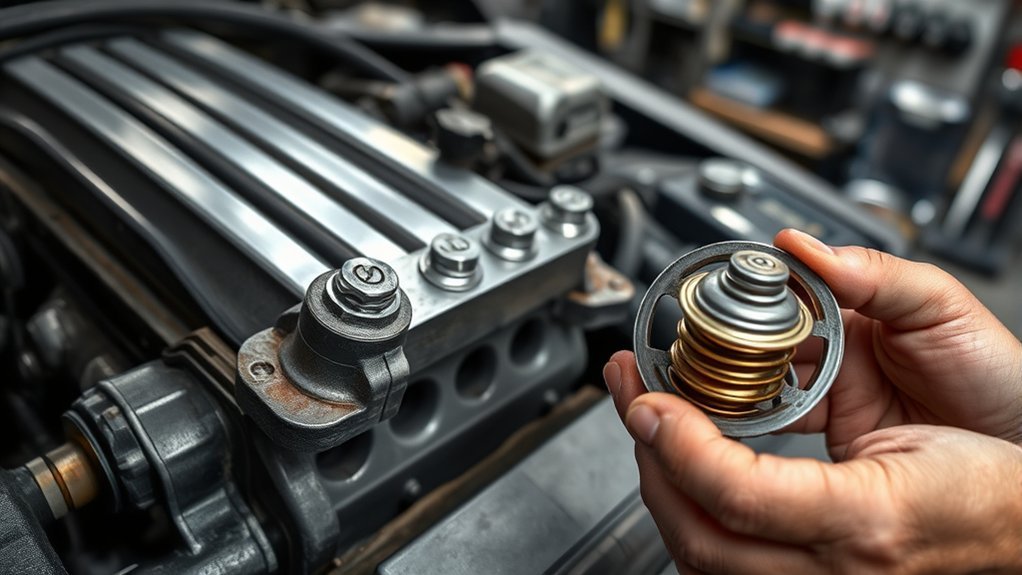
Toyota Supra thermostat symptoms can include overheating, unusually slow warm-up, a coolant-temperature display that stays low or changes abnormally, and weak cabin heat. Those signs do not prove the thermostat is bad. Older Supra engines use conventional removable thermostats, while modern GR Supra cooling systems use more integrated temperature-control hardware, so identify the exact model year and engine before diagnosing or replacing parts.
Last reviewed: September 16, 2026 · Cooling-system design, Toyota owner resources, and current parts references rechecked.
Quick Answer
On a conventional Supra cooling system, a thermostat stuck closed can contribute to rapid overheating, while one stuck open can cause slow warm-up, low indicated temperature, and weak heater output. On modern GR Supra models, similar symptoms can also involve water-control or heat-management hardware. Coolant loss, pump problems, trapped air, fan faults, sensors, and radiator issues can mimic thermostat failure, so diagnose the whole system before replacing parts.
Key Takeaways
- A thermostat that stays closed can contribute to overheating, while one that stays open can cause slow warm-up and low operating temperature.
- Overheating alone does not prove the thermostat failed; coolant loss, a water-pump problem, radiator restriction, fan fault, trapped air, or sensor issue can create similar symptoms.
- Older A70/A80 Supras use conventional removable thermostats, while modern GR Supra applications use more integrated water-control/temperature-management hardware; location, parts, coolant, torque values, and bleeding procedures must match the exact model and engine.
- Never open a hot, pressurized cooling system. Stop driving if the engine is overheating and allow the system to cool completely before inspection.
- A leak around a thermostat housing may require a housing, gasket, seal, hose, or connection repair even when the temperature-control component itself is not the cause.
Warning: If the coolant-temperature warning appears, the gauge moves into the high-temperature range, steam is visible, or the engine loses power while overheating, stop in a safe place. Do not remove a coolant or pressure cap while the system is hot. Follow the instructions in your specific Toyota Supra owner’s manual before continuing.
Which Toyota Supra Thermostat System Do You Have?
Before using any thermostat test or replacement guide, identify the Supra generation and engine. Factory service information for older A70 and A80 cars documents a conventional removable thermostat. Modern GR Supra parts information instead identifies water-control and thermostat assemblies, including heat-management hardware on the 3.0L application. That difference changes what can fail, where the component is located, and how the cooling system must be filled and bled after repair.
| Supra Family | Temperature-Control Layout | What That Means for Diagnosis |
|---|---|---|
| A70 / Mk3 and A80 / Mk4 | Factory manuals document a removable mechanical thermostat. | A stuck-open or stuck-closed pattern can be useful, but opening temperature, location, orientation, and torque values still vary by engine and year. |
| Modern GR Supra | Toyota parts data identifies water-control/thermostat assemblies; 3.0L catalog data identifies a heat-management-module application. | Do not apply an older Supra thermostat test or bolt sequence. Read fault data and verify the exact part and service procedure by VIN. |
| Engine-swapped or modified Supra | Cooling hardware may no longer match the chassis year. | Identify the installed engine, thermostat/control hardware, radiator layout, and coolant circuit before using factory chassis-year instructions. |
For current parts identification, Toyota Genuine lists water valve assembly 16670-WAA02, while Toyota dealer catalog data lists 16670-WAA03 for the 3.0L GR Supra heat-management-module/thermostat application. Always verify fitment by VIN before ordering.
What Does a Thermostat Do in Your Toyota Supra?
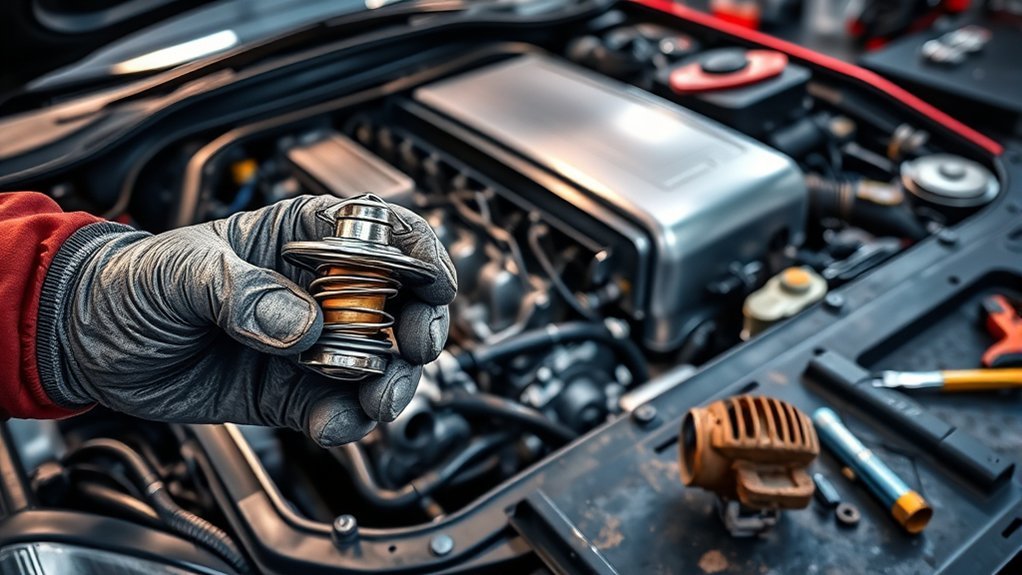
The thermostat or engine temperature-management system helps regulate coolant flow so the engine can warm efficiently and then remain within its intended operating range. On a conventional cooling system, coolant flow to the radiator is restricted while the engine is cold and increased as the engine warms. This helps balance warm-up, cooling, emissions, heater performance, and engine protection.
However, you should not assume every Toyota Supra uses the same simple thermostat arrangement. Classic Supra engines and modern GR Supra engines differ substantially in cooling-system design. Component location, replacement parts, coolant specifications, filling procedures, and diagnostic steps therefore need to match the exact model year and engine.
A correctly functioning temperature-control system helps the engine avoid both extremes. A control valve or thermostat that cannot provide enough radiator flow may contribute to overheating. A conventional thermostat that remains too far open can allow excessive cooling during warm-up, leaving the engine below its intended operating temperature for longer than normal.
Thermostat manufacturer MAHLE explains that thermostats regulate engine temperature through coolant flow and that failure in the open or closed position can lead to overcooling or overheating.
Note: Do not rely on a universal thermostat-opening temperature for every Supra. The correct operating strategy and specifications depend on the engine and cooling-system design. Check the service information for your exact vehicle.
What Are the Signs of a Bad Toyota Supra Thermostat?
Recognizing the signs of a possible thermostat problem can help you protect your Supra, but each symptom should be treated as a clue rather than a final diagnosis.
| Symptom | What It May Mean | Other Causes to Check |
|---|---|---|
| High coolant temperature or overheating | Insufficient coolant flow, including a thermostat or control-valve problem | Low coolant, pump failure, fan fault, radiator restriction, trapped air, leak |
| Engine stays unusually cool | A conventional thermostat may be stuck open | Temperature-sensor or display fault, unusually cold operating conditions |
| Temperature changes abnormally | Intermittent coolant-flow or temperature-control problem | Low coolant, trapped air, sensor/wiring fault, pump problem |
| Weak cabin heat | Engine may not be warming normally | Low coolant, air pocket, heater-core restriction, HVAC problem |
| Coolant around thermostat housing | Housing, seal, gasket, hose, or connection may be leaking | Nearby cooling-system leak running onto the housing |
| Temperature-management or coolant-control fault code | A modern control component, actuator, circuit, or temperature-regulation problem may be present | Sensor plausibility, wiring, coolant level, circulation, recent service, and the factory code-specific diagnostic path |
Steam from under the hood, a high-temperature warning, or a rapidly rising temperature display deserves immediate attention. Toyota’s warning-light guidance instructs drivers to stop the vehicle safely when the engine coolant temperature is too high.
[Products Worth Considering]

This engine coolant thermostat with seal is designed to help maintain proper engine temperature and support efficient cooling system performance. It is compatible with a wide range of Toyota, Lexus, Ford, Chevrolet, Mitsubishi, Scion, and Pontiac models, making it a versatile replacement choice for many vehicles. With included seal and durable metal-and-rubber construction, it offers a convenient fitment solution for cooling system repairs and maintenance.
Can a Bad Toyota Supra Thermostat Cause Overheating?
Engine overheating can occur when a thermostat or temperature-management component fails to provide sufficient coolant flow through the radiator. On a conventional system, a thermostat stuck closed is a classic example. However, a hot engine should trigger a complete cooling-system diagnosis, not automatic thermostat replacement.
When Should You Stop Driving?
Stop testing the car on the road when the temperature is clearly moving into an unsafe range. Use these warning signs as a stop-driving checklist:
| Symptom | What to Do |
|---|---|
| Rapid temperature rise | Reduce load and stop safely if temperature continues climbing or a warning appears. |
| Persistent high temperature | Do not keep driving to test the problem. Allow the vehicle to cool and diagnose the cooling system. |
| Steam or coolant discharge | Stop the engine when safe and keep the cooling system closed until fully cooled. |
| Falling coolant level | Find the source of the coolant loss instead of assuming the thermostat is responsible. |
What Evidence Points Toward a Thermostat or Control Fault?
A temperature rise that begins soon after a cold start can be consistent with restricted coolant flow, but the thermostat is only one possible cause. A coolant pump that is not circulating properly, a blocked radiator, air trapped after recent service, a failed fan, or severe coolant loss can produce similar behavior.
Erratic temperature readings can also have electrical causes. The coolant-temperature sensor and its wiring provide important information to the engine-management system. A scan tool that displays live coolant-temperature data can help distinguish an actual temperature problem from a gauge, sensor, or communication issue.
Coolant System Impact
A malfunctioning temperature-control component can affect the entire coolant system. Excessive temperature can increase cooling-system pressure and stress hoses, plastic fittings, seals, gaskets, and other components. Repeated overheating can also create engine-damage risks far beyond the thermostat itself.
- Consistent temperature rise: Investigate circulation, coolant level, leaks, radiator performance, fan operation, and temperature-control hardware.
- Sudden temperature changes: Check for low coolant, trapped air, sensor problems, intermittent circulation, and control faults.
- Repeated overheating: Stop treating the symptom as a simple thermostat problem and perform a full cooling-system diagnosis.
Pro Tip: If the Supra recently had coolant-system work and the temperature problem started afterward, verify that the system was filled and bled using the exact procedure specified for that model. Trapped air can mimic thermostat trouble and can also cause overheating.
Why Does a Toyota Supra Run Too Cold or Warm Up Slowly?
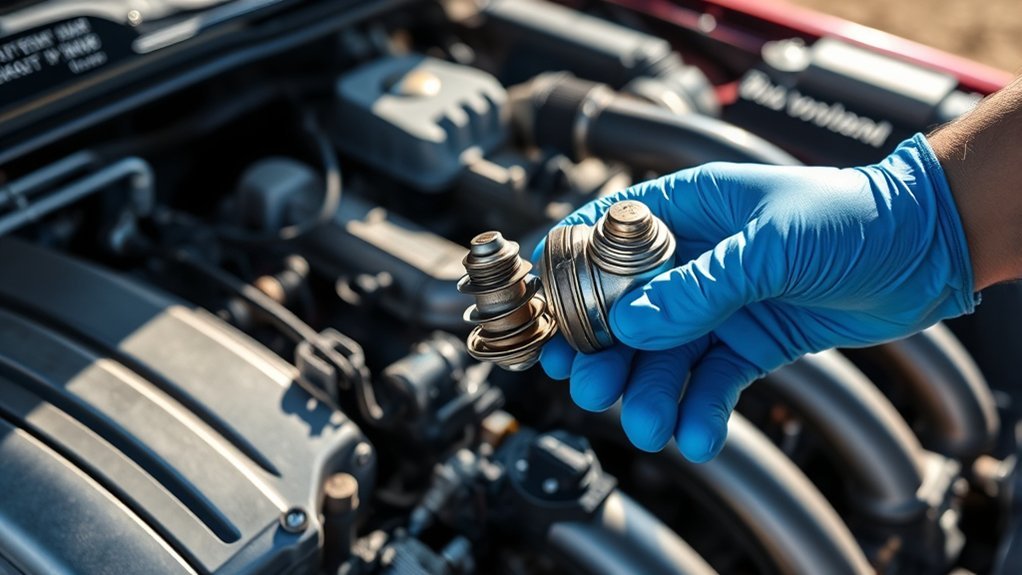
If your engine consistently takes much longer than expected to warm or remains below its normal indicated temperature after ordinary driving, a conventional thermostat stuck open is one possible cause. When coolant is routed through the radiator too early, warm-up can be delayed.
What Does a Stuck-Open Thermostat Feel Like?
- Low or slow-rising temperature indication: The engine takes unusually long to reach its normal displayed temperature.
- Poor heater performance: Cabin heat may remain weak because the coolant is not becoming hot enough, although HVAC or low-coolant problems can cause the same symptom.
- Reduced efficiency: Prolonged operation below the intended temperature can affect fuel-control strategy, emissions, and overall efficiency.
A scan tool can add useful evidence by showing coolant-temperature behavior from a cold start. Compare the data with ambient temperature before startup and watch how smoothly the temperature rises. Use the correct factory diagnostic information before deciding that the thermostat is defective.
What Happens if the Engine Runs Too Cold?
An engine that remains colder than intended may spend longer in warm-up operating strategies. Depending on the engine and driving conditions, this can contribute to increased fuel consumption, higher emissions, weaker heater output, and less consistent performance.
| Performance Issue | Possible Impact |
|---|---|
| Delayed warm-up | Engine remains in warm-up operation longer |
| Reduced fuel efficiency | Fuel consumption may increase |
| Weak cabin heat | Coolant may not become hot enough for normal heater output |
| Higher emissions | Cold-running operation can reduce emissions-system efficiency |
| Persistent low temperature display | Supports further diagnosis of thermostat/control and sensor operation |
Why Does My Toyota Supra Coolant Temperature Fluctuate?
Unexpected temperature fluctuations deserve investigation because they may indicate unstable coolant flow, low coolant, trapped air, a sensor problem, pump trouble, or a temperature-control fault.
- Watch the instrument display: A warning or sudden move toward the high-temperature range requires immediate attention.
- Check coolant only when cold: Verify the level using the procedure and reservoir identified in the owner’s manual.
- Inspect for visible leaks: Look around hoses, connections, reservoirs, radiator areas, the pump region, and temperature-control housing.
- Read live temperature data: A capable scan tool can help show whether the engine is warming smoothly or behaving abnormally.
- Compare physical temperature carefully: An infrared thermometer can provide non-contact temperature information without grabbing hot coolant hoses.
Do not diagnose a stuck thermostat solely because one radiator hose feels warmer than another. Hose temperatures change as the system warms and depend on coolant routing, engine load, ambient temperature, and the specific cooling-system design.
Before You Replace It: Rule Out Other Cooling-System Faults
A thermostat is only one component in the cooling system. Replacing it without confirming the failure can leave the original problem untouched.
- Low coolant or an external leak: Inspect the reservoir, radiator area, hoses, fittings, pump area, and housing connections when the engine is cold. If loss is recurring, use the Toyota Supra coolant leak diagnosis guide to narrow the source.
- Cooling fan problem: A fan that does not operate when commanded can allow temperature to rise, especially at low road speeds.
- Coolant-pump problem: Poor circulation can imitate a thermostat that is not opening.
- Radiator restriction or leak: Internal restriction, external blockage, or leakage can reduce heat transfer. See the Supra radiator leak symptoms and diagnosis guide when the radiator itself is suspect.
- Air trapped in the system: This is especially relevant if the cooling system was recently opened or refilled.
- Temperature-sensor or wiring fault: Bad temperature information can create misleading readings or fault messages.
- Pressure-cap or expansion-system fault: Improper system pressure can affect boiling margin and coolant behavior.
- Internal engine problem: Repeated coolant loss, combustion gases in the cooling system, contaminated fluids, or severe recurring overheating may require deeper engine diagnosis.
A temperature symptom tells you what the cooling system is doing; diagnosis determines why it is doing it.
Coolant Leaks and Their Connection to Thermostat Issues
Coolant around the thermostat area deserves attention, but a leak does not automatically mean the thermostat itself has failed internally. The source may be a housing, gasket, O-ring, hose connection, nearby coolant fitting, or another component above the visible wet area.
If the coolant level drops between checks, locate the leak rather than repeatedly topping off the system. A cooling-system pressure test performed according to the vehicle’s service procedure can help expose slow leaks that may not appear when the engine is cold and unpressurized.
Also remember that a temperature-control failure can exist without an external leak, and an external housing leak can exist while temperature regulation still appears normal. Treat temperature control and coolant sealing as related but separate diagnostic questions.
Warning: Automotive antifreeze may contain ethylene glycol. Keep coolant away from children and pets, minimize skin contact, collect drained coolant in a suitable container, clean spills promptly, and dispose of used coolant according to local requirements.
How to Diagnose a Suspected Supra Thermostat Problem
Use a diagnosis-first process before ordering parts:
- Identify the vehicle: Record the model year, engine, and VIN. Do not assume a thermostat procedure from another Supra generation applies to yours.
- Begin with a completely cold engine: Check coolant level and inspect for visible leakage before starting the vehicle.
- Scan for stored faults: If warning lights or messages are present, read the diagnostic trouble codes and live coolant-temperature information rather than clearing the codes immediately.
- Observe the warm-up pattern: Watch for abnormally slow warm-up, a temperature that remains low, rapid overheating, sudden changes, or heater-output changes.
- Check the whole cooling system: Verify fan operation, circulation, leak condition, radiator condition, coolant level, sensor plausibility, and any recent cooling-system repair history.
- Confirm the repair procedure: Use Toyota’s model-specific technical information before removing temperature-control components or draining coolant.
What Confirms a Thermostat Problem More Reliably Than Symptoms Alone?
- Cold-start scan data: The coolant-temperature signal should be plausible before startup and then follow a believable warm-up pattern. An implausible sensor reading can imitate a thermostat problem.
- Factory code-specific testing: On electronically managed systems, follow the diagnostic path for the stored fault before replacing a valve, module, thermostat, sensor, or pump.
- Direct component inspection: A cracked housing, failed seal, connector problem, or confirmed leak from the control assembly is stronger evidence than coolant found somewhere nearby.
- Model-specific thermostat testing: On older engines with a removable mechanical thermostat, use the factory opening-temperature and valve-lift test for that exact engine rather than a universal internet temperature.
Toyota provides current owner documentation through its owner-manual system, while detailed repair information can be obtained through the Toyota Technical Information System.
Can You Replace Your Thermostat Yourself?
A thermostat replacement can be a reasonable DIY repair on some older Supra engines, but it should not automatically be treated as a beginner job on every Supra. Access, electronic temperature-management components, coolant requirements, underbody panels, filling procedures, and bleeding requirements vary by model.
At a Glance
| Time Required | Varies substantially by Supra generation, engine, diagnosis, access, and coolant-filling procedure. |
| Difficulty | Moderate on a straightforward mechanical system; potentially advanced on newer temperature-management systems. |
| Tools Needed | Safety glasses, gloves, coolant drain pan, basic hand tools and torque tools, plus any model-specific diagnostic or coolant-filling equipment required by the repair manual. |
| Cost | Varies by engine, whether the thermostat or a larger housing/module is replaced, coolant quantity, additional seals, and local labor rates. Verify parts by VIN before buying. |
Before deciding to do the job yourself, confirm that you can safely raise or access the vehicle if required, capture and dispose of coolant, follow torque specifications, obtain the correct replacement seals, and perform the specified refill and bleeding procedure.
What Is the Safe Repair Workflow for a Failing Supra Thermostat?
If diagnosis confirms a temperature-control component has failed, replacement is normally the appropriate repair. The exact steps depend on the Supra’s engine, so use the following as a workflow rather than a substitute for the factory procedure.
| Task | Details |
|---|---|
| Confirm the fault | Rule out coolant loss, air, fan, pump, radiator, sensor, and wiring problems first. |
| Cool the vehicle completely | Do not open a hot or pressurized cooling system. |
| Drain coolant correctly | Use the specified drain points and collect coolant safely. |
| Remove the failed component | Follow the exact access and removal sequence for the model and engine. |
| Inspect sealing surfaces | Check the housing, connections, gasket surfaces, O-rings, and nearby components for damage or leakage. |
| Install and torque correctly | Use new seals where specified and follow factory orientation and torque specifications. |
| Refill and bleed | Use the coolant and filling/bleeding process specified for your exact Supra. |
| Verify the repair | Check coolant level, leaks, temperature behavior, heater output, warning messages, and stored faults. |
Step-by-Step Guide to Replacing Your Toyota Supra Thermostat
The safest way to approach a Supra thermostat replacement is to match every step to the correct engine rather than following one generic location or bolt sequence.
- Verify the replacement part: Use the VIN, model year, and engine to identify the correct thermostat, temperature-control housing/module, seals, and coolant.
- Read the model-specific procedure first: Confirm component location, access requirements, drain points, fastener torque values, thermostat orientation where applicable, and coolant-filling instructions.
- Let the engine and cooling system cool completely: Do not use an arbitrary waiting period as proof that the system is safe to open.
- Protect yourself and the work area: Wear eye protection and gloves and position a suitable drain pan before opening the cooling system.
- Drain only as instructed: Capture the coolant rather than allowing it onto the ground, driveway, belts, wiring, or painted surfaces.
- Access the temperature-control component: Remove only the panels, hoses, brackets, connectors, or components required by the factory procedure.
- Inspect before installing the new part: Look for cracked plastic, damaged hose connections, corrosion, distorted sealing surfaces, deteriorated O-rings, or evidence that the leak originated elsewhere.
- Install the replacement correctly: Match the required orientation, use new seals or gaskets where specified, and tighten fasteners to the correct factory torque rather than guessing.
- Refill with the specified coolant: Do not assume that one coolant formula or dilution applies to every Supra generation. For modern GR Supra coolant-selection context, see the Supra coolant type and service guide.
- Perform the required bleeding/filling routine: Some systems require more than simply filling the reservoir and running the engine. Follow the service procedure exactly to prevent trapped air.
- Check for leaks: Inspect all disturbed connections before and after the engine reaches normal temperature.
- Verify temperature control: Confirm that the engine warms normally, remains stable, produces normal heater output, and does not display coolant-temperature warnings.
- Recheck after cool-down: Once the vehicle has cooled completely again, verify the coolant level according to the owner’s manual and inspect for fresh leakage.
Pro Tip: If a replacement thermostat does not solve the original temperature problem, do not keep replacing cooling-system parts at random. Return to diagnosis and confirm coolant level, system bleeding, pump operation, fan operation, sensor data, radiator performance, and leak condition.
Frequently Asked Questions
What are the signs that indicate that a thermostat needs to be replaced?
Possible signs include overheating, abnormally slow warm-up, a temperature display that remains too low, unstable temperature behavior, or weak heater output. These symptoms justify diagnosis, but they do not prove the thermostat is faulty because several cooling-system and sensor problems can cause similar behavior.
How do you know if you need to replace the thermostat housing?
A housing may need replacement if inspection confirms a crack, distortion, damaged sealing surface, failed integrated component, or leak originating from the housing itself. Coolant nearby is not enough evidence because hoses, O-rings, fittings, or components above the housing can also leak.
Can you drive a Toyota Supra with a bad thermostat?
Do not continue driving if the vehicle is overheating or showing a high-coolant-temperature warning. A thermostat that keeps the engine too cool may not create the same immediate danger, but the underlying problem should still be diagnosed and repaired rather than ignored.
Does a coolant-temperature fault code automatically mean the thermostat is bad?
No. A temperature-related trouble code can be useful evidence, but diagnosis may also need to consider coolant level, sensors, wiring, circulation, temperature-control hardware, and recent cooling-system service. Read the code’s factory diagnostic procedure instead of replacing the thermostat solely because a code is present.
How can you tell a stuck-open thermostat from a stuck-closed thermostat?
On a conventional system, a thermostat stuck open commonly causes slow warm-up and an engine that runs cooler than intended. A thermostat stuck closed can restrict radiator flow and contribute to overheating. Modern temperature-management systems can behave differently, so confirm the diagnosis with model-specific information.
Can you use the same thermostat replacement procedure on every Toyota Supra?
No. Supra generations use different engines and cooling-system designs. Part location, fasteners, thermostat or control-module design, coolant specifications, component orientation, access, and bleeding procedures can all differ. Use repair information for the exact model year and engine.
Should you replace the thermostat whenever coolant is leaking near it?
Not automatically. First identify the actual leak source. A housing gasket, O-ring, hose, fitting, or housing itself may be leaking while the temperature-control component still functions normally. Replace the parts confirmed defective and any seals required by the repair procedure.
Conclusion
A failing Toyota Supra thermostat or temperature-management component can contribute to overheating, slow engine warm-up, abnormal temperature readings, or poor heater performance. The next step is to identify the exact Supra generation and engine, check coolant level and leaks, review live temperature data and stored faults, and then follow the model-specific Toyota diagnostic path. If the vehicle is actively overheating, stop driving. If coolant loss is part of the symptom pattern, diagnose the leak before replacing the thermostat or control module.
Sources
- Toyota Owner’s Manuals and Warranties — model-specific owner guidance, coolant warnings, and operating information.
- Toyota Warning Lights — Toyota guidance for high engine-coolant temperature warnings.
- Toyota Technical Information System — model-specific repair and technical information.
- Toyota Genuine Water Valve Assembly 16670-WAA02 — current Toyota parts reference for a water-control assembly used in the modern cooling/heating system family.
- Toyota GR Supra 3.0L Engine Coolant Thermostat 16670-WAA03 — dealer parts-catalog identification of the 3.0L heat-management-module/thermostat application.
- MAHLE Thermostats — thermostat function and stuck-open/stuck-closed operating effects.
- ATSDR: Ethylene Glycol — antifreeze exposure, handling, and storage safety information.