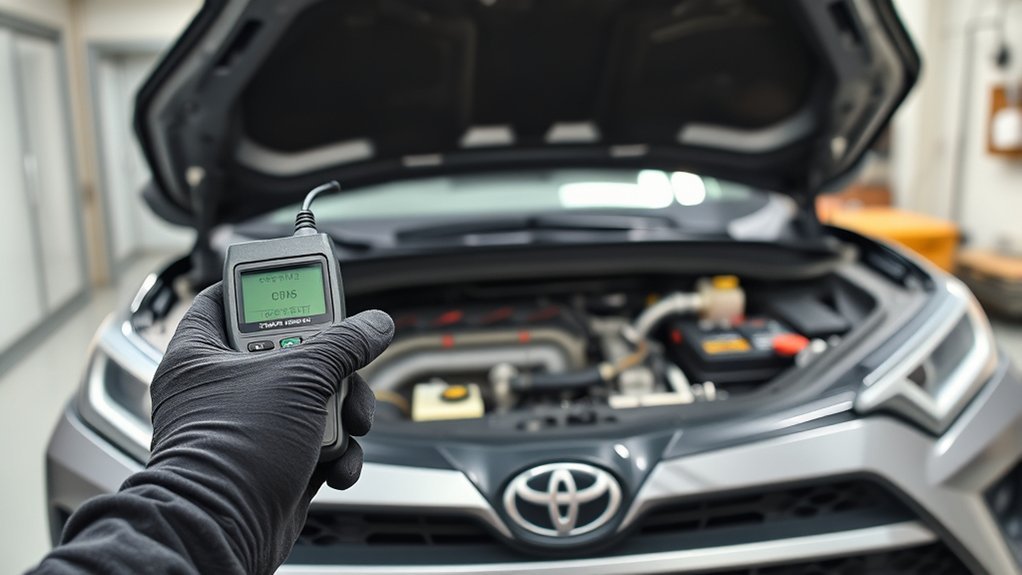
When your RAV4 sets a P0171 code it means the engine is running lean—too much air or too little fuel—so you’ll methodically check for vacuum leaks, a dirty or failed MAF sensor, and fuel pressure or delivery issues. Expect rough idle, reduced throttle response, and an illuminated check engine light. Start with visual hose inspection, smoke test, MAF cleaning, and fuel pressure verification; follow with live data and O2 sensor checks to pinpoint the fault and repair options if you want more guidance.
Quick Answer: What P0171 Means for Your RAV4
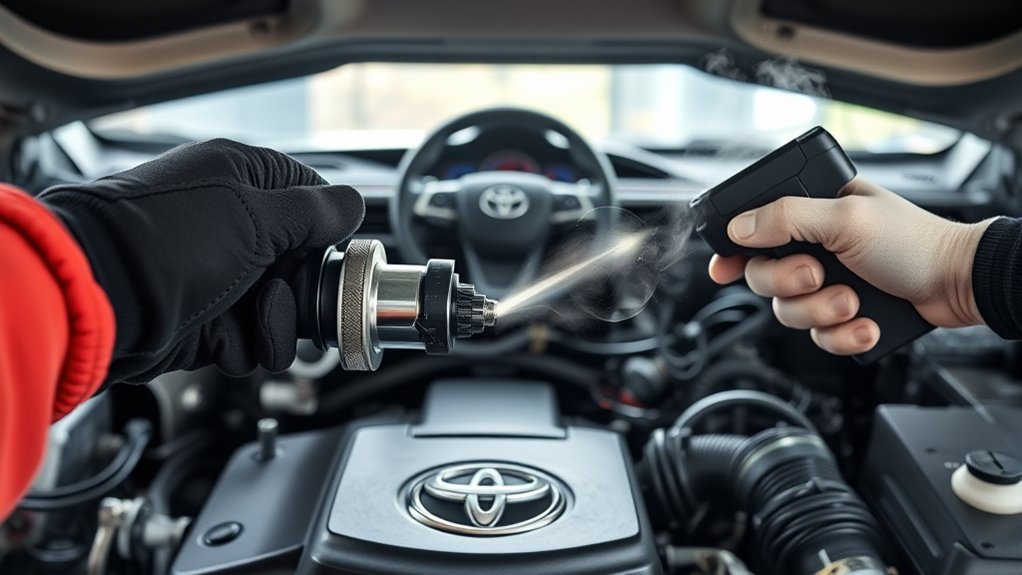
If your RAV4 throws a P0171 code, it means the engine control module is detecting a lean condition—too much air and not enough fuel in the air-fuel mixture. You’ll know the ECM is flagging that the measured air fuel ratio deviates toward lean, which directly degrades engine performance and efficiency. Start by methodically isolating common causes: inspect vacuum hoses for cracks or loose clamps, since leaks introduce unmetered air and are often the simplest fix. Next, test and clean the mass air flow sensor or replace it if readings are erratic; a fouled MAF misreports intake air, skewing fuel delivery. Finally, verify fuel pressure to rule out weak pump or clogged filter scenarios that limit fuel flow. You’ll restore proper mixture and reclaim control by addressing these points in sequence. Take decisive action—repair the faulted component, clear codes, and confirm the ECM reports a normal air fuel ratio to guarantee freed, reliable performance.
P0171 Symptoms on a RAV4: What to Watch
Several clear symptoms point to a P0171 lean condition on a RAV4 and you should watch for them immediately: you’ll feel a rough idle that makes the vehicle unstable at stop, and the check engine light will be on. Inspect behavior: lowered engine responsiveness, hesitation on acceleration, and an unusual increase in engine noise from an imbalanced air-fuel ratio. You’ll also notice a measurable drop in fuel economy—your tank won’t go as far because the ECU compensates for perceived lean running. These signs together indicate an oxygen-sensor or intake leak issue that demands action before catalyst or piston damage occurs. Stay proactive: don’t accept degraded performance as normal; treating symptoms early protects your freedom to drive without restraint. Log occurrences, note RPM and load when symptoms appear, and avoid long trips until you’ve diagnosed the fault. Prompt attention reduces repair scope and keeps you in control of your vehicle’s reliability.
Tools and Prep Before You Start Diagnosing
Now that you’ve noted the P0171 symptoms, gather the tools and safety gear you’ll need before starting diagnostics to work efficiently and avoid mistakes. You’ll want diagnostic tools and safety precautions in place so you can act deliberately and free yourself from guesswork. Lay out a service manual, clean workspace, and protective gear.
- Vacuum gauge, MAF cleaner, fuel pressure gauge, standard socket set.
- Code reader/scan tool, replacement clamps, basic hand tools.
- Gloves, goggles, rags; manual with torque specs and removal procedures.
Work methodically: verify the code with a scan tool, reference the manual for torque and disassembly, and use the specified gauges and cleaners. Keep small parts organized and document steps to reverse changes if needed. Follow safety precautions consistently—wear gloves and goggles, disconnect the battery when required, and avoid inhaling cleaners. This preparation preserves your autonomy in repairs and reduces the risk of errors.
Find Vacuum Leaks Step-by-Step (RAV4)
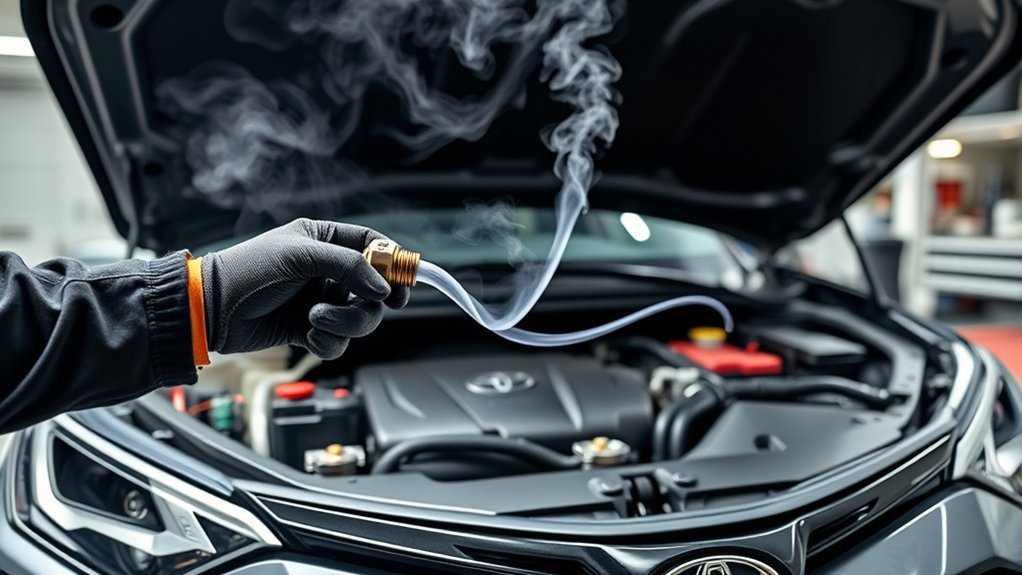
Because unmetered air is a common cause of P0171, start by systematically checking every vacuum connection on your RAV4 for cracks, loose clamps, or missing fittings. Begin a vacuum hose inspection: visually scan hoses at the intake manifold, throttle body gasket, and air intake junctions for wear or detachment. Lightly flex hoses to reveal hidden cracks.
Use smoke leak detection or soapy water next. With the engine off, introduce smoke into the intake system and watch for escape points; with soapy water, run the engine and look for bubbles forming. Focus on throttle body gasket seams and all vacuum tee fittings.
Replace any damaged hoses or faulty gaskets immediately, using OEM-equivalent parts and secure clamps. After repairs, clear codes and recheck for P0171 while monitoring idle and fuel trims. Confirm the system is sealed and the engine runs smoothly to reclaim reliable operation and driving freedom.
| Step | Target |
|---|---|
| Visual | Hoses & clamps |
| Test | Smoke leak detection |
| Fix | Replace & retest |
Clean and Test the MAF Sensor
You’ll first locate and carefully remove the MAF sensor from its housing near the air filter, taking care not to touch the sensing elements. Spray the sensor with a dedicated MAF cleaner, let it air dry completely, then reinstall it following proper torque and connector alignment. If the P0171 persists after cleaning and testing, replace the MAF sensor to restore accurate air measurement.
Locate And Remove Sensor
Locate the MAF sensor on the air intake tract near the air filter housing, then disconnect the negative battery terminal and unplug the sensor’s electrical connector before loosening its mounting clamps or screws. You’ll work deliberately to free the MAF sensor without twisting or stressing the harness; treat connectors gently to prevent damage.
- Inspect surrounding ducting and the air filter for debris or tears; clear as needed.
- Remove mounting hardware in sequence, supporting the sensor to avoid drop or shock.
- Extract the MAF sensor straight out of its housing, noting orientation for reinstallation.
You’re removing the component that measures incoming air to reclaim control over fuel trim. If cleaning doesn’t help later, you’ll have a clear path to replace the sensor.
Clean, Dry, Reinstall
With the MAF sensor removed and the intake area inspected, clean it using a dedicated MAF cleaner sprayed directly onto the sensing elements—do not touch them with tools or cloth. You’ll use careful cleaning techniques to free the sensor of oil and debris, preserving accurate air measurement for liberation from limp performance. Spray, wait, and repeat as needed; never rub.
| Step | Action | Note |
|---|---|---|
| 1 | Spray cleaner | Target sensing wires |
| 2 | Air dry | Complete drying only |
| 3 | Inspect | No residue visible |
Once dry, reinstall the MAF sensor into its housing near the air filter, secure clamps, and reconnect wiring. Start the engine and monitor for improved AFR and idle. If symptoms persist, replace the MAF sensor to restore precise airflow control.
Test Fuel Pressure: How and Target Values
Before hooking up a fuel pressure gauge, verify the fuel pump relay and prime the system so you get accurate readings; connect the gauge to the fuel rail service port while the engine is running and expect about 30–40 psi on most RAV4 models. You’ll make a clean gauge connection, observe steady pressure, and document readings against specs to decide next steps.
- Confirm relay and prime: cycle key to pressurize system, check relay operation, then attach the gauge to the service port for a reliable fuel pressure baseline.
- Measure running pressure: with engine idling, record psi. Target is roughly 30–40 psi on most RAV4s; a steady value within that window indicates the fuel delivery system is likely sound.
- Low-pressure protocol: if below range, inspect fuel filter, fuel pump output, and pressure regulator; replace or repair components based on manufacturer specifications and measured deviation.
You’ll act deliberately, reclaim control, and follow data-driven steps to restore proper fuel pressure.
O2 Sensor or Fuel Problem? How to Tell
Start by comparing fuel pressure readings to O2 sensor behavior: low pressure points to a fuel delivery issue, while normal pressure shifts focus to the sensor. Use live data—monitor O2 voltage swings and response time alongside short-term and long-term fuel trims—to see if the sensor tracks changes promptly. If pressure is good but the O2 signal is erratic or slow, replace the sensor; if pressure is low or trims stay lean, inspect the fuel system for clogs or leaks.
Fuel Pressure Versus Sensor
If your RAV4 throws a P0171, you’ll need to distinguish whether low fuel pressure or a faulty O2 sensor is causing the lean condition by testing each system methodically: measure fuel pressure with a gauge and compare it to spec. Low readings point to a failing fuel pump or clogged filter; normal pressure shifts focus to the sensor or intake systems. Then verify the oxygen sensor’s behavior.
- Attach a fuel pressure gauge; confirm pressure sits within manufacturer range—below range implicates fuel delivery (fuel pump/filter).
- Probe the oxygen sensor voltage during operation—fluctuation shows responsiveness; steady output suggests sensor fault.
- If both pass, pursue vacuum leaks or a contaminated MAF to regain control and freedom from repeat codes.
Live Data Diagnosis
When you pull live data to diagnose a P0171, focus on O2 sensor voltage swings and fuel trim numbers to distinguish sensor behavior from actual fuel delivery faults. You’ll watch the O2 sensor for dynamic switching between ~0.1–0.9 V; steady low voltage with no switching suggests lean indication not produced by a healthy sensor. Next check short-term and long-term fuel trims: positive trims mean the ECU is adding fuel to compensate. If both STFT and LTFT remain high across operating conditions, suspect fuel delivery (pump, filter, regulator, or injector issues) rather than the sensor. Always compare readings to Toyota specs and vary load/idle to confirm. Use methodical steps to liberate yourself from guesswork and fix the root cause.
Repair Costs: Parts, Labor, DIY vs Pro
One clear way to approach P0171 repairs is to weigh parts, labor, and whether you’ll tackle it yourself or hire a pro. Build a repair budget and run a cost comparison: simple fixes run $100–$300; vacuum leaks and MAF cleaning sit at the low end, sensor replacements at the high end. Labor is typically $75–$150/hour, with most jobs taking 1–2 hours.
- DIY: Clean MAF or inspect hoses for $20–$50 in supplies; you control time and savings.
- Independent shop: Expect diagnosis plus labor; total often falls in the $100–$300 range depending on parts.
- Dealer/pro: Higher hourly rates may apply; oxygen sensor replacement can reach $150–$300 including labor.
You’ll minimize long-term expense by addressing P0171 early. Choose your path by matching technical skill, desired autonomy, and the repair budget; act decisively to reclaim control and avoid cascading failures.
Fast Prioritized Checklist to Fix P0171
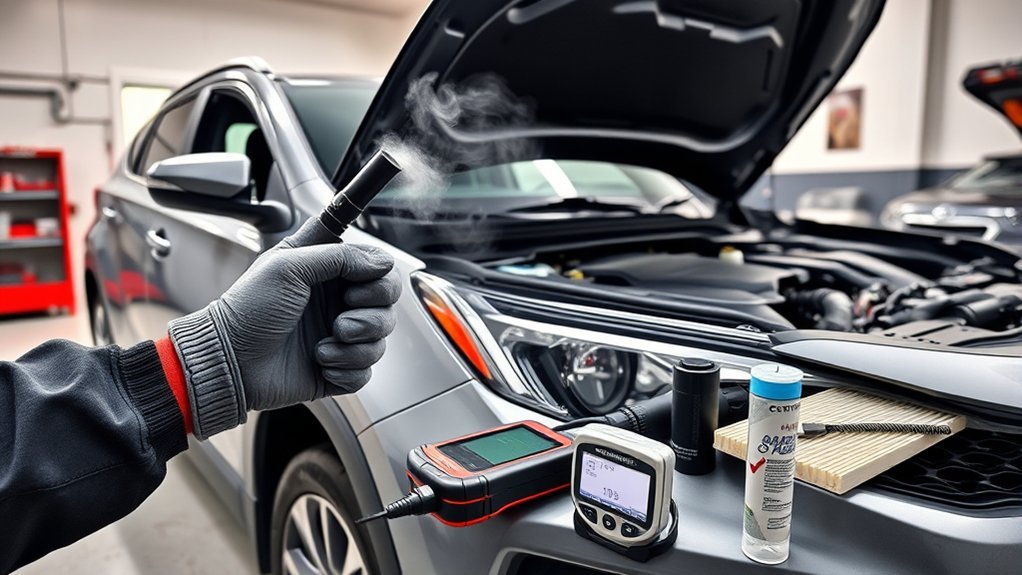
Start by checking for vacuum leaks around the intake manifold and all connected hoses, repairing any cracks or loose fittings you find. Next, remove the MAF sensor and clean it with a dedicated MAF cleaner, or replace it if cleaning doesn’t restore proper readings. Follow this sequence before moving on to fuel pressure or O2 sensor checks to rule out the most common causes of a P0171.
Check For Vacuum Leaks
If your RAV4 throws a P0171, inspect the intake system for vacuum leaks immediately. You’ll start by visually checking each vacuum hose for cracks, splits, or loose fittings that allow air leaks into the intake. Use a smoke machine or carefully spray carburetor cleaner around the intake manifold, throttle body gasket, and vacuum lines to pinpoint leaks by observing RPM change or smoke escape. Secure or replace any damaged hoses and tighten hose clamps to restore sealing integrity. Make this a recurring check to prevent recurrence of the lean-code condition. Be methodical and decisive—freedom from repeated faults comes from disciplined maintenance.
- Visually inspect hoses and clamps.
- Perform smoke or spray test.
- Replace faulty components.
Clean Or Replace MAF
After checking for vacuum leaks, move on to the mass air flow (MAF) sensor—it’s a common cause of a P0171 lean code. Remove the MAF sensor from its housing near the air filter for inspection. Use a dedicated MAF cleaner and spray carefully; avoid touching the sensing elements. Confirm no residue remains so the sensor retains accuracy in measuring intake air and diagnosing the air fuel balance. Let the sensor dry fully before reinstalling to prevent damage or false readings. If cleaning doesn’t clear the P0171 or the sensor shows physical damage or erratic output, replace the MAF sensor. Routine MAF maintenance prevents recurrent lean conditions and restores precise air-fuel metering, returning control to you.
Prevent P0171: Maintenance Tips for RAV4
Although routine checks might seem minor, keeping your RAV4’s vacuum hoses, MAF sensor, fuel filter, fuel pressure, and O2 sensors within spec prevents the lean condition that triggers P0171. You’ll act methodically: perform hose inspection frequently, swap cracked lines immediately, and prioritize fuel quality to reduce contamination. Clean the MAF every 15k–30k miles to maintain accurate airflow readings.
Keep your RAV4’s hoses, MAF, fuel filter, pressure, and O2 sensors in spec—inspect, clean, and replace to prevent P0171.
- Inspect and replace vacuum hoses per visual and pressure tests; address leaks to stop unmetered air entry.
- Replace the fuel filter per schedule (≈30k–40k miles) and monitor fuel pressure with a gauge to verify manufacturer specs.
- Test and replace O2 sensors at 60k–100k miles to preserve proper AFR feedback.
You’ll keep records and follow intervals to free yourself from recurring faults. These precise, repeatable actions protect engine efficiency and prevent the P0171 lean-code cycle, giving you control and reliability without unnecessary complexity.
Frequently Asked Questions
Can P0171 Cause Long-Term Engine Damage if Ignored?
Yes — if ignored, you’ll risk long-term engine damage. Persistent fuel system imbalance from vacuum leaks or air intake faults, plus sensor malfunction, will degrade engine performance, reduce efficiency, and cause premature wear and failure.
Will a Software Update/Ecu Reflash Fix P0171?
Sometimes — if faulty ECU calibration or software compatibility causes lean diagnostics, you can reflash the ECU to resolve P0171. You’ll want validated calibration, careful testing, and freedom from vendor lock-in before proceeding.
Can Cheap Fuel or Ethanol Blends Trigger P0171?
Yes — cheap fuel and ethanol effects can trigger P0171. Poor fuel quality causes lean mixtures, vapor lock, injector clogging, and altered stoichiometry. You’ll need diagnostics, fuel filtration, or switching fuels to regain control.
Does P0171 Affect Emissions Test Results?
Like a wilting flag, yes — you’ll fail emissions tests if P0171 causes high hydrocarbons or CO; you should follow diagnostic procedures, meet emission standards, and fix fuel/air issues promptly so you reclaim driving freedom.
Can a Clogged Catalytic Converter Mimic P0171 Symptoms?
Yes — a clogged catalytic converter can mimic P0171: clogged converter symptoms like reduced power and hesitation arise from exhaust flow issues, causing enriched/lean sensor readings; you’ll diagnose via backpressure, O2 response, and flow testing.
Conclusion
Fixing P0171 on your RAV4 isn’t mystical — it’s systematic. You’ll inspect hoses, test the MAF, and check O2 readings; most causes are a simple leak or dirty sensor, not a failed engine. If you think it’s too hard, picture swapping a tired intake hose in your driveway with basic hand tools in under an hour. Follow the checklist, use a scanner, and you’ll clear the lean code or know when to hand it to a pro.