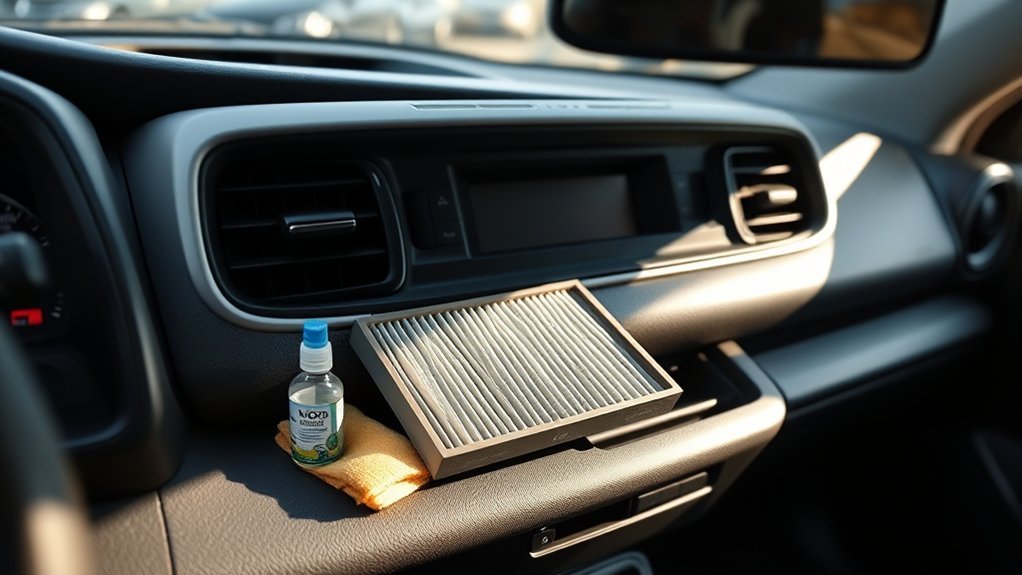
If your RAV4 smells musty from the vents, it’s usually mold or bacteria on the evaporator or a clogged AC drain causing standing water; start by checking and clearing the drain under the passenger footwell, replace the cabin filter, and run the fan after shutdown to dry the system. Use a foaming evaporator cleaner through the vents and inspect ducts for debris. Follow these steps and you’ll cut most odors — keep going for step‑by‑step clearing and sanitizing tips.
Is the Smell Mold in My RAV4’s Vents?
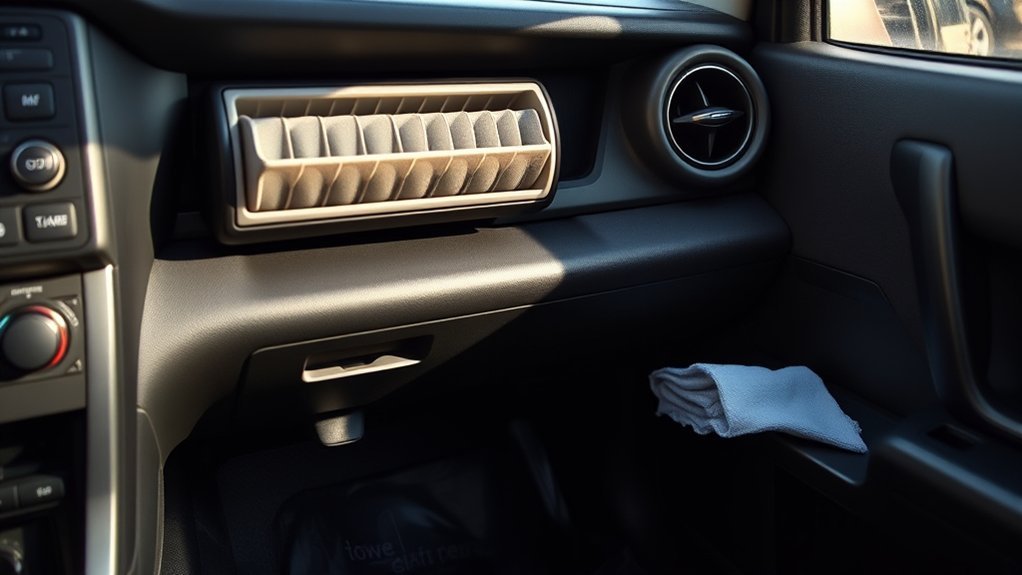
Could that musty smell coming from your RAV4’s vents be mold? You’ll diagnose it fast: mold identification starts with a musty, damp odor when the AC runs, especially after heavy humidity or frequent use. Stagnant water in the evaporator and poor drainage create the breeding ground, so if the scent returns soon after driving, mold and bacteria are likely culprits. You can act: replace the cabin air filter regularly and inspect for blocked drain paths to reduce moisture retention. For immediate air quality improvement, spray a disinfectant into the intake to kill spores and cut the smell. Habit changes help, too — running the fan off a few minutes before you stop lets the evaporator dry and aids odor prevention. Stay proactive: you’re reclaiming your cabin from hidden growth by diagnosing moisture sources, swapping filters, and keeping drainage clear so mold can’t reestablish itself.
Quick Fixes for RAV4 AC Smell: Drain, Vents, Fan
Start by checking and clearing the AC drain under the passenger footwell—blowing compressed air through it removes the standing water that feeds odors. Next, spray a foaming evaporator cleaner into the vents and let it sit for 30 minutes to kill mold and bacteria. Finally, run the fan (no heat or AC) for a few minutes after parking to dry the evaporator and prevent moisture from returning.
Clear The Drain
One simple step often fixes a musty RAV4 smell: clear the AC drain so water can exit the evaporator housing. You’ll perform basic drain maintenance to regain control over moisture control and stop stagnant water from feeding mold. Locate the rubber drain tube under the passenger side, then use compressed air or a flexible pick to push out leaves, sludge, or silt—don’t poke blindly; be gentle and deliberate.
After clearing, run the fan with AC off for several minutes to dry the evaporator housing and verify flow. Check the drain regularly, especially in humid areas, to prevent recurrence. If the smell persists despite a clear drain, escalate to deeper cleaning options rather than repeating the same quick fix.
Spray Evaporator Foam
Use a foaming evaporator cleaner made for automotive AC systems to attack mold and bacteria trapped in the evaporator core—apply it through the fresh‑air intake with the fan running so the foam penetrates the core and neutralizes odors at the source. Before you spray, clear the AC drain tube so cleaner and loosened grime won’t pool and recontaminate the system. Aim for targeted evaporator maintenance every six months to stop growth before it starts; this is practical odor prevention that keeps your cabin liberated from stale air. Follow product instructions, run the fan on high for a few minutes post‑treatment to move foam through the core, and repeat on a schedule. If smell persists, inspect cabin filter and intake for lingering debris.
Run Fan To Dry
After you’ve treated the evaporator, run the fan to dry the system and keep moisture from returning. You’ll turn off the A/C about a mile before you arrive and run the blower on low for several minutes; that simple ventilation technique helps evaporate residual condensation and interrupts mold growth. Keep a window cracked while the fan runs to boost airflow and speed drying. Check the AC drain hose regularly—clear drains are essential for proper condensation discharge and effective moisture control. Make this routine a habit after driving in humid conditions or using A/C long trips. Consistent use of these steps improves cabin air quality, reduces musty odors, and frees you from repeated cleaning cycles, extending the RAV4’s AC lifespan.
Clear the Evaporator Drain Step‑by‑Step (Passenger Footwell)
Start by locating the AC drain tube under the passenger footwell so you know exactly where to work. Use a flexible tool (zip tie or pipe cleaner) to gently clear debris, then catch any runoff with a cup or towel. Finish by running water through the tube to confirm it drains freely and stops trapping moisture.
Locate Drain Tube Opening
Before you clear the evaporator drain, crouch on the passenger side and look under the footwell where the HVAC housing meets the firewall; you’ll spot a rubber or plastic tube pointing downward that’s the drain opening. Identify its location visually and by touch—it’s usually low, near the carpet edge, and angled toward the ground. This is a key step in drain maintenance and evaporator inspection: knowing the tube lets you target blockages without tearing panels. Set a towel or small container beneath before you touch anything. Note any grime, foam, or discoloration at the mouth—these clues tell you if the drain’s been backing up. Mark its position mentally so you can return with tools confidently and free the system from stagnation.
Clear And Test Drain
Now that you’ve located the drain tube under the passenger footwell, clear it to restore proper condensation flow and stop moisture buildup. Grab compressed air and blow short bursts into the tube to expel leaves, dirt, and grime; that’s the core of effective drain maintenance. Inspect the tube visually after each blast and repeat until air passes freely and no debris exits. Run the AC on high for several minutes while watching for steady water flow from the tube—this confirms moisture control has been restored. Check again after heavy rain or a car wash, since clogs recur. If a musty smell lingers, sanitize the evaporator with AC cleaner foam to remove mold and bacteria and reclaim fresh air.
Sanitize the Evaporator and Ducts With Foaming Cleaner
Spray a foaming AC cleaner into the RAV4’s dashboard vents and access the drain hose so the foam can reach the evaporator and ducts; let it sit for at least 30 minutes to kill mold and bacteria. You’ll apply the foam where it can penetrate coils and channels, then seal vents briefly to let the product work. This treatment targets the microbial source of musty odors and frees your cabin air.
Follow a hands-on routine: schedule sanitization every six months as your cleaning frequency to reduce moisture buildup and sustain odor prevention. After dwell time, run the AC at max fan for several minutes to purge residue and boost drainage. Inspect the drain for proper flow afterward.
You’re reclaiming control of your environment—simple, effective maintenance that restores fresh air without surrendering to persistent smells. Use a product made for automotive evaporators and follow label safety instructions.
When to Replace the Cabin Air Filter and Best Types to Use
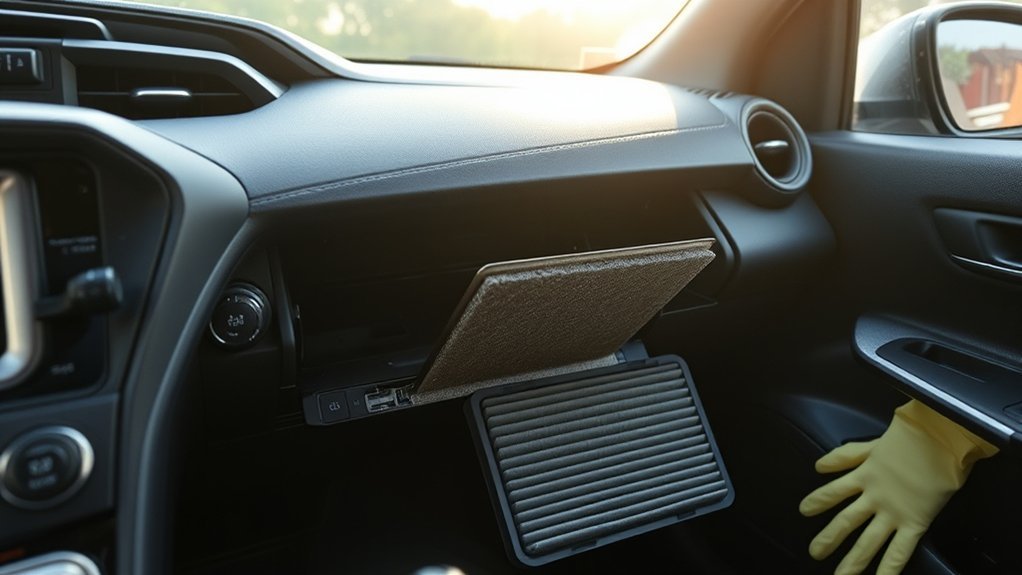
After you’ve sanitized the evaporator and ducts, check the cabin air filter next—it’s a common source of lingering odors and airflow problems. You should replace the cabin air filter every 15,000 to 30,000 miles or at least once a year; inspect it sooner if you drive dusty roads. A clogged filter restricts airflow, forces the HVAC to work harder, and creates conditions for mold and bacterial growth. For liberation from musty air, prioritize cabin filter maintenance: pull the filter, hold it to the light, and look for packed dirt or dark staining.
Choose high-quality charcoal cabin filters to absorb odors and improve air quality—these outperform basic paper filters. If you or passengers have allergies, opt for a HEPA-rated cabin filter to trap fine particles and allergens. Don’t guess: replace when visibly dirty or when airflow and scent don’t return to normal after cleaning. Good filter quality pays off in cleaner, freer breathing.
Deeper Cleaning: Blow‑Out, Blower Removal, and Pro Services
If simple filter swaps and surface disinfecting don’t stop the smell, you’ll need deeper work: a blow‑out to force debris and moisture from the evaporator, and often removal of the blower motor so you can access and clean the coils thoroughly. Use compressed air for the blow‑out to dislodge trapped dust and water; it reduces microbial fuel for odors. Removing the blower gives you clear access to coils and drain channels so you can treat mold directly.
| Task | Benefit |
|---|---|
| Blow‑out | Clears debris/moisture |
| Blower removal | Full coil access |
| Pro service | Equipment & solutions |
If you want liberation from recurring odor, adopt thorough cleaning techniques. DIY can work, but professionals bring professional equipment and Toyota‑specific kits for sanitization and inspection. They’ll find hidden mold, treat it, and advise on follow‑up. Schedule deep cleanings when community reports or persistent smell continue; you’ll regain fresh air and control.
Prevent Musty Smells: Fan Habits, Fresh‑Air Intake, Schedule
Having tackled the hard cleaning, you’ll prevent recurrence by tweaking daily habits: run the fan without A/C for a few minutes after driving to dry the evaporator, use fresh‑air intake instead of recirculation to keep stale air moving out, and replace the cabin filter on a regular schedule so trapped pollutants don’t feed odors. Make fan maintenance routine: switch the fan to high for 2–5 minutes at shutdown to expel moisture and discourage mold. Favor fresh‑air intake whenever possible; it flushes fumes and humidity, restoring cabin freedom and breaking the cycle of stale smells. Replace the cabin air filter per Toyota’s interval or sooner if you notice reduced airflow—clean filters equal cleaner air circulation. Every six months use an A/C disinfectant spray through vents to kill bacterial growth before it roots. In humid regions, park with a window cracked for passive ventilation when safe. These hands‑on steps keep your RAV4 smelling clean and free you from recurring musty confinement.
Persistent Smell Checklist and When to See a Mechanic

Start with a quick checklist you can run through in 10–15 minutes to pinpoint why the musty smell won’t quit: check the cabin filter for dirt, inspect the AC drain tube for blockages, run the blower on high with fresh‑air mode to force airflow, and perform a moisture detection by feeling around the passenger footwell and under the dash for dampness. If you find standing water or damp insulation, that’s a sign the evaporator or drain is retaining moisture.
Next, do a targeted ventilation inspection: smell vents with fan on, pressurize ducts briefly, and use evaporator cleaner foam every six months as a preventative. If odors persist after these steps, or if you detect mold, refrigerant smell, or signs of infestation, it’s time to see a mechanic. Professional inspection can find hidden mold in the evaporator, refrigerant leaks, or compromised ducting that DIY won’t access. Take action—don’t let the problem limit your freedom.
Frequently Asked Questions
How to Get Rid of Musty Smell in Car Vents?
Spray disinfectant into the intake, run fan to circulate, and use AC cleaner foam; check and clear drain lines, perform vent maintenance tips, and schedule air filter replacement annually so you reclaim fresh, odor‑free cabin air.
Why Do the Vents in My Car Smell Musty?
Mold and bacteria in your AC evaporator and stagnant drainage cause the musty vents; you’ll fix it by ventilation maintenance, swapping filters, disinfecting intake plenum, and drying the system to restore fresh air quality and reclaim comfort.
What to Do if Car HVAC System Starts to Smell Like Mildew?
Like pruning a jungle, you’ll act fast: ventilate, spray disinfectant into intake, run fan on high, replace cabin air filter, foam‑clean the evaporator, and adopt mildew prevention and HVAC maintenance habits so you reclaim fresh freedom.
Conclusion
You can usually fix a musty RAV4 vent smell yourself by clearing the evaporator drain, replacing the cabin filter, and sanitizing the evaporator/ducts. For example, a neighbor’s 2017 RAV4 smelled sour after rain; a quick drain clear, foam cleaner spray, and new HEPA cabin filter stopped it. If odor persists after a blow‑out or blower removal, get pro service—mold deep in ducts or a leaking heater core needs a mechanic’s diagnosis and repair.