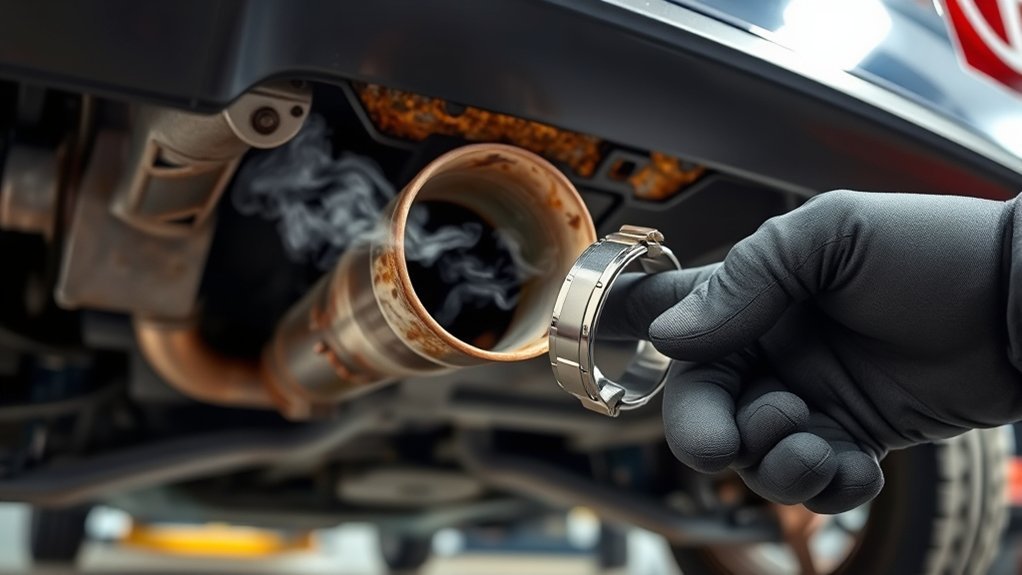
If your Toyota RAV4 has an exhaust leak, you might notice loud rumbling sounds, increased engine noise, or a raw fuel smell in the cabin. You could also see a drop in fuel efficiency and a check engine light due to O2 sensor issues. Spotting leaks involves visual inspections, listening for sounds, or using a smoke machine. While minor fixes may be DIY, serious problems require professional help. Keep going to find out more about effective solutions and preventive measures.
Identifying Common Symptoms of Exhaust Leaks
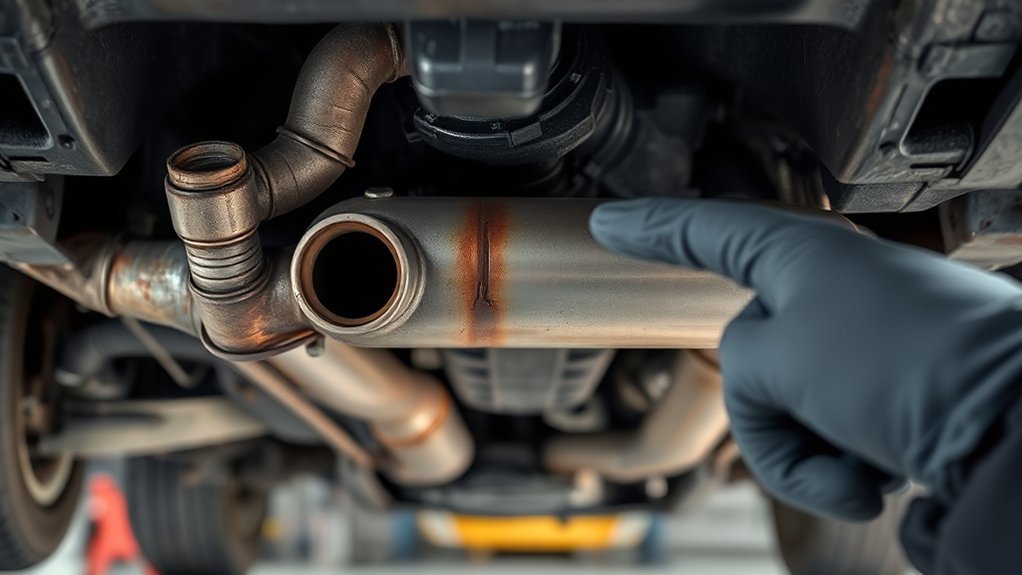
When you notice unusual sounds or smells while driving your Toyota RAV4, it might indicate an exhaust leak. Increased engine noise, often a loud rumbling or hissing, usually correlates with your engine’s RPMs, suggesting a disruption in the exhaust system. You may also detect unusual gas or raw fuel smells, pointing to improper gas flow and potential health risks from exhaust fumes entering your cabin.
Moreover, a significant drop in fuel efficiency can occur as the leak causes an air-fuel mixture imbalance, leading your engine to overcompensate with additional fuel injection. Keep an eye on your dashboard; if the check engine light activates, it could be linked to O2 sensor issues or air-fuel ratio problems stemming from the leak. Conduct a visual inspection for signs like holes, rust, or disconnected gaskets at common leak points to better assess your situation.
How to Find Where Your Exhaust Leak Is Coming From?
How can you effectively pinpoint an exhaust leak in your Toyota RAV4? Start with a thorough visual inspection. Look for cracks, rust, or loose connections, especially around the exhaust manifold and gaskets. Next, engage in sound analysis; listen for unusual noises like a loud rumble or hissing that often intensify with engine RPM.
For a more hands-on approach, consider using a handheld smoke machine or soapy water. Apply it to suspected areas—bubbles will form if there’s a leak. If it’s safe, run the engine and feel for escaping air; a noticeable current can indicate where the leak is located. Finally, utilize an OBD2 scanner to check for related error codes that could confirm your findings. By combining these methods, you’ll effectively narrow down the source of your exhaust leak and take the next steps toward resolution.
DIY Fixes vs. Professional Help
While tackling an exhaust leak in your Toyota RAV4 may seem straightforward, distinguishing between DIY fixes and professional assistance is vital. DIY repairs can work for minor issues, like tightening loose bolts or replacing worn gaskets. However, significant problems often require specialized tools and expertise. If you suspect complex issues, such as with the exhaust manifold or flex pipe, professional assessments are important. Technicians have the experience and equipment to guarantee a proper fix, reducing the risk of further damage.
Many exhaust shops offer free inspections, making this a practical first step. While DIY fixes might appear cost-effective, improper repairs can lead to more significant issues down the line, affecting your vehicle’s performance and safety. Ultimately, investing in professional help can save you time and money, ensuring your RAV4 runs efficiently and safely.
What Happens If You Ignore an Exhaust Leak?
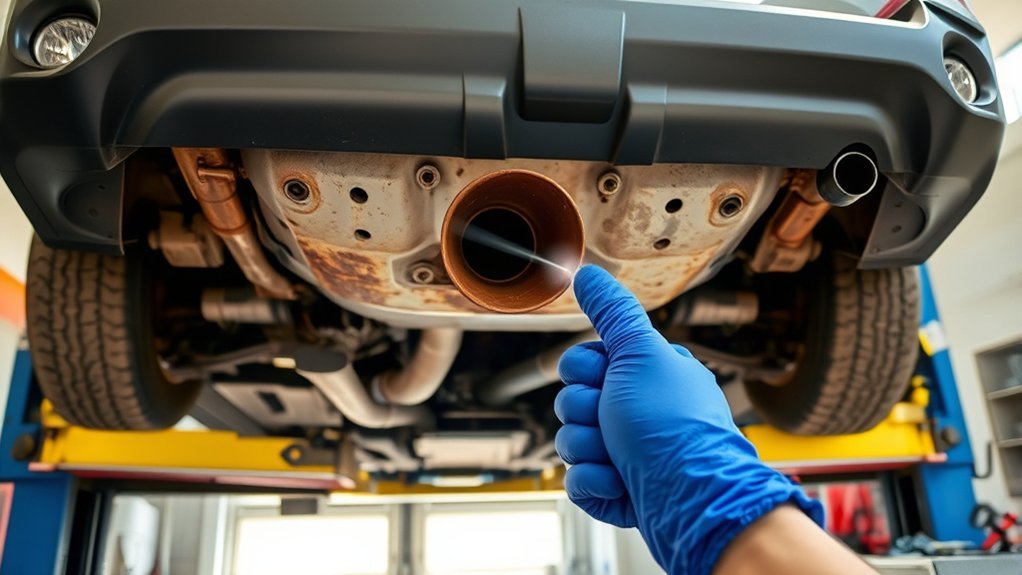
Ignoring an exhaust leak can lead to serious consequences for your Toyota RAV4. Over time, this seemingly minor issue can escalate, affecting both your vehicle’s performance and your safety. Here’s what can happen:
- Increased Emissions: A leak compromises emission controls, elevating your vehicle’s emissions impact and violating environmental standards.
- Check Engine Light: Persistent leaks can trigger the check engine light, indicating air-fuel mixture issues that may cause further engine damage.
- Reduced Fuel Efficiency: An exhaust leak disrupts the air-fuel ratio, forcing your engine to work harder and resulting in higher fuel consumption.
- Health Risks: Prolonged exposure to exhaust fumes can pose serious health risks, including carbon monoxide poisoning, which is odorless and potentially fatal.
Addressing an exhaust leak promptly is essential to maintain your RAV4’s performance and guarantee your safety on the road.
Preventive Measures to Avoid Future Exhaust Issues
To prevent future exhaust issues in your Toyota RAV4, it’s crucial to regularly inspect the exhaust system for any signs of wear or damage. Look out for rust, visible cracks, or loose components. Securely fasten exhaust hangers and mounts, as worn or broken supports can cause misalignment, leading to leaks. Employ exhaust maintenance tips such as using high-quality materials when repairing or replacing parts to enhance durability and minimize future problems.
Additionally, schedule routine maintenance checks with a qualified technician who can spot potential issues early, saving you from costly repairs later. Keep an eye on engine performance and fuel efficiency; any sudden changes can indicate underlying exhaust issues that require immediate attention. Implement rust prevention techniques, like applying protective coatings, to shield your exhaust system from corrosive elements. Adopting these practices will help guarantee your RAV4 runs smoothly and efficiently for years to come.
Frequently Asked Questions
How to Diagnose and Fix an Exhaust Leak?
To diagnose and fix an exhaust leak, use diagnostic methods like visual inspections and OBD2 scanners. Check for common causes, such as rusted gaskets or pipe connections, and address any noise or unusual odors promptly.
How Much Does It Cost to Fix Your Exhaust Leak?
Fixing your exhaust leak typically costs between $100 and $1,200. For instance, if you tighten a loose connection, you might only pay $100. Use leak detection methods like smoke tests to identify issues effectively.
Conclusion
In summary, addressing exhaust leaks in your Toyota RAV4 is essential for both performance and safety. Ignoring these issues can lead to a 20% decrease in fuel efficiency, not to mention potential health risks from harmful emissions. By being vigilant about symptoms and seeking timely repairs, you can maintain your vehicle’s integrity and protect your well-being. Remember, a little proactive care goes a long way in preventing costly future problems.