Last updated: July 15, 2026
A Toyota RAV4 exhaust leak often sounds like a sharp tick near the engine, a hiss under acceleration, or a deeper rumble beneath the vehicle. Stop driving and arrange professional help if exhaust fumes enter the cabin, anyone develops a headache or dizziness, the exhaust is hanging or dragging, you smell raw gasoline, or the check engine light flashes while the engine runs roughly.
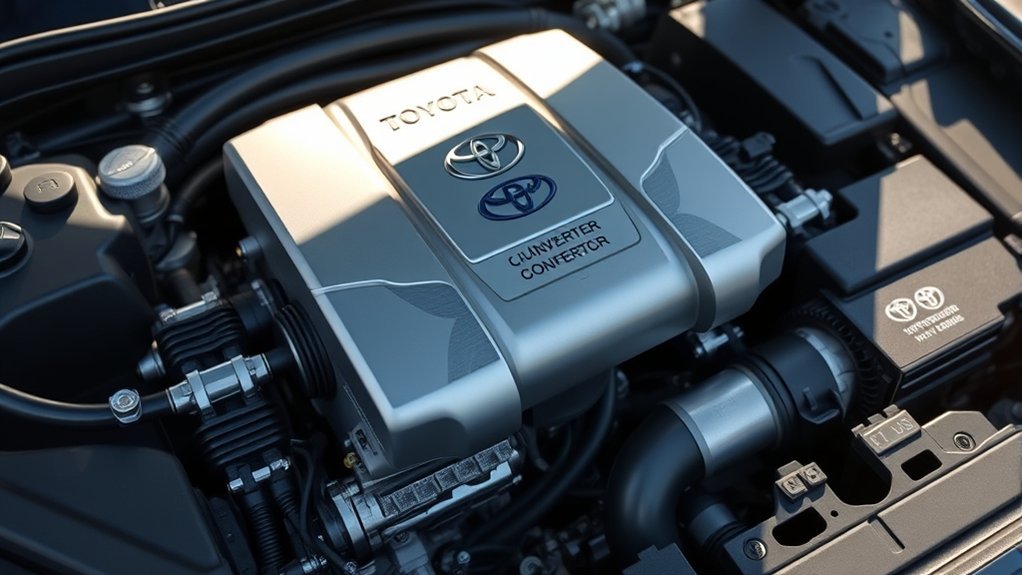
With the exhaust completely cool, start by checking for soot, rust, loose joints, damaged hangers, and cracked pipe sections. An OBD2 scan may provide clues, but a trouble code does not identify the failed part. Hidden leaks near the exhaust manifold, catalytic converter, flex pipe, or oxygen sensors are best confirmed with a controlled professional smoke test.
The exact exhaust layout varies by model year, engine, front-wheel drive or all-wheel drive, and Hybrid or plug-in hybrid configuration. Confirm replacement parts and warranty coverage with your VIN.
Quick Answer
A Toyota RAV4 exhaust leak usually causes ticking, hissing, or rumbling that changes with engine speed. Inspect the cold system for black soot, rust, loose joints, and damaged hangers. Do not touch or spray a running exhaust. Stop driving if fumes enter the cabin, anyone feels ill, the pipe is dragging, or the engine runs roughly with a flashing check engine light.
Key Takeaways
- A sharp cold-start tick often points toward the manifold, gasket, or front flange, while a deeper rumble usually comes from a pipe, resonator, muffler, or tailpipe.
- A leak before or near an oxygen sensor can affect sensor readings, but an emissions code alone does not prove that the exhaust is leaking.
- Carbon monoxide is colorless and odorless. The absence of an exhaust smell does not prove the cabin is safe.
- Stop driving if fumes enter the cabin, anyone develops possible carbon monoxide symptoms, the exhaust drags, or you smell raw gasoline.
- Use the RAV4’s VIN to confirm parts because exhaust components vary by model year, engine, drivetrain, and electrified powertrain.
At a Glance
| Inspection Time | A brief cold-system inspection; professional diagnosis and repair time vary by leak location and corrosion |
| Difficulty | Easy for visual inspection; moderate to advanced for repair |
| Basic Tools | Flashlight, gloves, eye protection, inspection mirror, and OBD2 scanner; use ramps or jack stands only if you are trained to lift the vehicle safely |
| Professional Tools | Vehicle lift and a controlled low-pressure smoke-testing system |
| Cost | A clamp, gasket, or hanger is usually less involved than a flex pipe, manifold, catalytic-converter section, or heavily rusted pipe assembly |
Contents
Toyota RAV4 Exhaust Leak Quick Triage
Use the table below to decide how urgently to act. Each symptom is a clue, not proof of a specific failed part.
| What You Notice | Possible Area or Cause | What to Do |
|---|---|---|
| Exhaust odor inside the cabin, headache, dizziness, weakness, nausea, chest pain, or confusion | Exhaust entering through the body, floor, cargo area, ventilation system, or an opening near a damaged pipe | Move into fresh air, shut the vehicle off, seek urgent medical help when symptoms occur, and do not drive it again until inspected |
| Sharp ticking that is strongest during a cold start | Manifold, manifold gasket, flange, or front pipe | Inspect for soot when cold and schedule professional diagnosis |
| Hissing that becomes louder under acceleration | Small flange, flex-pipe, weld, or front-pipe leak | Avoid hard acceleration and arrange an inspection |
| Deep rumble beneath or behind the cabin | Mid-pipe, resonator, muffler, or tailpipe | Check for a loose or hanging section and repair it promptly |
| Pipe hanging, dragging, or striking the body | Broken hanger, separated joint, impact damage, or severe corrosion | Stop driving and have the vehicle towed |
| Flashing check engine light, severe rough running, or major power loss | An active misfire or another urgent engine fault, with or without an exhaust leak | Reduce risk by stopping safely and arranging diagnosis or towing |
| Raw gasoline odor | Possible fuel-system leak or unburned fuel, not simply an exhaust leak | Shut the engine off, avoid sparks or flames, and arrange professional help |
[Products Worth Considering]

Walker exhaust pipe flange gasket is designed to help complete exhaust repairs with a reliable seal for compatible vehicles. Built to work with OE exhaust components and Walker replacement parts, it features heat-deflecting construction, durable materials, and slotted bolt holes where applicable for easier installation. Engineered and tested for real-world performance, it supports long-lasting exhaust system service.

This oxygen O2 sensor set is designed for select Toyota Camry and RAV4 models with 2.4L engines, providing upstream and downstream replacement coverage in one package. Built to OEM specifications for plug-and-play installation, it helps improve fuel efficiency, support accurate air-fuel monitoring, and restore reliable engine performance. The stainless steel and heat-resistant construction is made for long-lasting durability and stable operation.

This genuine Toyota vent valve is designed as a vehicle-specific replacement part to support proper engine ventilation and reliable PCV system performance. It helps maintain correct airflow and crankcase function, making it a dependable choice for restoring original operation. Built to Toyota specifications, it offers a direct-fit solution for compatible vehicles.
What Are the Symptoms of a Toyota RAV4 Exhaust Leak?
The first sign of an exhaust leak is often a new sound. A small leak near the exhaust manifold, manifold gasket, or front flange may create a sharp ticking or tapping noise, especially during a cold start. A leak farther back may sound like a deeper rumble, drone, or hiss that changes as engine speed and load change.
An exhaust leak may also create a noticeable exhaust odor around or inside the vehicle. However, carbon monoxide itself has no color or smell. Do not use odor as proof that the cabin is safe. The CDC warns that a small exhaust-system leak can allow carbon monoxide to build up inside a vehicle.
A raw gasoline smell requires a different response. Turn the engine off and arrange professional help because the problem may involve the fuel system, incomplete combustion, or another fault rather than a simple pipe leak.
Warning: If exhaust enters the cabin or anyone develops headache, dizziness, weakness, nausea, chest pain, confusion, or unusual tiredness, move into fresh air, shut the vehicle off, and seek urgent medical help. Do not drive the RAV4 again until the source has been found and repaired.
A front exhaust leak can sometimes affect engine-management readings. Outside air entering before or near an oxygen or air-fuel-ratio sensor may influence the sensor signal and contribute to a lean-condition or catalyst-efficiency code. A code alone does not prove that a leak exists, and it does not justify replacing a sensor or catalytic converter without further testing.
Lower fuel economy, hesitation, or weak acceleration can occur alongside an exhaust-system problem, but these symptoms are not specific to a leak. Ignition faults, fuel-delivery problems, intake leaks, sensor faults, or a restricted catalytic converter can produce similar symptoms.
Common RAV4 Exhaust Leak Warning Signs
- Ticking or tapping during a cold start: May point to the exhaust manifold, manifold gasket, or front flange.
- Hissing during acceleration: May point to a small crack, flange gap, flex section, or damaged weld.
- Deep rumble underneath: Often comes from the mid-pipe, resonator, muffler, or tailpipe.
- Exhaust odor: Suggests that exhaust gases are escaping before the tailpipe, but the odor does not reveal the CO level.
- Check engine light: May appear with lean-condition, oxygen-sensor, or catalyst-efficiency faults, although many other causes are possible.
- Non-specific drivability changes: Poor fuel economy, hesitation, rough running, or reduced power require broader diagnosis.
- Visible soot or black marks: Soot around a flange, weld, gasket, or pipe joint is a useful leak clue.
- Rust, a hanging pipe, or broken hangers: Indicates structural damage that may worsen quickly.
How Can You Tell an Exhaust Leak From an Engine Tick?
An exhaust-manifold leak often sounds sharpest near the manifold, gasket, or front flange. It may be more noticeable immediately after a cold start and may leave a black soot trail near the leak. The sound can change as the exhaust heats and the metal expands.
Injector, valvetrain, timing, or internal engine noises may remain centered higher in the engine and may not leave soot or create an exhaust odor. Sound alone cannot confirm the cause. If the noise is deep, metallic, persistent when warm, or paired with low oil pressure or severe rough running, stop driving and get an engine diagnosis rather than assuming it is an exhaust leak.
Where Do Toyota RAV4 Exhaust Leaks Usually Occur?
The RAV4 exhaust system runs from the engine to the rear of the vehicle, but the exact routing and component design vary by generation, engine, drivetrain, and electrified powertrain. A front leak is usually louder near the engine and more likely to affect sensor readings. A rear leak may sound louder outside the vehicle but can still allow fumes to collect beneath the cabin or cargo area.
| Leak Location | Typical Clues | DIY or Shop? |
|---|---|---|
| Exhaust manifold or manifold gasket | Ticking during cold start, soot near the engine, exhaust odor, or an emissions-related code | Shop recommended |
| Flange gasket or pipe joint | Soot around the joint, hissing, loose hardware, or rusted bolts | DIY may be possible when the joint is accessible and structurally sound |
| Flex pipe or flexible coupling | Hiss, rattle, odor, or noise that changes as the powertrain moves | Shop recommended |
| Catalytic converter or front pipe section | Loud front leak, soot, emissions codes, heat damage, or failed-inspection risk | Shop recommended |
| Resonator, muffler, or tailpipe | Deep rumble, visible rust holes, broken welds, or a loose pipe | Minor clamp work may be DIY; welding or replacement usually needs a shop |
| Hangers and mounting points | Sagging, banging, body contact, misaligned joints, or a dragging pipe | Replace an accessible rubber hanger only when the vehicle is safely supported |
[Products Worth Considering]

This A-Premium AC expansion valve is a direct replacement designed to restore proper refrigerant flow and improve cooling performance across a wide range of compatible vehicles. Built to meet or exceed OEM quality standards, it features precision internal components for reliable operation and long-lasting durability. It is supported by an unlimited-mileage warranty for added peace of mind.

This oil filter housing cap assembly is designed as a direct replacement for a wide range of Toyota and Lexus vehicles, helping restore a secure seal for proper oil filtration. It is made for easy installation and tested for compatibility with multiple part numbers and model years. The package includes the cap, plug, and gasket for a complete replacement solution.
How Do You Find a RAV4 Exhaust Leak Safely?
Start with safe observation before using advanced tools. Let the exhaust cool completely, park on level ground, set the parking brake, and keep the vehicle outdoors. Use approved ramps or jack stands only if you know how to lift the vehicle at its specified support points. Never crawl beneath a vehicle supported only by a jack.
Note: On RAV4 Hybrid and plug-in hybrid models, assume the gasoline engine can start whenever the vehicle displays READY. Keep hands, clothing, hair, and tools away from moving parts, cooling fans, and hot exhaust components.
Step 1: Listen From a Safe Position
Start the vehicle outdoors and listen from beside it without reaching into the engine bay or crawling underneath. A front-end tick may point toward the manifold or gasket. A hiss beneath the center may point toward a flange or flex section. A low rumble at the rear may point toward the muffler or tailpipe.
Do not run the engine in a garage, even with the garage door open. Shut it off before moving closer for a visual inspection.
Step 2: Look for Soot, Rust, and Loose Parts
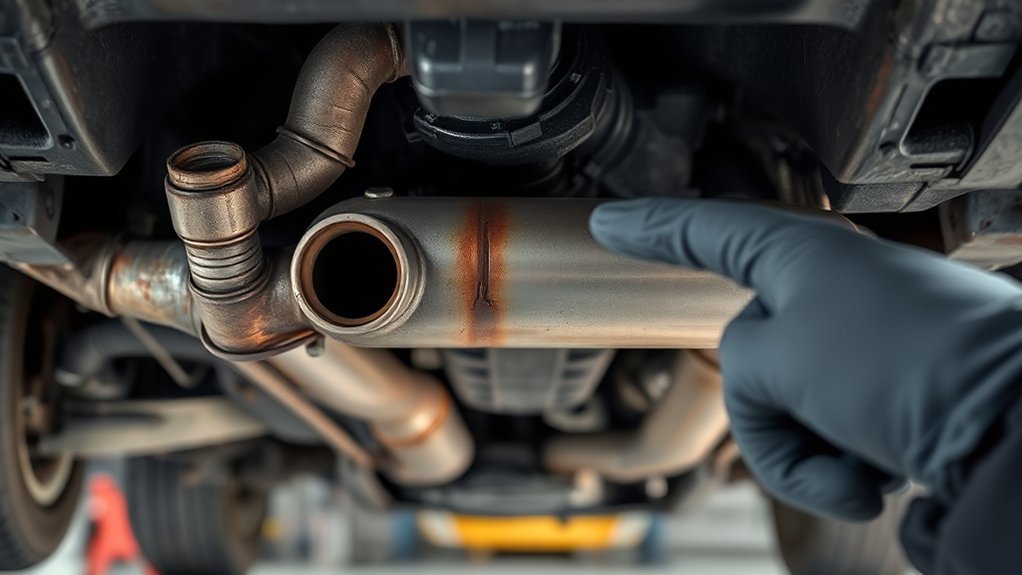
After the exhaust has cooled, use a flashlight and inspection mirror to check accessible areas around the exhaust manifold, pipe joints, flange gaskets, flex section, resonator, muffler, and tailpipe. Look for black soot, rust holes, cracked welds, missing bolts, broken hangers, heat damage, or a pipe that is no longer aligned.
A soot trail may lead back to a gasket edge, crack, weld, or joint. Heavy rust around a small hole often means the surrounding metal is too thin for a reliable patch.
Step 3: Inspect Joints Without Touching Hot Parts
With the engine off and the exhaust completely cool, inspect accessible seams and joints without spraying household chemicals onto the exhaust. Do not reach around heat shields, oxygen sensors, electrical connectors, or recently operated components.
If sound and soot do not identify the source, stop the home inspection. A controlled low-pressure smoke test is safer and more reliable than working beside a running, rapidly heating exhaust.
Step 4: Review Codes and Scan Data
Use an OBD2 scanner to review stored and pending codes, freeze-frame information, and fuel-trim data. A front exhaust leak can sometimes contribute to a lean code such as P0171 or a catalyst-efficiency code such as P0420, but neither code proves that a leak exists.
Oxygen-sensor circuit and heater codes require separate electrical diagnosis. Intake leaks, misfires, fuel-delivery faults, damaged wiring, failing sensors, and catalytic-converter problems can produce overlapping symptoms. Do not replace a sensor or converter based on a code alone.
Step 5: Confirm Hidden Leaks With a Professional Smoke Test
A repair shop can introduce smoke at controlled low pressure and watch for smoke escaping from a gasket, weld, pipe seam, or hidden area above a heat shield. This is especially useful when the leak is too small or inaccessible to locate visually.
Do not use flammable homemade smoke, force high-pressure air into the exhaust, or block the tailpipe while working beneath or behind the vehicle.
Pro Tip: Follow a light black soot trail toward its narrowest point. The clean break, gasket edge, weld, or pipe seam at the start of the trail is often closer to the true leak than the widest stained area.
Can You Fix a RAV4 Exhaust Leak Yourself?
A small, accessible leak may be repairable at home when the pipe is structurally sound and the vehicle can be supported safely. A loose clamp is different from a cracked manifold, damaged flex section, catalytic-converter shell, sensor bung, or heavily corroded front pipe.
DIY Repairs That May Be Reasonable
- Tightening accessible hardware: Reasonable only when the fastener, flange, and surrounding metal remain in good condition. Follow the service information for the correct torque.
- Replacing an accessible flange gasket: May work when the mating surfaces are flat, intact, and not heavily corroded.
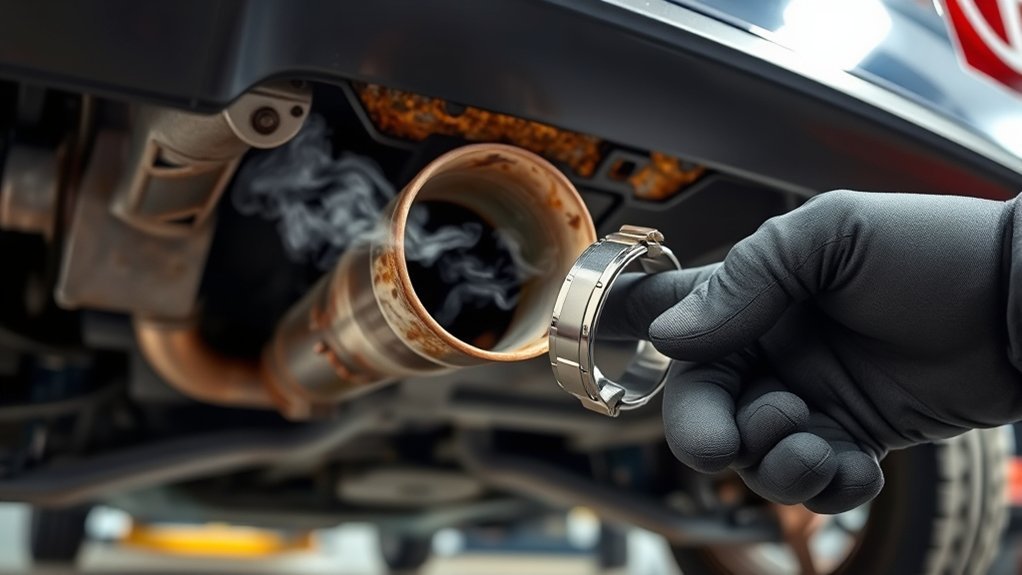
- Installing the correct exhaust or band clamp: Can seal a suitable pipe joint when both pipe sections remain structurally sound.
- Using exhaust repair paste or wrap temporarily: May provide a short-term seal for a small hole in solid pipe away from sensors and very high-heat components.
- Replacing an accessible rubber hanger: Can correct sagging before it places more stress on joints and welds.
Do not patch a catalytic-converter shell, exhaust manifold, sensor bung, severely rusted pipe, or section that supports significant weight. A patch over thin surrounding metal usually fails again.
When to Get Professional Help
Get professional help when the leak is near the exhaust manifold, catalytic converter, flex section, oxygen sensors, or an area hidden by heat shields. A shop can raise the vehicle safely, perform a smoke test, measure scan data, repair damaged metal, and confirm that the exhaust is sealed afterward.
Professional repair is also the safer choice when bolts are seized, the pipe is heavily rusted, welding is required, the check engine light is on, or the exhaust is hanging. Shut the engine off and arrange urgent help if you smell raw gasoline because that symptom may involve the fuel system.
Warranty coverage depends on the model year, mileage, failed part, cause, state, and emissions certification. Toyota’s 2026 RAV4 Warranty and Maintenance Guide lists the catalytic converter and protector with 8-year or 80,000-mile federal emissions coverage. It also lists the exhaust manifold and certain pipes as emissions-related parts, but their coverage periods can differ. Check the guide for your exact model year and ask Toyota to confirm coverage for your VIN before authorizing a repair.
The same guide states that owners may use an automotive service provider of their choice. However, damage or noncompliance caused by improper maintenance or repair is not covered.
What Happens If You Ignore a RAV4 Exhaust Leak?
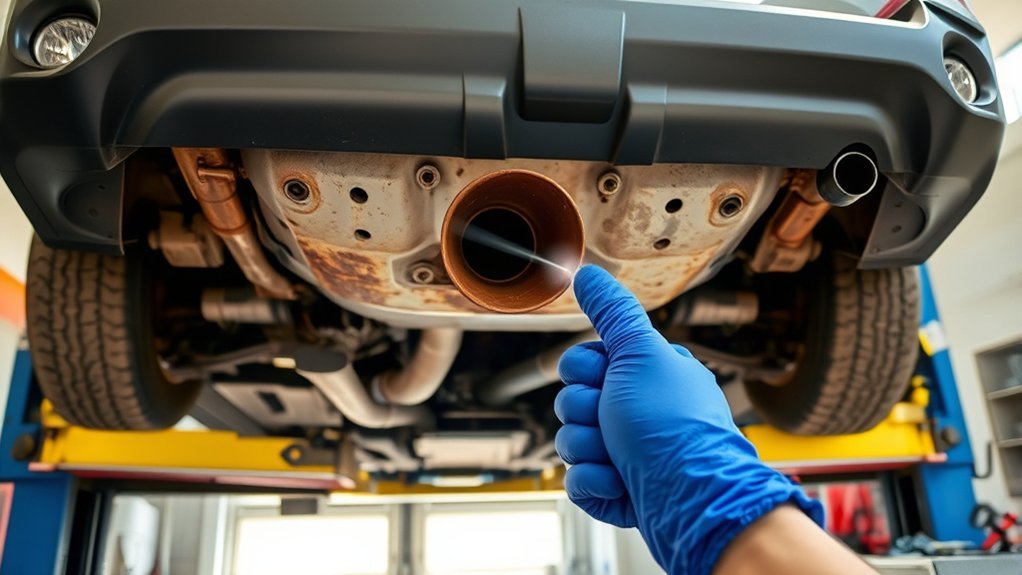
Ignoring an exhaust leak can turn a small defect into a larger safety, structural, or emissions problem. A gasket opening can widen, corrosion can spread, and a loose pipe can damage hangers, flanges, heat shields, or nearby components.
- Fume exposure: Exhaust entering the cabin can expose occupants to carbon monoxide. The CDC warns that CO can cause sudden illness and death even though it cannot be seen or smelled.
- Incorrect diagnosis or warning lights: A leak near a sensor can contribute to emissions-related readings, but the stored code may also come from another engine, electrical, or catalyst fault.
- Possible fuel-economy changes: An upstream leak that influences sensor feedback may contribute to fuel-trim changes, although reduced economy has many possible causes.
- Higher emissions: A leak can release exhaust before it reaches the intended outlet or interfere with emission-system monitoring.
- Structural failure: Rust, vibration, impact damage, and broken hangers can allow a pipe or muffler to separate and drag.
- More expensive repairs: A repairable joint can become a full section replacement when surrounding metal, fasteners, and mounting points deteriorate.
An exhaust leak is not only a noise problem. Cabin fumes, possible carbon monoxide symptoms, a dragging pipe, or severe rough running require immediate action.
How Much Does It Cost to Fix a RAV4 Exhaust Leak?
The cost depends on the leak location, RAV4 model year, engine, drivetrain, corrosion level, labor access, and whether one small part can be repaired or a larger assembly must be replaced. A clamp, gasket, or hanger is normally less involved than a flex section, exhaust manifold, catalytic-converter assembly, or heavily rusted pipe.
Ask the shop to identify the exact leak location and explain whether it plans to repair one section or replace a complete assembly. A quote should include parts, labor, taxes, shop fees, required hardware, and any related diagnostic work.
RepairPal’s estimator can provide general location-based context. Its exhaust-manifold estimate is a national category estimate rather than a quote for every RAV4. Use your year, engine, VIN, and location when requesting a realistic figure.
| Repair Type | What It Usually Involves | Relative Cost Level |
|---|---|---|
| Tighten a clamp or accessible hardware | Minimal parts when the joint and metal remain sound | Low |
| Replace a gasket or hanger | Small parts plus access and labor | Low to moderate |
| Weld a small pipe defect | Possible only when the surrounding metal is thick and structurally sound | Moderate |
| Replace a flex section, muffler, or exhaust pipe | Cutting, welding, or replacement of a bolted assembly | Moderate to high |
| Replace an exhaust manifold or catalytic-converter assembly | Parts-heavy repair with emissions, access, and warranty considerations | High |
How Can You Prevent Future RAV4 Exhaust Leaks?
Inspect the exhaust system during routine service and after any underbody impact. Look for rust, dents, loose heat shields, missing hangers, stretched rubber mounts, black soot, and joints that have moved out of alignment.
The CDC recommends having a mechanic check a car or truck’s exhaust system every year. An annual inspection is especially useful on an older RAV4, a vehicle driven on salted roads, or one with previous exhaust repairs.
If roads are salted in your area, rinse the underbody when weather and local rules allow. Salt and trapped moisture can speed corrosion on pipes, clamps, flanges, welds, and hangers. Repair a failed hanger before the exhaust begins sagging or striking the body.
Use replacement parts that fit the exact vehicle configuration, and keep repair records. Toyota’s Warranty and Maintenance Guide says maintenance and repairs may be performed by the owner or another service provider, but failures caused by improper work are not covered.
Simple Maintenance Checklist
- Listen for new ticking, hissing, or rumbling after a cold start.
- Respond immediately to exhaust odor inside the cabin.
- Do not rely on smell to rule out carbon monoxide.
- Look for soot around flanges, welds, gaskets, and pipe joints.
- Inspect rubber hangers and mounts for cracks or stretching.
- Repair loose heat shields before they hide damage or rub against a pipe.
- Check the underbody after striking road debris, a curb, or deep snow.
- Diagnose warning lights instead of clearing codes and waiting for them to return.
- Request an exhaust inspection before emissions testing when you hear a suspected leak.
Frequently Asked Questions
How do you diagnose and fix a Toyota RAV4 exhaust leak?
Let the exhaust cool, then inspect the manifold area, flanges, flex section, pipes, muffler, tailpipe, and hangers for soot, rust, cracks, or loose parts. Review OBD2 codes as clues rather than proof. Have a shop perform a controlled smoke test when the leak is hidden. Repairs range from replacing a clamp, gasket, or hanger to welding or replacing a damaged exhaust assembly.
How much does it cost to fix an exhaust leak on a RAV4?
The cost depends on the model year, engine, leak location, corrosion, labor access, and parts required. A clamp, gasket, or hanger is usually less involved than a flex section, manifold, catalytic-converter assembly, or complete pipe. Get a VIN- and location-specific quote instead of relying on a generic national estimate.
Can I drive my Toyota RAV4 with an exhaust leak?
Do not drive if exhaust enters the cabin, anyone develops possible carbon monoxide symptoms, the pipe is hanging or dragging, you smell raw gasoline, or the check engine light flashes while the engine runs roughly. A minor rear leak without those symptoms may allow a direct trip to a nearby repair shop, but towing is the safer choice when the location or severity is uncertain.
Will an exhaust leak cause a check engine light?
It can, especially when the leak is before or near an oxygen or air-fuel-ratio sensor. The extra oxygen may influence fuel-trim or catalyst-monitor readings. However, a warning light has many possible causes, and a rear muffler or tailpipe leak may not trigger a code.
Can a RAV4 exhaust leak cause P0171 or P0420?
A front exhaust leak can sometimes contribute to P0171 lean-condition or P0420 catalyst-efficiency readings, depending on its location. Neither code proves that a leak exists. Intake leaks, fuel-delivery faults, misfires, sensors, wiring, and catalytic-converter problems must also be tested.
How can you tell an exhaust-manifold leak from an engine tick?
A manifold leak may sound sharpest near a flange, become more noticeable during a cold start, and leave soot near the leak. An injector, valvetrain, timing, or internal engine tick may remain higher in the engine and lack soot. Sound alone cannot confirm the cause, so persistent or deep metallic noise needs professional diagnosis.
Is an exhaust leak covered by Toyota warranty?
Coverage depends on the model year, mileage, failed component, cause, emissions certification, and state. Toyota’s 2026 RAV4 guide lists the catalytic converter and protector with 8-year or 80,000-mile federal emissions coverage and lists other exhaust components with different terms. Rust, impact damage, abuse, and improper repairs may not be covered. Ask Toyota to confirm coverage for your VIN.
What Should You Do Next?
Start with a cold visual inspection for soot, rust, loose joints, damaged hangers, and a hanging pipe. Use an OBD2 scan only to guide the next test. Do not touch or spray a running exhaust, use homemade smoke, or replace an oxygen sensor or catalytic converter based only on a trouble code.
Arrange professional diagnosis when the leak is near the engine, flex section, oxygen sensors, catalytic converter, or an area hidden by heat shields. Stop driving when fumes reach the cabin, anyone feels ill, the exhaust drags, raw gasoline is present, or the engine runs roughly with a flashing warning light.
Sources
- Toyota 2026 RAV4 Warranty and Maintenance Guide — supports federal and California emissions-warranty details, covered emissions components, maintenance-provider choice, replacement-part guidance, and owner responsibilities.
- CDC: Carbon Monoxide Poisoning Basics — supports the carbon monoxide properties, symptoms, vehicle-exhaust warning, and annual exhaust-inspection recommendation.
- U.S. EPA: Mobile Source Pollution and Related Health Effects — supports the broader vehicle-emissions and health context.
- RepairPal: Exhaust Manifold Replacement Cost Estimate — supports soot inspection, controlled smoke testing, professional repair boundaries, and the limitations of national cost estimates.