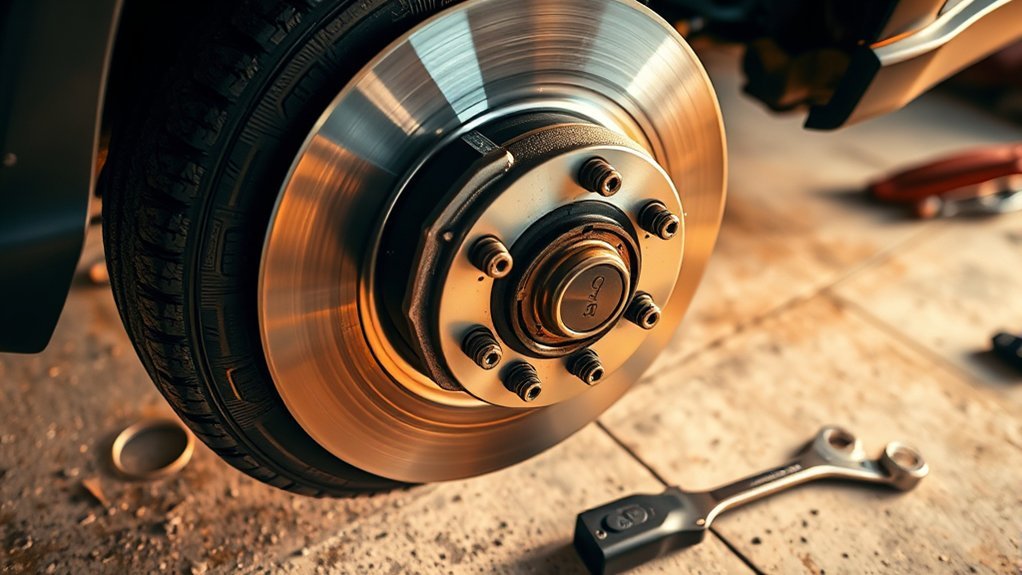
Replacing brake rotors on your Toyota RAV4 involves several key steps. Start by gathering essential tools, including a 21 mm socket and a 3-ton jack. Disengage the electronic parking brake using a scan tool. Then, remove the old rotors by unscrewing the caliper and gently tapping the rotor if needed. Install the new rotors, ensuring they’re clean and properly aligned. Tighten all components to specified torque. If you want to know more about the process, there are further details available.
Essential Tools for Brake Rotor Replacement
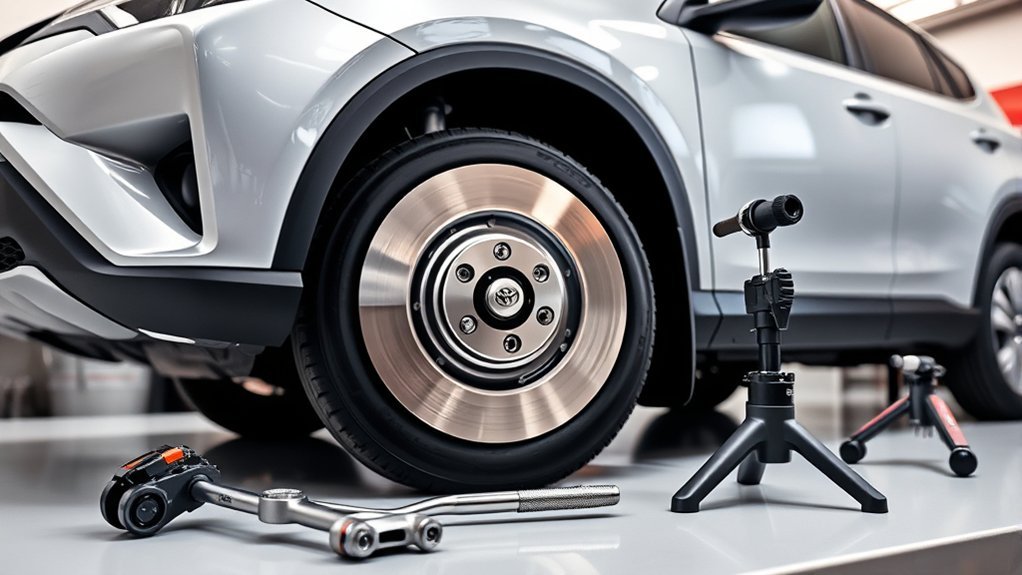
When you’re ready to replace the brake rotors on your Toyota RAV4, having the right tools at your fingertips is essential. Start with a 21 mm socket for removing the caliper and rotor bolts. You’ll also need a 3-ton jack and jack stands to guarantee safety while lifting your vehicle. To properly disengage the electronic parking brake on a 2021 model, connect a Foxwell NT 650 Elite scan tool to the OBD port with the ignition on. Don’t forget a torque wrench for tightening rotor bolts to 65 ft-lbs and caliper bolts to either 20 or 25 ft-lbs. Installing new hardware clips with ceramic or copper anti-seize on smooth surfaces prevents sticking. Finally, consider brake pad compatibility and rotor material differences to maximize performance. With these tools, you’re set for a successful brake rotor replacement, guaranteeing both safety and efficiency.
Benefits of Replacing Brake Rotors on Your RAV4
Replacing the brake rotors on your 2021 Toyota RAV4 greatly enhances your vehicle’s braking performance, guaranteeing you have the stopping power needed for safe driving. New rotors improve braking efficiency by providing better heat dissipation, which is crucial for preventing brake fade during prolonged use. This guarantees your brakes remain responsive in all driving conditions.
Additionally, modern rotor materials can notably reduce vibrations and noise, resulting in a smoother, quieter driving experience—particularly at higher speeds. Fresh rotors also contribute to even wear on brake pads, extending their lifespan and ultimately saving you money on future maintenance.
Disengaging the Electronic Parking Brake
To disengage the Electronic Parking Brake (EPB) on your 2021 Toyota RAV4, start by connecting the Foxwell NT 650 Elite scan tool to the OBD port and turning the ignition to the “on” position without starting the engine. Press the brake pedal to verify the system is ready, and then access the maintenance section of the scan tool to select the EPB option. Confirm successful disengagement by checking that the dashboard light remains steady when the brake pedal is pressed.
Steps to Disengage EPB
Disengaging the Electronic Parking Brake (EPB) on your 2021 Toyota RAV4 is an essential step before performing brake rotor replacement. Start by connecting a Foxwell NT 650 Elite scan tool to the OBD port, guaranteeing the ignition is in the “on” position without starting the engine. Next, press the brake pedal and access the maintenance section of the scan tool. Navigate to the EPB option to initiate the disengagement process. You’ll notice the parking brake light blinking when the brake pedal is pressed, indicating it’s working. A solid light on the parking brake switch confirms successful disengagement. This process enhances brake performance and guarantees your vehicle is ready for safe service.
Using the Scan Tool
Initiate the process of disengaging the Electronic Parking Brake (EPB) by connecting the Foxwell NT 650 Elite scan tool to the OBD port of your 2021 Toyota RAV4. With the ignition in the “on” position, access the maintenance section of the scan tool and select the EPB option. Press down on the brake pedal to successfully disengage the EPB. Keep an eye on the scan tool features; it may indicate a successful disengagement with a blinking light when the brake pedal is pressed correctly. If you encounter issues, refer to troubleshooting tips within the tool. After completing your brake service, use the scan tool again to re-engage the EPB, confirming your vehicle’s VIN for proper operation.
Safety Precautions Required
Before you start any brake service on your 2021 Toyota RAV4, it’s essential to prioritize safety by ensuring the electronic parking brake (EPB) is fully disengaged. Here’s how to do it effectively:
- Connect your compatible scan tool, like the Foxwell NT 650 Elite, to the OBD port.
- Turn the ignition to the “on” position without starting the engine.
- Depress the brake pedal to disengage the electronic parking brake.
- Follow the scan tool prompts to navigate to the maintenance section and select the option for disengaging the EPB.
Confirm that the parking brake light is off before proceeding with brake disassembly. This step is vital for brake safety and prevents potential damage to brake components.
Removing Old Rotors: A Step-by-Step Guide
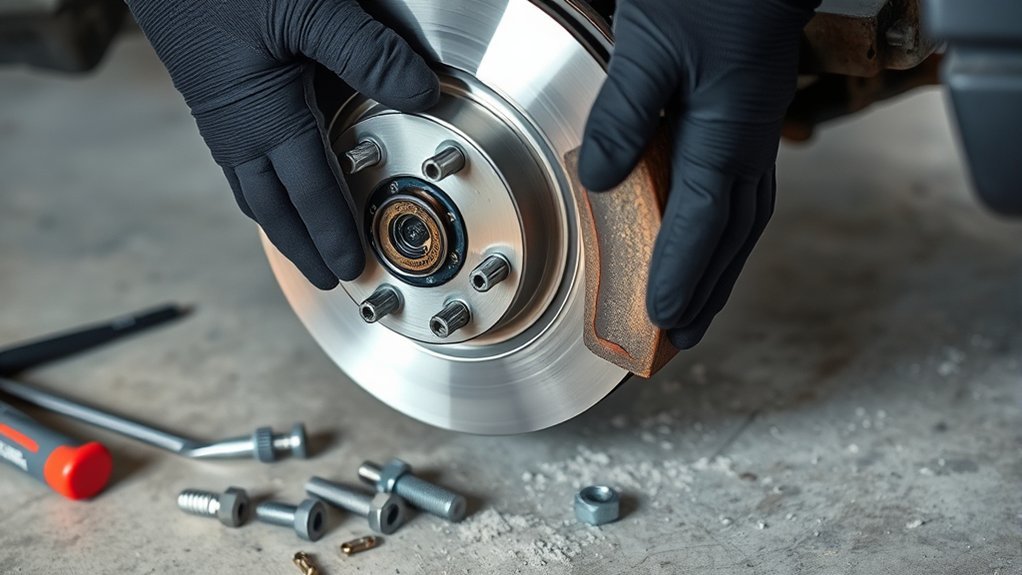
To remove the old rotors on your Toyota RAV4, you’ll need specific tools, including a 3-ton jack and a caliper tool. Start by carefully removing the brake caliper, ensuring you don’t damage any electrical sensors, before tapping off the rotor. After removal, clean the wheel hub surface thoroughly to prepare for the new rotor installation.
Essential Tools Required
When tackling the removal of old rotors on your 2021 Toyota RAV4, you’ll need a few essential tools to guarantee a smooth process. Having the right brake tools assures efficiency and safety. Here’s what you’ll need:
- 21 mm Socket: For loosening brake components.
- 14 mm Socket: To remove caliper bolts without damaging the assembly.
- Sledgehammer: For gently loosening the rotor—strike carefully to avoid hub damage.
- Foxwell NT 650 Elite Scan Tool: To disengage the electronic parking brake, vital for this brake service.
These tools help accommodate various rotor types, assuring you can manage the task effectively and confidently.
Brake Caliper Removal Process
Removing the brake caliper is an essential step in replacing the rotors on your 2021 Toyota RAV4. Start by unscrewing the 14 mm caliper bolts to detach the caliper from the rotor. Handle it carefully to avoid damaging any electrical sensors. Clean the caliper boot with spray, then use a C-clamp or caliper tool for piston retraction, making rotor removal easier. If the rotor is stuck, you can use a sledgehammer cautiously, ensuring not to damage the wheel hub. Some rotors have threaded holes for easier removal using bolts. After rotor removal, clean the wheel hub surface and apply anti-seize lubricant to prevent rust.
| Action | Description |
|---|---|
| Remove caliper bolts | Unscrew 14 mm bolts carefully |
| Clean caliper boot | Use brake cleaner spray |
| Retract piston | Use a C-clamp or caliper tool |
| Secure rotor | Use spare nuts or bolts if necessary |
Rotor Cleaning Techniques
Before tackling rotor cleaning, it’s crucial to confirm the wheel hub surface is spotless, as this guarantees ideal contact for the new rotors. Follow these rotor maintenance tips for effective cleaning techniques:
- Spray brake cleaner on the wheel hub and wipe it down to remove debris.
- If rotors are stubborn, use a sledgehammer carefully to avoid damaging the hub.
- Check for threaded holes on the rotors; use a bolt to assist in loosening them.
- Keep spare nuts handy to secure the rotor during removal, preventing it from falling.
Once you’ve removed the rotors, apply anti-seize lubricant around the hub to prevent rust and simplify future rotor changes. This guarantees a smooth installation process.
Best Practices for Installing New Rotors and Brake Pads
Installing new rotors and brake pads requires careful attention to detail to confirm peak performance and safety. Start by cleaning your new rotors with brake cleaner to remove protective oils. Use rotor alignment tips, such as securing the rotor with a stud or spare nuts during assembly to prevent shifting. When applying brakes, select pads that suit your driving style and conditions.
| Step | Best Practice |
|---|---|
| Rotor Installation | Clean with brake cleaner and secure with a stud. |
| Bolt Application | Use low-strength thread locker; torque to 65 ft-lbs. |
| Brake Pad Installation | Insert bottom first; lubricate metal shims. |
After fitting the components, engage the electronic parking brake with a scan tool to confirm proper brake initialization. Following these practices will help enhance your vehicle’s braking efficiency and safety.
Properly Reassembling Brake Components
Reassembling brake components requires meticulous attention to detail to guarantee peak performance and safety. Follow these steps for effective brake component maintenance and proper installation techniques:
- Clean Slide Pins: Use a cleaning solution on the slide pins, then apply silicone paste to prevent excessive pad wear and caliper sticking.
- Secure Caliper Bolts: Tighten caliper bolts to the specified torque of 20 or 25 ft-lbs to ascertain functionality.
- Install Brake Hardware Clips: Use new clips with the correct orientation, referencing one side for accuracy to avoid mistakes.
- Torque Rotor Bolts: After installing the new rotor, hold it in place with a rotor stud, apply low-strength thread locker, and torque bolts to 65 ft-lbs.
Final Checks for Brake Performance
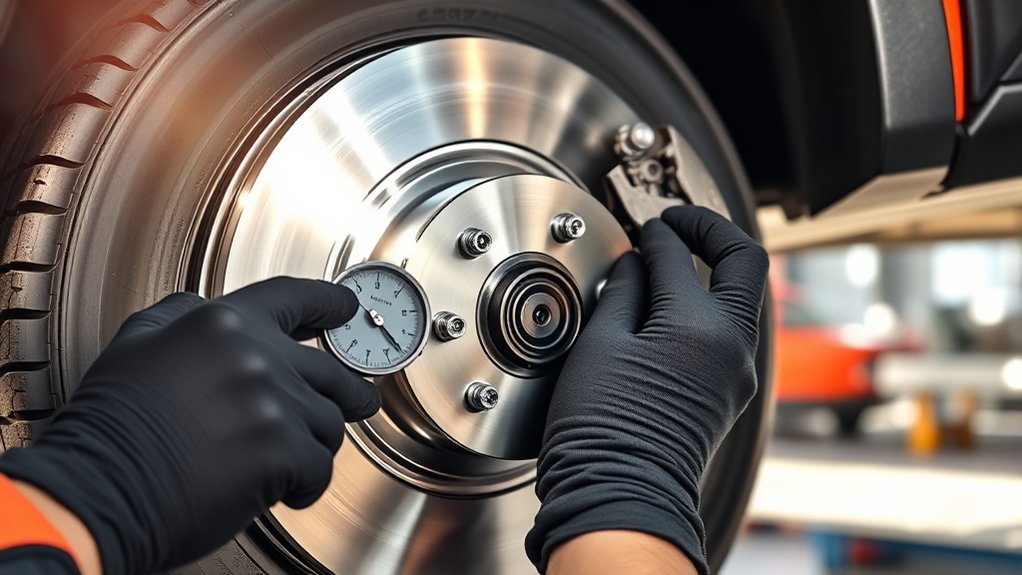
Once you’ve replaced the brake rotors, it’s crucial to conduct final checks to guarantee peak performance and safety. Begin by pumping the brake pedal to reset the calipers, confirming proper caliper alignment. Don’t forget to monitor the brake fluid level; low fluid can indicate leaks or other issues. Next, engage the electronic parking brake using a scan tool, verifying a solid dashboard light.
Here’s a quick checklist for your final inspections:
| Task | Importance |
|---|---|
| Pump brake pedal | Confirms caliper contact |
| Check brake fluid level | Indicates system integrity |
| Verify electronic brake | Confirms proper engagement |
| Tighten wheel bolts | Prevents detachment |
Finally, install the wheels with a fingertight fit and then torque to 100 foot-pounds. Remember to break in the brake pads gradually to enhance performance and longevity.
Frequently Asked Questions
How Many Miles Should Rotors Be Changed on a Toyota RAV4?
You should change your Toyota RAV4 rotors every 30,000 to 70,000 miles, depending on brake wear and driving conditions. Regularly check rotor lifespan to guarantee safety and peak performance for your vehicle.
How to Tell Which Rotors Need to Be Replaced?
To tell which rotors need replacing, check for deep grooves, measure thickness, listen for rotor noises, and feel for brake pedal vibration. These signs of brake wear often indicate it’s time for a replacement.
Conclusion
In wrapping up your RAV4 brake rotor replacement journey, you’ve transformed a challenging task into a smooth ride. With precision and care, you’ve engaged each step, ensuring safety and performance. Like a well-oiled machine, your brakes are now primed for action. Remember, regular maintenance keeps your vehicle singing on the road. So, embrace the rhythm of routine checks, and enjoy the peace of mind that comes with knowing your brakes are in top shape.