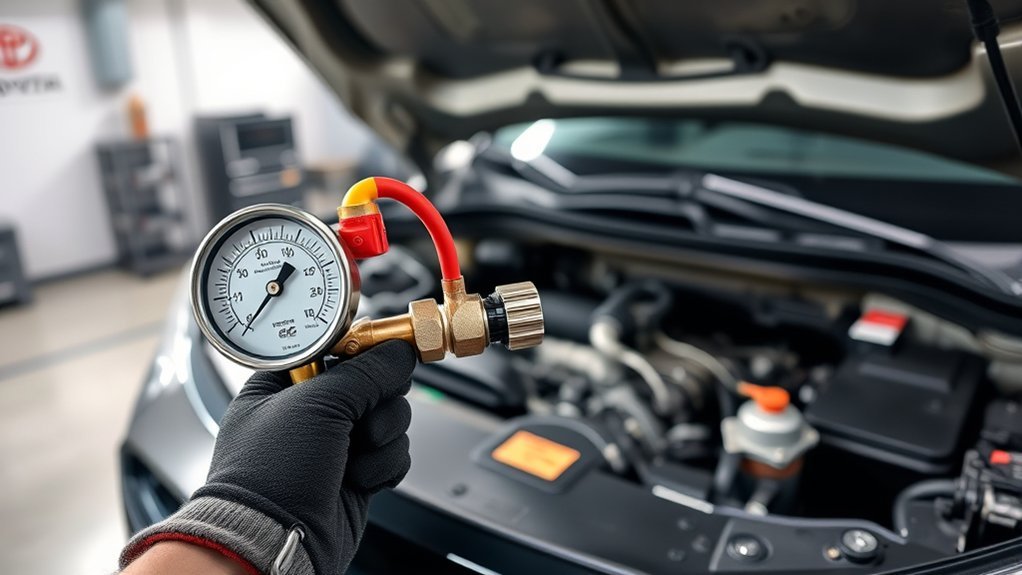
If your Toyota RAV4’s AC isn’t cold, you’ve likely lost refrigerant, have restricted airflow, or a failing component like the compressor, condenser, blower motor, or blend door actuator. Start by checking the cabin filter, condenser fins, and vent temperatures; listen for compressor noises and test blower speeds. Low-pressure at the service port or oil/UV dye traces mean a leak. You can recharge temporarily, but proper leak repair or professional diagnostics will fix it long-term—keep going to see specific tests and costs.
Quick Fixes for RAV4 AC Problems
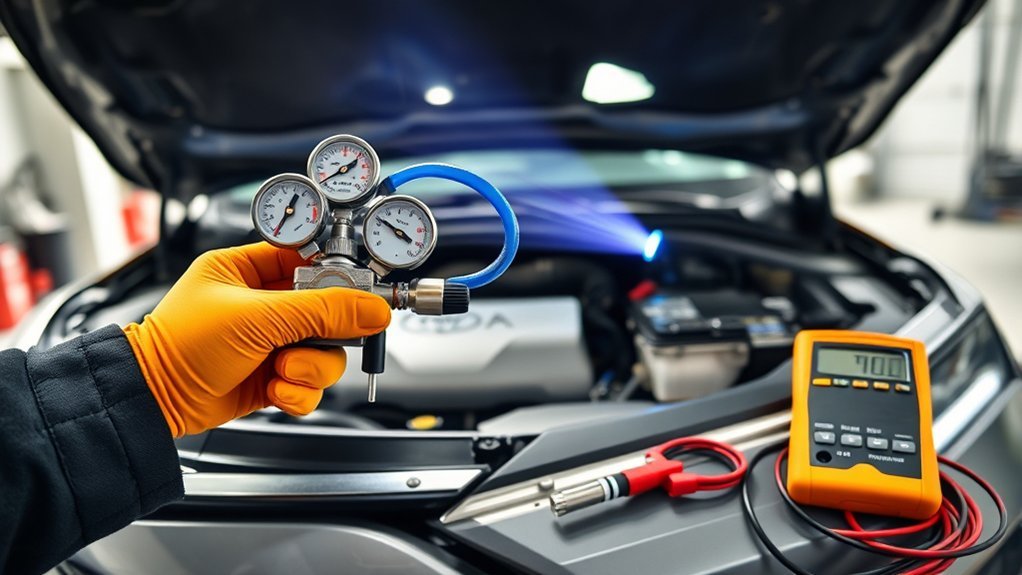
Start with the simplest checks you can do yourself: inspect and replace a clogged cabin air filter, switch on recirculation to keep out warm outside air, and visually clean the condenser for debris that might block airflow. Next, use basic diagnostic tools: a refrigerant gauge will tell you if low pressure points to a leak rather than a performance issue, and a multimeter can verify blower motor power. Listen closely while the system runs — clicking or grinding often flags a failing compressor that you shouldn’t ignore. Don’t fall for common misconceptions like “more refrigerant always fixes it” or “odors mean the AC is dead”; overcharging or misdiagnosing components creates bigger failures. Act decisively: replace simple parts yourself, seal obvious condenser blockages, and document pressure readings before you recharge. When readings point to mechanical failure or persistent leakage, escalate to professional service to reclaim control of your cabin climate.
How Your RAV4 AC Works (Quick Primer)
Think of your RAV4’s AC as a closed refrigeration loop: the compressor pressurizes and circulates refrigerant, the condenser sheds heat to outside air, the expansion device meters flow and drops pressure, and the evaporator core absorbs cabin heat while the blower distributes the cooled air. You’ll use this AC Component Overview to diagnose cooling loss: the compressor creates pressure differential; low charge or mechanical failure cuts flow. The condenser must reject heat—bent fins or debris reduce capacity. The expansion device (or orifice) controls refrigerant feed; blockage causes poor evaporation. The evaporator core surface area and the blower determine delivered cooling; a weak blower or clogged cabin filter limits airflow despite a healthy refrigerant circuit. System Maintenance Tips: check refrigerant level, inspect compressor clutch operation, clean condenser fins, replace cabin filter, and scan for leaks. Read symptoms against component functions to liberate yourself from guesswork and target repairs efficiently.
Fast Checks: Is Your AC Really Not Cold?
Wondering if your RAV4’s AC is actually underperforming or if it just feels that way? Use objective checks to free yourself from guesswork. Measure vent temperature with a thermometer; you should see roughly a 40°F drop from outside. Note airflow strength—weak flow points to a clogged cabin air filter or a failing blower fan. Listen for abnormal clicks or grinding; those sounds flag mechanical faults, including potential compressor problems.
Suspect your RAV4’s AC? Verify vent temp, airflow, and listen for odd noises before assuming major repairs.
- Measure: thermometer at vents; expect ~40°F drop from ambient.
- Airflow & leaks: assess flow; inspect for air duct leaks and check cabin filter/blower.
- Visual & service-valve check: inspect lines for moisture/oily residue and read low-pressure service valve for low refrigerant.
Also consider thermostat issues if cabin temp control seems erratic. These diagnostics let you decide whether to self-service or liberate yourself via a qualified technician before escalating to refrigerant, compressor, or condenser repairs.
RAV4 AC: Refrigerant, Compressor, and Condenser Problems
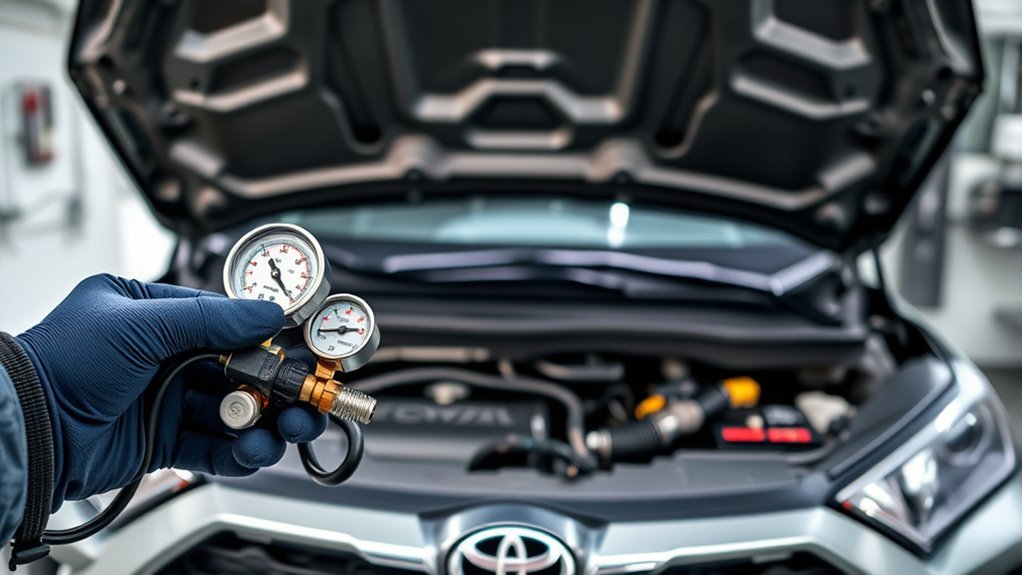
Check the refrigerant charge and pressure first, because low refrigerant from hose or connection leaks will cut cooling capacity and often shows as weak airflow or warm air. Listen for compressor faults—grinding or squeal noises and a clutch that won’t engage indicate the compressor isn’t circulating refrigerant. Inspect the condenser for dents, debris, or blockage that restricts heat exchange and causes elevated discharge temperatures and poor cabin cooling.
Low Refrigerant Signs
Low refrigerant in your RAV4 shows up in specific, measurable symptoms you can use to diagnose the system: warm or barely cool air from the vents, a hissing or bubbling noise that often indicates a leak, and an AC compressor that struggles to engage or clicks as it tries to run. You’ll notice these signs before major failure; they let you act to reclaim comfort and control. Check for:
- Persistent warm air and frequent top-ups — classic refrigerant leak behavior.
- Audible hissing/bubbling near AC lines or connections — visual/smell inspection will localize a leak.
- Compressor issues like clicking or intermittent clutch engagement — indicates low charge or internal strain.
Address leaks promptly, test pressures, and repair to avoid repeated recharges and restore liberated driving.
Compressor And Condenser Failure
One major cause of inadequate cooling in your RAV4 is failure of the AC compressor or condenser, and you’ll see distinct operational signs that let you pinpoint which component’s at fault. Diagnose compressor failure by listening for clicking, checking clutch engagement, and measuring system pressure; a non-engaging compressor or abnormal pressures indicate need for compressor replacement. Inspect the condenser for visible dents, debris, or oil stains and test airflow at highway speeds—warm air despite proper refrigerant often signals condenser restriction. Perform condenser cleaning to restore heat rejection; if damage or internal blockage persists, replace the condenser. Maintain freedom from heat by scheduling regular refrigerant checks and component inspections so you can avoid sudden breakdowns and retain control over your vehicle’s cooling performance.
Cabin Airflow Issues: Filter, Blower Fan, and Blend Door
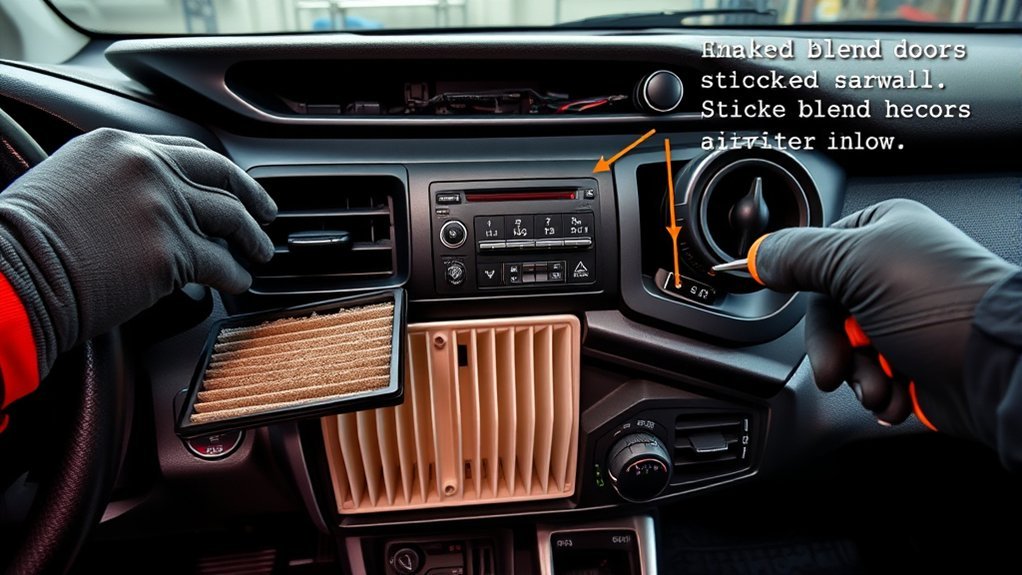
Check the cabin air filter first—if it’s clogged you’ll see reduced airflow and poorer cooling. Verify blower motor function by testing multiple fan speeds and listening for unusual noises that indicate bearing or resistor failure. If airflow and fan sound normal but temperatures fluctuate, inspect the blend door and its actuator for proper movement and calibration.
Cabin Air Filter
Clogged cabin air filters are a common cause of weak AC airflow in the RAV4, and you’ll notice reduced cooling performance, musty odors, or visible debris when the filter’s obstructed. You should prioritize cabin filter maintenance to restore airflow improvement and efficient cooling. Inspect the filter behind the glovebox; replace every 15,000–30,000 miles or sooner if dirty. Replacement is a quick, liberating repair that restores system efficiency.
- Check: remove filter, assess for leaves, dust, mold; severe clogging equals immediate replacement.
- Replace: fit correct OEM or quality aftermarket filter; guarantee proper orientation seals bypass paths.
- Verify: run AC on high; confirm stronger airflow and reduced odors—if not, proceed to blower/blend door diagnostics.
Blower Motor Function
Start by confirming the blower motor is actually moving air: if airflow is weak or absent despite a clean cabin filter, the fan assembly, motor, or blend door is the likely culprit. You’ll perform airflow diagnostics: run the fan at multiple speeds, listen for grinding or rattling, and note any speed loss. Prioritize blower motor maintenance—clean debris, check electrical connections, and replace a noisy or nonresponsive motor.
| Symptom | Likely Cause | Action |
|---|---|---|
| Weak airflow | Clogged filter or failing motor | Replace filter, test motor |
| Noise | Worn bearings or debris | Inspect fan assembly |
| No airflow | Motor dead or wiring fault | Check power, replace motor |
These steps free you from guesswork and restore decisive cabin airflow control.
Blend Door Operation
After you’ve confirmed the blower motor is moving air, inspect the blend door system next: the blend door and its actuator control the mix of hot and cold air, so a stuck door or failed actuator will make temperatures inconsistent or cause airflow to ignore your climate settings. You’re diagnosing a mechanical/electrical control that liberates you from unpredictable cabin climate. Look for clicking, grinding, or no movement when you change temperature; those are classic signs of blend door malfunction or actuator issues.
- Check cabin air filter — replace if clogged to restore flow through the blend door.
- Test actuator — command temperature changes and observe actuator motion; replace if nonresponsive.
- Inspect door linkage and gears for binding or damage; repair to restore proper mix control.
DIY RAV4 AC Tests You Can Do Safely at Home
When your RAV4’s A/C isn’t cooling well, you can run a few safe, diagnostic checks at home to narrow down the problem and decide whether you need professional service. Start with A/C System Maintenance basics: check the cabin air filter and replace it if clogged, ensuring free airflow. Use simple Diagnostic Tools: a thermometer at the vents and a pressure gauge on the low-pressure service valve.
| Test | What to do | Pass/fail cue |
|---|---|---|
| Refrigerant check | Attach low-side gauge; compare to spec | Low reading = possible leak/low charge |
| Vent temperature | Measure vent temp vs outside | ≥40°F drop = proper cooling |
| Blower & sounds | Run all fan speeds; listen with A/C on | Weak airflow or grinding = fan/compressor issue |
If readings fail, you’ve narrowed cause — low charge, airflow restriction, or mechanical noise — and you can choose empowered next steps or call a pro.
Recharge vs. Fix the Leak: What to Do First
Although topping off refrigerant can seem like a quick fix, you should locate and repair any leaks before recharging the system; adding gas to a leaking RAV4 will only mask the issue and lead to repeat failures, wasted money, and potential compressor damage. You’ll want a targeted approach: confirm leak detection, identify the source, and repair it before introducing any refrigerant types.
- Visual inspection and oil residue: check lines, fittings, and the evaporator core for oily films—these point to active leaks and require repair before recharge.
- Pressure testing: perform a controlled pressure or vacuum test to quantify leak rate; low holding pressure signals a repair need, not a recharge.
- Post-repair recharge: once sealed, recharge with the manufacturer-specified refrigerant types and correct charge to protect the compressor and restore full cooling.
Fix-first preserves components, saves money, and frees you from repeat visits—liberate your RAV4’s AC with diagnostics, not temporary top-ups.
When to See a Pro and the Diagnostics They’ll Run
If your RAV4’s vents keep blowing warm air despite basic checks, bring it to a professional so they can run targeted diagnostics that you can’t do at home. You’ll seek a focused professional assessment to locate root causes like refrigerant leaks, compressor failure, or electrical faults. Technicians use diagnostic tools to measure refrigerant pressure, add UV dye and inspect with black light, and perform leak detection. They’ll run pressure tests to confirm compressor output and check for blockages in the orifice tube or condenser. Electrical diagnostics retrieve fault codes, verify sensor signals, and test wiring and relays tied to the AC clutch and control module. They’ll also inspect cabin air filter condition and actuate the blend door to confirm proper airflow and temperature blend. You’ll leave empowered: the shop identifies the failure mode, documents required repairs, and supplies data-driven options so you can choose the repair path that restores comfort and freedom.
Cost, Timeline, and Maintenance Tips to Avoid Repeat Problems
Now that a shop has identified the fault, you’ll want clear expectations for cost, time, and steps to prevent recurrence. Repair costs typically range $150–$1,000 depending on refrigerant leaks, compressor or condenser replacement. Most jobs finish within hours to a day; complex failures or backordered parts can extend the timeline to multiple visits. You’ll want a written estimate and parts ETA.
Now that the shop’s diagnosed the issue, get a written estimate, parts ETA, and realistic cost/time expectations.
Maintain system health with disciplined, liberating habits that reduce dependency on costly fixes:
- Schedule annual AC maintenance ($75–$150) to catch leaks, test pressures, and confirm compressor function — adjust maintenance frequency to local climate stress.
- Replace cabin air filters and visually inspect hoses monthly; monitor refrigerant levels and run leak tests if cooling degrades.
- Use recirculation in high-humidity regions to reduce system load and slow component wear.
Follow these steps to minimize repeat problems, control repair costs, and reclaim freedom from unexpected breakdowns.
Frequently Asked Questions
How Much Does It Cost to Fix AC in a Toyota RAV4?
You’ll typically pay $150–$1,000 to fix AC in a RAV4; recharges run $100–$300, compressors $400–$800, labor $75–$150/hr. Use AC Maintenance Tips to diagnose Common Issues early and reclaim control.
Conclusion
You’ve traced the chill problem like a mechanic with a stethoscope: checked pressures, felt the vents, inspected belts and filters, and ruled out obvious leaks. If the compressor, condenser, or blend door’s at fault, don’t paper over symptoms with a recharge—diagnose. Small fixes are quick; hidden leaks aren’t. Act like a diagnostician: document readings, isolate the failure, then repair. Do that and your RAV4’s climate will sing cool again.