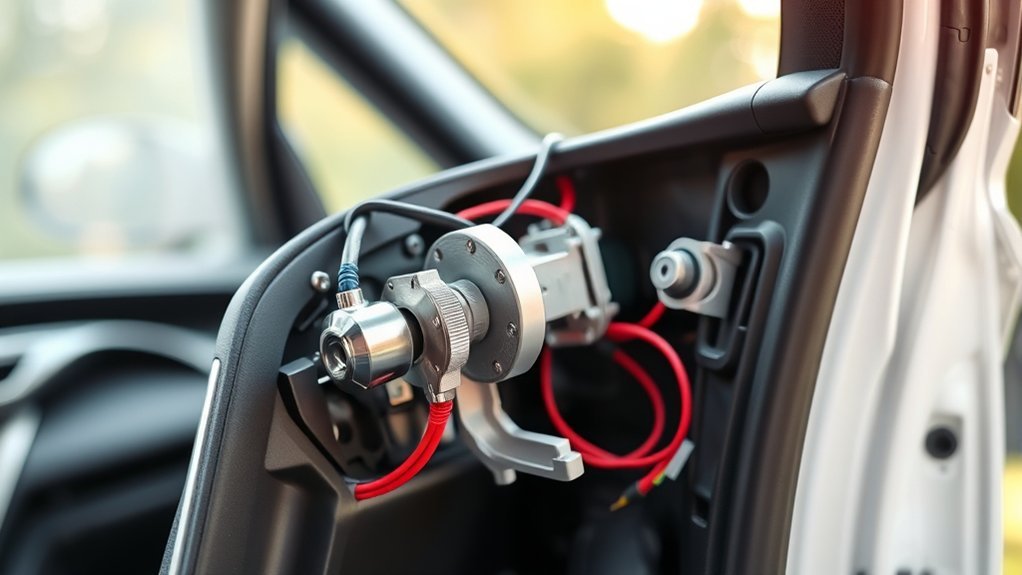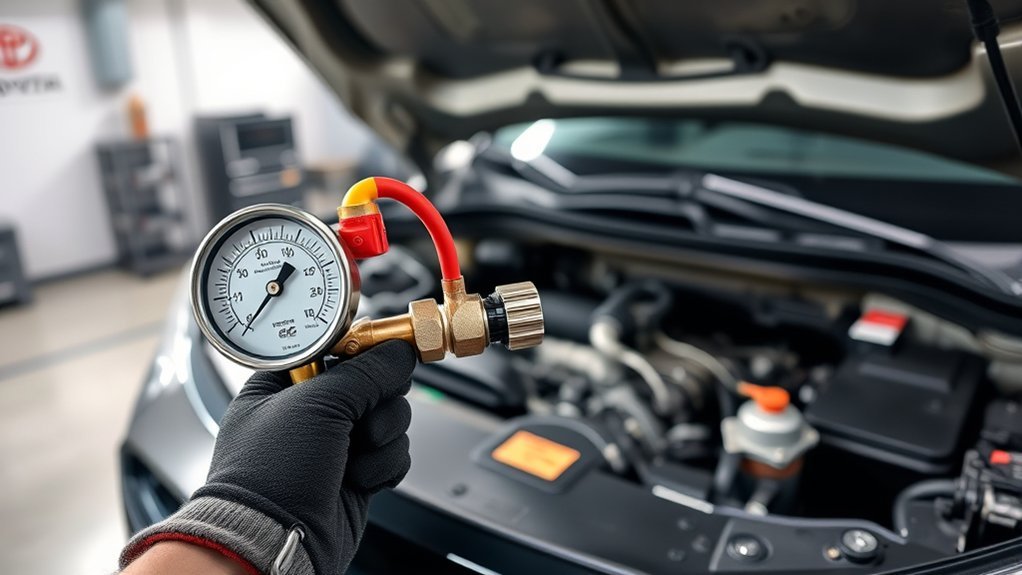
If your Toyota RAV4’s AC isn’t cold, start with the basics before assuming the compressor has failed. Weak cooling is usually caused by low refrigerant from a leak, poor airflow through a clogged cabin filter or dirty condenser, an incorrect climate setting, or a failed part such as the blower motor, blend door actuator, compressor, condenser, pressure sensor, or relay. Use the checks below to separate simple DIY fixes from problems that need professional AC service.
Quick Answer
A Toyota RAV4 AC that blows warm or barely cool air usually has low refrigerant from a leak, restricted airflow, a dirty condenser, Eco mode limiting cooling, or a failing compressor, blower motor, or blend door actuator. Check the cabin filter, AC settings, condenser, vent temperature, and unusual noises first. Fix leaks before recharging.
Key Takeaways
- Weak airflow often points to a clogged cabin air filter, blower motor problem, blocked vents, or blend door issue.
- Warm air with normal airflow often points to low refrigerant, a condenser problem, compressor trouble, or an electrical control fault.
- A recharge may cool the cabin temporarily, but refrigerant loss means there is a leak that should be found and repaired.
- Use only the refrigerant shown on the under-hood AC label; many newer vehicles use R-1234yf while older RAV4s may use R-134a.
- Hybrid and plug-in hybrid RAV4 models have high-voltage components, so compressor and orange-cable electrical work should be left to trained technicians.
At a Glance
| Time Required | 10–30 minutes for basic checks; a few hours to a full day for most shop repairs |
| Difficulty | Easy for filter, setting, and visual checks; advanced for refrigerant, compressor, and electrical diagnostics |
| Tools Needed | Thermometer, flashlight, gloves, safety glasses, cabin filter, and a low-side gauge only if you know the correct refrigerant and safe service procedure |
| Typical Cost | Cabin filter: usually low-cost DIY; professional recharge/leak service: often a few hundred dollars; compressor replacement: commonly over $1,000 depending on year, parts, and labor |
Quick Fixes for RAV4 AC Problems
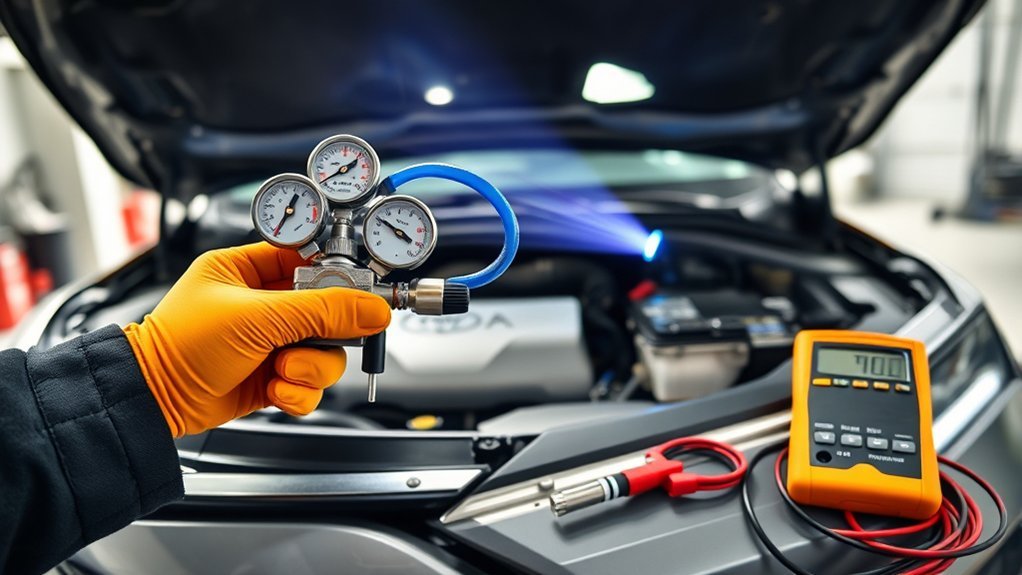
Start with the simplest checks because many RAV4 AC complaints come from airflow restrictions or climate-control settings rather than a failed compressor. Set the system to MAX A/C if equipped, use recirculation, raise the fan speed, set the temperature to the coldest setting, and turn off Eco drive mode or Eco air conditioning mode if cooling feels weak. Toyota notes that Eco mode can restrict cooling capacity and fan speed to prioritize efficiency.
Next, inspect the cabin air filter, front condenser, and vent airflow. A dirty filter can make the AC feel warm because not enough air is passing through the evaporator. Toyota’s owner information says the air conditioning filter should be inspected and replaced according to the maintenance schedule, and dusty areas or heavy traffic may require earlier replacement.
Then listen while the AC is running. Clicking, grinding, squealing, or a compressor that cycles rapidly can point to low refrigerant, a slipping belt on non-hybrid models, a failing clutch, a bad relay, or internal compressor trouble. Do not keep adding refrigerant blindly; too much refrigerant can reduce cooling and damage components.
Warning: Do not vent refrigerant, mix refrigerants, or use propane/hydrocarbon “replacement” refrigerants. The EPA prohibits intentional refrigerant release during AC service, and hydrocarbon refrigerants are not acceptable for motor vehicle AC systems under EPA rules.
How Your RAV4 AC Works: Quick Primer
Your RAV4’s AC is a closed refrigeration loop. The compressor circulates and pressurizes refrigerant. The condenser in front of the radiator releases heat to outside air. The expansion valve meters refrigerant into the evaporator. The evaporator core absorbs cabin heat, and the blower motor pushes cooled air through the vents.
When one part of that chain fails, the symptom changes. Low refrigerant reduces heat transfer. A dirty condenser cannot reject heat. A clogged cabin filter restricts airflow. A weak blower makes the air feel barely cool. A stuck blend door can mix hot air with cold air even when the AC system itself is working.
On RAV4 Hybrid and RAV4 Prime models, the AC compressor is part of the high-voltage system. Toyota’s hybrid safety information identifies the air conditioning compressor among high-voltage components, so avoid probing, unplugging, or servicing orange high-voltage wiring or compressor electrical connections unless you are trained for hybrid service.
Fast Checks: Is Your AC Really Not Cold?
Before replacing parts, confirm the AC is truly underperforming. Heat load, humidity, sun exposure, black interiors, and stop-and-go traffic can make normal AC feel weaker than expected. Use objective checks instead of guessing.
- Confirm the settings: Use MAX A/C or the coldest setting, recirculation, high fan speed, and upper-body vents. Turn off Eco drive mode or Eco AC mode if cooling feels limited.
- Measure vent temperature: Place a thermometer in the center vent after the vehicle has run for several minutes with doors closed. Compare the reading with outside temperature and humidity. Exact outlet temperature varies by conditions, so look for a clear temperature drop rather than one universal number.
- Check airflow strength: Weak air from every vent usually means a clogged cabin filter, blower problem, blocked intake, or evaporator icing. Weak air from one side or one vent can mean a duct, mode door, or actuator issue.
- Look for leak clues: Oily residue on AC lines, fittings, condenser corners, or the compressor can indicate refrigerant oil escaping with refrigerant.
- Listen for noises: Grinding, squealing, repeated clicking, or rattling can point to compressor, fan, bearing, belt, or debris problems.
Pro Tip: Test the AC with the hood open and the vehicle safely parked. Confirm the radiator/condenser fans run when the AC is on. If the fans do not run, the AC may blow warm at idle but improve at highway speed.
RAV4 AC: Refrigerant, Compressor, and Condenser Problems
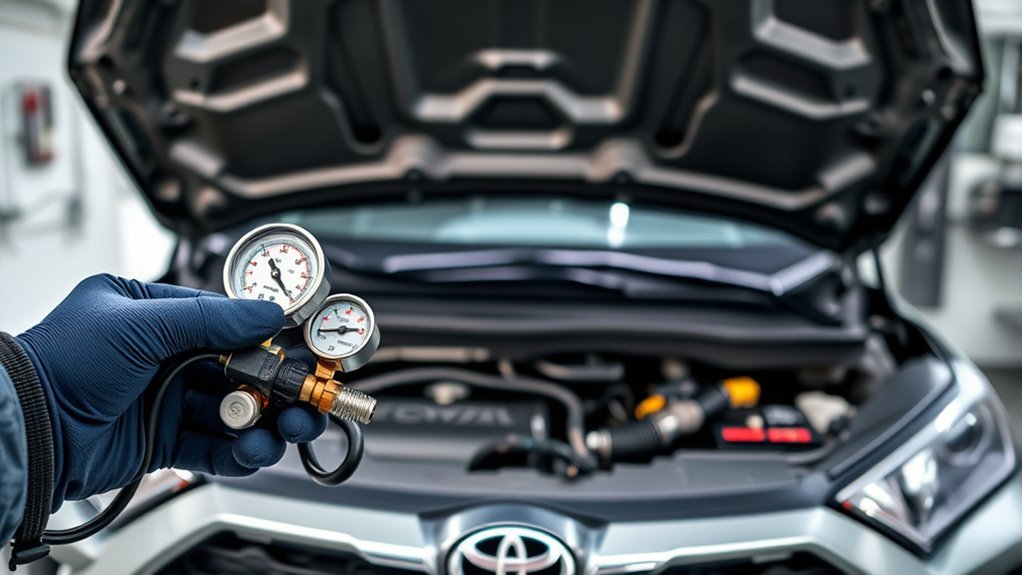
If airflow feels strong but the air is warm, focus on the refrigerant circuit, compressor operation, condenser airflow, sensors, and electrical controls. These problems can overlap, so diagnose in order instead of replacing the most expensive part first.
[Products Worth Considering]

This KAX HEPA cabin air filter is designed to help keep your vehicle interior air cleaner by capturing fine particles and reducing airborne contaminants. Its multi-layer structure with activated carbon supports strong filtration performance while helping improve HVAC airflow for more efficient heating and cooling. Built for a wide range of Toyota, Lexus, Subaru, and Mazda models, it offers a practical replacement option for maintaining fresher cabin air.

This CF10285 cabin air filter is designed to help keep your vehicle's interior air cleaner by capturing dust, pollen, soot, and road grime. It is compatible with a wide range of Toyota, Lexus, Jaguar, Land Rover, Subaru, Scion, and Pontiac models, making it a versatile replacement choice. The activated carbon design and easy glove-box installation make it a practical upgrade for fresher driving comfort.

This activated carbon cabin air filter helps improve in-cabin air quality by capturing dust, smoke, pollen, and odors for a fresher driving experience. Designed as a direct replacement for many Toyota, Lexus, Subaru, and other compatible models, it supports HVAC performance and offers easy, tool-free installation.
Low Refrigerant Signs
Low refrigerant is one of the most common reasons a RAV4 AC stops cooling, but refrigerant does not get “used up” like fuel. If the system is low, it usually has a leak.
- Warm or barely cool air: The system cannot absorb and move enough heat.
- Rapid compressor cycling: Low pressure can make the compressor switch on and off quickly.
- Hissing or bubbling sounds: These may happen near a leak or when refrigerant flow is restricted.
- Oily residue: Refrigerant oil may leave a film around leaking fittings, hoses, condenser seams, or compressor seals.
- Repeated top-offs: If cooling fades again after a recharge, the leak still exists.
Use the refrigerant label under the hood to identify the correct refrigerant and charge amount. Do not mix R-134a and R-1234yf, and do not use universal cans that contain sealers unless the vehicle manufacturer and repair shop specifically approve them.
Compressor and Condenser Failure
The compressor is the heart of the AC system. On many gas-only RAV4 models, you may hear the compressor clutch engage. On hybrid models, compressor operation is different because the compressor is electrically driven. Either way, a compressor that cannot create the right pressure difference will not cool the cabin properly.
Suspect compressor or control problems if the AC light is on but the compressor never runs, the system blows warm with correct refrigerant charge, there are abnormal pressure readings, or the compressor makes grinding or metallic noises. Electrical issues such as a bad relay, pressure sensor, temperature sensor, wiring fault, or control module command can mimic a bad compressor, so professional diagnosis matters before replacement.
The condenser sits at the front of the vehicle and can be damaged by road debris, packed with leaves, or blocked by bent fins. A restricted condenser may cause poor cooling at idle, high pressure readings, or AC that improves when the vehicle is moving. Clean loose debris gently with low-pressure water or compressed air from the back side when possible, but do not flatten the fins.
Cabin Airflow Issues: Filter, Blower Fan, and Blend Door
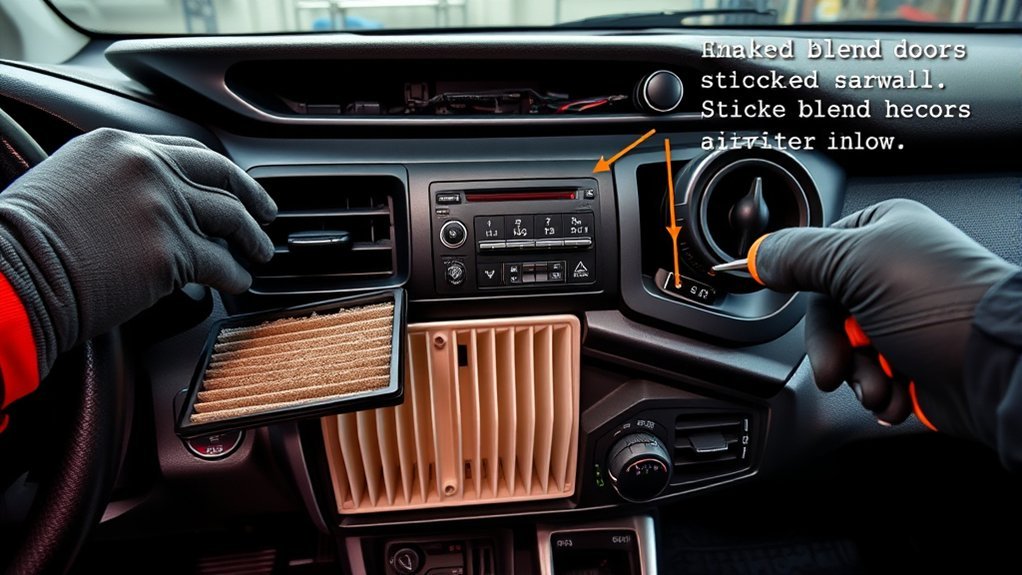
If the AC air is cold but barely comes out of the vents, the problem is usually inside the HVAC airflow system rather than the refrigerant loop. Start with the cabin filter, then move to the blower motor, blower resistor or control module, and blend or mode door actuators.
[Products Worth Considering]

JOGOAUTO H10285 is a replacement cabin air filter designed to help keep vehicle interiors fresher and cleaner by filtering airborne particles and reducing odors. Its dual-filtration design uses activated carbon and melt blown fabric for improved cabin air quality, and it is made to fit a wide range of compatible Toyota, Subaru, Lexus, and other supported models. Installation is straightforward, making it a convenient maintenance part for regular filter replacement.

This coolant electric water pump is designed as a replacement for select Toyota vehicles, helping maintain proper engine cooling performance and reliable temperature control. Built to OE specifications, it offers fitment support for compatible Avalon, Camry, and RAV4 models with 2.5L L4 engines. It also includes cross-reference part numbers for easier matching and comes with after-sales support for covered defects.
Cabin Air Filter
A clogged cabin air filter can cause weak airflow, musty odors, window fogging, and poor cooling performance. In most RAV4 models, the filter is behind the glove box. Remove it, check for leaves, dust, pollen, and mold, and replace it if it is dirty or deformed.
- Check: Remove the filter and inspect both sides for debris or dark dust buildup.
- Replace: Install the correct filter with the airflow or “UP” marking oriented as directed for your model.
- Verify: Run the fan on high. If airflow improves but cooling is still weak, continue with refrigerant and condenser checks.
Blower Motor Function
The blower motor pushes air across the evaporator and into the cabin. A failing blower motor, resistor, fan control module, or wiring connection can make airflow weak, intermittent, noisy, or completely dead.
| Symptom | Likely Cause | Action |
|---|---|---|
| Weak airflow | Clogged filter, weak blower, blocked intake, or dirty evaporator | Replace filter, inspect intake, test blower output |
| Noise from dash | Leaves in fan cage, worn bearings, or loose blower wheel | Inspect blower housing and fan assembly |
| Only one fan speed works | Blower resistor, control module, or switch fault | Test electrical controls and replace failed part |
| No airflow | Dead blower motor, fuse, relay, wiring, or control fault | Check fuses and power supply; diagnose before replacing motor |
Blend Door Operation
The blend door controls how much heated and cooled air mix before air reaches the vents. If the door sticks or the actuator fails, your RAV4 may blow warm air even when the refrigerant system is working.
Common blend door symptoms include clicking behind the dash, one side colder than the other, temperature that changes randomly, or air that ignores the temperature setting. Change the temperature from full cold to full hot and listen for actuator movement. If the noise repeats or the temperature does not change, the actuator or door linkage may need repair.
DIY RAV4 AC Tests You Can Do Safely at Home
You can narrow the problem at home without opening the refrigerant system. Stop once a test points to refrigerant handling, high-voltage hybrid components, or sealed AC parts.
| Test | What to Do | What It Means |
|---|---|---|
| Climate setting check | Use MAX A/C, recirculation, high fan, coldest temp, and disable Eco mode | Improvement means settings or efficiency mode were limiting cooling |
| Cabin filter check | Remove and inspect the filter behind the glove box | A dirty filter explains weak airflow and musty smells |
| Vent temperature test | Measure center vent temperature after several minutes of operation | Little temperature drop suggests refrigerant, compressor, condenser, or blend door trouble |
| Condenser inspection | Look through the grille for leaves, bags, bent fins, or impact damage | Blocked fins reduce cooling, especially at idle or in traffic |
| Fan operation check | With the AC on, confirm cooling fans run when commanded | No fan operation can cause warm air at idle and high AC pressure |
| Sound check | Listen for clicking, grinding, squealing, or rapid cycling | Noise helps separate compressor, belt, blower, relay, or actuator issues |
Note: A low-side gauge can help identify an obviously low system, but pressure readings depend on ambient temperature, humidity, engine speed, fan operation, and refrigerant type. A gauge reading alone is not a complete diagnosis.
Recharge vs. Fix the Leak: What to Do First
A recharge can restore cold air only if the system is low and the correct amount of the correct refrigerant is added. But if refrigerant leaked out once, it will leak again unless the leak is repaired. Recharging without leak repair can waste money, reduce cooling, and put extra strain on the compressor.
- Inspect first: Look for oily residue around hoses, fittings, the condenser, compressor, and service ports.
- Confirm the refrigerant: Read the under-hood AC label. Do not assume your RAV4 uses the same refrigerant as another model year.
- Avoid stop-leak products: Sealers can clog small passages and may contaminate professional recovery equipment.
- Repair the leak: Replace damaged O-rings, hoses, condenser, evaporator, or compressor seals as needed.
- Evacuate and recharge by weight: A shop should recover remaining refrigerant, pull a vacuum, confirm the system holds vacuum, and recharge to the specified amount.
The right order is diagnose, repair the leak, evacuate the system, then recharge by the manufacturer-specified weight—not “add a can and hope.”
[Products Worth Considering]

Efficient Disassembly: The AC valve removal tool included in AC valve core kit comes in three different styles to ensure versatility and assist technicians in easily removing and installing automotive air conditioning systems, making it an ideal and convenient tool for automotive enthusiasts

STOP LEAKS PERMANENTLY - The Leak Saver can permanently seal small refrigerant leaks where the complete refrigerant charge is not lost within 7 days. When a leak occurs, the Leak Saver reacts with the air and moisture at the leak site to permanently seal the leak. When used for preventative maintenance, the active ingredient circulates safely in the system to seal future leaks

Buyer's Guide - Our package contains 52 pcs replaceable car air conditioner compressor gaskets. Please confirm compatibility before ordering: BC-6001, BC-6002, BC-6003, BC-6004, BC-6005, BC-6003a. Air conditioning system gasket kit is a good helper for auto repair.
When to See a Pro and the Diagnostics They’ll Run
See a professional if the AC still blows warm after the basic checks, if refrigerant is low, if the compressor does not run, if you see oily leak residue, if the AC works only while driving, or if your RAV4 is a hybrid or plug-in hybrid with suspected compressor or high-voltage issues.
A qualified technician may run these diagnostics:
- Pressure testing: Compare high-side and low-side pressures under controlled conditions.
- Leak detection: Use electronic leak detectors, UV dye when appropriate, and visual inspection.
- Vacuum test: Confirm whether the sealed system holds vacuum before recharge.
- Electrical testing: Check relays, fuses, pressure sensors, temperature sensors, compressor command, and wiring.
- Scan tool diagnosis: Read HVAC and body control codes that a basic code reader may miss.
- Actuator testing: Command blend doors, mode doors, and recirculation doors to verify movement.
- Fan and condenser checks: Confirm cooling fan operation and condenser heat rejection.
Ask the shop for the pressure readings, leak-test result, failed component, refrigerant type, and written estimate before approving major AC repairs.
Cost, Timeline, and Maintenance Tips to Avoid Repeat Problems
RAV4 AC repair costs vary by model year, refrigerant type, labor rate, and the failed part. A professional AC recharge or evacuation-and-recharge service is often a few hundred dollars. RepairPal’s RAV4 estimate places AC recharge around the mid-$200 to low-$300 range on average, while compressor replacement is commonly over $1,000. Your local price may be higher or lower depending on refrigerant, parts availability, and whether leak repairs are needed.
Most simple jobs, such as filter replacement, relay replacement, or evacuation and recharge, can be completed the same day. Compressor, condenser, evaporator, or blend door repairs may take longer because parts may need to be ordered and dashboard or front-end components may need removal.
Use these maintenance habits to avoid repeat problems:
- Replace the cabin air filter on schedule: Inspect it more often in dusty areas, wildfire smoke, pollen season, or heavy traffic.
- Keep the condenser clear: Remove leaves, bugs, plastic bags, and road debris from the grille area.
- Run the AC regularly: Even in cooler months, occasional operation helps circulate oil through seals.
- Pay attention to changes: Musty odors, weak airflow, clicking, or cooling that fades over days can be early warning signs.
- Do not ignore leaks: Repeated recharges without repair can lead to compressor damage and higher costs.
Frequently Asked Questions
How much does it cost to fix AC in a Toyota RAV4?
A basic cabin filter replacement may be inexpensive if you do it yourself. Professional recharge or evacuation-and-recharge service is often a few hundred dollars, while compressor replacement commonly costs over $1,000. The final price depends on model year, refrigerant type, leak location, parts, and local labor rates.
Why is my RAV4 AC cold on one side and warm on the other?
Cold air on one side and warm air on the other often points to a blend door actuator, temperature door, dual-zone control issue, or low refrigerant. Low refrigerant can sometimes cool part of the evaporator unevenly, while a stuck blend door can mix heated air into one side of the cabin.
Can I recharge my RAV4 AC myself?
You can perform basic visual and airflow checks at home, but refrigerant work requires care. Use only the refrigerant listed on the under-hood label, never vent refrigerant, and do not mix refrigerants. If the system is low, the better fix is to find and repair the leak before recharging.
Why does my RAV4 AC blow warm at idle but cooler while driving?
Warm air at idle can be caused by a condenser fan problem, dirty condenser, low refrigerant, weak compressor, or high system pressure. When the vehicle moves, outside air flows across the condenser, which can temporarily improve cooling.
Can Eco mode make the RAV4 AC feel weaker?
Yes. Toyota’s owner information explains that Eco drive mode can restrict cooling capacity and fan speed to prioritize fuel efficiency. If the AC is not cold enough, increase fan speed and turn off Eco drive mode or Eco air conditioning mode when conditions require maximum cooling.
Why does my RAV4 AC smell musty?
Musty AC odor usually comes from moisture and organic buildup on the cabin air filter or evaporator. Replace the cabin filter first, clear leaves from the cowl intake, and run the fan without AC for a few minutes before parking to help dry the evaporator.
Conclusion
A Toyota RAV4 AC that is not cold is easiest to fix when you diagnose it step by step. Start with settings, recirculation, Eco mode, the cabin filter, airflow, condenser blockage, and vent temperature. If airflow is strong but the air is still warm, move toward refrigerant pressure, leak detection, compressor operation, condenser performance, electrical controls, and blend door function.
Do not hide a leak with repeated recharges. Find the failure, repair it correctly, and recharge the system with the right refrigerant and exact charge amount. That approach protects the compressor, saves repeat repair costs, and gets your RAV4 blowing cold air again for the long run.
Sources
- Toyota Owners: RAV4 Automatic Air Conditioning System — supports Eco mode and air conditioning operation guidance.
- Toyota Owners: RAV4 Air Conditioning Filter — supports cabin filter inspection and replacement guidance.
- Toyota Owners: RAV4 Hybrid System Precautions — supports high-voltage AC compressor safety guidance for hybrid models.
- U.S. EPA: Regulatory Requirements for MVAC System Servicing — supports refrigerant handling and venting prohibition guidance.
- U.S. EPA: Safety Risks of Hydrocarbon Refrigerants in MVACs — supports warning against propane and hydrocarbon refrigerants.
- RepairPal: Toyota RAV4 AC Recharge Cost and Toyota RAV4 AC Compressor Replacement Cost — supports general cost ranges for common RAV4 AC services.