Quick answer: your 2018–2020 Toyota Camry’s tire pressure placard is on the driver’s side door jamb and lists the recommended PSI—typically 35 psi for both front and rear tires. Check it cold with a reliable gauge weekly or before long trips to prevent uneven wear and improve fuel economy and safety. The placard also shows spare tire pressure and tire size. If pressures don’t match, adjust and inspect for leaks; more practical tips follow.
Quick Answer: Your 2018–2020 Camry Recommended PSI
For 2018–2020 Toyota Camry models, inflate both front and rear tires to a maximum of 35 psi as shown on the driver’s door placard; keeping tires at the recommended pressure prevents excessive tread wear, improves fuel efficiency, and reduces the risk of blowouts or loss of control. You should check pressure cold, weekly or before long trips, using a reliable gauge. Follow tire maintenance tips: inspect tread depth, look for cuts or bulges, and rotate tires per your schedule to distribute wear. If pressure’s low, add air to reach the placard value; if it’s consistently high or low, have the tires and valve stems inspected. Proper inflation gives you better handling and braking—core driving safety advice that protects you and others on the road. Taking control of tire care frees you from unexpected failures and costly replacements, so make these checks part of your routine and drive with confidence.
Where to Find the Tire Pressure Placard on Your Camry
You’ll find the primary tire pressure placard on the driver’s side door jamb, where it lists the recommended pressures and tire size. If you can’t spot it there, check your owner’s manual for the same specifications and guidance. Also glance in the spare tire compartment—some models store a copy or related information with the jack and tools.
Driver Door Jamb
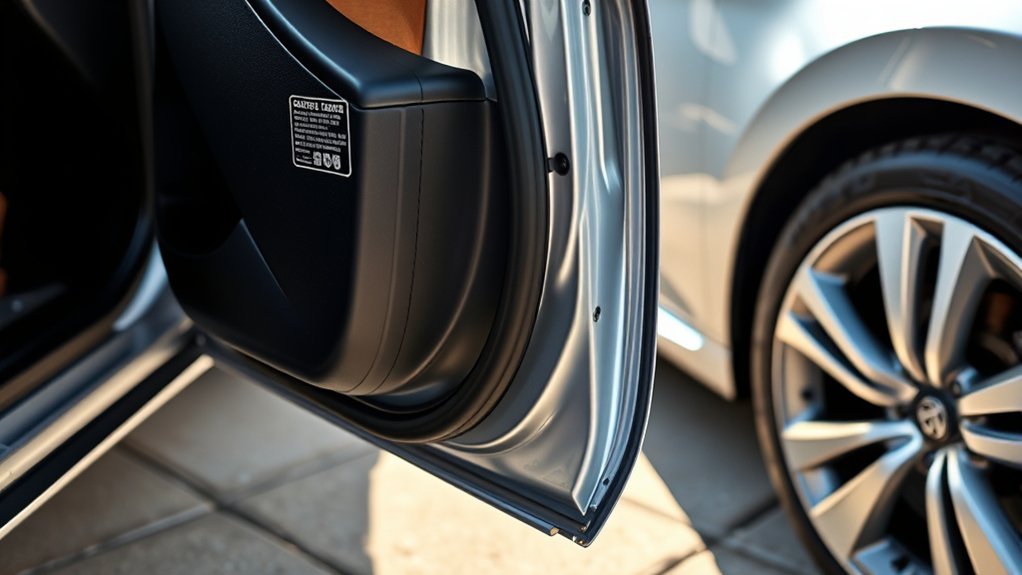
Look at the driver’s door jamb to find the tire pressure placard on your Toyota Camry; it lists the recommended pressures (commonly up to 35 psi front and rear), correct tire size, and load capacity. Open the door, inspect the jamb area near the latch, and read the sticker. Use it as your primary reference before inflating tires so you’re compliant with manufacturer specs and practicing proper tire maintenance. Checking it regularly supports door safety by preventing overinflation that can affect handling and braking. Keep the placard in mind when replacing tires or carrying heavy loads; follow the listed pressures and load ratings to preserve performance and fuel efficiency. Rely on this simple step to maintain control and mobility.
Owner’s Manual Location
1 clear place to check is the driver’s side door jamb—open the door and you’ll find the tire pressure placard on the door frame or inside the door panel. You’ll also consult the owner’s manual for confirmation: it reinforces placard details, recommended pressures (often up to 35 psi), tire size, and load capacity. Use this info to free yourself from guesswork and keep tire maintenance routine.
| Item | Location | Purpose |
|---|---|---|
| Placard | Driver’s door jamb | Recommended pressures |
| Owner’s manual | Glove box | Verification and details |
| Tires | Vehicle wheels | Apply correct psi |
Check the placard and manual regularly to secure efficient, safe driving and independent tire maintenance.
Spare Tire Compartment
Besides the driver’s door jamb, you can also find the tire pressure placard tucked inside the spare tire compartment—lift the trunk floor panel and check the area around the spare for a sticker or plate. When you locate it, you’ll see the recommended tire pressure clearly listed (maximum 35 psi for both front and rear). Use that placard as your authority for pressure maintenance to keep handling, fuel economy, and safety optimized. Before inflating or adjusting tires, consult this label to avoid under- or over-inflation. Treat the spare tire area as an important reference point, not just storage. Knowing where the placard lives frees you to maintain your vehicle confidently and reclaim control over routine upkeep.
What the Tire Pressure Placard Shows and Why PSI Matters
When you open the driver’s door you’ll find the tire pressure placard that tells you the precise PSI recommendations for your Camry—typically 35 psi front and rear—and the maximum allowable pressure, so you can inflate correctly, avoid over‑inflation risks, and maintain fuel efficiency, tire life, and proper handling. The placard is your direct instruction for safe, efficient driving: follow the recommended pressure to prevent uneven tread wear, reduce rolling resistance, and gain fuel efficiency benefits. It also lists the maximum pressure to keep you from over‑inflating, which can stiffen the ride and increase blowout risk. Use these tire maintenance tips when checking pressure cold, with a reliable gauge, and before long trips or heavy loads. Keeping tires at the placard’s values frees you from guesswork, helps tires wear evenly, and improves handling responsiveness. Treat the placard as a simple tool for vehicle liberation—accurate inflation saves money, time, and reduces roadside hassles.
How to Read Front, Rear, and Spare PSI on the Placard
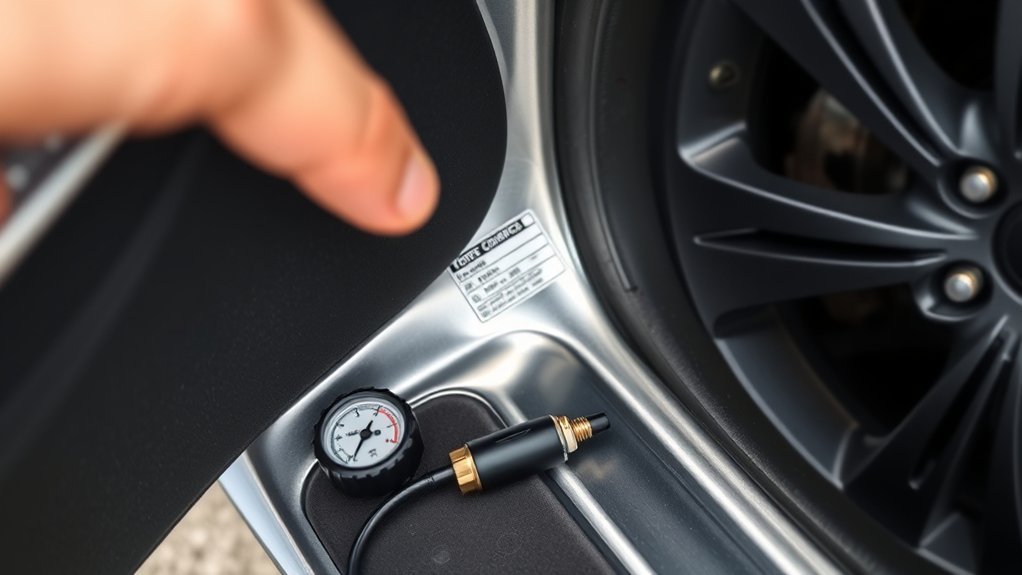
Now that you know why the placard matters, learning to read it is quick and practical. Open the driver’s door and find the placard; this is your authoritative source for tire pressure and placard reading. You’ll see separate lines for front and rear tires—most Camrys list 35 psi for both. Treat those numbers as the target when tires are cold.
The placard also lists the spare tire pressure. Don’t ignore it: a properly inflated spare gets you mobile, so check and inflate the spare to the stated psi before you need it. Remember that tire pressure changes with temperature and load, so consult the placard rather than generic charts whenever you adjust pressure. Check pressures regularly with a reliable gauge and inflate or deflate to match the placard reading. This habit protects handling, fuel economy, and your freedom to travel without avoidable stops.
Common Camry (2018–2020) Placard Variations and Exceptions
You’ll usually find the tire pressure placard on the driver’s side door jamb, but some Camrys may use alternate locations like the glove box lid or inside the fuel filler door. Check the placard in its actual spot for the exact front/rear PSI, load limits, and tire size rather than relying on memory or generic charts. If you drive a hybrid or a different trim, verify the specific placard since pressures can vary up to the 35 psi maximum.
Door Jamb Placard Locations
Wondering where to find your Camry’s tire pressure info? You’ll usually find the tire pressure placard on the driver’s side door jamb—an intentional choice for door safety and placard visibility. Open the door fully so the label isn’t hidden by a partially closed panel. The placard lists recommended pressures (maximum 35 psi front and rear) and may note tire size and load capacity on some models. Before inflating, check this placard to keep pressure ideal for safety and performance. Relying on the jamb label frees you from guesswork and keeps you in control; it’s a quick, reliable reference that supports safe driving and vehicle longevity. Keep it readable and accessible.
Alternate Placard Placements
If you checked the driver’s side door jamb and didn’t find the tire pressure placard, look in a few other spots before assuming it’s missing. On some 2018–2020 Camry trims you’ll find the same tire pressure data inside the fuel filler door as an alternate placard placement. That placard still lists recommended pressure—typically 35 psi front and rear—so you can set pressures confidently. Variations happen with trim levels or optional features, so scan the door jamb, fuel door, and consult the owner’s manual to free yourself from uncertainty. For liberation-minded drivers: keep this info accessible, note it on your maintenance list, and follow basic safety tips—check pressures regularly and before long trips to protect performance and safety.
If Your Tires Don’t Match the Placard: What to Do Next
When your tire pressure readings don’t match the placard, start by inspecting each tire for visible damage or leaks and then adjust the pressure to the recommended value on the driver’s door sticker (commonly 35 psi for many Camry models). Check for punctures, sidewall cuts, or objects lodged in the tread; fixable leaks you can temporarily seal, but plan for professional repair. Use pressure monitoring tools and carry portable gauges as part of practical tire maintenance tips so you can verify readings before and after inflation. Recheck pressure after driving a few miles and after temperature swings, since ambient changes shift PSI. If pressures stay inconsistent despite correct inflation, have a technician examine valves, rims, and uneven wear patterns that indicate alignment or suspension issues. Rely on the placard as your authoritative guide. Taking these steps frees you from guesswork, keeps you safe, and preserves tire life while affirming your control over vehicle maintenance.
Frequently Asked Questions
How to Find Tire Pressure on a Toyota Camry?
Look inside the driver’s door frame for the placard showing recommended pressures; check tire pressure with a gauge or pressure monitoring, follow tire maintenance tips, and adjust to the listed psi to stay safe and free on the road.
Where Is the TPMS Sensor Located on a Toyota Camry?
Under the tire, you’ll find the TPMS sensor mounted on the valve stem inside each wheel; you can reset TPMS via the TPMS reset or vehicle settings, know sensor types (internal valve-stem batteries) and replace when needed.
Conclusion
You’ve now got the lowdown on where your Camry’s tire pressure placard hides and what those PSI numbers mean, so you won’t be left guessing. When pressures don’t match your tires, treat it like a polite reminder—not an emergency—by checking load, tire size, and topping to the placard specs or consulting a pro. Keep that placard’s guidance handy, and your Camry will reward you with steadier handling, better life for the tires, and safer drives.