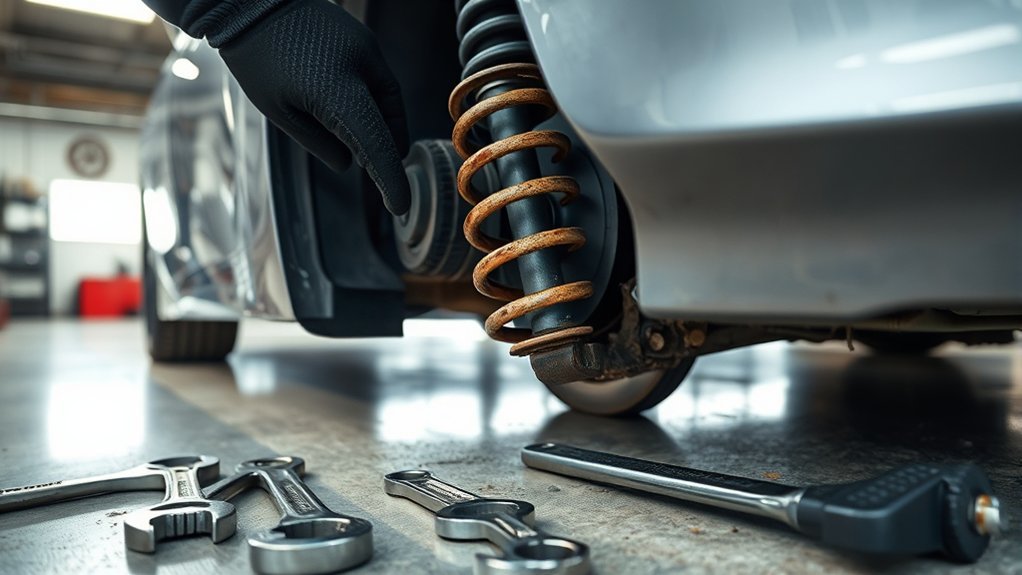
If your Toyota Camry’s suspension squeaks, it’s likely due to worn components like bushings and joints. These issues can lead to a compromised ride and handling. Common symptoms include unusual noises, vibrations in the steering wheel, and uneven tire wear. Inspecting your suspension is essential, so gather some tools like a jack, silicone spray, and a flashlight. Keep your suspension in good shape, and there’s more to learn about diagnosing and fixing these pesky squeaks.
What Causes Squeaking in Your Suspension?
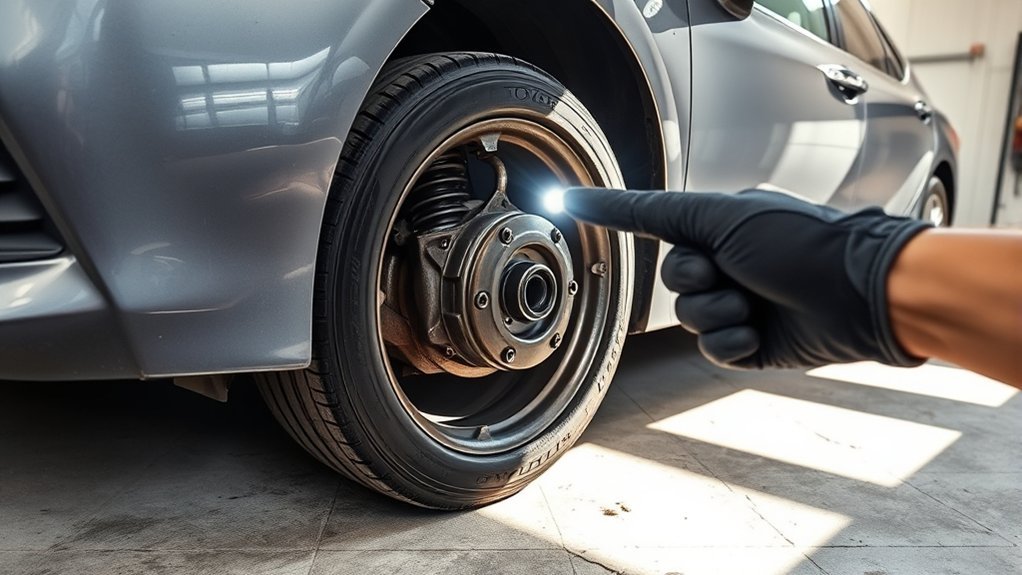
When you hear squeaking in your Toyota Camry‘s suspension, it often signals underlying issues that need attention. Common causes include worn or damaged components, particularly rubber bushings and ball joints, which lose lubrication over time. Environmental factors like moisture and road debris can accelerate this deterioration, leading to increased noise when driving.
Pay close attention to the upper control arm bushing; it bears significant weight and stress, making it a frequent culprit for squeaks. Additionally, steering tie rod ball joints and bottom knuckle joints can produce similar sounds when they become dry or damaged, impacting your steering response and stability.
Regular suspension maintenance is essential. By inspecting these components routinely, you can catch squeaking issues early, allowing for effective noise reduction and preventing more serious mechanical problems down the road. Don’t let squeaks compromise your driving experience—stay proactive!
Common Symptoms of Worn Suspension Components
If you’re hearing unusual noises while driving or experiencing vibrations in your steering wheel, it could signal worn suspension components. These symptoms often indicate problems with parts like ball joints or bushings, which can also lead to uneven tire wear. Addressing these issues promptly is essential to maintaining both your comfort and vehicle handling.
Unusual Noises While Driving
Unusual noises while driving, especially those pesky squeaks that crop up when you hit bumps or turn corners, often signal worn suspension components in your Toyota Camry. Squeaking noises can stem from ball joints or control arm bushings, and they might become more pronounced under certain driving conditions, especially with weight on the wheels. The upper control arm bushing frequently gets the blame, but don’t overlook steering tie rod ball joints or bottom knuckle joints. To temporarily alleviate those squeaks, you can apply silicone lubricant to the rubber bushings, though this isn’t a permanent fix. Regularly inspecting your suspension components is essential; neglecting them can lead to worsening noise, decreased handling, and possible safety hazards.
Steering Wheel Vibration Issues
Steering wheel vibrations can be a frustrating experience, often signaling underlying issues with your Toyota Camry’s suspension components. Worn parts like ball joints or control arm bushings can compromise vehicle stability, leading to poor steering feedback. If you notice vibrations, it could also mean your wheels are misaligned, a common result of failing suspension components. Insufficient lubrication may cause squeaking noises, especially during turns and over bumps, amplifying the vibrations. To regain smooth handling, consider vibration remedies such as regular inspections and maintenance of your suspension parts. Addressing these issues promptly not only enhances your driving experience but also prolongs the life of your Camry, ensuring you enjoy every mile.
Uneven Tire Wear Patterns
Uneven tire wear patterns can be a clear indicator that your Toyota Camry’s suspension components are in need of attention. Look for bald spots or excessive wear on one side; these signs often point to worn control arms or bushings. Cupping or scalloping on the tread affects both handling and ride comfort, making your driving experience less enjoyable. Misalignment from failing suspension parts leads to premature tire wear, often resulting in abnormal camber or toe patterns. Regular alignment checks and maintaining proper tire pressure can help mitigate these issues, but if problems persist, it’s essential to inspect your suspension for play or damage. Addressing these concerns early can save you from more costly repairs down the road.
Gather Your Tools for Inspection
Before diving into the inspection of your Toyota Camry’s suspension, you’ll need to gather some essential tools to guarantee a thorough and safe process. Start with a jack and jack stands to lift the vehicle securely; this is vital for inspection safety. You’ll also need a socket set and a tire removal tool to take off the wheels, giving you better access to the suspension components.
Don’t forget a flashlight—it’s invaluable for illuminating hard-to-see areas under the car, making it easier to spot potential squeak sources. Having WD-40 silicone spray on hand is wise, too; it can lubricate rubber bushings and joints, helping you identify any problematic areas during your inspection. With the right suspension tools collected, you’re set to tackle the job confidently and make sure your Camry runs smoothly.
Step-by-Step Suspension Inspection
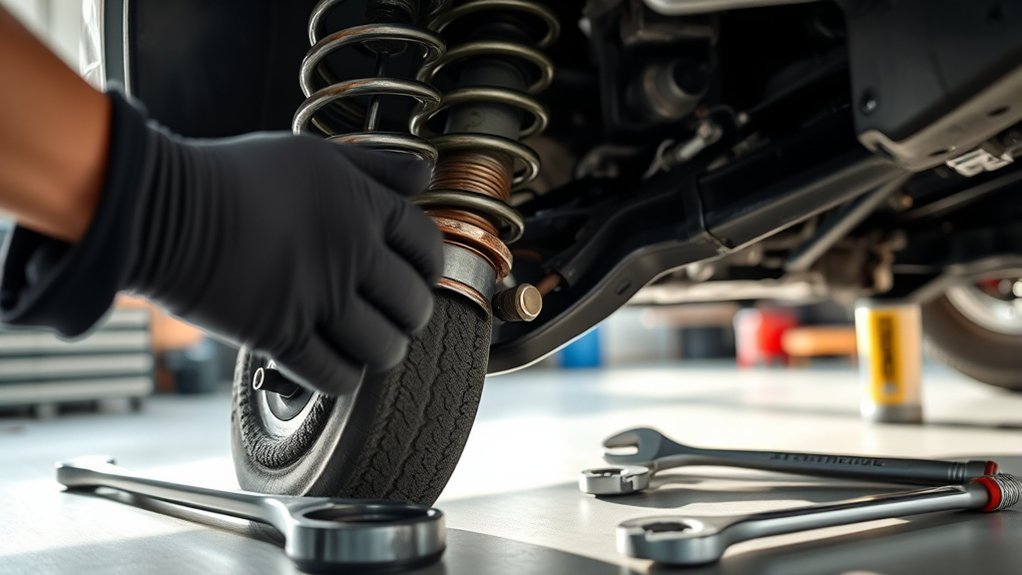
Once you’ve safely elevated your Toyota Camry, it’s time to plunge into the suspension inspection. Follow these steps to guarantee your suspension is in top shape and to implement effective squeak prevention methods:
- Remove the front wheels for better access to the knuckle and control arm bushings.
- Turn the steering wheel to observe any movement in the steering tie rod and bottom knuckle joint.
- Inspect the upper control arm bushing, often the main culprit of squeaking.
- Test each component individually for noise; listen closely for any irregularities.
- If you detect signs of wear or friction, consider applying silicone spray to the bushings.
These suspension maintenance tips will help you identify issues early, keeping your ride smooth and quiet. With a thorough inspection, you can tackle any problems head-on and enjoy a liberating driving experience.
How to Diagnose Your Squeaky Suspension
When your Toyota Camry starts squeaking, it’s essential to pinpoint the source of the noise. Begin by checking the upper control arm bushing, as it’s a common culprit. With the right inspection techniques, you can effectively isolate the problem and keep your suspension in top shape.
Common Squeak Sources
If you’re hearing a squeak from your Toyota Camry’s suspension, it’s essential to pinpoint the source quickly. Here are some common culprits to check:
- Upper control arm bushing: Often the main source of squeaks due to bushing wear.
- Steering tie rod: Worn components can contribute to noise.
- Bottom knuckle joint: Inspect for damage that may cause squeaking.
- Load simulation: Lift your vehicle on jack stands and turn the steering wheel to replicate weight on the suspension.
- Lubrication: Create a small slit in the bushing to apply silicone spray, then seal it with super glue for a temporary fix.
Addressing these areas can help silence your suspension and restore your Camry’s ride quality.
Inspection Techniques Explained
Diagnosing a squeaky suspension in your Toyota Camry requires a systematic approach to pinpoint the issue effectively. Start by lifting the vehicle and placing it on jack stands with the parking brake engaged. Remove the wheels for better access to essential components like the knuckle and steering tie rod. While turning the steering wheel, look for moving parts that may cause noise, focusing on the upper control arm bushing.
Here’s a quick reference table for your inspection:
| Component | Action |
|---|---|
| Upper Control Arm Bushing | Inspect for wear and lubrication |
| Steering Tie Rod | Check for play and visual damage |
| Bottom Knuckle Joint | Evaluate for rust or corrosion |
Targeted suspension maintenance guarantees effective noise identification and lasting solutions.
Applying Silicone Spray to Fix Squeaks
Squeaks from your Toyota Camry’s suspension can be annoying, but applying silicone spray offers an effective solution. This approach not only quiets those pesky noises but also enhances rubber bushing maintenance. Here’s how to do it right:
- Create a small slit in the rubber bushing for deep penetration.
- Apply silicone spray to lubricate the bushing without causing damage.
- Clean the area with a paper towel after application to remove any residue.
- Seal the slit with rubber-compatible super glue to keep dirt and moisture out.
- Test your suspension for a month to assess the long-term effectiveness of the silicone spray.
Embracing silicone spray benefits can greatly improve your ride quality while prolonging the life of your suspension components. With a bit of effort, you can liberate your Camry from those annoying squeaks and enjoy a smoother drive.
Keep Your Suspension in Top Shape
To keep your Toyota Camry’s suspension performing at its best, regular maintenance is essential. Inspect components like ball joints and control arm bushings for wear to prevent squeaks. Use WD-40 silicone spray for lubrication, ensuring it’s rubber-compatible to avoid damage. Always lift your vehicle safely on jack stands before any inspection or repair.
Here’s a quick reference table for your suspension maintenance:
| Task | Frequency |
|---|---|
| Inspect suspension components | Every 6 months |
| Lubricate bushings | Annually |
| Test for squeaks | Every oil change |
| Seal lubrication holes | After lubrication |
| Replace worn parts | As needed |
If you notice a squeak, test each component individually, especially the upper control arm bushings and steering tie rod joints. Prolong the lifespan of your suspension with diligent maintenance—your ride will thank you!
When Should You Seek Professional Help for Suspension Issues?
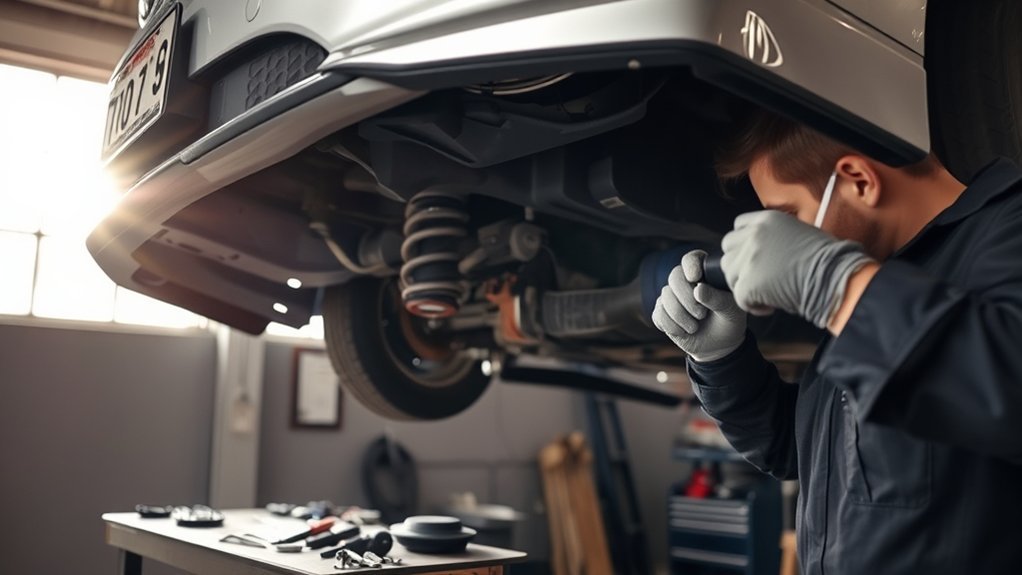
How can you tell when it’s time to call in a professional for your Toyota Camry’s suspension issues? Recognizing the signs early can guarantee your suspension safety and prevent further damage. Here are some indicators that you shouldn’t ignore:
Knowing when to seek professional help for your Toyota Camry’s suspension is crucial for safety and preventing further damage.
- Squeaking persists despite lubrication or worsens over time.
- Visible damage, like cracks or excessive wear, on suspension components.
- Compromised handling, such as pulling to one side or difficulty turning.
- Unusual noises accompanied by vibrations or changes in ride quality.
- Regular inspections by a qualified technician aren’t part of your routine.
If you notice any of these symptoms, don’t hesitate to seek a professional evaluation. Addressing these issues promptly can save you from costly repairs down the road and keep your ride smooth and safe. Your Camry deserves the best care!
Frequently Asked Questions
How Much Does It Cost to Fix the Suspension on a Toyota Camry?
Fixing your Toyota Camry’s suspension typically costs between $300 and $1,500. To save money, focus on regular suspension maintenance tips. Early detection of issues can prevent costly repairs, keeping your ride smooth and safe.
How Much Does It Cost to Fix a Squeaking Suspension?
Fixing a squeaking suspension typically costs between $100 and $1,000. Prioritizing suspension maintenance not only prevents noise but also saves you money in the long run by addressing issues before they escalate into costly repairs.
Why Is My Toyota Camry Squeaking?
Your Toyota Camry’s squeaking could stem from worn suspension components or degraded bushings. For an accurate noise diagnosis, inspect these areas closely, as they often reveal the source of that annoying sound you’re hearing.
Conclusion
In the end, addressing squeaks in your Toyota Camry’s suspension is like tending to a garden. Just as weeds can choke out your flowers, ignoring those noises can lead to bigger problems down the road. By regularly inspecting and maintaining your suspension, you keep your vehicle thriving. If the squeaks persist despite your efforts, don’t hesitate to consult a professional. After all, a well-cared-for suspension will guarantee a smooth ride, just like a well-tended garden flourishes.