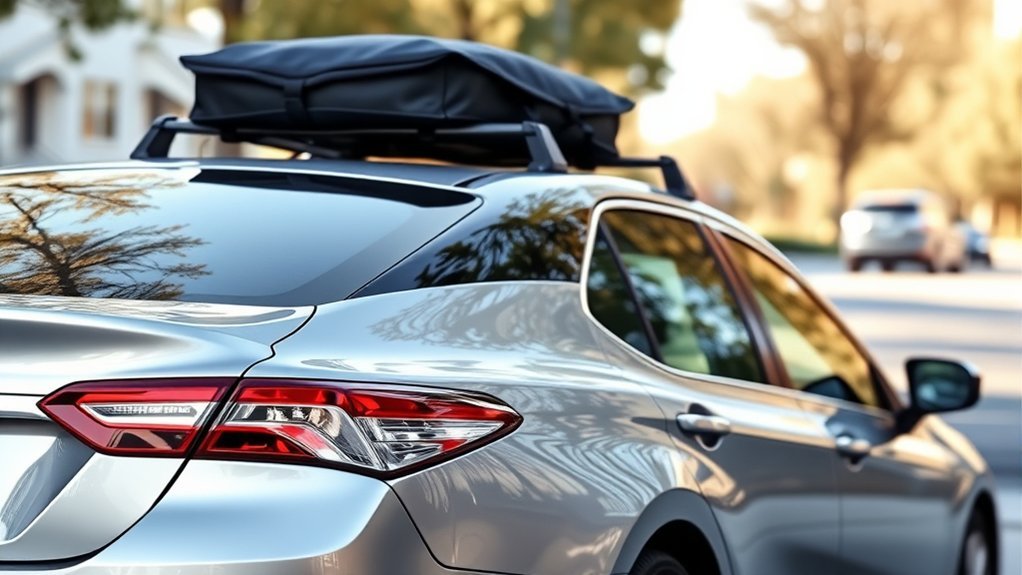
You should limit roof loads on your Camry to about 100 lbs while driving and roughly 150–165 lbs when parked, after subtracting the roof rack weight and ensuring even distribution. Check your owner’s manual or Toyota’s online resources for model-specific numbers, and factor in rack, carrier, and cargo to get the total. Inspect mounting points, use rated straps, and recheck security after a short drive — keep going and you’ll get practical rack, loading, and driving tips.
How Much Weight Can a Camry Roof Hold : Moving vs. Parked?
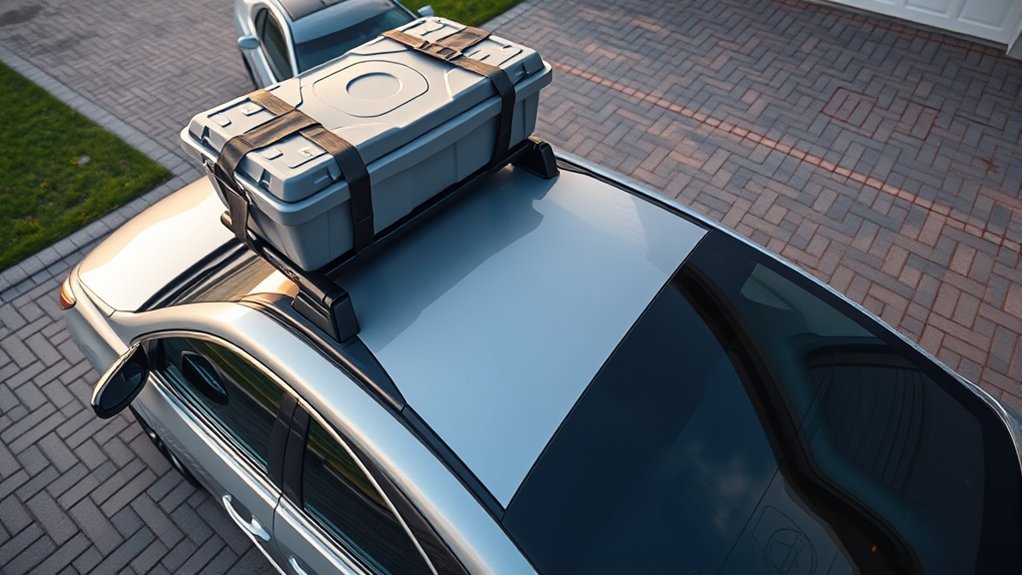
Wondering how much weight your Camry roof can handle? You can carry about 100 pounds as a safe dynamic roof load while driving; that limit preserves handling and braking. When parked, the static capacity rises to roughly 165 pounds, letting you load heavier gear for overnight camping or temporary setups. Remember that roof rack components may impose lower limits, so you’ll need to honor the lowest specified value. You’ll also watch weight distribution carefully: center items low and even across the crossbars to avoid creating a high center of gravity or unbalanced forces that compromise control. Regularly inspect the load and attachment points before departure and after stops, and don’t exceed rated capacities. By respecting these measured limits and managing weight distribution, you’ll protect the vehicle’s structure, maintain stable handling, and keep your freedom to travel with gear without risking damage or unsafe conditions.
Find Your Camry’s Roof Capacity (Manual & Online)
Check your owner’s manual first — it lists the model-specific roof load limits and any notes about rack weight. If the manual’s unavailable, search Toyota’s owner portal or manufacturer database online for your Camry’s year and trim. Always subtract the roof rack system weight from the published limit and inspect roof and gutters for wear before loading.
Check Owner’s Manual
Because roof limits can change between model years, you should consult your Camry’s owner’s manual—either the paper copy or Toyota’s online resources—to find the exact roof load rating for your specific year and trim. You’ll find roof weight figures (for example, the 1988 Camry lists 100 lbs dynamic and 165 lbs static) and clear safety guidelines about distribution and including the roof rack’s weight. Follow those limits: Toyota warns against exceeding them to preserve handling, structure, and occupant safety. The manual also shows how to spread cargo to avoid high centers of gravity. If you want freedom on the road, use the manual’s specs to plan loads that keep you safe and your vehicle performing reliably.
Search Manufacturer Database
When you need the exact roof load for your Camry, pull the owner’s manual and cross-check Toyota’s online database or customer support—these sources list the model-specific dynamic and static limits (for many Camrys, about 100 lb dynamic and 165 lb static) and note variations by year, trim, or aftermarket roof accessories. Use Toyota’s official site to locate manufacturer specifications tied to your VIN or model year; that gives authoritative limits and notes on roof racks or sunroofs that change capacity. Supplement that with forum threads and user experiences to see real-world loading scenarios and installation tips, but treat them as corroboration, not replacement, for factory data. If in doubt, ask Toyota support directly for written confirmation.
Typical Roof Weight by Camry Generation and Body Style
You should compare generation-specific capacities to know what your Camry can safely carry on the roof: older models like the 1988 Camry list about 100 lb dynamic / 165 lb static, and many 2018–2023 models use the same figures. Note that recent 2025–2026 Camrys specify a 165 lb maximum, reflecting improved structure even as roof-rack compatibility remains. Also account for body style differences — sedans generally have lower limits than SUV/crossover variants — when planning loads.
Generation-Specific Capacities
Across Camry generations, roof load limits stay remarkably consistent, so you can generally expect a 100-pound dynamic capacity with static limits ranging from about 150 to 165 pounds depending on the model year and roof-rack setup. You should note how roof design and safety features focus on predictable limits so you can plan loads without guesswork. The 1988 Camry lists 100/150 lb (dynamic/static); 2007–2011 and 2012–2017 maintain 100 lb dynamic with 165 and 150 lb static respectively; the 2025–2026 model specifies a 165 lb static limit including racks. Use the table below to compare generations quickly and liberate your decision-making with clear, evidence-based figures.
| Generation | Dynamic/Static (lbs) |
|---|---|
| 1988 | 100 / 150 |
| 2007–2011 | 100 / 165 |
| 2012–2017 | 100 / 150 |
Body Style Variations
Although roof capacities vary little by body style, it’s useful to know how sedans, coupes, and wagons typically handle loads so you can pick the right gear and mounting method. You’ll find consistent limits across generations: roughly 100 lbs dynamic and 165 lbs static from 1983 through the 2000s, and modern Camrys (2025–2026) list a 165 lbs maximum. That consistency reflects uniform roof design and structural choices rather than dramatic body style differences.
- Sedans/coupes: low-profile roofs suit roof boxes and light racks; stay within dynamic 100 lbs for safe driving.
- Wagons (if converted/compatible): flat roof areas help spread static loads up to 165 lbs.
- Modern models: reinforced roof design preserves the same limits; always check your owner’s manual before loading.
Choose a Roof Rack That Matches Toyota Camry Specs
1 clear step when choosing a roof rack for your Toyota Camry is to match the rack’s design and load rating to the car’s bare-roof configuration and manufacturer limits. You’ll check roof rack compatibility first: confirm your Camry has a bare roof (not factory rails) and pick a rack system engineered for that profile to protect gutters and attachment points. Compare the rack’s rated capacity to the Camry’s limit—1988 models specify 100 lb (150 lb recommended maximum for safety). Aftermarket racks can list higher ratings, but you must verify they won’t push the vehicle beyond its structural limit. Prioritize even load distribution across crossbars and mounting points to avoid stress concentrations that damage the roof. Choose a proven, aerodynamic design (e.g., Thule WingBar Evo for modern Camrys) to reduce noise and maintain performance. Install per instructions and inspect regularly so your freedom to carry gear doesn’t compromise safety or the car’s integrity.
Calculate Total Roof Load: Rack + Carrier + Cargo (With Examples)
When you calculate total roof load, include every component—the crossbar/rack (typically 10–20 lb), the carrier (about 20–50 lb), and your cargo—because the 1988 Toyota Camry’s dynamic limit is 100 lb; exceeding it risks structural damage and unsafe handling. You’ll add rack weight + carrier weight + cargo weight, then verify the sum stays at or below 100 lb. That simple arithmetic protects the structure and preserves control, advancing your freedom to travel confidently.
- Example A: rack 15 lb + carrier 30 lb + cargo 50 lb = 95 lb (within limit).
- Example B: rack 12 lb + carrier 25 lb + cargo 70 lb = 107 lb (exceeds limit; reduce cargo).
- Example C: rack 20 lb + carrier 40 lb + cargo 40 lb = 100 lb (maximum allowable).
Choose appropriate roof rack types and monitor load totals routinely. Prioritize cargo safety and balance; staying within the specified limit prevents damage and unsafe handling so you can move freely.
Best Practices for Placing and Securing Loads on a Camry Roof

Before you load anything, confirm the roof system and cargo together stay at or below the Camry’s 100 lb dynamic limit and spread that weight evenly between the crossbars to preserve handling and structural integrity. Place heavier items low and centered between the crossbars to optimize load distribution and keep the center of gravity close to the vehicle’s midpoint. Use roof racks specified for your Camry; aftermarket units may alter capacity or fit. Lay gear flat and compact—avoid overhang that catches wind or shifts load. Employ redundant tie down techniques: run straps over and around the cargo, attach to both left and right anchor points, and use at least two independent tie lines per major item. Tighten straps to remove slack, then recheck after a short drive and at stops. Consult the owner’s manual for combined rack-plus-cargo limits and respect manufacturer specs to prevent structural damage and preserve your freedom to travel safely.
Driving Tips and Speed Limits When Carrying Roof Cargo
Now that your load is secured and weight is distributed properly, adjust how you drive: slow down by about 10–15 mph below the posted limit to reduce wind buffeting and improve stability, especially on highways and exposed roads. You’ll make deliberate speed adjustments and respect the Camry’s dynamic roof capacity (about 100 lbs) to preserve handling. Heavy rooftop cargo raises your center of gravity, so avoid sudden steering inputs and high-speed lane changes.
Check load security periodically, especially after elevation changes or long intervals. In adverse weather, cut speed further — wind resistance magnifies instability. Drive with intent: smooth inputs, longer following distances, and reduced cornering speeds.
- Maintain steady, reduced speeds and plan passes early to avoid abrupt maneuvers.
- Monitor load stability at stops; re-torque straps if you feel vibration or shifting.
- In crosswinds or storms, pull off safely and reassess; don’t push speed limits.
These concise stability considerations free you to travel confidently while protecting you and others.
Risks, Common Failures, and When Age Lowers Roof Capacity
Although the factory-specified dynamic roof load for a 1988 Camry is about 100 lb (including the weight of racks and accessories), aging metal, weakened rain gutters, and corroded mounting points can reduce the roof’s true capacity and raise your risk of structural failure. You’ll face reduced structural integrity as seams fatigue and corrosion eats anchoring points; those changes aren’t obvious until you push loads near the nominal limit. Common failures include dented or buckled roof panels, detached racks, and altered handling from shifted center of gravity, each with clear safety implications that increase crash risk. You should treat manufacturer numbers as starting points, not guarantees, and factor vehicle age, visible corrosion, and prior roof repairs into your judgment. Neglecting inspections can create legal exposure if an overloaded roof causes injury or property damage. Aim to keep loads well below the spec on older cars, prioritize repairs that restore mounting strength, and accept limits that protect you and others.
Pre-Trip Checklist: Weigh, Mount, Inspect, and Secure
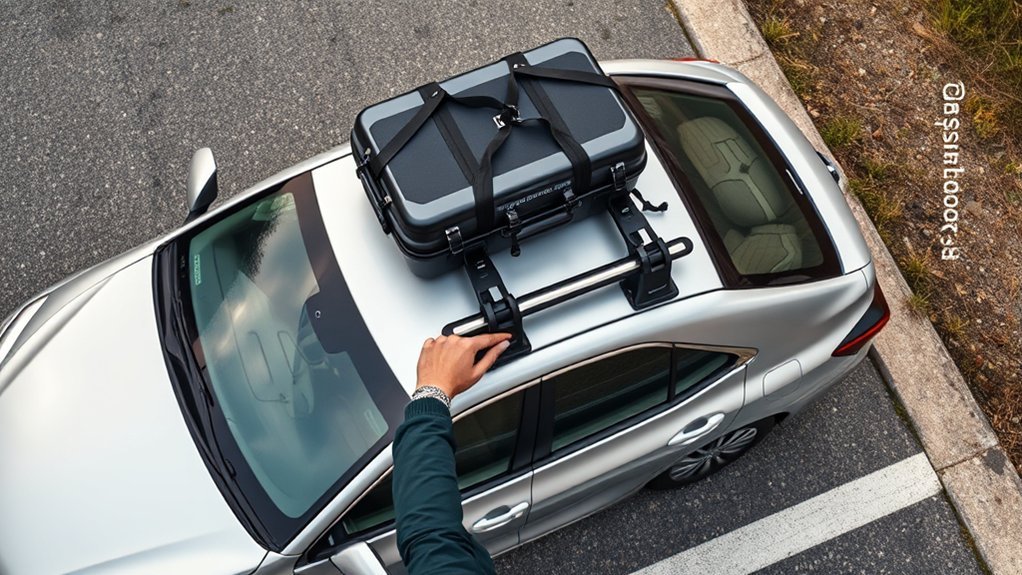
Start by weighing every item you plan to put on the roof—including the rack, any crossbars, and accessories—and confirm the total stays under the Camry’s 100 lb dynamic (165 lb static) limit. You’ll verify roof rack compatibility with your model, record individual weights, and plan cargo weight distribution so the center of mass stays low and centered. Mount the rack per manufacturer instructions, tighten fasteners to specified torques, and use approved attachment points to prevent detachment.
- Inspect gutters, rails, and hardware for corrosion, cracks, or loosened bolts.
- Use multiple tie-down points and rated straps to prevent shifting.
- Recheck load security after 10–30 miles and after elevation or speed changes.
You’ll inspect components before each trip, adjust loads if wear reduces capacity, and periodically reassess static vs. dynamic limits. These precise steps protect your freedom to travel while preventing avoidable failures and handling degradation.
Frequently Asked Questions
How Much Weight Can a Toyota Camry Roof Hold?
You can typically carry about 100 pounds dynamic and up to 165 pounds static on a Camry roof; follow roof safety tips and load distribution advice, account for rack weight, center and secure cargo, and check your owner’s manual.
Can I Put 300KG in My Car?
No — you can’t. By coincidence, 300kg crushes cargo safety and overloads weight distribution; it exceeds roof limits, risks structural failure and accidents, so you should follow the manual, reduce load, and protect your freedom to travel safely.
What Does Maximum Roof Load Mean?
Maximum roof load is the safe weight your vehicle’s roof can carry; you’ll respect roof load limits and manage weight distribution to avoid structural damage, higher center of gravity, and compromised handling, protecting yourself and others.
How Much Weight Can a Toyota Roof Rack Hold?
You can typically carry about 100 pounds dynamic (up to ~165 pounds static) on a Toyota roof; prioritize roof rack safety, include rack weight, and guarantee even weight distribution so you maintain control, freedom, and structural integrity.
Conclusion
Check your Camry’s roof limit in the manual and online, then add rack and carrier weights to stay within that limit—don’t guess. When parked you can handle more briefly, but driving needs the manufacturer’s dynamic limit for safety. Secure loads low and centered, use approved racks, and inspect mounts and fasteners before each trip. Drive cautiously; wind and turns amplify forces like a lever. Follow limits and checks to avoid structural failure or rollover.