The Toyota Camry Hybrid uses regenerative braking to recover some energy during coasting and braking, then stores that energy in the hybrid battery for later electric assist. On current U.S. Camry models, Toyota’s all-hybrid powertrain makes this system part of normal driving, but it is not the same as true one-pedal driving and it does not replace the friction brakes.
Quick Answer
Regenerative braking in the Toyota Camry Hybrid turns the electric motor into a generator when you slow down. It captures energy that would normally be lost as heat, sends it to the hybrid battery, and helps improve fuel economy while reducing routine brake pad wear.
Key Takeaways
- The Camry Hybrid charges its traction battery through regenerative braking and the gasoline engine; it does not plug in like a plug-in hybrid or EV.
- Regenerative braking works best in city driving, stop-and-go traffic, gentle deceleration, and long descents where there are more chances to recover energy.
- The Camry Hybrid still uses conventional friction brakes when stronger stopping power is needed, at low speeds, or when the battery cannot accept much charge.
- The Camry Hybrid does not offer true one-pedal driving, so you should always be ready to use the brake pedal.
What You Should Know About Regenerative Braking in the Camry
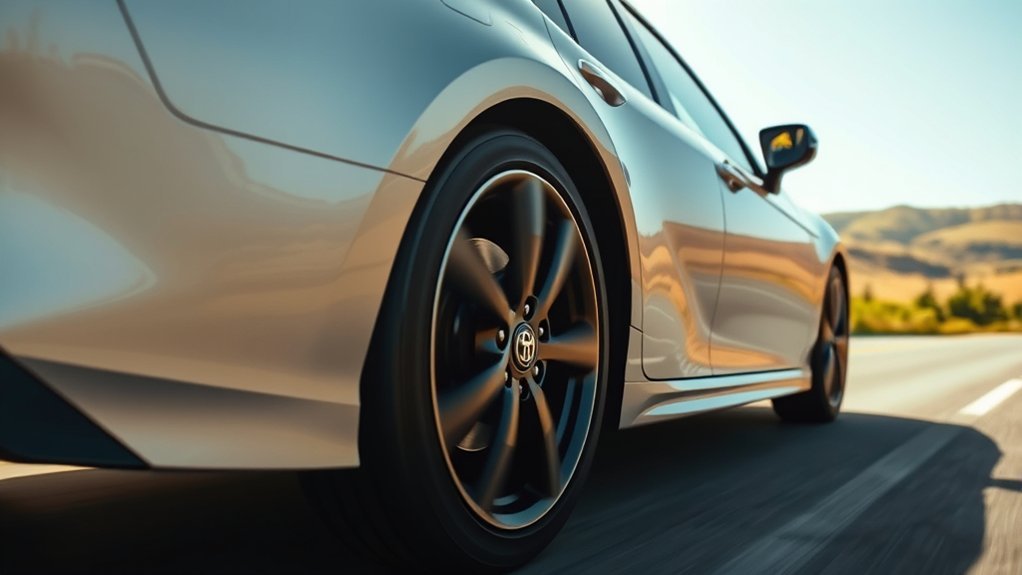
Regenerative braking is one of the main reasons a hybrid vehicle can be more efficient than a similar gas-only car, especially in traffic. According to the U.S. Department of Energy’s Alternative Fuels Data Center, a hybrid vehicle captures energy normally lost during braking by using the electric motor as a generator and storing that energy in the battery.
In the Toyota Camry Hybrid, this happens automatically. When you lift off the accelerator or press the brake pedal lightly, the system can use the motor-generator to slow the car and send recovered energy to the hybrid battery. When you need more stopping force, the vehicle blends in the regular friction brakes.
For the driver, the main benefits are simple: better fuel economy, smoother low-speed slowing, and less routine wear on brake pads compared with a vehicle that relies only on friction braking. Toyota also notes in the Camry Hybrid owner’s manual that the system can manage battery state of charge before long downhill sections to help preserve charging capacity for regenerative braking.
Note: Regenerative braking applies to Camry Hybrid models. Older gas-only Camry models do not have a hybrid traction battery or motor-generator system for energy recovery.
How Regenerative Braking Enhances Energy Efficiency
In a traditional braking system, much of the car’s moving energy turns into heat at the brake pads and rotors. Regenerative braking changes that process. As FuelEconomy.gov explains, regenerative braking uses the forward motion of the wheels to turn the motor, generate electricity, and help slow the vehicle.
Here is what happens in the Camry Hybrid during normal deceleration:
- You lift off the accelerator or press the brake pedal: The car begins slowing, and the hybrid control system decides how much regenerative braking can be used.
- The motor-generator creates electricity: Instead of using electricity to help move the car, the system reverses the energy flow and sends recovered electricity toward the hybrid battery.
- The battery stores usable energy: That stored energy can later help power the electric motor during low-speed driving, acceleration assist, and other hybrid operation.
- Friction brakes help when needed: For hard stops, emergency braking, very low-speed stopping, or situations where regeneration is limited, the conventional brakes still do the work.
Regenerative braking does not create “free” energy, but it recovers energy that would otherwise be wasted as brake heat.
This is why the benefit is most noticeable in stop-and-go driving. On a steady highway cruise, there are fewer braking events, so there is less energy to recover. The system still works when you slow down, but it will not add much benefit if you are holding a constant speed for long stretches.
Does the Toyota Camry Have One-Pedal Driving?
The Toyota Camry Hybrid uses regenerative braking, but it should not be described as a true one-pedal driving vehicle. In many EVs, one-pedal driving can slow the car strongly when the driver releases the accelerator, and some systems can bring the car to a complete stop without using the brake pedal. The Camry Hybrid is different.
In the Camry Hybrid, releasing the accelerator may create a natural slowing effect and recover some energy, but you still use the brake pedal for normal stopping. Toyota designed the system to feel familiar to drivers coming from a conventional automatic car, with the hybrid system blending regenerative braking and friction braking in the background.
This distinction matters because calling the Camry a one-pedal vehicle can create the wrong expectation. You should not rely on accelerator lift-off alone to stop the car. Use the brake pedal whenever you need controlled, predictable stopping.
Warning: Regenerative braking is not a substitute for attentive driving. Always keep a safe following distance and use the brake pedal when traffic, speed, weather, or road grade requires it.
[Products Worth Considering]
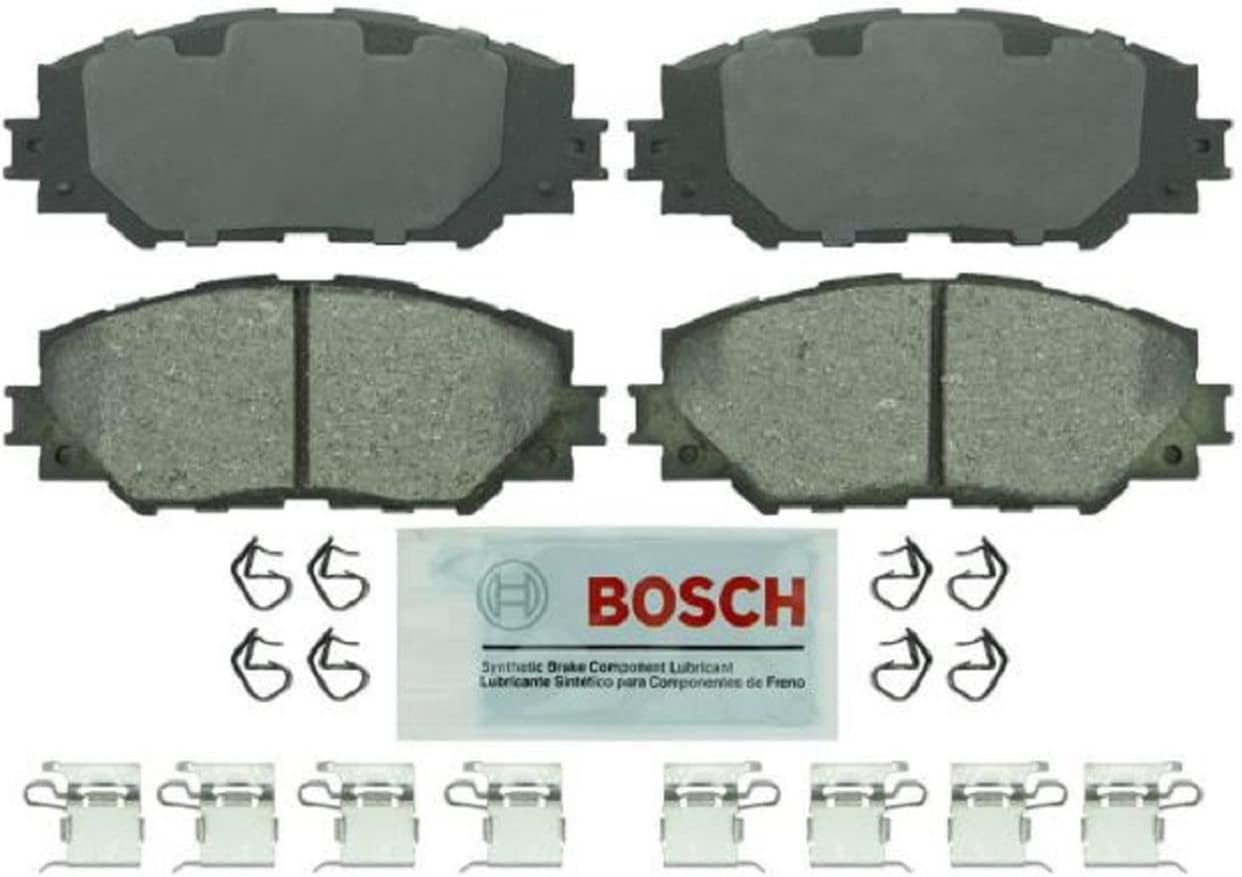
Bosch Blue ceramic front brake pads deliver dependable stopping power with platform-specific friction material designed for select Lexus, Pontiac, Scion, and Toyota vehicles. OE-style shims, slots, and chamfers help promote quiet braking, while the rust-inhibitive coating supports long-lasting performance and cleaner operation. The set includes hardware and synthetic lubricant for easier installation on one axle.

Bendix Premium Ceramic Front Brake Pads are engineered to match original equipment fit, form, and function for a straightforward replacement. Built with durable materials to help resist wear and corrosion, they support consistent braking performance and reduced brake fade for everyday driving. These pads are a dependable choice for compatible Pontiac, Scion, Toyota, and related vehicles.

Packag Included: The package includes 4 pieces of brake light switch stoppers, sufficient quantity to meet your daily requirements for usage and replacement, you can also share them with your friends and family.
How Regenerative Braking Helps With Common Braking Issues
Regenerative braking can reduce some of the load placed on the Camry Hybrid’s friction brakes during everyday driving. That can help with three common braking concerns:
- Brake pad wear: Light and moderate slowing can often be handled partly by regeneration, so the pads and rotors may be used less often than in a gas-only braking system.
- Brake heat: Because some slowing is handled by the motor-generator, routine deceleration can create less heat at the pads and rotors.
- Driving smoothness: The blended brake system is designed to slow the vehicle in a controlled way while recovering energy when conditions allow.
However, regenerative braking has limits. It may be reduced when the hybrid battery is full, when the battery temperature is outside its ideal range, during very hard braking, at very low speeds, or when traction-control and stability systems need to prioritize vehicle control. In those cases, the Camry relies more heavily on its conventional brakes.
[Products Worth Considering]
![MOTOREVO Rear Brake Rotors Kit for Camry [2018-2024] GEOMET Rotors [11.07in 281mm] App Specific 18 19 2020 2021 2022 2023 2024 [NOTE: 2020-2024 Only for Electric Parking Brake-EPB]](https://m.media-amazon.com/images/I/41FoV7n4lDL._SL500_.jpg)
⚠️ [NOTE Model Specific- we offer 2 options] 2018-2019 Compatible with XLE / XSE / All Hybrid Models;NOTE: 2020-2024 only for Electric Parking Brake-EPB
![MOTOREVO Rear Geomet Coated Brake Kit for Accord [ 2003-2007 259.7mm 10.2in Rotors ] (Not For 11.1in Hybrid) High-Carbon Alloy Drilled and Slotted Automotive Back Brake Discs With Ceramic Brake Pads](https://m.media-amazon.com/images/I/41KXCMnQ2WL._SL500_.jpg)
[ Vehicle Compatibility ] Rear automotive replacement brake discs kit fits Accord 2003-2007 ALL Models (⚠️Except Hybrid).

OE REPLACEMENT: Designed and engineered to OE specifications for fit, form, and function
How Regenerative Braking Can Reduce Brake Maintenance Costs
The Camry Hybrid’s regenerative braking system can help lower long-term brake wear because it reduces how often the friction brakes do all the stopping. That can mean longer intervals between brake pad replacements for many drivers, especially those who drive smoothly and spend a lot of time in city traffic.
It is best to avoid exact promises such as “50% less brake wear,” because brake life depends on driving style, traffic, climate, terrain, vehicle load, and maintenance habits. A driver who brakes hard at the last second will still wear pads faster than a driver who slows early and gradually.
Regenerative braking also does not eliminate brake maintenance. Brake fluid, pads, rotors, calipers, parking brake components, and brake inspections still matter. If you hear grinding, feel vibration, see a brake warning light, or notice a longer stopping distance, have the vehicle inspected promptly.
Pro Tip: Smooth, early braking gives the hybrid system more time to recover energy. Fast, late braking forces the friction brakes to do more work and leaves less time for regeneration.
[Products Worth Considering]

Kit Includes: 1 Front Ceramic Brake Pad Set; 1 Rear Ceramic Brake Pad Set


Application:The brake rubber stopper can be replaced by the part number 90541-06036, 9054106036, which is suitable for Toyota Avalon 1995-2002, for Camry 1987-2011, for MR2 1990-1995, for Lexus ES330 2004-2006, for LS500 2018-2022, for RX400h 2006-2000, for Scion iM 2016, for TC 2005-2016 and other models. Please check your OEM number and car model before purchasing to ensure proper use
Top Tips to Boost Energy Recovery
To get the most from regenerative braking in your Toyota Camry Hybrid, focus on smooth driving instead of aggressive inputs. These habits help the system recover more energy and reduce unnecessary brake use:
- Look farther ahead: Watch traffic lights, slowing vehicles, and road grades early so you can ease off the accelerator sooner.
- Brake gradually: Light, steady brake pressure gives the system more opportunity to use regenerative braking before friction braking takes over.
- Avoid rapid acceleration before stops: Hard acceleration followed by hard braking wastes fuel and limits energy recovery.
- Use Eco-focused displays when helpful: The hybrid system indicator and energy monitor can help you learn when the car is using electric assist, charging, or gasoline power.
- Plan for hills: On long descents, maintain a controlled speed and avoid riding the brake pedal. Follow the owner’s manual for the correct driving mode or gear position for downhill driving.
- Keep tires properly inflated: Correct tire pressure reduces rolling resistance and helps the hybrid system work efficiently.
The current U.S. Toyota Camry lineup is hybrid-only, and Toyota lists up to a 51 combined EPA-estimated mpg rating for select 2026 Camry configurations. Regenerative braking is one part of that efficiency picture, along with the hybrid engine, electric motor assist, battery management, aerodynamics, tires, and driving habits.
When Regenerative Braking Works Best and When It Does Not
Regenerative braking is most useful when the car slows often. That is why hybrid vehicles usually shine in city and suburban driving. Every time you slow gently for traffic, a turn, a hill, or a stoplight, the system may be able to recover some energy.
Regeneration is less helpful in these situations:
- Steady highway cruising: The car is not slowing much, so there is little braking energy to recover.
- Emergency stops: The friction brakes provide the stronger stopping force needed for safety.
- Very low-speed stopping: Regenerative braking becomes less effective as wheel speed drops, so friction brakes finish the stop.
- A full hybrid battery: If the battery cannot accept much more charge, the system reduces regeneration.
- Slippery roads: Stability and traction systems may limit regeneration to help maintain control.
Frequently Asked Questions
Should I use regenerative braking on the highway?
Yes, but there is nothing special you need to turn on for normal highway driving. The Camry Hybrid uses regenerative braking automatically when you slow down. The benefit is usually smaller on the highway than in city traffic because steady cruising has fewer braking events.
How does a Toyota Camry Hybrid charge itself?
A Toyota Camry Hybrid charges its hybrid battery through regenerative braking and by using the gasoline engine when needed. It is a hybrid electric vehicle, not a plug-in hybrid, so you do not connect it to an external charger for normal operation.
Does the Toyota Camry Hybrid have one-pedal driving?
No. The Camry Hybrid has regenerative braking, but it is not a true one-pedal driving system. You should use the brake pedal for normal stops, traffic, parking, and any situation that requires controlled braking.
Does regenerative braking replace regular brakes?
No. Regenerative braking helps slow the vehicle and recover energy, but the Camry Hybrid still uses regular friction brakes. They are needed for strong braking, final stopping, low-speed stops, and situations where regeneration is limited.
Can regenerative braking make my brake pads last longer?
It can help. Because the hybrid system handles some light and moderate slowing, the friction brakes may wear more slowly. Actual brake life still depends on driving style, traffic, hills, road conditions, and maintenance.
Is the Camry Hybrid battery covered by warranty?
Toyota states that every Toyota hybrid battery is supported by a 10-year/150,000-mile limited warranty, whichever comes first. Coverage details can vary by market and vehicle, so owners should confirm the warranty information for their exact model year and region.
Conclusion
The Toyota Camry Hybrid’s regenerative braking system is a practical efficiency feature, not a gimmick. It recovers some energy during deceleration, stores it in the hybrid battery, and helps the car use less fuel in the driving conditions where hybrids work best. It can also reduce routine brake wear, although it does not remove the need for brake maintenance.
The most important correction is this: the Camry Hybrid is not a true one-pedal driving car. Treat regenerative braking as an automatic support system, keep using the brake pedal normally, and drive smoothly to help the system recover as much energy as possible.
Sources
- Toyota 2026 Camry official page — current Camry hybrid powertrain information and EPA-estimated fuel economy claims.
- Toyota Camry Hybrid Owner’s Manual: Hybrid system features — Camry Hybrid regenerative braking and hybrid battery management details.
- U.S. Department of Energy Alternative Fuels Data Center: Hybrid Electric Vehicles — how hybrids use regenerative braking and the engine to charge the battery.
- FuelEconomy.gov: How Hybrids Work — regenerative braking explanation for hybrid vehicles.
- Toyota Electrified Vehicles Warranty — Toyota hybrid battery warranty coverage.