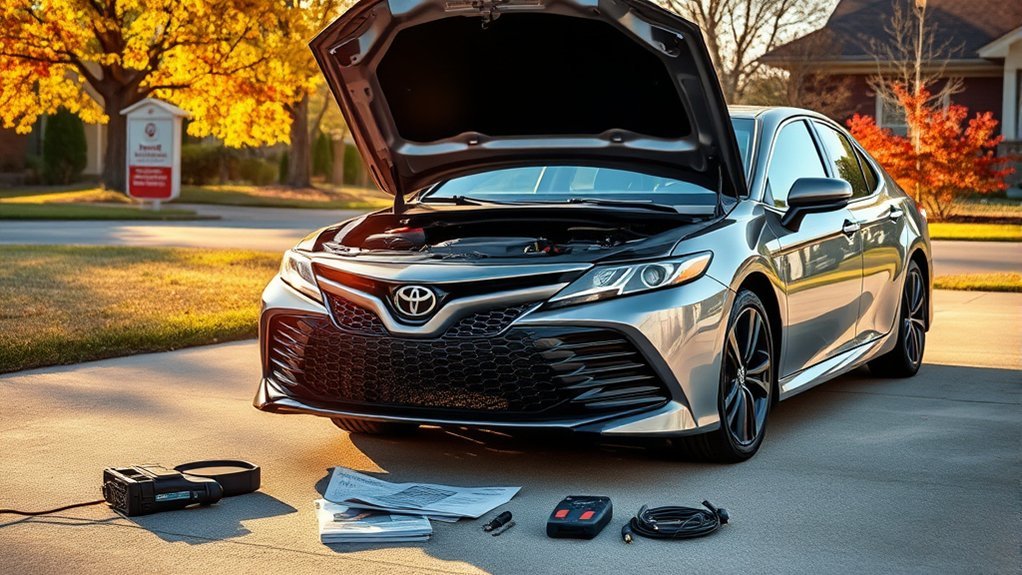
If your Toyota Camry triggers Reduced Power Mode, it usually means the powertrain control module has detected a malfunction. Common causes include throttle body issues, faulty sensors, or electrical problems. You might notice diminished acceleration, erratic idling, or a check engine light. To fix this, inspect fluid levels and connections, clean or replace the throttle body, and reset the warning light if necessary. There’s more you can do to prevent these issues from recurring.
Understanding Reduced Power Mode in Your Toyota Camry

When your Toyota Camry enters Reduced Power Mode, it’s a clear signal that the powertrain control module has detected a malfunction. This mode limits engine performance to prevent damage, often linked to issues with the throttle body, faulty sensors, or circuit problems. You may notice a decrease in throttle response, making driving less responsive and potentially dangerous.
The check engine light usually illuminates alongside this mode, indicating you need immediate engine diagnostics. Regular maintenance—like checking fluid levels and cleaning the throttle body—can help you avoid these issues. If you find yourself in Reduced Power Mode, using an OBD-II scanner can pinpoint specific error codes. This tool guides you in diagnosing and troubleshooting the problem effectively, empowering you to take control of your vehicle’s performance. Understanding these factors can help you maintain your Camry and enjoy a smoother driving experience.
Common Symptoms of Reduced Engine Power in a Camry
Experiencing reduced engine power in your Toyota Camry can manifest through several noticeable symptoms. These issues often arise from sensor malfunctions or throttle response problems. Here are some common signs you might encounter:
Experiencing reduced engine power in your Toyota Camry can lead to noticeable symptoms from sensor malfunctions or throttle issues.
- Diminished Acceleration: You’ll notice struggles when merging onto highways or during rapid acceleration.
- Erratic Idling: Inconsistent speeds or rough idling can indicate underlying throttle body issues.
- Increased Fuel Consumption: Frequent fill-ups may occur as your engine works harder to maintain performance.
- Check Engine Light: The warning light may illuminate, signaling that you should retrieve diagnostic trouble codes.
Regular maintenance checks are essential, as low engine oil or coolant levels can also trigger reduced power mode to protect your engine from overheating. Addressing these symptoms promptly can help restore your Camry’s performance.
Common Mechanical and Electronic Causes of Reduced Power Mode
Reduced engine power in your Toyota Camry can stem from various mechanical and electronic issues. Key problems include:
| Cause | Description | Solution |
|---|---|---|
| Throttle Body Issues | Dirt buildup or malfunction restricts airflow. | Regular throttle maintenance. |
| Faulty Sensors | Miscommunication from APP and TP sensors affects ECU. | Check sensor calibration. |
| Electrical Problems | Damaged wiring disrupts communication between modules. | Inspect connections and wiring. |
Additionally, overheating from low coolant levels or a malfunctioning cooling system can trigger Reduced Power Mode as a protective measure. To avoid these issues, regular maintenance is crucial. Cleaning your throttle body and guaranteeing proper fluid levels not only enhances performance but also helps prevent unexpected power reductions. Stay proactive, and you’ll guarantee a smoother driving experience in your Camry.
Diagnosing Reduced Engine Power: What to Look For?
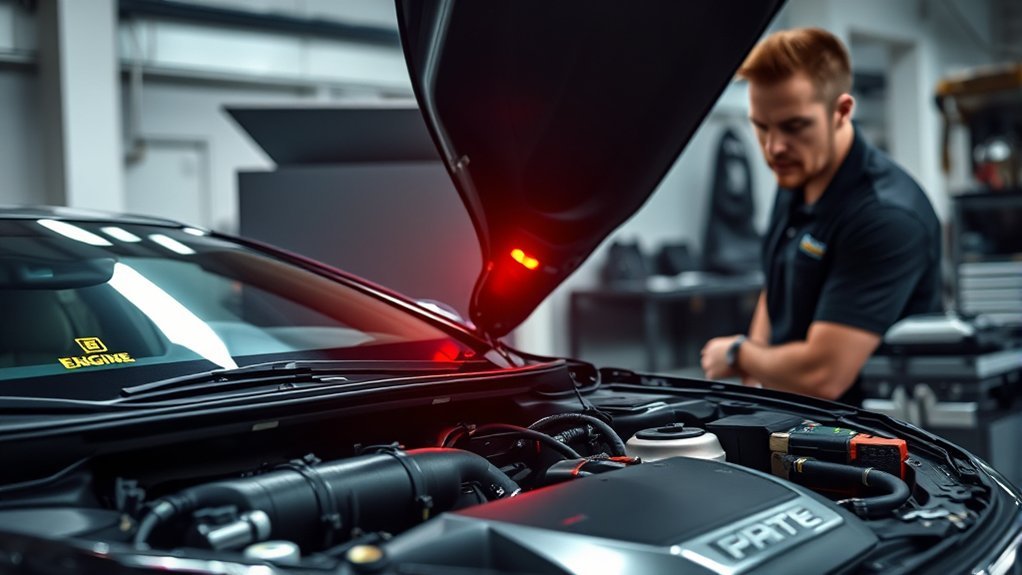
When you experience reduced engine power in your Toyota Camry, start by checking for common symptoms like warning lights and sluggish acceleration. Use an OBD-II scanner to retrieve diagnostic trouble codes, which can help identify underlying issues. Also, inspect fluid levels and connections to guarantee everything is functioning properly.
Common Symptoms Noted
How can you identify if your Toyota Camry is in reduced power mode? Look out for these common symptoms that indicate a drop in engine performance and throttle response:
- Diminished Acceleration: Noticeable lag when accelerating, particularly on highways.
- Check Engine Light Activation: The check engine light often turns on, signaling the need for diagnostics.
- Irregular Idling: Erratic engine speeds or inconsistent idling can hint at throttle body issues.
- Increased Fuel Consumption: A sudden spike in fuel usage may point to inefficiencies caused by restricted airflow.
If you experience any of these symptoms, it’s essential to investigate further to guarantee your Camry runs smoothly and efficiently.
Key Diagnostic Tools
To effectively diagnose engine power issues in your Toyota Camry, utilizing an OBD-II scanner is crucial. This diagnostic equipment retrieves trouble codes that highlight specific sensor failures or system malfunctions. Start by inspecting the throttle body for dirt or carbon buildup, a common culprit of reduced power. Clean it if necessary to restore function. Next, check the accelerator pedal position (APP) and throttle position (TP) sensors; faults in these can trigger reduced power mode due to inaccurate readings. Confirm all electrical connections around the throttle actuator and battery are secure and free from corrosion. Finally, monitor fluid levels, especially engine oil and coolant, as low levels may lead to overheating and activate reduced power mode as a protective measure.
Resetting the Reduced Power Warning Light
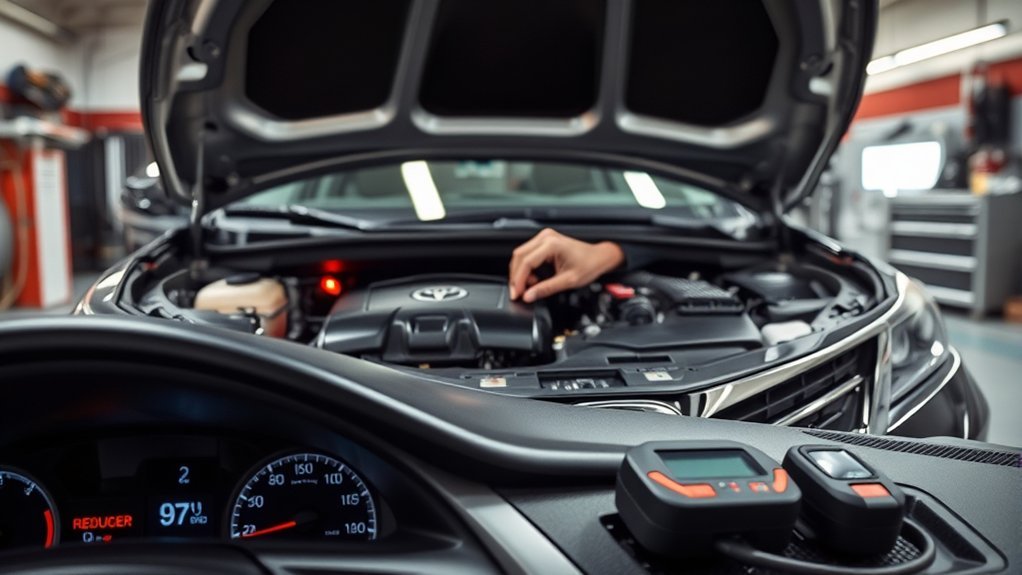
To reset the Reduced Power Warning light on your Toyota Camry, you can use the disconnecting battery method or perform a throttle body reset. Start by turning off the engine and disconnecting the negative battery cable for about 10 minutes. If the light remains on after reconnecting, further diagnostics may be necessary to identify any underlying issues.
Disconnecting Battery Method
Disconnecting the negative battery cable for about 10 minutes can effectively reset your Toyota Camry’s computer, potentially clearing the Reduced Power Warning light. Follow these steps for this method:
- Turn off the engine to prevent electrical shocks.
- Locate the negative battery terminal and use a wrench to disconnect the cable.
- Wait for approximately 10 minutes to allow the system to reset.
- Reconnect the negative terminal securely and start your car.
Check if the Reduced Power Warning light has disappeared. If it remains, further diagnosis is essential. While this method may offer temporary relief, it doesn’t address the underlying issues. Regular battery maintenance and inspecting connections can help prevent recurring warning indicators.
Throttle Body Reset Procedure
If your Toyota Camry’s Reduced Power Warning light is still on after disconnecting the battery, a throttle body reset might be necessary. Start by turning off the engine, then disconnect the negative battery cable for about 10 minutes. Reconnect the cable and start the vehicle to check if the light has cleared. If it persists, clean the throttle body with a throttle body cleaner; make certain it dries completely before reinstalling. Inspect the gas pedal area for any loose connectors or moisture. For ongoing issues, use a diagnostic scan tool to retrieve error codes related to electronic throttle or throttle calibration.
| Step | Action |
|---|---|
| Disconnect Battery | Wait 10 minutes |
| Clean Throttle Body | Use throttle body cleaner |
| Check Gas Pedal Area | Inspect for loose connections/moisture |
Cleaning the Throttle Body: A Solution to Power Issues
While you might not think about it often, cleaning the throttle body can greatly improve your Toyota Camry’s performance. A dirty throttle body can restrict airflow, leading to reduced engine power. Regular throttle body maintenance is essential to avoid these issues. Here’s a quick guide on how to clean it:
- Gather Supplies: Get a specialized throttle body cleaner; avoid harsh chemicals like brake cleaner.
- Remove the Throttle Body: Disconnect the necessary components carefully, ensuring you note their positions.
- Clean Thoroughly: Spray the cleaner inside the throttle body, removing carbon deposits and grime. Let it dry completely.
- Reinstall Securely: Reconnect all components tightly, as loose connections can cause performance issues.
For peak performance, consider cleaning frequency every 30,000 miles or as needed. This simple step can keep your Camry running smoothly and efficiently.
Inspecting the Gas Pedal and Electrical Connections
After confirming your throttle body is clean, it’s important to turn your attention to the gas pedal and its electrical connections. Start with a thorough gas pedal inspection. Look for any loose connectors; improper connections can lead to erroneous readings and trigger Reduced Power Mode. Moisture buildup under the dashboard can also cause electrical malfunctions, affecting throttle response.
Next, check for visible damage in the gas pedal area, as physical obstructions may impede normal operation. Verify that all electrical connections around the gas pedal are secure; loose or corroded connections disrupt communication with your vehicle’s computer. Regularly inspecting and cleaning the contacts in the gas pedal assembly is vital to prevent corrosion that can lead to performance issues. Addressing these areas will help maintain your Toyota Camry’s responsiveness and prevent unnecessary power reductions.
When to Get Professional Help for Reduced Power Mode?
If the Reduced Power Mode warning persists after your initial checks, it’s time to seek professional help to prevent further damage. A flashing check engine light indicates a serious issue that needs immediate attention. Significant performance problems, like severe acceleration loss or erratic idling, also warrant a visit to a qualified technician for a thorough diagnostic.
Signs of Serious Issues
When your Toyota Camry enters Reduced Power Mode, it’s essential to recognize the signs that indicate serious issues requiring professional help. Ignoring them could lead to further complications. Look for the following symptoms:
- A flashing check engine light, signaling a severe issue.
- Consistent irregular idling or significant drops in acceleration, especially on highways.
- Increased fuel consumption beyond normal levels, indicating engine inefficiencies.
- Failure to reset the warning by disconnecting the battery, pointing to deeper mechanical or electrical problems.
If you notice any of these signs, don’t hesitate to seek professional vehicle diagnostics. Addressing these issues promptly can improve engine performance and prevent costly repairs down the line.
Persistent Warning Lights
Persistent warning lights on your Toyota Camry can signal serious underlying issues that need immediate attention. If the Reduced Power Mode warning lingers even after a restart, don’t ignore it. A flashing check engine light often indicates severe problems requiring professional diagnosis.
| Warning Light Cause | Symptoms | Recommended Solutions |
|---|---|---|
| Throttle Body Issues | Reduced engine power | Inspect and repair the throttle body |
| Sensor Malfunctions | Persistent warning lights | Run diagnostic tests and replace faulty sensors |
| Electrical Problems | Erratic performance | Check wiring and connections |
| Ignored Warnings | Increased repair costs | Schedule regular maintenance |
Addressing these warning light causes promptly can prevent costly repairs down the line. Seeking professional help guarantees you tackle issues effectively.
Repair Costs for Reduced Power Issues
Reduced power issues in your Toyota Camry can lead to varying repair costs, depending on the underlying cause. Understanding the repair pricing can help you make informed decisions. Here’s a cost comparison for common repairs:
Reduced power issues in your Toyota Camry can vary in repair costs based on the underlying causes. Understanding these prices aids informed decision-making.
- Throttle Position Sensor Replacement: $50 – $600
- Throttle Body Cleaning/Replacement: $150 – $400
- Circuit and Network Issues: $200 – $800
- Alternator Replacement: $100 – $2,500 (excluding labor)
Additionally, diagnostic fees for identifying the root cause typically range from $75 to $150. This initial investment can save you from more extensive repairs later. Knowing these costs helps you budget effectively and empowers you to address reduced power issues promptly. Always consult with a qualified technician to get an accurate estimate tailored to your vehicle’s specific needs.
Preventive Measures for Avoiding Reduced Engine Power
To prevent your Toyota Camry from entering Reduced Engine Power mode, regular maintenance is essential. Start with throttle maintenance; regularly inspect and clean the throttle body to eliminate carbon buildup that can restrict airflow. Keep all engine fluids at recommended levels, as low oil or coolant can lead to overheating and activate limp mode.
Routine checks on battery health and electrical connections are important to avoid voltage issues that can limit performance. Don’t overlook sensor replacement; make sure worn-out sensors, like the accelerator pedal position sensor, are replaced promptly. Accurate data transmission to your vehicle’s computer system is critical for peak performance.
Finally, follow the manufacturer’s maintenance schedule diligently, including timely oil changes and inspections. By taking these preventive measures, you’ll enhance your Camry’s reliability and help avoid the frustrating Reduced Engine Power mode.
Frequently Asked Questions
What Is the Most Common Reason for Reduced Engine Power?
The most common reason for reduced engine power is throttle body issues. These restrict airflow, impacting engine performance and power management, leading to decreased acceleration and efficiency. Regular maintenance can help prevent this situation.
Can I Still Drive My Car if It Says Engine Power Reduced?
“Better safe than sorry.” You can drive if your car says engine power’s reduced, but it compromises engine performance and driving safety. Pull over, diagnose the issue, and avoid worsening any existing problems.
Conclusion
Experiencing reduced power mode in your Toyota Camry can feel like driving with a heavy anchor dragging behind you. By understanding the causes and symptoms, you can tackle the issue head-on. Remember to diagnose thoroughly, check connections, and don’t hesitate to seek professional help if needed. With the right approach, you can restore your Camry’s performance and keep it running smoothly, ensuring every drive feels as effortless as gliding on a calm sea.