Your 2022 Toyota Camry’s recommended tire pressure is 35 psi front and rear, posted on the driver’s door jamb; keep it there for best handling, fuel economy, and even tread wear. Check pressures when tires are cold (before driving or after three hours) and include the spare. Use a gauge, add air in short bursts, or release slowly if needed, and inspect tread for center or edge wear. Continue below to learn seasonal tips and service options.
Recommended Tire Pressure for the 2022 Toyota Camry
For the 2022 Toyota Camry, Toyota recommends inflating both the front and rear tires to 35 psi. You’ll find this specific guidance on the decal inside the driver’s door jamb, and you should follow it to get the tire pressure benefits that matter most: improved handling, better fuel efficiency, and increased safety. Check pressure at least once a month as part of basic tire maintenance tips, since both under- and over-inflation can shorten tire life and degrade performance. When you keep pressure consistent, you’ll extend tread life and maintain stable steering and braking. These outcomes free you from avoidable breakdowns and wasted fuel, letting you drive with more confidence and autonomy. Use the door-jamb decal as your authoritative reference rather than estimates or habit. Stay disciplined about routine checks and simple maintenance, and you’ll protect your vehicle’s performance while reducing costs and risks over time.
How to Check Your Camry’s Tire Pressure (Cold-Reading Method)
Start by checking tire pressure when the tires are cold — ideally before you drive or at least three hours after driving — because heat raises pressure and gives inaccurate readings. You’ll use the cold-reading method to get reliable numbers: the Camry’s recommended pressure is 35 psi for front and rear tires, shown on the driver door sticker. Check all four tires plus the spare to keep performance and freedom from unexpected stops.
Check tire pressure cold—about 35 psi front and rear—inspect all four tires and the spare monthly for safe, efficient driving.
- Remove each valve cap, press an accurate gauge firmly onto the valve stem until hissing stops, and note the reading so gauge accuracy isn’t compromised.
- Compare each measured value to 35 psi; record discrepancies and recheck if a reading seems off to confirm gauge accuracy.
- Repeat for every tire monthly or before long trips to preserve handling, fuel efficiency, and your autonomy on the road.
This routine is simple, empowering, and keeps your Camry ready.
How to Add or Release Air Safely on a Camry
Before adding or releasing air, check your Camry’s tire pressure when the tires are cold (or after at least three hours of no driving) to get an accurate reading. Use a gauge and set the inflator to the recommended 35 psi, adding air in short bursts and rechecking until you reach the target. If a tire’s over-inflated, carefully press the valve core or use a small tool to release air slowly and replace the valve cap securely when finished.
Check Pressure Cold
1 simple check will keep your Camry’s tires at the correct pressure: measure them when they’re cold — before you drive or at least three hours after driving — so the reading isn’t skewed by heat. Cold pressure matters for tire accuracy and for reliable handling, fuel efficiency, and safety. Use a quality gauge and compare to the OEM decal: Toyota recommends 35 psi front and rear.
- Use a reliable tire pressure gauge on each cold tire; record readings and note deviations from 35 psi.
- If below 35 psi, add air at a station or with a portable inflator; recheck until you hit the recommended pressure.
- Repeat monthly and before long trips to maintain freedom from unexpected flats and to preserve performance.
Safely Release Excess Air
When a Camry’s tire reads above the recommended 35 psi, you’ll want to release air carefully to avoid underinflation; check cold pressure with a quality gauge, remove the valve cap, and depress the valve stem briefly with a small tool or your fingertip while monitoring the gauge so you stop once the PSI falls into the 32–35 psi range. You’ll check each tire cold, record readings, and perform slow air release to keep control. Monitor the gauge between short bursts until you hit the target. After adjustment, replace the valve cap securely to keep out dirt and moisture. If a tire needs significant air removal or shows damage, seek professional help. Maintaining correct tire pressure empowers you to drive safer and freer.
Seasonal Adjustments: Setting Camry Tire Pressure for Hot and Cold Weather
Seasonal temperature swings can change your Camry’s tire pressure noticeably, so aim for the recommended 35 psi while adjusting for extremes—remember pressure drops about 1 psi for every 10°F decrease. You should monitor tire pressure regularly to counter temperature effects and preserve control, efficiency, and safety. Check monthly and before long trips, and recheck when seasons shift.
Seasonal swings affect your Camry’s tire pressure—aim for 35 psi, check monthly, and recheck with temperature changes.
- In cold weather, verify pressures when tires are cold and top to 35 psi; add a psi or two if you expect sustained subfreezing temps to offset steady drops.
- In hot weather, inspect pressures more often; heat expands air and can push tires toward over-inflation, so relieve excess to stay near 35 psi for balanced wear and handling.
- Use a reliable gauge, record readings, and adjust incrementally; consistent checks free you from surprises and keep your Camry trusted on every road.
How to Tell If Tire Wear Is Caused by Wrong Pressure
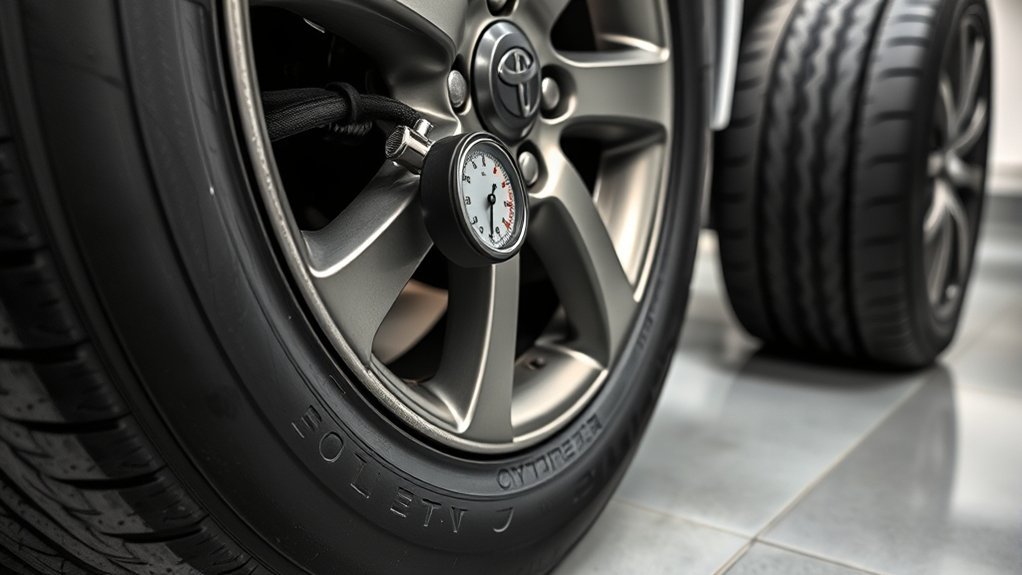
After checking pressures for seasonal swings, you should inspect tread patterns to see if wear points to incorrect inflation. You’ll use tire wear indicators and a tread depth gauge to compare center, inner, and outer depths. Center-heavy wear or a bulging mid-tread usually means over-inflation, since the tire’s contact patch shrinks and the middle takes most load. Excess wear on outer edges signals under-inflation, which flattens the tire and stresses the shoulders. If depth measurements differ across the tire, don’t assume alignment issues first—verify pressure history and repeat measurements when tires are cold. Use pressure monitoring—manual gauges or the vehicle’s TPMS—to confirm readings match manufacturer recommendations. Regular inspections let you correct pressures before patterns become permanent, preserving handling and extending tire life. If wear patterns persist after correct inflation, have a professional check suspension and alignment; but start with disciplined pressure monitoring as your primary diagnostic step.
Quick Safety and Fuel-Economy Effects of Correct Pressure
Keeping your Camry’s tires at the recommended 35 psi helps you get better mileage by cutting rolling resistance. It also keeps the tire’s contact patch ideal, improving handling, braking, and overall stability so you’re less likely to be in an accident. You should check and adjust pressures regularly to prevent premature wear and the fuel- and safety-related downsides of incorrect inflation.
Improved Fuel Efficiency
When you maintain your Camry’s recommended 35 psi, you reduce rolling resistance and can improve fuel economy by about 3–4%, while also preserving tire life and handling. You free yourself from wasted fuel and unnecessary expense by keeping tire pressure where it belongs. Under-inflation costs roughly 0.2% fuel economy per 1 psi drop; over-inflation also hurts economy and ride quality.
- Check monthly: consistent pressure keeps rolling resistance low, so you use less gas and extend tire life.
- Adjust with temperature: pressure shifts with ambient heat, so monitor to protect economy and comfort.
- Use a reliable gauge: accurate readings let you act decisively, saving fuel and maintaining control without compromise.
Enhanced Driving Safety
Having the Camry’s tires at the recommended 35 psi not only trims fuel use but also sharpens vehicle stability and handling, giving you more predictable steering and shorter stopping distances. You gain clear tire pressure benefits: reduced rolling resistance boosts gas mileage, while correct inflation cuts uneven tread wear and delays replacements. That saves money and keeps you moving without constraint. Low pressure raises blowout risk, compromising control and freedom on the road. By checking pressure regularly and maintaining 35 psi, you preserve driving stability, enhance vehicle control, and lower accident likelihood. This simple habit frees you from avoidable hazards and costs, letting you drive with confidence and autonomy while maximizing safety and efficiency.
When to Get Professional Tire Service (Toyota of Orlando Contact)
If you’re unsure how to check or fill your Camry’s tire pressure, or you notice persistent issues like uneven wear or frequent loss of pressure, schedule professional service to guarantee safety and accuracy; Toyota of Orlando can help and makes appointments easy at (407) 298-4500. You deserve reliable, precise care that frees you from worry and keeps mobility intact. Toyota of Orlando offers tire service and professional assistance, ensuring measurements match manufacturer specs and detecting problems you might miss.
Unsure about your Camry’s tire pressure? Trust Toyota of Orlando for precise checks, repairs, and easy appointment scheduling at (407) 298-4500.
- Bring your Camry when you see uneven tread, repeated pressure loss, or after hitting a curb—technicians will inspect, balance, and repair as needed.
- Schedule routine checks if you lack tools or time; the dealership is off I-4 across from Millenia Mall for convenient access.
- Call (407) 298-4500 and provide your name, email, and phone for tailored service and appointment reminders that respect your schedule and autonomy.
Frequently Asked Questions
Do Different Camry Trims Need Different Tire Pressures?
Yes — you’ll see Camry tire specifications differ by model, so Trim pressure variations matter; check the door placard or owner’s manual, and you’ll confidently set pressures matching load, wheel size, and driving needs.
Can a Spare Tire Use the Same 35 PSI Recommendation?
No — you shouldn’t assume the spare tire uses 35 psi. Check spare tire specifications; recommended pressure differences exist because compact spares often need higher psi. You’ll follow the vehicle’s placard or owner’s manual for safety and freedom.
How Does Tire Pressure Affect Hybrid Camry Battery Range?
Cut to the chase: you’ll boost tire performance and battery efficiency by keeping proper pressure; underinflation raises rolling resistance, cuts electric range, and makes you work harder—so check pressure regularly and reclaim control of your drive.
Are TPMS Alerts Indicative of Gradual or Sudden Leaks?
They can indicate both: tire pressure alerts warn you of sudden drops and gradual declines. Use immediate inspection and electronic leak detection to confirm source, fix promptly, and reclaim safety and freedom on the road.
Can Aftermarket Wheels Change Recommended Tire Pressure?
Yes — even with a zeppelin’s flair, you’ll adjust pressures when aftermarket benefits or wheel materials differ; lighter alloys or different diameters change load and ride needs, so follow tire and wheel specs to keep freedom and safety.
Conclusion
Like a compass steering a ship, correct tire pressure keeps your Camry true and efficient. You should check cold pressures monthly and adjust to the spec on the door placard, adding or releasing air slowly and rechecking. Raise pressure slightly in hot weather, lower a bit when it’s cold, and watch for uneven wear patterns that signal problems. Maintain proper pressure for safety, better fuel economy, and longer tire life; see pros when unsure.